
The Ten Best UKGC-Licensed Casinos for Classic Slots in 2026
 Available in GB
The three-reel slot is the oldest format in the casino, and in 2026 it is also the one a careful player should be looking at. The maths is better, the games are lighter, and the UK regulatory floor sits underneath every spin. What follows is a working guide to that market: what a classic slot actually is, which ten UKGC-licensed casinos are worth opening an account at, and the rule book the Gambling Commission now expects every operator on this page to follow.
*Data current as of September 8, 2026 and cross-checked against the UK Gambling Commission’s public operator register.*
What Classic Slots Actually Are — and Why the Oldest Format Still Delivers in 2026
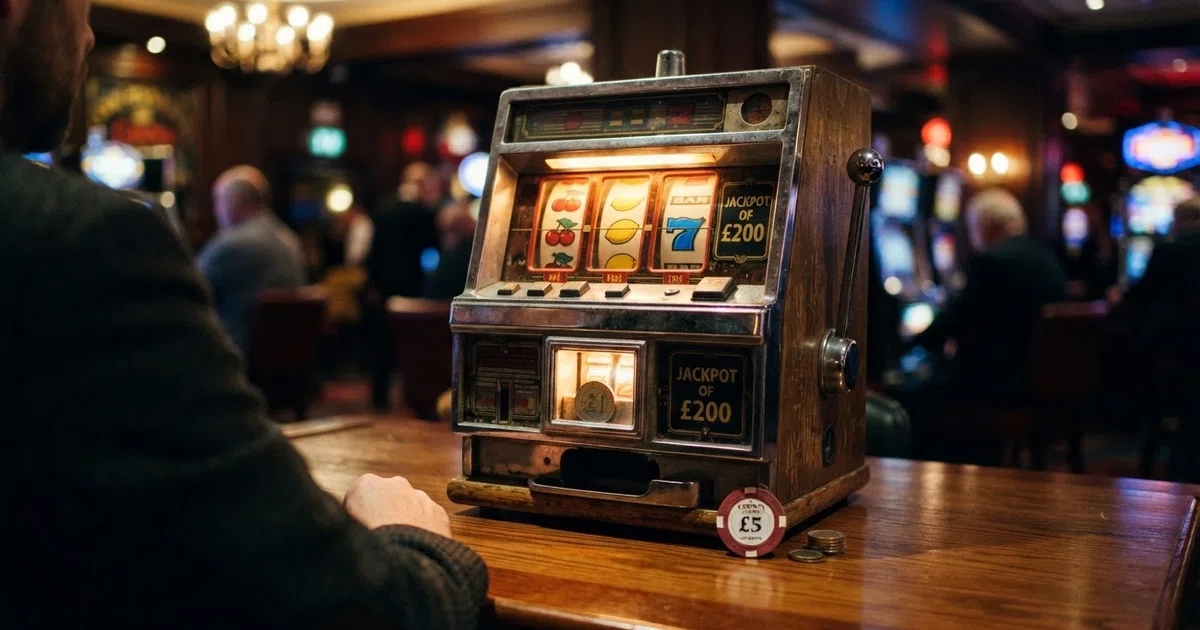
A “classic slot” is not a vague aesthetic choice. The genre has a mechanical definition: three reels, typically a small fixed number of paylines, and a symbol set built around cherries, lemons, bars and the lucky seven. It is the form factor that came out of the electromechanical cabinets of the 1960s and 1970s, when a “spin” was a physical lever and a “win” was three bars across the centre line. Online classic slots preserve that blueprint almost exactly. The reels are digital now, but the layout, the line count, and the visual grammar are the ones the pub fruit machine taught a generation of British players.
That continuity is the point. A classic slot tells the player everything it is going to do on a single screen. No expanding reels, no cascading symbols, no ten-trigger bonus round that opens a second board. The format exists because it works at the simplest level: place a stake, press a button, see whether the three symbols line up. The rest of this page builds from that premise.
The UK frames the genre more tightly than most markets do. Every operator serving Great Britain must hold a Gambling Commission licence, and the Commission now dictates stake limits, spin speeds, and what counts as a “loss” on the screen. The headline changes for 2026 are the £5 maximum stake for adults aged 25 and over, in force since 9 April 2025, and the £2 maximum for 18-to-24-year-olds, live since 21 May 2025. A 1.1% statutory levy on operator gross gambling yield funds the harm-reduction work. Auto-play has been banned since 2021, and every game cycle must last at least 2.5 seconds. None of this is background colour. It sets the price, the pace, and the design of every spin a UK player makes.
The Three-Reel Blueprint: What Defines a Classic Slot
Three reels, usually three rows, and a payline structure that runs in straight lines across the centre and diagonals. Five paylines is the working standard. The symbol set is the visual signature: cherries, lemons, oranges, plums, single-double-triple bars, and the lucky seven at the top of the paytable. Bells appear on older titles. A joker, when it shows up, is a wild substitution rather than a bonus trigger.
This is the form factor the term “pub slot” still describes in British gambling vocabulary. The pub fruit machine is the cultural ancestor: a one-armed bandit with a fixed symbol set, nudges and holds as the only feature, and a cash prize at the top. Modern online classic slots do not copy the nudge-and-hold heritage in every case, but they keep the surface — three reels, fruit and sevens, a single spin button — because that surface is what the genre is. When a developer labels a five-reel, multi-payline game a “classic”, it is borrowing the visual cues rather than the mechanical structure.
How Classic Slot Paylines and RTP Actually Work
A payline is a line on which matching symbols pay. Classic slots use a small fixed set — five is the norm — and the player cannot disable any of them. Every spin activates every line at the same stake per line. This is structurally simpler than a video slot, which may offer 20, 40, or 243 ways to win and lets the player pick the number of active lines.
Return to player, or RTP, is the percentage of all wagered money a slot returns to players over a very large number of spins. A 96% RTP slot returns £96 for every £100 staked across millions of spins; the remaining £4 is the house edge. The UKGC requires every licensed operator to publish the RTP of every game, and a serious slot will state it in the info panel. Fire Joker, for example, is published at 96.15% with medium volatility and a maximum win of 800x the bet. Mega Joker, in its Supermeter mode, reaches up to 99% RTP with low volatility and a top payout of 2,000 coins. Those are the two anchors the rest of this page refers back to.
The house edge is the other side of the RTP number. A 96% RTP slot has a 4% house edge; a 99% RTP slot has a 1% edge. The two numbers always add up to 100, and the edge is what the operator keeps over volume. RTP is the only honest number for comparing games, because volatility tells you how lumpy the wins are while RTP tells you what the slot costs over time.
What RTP Means for Your Bankroll — the Expected-Loss Reality
RTP is not a promise. It is a long-run average, and a long run is millions of spins. What it does give a player is a way to price a session: the higher the RTP, the smaller the expected loss per pound staked.
Take a 1% edge on a slot played at £1 per spin for 1,000 spins. The stake is £1,000. The expected loss is the turnover multiplied by the edge, which is £1,000 × 0.01 = £10. That £10 is what the maths says the player will, on average, give back to the house. On a slot with a 4% edge, the same session costs £40. The headline RTP is the same shape of statement, just inverted: a 99% RTP slot keeps a 1% edge, while a 96% slot keeps a 4% edge.
Now layer a bonus on top. The 888 Casino welcome bonus is 100% up to £100 at 10x wagering, which means a player who claims the full £100 must generate £100 × 10 = £1,000 in qualifying turnover before withdrawing. Played on Mega Joker at 99% RTP, the expected loss on that £1,000 turnover is £1,000 × (1 − 0.99) = £1,000 × 0.01 = £10. The £100 bonus looks generous. The maths says a disciplined player who clears it on a 99% RTP slot gives back about £10 of it, on average, to the house. A player who clears the same bonus on a 96% slot gives back £40. The bonus is worth what the wagering multiple and the RTP together make it worth. A high RTP does not make a bonus profitable — it makes it cheaper to clear.
This is the defensive case for high-RTP classic slots. They do not produce a positive expected return; no slot does. They reduce how much the player pays the house for the privilege of clearing a bonus, which is the only thing a stake can be priced against.
| Feature | Classic Slot | Video Slot |
|---|---|---|
| Reels | 3 | 5+ |
| Paylines | Fixed (typically 5) | Multiple (up to 243+) |
| Symbols | Fruit, bars, sevens | Themed characters, scatters |
| Features | Minimal (nudges/holds) | Complex (bonus/free spins) |
The reel count does real work beyond the cosmetic. A 3-reel slot typically has fewer winning combinations per spin, which means a lower hit frequency — longer dry patches between wins, and when a win lands, the size is more variable because the paytable has fewer tiers. A 5-reel slot spreads the same symbol set across more positions and pairs it with multiple paylines, which raises the hit frequency at the cost of diluting the per-line payout. Volatility, not reel count, is the better predictor of session feel, but reel count is what a player sees first.
The UK Gambling Commission does not draw a clean line between “classic” and “video” for regulatory purposes. The stake limits, the auto-play ban, and the spin-speed rule apply to all online slots equally. The classification that matters for the regulator is “online slot” as a single category, and the genre label a developer chooses is a marketing decision rather than a regulatory one.
The Symbols That Built the Casino — from Cherries to Lucky Sevens
Every symbol on a classic slot payscale has a history. The cherries trace back to the fruit-flavoured chewing gum payouts on early American machines, a workaround for anti-gambling laws that let the manufacturer frame the prize as flavoured confectionery. Lemons, oranges, and plums completed the fruit set because they were easy to render on a mechanical reel strip. Single, double, and triple bars were the next step up the paytable, with the bar logo borrowed from the Bell-Fruit Gum Company. The lucky seven — typically red on a white background — sits at the top of most paytables and traces to the seven as a lucky number across multiple gambling traditions.
Bells appear on older titles, often as the second-highest symbol after the seven. A joker, when present, is a wild that substitutes for other symbols to complete a payline. Modern classic-style slots sometimes add a star or a diamond as a premium symbol, but the original grammar is the one the genre returns to. A new player who learns the cherries-to-sevens ladder has learned the grammar of the entire format.
Bonus Features in Classic Slots — More Than You Would Expect
“Classic” does not mean featureless. The pub-fruit-machine heritage passes down nudges (the player can shift a reel a row at a time to complete a line) and holds (the player can lock one or more reels in place while the others spin). Most online classic slots do not carry these features forward — the random number generator makes them less useful in a digital context — but a handful do, and the genre is broader than the bare three-reel model.
The two standout examples on the page are Mega Joker and Fire Joker. Mega Joker’s Supermeter mode is a progressive-risk feature: wins from the base game can be carried up to a Supermeter where the stake is higher and the potential payout goes with it. The RTP climbs to up to 99% in that mode, and the maximum win is 2,000 coins. Fire Joker, a more recent Play’n GO title, is a 3-reel slot with a respin feature: when two reels land on the same symbol, the third reel respins to give the player a chance to complete the line. The slot sits at 96.15% RTP with medium volatility and a maximum win of 800x the bet. Both games show that a classic frame can carry features that materially change the maths.
Classic Slots in the UK: A Market Shaped by Regulation
The UK classic-slot market in 2026 is one of the most tightly regulated in the world. The Gambling Commission requires every operator serving Great Britain to hold a remote casino licence. The Commission’s design rules — stake limits, no auto-play, a 2.5-second minimum spin, the ban on losses disguised as wins — are not optional. They shape the games themselves, and they shape how a player approaches them.
The £5 maximum stake for adults aged 25 and over, effective 9 April 2025, and the £2 maximum for 18-to-24-year-olds, effective 21 May 2025, apply to every online slot spin. For a classic slot like Mega Joker’s Supermeter, which historically attracted higher-coin play, the £5 ceiling is a real constraint: a player who would have wagered £20 a spin at an offshore casino is now bound by the UK rule. The 1.1% statutory levy on operator gross gambling yield, effective April 2025, funds the harm-reduction and treatment work. The levy is paid by the operator, but the cost is structural and it shapes what offers the market can sustain.
The combination is the point. A UK player at a UKGC-licensed casino plays under rules the operator cannot waive. That is the difference between a regulated market and the alternatives, and it is the reason this page does not stray outside it.
The Ten Classic Slots Casinos for UK Players — Compared Side by Side
The ten operators below are UKGC-licensed for remote casino play, were cross-checked against the Commission’s public register, and each carries at least one genuine three-reel classic slot in its library. The ranking weights classic-slot selection depth, bonus value after wagering, the RTP of the featured classic title, and licence longevity. Welcome offers are stated in the form the operator publishes them; wagering is the multiple the player must clear before withdrawing bonus-derived funds.
| Operator | UKGC Licence | Welcome Offer | Wagering | Standout Classic Slot |
|---|---|---|---|---|
| 888 Casino | 39028 | 100% up to £100 | 10x bonus | Mega Joker |
| LeoVegas | 39198 | 50 Free Spins on Big Bass Splash | 0x | Fire Joker |
| William Hill | 39225 | 200 Free Spins on Big Bass Splash (£30 winnings cap) | 10x on winnings | Fire Joker |
| PlayOJO | 39326 | 50 Free Spins on Big Bass Bonanza | 0x | Mega Joker |
| Betway | 39326 | 100% up to £50 | 50x bonus | Break da Bank |
| Sky Vegas | 39326 | 200 Free Spins on selected game | 0x | Starburst (adjacent) |
| Grosvenor Casinos | 39326 | Deposit £20, Play with £40 + 100 Free Spins | 10x | Reel King |
| Casumo | 39326 | 100% up to £25 + 20 Bonus Spins | 30x | Mystery Joker |
| MrQ | 39326 | 20 Free Spins | 0x | Fire Joker |
| Ladbrokes | 39326 | Bet £10, Get £30 | 40x | Big Bass Bonanza (adjacent) |
The wagering column is where the table does the most work. A 0x wagering line means the winnings from the free spins are credited as cash, withdrawable on completion of any standard account-verification steps. A 10x line means the player must wager the bonus amount (or the winnings, where stated) ten times before withdrawing. A 50x line is the heaviest on the table, and it converts a £50 bonus into £2,500 of qualifying turnover before any withdrawal is possible. The standout classic column is the operator’s marquee retro or 3-reel title; where the marquee title is a video slot borrowing classic symbols, the row is marked “adjacent”.
888 Casino
888 Casino holds UKGC licence 39028, active for remote casino and betting since 1 November 2014, which makes it the longest-running licence on this page. The welcome offer is a 100% match up to £100 at 10x wagering on the bonus — the lowest wagering multiple in the table. The headline classic is Mega Joker, with up to 99% RTP in Supermeter mode and a maximum win of 2,000 coins. The provider backbone is NetEnt and Playtech, with IGT also in the mix.
A player who claims the full £100 bonus and clears it on Mega Joker at 99% RTP is looking at £1,000 in qualifying turnover and an expected loss of roughly £10 against the bonus value. The same bonus cleared on a 96% slot costs about £40. The wagering multiple is the only thing keeping the bonus from being a free option; 10x is light by industry standards, and combined with the highest-RTP classic on the UK market, 888 is the standout for a bonus-conscious player who wants the maths to work as cleanly as it can.
LeoVegas
LeoVegas holds UKGC licence 39198 for remote casino. The welcome offer is 50 free spins on Big Bass Splash with no wagering requirements on the resulting winnings. Fire Joker, the Play’n GO classic at 96.15% RTP and medium volatility, is the standout retro title in the lobby. The provider mix is NetEnt, Play’n GO, and Microgaming.
The no-wagering structure is the differentiator. A free spin that pays cash on completion has no expected loss against a bonus — there is no bonus to clear. The trade-off is that the player is not paid a deposit match, so the offer rewards volume and patience rather than a single large stake. LeoVegas’s no-wagering offer provides a straightforward alternative for those who prefer free spins to deposit-match bonuses.
William Hill
William Hill holds UKGC licence 39225, active for remote casino and betting. The William Hill Vegas welcome offer is 200 free spins on Big Bass Splash for a £10 deposit or stake, with winnings capped at £30 and subject to 10x wagering. Fire Joker is the classic highlight. The provider backbone is Playtech, IGT, and Evolution.
The £30 cap is the line that defines the offer. Two hundred free spins at a low denomination can return more than £30 at 96% RTP, so the cap is a real constraint — anything above it is forfeited. The 10x wagering on the (capped) winnings is a light multiple. William Hill’s offer suits fans of high-street brands looking for a high volume of spins, though the winnings cap may deter those seeking an uncapped bonus.
PlayOJO
PlayOJO operates under UKGC licence 39326, which covers its remote casino offering. The welcome offer is 50 free spins on Big Bass Bonanza for a £10 deposit with no wagering requirements. Mega Joker is the standout classic in the lobby, accessible as a higher-RTP option for players who want to fund it themselves after the welcome spins are used. The provider mix is NetEnt, Microgaming, and Play’n GO.
PlayOJO’s “no wagering, ever” positioning is the only one of its kind on the page. Every bonus credit, every free spin, every promotion pays cash. The 50 free spins are a low entry point — a £10 deposit is the only commitment — and the absence of a wagering multiple means there is no playthrough tax to model. PlayOJO’s ‘no wagering’ philosophy simplifies the experience, making it an ideal choice for players who want immediate access to their cash.
Betway
Betway is licensed and regulated by the UKGC under number 39326. The welcome offer is a 100% deposit match up to £50 at 50x wagering on the bonus. The standout classic is Break da Bank, a Microgaming 3-reel slot from the operator’s house catalogue. The provider mix is Microgaming and NetEnt.
The 50x wagering multiple is the heaviest cash bonus on the page. A player who claims the full £50 bonus must generate £50 × 50 = £2,500 in qualifying turnover. On a 96% RTP slot, the expected loss against that turnover is £2,500 × 0.04 = £100. The bonus is worth £50 in headline value; the cost of clearing it, on average, is roughly twice that at industry-average RTP. The case for Betway is the Break da Bank catalogue rather than the welcome offer — Microgaming’s 3-reel library is one of the deepest in the UK market, and that depth is the operator’s real selling point.
Sky Vegas
Sky Vegas holds a UKGC remote casino licence, number 39326. The welcome offer is 200 free spins on a selected game, typically with no wagering requirements. The marquee retro-adjacent title is Starburst, which is a video slot borrowing classic visual cues rather than a true 3-reel classic. The provider mix is NetEnt, IGT, and Playtech.
The honest read is that Sky Vegas is light on three-reel classics. The operator’s strengths — brand recognition, a no-wagering free spins offer, a deep NetEnt and IGT catalogue — sit beside a thinner classic-slot selection than 888, PlayOJO, or MrQ. For a player who treats Starburst as a retro title and is happy with the adjacent format, Sky Vegas works. While Starburst remains popular, players specifically seeking deep three-reel collections may find the library less focused than at competitors.
Grosvenor Casinos
Grosvenor Casinos, licensed under UKGC number 39326, offers a remote casino platform. The welcome offer is a deposit-£20-play-with-£40 structure plus 100 free spins, at 10x wagering on the bonus. Reel King, a Novomatic title with a genuine pub-fruit-machine heritage, is the standout classic. The provider mix is IGT, Novomatic, and Evolution.
Grosvenor’s online product carries the land-based brand’s reputation for table games, and the slot lobby is competent rather than exceptional. The 10x wagering multiple is light, and the £20-for-£40 structure doubles a player’s first-session stake. For a player who values the high-street name and the Novomatic catalogue — Reel King is a real three-reel classic with a hold feature — Grosvenor earns its place. The free spins component is a secondary draw, and the bonus terms are the strongest part of the offer after the wagering multiple.
Casumo
Casumo holds UKGC licence 39326 for remote casino. The welcome offer is a 100% deposit match up to £25 plus 20 bonus spins, at 30x wagering on the bonus. Mystery Joker, a NetEnt three-reel title, is the standout classic. The provider mix is NetEnt, Play’n GO, and Thunderkick.
The 30x wagering multiple is mid-table: heavier than 888, William Hill, or Grosvenor, and lighter than Betway or Ladbrokes. The £25 cap is the lowest cash match on the page, which limits the size of the bonus any single player can claim. Mystery Joker is a genuine classic rather than an adjacent video slot, and the NetEnt/Play’n GO/Thunderkick mix is one of the broader provider combinations available. For a player who wants a small bonus, a real classic, and a moderate wagering hurdle, Casumo is a reasonable mid-table option.
MrQ
MrQ holds UKGC licence 39326 for remote casino. The welcome offer is 20 free spins with no wagering requirements. Fire Joker, at 96.15% RTP and medium volatility, is the standout classic. The provider mix is NetEnt, Play’n GO, and Thunderkick.
MrQ’s structure is the leanest on the page. Twenty free spins, no deposit match, no wagering, and Fire Joker in the lobby. The trade-off is that the headline value is smaller than 888, William Hill, or Grosvenor, and the player who wants a longer session has to fund it themselves. The case for MrQ is the no-wagering simplicity: a player who wants to try Fire Joker without committing to a bonus playthrough can do so in 20 spins and move on, with any winnings already in cash.
Ladbrokes
Ladbrokes holds UKGC licence 39326 for remote casino. The welcome offer is a bet-£10-get-£30 structure at 40x wagering on the bonus. The marquee retro-adjacent title is Big Bass Bonanza, a video slot rather than a true three-reel classic. The provider mix is Playtech and IGT.
The 40x wagering multiple is the second-heaviest on the page, behind Betway’s 50x. A player who claims the full £30 bonus must generate £30 × 40 = £1,200 in qualifying turnover. At 96% RTP, the expected loss against that turnover is £1,200 × 0.04 = £48 — well above the £30 bonus value on average. Ladbrokes is a betting-shop brand that has extended into slots; the welcome offer is competitive only if the player values the brand name and is willing to pay for it in expected loss.
Free Classic Slots: Why Demo Mode Is Your Best Strategy Tool
A demo spin costs the player nothing. That is its only advantage and it is a substantial one. Demo mode is how a player learns a slot’s rhythms — the gap between wins, the size of the typical payout, the trigger frequency of a bonus feature — without paying for the lesson. For a classic slot with a non-trivial feature like Mega Joker’s Supermeter or Fire Joker’s respin, demo play is the only sensible way to understand the feature before staking cash on it.
The UK market treats demo mode as a regulated environment. UKGC-licensed casinos must verify a player’s age before any deposit or real-money play, but demo access is typically available without registration. The same 2.5-second minimum spin speed applies in demo as in real-money play, so the pacing a player experiences in demo is the pacing they will get at the table. The 99% RTP figure for Mega Joker, the 96.15% figure for Fire Joker, the volatility class, the maximum win — every published number applies in both modes. The maths does not change when the stake changes from real money to play-money; the engine is the same engine.
What demo play does not teach is the psychology of real money. A player who loses £100 in demo mode feels nothing; a player who loses £100 of real money feels the loss and may chase it. The 2.5-second spin gap that feels brisk in demo can feel glacial when £2 per spin is on the line. The £5 stake limit that seems abstract at demo stake sizes becomes a hard ceiling at real-money denominations. These are the things a player only learns by playing for cash, and they are the reasons a disciplined player treats demo as a research tool rather than a substitute.
Trying Classic Slots Risk-Free — Where Demo Mode Lives and How It Works
Most UKGC-licensed casinos offer demo access to their slot libraries without requiring an account. A player visiting 888, PlayOJO, MrQ, or any of the other operators on this page can typically load Mega Joker, Fire Joker, or Mystery Joker and play it at demo stakes immediately. No deposit, no registration, no time limit on the demo session at most operators.
The games that are reliably available in demo on the UK market are the major NetEnt and Play’n GO titles — Mega Joker, Fire Joker, Mystery Joker — plus a long tail of smaller classic slots from IGT, Novomatic, and Microgaming. The advantage of starting with one of these well-known titles is that the published RTP and volatility figures are easy to verify against the slot’s info panel, and the player’s demo experience can be compared to the published numbers.
Instant-Play, No Download: How Browser-Based Classic Slots Work
Modern classic slots run on HTML5, the same technology that runs the rest of the modern web. There is no Flash, no download, no plugin. A player opens a casino lobby in a browser, clicks a game, and the slot loads in seconds. The same engine runs on desktop and mobile, and a session started on one device can be continued on another if the operator supports cross-device session continuity.
The “no download” claim is, in 2026, simply true. The exceptions are the small number of standalone casino apps players can install from the App Store or Google Play, which are download products but still run HTML5 games inside them. The download is the wrapper, not the engine. For the player, the practical difference is that browser play needs no storage and no installation, while an app uses a few hundred megabytes of device memory and updates itself in the background.
Free 3-Reel Classics vs Real-Money Play — What Changes When You Stake Cash
The maths is identical. The engine, the random number generator, the paytable, the published RTP — none of these change between demo and real-money mode. A player who sees a 99% RTP in demo will see a 99% RTP at real stakes, and a player who sees a 96.15% RTP in demo will see the same 96.15% RTP at the table. The house edge is the house edge.
What changes is everything around the maths. The £5 stake limit is a real constraint at real-money stakes and an abstraction at demo. The 2.5-second spin speed feels brisk in demo and slow when £5 is committed. The “losses disguised as wins” that the UKGC banned would have hidden the sting of a losing spin; in their absence, the screen tells the truth. A player moving from demo to real money is moving from a research tool to a real financial decision, and the transition is one the maths does not prepare them for.
Popular Free Classic Slot Titles Worth Your Time
Mega Joker is the headline title for any player learning the genre. The Supermeter mode — a higher-stakes, higher-RTP bonus round accessible from the base game — is a feature that takes a few demo sessions to understand. The 99% RTP is real but conditional: a player who never enters the Supermeter sees a lower base-game RTP and a flatter experience. Demo is the only sensible way to learn when to collect and when to carry winnings up.
Fire Joker is the medium-volatility counterpoint. The respin feature is simpler than the Supermeter — a single reel respin when two reels match — and the 96.15% RTP is published and stable. The slot teaches a player what medium volatility feels like: longer dry patches than a low-volatility game, but the wins that land are larger on average. A player who can sit with the rhythm in demo can sit with it at the table.
Mystery Joker, the NetEnt title available at Casumo, is a simpler classic for baseline comparison. Three reels, no Supermeter, no respin, a straightforward spin-and-collect structure. The slot is the cleanest reference point for what a 3-reel game looks like when no features complicate it. Reel King, the Novomatic title at Grosvenor, carries the pub-fruit-machine heritage into the online lobby. A player who grew up around UK pub slots will recognise the format immediately.
Classic Slots on Mobile — No App, No Problem
Classic slots are the lightest games in any casino lobby. Three reels, five paylines, no complex bonus rounds, no 3D animations. On a mobile device, that simplicity translates into faster load times, lower data consumption, and less battery drain than a 5-reel video slot with cascading reels and a multi-stage bonus round. For a player playing on a mobile data connection rather than Wi-Fi, the difference is meaningful.
The modern mobile experience is browser-native. HTML5 runs the same slot engine on iOS and Android without requiring an app, and the slot lobby is the same lobby a player sees on desktop. The handful of operators that maintain a dedicated app — 888, LeoVegas, William Hill, Betway, Sky Vegas, Ladbrokes, and Grosvenor among the ten on this page — offer push notifications, biometric login, and offline lobby browsing as the app’s added value, but the slot engine itself runs identically in the app and in the browser.
Dedicated Casino Apps vs Browser Play — What Is Actually Available
Most of the operators on this page maintain a dedicated iOS and Android app. The app’s value is operational rather than mechanical: push notifications for new promotions, Face ID or fingerprint login, an offline lobby that the player can browse without a data connection. The games themselves run the same HTML5 engine inside the app that they run in a mobile browser, and a player who only ever plays in the browser loses nothing the engine has to offer.
Browser play is the universal fallback. A player who clears the casino’s cookies, switches devices, or simply does not want to install an app can play every slot on this page in a mobile browser. The trade-off is that browser play may not support biometric login, and the casino cannot send push notifications to a device that has not installed its app. For a player who plays occasionally and on shared devices, browser play is the better fit.
Free-to-Download Classic Slot Apps — What They Are and What They Are Not
The App Store and Google Play carry a long tail of standalone “classic slots” apps that are not real-money gambling products. These are entertainment apps — sometimes called social casino apps — that simulate a slot experience without paying out real cash. They monetise through in-app purchases: coins, extra spins, ad removal, or VIP subscriptions. The games can be visually faithful to a classic slot, but they are not regulated by the UKGC and they do not pay real money.
The line between a free-play casino app and a real-money gambling app is the licence. A UKGC-licensed app pays real money and falls under the Commission’s rules: age verification, deposit limits, GAMSTOP enrolment, the stake limits, the spin-speed rules. A social casino app pays nothing and is governed only by the app store’s content policies. Ultimately, the licence is the key difference: a UKGC-regulated app ensures that real-money play follows all legal standards, whereas social casino apps are entertainment-only products.
Mobile Classic Slots: Battery, Data, and Load Times vs Video Slots
The practical advantage of a classic slot on mobile is the simplicity of the engine. A 3-reel, 5-payline game with no bonus round renders in a few hundred kilobytes of assets and a single sprite sheet. A 5-reel video slot with a multi-stage bonus, animated characters, and a soundtrack may render in several megabytes. On a slow connection, the classic slot loads first. On a fast connection, both load in under a second and the difference is academic.
Battery drain follows the same logic. A simpler game is a less CPU-intensive game, and the device’s processor spends less time per frame. For a player on a long session — an hour or more at the slot — the difference between a classic slot and a heavy video slot is the difference between finishing the session with battery to spare and reaching for a charger.
The UKGC Rules That Shape Every Spin — 2026 Stake Limits Explained
The Gambling Commission is the regulator, and the rules it sets are the rules every operator on this page follows. A player who understands the rules understands the market. A player who does not is reading the marketing and missing the mechanism.
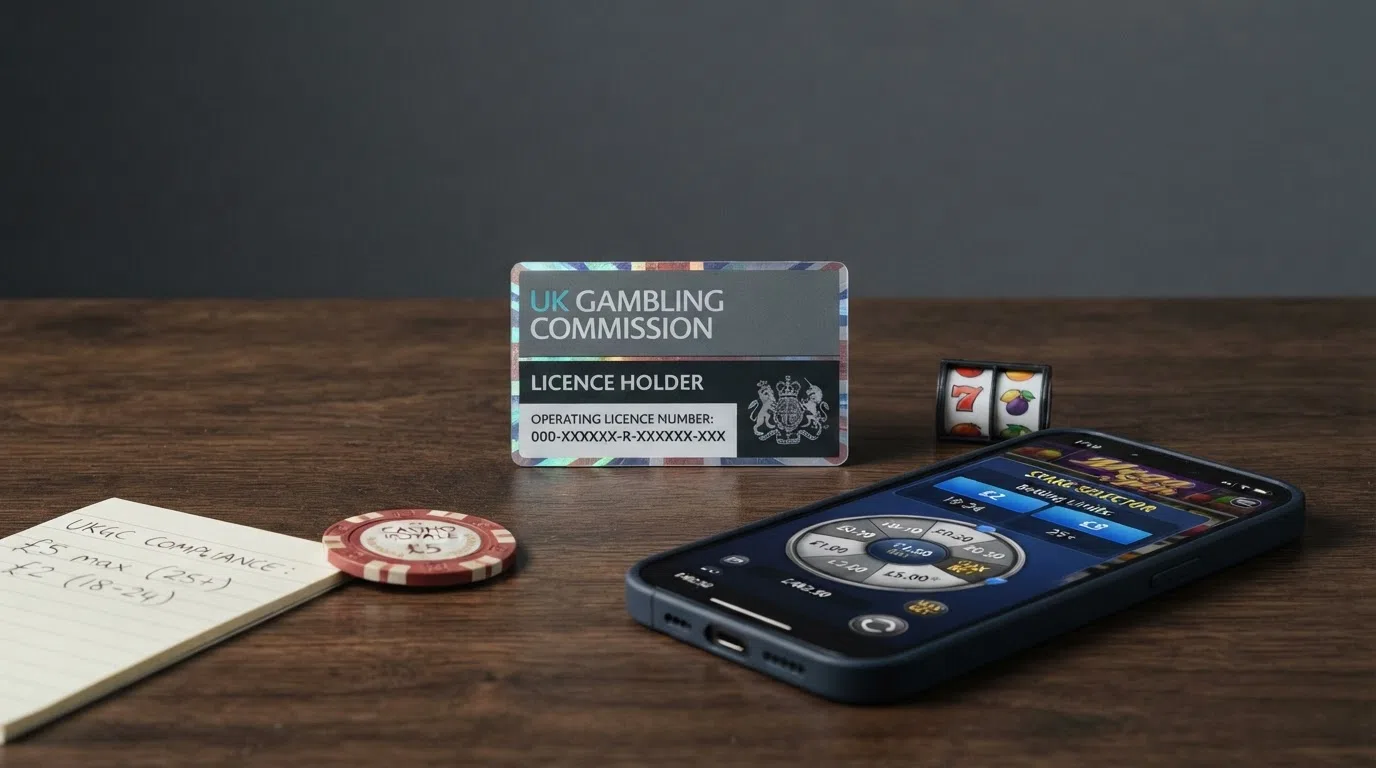
The headline rule for 2026 is the two-tier stake limit. Since 9 April 2025, every online slot spin at a UKGC-licensed casino is capped at £5 for adults aged 25 and over. Since 21 May 2025, the cap is £2 for adults aged 18 to 24. The Commission confirmed the dates directly: “The £5 limit for all adults went live 9 April 2025 and the £2 limit for adults aged 18 to 24 went live 21 May 2025.” Both limits are per game cycle, not per session, and both apply to every online slot regardless of theme or reel count.
The auto-play ban, in force since 2021, means no automated spin sequences. A player cannot set a slot to spin 100 times unattended. The minimum spin speed of 2.5 seconds per game cycle, also from 2021, means no turbo mode and no rapid-spin button. The Commission’s design rules extend further — losses disguised as wins are banned, meaning a slot cannot present a spin that returns less than the stake as a “win” with celebratory graphics — but the stake limit and the spin speed are the rules a player feels every session.
The UKGC Licence — What It Guarantees Every Player
A UKGC licence is a bundle of enforceable player rights. The operator must verify the player’s age and identity before accepting any deposit or allowing any play. Player funds must be held in segregated accounts, separate from the operator’s working capital, so a player can recover their balance if the operator becomes insolvent. The operator must offer deposit limits, reality checks, time-outs, and GAMSTOP self-exclusion as standard tools. Complaints that the operator cannot resolve must be referred to an alternative dispute resolution (ADR) provider, and the Commission’s enforcement powers include financial penalties and licence revocation.
The longevity of the licence is itself a quality signal. 888 Casino’s licence 39028 has been active since 1 November 2014 — over a decade of continuous operation under Commission oversight. The other operators on this page hold licences at various stages of tenure, but every one of them has cleared the Commission’s fitness and financial-viability checks to be on the register. A player who checks the UKGC public register before depositing is doing the one piece of due diligence the Commission itself recommends.
The 2026 Stake Limits — £5 and £2, and Who They Apply To
The £5 cap is the headline figure for the over-25 bracket. Effective 9 April 2025, it is the maximum a player aged 25 or older can stake on a single spin of any online slot at a UKGC-licensed casino. The £2 cap for the 18-to-24 bracket, effective 21 May 2025, is the same rule applied at a lower threshold for the age group the Commission considers most financially vulnerable. Both caps are per game cycle, and a game cycle is one full spin from stake placed to result displayed.
The practical impact on classic slots is most visible on titles like Mega Joker, where the Supermeter mode historically supported higher coin values. A player who would once have staked £10 or £20 per Supermeter spin is now bound by £5 (or £2 for the 18-to-24 bracket). The rule does not change the maths of the slot — the RTP and the volatility are unchanged — but it does change the bankroll needed to play a session at the same effective speed. A player who wants the same number of Supermeter spins per £100 of bankroll needs twice as much money at the £5 cap as at the historical £10 cap.
The Commission’s stated rationale is affordability and harm prevention. The limits are designed to slow the rate at which a player can spend, not to change the odds of the games. The result is a market in which the games themselves are unchanged but the maximum cost of a session is structurally lower than it was before April 2025.
Auto-Play, Spin Speeds, and the Design Rules You Do Not See
Auto-play, banned in 2021, was a feature that let a player set a slot to spin a fixed number of times unattended, often with stop conditions on a win or a loss limit. The Commission banned it because it removed the player from the decision-making moment: a player who set 100 auto-spins was not making 100 decisions, they were making one. The Commission’s position is direct: “Auto-play for slots is not permitted.”
The 2.5-second minimum spin speed is the same principle applied to the individual spin. A slot cannot be played on turbo mode; the reels must take at least 2.5 seconds to complete one cycle from stake to result. A player cannot speed through a session by holding down a button. The rule is a pacing mandate, and it is one of the few design rules a player feels every session, because it determines the rhythm of play.
The ban on losses disguised as wins is the third design rule a player does not see but benefits from. A spin that returns £0.40 on a £1 stake is a loss, not a win, and a slot is not permitted to present it with celebratory graphics and a “winner” sound. The rule was introduced because the design pattern was misleading players into treating small returns as successes; the Commission removed the misleading frame and required the screen to reflect the actual outcome. The result is a slot lobby in which a losing spin looks like a losing spin, which is the only honest presentation.
Staying in Control — The Safety Net Every Classic Slots Player Has
Responsible gambling in the UK is not optional. Every UKGC-licensed operator must provide a standard set of player-protection tools, and the support infrastructure outside the casino is the strongest in any regulated market. A player who wants help can find it; a player who does not want to ask for it can still set the limits that prevent the need to ask.
- Every UKGC-licensed casino must offer deposit limits at the account level, with daily, weekly, and monthly options enforced across the operator.
- Every UKGC-licensed casino must offer reality checks — pop-up reminders at configurable intervals showing time played and net spend.
- Every UKGC-licensed casino must offer time-out (short-term self-exclusion, typically 24 hours to six weeks) and full self-exclusion via GAMSTOP (minimum six months).
- GamCare runs the National Gambling Helpline on 0808 8020 133, free and confidential, 24 hours a day.
- BeGambleAware provides public-health information and signposting at the national level.
- The NHS runs specialist gambling clinics across Great Britain, offering clinical-grade treatment for problem gambling.
The Tools Every UK-Licensed Casino Must Give You — Deposit Limits, Reality Checks, and Time-Outs
Deposit limits are set at the account level and apply across every game the operator offers. A player who sets a £100 weekly deposit limit cannot deposit more than £100 in any rolling seven-day window, and the limit is enforced on the operator’s side — it cannot be bypassed by switching games or payment methods. Lowering a limit takes effect immediately. Raising a limit typically has a 24-hour cooling-off period to prevent a player from impulsively removing a limit they set when calm.
Reality checks are pop-up reminders that appear at intervals the player configures — every 15, 30, or 60 minutes is a common range. The pop-up shows how long the player has been in session and the net position (wins minus stakes) over that period. The player can acknowledge the reminder and continue, or end the session. The tool is a deliberate interruption, designed to break the flow state a long session can produce.
Time-out is a short-term self-exclusion the player can set without going through GAMSTOP. A 24-hour time-out locks the account for a day; a six-week time-out locks it for six weeks. After the period ends, the account reactivates automatically. GAMSTOP is the longer-term option: a minimum six-month self-exclusion that covers every UKGC-licensed operator, not just the one where the player registered.
Where to Get Help — GamCare, BeGambleAware, and the NHS
GamCare is the main point of contact for anyone affected by problem gambling in Great Britain. The National Gambling Helpline on 0808 8020 133 is free, confidential, and available 24 hours a day. GamCare also runs online chat and email support, and the website carries self-assessment tools that help a player gauge whether their gambling has become problematic.
BeGambleAware is the public-health body funded by the gambling industry through voluntary contributions. Its role is information and signposting: the website explains how gambling works, how to set limits, and how to access treatment. BeGambleAware is not a treatment provider itself, but it routes players to the services that are.
The NHS runs specialist gambling clinics in several regions of England, with referrals from a GP or directly through the clinic. The clinics offer cognitive behavioural therapy and other evidence-based treatments for gambling disorder, free at the point of use. A player who feels their gambling is no longer under control can refer themselves directly; a family member or concerned friend can also refer on the player’s behalf.
How We Selected and Ranked These Classic Slots Sites
The ten operators on this page are the ones that satisfy four conditions. First, every operator holds a UKGC remote casino licence, and the licence is currently active on the Commission’s public register. Second, the operator’s slot lobby includes at least one genuine three-reel classic title — not a video slot borrowing classic visual cues, but a 3-reel, fixed-payline game with the symbol set the genre is built on. Third, the operator publishes an RTP figure for its featured classic title in the slot’s info panel. Fourth, the operator’s welcome offer is currently advertised in a form a UK player can claim, and the wagering terms are stated explicitly in the offer’s terms and conditions.
The ranking weights four criteria. Classic-slot selection depth — the number of genuine three-reel titles in the lobby — is the heaviest, because the page is about classic slots specifically. Bonus value after wagering, which combines the headline bonus amount with the wagering multiple and the RTP of the bonus-eligible games, is the second. RTP of the featured classic title, where published, is the third. Licence longevity — how long the operator has held a continuous UKGC licence — is the fourth.
What is excluded: operators without a UKGC remote casino licence; operators whose classic-slot selection is limited to one or two adjacent video slots with no genuine three-reel titles; operators whose welcome offers are not currently advertised. The market research gap the plan identified — a strategic breakdown of low-volatility versus medium-volatility classic slots and how the £2/£5 stake limits reshape bankroll strategy — is addressed in the section on what RTP means for a bankroll, and the regulatory framework is covered in the section on UKGC rules.
Classic Slots in 2026: What the Numbers Actually Say
The case for classic slots in 2026 is structural rather than emotional. The format delivers the best RTP available in the UK online market: Mega Joker at up to 99% in Supermeter mode, against a typical video slot at 96% or lower. Fire Joker at 96.15% with medium volatility is the more accessible middle ground — not the highest RTP, but a published, stable figure with a feature that gives the player something to think about. Across the ten operators on this page, the three-reel classic is the genre where the published RTP is highest and the bonus terms, where they exist, are lightest.
The expected-loss maths is the constraint. A 99% RTP slot still keeps a 1% edge, and a player who runs £1,000 of turnover through it gives back £10 on average. A 96% slot keeps a 4% edge and costs £40 on the same turnover. No published RTP turns a slot into a positive-expected-value proposition, and no bonus terms change that. What the maths does say is that a high-RTP classic slot is the cheapest way to clear a bonus, and a no-wagering free spin is the cheapest way to play at all. The 888 Casino welcome bonus cleared on Mega Joker at 99% RTP costs about £10 in expected loss against £100 in bonus value. The same bonus cleared on a 96% slot costs about £40. The maths is the same shape either way — the operator keeps an edge — but the magnitude differs.
The UK regulatory framework is the floor. A UKGC-licensed casino must verify age, segregate player funds, offer deposit limits and reality checks, enrol players in GAMSTOP, and enforce the stake limits and spin speeds the Commission mandates. A player at a UKGC-licensed casino plays under rules an offshore operator is not required to follow. That is the difference between this page and the alternative markets, and it is the reason every operator on it holds a UKGC licence.
The one-sentence verdict: classic slots deliver the best published RTP and the simplest experience in UK online gambling, and the player’s only real lever is choosing a high-RTP title, reading the wagering terms before claiming a bonus, and never chasing a loss. The house always has an edge. The format is the one where the edge is smallest, the regulation is the one where the protection is strongest, and the rest is discipline.
Frequently Asked Questions
What is the RTP of Mega Joker and how does the Supermeter mode work?
Mega Joker’s published RTP reaches up to 99% in Supermeter mode, with low volatility and a maximum win of 2,000 coins. The Supermeter is a higher-stakes bonus round accessible from the base game: a player who wins in the base game can choose to collect or carry the winnings up to the Supermeter, where the stake per spin is higher and the RTP is at its published peak. The trade-off is that a Supermeter spin costs more than a base-game spin, so the bankroll required to use the feature is larger.
Are classic slots available to play for free in the UK?
Yes. Most UKGC-licensed casinos offer demo access to their slot libraries without requiring registration or a deposit. Mega Joker, Fire Joker, and Mystery Joker are reliably available in demo at the operators on this page, and the same 2.5-second minimum spin speed applies in demo as in real-money play. Demo play uses the same engine as real-money play, so the published RTP and volatility figures apply in both modes. What demo play does not teach is the psychology of real-money stakes.
How does the UKGC £2 stake limit affect 18-24 year olds playing classic slots?
The £2 maximum stake per spin for adults aged 18 to 24 has been in force since 21 May 2025. The limit applies to every online slot, including classic three-reel titles, and is enforced per game cycle. For a classic slot like Mega Joker’s Supermeter, which historically supported higher coin values, the £2 cap is a tighter constraint than the £5 cap that applies to adults aged 25 and over. The limit is a per-spin ceiling, not a per-session cap, and a player who wants to play a longer session can still do so at the lower stake.
Are classic fruit machines fair and regulated in Great Britain?
Every online slot offered to GB players — classic or otherwise — must come from a UKGC-licensed operator. The Commission requires age and identity verification before any real-money play, mandates segregated player funds, enforces the stake limits and spin-speed rules, and requires the operator to publish the RTP of every game. A player who checks the UKGC public register before depositing can verify that the operator holds an active remote casino licence. The regulatory framework is the strongest layer of player protection available in any online gambling market.
Can I play classic slots on my mobile phone without downloading an app?
Yes. Modern classic slots run on HTML5, the same technology that runs the rest of the modern web, and a player can load and play every slot on this page in a mobile browser without installing anything. The handful of operators that maintain a dedicated iOS or Android app add push notifications, biometric login, and offline lobby browsing, but the slot engine itself runs identically in the app and in the browser. Browser play is the universal fallback and loses nothing the engine has to offer.
Slots – fastestpayout-casinos-uk
Content created by the «fastestpayout-casinos-uk» team