
Casinos That Accept Debit Card UK: The 2026 Ranking
 Available in GB
Few things in UK gambling have shifted as quietly or as completely as the debit card. On 14 April 2020, the Gambling Commission barred every UK-licensed operator from accepting credit cards for any form of remote gambling — the first outright card-type ban in a regulated European market, written into Licence Conditions and Codes of Practice (LCCP) condition 6.1.2. Six years on, that decision has reshaped the entire deposit landscape. Debit cards now account for 54% of all UK payments, totalling 26.1 billion transactions in 2024, according to UK Finance — by some distance the most-used payment method in the country.
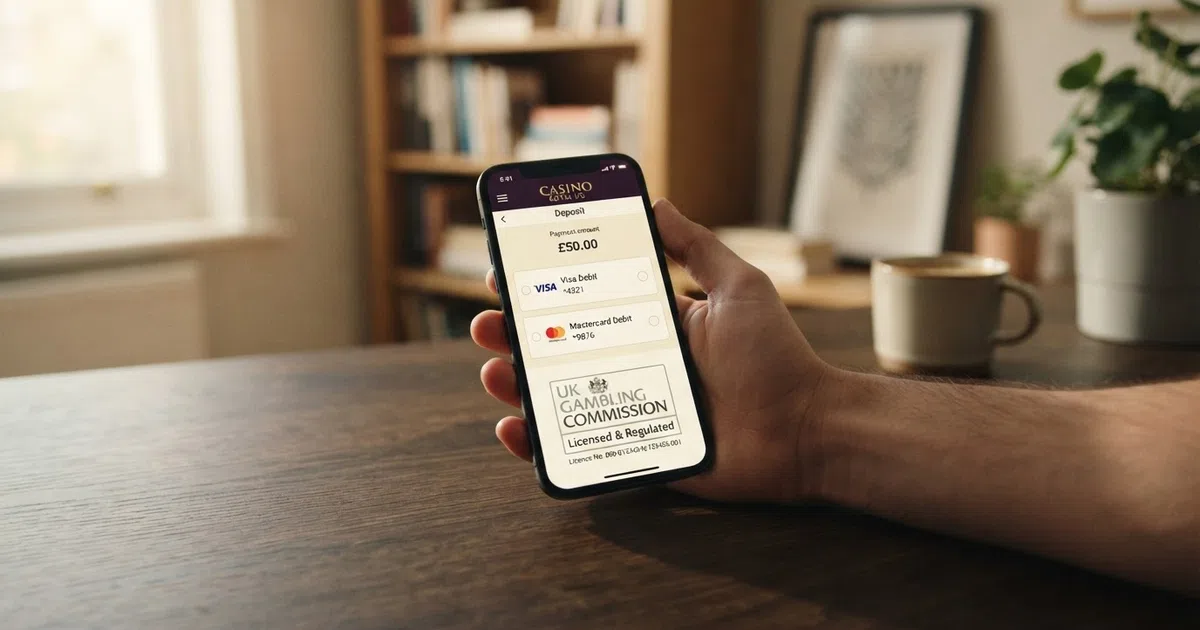
The numbers behind the licensed market tell the same story from the other side. UK online gross gambling yield reached £1.55 billion in the fourth quarter of 2025/26, up 7% year-on-year, with online slots alone rising 12% and 26.8 billion bets and spins logged in the quarter. Almost every one of those deposits landed via a Visa or Mastercard debit card. Welcome bonuses are tuned to it, fast-withdrawal programmes are built around it, and the entire regulatory architecture of deposit limits and financial vulnerability checks is calibrated to its typical £10–£50 loading amounts.
That is the market this page sits inside. What follows is a ranking of ten UK Gambling Commission (UKGC)-licensed operators where a debit card is the natural primary method, an account of the rules that shape what you can and cannot do with one, and a clear-eyed look at what each welcome offer actually costs once the maths catches up with the marketing.
Data current as of September 8, 2026. Licence status verified against the UK Gambling Commission’s public register, last updated 29 July 2026.
What a Debit Card Casino Is
A UK debit card casino is an online gambling site holding an active UKGC operating licence that accepts Visa Debit or Mastercard Debit for both deposits and withdrawals. That sounds plain enough, but two distinctions are worth pinning down from the start.
The first is between debit and credit. Since 14 April 2020, no operator licensed by the UKGC can accept a credit card for any remote gambling transaction — slots, sports, bingo, lottery, the lot. LCCP condition 6.1.2 also catches e-wallet deposits funded by a credit card, so topping up Neteller with a credit card and then paying a casino from that e-wallet is blocked too. What remains is the debit card: money taken directly from your current account, on the day, with no borrowing and no interest.
The second is the licence itself. Every operator listed in the ranking below holds a current UKGC operating licence, which means it submits to the Commission’s licence conditions and social responsibility codes, contributes to the statutory levy, and answers to enforcement that runs from financial penalties through to licence revocation. The fact that the casino “takes debit cards” is the second check; the first is that the casino is allowed to take your money at all.
Since 7 May 2019, every UKGC remote operator must verify a customer’s name, address and date of birth before they can deposit or place a bet. The old 72-hour grace period, when punters could play first and send documents later, is closed. Identity verification is now a precondition, not a postscript.
Why Debit Cards Became the Default Casino Payment Method in the UK
The credit card ban did not remove a payment option from British players. It removed a funding model — the habit of loading a casino from a credit line, deferring payment, and treating the activity as a form of short-term borrowing. Debit cards filled the gap almost immediately because they were already in everyone’s wallet.

UK Finance’s 2025 summary puts debit cards at 54% of all UK payments in 2024, with 26.1 billion transactions — a number that runs ahead of direct debits, faster payments and cash combined. Gambling deposits ride that same rails. Operators responded to the ban by simplifying their cashier pages around Visa and Mastercard debit, then layering on alternative options such as Apple Pay, Google Pay, Trustly’s Open Banking rails, and a handful of e-wallets. E-wallets are still widely accepted as a payment method, but several major brands have quietly moved them off the welcome-bonus qualifying list.
That last point matters more than the deposit screen suggests. At BetMGM, LeoVegas, Betway, PartyCasino and Grosvenor Casinos, a deposit made via PayPal (and in some cases Skrill, Neteller or Paysafecard) does not qualify the player for the headline welcome offer. A debit card deposit, by contrast, qualifies automatically. For a player who was going to make one qualifying deposit and use it for everything, that exclusion effectively makes the debit card the cheapest route in.
The ban also drew a line around the secondary market. The Gambling Commission’s enforcement around credit-card-funded e-wallets has been a steady drumbeat since 2020, and operators that once waved through the practice now require a card-type check before crediting a bonus. A debit card makes that check trivial: the payment is settled from a current account, the money is real, and there is no borrowed element to unwind.
Debit Card vs Other Casino Payment Methods: What You Trade Off
Three payment categories compete for the slot a debit card occupies at the cashier. E-wallets such as PayPal, Skrill and Neteller, bank-transfer and Open Banking rails (Trustly is the commonest), and the card networks themselves. Each one trades off speed, bonus eligibility and consumer protection differently.
Debit cards win on three things a careful player cares about. First, near-universal acceptance: every UKGC-licensed casino takes Visa and Mastercard debit, and most take Maestro as well. Second, automatic welcome-bonus qualification, which is no longer the case for e-wallets at the operators above. Third, bank-level consumer protection via the chargeback scheme run by Visa and Mastercard — a route the bank can invoke when a transaction is unauthorised or the goods are not delivered.
Where debit cards lose is withdrawal speed. Standard debit card withdrawals at most of the featured operators take one to five working days, and many UK banks still treat gambling payouts as low-priority credits that arrive after the working day cut-off. PayPal and Trustly can be faster — Paddy Power quotes PayPal and Trustly payouts within two hours, BetMGM’s PayPal withdrawal is 0–24 hours — but those routes carry the bonus-exclusion penalty. Visa Direct and Mastercard Send are closing the gap, and several of the ranked operators already run those rails at the top of their withdrawal queues.
Open Banking is the most interesting new entrant. Trustly’s pay-by-bank method lets a player deposit directly from a current account using Faster Payments, then withdraw back to the same account, often within minutes. The catch is bank coverage: not every UK current account is supported, and the technology is not yet as standardised as card payments. A player who wants the fastest possible debit-card-style experience without using a card can often reach it through Trustly, but only at operators that have integrated it.
The practical verdict is that debit cards remain the right default for most UK players: they are accepted everywhere, they qualify for every welcome offer on this page, and they cost nothing at the cashier. The slow withdrawal is the real price, and the rest of this article is about when that price is worth paying and when it is not.
The Best Debit Card Casinos in the UK for 2026
Ten UKGC-licensed operators made the ranking. Each one was checked against the Gambling Commission’s public register for an Active licence, confirmed to accept Visa and Mastercard debit for deposits and withdrawals, and evaluated on three things: the headline value of the welcome offer, the terms attached to it (particularly the wagering requirement, which since 19 December 2025 cannot legally exceed 10× at any GB licensee), and the speed of a debit card withdrawal once winnings are in the cashier queue.
| Casino | UKGC Licence | Welcome Bonus | Wagering Requirement | Debit Card Withdrawal Speed |
|---|---|---|---|---|
| bet365 | 55148 (Hillside) | Bet £10 Get £30 in free bets | N/A | 1–4 hours (Visa Direct) / 1–3 working days |
| Sky Vegas | Listed (Bonne Terre) | 50 no-deposit spins + 200 on £10 spend | 0× | 1–4 hours (instant) / 2–5 working days |
| BetMGM | 39198 (LeoVegas Gaming) | 200 spins on Big Bass Splash | 1× on deposit | 2–5 working days |
| LeoVegas | 39198 (LeoVegas Gaming) | 50 wager-free spins on Big Bass Splash | 0× | 2–5 working days |
| Betway | 39372 (Betway) | 100% up to £50 or 150 spins | 10× | 1–3 working days |
| Grosvenor Casinos | 57924 (Rank Digital) | £40 + 100 spins on Big Bass Splash | 10× | 15 minutes (fast) / 1–3 working days |
| Paddy Power | Listed (PPB) | 50 no-deposit spins + 100 on £10 | 0× / 10× | 1–2 working days |
| Virgin Games | 038905-R-319430-021 (Gamesys) | — | — | 4–24 hours / within 4h (Visa Direct) |
| William Hill | 2752 (WH Organization) | — | — | Within minutes (Visa Direct) / 1–3 days (Mastercard) |
| PartyCasino | 54743 (LC International) | Deposit and bet £10, get £10 | 10× | 2–5 working days |
The table does the sorting. The operators with the friendliest wagering terms are also the ones paying out fastest, and the slowest debit card withdrawals cluster around the largest bonus sizes. That pattern is not coincidental: the 10× cap compresses wagering volume at the high end, so operators with bigger offers either lift the bonus size (BetMGM) or add spin-triggered volume to spread the cost.
bet365
bet365 is the brand most UK gamblers know first, and its casino operation is a smaller cousin of the sportsbook that built the Hillside (UK Gaming) ENC business. The UKGC account is 55148 and Active on the public register. The casino welcome offer is not the headline event: it is the Bet £10 Get £30 in free bets package, valid for seven days from registration, sportsbook-weighted and free of any casino free spins. That tells you where bet365’s confidence sits, and it is in volume rather than casino promos.
What the casino cashier does exceptionally well is the routine. Debit card deposits are instant, with a £5 minimum, on Visa, Mastercard and Maestro. Withdrawals split into two lanes: a Visa Direct fast track that arrives in one to four hours at supported banks, and a standard 1–3 working day path for everyone else. There is no casino free spins welcome here, so this is the ranking’s deposit-and-play option rather than its bonus-hunting one.
For a player who already has a bet365 sports account and wants the casino tab opened, the £5 minimum deposit and Visa Direct withdrawal lane are the practical draw. If you are shopping exclusively for the largest casino bonus, however, there are more competitive options elsewhere.
Sky Vegas
Sky Vegas is the only featured operator offering genuinely deposit-free spins. Bonne Terre Limited, trading as Sky Betting & Gaming, holds an Active UKGC licence and runs a 50 free spins no-deposit offer on registration, followed by 200 further free spins once £10 has been deposited and played. Both batches are wager-free.
The wagering story is what sets Sky Vegas apart. Every spin in both batches carries zero wagering, which means anything won is paid as cash to the withdrawable balance, subject only to the standard debit card withdrawal queue. Spin expiry is seven days from credit, so the no-deposit batch needs to be used inside a week, and the deposit-triggered batch the same. Visa and Mastercard deposits are instant from £10, with some Sky accounts permitted at £5, and withdrawals are eligible for instant processing in 1–4 hours or 2–5 working days standard.
The single trade-off is that no-deposit bonuses change: confirmation that the first 50 spins are deposit-free was given this run, but the no-deposit structure is a known promotion and may not be live at all times. This offer is the primary choice for players who want to test the site before risking their own capital.
BetMGM
BetMGM UK sits inside the LeoVegas Gaming PLC platform, which holds UKGC account 39198. The welcome offer is a volume play: 200 free spins at 10p each on Big Bass Splash, credited after £10 has been played through. The deposit carries a 1× wagering requirement, which is the regulatory floor, and the spin reward has a three-day expiry from credit, with seven days to make the qualifying deposit and wager.
The 200 spins are a generous total in raw spin count, and the 10p-per-spin value lines up with what most UK welcome offers pay. Where it diverges from Sky Vegas is the wagering: a 1× requirement on the deposit is light, but the spin winnings are not wager-free, so any cash from the spins must be worked through before withdrawal. Big Bass Splash is the Pragmatic Play / Reel Kingdom fishing-themed slot that recurs across the ranking, which is itself a small efficiency gain for a player who already knows the game.
Debit card withdrawals are 2–5 business days, which is mid-pack. PayPal is faster at 0–24 hours but does not qualify for the welcome bonus. BetMGM stands out for players who prioritize spin volume and are happy to manage a three-day reward window.
LeoVegas
LeoVegas shares the LeoVegas Gaming PLC licence with BetMGM (UKGC 39198), and the welcome offer is the leaner sibling: 50 wager-free free spins on Big Bass Splash, credited on a £10 debit card or Open Banking deposit. The qualifying payment must be a debit card or Trustly deposit; PayPal deposits do not qualify for the bonus, and that is the cleanest expression of the bonus-eligibility story this page keeps returning to.
The wagering on those 50 spins is 0×, so any winnings land in the cash balance. Spin expiry is three days. Debit card withdrawals are 2–5 business days, which is slower than Sky Vegas or bet365.
The trade-off is straightforward. LeoVegas gives up spin volume relative to BetMGM, but the wagering terms are superior. This is the optimal selection for players who want the cleanest, wager-free bonus structure available on this list.
Betway
Betway runs one of the clearest expressions of the 10× wagering cap. The 100% deposit match up to £50, on a £10+ first deposit, is wagered at 10× — the maximum now permitted at any GB licensee since LCCP Social Responsibility Code 5.1.1 came into force on 19 December 2025. The alternative is 150 free spins (50 per day over three days) on a £20 staked deposit, each spin worth 10p, with a seven-day expiry from registration.
Betway Limited holds UKGC account 39372, Active. Debit card deposits are instant from £10 (with some issuer-level exclusions), and debit card withdrawals are 1–3 working days — faster than BetMGM and LeoVegas, slower than bet365’s Visa Direct lane.
The match offer suits a player who can deposit the full £50 and put it through slots at 10× wagering (£500 of slot play) inside a week. The free spins alternative suits a player who would rather drip-feed 50 spins a day for three days than work a single matched sum. Both are honest expressions of what the new 10× ceiling looks like in a real welcome offer.
Grosvenor Casinos
Grosvenor Casinos is the ranking’s land-based legacy. Rank Digital Gaming (UK) Limited, part of The Rank Group, holds UKGC account 57924, Active. The brand’s high-street casino chain gives it an unusual position in the UK online market: a player can walk into a Grosvenor on the high street and withdraw online winnings over the counter at some locations, or deposit in-store to play online.
The welcome offer is £40 casino bonus plus 100 free spins on Big Bass Splash on a £20 debit card deposit. Wagering is 10× on both the bonus and the qualifying deposit, and 10× on the spin winnings, so the structure is the same 10× ceiling the regulator now requires. PayPal and Paysafe are explicitly excluded from the offer. Minimum deposit for the bonus is £20, which is the highest in the ranking.
The withdrawal story is the reason Grosvenor sits in the top half of the speed ranking. Fast withdrawals via Visa and Mastercard are processed within 15 minutes; standard withdrawals take 1–3 working days. For a player who values cash-in-hand speed over bonus size, Grosvenor is the clear choice. The 15-minute figure is the fastest standard debit card withdrawal in the ranking.
Paddy Power
Paddy Power runs the same two-tier structure as Sky Vegas, minus one batch. PPB Counterparty Services Limited holds an Active UKGC licence. The first 50 free spins are no-deposit and zero-wagering, credited on registration. A further 100 free spins are credited on a £10 deposit, with winnings wagered at 10×. Spin expiry is three days for the wagering window.
Debit card deposits are instant from £10. Debit card withdrawals are 1–2 working days, which is faster than BetMGM and LeoVegas and on par with bet365’s standard lane. PayPal and Trustly are faster still at within two hours, which is the route the operator pushes hard at the cashier.
The Paddy Power offering is the closer of the two no-deposit entries. The first 50 spins are deposit-free; the next 100 are deposit-triggered with 10× wagering on winnings. This is a well-paced entry for players who want a trial phase followed by a commitment, with a withdrawal speed that is one of the more competitive in the market.
Virgin Games
Virgin Games is the ranking’s mismatch. Gamesys Operations Limited, a subsidiary of Bally’s Corporation, holds UKGC account 038905-R-319430-021, Active since 1 November 2014. The brand takes Visa and Mastercard debit from £10 to £10,000 per transaction, processes withdrawals in 4–24 hours, and routes Visa Direct payouts that can arrive within four hours. The maximum single withdrawal is £25,000, and the standard ceiling is three working days.
The mismatch is that Virgin Games has no e-wallet support for new accounts. A player who tries to register with a PayPal- or Skrill-funded deposit will be told to use a debit card. For a page about debit card casinos, that constraint is in Virgin Games’s favour: the debit card is the practical default rather than one option among many.
The latest welcome offer and wagering terms for this operator are available on their official promotions page. The clear practical pitch is the cashier: the £10 minimum, the £10,000 single-deposit ceiling, the four-hour Visa Direct arrival on supported cards, and the 24-hour processing ceiling on standard withdrawals.
William Hill
William Hill is the ranking’s heritage high-street name. William Hill Organization Limited holds UKGC account 2752, Active — one of the older accounts on the public register. The minimum deposit is £5 on Visa, Mastercard and Maestro, and the minimum withdrawal is also £5, with a maximum of £33,000 per transaction. The withdrawal lanes are the most asymmetric in the ranking: Visa Direct payouts tested as arriving within minutes at supported banks, while Mastercard takes 1–3 business days.
A player depositing with a Visa debit card from a fast-funds-enabled bank (most major UK banks qualify) can realistically see winnings in their current account inside the hour. The same player on a Mastercard issues a one-to-three-business-day wait. The choice of card at the cashier, not the operator, is the deciding factor.
The latest welcome offer and wagering terms for this operator are available on their official promotions page. The pitch is the cashier infrastructure, the £5 minimum that is the lowest in the ranking alongside bet365, and the long-established licence position.
PartyCasino
PartyCasino closes the ranking. LC International Limited, part of Entain plc, holds UKGC account 54743, Active. The welcome offer is the simplest in the table: deposit and bet £10 on qualifying games, receive a £10 casino bonus, wagered at 10× — the regulatory ceiling. Apple Pay, Google Pay and Trustly all qualify alongside debit card, but PayPal, Skrill, Neteller and Paysafecard deposits do not qualify for the welcome offer.
Debit card deposits are instant, and debit card withdrawals are 2–5 business days. PartyCasino is the back half of the speed ranking, but the offer itself is the cleanest example in the table of what the 10× cap means at a large operator: small bonus, ceiling-level wagering, narrow qualifying deposit list.
For a player who wants to understand the new bonus rules in their simplest form, PartyCasino is the case study. The 10× wagering is not an aggressive operator policy; it is now the legal maximum.
Why Debit Card Withdrawals Take Longer Than You Expect — and When They Do Not
A debit card deposit is instant. A debit card withdrawal is not, and the gap between those two facts is the most common surprise a new UK player encounters. The reasons are structural, and most of them are settled by the cashier and the operator’s payment team rather than anything the player does.
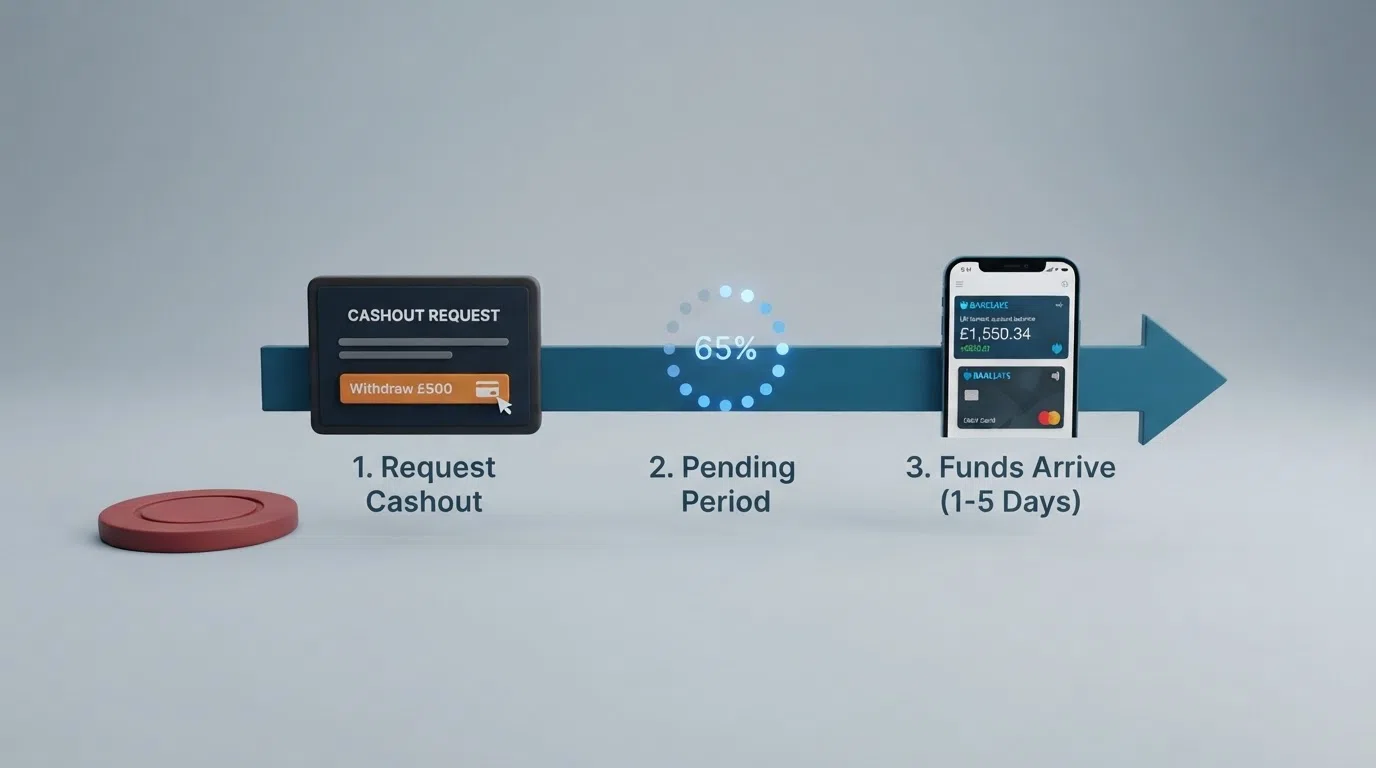
The first reason is the pending period. From the moment a withdrawal is requested, the casino runs internal checks: identity re-verification where the operator has not seen the card used as a deposit method before, anti-fraud screening, and bonus-completion confirmation. Most UKGC licensees have collapsed this period to a few hours for verified customers, but the screen is not optional. Since 31 October 2021, reverse withdrawals have been permanently banned at every UK-licensed casino, so a pending withdrawal cannot be cancelled on impulse. Once the request is in, it is in.
The second reason is the bank’s processing speed. Once the casino releases the funds, the payout travels through the Faster Payments or BACS rails to the card-issuing bank, where it is credited back to the debit card. Standard timelines are one to three working days, with five working days at the slower end. Many UK banks treat gambling payouts as a low-priority credit, so a Friday withdrawal can sit in the bank’s processing queue over the weekend.
The third reason is the absence, until recently, of a card-network-level fast payout. Visa Direct and Mastercard Send have changed that, and several of the ranked operators now route withdrawals through them. The result is the spread seen in the ranking: William Hill’s within-minutes Visa Direct lane, bet365’s 1–4 hour Visa Direct window, Sky Vegas’s 1–4 hour instant withdrawal, Grosvenor’s 15-minute fast withdrawal, Virgin Games’s within-four-hour Visa Direct arrival, and the standard 1–5 working day default that still covers most of the table.
A player who wants the fastest possible debit card experience should look for Visa Direct at a bank that supports fast funds (most major UK banks do), and accept that a Mastercard or a non-fast-funds bank will fall back to the standard queue.
How to Deposit With a Debit Card at a UK Casino
The deposit flow is short and uniform across the ranked operators. Three steps cover it:
- Enter the deposit amount on the cashier screen. Minimums across the ranking range from £5 (bet365, William Hill) to £20 (Grosvenor for the welcome bonus), with £10 the most common floor. Maximums go as high as £10,000 per transaction at Virgin Games. A first-time deposit must be preceded by identity verification — name, address and date of birth confirmed against the UKGC’s requirements, in force since 7 May 2019.
- Enter the card details, or confirm via Apple Pay / Google Pay. Cardholder name, 16-digit card number, expiry and the three-digit security code on the back. The casino never stores the full number in plain text; it is tokenised at the payment processor and re-presented as a card-on-file reference for future deposits. The flow is the same whether the card is Visa Debit, Mastercard Debit or Maestro.
- Complete the 3D Secure challenge and confirm. Strong Customer Authentication, mandated by the Payment Services Regulations 2017 transposing PSD2, requires two of the three factors: something you know (PIN or password), something you have (phone or card), something you are (biometric). A typical UK 3DS flow sends a push notification to the banking app, or asks for a one-time code by SMS. The deposit credits instantly on a successful check.
The full process is under a minute at any of the ranked operators. The places it goes wrong are mostly bank-level: a fraud system blocking the merchant code (gambling transactions carry distinctive MCCs that some banks flag), an issuer declining the 3DS challenge, or a daily card spending limit on the current account. The first is solved by a phone call to the bank; the second is solved by trying a different card; the third is solved by raising the limit or using a different account.
How Debit Card Withdrawals Work — Processing Times, Verification and the Reverse-Withdrawal Ban
A withdrawal request is the mirror image of a deposit, with the asymmetry that the casino is sending money out rather than taking it in. The flow runs: request a withdrawal in the cashier, optionally switch payment method (debit card is the default and the most common choice), pass the operator’s internal checks, then wait for the payout rail.
The internal checks are the operator’s anti-fraud and bonus-completion reviews. For a fully verified customer with no outstanding bonus, the checks typically take a few hours. For a customer whose withdrawal card is different from the deposit card, the operator may require additional identity checks. For a customer with an unplayed bonus, the withdrawal will be held until the wagering is complete or the bonus is forfeit.
Once the operator releases the funds, the payout rail decides the rest. Standard debit card payouts go through Faster Payments or BACS and arrive in one to three working days at most UK banks. Five working days is the slow end of the range, and three is the typical middle. Visa Direct and Mastercard Send collapse the bank-side window: bet365, Sky Vegas, William Hill, Grosvenor and Virgin Games all offer a fast-track option that, at a fast-funds-enabled bank, arrives in minutes to four hours.
The reverse-withdrawal ban, in force since 31 October 2021, is the regulatory reason the pending period is short and getting shorter. A player who changes their mind at the cashier is no longer able to cancel a pending withdrawal and put the money back into play. The ban was designed to break the cycle of chasing losses, and it means the time between request and arrival is mostly a function of the operator’s processing speed and the card network, not the player’s last-minute hesitation.
Fast and Instant Withdrawal Casinos: Who Pays Out Quickest on Debit Card
| Casino | Standard Debit Card Withdrawal | Fast Withdrawal Option | Processing Time |
|---|---|---|---|
| Grosvenor Casinos | 1–3 working days | Fast Withdrawals (Visa/Mastercard) | Within 15 minutes |
| William Hill | 1–3 business days (Mastercard) | Visa Direct | Within minutes |
| bet365 | 1–3 working days | Visa Direct | 1–4 hours |
| Sky Vegas | 2–5 working days | Instant (Visa/Mastercard) | 1–4 hours |
| Virgin Games | Up to 3 working days | Visa Direct | Within 4 hours |
| Paddy Power | 1–2 working days | PayPal / Trustly (not debit card) | Within 2 hours |
| Betway | 1–3 working days | — | — |
| BetMGM | 2–5 business days | PayPal (not debit card) | 0–24 hours |
| LeoVegas | 2–5 business days | E-wallets (not debit card) | Faster than debit |
| PartyCasino | 2–5 business days | — | — |
The table reads quickly. Grosvenor, William Hill, bet365, Sky Vegas and Virgin Games have built a fast-pay lane on top of the standard withdrawal. Paddy Power’s fastest lane is PayPal or Trustly rather than debit card, so it sits in the middle. Betway, BetMGM, LeoVegas and PartyCasino have not built a fast debit card lane, and their standard times reflect that.
A player who wants the fastest possible debit card experience should look at Grosvenor (15 minutes) or William Hill (minutes on Visa Direct at a fast-funds bank), with bet365, Sky Vegas and Virgin Games as close seconds. The “processed” timeline printed at the cashier is the operator’s internal window; the time from processed to arrived is the card network and the bank.
Visa Debit vs Mastercard Debit at UK Casinos — Does It Matter Which You Use?
Both networks are accepted at every featured operator. Both support instant deposits, both can route withdrawals, and both are subject to the same UKGC rules and the same 3D Secure authentication flow. The differences that matter are at the network and bank level rather than at the casino.
Visa Direct is the more widely deployed fast-payout rail. bet365, Sky Vegas, William Hill, Grosvenor and Virgin Games all offer a Visa Direct withdrawal lane. The lane requires a Visa-issuing bank that supports fast funds, which covers most major UK banks — HSBC, Barclays, Lloyds, NatWest, Santander, Monzo, Starling and Revolut among them. For a player with a Visa debit card from one of those banks, the fast lane is usually available.
Mastercard Send is the equivalent Mastercard rail, but it is less widely supported among UK issuers, and the ranked operators do not currently quote it as a withdrawal method. The result is that a player depositing with Mastercard often falls back to the standard 1–5 working day withdrawal queue, while a player depositing with Visa at a fast-funds bank can reach the sub-four-hour lane. This is the practical reason the cashier often lists “Visa/Mastercard” but the withdrawal times diverge.
A second bank-level difference is the gambling transaction block. Some UK banks block gambling merchant codes on one network but not the other, and a few block debit card gambling transactions entirely. Monzo and Revolut both allow gambling on Visa, with Monzo allowing it on Mastercard too. The player’s bank, not the casino, sets the policy, and the test is a small deposit followed by a phone call to the bank if it fails.
Deposit and Withdrawal Limits at Debit Card Casinos
Per-operator minimums and maximums are modest in range. The lowest deposit minimum in the ranking is £5, at bet365 and William Hill. The most common floor is £10, set by Sky Vegas, BetMGM, LeoVegas, Betway, Paddy Power, Virgin Games and PartyCasino. Grosvenor’s £20 is the highest, and that floor applies specifically to the welcome bonus — lower minimums are available for general top-ups.
On the withdrawal side, bet365 and William Hill both set a £5 minimum. Virgin Games permits a single withdrawal up to £25,000 and a single deposit up to £10,000, the highest ceiling in the ranking. William Hill’s £33,000 single-withdrawal maximum is the highest figure anywhere in the table.
The regulatory layer sits on top. From 31 October 2025, every UK-licensed operator must prompt the customer to set a financial limit before the first deposit, so the player is asked, not assumed. From 30 September 2026, only a gross deposit limit — defined as money paid into the account over a set period — may be called a “deposit limit”. A player who wants a net deposit limit, a loss limit, or a time-based session cap can still set those, but they cannot be marketed as a “deposit limit” any more.
The financial vulnerability check sits alongside these rules. Once a player has deposited £150 net in a rolling 30-day period, the operator must run a light-touch check using publicly available data only — county court judgments, individual voluntary arrangements, bankruptcy orders. It is not a credit check and it is not an affordability assessment, but it is a regulatory trigger designed to catch the early signs of financial pressure at a low threshold.
How the UK Bonus Cap Changes What a Casino Welcome Offer Costs You in 2026
The single biggest change in the UK bonus market in five years came into force on 19 December 2025, when the Gambling Commission’s LCCP Social Responsibility Code 5.1.1 imposed a hard ceiling of 10× on wagering requirements. As the Commission put it, “Wagering requirements are capped at 10× — a hard ceiling. Before this, requirements as high as 60× were being applied.”
The change compresses the value gap between high and low wagering offers, but it does not erase the difference between a wager-free and a 10× offer. A 50-spin wager-free package at 10p per spin is worth up to £5 in expected spin value, paid as cash, with no playthrough. A 200-spin package at 10p with 1× wagering on the deposit is worth up to £20 in expected spin value, but the £10 deposit must be worked through. The maths is the same one every bonus market has run on for two decades, with a smaller multiplier at the centre of it.
The same code banned mixed-product promotional offers, so a casino cannot condition a casino bonus on the customer also placing a sports bet, playing bingo, or buying a lottery ticket. The bonus is for one product only, and the qualification is for one product only. That simplifies the comparison table above: every welcome offer in the ranking applies to casino play and nothing else.
The third effect of the cap is on the operators themselves. Before December 2025, a 60× requirement was the engine of an offer like “100% up to £200” — the player would have to wager £12,000 before any withdrawal. With the cap at 10×, that same headline offer is unworkable, so operators have either shrunk the bonus (Betway’s 100% up to £50, PartyCasino’s £10-for-£10) or shifted the value into spin count (BetMGM’s 200 spins, Sky Vegas’s 250). The result is a market with smaller, cleaner bonuses and a smaller gap between the best and worst welcome offer on the page.
Welcome Bonuses You Can Claim With a Debit Card Deposit
Almost every welcome offer in the ranking qualifies automatically on a debit card deposit. The exceptions are operator-specific and worth listing.
BetMGM, LeoVegas, Betway, PartyCasino and Grosvenor Casinos all exclude e-wallet deposits from welcome offer qualification. In some cases the exclusion is PayPal only, in others it extends to Skrill, Neteller and Paysafecard. A debit card deposit, in every case, qualifies automatically. The Apple Pay, Google Pay and Trustly options at PartyCasino also qualify.
The structure of the offers falls into three groups. The match bonuses (Betway’s 100% up to £50, Grosvenor’s £40 bonus, PartyCasino’s £10-for-£10) attach a 10× wagering requirement to the bonus amount. The free spin packages (BetMGM’s 200 spins, LeoVegas’s 50 spins, Sky Vegas’s 50 + 200 spins, Paddy Power’s 50 + 100 spins) attach 0× or 1× to the spin winnings, with the deposit carrying a separate small wagering requirement. The free bet offers (bet365’s Bet £10 Get £30) sit outside the casino-wagering framework because they are sportsbook-weighted.
The headline numbers need a second look. bet365’s £30 in free bets is the smallest headline value in the ranking, but it is a sportsbook offer credited as cash winnings, so the conversion rate to withdrawable cash is close to 100%. Grosvenor’s £40 + 100 spins at 10× wagering is the most demanding bonus to clear in the table, because the wagering requirement applies to both the bonus and the qualifying deposit. Sky Vegas’s 250 free spins with 0× wagering is the highest effective value per spin, because every win lands as cash.
For a player deciding purely on bonus value, the ranking order shifts: Sky Vegas > bet365 (in wagered cash terms) > BetMGM > LeoVegas > Paddy Power > Betway > Grosvenor > PartyCasino. The withdrawal-speed ranking above does not track the bonus-value ranking, which is the page’s main reason for covering both.
No-Deposit and Free-Spins Offers for Debit Card Players
Two operators in the ranking offer genuinely deposit-free spins: Sky Vegas and Paddy Power. Both credit 50 free spins on registration, with no deposit and no card detail required at the spin-credit stage, and both carry 0× wagering on those first 50 spins.
The distinction between a no-deposit spin and a deposit-triggered free spin matters because the marketing often blurs it. A “100 free spins” headline that requires a £10 deposit to trigger is not a no-deposit offer; it is a deposit offer with a high spin count. The two operators above are explicit: the first 50 spins are credited without a deposit, and a further batch of 200 (Sky Vegas) or 100 (Paddy Power) is credited once the £10 has been spent.
Spin value is a separate axis. The 10p-per-spin standard is what BetMGM, Betway and the no-deposit batches at Sky Vegas and Paddy Power all pay. A 50-spin package at 10p is worth up to £5 in nominal spin value, paid as cash on the wager-free structures and as bonus funds on the wagered structures. The slot title is also worth noting: Big Bass Splash, the Pragmatic Play / Reel Kingdom fishing-themed slot, is the recurring title across BetMGM, LeoVegas and Grosvenor. A player who already knows the game can plan around the volatility and bonus frequency; a player who does not can read the paytable before staking.
The expiry windows are short. BetMGM’s 200 spins have a 3-day reward expiry and a 7-day window to make the qualifying deposit. LeoVegas’s 50 spins expire after 3 days. Sky Vegas’s spins expire after 7 days. Paddy Power’s deposit-triggered batch has a 3-day wagering window. None of these is a long runway, and the most common reason a free-spin offer goes unused is a player who credits the spins and comes back four days later.
Wagering Requirements, the 10× Cap and Bonus Terms That Matter
The 10× cap is the centre of the new bonus market. A £50 bonus at 10× wagering is £500 of qualifying play. A £40 bonus at 10× is £400. A £10 bonus at 10× is £100. The numbers are small enough that a player who enjoys slots can clear them in an evening at standard spin values; the question is whether the bonus is worth the time.
A worked example on the Betway 100% match up to £50 makes the maths concrete. Deposit £50, receive a £50 bonus, wager the bonus at 10× = £500 of qualifying slot play. At a 10p stake per spin, that is 5,000 spins. At a 2.5-second spin interval (the regulatory floor), that is 12,500 seconds of slot play, or just under three and a half hours of continuous spinning. The expected return on a 96% RTP slot across 5,000 spins at 10p is £480 — a £20 expected loss over the wagering period, on top of the £50 deposit that returns as cash. Net cost: roughly £20 of expected slot loss, in exchange for £50 of cleared bonus that returns as withdrawable cash plus the £50 deposit. A 96% RTP slot is the working assumption; a 94% slot pushes the expected loss higher.
The example is a statistical estimate, not a guaranteed outcome. Over 5,000 spins, variance is wide: a session can clear the wagering well above the expected return or well below it. The point is that the 10× cap keeps the expected loss within a range a casual player can absorb, where the pre-2025 60× offers could push the expected loss to several hundred pounds before a single penny of bonus was withdrawable.
The other terms that matter are the game contribution rates, the validity windows and the slot title. Slots contribute 100% of stake to wagering at most UK operators; table games contribute 10%–20%; live dealer games are often excluded entirely. The 3-day to 7-day validity windows across the ranking are tight enough that a player who does not return to the casino within a week will lose the bonus. The slot title matters because the RTP and volatility determine the expected loss over the wagering period, and the casino picks the slot.
Which Casino Games Accept a Debit Card Deposit — and What the Stake Caps Mean
The debit card is a payment method, not a game rule. The games themselves are governed by a separate layer of regulation, and the headline rule for the ranking’s biggest product is the age-banded stake cap on online slots.
Since 9 April 2025, the maximum stake per game cycle on any UK-licensed online slot is £5 for players aged 25 and over. Since 21 May 2025, the maximum for players aged 18 to 24 is £2. Both limits were imposed by the Gambling Act 2005 (Operating Licence Conditions) (Amendment) Regulations 2025, known as SI 2025/215. The cycle means “a single game cycle” — one spin, one round, one feature buy, depending on the slot’s design. The cap is per cycle, not per session, so a player cannot split a £10 bet across two £5 spins and call it a £10 stake.
No statutory stake cap applies to online products other than slots. Live dealer blackjack, live roulette, live baccarat, online table games, sports betting and bingo can all be staked above £5 per round, subject to operator-set maximums and the customer’s own deposit and time controls.
Slots dominate the regulated market. The Q4 2025/26 figures from the Gambling Commission show slots up 12% year-on-year and 26.8 billion bets and spins logged across the quarter — a number that exceeds the population of the planet several times over. Almost every welcome bonus in the ranking is slot-weighted, almost every free spin lands on a slot, and the recurring title across BetMGM, LeoVegas and Grosvenor is Big Bass Splash.
Online Slots With a Debit Card Deposit — What the Stake Caps Mean
The £5/£2 age-banded stake cap is the most concrete regulatory change in the slots market in five years. It applies to every UK-licensed slot, from the high-RTP Book of Dead-style games at one end of the volatility spectrum to the feature-heavy Megaways titles at the other. The cap is enforced at the game level: the slot itself will not accept a stake above the player’s age-band limit, so the operator cannot accidentally exceed the cap.
A 25-year-old player staking £5 per spin on a 96% RTP slot at 2.5-second spin speed is committing £120 per hour of slot play. A 21-year-old staking the £2 cap is committing £48 per hour. The expected loss over an hour, on a 96% slot, is £4.80 for the 25-year-old and £1.92 for the 21-year-old. These figures are the regulatory baseline the UKGC has chosen: an hour of slots at the stake cap costs less than a cinema ticket in either case, but the cap prevents the kind of high-velocity play that was possible before April 2025.
The slot title matters for variance. A 96% RTP slot with medium volatility returns close to its long-run average over a few thousand spins. A 96% RTP slot with high volatility swings much wider over the same sample — a session can pay out 10× the stake or eat the bankroll inside an hour. The wagering maths above assumes medium-volatility play; high-volatility slots push the variance, not the expected return.
Live Casino and Table Games on a Debit Card Deposit
Live casino is the second product line after slots, and the one the stake cap does not touch. Every ranked operator runs live dealer blackjack, live roulette and live baccarat, and the stake minimums are typically £1 with maximums that scale into the thousands at the high-roller tables. The same 3D Secure flow and the same debit card minimums apply, so a £5 or £10 deposit is enough to sit at a low-stakes live table.
Table games without a live dealer — RNG roulette, RNG blackjack, baccarat — are also available at every ranked operator. The wagering contribution of table games is typically 10%–20% of stake, so a £100 bet on RNG roulette contributes £10–£20 to a bonus wagering requirement. A player who is clearing a bonus and wants to play table games is therefore working through 5–10× the wagering volume they would on slots, which is why bonuses are usually slot-weighted.
Bingo is a separate product at operators like Betway, Grosvenor and Paddy Power, with its own dedicated rooms and its own bonus structure. The credit card ban applies to bingo too, and the debit card is the default deposit method. The mixed-product bonus ban means a casino welcome offer cannot be conditioned on bingo play, and vice versa.
How to Pick a Debit Card Casino You Can Trust in 2026
The UKGC licence is the floor. Every other signal sits on top of it.
A UKGC licence means the operator is subject to the licensing objectives in section 1 of the Gambling Act 2005: preventing gambling from being a source of crime or disorder, ensuring gambling is conducted in a fair and open way, and protecting children and other vulnerable persons from being harmed or exploited. It also means the operator contributes to the statutory levy, runs the mandatory responsible-gambling tools, and answers to the Commission’s enforcement powers, which run from fines through to licence revocation.
A licence number on the operator’s website is not a substitute for the public register. The register is the single source of truth: it lists the legal entity, the trading name, the licence type, the account number and the current status. Active is the status a player wants. Suspended, Revoked or Surrendered are statuses that should end the conversation.
The trust signals that sit on top of the licence are mostly operational. A clear responsible-gambling page with deposit limits, reality checks, time-outs and GamStop registration is a baseline. A published payout percentage and an external game-testing certificate (eCOGRA, Gaming Laboratories International, BMM Testlabs) is the next layer. A long track record with no public enforcement action is a soft signal that the Commission has not found cause to act. A short track record is not a negative signal in itself, but it is a thinner record on which to rely.
The absence of a UKGC licence is the disqualifying signal. An operator holding only a Malta Gaming Authority, Gibraltar or Curaçao licence has no obligation to apply the 10× wagering cap, the £5/£2 stake cap, the deposit-limit rules, the financial vulnerability check, the GamStop integration, or any of the consumer protections that follow from a GB licence. The debit card deposit is a route into the operator’s cashier, but it is not a route into UK consumer protection law.
Safety and Licensing Checks Every Player Should Run
Four checks take a few minutes and cover most of what a UK player needs to know before depositing.
- Confirm the licence on the UKGC public register. The register at the Gambling Commission’s website lists every operating licence, the legal entity, the trading name, the licence type (remote casino, remote betting, etc.), and the current status. Active is the status to look for. The account numbers in the ranking above (55148 for bet365, 39198 for BetMGM and LeoVegas, 39372 for Betway, 57924 for Grosvenor, 54743 for PartyCasino, 2752 for William Hill) are the values to look up. The register is the single source of truth, and any operator whose status is not Active should not be depositing into.
- Confirm the three licensing objectives apply. The Gambling Act 2005’s section 1 objectives are the test the Commission applies. A licensed operator is one that has met the fit-and-proper test, paid the application fee, and committed to the operating conditions. An offshore operator with no GB licence has not.
- Reject the offshore substitute. An MGA, Gibraltar or Curaçao licence is not a substitute for a UKGC licence for a GB customer. Operating without a GB licence while serving GB customers is a criminal offence under section 33 of the Gambling Act 2005, with penalties up to 51 weeks’ imprisonment, an unlimited fine, or both. The Commission’s enforcement against offshore operators runs through cease-and-desist notices, search-engine delisting, payment-provider referrals and domain suspension — not ISP blocking, which it currently lacks the statutory power to order.
- Verify the GamStop integration. Every GB-licensed online operator must be integrated with GamStop. If the registration or deposit flow does not check GamStop on signup, the operator is either unlicensed or non-compliant, and either is a reason to leave.
Security of Debit Card Transactions at UK Casinos
Debit card payments at UK-licensed casinos are protected by three layers. The first is PCI DSS, the Payment Card Industry Data Security Standard, which governs how card data is stored, processed and transmitted. A UKGC-licensed operator’s payment processor is PCI DSS compliant at the relevant level (Level 1 for the largest processors), and the casino itself never stores the full card number in plain text — it is tokenised at the processor and re-presented as a card-on-file reference for future deposits.
The second layer is 3D Secure, the authentication flow mandated by the Payment Services Regulations 2017 transposing the EU’s PSD2 directive. Strong Customer Authentication requires two of three factors: something you know (PIN or password), something you have (phone or card), something you are (biometric). The 3DS check is what asks the player’s banking app to confirm a transaction, and the deposit cannot complete without it.
The third layer is the bank. UK banks are liable for unauthorised debit card transactions under the Payment Services Regulations and the broader FCA handbooks, and a player who spots an unauthorised transaction can recover the money through the chargeback scheme. A chargeback is a request from the card-issuing bank to the acquiring bank to reverse a transaction, and it is available for unauthorised transactions, goods not delivered, and a small list of consumer-protection scenarios. The Consumer Credit Act 1974’s section 75 protection, which covers credit card purchases between £100 and £30,000, does not apply to debit cards — the protection is the chargeback scheme instead. The distinction matters because a player who thinks section 75 covers a debit card deposit is wrong, and the bank will say so.
New Debit Card Casinos Worth Considering in 2026
The UKGC public register lists several hundred remote casino operating licences, and new ones arrive every quarter. A new UKGC licensee is subject to the same LCCP conditions and social responsibility codes as an established operator: the credit card ban, the 10× wagering cap, the £5/£2 stake cap, the deposit-limit rules, the GamStop integration, the financial vulnerability check, the responsible-gambling toolkit. The licence is the licence.
The trade-off is the track record. A new operator’s welcome offer, platform, customer support, withdrawal speed and bonus-honouring record are untested at scale, and the player is in a sense running the QA. Some of the biggest names in the UK market now — bet365, William Hill, Betway, Sky Vegas, PartyCasino — are old by the standards of the register, and that longevity is itself a soft signal of operational competence. A brand-new operator carries none of that signal, even if the licence is the same.
The practical question is not whether a new UKGC licensee is legal and regulated, but whether the new operator’s offering is competitive with the established set on the things the ranking above measures: bonus value, wagering terms, withdrawal speed, debit card experience. The answer for most new entrants in any given quarter is no, because the established operators have spent years optimising the cashier. A new entrant can win on a generous welcome offer, but the offer has to clear the 10× wagering cap and the rest of the responsible-gambling framework, and the smaller bonus sizes now permitted make that harder.
What to Check Before Depositing at a New Debit Card Casino
The same licence, the same rules, the same identity-verification requirement, the same deposit-limit prompt. The pre-deposit checklist for a new UKGC licensee is the same as for an established one, with one extra question: how long has the operator been live, and what is its track record.
Verify the licence on the public register. Active is the only acceptable status. The legal entity, the trading name and the licence type should match what is on the operator’s website. A mismatch is a red flag.
Check the domain registration date and the operator history. A domain registered in the last 12 months and a brand with no prior history are not disqualifying, but they are thinner evidence than a 5-year-old domain attached to a known operator. WHOIS and Companies House are the public sources for both.
Read independent player reviews. Trustpilot, Casino Guru, the Reddit gambling communities and the affiliate review sites that cover the UK market all carry player feedback. A new operator with no reviews is a thinner signal than one with a body of mixed-but-honest feedback. The test is not whether the reviews are positive — every operator has complaints — but whether the complaints are addressed and whether the patterns are reasonable.
Test customer support before depositing. A live chat or email response to a basic pre-deposit question (licence number, withdrawal time, bonus terms) is a small but real signal. An unanswered chat is a louder one.
The Rules That Shape Every Debit Card Casino in the UK
The Gambling Commission is the single statutory regulator for commercial gambling in Great Britain, sponsored by the Department for Culture, Media and Sport. Northern Ireland operates under separate, older legislation and is not covered by the Commission. The framework is the Gambling Act 2005, extended to remote operators by the Gambling (Licensing and Advertising) Act 2014, which made a GB licence compulsory for any operator serving GB customers regardless of where the operator is based. The point-of-consumption reform ended the era when a server in Antigua or Malta could take UK customers without UK oversight.
The licensing objectives in section 1 of the Gambling Act 2005 are the test the Commission applies. The first is preventing gambling from being a source of crime or disorder, which covers anti-money-laundering controls and the integrity of games. The second is ensuring gambling is conducted in a fair and open way, which covers payout percentages, terms transparency and the prohibition of misleading marketing. The third is protecting children and other vulnerable persons from being harmed or exploited, which is the umbrella for the responsible-gambling framework, age verification, and the affordability architecture that is still being built out.
The LCCP is the operator-level rulebook. It is updated frequently, and the changes that matter for a debit card player in 2026 are the credit card ban (condition 6.1.2, in force 14 April 2020), the bonus rules (SR Code 5.1.1, in force 19 December 2025), the deposit-limit rules (in force 31 October 2025 and 30 September 2026), the game-design limits (in force 31 October 2021), and the financial vulnerability check (in force 28 February 2025). The earlier sections of this page cover each one. The point of naming them together is that they are not separate rules — they are one architecture, and a UK-licensed casino is one that has implemented all of them.
The Credit Card Ban: Why Debit Is Your Only Card Option at UK Casinos
LCCP condition 6.1.2, in force since 14 April 2020, prohibits every UK-licensed operator from accepting credit card payments for any form of remote gambling. The scope is wide: slots, casino, sports, bingo, lottery, pool betting, the full list. The scope also catches e-wallet deposits funded by a credit card, so the indirect route through Neteller or Skrill is closed at the same time.
The reason was the harm pattern. The Gambling Commission’s evidence at the time showed that customers funding gambling with credit cards were more likely to show markers of harm than those funding it with debit cards. Borrowing to gamble, and the resulting debt spiral when losses mounted, was the harm the ban was designed to interrupt. Six years on, the ban is the structural reason debit cards are the default and not one option among many.
The ban is permanent. There is no sunset clause, no review clause, and no industry pressure to reverse it. The credit card networks themselves (Visa and Mastercard) now code gambling transactions in a way that makes the merchant-side check straightforward, and a UKGC licensee that accepts a credit card would be acting in breach of its licence condition. The risk is licence revocation, and no operator in the ranking has anything to gain by testing that.
For a debit card player, the implication is positive in a narrow way. The ban removed the borrowing-based funding model and replaced it with a current-account-based one, which is the same funding model the rest of UK life uses. A player who wants to gamble with money they have, rather than money they do not, has the same payment method at the casino cashier as at the supermarket.
GamStop and Self-Exclusion: What Debit Card Players Need to Know
GamStop is the national multi-operator online self-exclusion scheme, and participation has been a mandatory condition of every UKGC online operating licence since 31 March 2020. A player who registers with GamStop is blocked from opening new accounts, depositing or gambling at every participating GB-licensed operator for the chosen exclusion period. The options are six months, one year, five years, or five years with auto-renewal. None of them can be cancelled early.
The integration is at the registration and deposit layer. A new account at a UK-licensed casino checks the player’s details against the GamStop database on signup, and a player who is on the register is rejected. A player who registers with GamStop while holding an existing account is logged out and the account is closed, with any remaining balance returned. The scheme covers remote gambling only, not land-based casinos, and the land-based self-exclusion scheme is run separately.
The interaction with a debit card is that the card is the deposit method, not the exclusion method. A player who wants to stop gambling uses GamStop, not the debit card. A player who is on GamStop and tries to deposit with a debit card at a participating casino will be declined at the cashier. The card itself is not blocked; the merchant is.
A separate self-exclusion mechanism is the operator’s own, which can be set for a shorter period (six months, one year, five years) and applies at a single operator. GamStop is the multi-operator version, and the operator-level exclusion is the one to use for a temporary break at a single brand.
Casinos Not on GamStop: What They Are and Why They Carry More Risk
A casino not on GamStop is, by definition, a casino without a UKGC remote operating licence. The two things are linked: every GB-licensed online operator must integrate GamStop, and a casino that does not integrate GamStop does not have a GB licence to lose.
The typical licences carried by non-GamStop casinos are Curaçao, the Malta Gaming Authority without a UKGC cross-licence, Gibraltar in narrow cases, and a handful of smaller jurisdictions. None of those licences carries the same consumer-protection obligations as the UKGC: no 10× wagering cap, no £5/£2 slot stake cap, no mandatory financial vulnerability check, no GamStop integration, no deposit-limit prompt, no contribution to the statutory levy that funds treatment and prevention.
A player who deposits at a non-GamStop casino gives up every UK regulatory safeguard. A dispute with the operator is not subject to the Commission’s enforcement. A problem with a withdrawal is not subject to the alternative dispute resolution framework. A pattern of harm is not picked up by the affordability architecture. A self-exclusion decision does not carry across the operator.
The Commission’s enforcement against offshore operators serving GB customers is real. Cease-and-desist notices, search-engine delisting, payment-provider referrals and domain suspension are all in active use. The Commission does not have the statutory power to order ISP blocking of offshore sites, and the gap is one the operators exploit. But the practical effect for a player is that the debit card deposit is a route to an offshore cashier with no UK consumer protection on the other side, and the bank may decline the transaction at the merchant-code level.
Staying in Control: Responsible Gambling Tools for Debit Card Players
The UK responsible-gambling infrastructure sits on top of every UKGC-licensed operator. A debit card deposit triggers a layer of checks and controls that the operator is required to maintain, and the player can opt into further layers at any time.
The mandatory layer starts at signup. Identity verification — name, address, date of birth — is required before the first deposit, with no grace period. The pre-deposit prompt, in force since 31 October 2025, asks the player to set a financial limit before any money is taken. The gross deposit limit, defined from 30 September 2026, is the only control that may be called a “deposit limit”; the operator may also offer a loss limit, a session time limit, a wager limit and a reality check, but the deposit limit is the regulatory floor.
Once the player is in play, the game-design controls kick in. Auto-play is banned. Spin speed is capped at 2.5 seconds per cycle. Losses disguised as wins — slot features that celebrate a net loss as a win — are banned. Reverse withdrawals are banned. Session losses, session wins and time played are displayed. None of these is a player-set control; they are mandatory game-level rules, present in every slot at every UK-licensed casino.
The financial vulnerability check is the next layer. Once a player has deposited £150 net in a rolling 30-day period, the operator runs a light-touch check using publicly available data — county court judgments, individual voluntary arrangements, bankruptcy orders. It is not a credit check and it is not an income check, but it is a regulatory trigger. A player whose check returns a positive signal is offered a more detailed conversation, support information and a chance to set stricter limits.
The full affordability check (“financial risk assessment”) is the next stage the regulator has signalled but not yet implemented. The announced Stage 1 thresholds are £5,000 net deposits in 24 hours for players aged 25 and over, and £2,500 for players under 25. The start date is not confirmed. When it lands, the operator will need to ask for income and savings evidence at the high-deposit end, and a player who cannot provide it will be asked to lower their deposit limit.
The prevalence data behind the controls is the reason the controls exist. The NHS Adult Psychiatric Morbidity Survey 2023/24 found 4.6% of adults who had gambled online in the past year scored 3+ on the PGSI (Problem Gambling Severity Index), the threshold for moderate risk or above, and 1.2% scored 8+, the threshold for problem gambling. Across all adults, 1.6% experienced at least moderate risk gambling. The 81.5% share of National Gambling Helpline contacts in 2026 citing online forms of gambling — a five-year high — is the same number read from the other side: more people are asking for help, and most of them are asking about online.
Deposit Limits, Reality Checks and the Tools Every UK Casino Must Offer
The deposit-limit prompt is the first mandatory touch. Before the first debit card deposit clears, the casino must show a screen asking the player to set a financial limit. The screen cannot be skipped, the limit cannot be zero (a player who wants to self-exclude must use GamStop, not a deposit limit), and the limit applies to the gross amount paid into the account over a set period.
The gross deposit limit is the only form that may be called a “deposit limit” from 30 September 2026. The rule closes a loophole where operators marketed “loss limits” or “net deposit limits” as “deposit limits” and the difference mattered in a real-money dispute. A player who sees an offer of a “deposit limit” should expect it to be a gross-money-in number, not a net-of-withdrawals number.
Reality checks and time-out options are the next layer. A reality check is a pop-up that interrupts play at a set interval — every 30, 60 or 120 minutes depending on the operator — and shows the player their session time, net position and deposit total. A time-out is a player-set break from the casino, ranging from 24 hours to six weeks. Time-outs are operator-level; GamStop is the multi-operator equivalent.
Session history is the third layer. The Commission requires every UK-licensed casino to display session losses, session wins and time played in a way the player can access. The data is a record of the player’s own play, not a comparison to other players, and it is the raw material for a self-audit.
The financial vulnerability check sits at the £150 net deposit threshold. It is light-touch, publicly available data only, and it is not a credit check. The point is to catch early signs of financial pressure — a county court judgment, an individual voluntary arrangement, a bankruptcy order — at a deposit level most casual players will not reach in a month, but a player in early harm may.
Where to Get Help: GamCare, NHS Clinics and the National Gambling Helpline
Free, confidential support is available 24 hours a day, every day of the year, by phone and online.
The National Gambling Helpline, run by GamCare, is 0808 8020 133. The line is free, operates 24/7, and covers England, Scotland and Wales. The same service is available via live chat on the GamCare website, via WhatsApp and via Facebook Messenger. The 81.5% share of contacts in 2026 citing online forms of gambling is the demand signal behind the service’s online channels.
The National Problem Gambling Clinic, run by the Central and North West London NHS Foundation Trust and jointly commissioned by GambleAware and NHS England, is at 020 7381 7722. The clinic takes patients aged 13 to 18 from anywhere in England, and patients aged 18 and over from Greater London. Equivalent services run in the North of England (the Northern Gambling Service), Scotland and Wales. All are free, confidential, and NHS-commissioned.
GambleAware and the National Gambling Support Network coordinate treatment, support and advice across Great Britain. The 2024 GambleAware/YouGov survey found 30% of adults with any gambling problems wanted treatment, support or advice — up from 17% in 2020. The statutory levy, in force from 6 April 2025 at 1.1% of gross gambling yield for remote operators, funds the network. The split is 50% to treatment, 30% to prevention, 20% to research.
Gamblers Anonymous runs local peer-support groups across the UK, meeting in person and online. The groups are free and the only requirement for attendance is a desire to stop gambling.
GamStop, the multi-operator self-exclusion scheme, is at gamstop.co.uk. Registration is free, takes a few minutes, and blocks the player from opening new accounts at every GB-licensed online operator for the chosen exclusion period. The periods are six months, one year, five years, or five years with auto-renewal, and none can be cancelled early. The scheme does not cover land-based casinos; the in-venue self-exclusion scheme is separate.
How We Selected and Ranked the Best Debit Card Casinos
The ranking was built from the UKGC public register and the operators’ own published terms. The register, last updated 29 July 2026, was the source for the licence number, the legal entity and the current status of each featured operator. The ten operators in the ranking are all Active on the register; a licence status other than Active was an exclusion criterion.
The inclusion criteria were straightforward. The operator had to hold a UKGC remote operating licence in Active status, accept Visa and Mastercard debit for both deposits and withdrawals, accept UK-based customers aged 18 and over, and run a casino product. The exclusion criteria were offshore-only operators, operators whose primary product is sports betting without a casino tab, and operators with a Commission enforcement action in the public record.
The evaluation criteria were three: bonus value, bonus terms, and debit card withdrawal speed. Bonus value was the headline figure — match amount, free spin count, free bet value — normalised for offer type. Bonus terms were the wagering requirement, the validity window, the qualifying deposit methods and the game contribution rates. Debit card withdrawal speed was the operator’s standard timeline plus the fast-track option, where one was available. The three criteria were weighted equally in the ranking, with no single criterion decisive on its own.
The data was the data the operators publish. Bonus terms change frequently, and the figures in this article are accurate as of the date at the top of the page. The UKGC public register is the live source for licence status; the operators’ own promotion pages are the live source for welcome offers; the operators’ help pages and customer support are the live source for withdrawal times. A player who finds a figure has changed should treat the change as the operator’s current terms, not as a discrepancy with this page.
Should You Keep Using a Debit Card for Casino Deposits?
For most UK players, the answer is yes, and the case is stronger than the marketing usually lets on.
The acceptance argument is simple. Visa and Mastercard debit are accepted at every UKGC-licensed casino, the deposit is instant, and the £5–£20 minimum fits a casual bankroll. The 54% share of all UK payments that runs through debit cards is the same rails the rest of UK life uses, and the player does not have to learn a new system to fund a casino account.
The bonus eligibility argument is the one that matters most. Several major operators — BetMGM, LeoVegas, Betway, PartyCasino, Grosvenor — exclude PayPal and other e-wallet deposits from welcome offer qualification. A debit card deposit, by contrast, qualifies automatically. For a player who was going to make one deposit and use it to clear a welcome offer, the debit card is the cheapest route in, and the saving is the bonus value itself.
The consumer protection argument is the bank. UK banks are liable for unauthorised debit card transactions under the Payment Services Regulations, and a chargeback is available where a transaction is unauthorised or the merchant fails to deliver. Section 75 of the Consumer Credit Act 1974 does not cover debit cards, but the chargeback scheme does. The protection is the card network and the bank, not the casino.
The case against is the withdrawal speed. Standard debit card withdrawals at the slower end of the ranking take up to five working days, and the experience is worse than PayPal or Trustly. A player who values cash-in-hand speed above everything else should consider e-wallets or Open Banking, accepting the bonus-exclusion penalty. For most players, the slower withdrawal is a real cost but a manageable one, and the operators at the top of the speed ranking — Grosvenor at 15 minutes, William Hill at minutes on Visa Direct, bet365 at 1–4 hours — have closed most of the gap.
The practical next step is to pick an operator from the ranking, set a deposit limit before the first deposit, and read the bonus terms in full. The UKGC licence is the floor; the bonus terms are the ceiling on what the offer is worth; the deposit limit is the budget. Once those three are set, the rest of the experience is the slots, the live tables and the variance, and the page has done what it can.
Frequently Asked Questions
Are debit card deposits safe at UK-licensed casinos?
Debit card deposits at UKGC-licensed casinos are protected by PCI DSS-compliant payment processing, 3D Secure authentication under PSD2 Strong Customer Authentication, and your bank’s chargeback rights for unauthorised or disputed transactions. The casino never stores your full card number in plain text — it is tokenised at the payment processor. The credit card ban under LCCP condition 6.1.2 also closes the borrowing-based funding model, so the money being wagered is the money already in your current account.
Why can’t I use a credit card to gamble at UK casinos?
The Gambling Commission banned credit card payments for all remote gambling in Great Britain on 14 April 2020 under LCCP licence condition 6.1.2, including deposits via e-wallets funded by a credit card. The ban is permanent and applies to every UK-licensed operator. The aim was to break the cycle of borrowing to chase gambling losses; a debit card is the only card option at every UKGC-licensed casino.
Are there any fees for depositing or withdrawing with a debit card at UK casinos?
No UKGC-licensed casino in the ranking charges a fee for debit card deposits or withdrawals. The casino absorbs the card-network interchange and processing costs. Your own bank may charge a cash-advance fee if the deposit is coded as a cash transaction, but standard debit card purchases and refunds are treated as normal account activity. A small foreign-transaction fee applies if the casino is licensed in a non-GB jurisdiction and settles in a non-GBP currency, which does not apply to any operator in this ranking.
What is the minimum deposit amount with a debit card at UK online casinos?
Minimum deposits at the ranked operators range from £5 (bet365, William Hill) to £20 (Grosvenor for the welcome bonus), with £10 the most common floor. The minimum is set by the operator, not the regulator, so it varies. A player’s bank may also impose a higher minimum on a specific card, but the casino-side floor is the binding one.
Do I lose bonus eligibility by depositing with a debit card instead of an e-wallet?
No — debit card deposits qualify automatically for the welcome offers at every ranked operator. Several operators, including BetMGM, LeoVegas, Betway, PartyCasino and Grosvenor Casinos, exclude PayPal and other e-wallet deposits from welcome offer qualification, but the exclusion runs against the e-wallet, not the debit card. Apple Pay, Google Pay and Trustly are explicitly qualifying at PartyCasino alongside debit card. The single safest path to a welcome offer is a debit card deposit, which is the structural reason the credit card ban has not pushed players toward e-wallets.
Payments – fastestpayout-casinos-uk
Content created by the «fastestpayout-casinos-uk» team