
Non UK Regulated Casinos: What a UK Player Gives Up, and What They Get Instead
 Available in GB
A non-UK regulated casino is any online casino that takes real-money play from players in Great Britain without holding a Gambling Commission operating licence. Every casino on this page sits in that category. None holds a UKGC licence as of 2026; all of them accept UK players; and every one of them is, by definition, operating outside the British regulatory perimeter that the Gambling Act 2005 and the point-of-consumption rule were written to police. This is a factual market scan, not a shortlist of places to play, and the first question it answers is the one most comparison pages skip: what does that regulatory gap actually cost the player sitting on the other side of it?
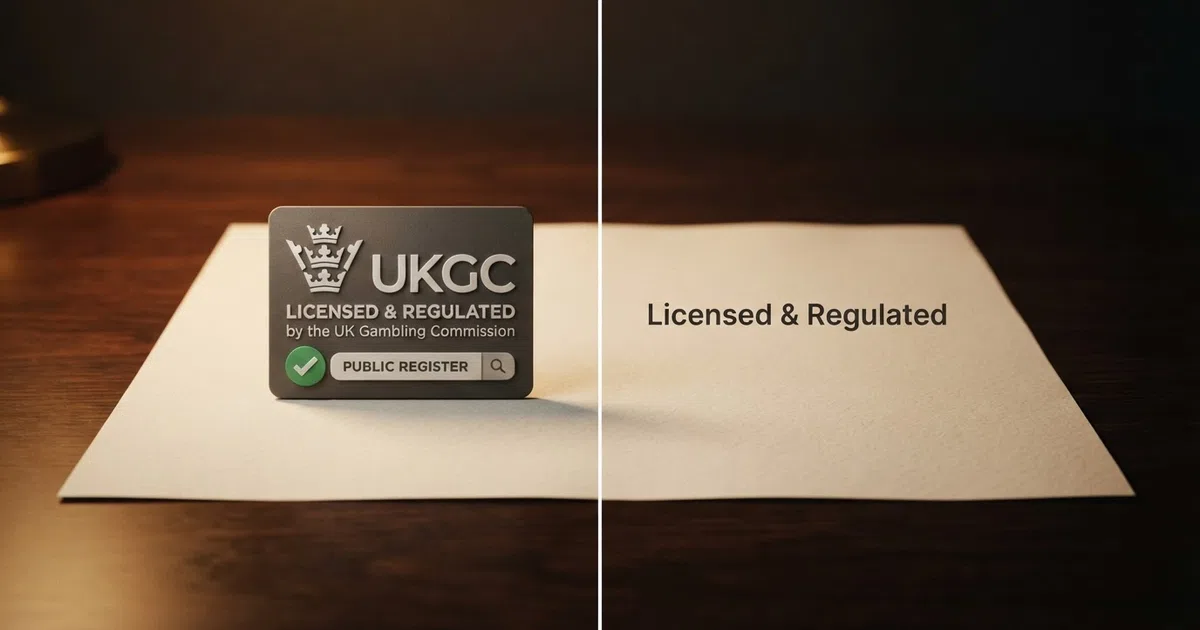
Last verified against the UK Gambling Commission public register on September 8, 2026.
What “Regulated Casino” Actually Means — and Why the Label Alone Isn’t Enough
A casino footer is the worst place in the world to read a regulatory claim. A licensed operator is one the Gambling Commission has given permission to deal with British customers, and a *regulated* operator is one the Commission is actively supervising — auditing, inspecting, sanctioning, and fielding complaints about. The two words travel together in marketing, and in practice they are not the same thing.
The distinction matters because the UK regime is built on three licensing objectives written into section 1 of the Gambling Act 2005: preventing gambling from being a source of crime or disorder, ensuring it is conducted fairly and openly, and protecting children and other vulnerable people from harm. The Commission transcribes those objectives into the Licence Conditions and Codes of Practice (LCCP) and into the Remote Technical Standards (RTS), and a UKGC licence obliges the holder to comply with both. Offshore licensing regimes do not share those objectives, and a Curaçao or Anjouan permit grants none of the obligations the British version does.
The Difference Between Licensed and Regulated — Two Words, Two Standards
A licence is permission: a regulator authorises an operator to run. Regulation is what comes after — a continuous relationship of standards, inspections, enforceable codes and a complaints route. A GB-licensed operator is bound by the LCCP and the RTS, both of which spell out concrete obligations: pre-deposit identity checks, GAMSTOP participation, ADR access, fund segregation, spin-speed minimums, stake caps, and a long list of conduct rules. None of that is automatic on an offshore licence.
The reason the two words get blurred in casino marketing is that every offshore regulator of any size issues a licence, and “licensed” is technically true for any operator that has paid the fee. The Malta Gaming Authority is regulated — it runs a player-support function, requires deposit limits and self-exclusion, and disciplines its licensees. Curaçao’s GCB runs a public register and has tightened its regime through the 2024 LOK reform, but the post-licence supervision is thinner. Anjouan and Costa Rica sit further down that ladder; in Costa Rica, there is no formal iGaming regulator at all, only a registration. Treating “licensed” and “regulated” as synonyms is how a player walks into a site with no enforceable complaints route without realising it.
How Casino Regulation Changes When You Cross a Border
One player, three regulators, three different rules. The UK regime is built on the point-of-consumption principle introduced by the Gambling (Licensing and Advertising) Act 2014 — any operator serving customers in Great Britain needs a UKGC licence regardless of where the operator is based. A Malta licence is a Tier 1 EU authorisation with a real player-support function, but it does not authorise an operator to take GB customers; that requires a separate UKGC licence. Curaçao’s GCB is the volume offshore licence, with annual fees starting around €30,000 and a first-year cost closer to €45,000–60,000 — a 2024 LOK reform tightened the rules, but operators are still required to geo-block regulated markets including the UK, and that requirement is unevenly enforced. Anjouan and Costa Rica sit below that: Anjouan has a Gaming Board with no independent dispute body, and Costa Rica does not have a gambling regulator at all.
The jurisdiction printed on a casino’s footer is therefore the single most important fact a UK player can check, because it sets the ceiling on what the operator is actually required to do. The Commission can disrupt an offshore site, refer its URLs to search engines, and refer the operator’s payment providers — over 287,961 URLs were removed between April 2024 and June 2025 under that programme — but it cannot make an offshore regulator enforce British rules.
The UK Regulatory Wall: What 2026‘s Rules Protect, and What Offshore Casinos Leave Behind
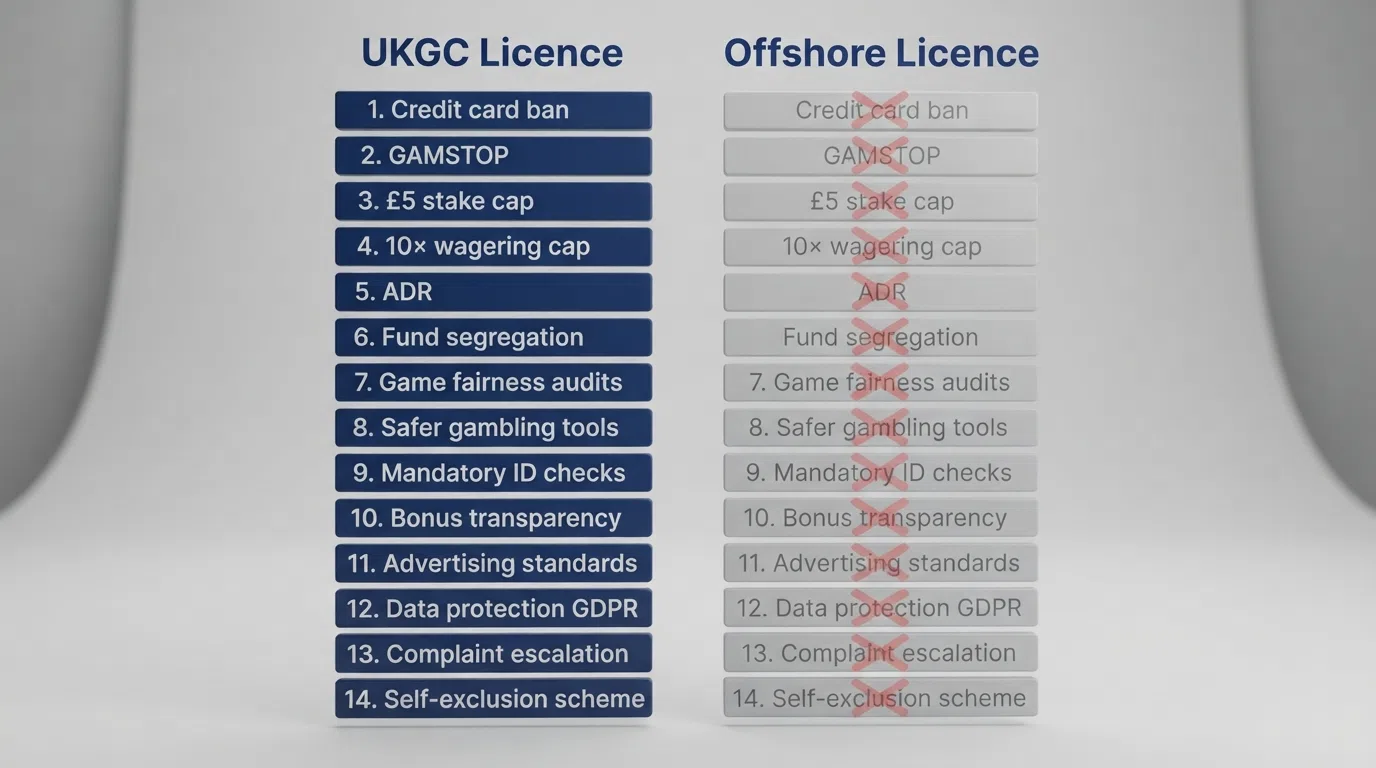
The UK regime has accumulated a series of specific protections over the last six years, and each one was written into the rulebook for a reason. A GB-licensed casino must provide every one of them. An offshore casino may provide some, none, or all of them, and there is no regulator in most of those jurisdictions forcing it to do any.
Why UK Players Look Beyond the UKGC: Bonuses, Fewer Restrictions and Faster Sign-Up
A GB player weighing the offshore route is not irrational. The five reasons most often cited are real differences, not invented ones.
The welcome offers are larger. Offshore operators run match rates from 150% to 380% against a UK market where wagering has been capped at 10× since 19 December 2025 and bonus values are squeezed accordingly. GAMSTOP is the second reason: a player who has self-excluded and wants back in cannot do so at a GB-licensed casino for the remainder of their exclusion period, but the same player can register at any Curaçao or Anjouan operator with no automated barrier. The third is the stake caps — slots are limited to £5 per spin for players 25 and over and £2 for those aged 18 to 24, a ceiling no UK operator can lift. The fourth is friction: a GB casino must prompt a deposit limit before the first deposit and run a financial vulnerability check at £150 net deposit within a rolling 30 days, while an offshore operator can sign a player up in minutes. The fifth is payment — no GB-licensed casino accepts cryptocurrency, and the credit card ban has been in force since 14 April 2020; offshore casinos take both.
Each of those has a price, and the price is the catalogue of protections below. The rest of this section is what the player trades away.
What a UKGC Licence Guarantees — 14 Protections Every GB Player Has
Every protection in this list is mandatory at a UK-licensed operator and either absent, optional or self-administered at most offshore ones.
Pre-deposit identity verification has been required since 7 May 2019 — a GB casino must confirm name, address and date of birth before the first deposit. Offshore casinos rarely require it before play, and the offshore operators reviewed here vary in whether they ask at all. The credit card ban, in force since 14 April 2020, extends to credit-card-funded e-wallet payments routed through Skrill, Neteller or PayPal. GAMSTOP has been a mandatory condition of every GB online operating licence since 31 March 2020, with four exclusion periods (six months, one year, five years, or five years with auto-renewal) and an exclusion that cannot be cancelled early. The October 2021 package of slot conduct rules is still in force: auto-play is banned, spin speed cannot exceed 2.5 seconds, features that speed up play are banned, “losses disguised as wins” are banned, and reverse withdrawals have been permanently banned since 31 October 2021.
Wagering requirements at GB casinos are capped at 10× since 19 December 2025, and mixed-product promotions such as “bet £10 on football, get free spins” are banned under LCCP Social Responsibility Code 5.1.1. The statutory stake cap on online slots — £5 per game cycle for players aged 25 and over, £2 for those 18 to 24 — took effect in April and May 2025 under SI 2025/215. From 31 October 2025 every GB operator must prompt a customer to set a financial deposit limit before their first deposit, with a standardised gross deposit limit to be offered with equal prominence by 30 September 2026. The financial vulnerability check at £150 net deposit in a rolling 30-day period has been in force since 28 February 2025. Funds must be held in segregated or protected accounts. Disputes go to an approved ADR provider. The three licensing objectives under section 1 of the Gambling Act 2005 — preventing crime, ensuring fairness, and protecting the vulnerable — define every rule. The statutory levy funds the system: 1.1% of leviable amount (gross gambling yield) for remote casino, remote bingo, remote general betting and gambling software licence holders, with the proceeds split 50% to treatment, 30% to prevention and 20% to research.
The list reads as policy text because it is policy text, and that is precisely the point. The reason a GB player gets all of this without asking is that the regulator requires it and inspects for it. The reason an offshore player gets none of it is that nobody with the authority to require it is on the other end.
Offshore Licences Explained: Curaçao, Malta, Anjouan and What Each One Is Worth
Five offshore jurisdictions license casinos that accept UK players, and the protection they offer varies by an order of magnitude.
| Jurisdiction | ADR Provider | Fund Protection Mandate | Enforcement Level | UK Player Access |
|---|---|---|---|---|
| Malta (MGA) | Formal player-support function | Required | Tier 1 EU regulator; formal player protection | Not authorised to serve GB consumers without a UKGC licence |
| Curaçao (GCB) | Limited; no mature ADR scheme | Not consistently mandated | Volume offshore licence; 2024 LOK reform tightened rules; geo-block enforcement uneven | Operator is bound by Curaçao rules only; UK access is operator’s choice |
| Kahnawake | Limited | Limited | Established but lower enforcement capacity than MGA or UKGC | Geo-block requirement includes the UK; unevenly enforced |
| Anjouan | None — operator judges its own disputes | No mandate | Sub-national jurisdiction with limited enforcement | Operator’s choice; no GB-side barrier |
| Costa Rica | None | None | No formal iGaming regulator; registration only | Operator’s choice; no GB-side barrier |
Malta is the strongest of the five. Anjouan and Costa Rica are the weakest. Curaçao sits in the middle: a real licence, a real register, a real reform effort, and a regulator that does not currently offer the kind of ADR route a UK player is used to. The table is the way the rest of the page should be read — the operator’s licence, then the ADR question, then the cashout question.
GAMSTOP: The Self-Exclusion Safety Net That Stops at the UK Border
GAMSTOP is mandatory on every GB-licensed online site, and it has been since 31 March 2020. A player who confirms an exclusion cannot cancel it early; if they make no contact after the minimum period the exclusion continues for up to seven further years. The system covers every GB-licensed online operator. It does not cover Curaçao, Malta, Kahnawake, Anjouan or Costa Rica. An offshore operator is not bound by it, and a self-excluded UK player who registers at one is not protected by it.
This is the single most important sentence on this page for any reader who has previously self-excluded. The protection stops at the UK border. The player crosses it alone.
Unregulated vs Offshore-Licensed: Two Very Different Risks
The word “unregulated” is used loosely in the trade, and a reader who treats it as a synonym for “offshore-licensed” is misreading the risk. An offshore-licensed casino holds a real permit from a named regulator that imposes some obligations — however thin those obligations turn out to be. An unregulated casino has no licence, no regulator, and no third party to appeal to. The spectrum from MGA through Curaçao to Anjouan and Costa Rica is wide, but the unlicensed tier sits off the scale entirely.
The real-world difference is not theoretical. BC Game casino surrendered its Curaçao licence in December 2024 following a bankruptcy ruling over approximately $2.5 million in unpaid player claims, then re-emerged under a new entity (Twocent Technology Limited, registered in Belize) with an Anjouan Gaming Board licence. There was a regulator on the file. A truly unlicensed site leaves no paper trail at all.
Crypto Casinos and the Regulatory Gap No One Has Closed
No GB-licensed casino accepts cryptocurrency. The reason is the UKGC’s source-of-funds and AML requirements, which effectively prohibit crypto deposits at any operator under the regime. Offshore crypto casinos fill that gap, and they do so under Curaçao or Anjouan licences that impose no comparable crypto-specific oversight. The “regulated crypto casino” claim in most marketing copy is a standard offshore gambling licence applied to a payment method, not a dedicated crypto regulator. The player gives up chargeback rights, bank mediation, and any regulator with crypto expertise on the other end of the complaint.
10 Offshore Casinos Side by Side: Licence, Bonus and What Separates Them
Ten operators are reviewed below. All are offshore-licensed; none holds a UKGC licence as of 2026. The table is a factual comparison across licence, UKGC status, welcome bonus headline value, wagering multiplier, free spins and game library size. The ranking orders by reputation and GB player volume, not by bonus size alone, and is not a recommendation of any kind.
| Casino | Licence | UKGC Status | Welcome Bonus (headline) | Wagering | Free Spins | Game Library |
|---|---|---|---|---|---|---|
| Stake | Curaçao GCB (OGL/2024/1451/0918) + Anjouan | Surrendered March 2025 | 200% up to $2,000 | 40× | None in standard welcome | 4,000+ |
| 7Bit Casino | Curaçao GCB (OGL/2023/174/0082), Dama N.V. | Never held | 325% up to 5.25 BTC | 40× | 250 (multi-deposit) | 7,000+ |
| BitStarz | Curaçao (Dama N.V.) | Never held | Up to 5 BTC | 40× | 180 (4 deposits) | 4,500+ |
| MyStake | Curaçao (GTW B.V., OGL/2024/1798/1048) | Never held | Up to £1,500 + 30 no-deposit FS | 30× (deposit + bonus) | 30 no-deposit + more | 6,500+ |
| Velobet | Curaçao (Santeda International B.V.) | Never held | 150% up to £500 / 100% up to £1,000 | 30× (35× on FS) | 70 | 5,000+ |
| Rolletto | Curaçao | Never held | Up to £5,500 | 30× | 200 | 6,000+ |
| Jackbit | Curaçao Gaming Authority | Never held | Wager-free (spins-based) | 0× | Varies by promotion | 6,000+ |
| Winorio | Costa Rica (AXENTRA LTD) | Never held | Multi-deposit package | Not specified | Part of package | 10,000+ |
| BC.Game | Anjouan (ALSI-202410011-FI1) | Surrendered December 2024 | 380% up to $4,000 | 40× | 400 | 8,000+ |
| Tomcasino | Anjouan (Tom Limitada, S.R.L., Costa Rica) | Never held | $500 package | Not specified | Not specified | Not specified |
The spread in wagering — 0× at Jackbit, 30× at MyStake, Velobet and Rolletto, 40× at Stake, 7Bit, BitStarz and BC.Game — is the most important number in the table. The UK’s 10× cap, in force since 19 December 2025, is the baseline none of these offers match except Jackbit’s wager-free model. The headline bonus is what the marketing copy leads with; the wagering multiplier is what determines what the bonus actually costs to clear.
To clear a representative 30× wagering bonus of, say, £1,000 (the size of the second Velobet tier or roughly two-thirds of the MyStake package), a player must turn over £30,000 in qualifying bets. At a £1 stake per spin and 5 seconds per spin, that is 30,000 spins taking roughly 41.7 hours of continuous play. The same £1,000 bonus under the UK’s 10× cap would require only £10,000 in turnover — about 13.9 hours at the same pace, less than a third of the time. That is the gap between a UK welcome offer and an offshore one, expressed in hours of play rather than pounds, and it is the cleanest way to see why a 150% headline rate is not the same as a 150% net gain.
A second calculation sharpens the cost. A £30,000 turnover at a slot returning 96% RTP produces an expected loss of £1,200 — turnover multiplied by 4% (one minus the RTP). That is the arithmetic cost of clearing a £1,000 30× bonus. It is an average over many spins under the stated assumptions, not a guaranteed outcome for any single player. The number is what the bonus really costs before the player has even touched the cash they deposited alongside it. The equivalent loss on the £10,000 turnover at a UK casino would be £400 — a third as much, against a third as much turnover. The headline rate is not where the offer is judged; the wagering is.
Stake: The Former UKGC Licensee That Now Operates From Curaçao
Stake surrendered its UKGC licence in March 2025 and now operates under a Curaçao GCB master gaming licence (OGL/2024/1451/0918) with a secondary Anjouan licence. The welcome is a 200% deposit match up to $2,000, with 40× wagering on the bonus and 30 days to clear it — and no free spins in the standard package. The library runs to 4,000+ titles from Pragmatic Play, Evolution, Hacksaw, Push Gaming, Relax Gaming and Nolimit City. The 40× multiplier is the median for the offshore set; the 30-day validity is the longest in the set alongside MyStake. The “no free spins” line is the giveaway: this is a high-percentage match designed for high-volume play, and the bonus clears or expires on the multiplier alone.
For a player who knows what they want and is happy to grind 40× in 30 days, Stake offers a clean, large-match offer with a top-shelf provider list. For a player who wants the 30× deposit+bonus combined or the wager-free model, the alternatives below are cheaper to clear.
7Bit Casino: A Crypto Veteran With 7,000+ Games and 40× Wagering
7Bit has been on the SoftSwiss platform under Dama N.V. since 2014, longer than most of the names on this list, and it operates under Curaçao GCB licence OGL/2023/174/0082. The welcome is a 325% package up to 5.25 BTC plus 250 free spins across multiple deposits, with 40× wagering on the bonus amount and a 14-day validity per deposit. The library runs to 7,000+ titles from BGaming, Pragmatic Play and Betsoft. The 14-day window per deposit is the tightest in the set and the limit a player is most likely to bump into — a 7Bit bonus does not wait for a busy month.
This is a crypto-native offer and the 5.25 BTC headline will mean different things to different readers; the 40× multiplier is the constant. A player who can clear four deposit bonuses in four two-week windows has the discipline the offer rewards.
BitStarz: 4,500+ Games and a Multi-Deposit BTC Bonus
BitStarz is the other Dama N.V. Curaçao operation, with a four-deposit structure (100%/50%/50%/100%) delivering up to 5 BTC plus 180 free spins and the same 40× wagering on the bonus amount with 14-day validity per deposit. The library is 4,500+ titles from Pragmatic Play, Evolution, Play’n GO and Betsoft. The split-match structure rewards longer commitment but the per-deposit window is still 14 days; the player who does not clear a stage loses the bonus at that stage. The 180 free spins are the second-largest free-spin count in the set after BC.Game and Rolletto.
For a player who likes a structured four-deposit ladder and a provider list anchored by Pragmatic and Evolution, BitStarz is the cleaner fit. The 40× still applies at every stage.
MyStake: The Only Operator in This Set With a No-Deposit Free-Spins Starter
MyStake is the entry that breaks the deposit-first pattern. It runs under Curaçao licence OGL/2024/1798/1048 under GTW B.V., has never held a UKGC licence, and offers up to £1,500 across three deposits (150%/100%/50%) with 30 no-deposit free spins as a starter. The wagering is 30× on deposit plus bonus combined — the lowest multiplier in the set alongside Rolletto and Velobet — and the validity is 30 days. The minimum deposit is £20 per stage. The library runs to 6,500+ titles from Pragmatic Play, Evolution, Hacksaw, NetEnt and Red Tiger.
The 30 no-deposit free spins are the headline differentiator; the 30× deposit+bonus combined wagering is the substantive one. Combined wagering is harder to clear than bonus-only wagering because the deposit itself is in the turnover calculation — at a £100 first deposit and a 150% match, the player is clearing 30× on £250, not on the £150 bonus alone. A player who reads the wagering line carefully and does the arithmetic before depositing is the player this offer suits. The package is a 30-day run, not a sprint.
Velobet: 150% Match With a £100 Free-Spins Cashout Cap
Velobet operates under Curaçao licence via Santeda International B.V. and has never held a UKGC licence. The welcome splits into two tiers: 150% up to £500 plus 70 free spins for deposits under £500, or 100% up to £1,000 plus 70 free spins for deposits of £500 and over. Wagering is 30× on the bonus amount and 35× on free-spins winnings. Maximum cashout from the free spins is capped at £100 — a hard ceiling a player should read before depositing. The library runs to 5,000+ titles from Pragmatic Play, Evolution, Hacksaw and Relax Gaming. Minimum deposit is £20.
The 150% headline is for the smaller-deposit player; the 100% headline is for the larger-deposit player. The £100 free-spins cashout cap is the most important number on this page for any reader choosing Velobet. Free spins advertised as “70” are worth £100 if the cap binds, which it almost always does at this operator.
Rolletto: Up to £5,500 Across Three Deposits — the Largest Headline Figure in This Set
Rolletto’s welcome is the largest pound figure in the table: up to £5,500 plus 200 free spins across three deposits, with 30× wagering on the bonus amount and 30× on free-spins winnings, 30-day validity, and a £10 minimum deposit. The library is 6,000+ titles from Pragmatic Play, Evolution, Hacksaw and Nolimit City. Maximum cashout from the bonus is capped at 10× the bonus amount for slots.
The £5,500 headline is the bait. The 10× bonus-amount slots cashout cap is the trap: a player who hits a meaningful win on a slot while a bonus is active can only withdraw 10× the bonus value, regardless of the spin that produced the win. Read the cap before depositing, not after. Rolletto suits a player who plans a long bonus run across three deposits and reads the small print at each stage.
Jackbit: The Wager-Free Operator — No Wagering Multiplier on Promotions
Jackbit is the outlier in the table. It operates under a Curaçao Gaming Authority licence, has never held a UKGC licence, and has replaced the traditional deposit-match welcome with a wager-free model — spins-based offers carry 0× wagering, and no-deposit winnings are paid out with no multiplier attached. Some of its promotions are deposit-free entirely. The library runs to 6,000+ titles from Pragmatic Play, Evolution, Hacksaw and Push Gaming.
The 0× line is the only one of its kind in this set and the closest any offshore offer in the table gets to the UK 10× cap. For a player who values what the bonus pays out over how big the headline rate is, Jackbit is the operator that solves the wagering problem the rest of the set is built around.
Winorio Casino: 10,000+ Titles Under a Costa Rica Registration
Winorio holds a Costa Rica registration under AXENTRA LTD and has never held a UKGC licence. Costa Rica has no formal iGaming regulator — the operator holds a registration, not a supervised licence. The library is the largest in the set at 10,000+ titles from Pragmatic Play, Evolution and Betsoft. The welcome is a multi-deposit package with free spins; specific match rates and wagering are not publicly specified at the level of the other operators reviewed here.
The library size is the headline, and the regulatory position is the price. A player who chooses Winorio is choosing game count over regulator scrutiny, and that is a trade-off rather than a free upgrade. Anjouan and Costa Rica sit at the bottom of the protection ladder; that is the position to weigh against 10,000 titles.
BC.Game: The Anjouan Relaunch After a Curaçao Collapse
BC Game casino holds an Anjouan Gaming Board licence (ALSI-202410011-FI1) under Twocent Technology Limited, registered in Belize. The Curaçao licence was surrendered in December 2024 following a bankruptcy ruling over approximately $2.5 million in unpaid player claims. The welcome package is 380% across four deposits up to $4,000 plus 400 free spins, with 40× wagering. The library runs to 8,000+ titles from 38+ providers, including 75+ provably fair BC Originals.
The 380% headline is the largest in the set; the unpaid-claims history is the largest counterweight. The 75+ BC Game casino Originals run on a provably fair model, which is a separate trust mechanism — third-party verification of each bet outcome via cryptographic hashes — from a regulator’s ADR route, and the two are not interchangeable. A player who chooses BC.Game is choosing the largest headline bonus and the provably-fair games; they are not choosing a regulator on the UKGC’s level.
Tomcasino: A $500 Welcome Package Under an Anjouan Licence
Tomcasino operates under an Anjouan Gaming licence held by Tom Limitada, S.R.L., registered in Costa Rica, and has never held a UKGC licence. The welcome is a $500 package; specific match rates, wagering, free-spins details and bonus validity are not publicly specified at the level of the other operators reviewed here. Game providers and library size are not specified in available research either.
The smallest headline in the set, the thinnest disclosure in the set, and a Costa Rica registration alongside an Anjouan licence — the two weakest jurisdictions in the table stacked on top of each other. A reader looking at Tomcasino is looking at a casino that has not put its terms on a public page the way the rest of the set has. The gamble is on more than the slots.
How to Verify a Casino Licence Yourself — Before You Deposit a Penny
The licence badge on a casino homepage is a starting point and not a conclusion. It must be verified on the regulator’s own public register, because the badge is a graphic the operator controls and the register is a database the regulator controls. The two are not the same document.
The UKGC Public Register: How to Check a GB Licence in Under Two Minutes
The UK Gambling Commission publishes a public register of gambling businesses, last updated 29 July 2026, holding 2,663 records. It is searchable by business name, trading name, domain name or account number. A genuine entry shows a licence number, status, activities permitted and any sanctions or conditions. A search that returns no result means the operator either has no GB licence or is operating under a different registered name — and the second case is the one to check carefully, because the domain in the search bar and the legal entity on the footer are not always the same.
The check takes under two minutes and is free. A player who skips it on a GB-licensed casino has not verified the licence; they have only read the operator’s claim of one.
Three Questions to Ask Before You Sign Up at Any Casino
The first question: who regulates this casino, and can I verify that on the regulator’s own website right now? If the answer is “yes, here is the register entry”, the licence is real. If the answer is “we are licensed and regulated”, the operator has not shown the work. The second question: where is the operator actually registered? A corporate address in a different country from the licence jurisdiction is a red flag — it does not mean the operator is dishonest, but it is the kind of detail that gets examined in a complaint. The third question: what happens if the casino refuses to pay? Is there an independent ADR provider, or does the operator judge its own disputes? The MGA offers a player-support function; Curaçao offers a limited ADR route; Anjouan and Costa Rica offer none. That last question is the one this entire article reduces to.
Slots Without UK Stake Caps: What Changes When You Play Offshore
A UK-regulated slot is engineered to slow the player down. Auto-play is banned, spin speed cannot exceed 2.5 seconds, features that speed up play are banned, “losses disguised as wins” are banned, the stake is capped at £5 per spin for players 25 and over and £2 for those 18 to 24, and a reality check interrupts the session. All of those rules are written into the RTS and have been in force since 31 October 2021. None of them follows the player across a border.
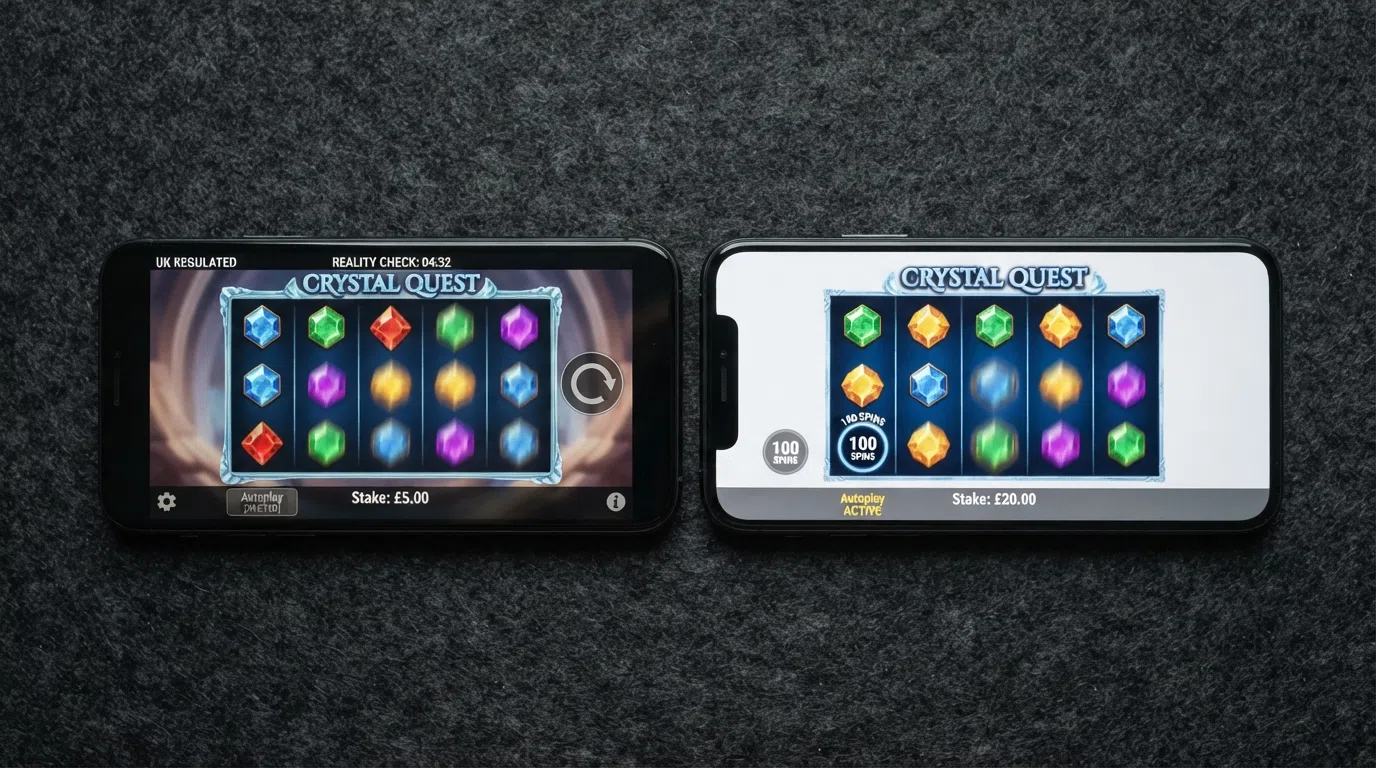
An offshore slot can run as fast as the provider and operator allow, with stakes set by the player and the operator rather than by statute. Auto-play returns. Spin speed can drop below the UK-mandated 2.5-second floor. “Losses disguised as wins” are present in the game design unless the provider voluntarily removes them. The slot is the same game; the wrapper around it is the difference.
RNG Fairness: Who Tests the Games and What a Certificate Actually Proves
The major testing houses — eCOGRA, iTech Labs, Gaming Laboratories International and BMM Testlabs — audit slot games and RNG systems. A UKGC-licensed casino must use GC-approved test houses, and the RTP and RNG data are part of the audit. An offshore casino may display an RNG certificate from a recognised lab, but the issuing regulator may not require ongoing re-audit or publish the results. A certificate on a casino site is a snapshot; a regulator-mandated re-audit is a system. The two are not the same level of assurance, and the player has to read which one applies to the operator in front of them.
How to Check Whether a Slot Game Is Regulated — and Why Most Players Skip This Step
A slot’s RTP is usually published — in the game rules screen, on the provider’s website, or in the casino’s game information panel. “Provably fair” is a separate trust mechanism used by crypto casinos such as BC.Game, where each bet outcome can be verified by cryptographic hash against the player’s seed. It is a real mechanism and it does work, but it is not third-party RNG certification; it is a different kind of proof. A game regulated at the provider level (Pragmatic Play and Evolution test their games before distribution) is one piece of the picture; a game regulated at the operator level (the casino is licensed, supervised and audited) is the other. The two checks together are what most players skip.
Staying in Control: Safer Gambling Tools When the UK Safety Net Isn’t There
The UK safety net is built on mandatory tools and a public treatment network. Offshore, the tools are optional and the network is British — which is the part that catches a self-excluded player out. Treatment demand is rising on this side of the border: the National Gambling Support Network treated 11,960 clients between April 2024 and March 2025, an 11% increase on the previous year, with 93% of clients completing treatment seeing improvement. GamCare’s National Gambling Helpline made 996 referrals to treatment in January 2026, up 48% from 674 in January 2025. Problem gambling prevalence in Great Britain is estimated at approximately 2.4% of adults — roughly 1.3 million people per the Gambling Survey for Great Britain Year 3 (2025). The infrastructure is there. The question is whether the player reaches it.
Self-Exclusion Beyond GAMSTOP: What Offshore Casinos Offer — and What They Don’t
GAMSTOP is the only cross-operator self-exclusion scheme in the GB system, and it stops at the GB border. Some Curaçao-licensed casinos offer their own self-exclusion, but it applies to that operator only. MGA-licensed casinos are required to offer self-exclusion, but an MGA casino accepting a GB player is already operating outside its authorised market, so the requirement is academic. A self-excluded UK player who registers at five offshore casinos must self-exclude at each one individually — there is no cross-operator scheme to do it once. The practical risk is plain: a player who registered with GAMSTOP to block themselves can walk straight into an offshore casino with no automated barrier. The block has to be set, by hand, in every account.
Deposit Limits, Time-Outs and Reality Checks: The Tools You Should Set Before You Play
A GB-licensed casino must offer a deposit limit before the first deposit, run a financial vulnerability check at £150 net deposit in a rolling 30-day period, and interrupt play with reality checks. An offshore casino may offer those features but will not force them; they are usually buried in account settings and are easy to leave off. The three tools every player should configure before play, whether the casino insists on them or not, are a deposit limit set to a budget the player can afford to lose, a time-out of 24 hours to six weeks as a default cool-off, and a reality check at a session interval short enough to register on the clock. The fact that the casino is not required to surface them is the reason the player has to set them.
Cooling-Off, Permanent Closure and Where to Get Help in the UK
Permanent self-exclusion at an offshore casino is requested through the operator’s responsible-gambling page, with confirmation in writing. The UK services that will help a player who has decided to step away are free, confidential and not offshore: GamCare runs the National Gambling Helpline (24/7, free, confidential); the NHS runs gambling harm clinics in England, Scotland and Wales; Gamblers Anonymous runs peer-support meetings; and GambleAware funds the research, prevention and treatment that those services are built on. The statutory levy that funds this system — 1.1% of gross gambling yield from remote operators, split 50% to treatment, 30% to prevention and 20% to research — applies to GB licensees. An offshore casino contributes nothing to it.
How We Selected and Ranked These Casinos
The operators reviewed are the ten offshore casinos with the highest documented GB player volume and public search visibility as of 2026 — a market scan, not an exhaustive listing. Each operator was checked against the UKGC public register of 2,663 licence holders to confirm that none holds a GB licence as of the verification date, and against the Gambling Commission’s published enforcement data (3,140 cease-and-desist notices, 447,778 URLs referred, 287,961 URLs removed between April 2024 and June 2025) for any open action.
The ranking weighs four qualitative factors, in this order: licence jurisdiction strength, transparency of bonus terms, provider quality, and game-library breadth. No invented percentages or numerical weightings are applied. The review draws on Gambling Commission publications (the LCCP, the RTS, the enforcement reports and the GSGB), on GamCare and GambleAware treatment data, on operator terms pages, and on the UKGC public register itself. No operator self-reported claim has been taken at face value without a cross-check against a public register.
The ranking is not a recommendation. The order does not imply safety, value, or appropriateness for any reader. It is the order in which the operators were reviewed.
Is an Offshore Casino Worth the Risk — What a UK Player Should Actually Weigh Up
The protection gap is real and it is measurable. Fourteen specific safeguards a UKGC licence provides do not transfer offshore. The bonus numbers are larger, but the wagering burden — 30×, 35× and 40× against the UK’s 10× cap — means the headline figure is not the net value, and a £1,000 30× bonus carries an expected loss of £1,200 over the clearing turnover at a 96% RTP slot, against roughly £400 on a UK 10× bonus of the same headline size. The arithmetic is what separates a welcome offer from a real gain.
A UK player who chooses an offshore casino has three checks to run before depositing a pound. Verify the licence on the issuing regulator’s own register, not on the casino’s footer. Read the bonus terms for the wagering multiplier, the validity window, and any maximum cashout cap (Velobet’s £100 free-spins cap and Rolletto’s 10× bonus-amount slots cap are the two most consequential in the set). Confirm an ADR route exists before depositing — MGA offers it, Curaçao offers a thin version of it, Anjouan and Costa Rica offer none.
The safest offshore choice is a casino licensed in a jurisdiction with a functioning ADR scheme and a public licence register, which means MGA at the top and Curaçao in the middle. Anjouan and Costa Rica offer neither. If the answer to “who judges my complaint if this casino refuses to pay” is “nobody” or “the casino itself,” the player has no recourse. That is the single question this entire article reduces to, and it is the one every reader should answer for themselves.
Frequently Asked Questions
Are non-UK regulated casinos legal for UK players to use?
It is not illegal for a player in Great Britain to access an offshore casino. The legal risk under section 33 of the Gambling Act 2005 sits with the operator, not the punter, and no penalty traced in current Gambling Commission enforcement data is aimed at a player who has merely gambled on an unlicensed site. “Not illegal” is not the same as “fully protected,” and the gap between those two phrases is where the real risk lives.
Does GAMSTOP cover casinos licensed in Curaçao or Malta?
No. GAMSTOP has been a mandatory condition of every GB-licensed online operating licence since 31 March 2020, but the scheme covers GB-licensed sites only. An operator licensed in Curaçao, Malta, Kahnawake, Anjouan or Costa Rica is not bound by GAMSTOP, and a self-excluded player who registers at one has no automated barrier. The exclusion has to be set at each operator individually, where the operator offers it at all.
How can I check if an online casino holds a UK Gambling Commission licence?
Visit the official UK Gambling Commission website and use the public register search tool. Enter the casino’s business name, trading name, or URL. A licensed operator will appear with a valid status, licence number, and permitted activities. If no record appears, the operator holds no GB licence.
Are offshore casinos safe — will they pay out my winnings?
An offshore casino is a business running under a foreign licence, and the answer depends on the jurisdiction. MGA licensees have a formal player-support function and a real complaints route. Curaçao GCB licensees have a register and a regulator but a thinner ADR process. Anjouan and Costa Rica licensees have neither, and an operator under those jurisdictions is effectively judging its own disputes. BC Game casino’s surrender of its Curaçao licence in December 2024, following a bankruptcy ruling over approximately $2.5 million in unpaid player claims, is the case that shows the difference a regulator on the file makes: a player with a claim has somewhere to send it.
Can I use a credit card to deposit at a casino not regulated by the UKGC?
The UK credit card ban, in force since 14 April 2020 under LCCP licence condition 6.1.2, applies to GB-licensed operators and to credit-card-funded e-wallet payments at those operators. An offshore casino is outside the UK regime, and most accept credit cards directly, including the ones reviewed here. The ban does not travel with the player across the border. The cost — chargeback disputes, interest charges, and the absence of the UK’s bank-side protections — is the player’s to manage.
What dispute resolution options exist if an offshore casino refuses to pay?
The route depends on the licence. An MGA-licensed casino is subject to the Malta Gaming Authority’s player-support function, which handles complaints against its licensees. A Curaçao-licensed casino has a thinner process through the GCB, and the regulator can be involved at a higher level. Anjouan and Costa Rica have no independent dispute body, and the operator judges its own cases. A player choosing an offshore casino should identify the ADR route before depositing, not after a payout refusal — the question is the one this article has been building toward.
Account – fastestpayout-casinos-uk
Content created by the «fastestpayout-casinos-uk» team