
The Highest RTP Slots UK Players Can Actually Win On
 Available in GB
A 99% Return to Player figure looks like a gift on a casino lobby page, until the slot you load at your casino returns 94%. That gap is the entire story of high-RTP play in the UK, and most of the rankings you’ll find online do not tell it. The same slot title can carry a different payout percentage at every licensed operator, and the figure the studio publishes is a ceiling, not a guarantee. The casino picks the tier, and the casino does not always pick the highest one.
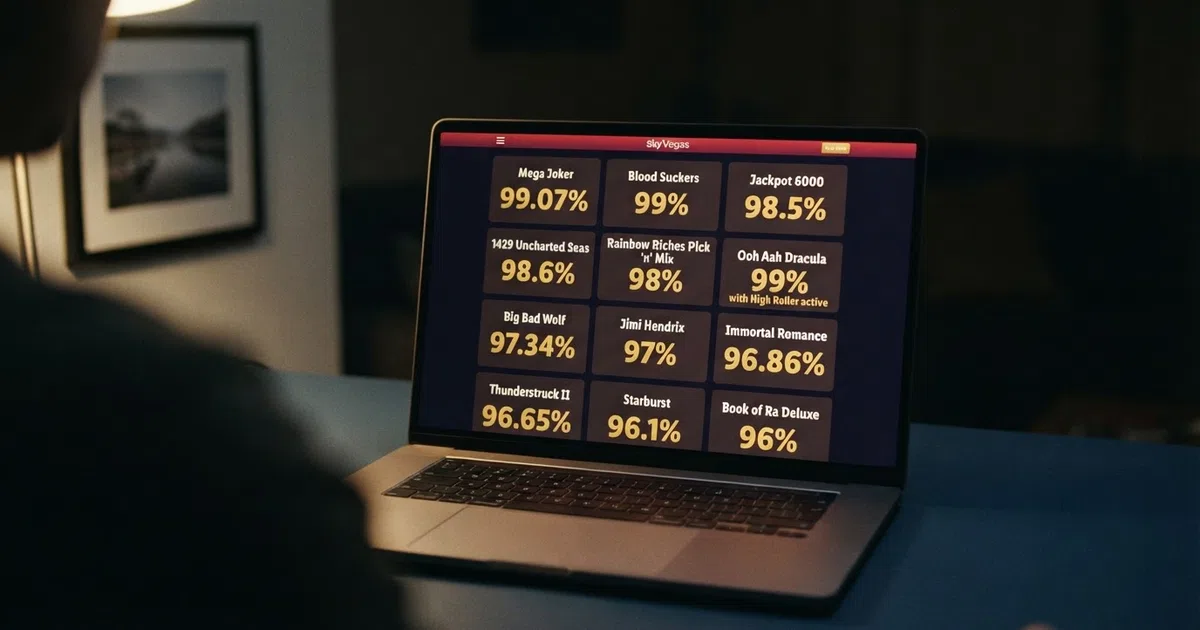
This page is built around what actually lands on a UK player’s screen. It ranks the highest-RTP slot titles available to British players, spells out which studios deploy fixed versus variable RTP configurations, names the ten UKGC-licensed operators that host them, and explains why a 96% slot at a wager-free casino can outperform a 99% slot at a 60×-wagering one, even though that is no longer the cap. The numbers are verified, the variable-tier traps are flagged, and the responsible-gambling infrastructure sits at the end where a reader who needs it can find it.
Verified against the UKGC public register of licence holders on September 8, 2026.
Why the Highest RTP Slot Isn’t Always the Slot You Think You’re Playing
Slot RTP is a long-run statistical average, calculated over millions of simulated spins, that describes what a game returns to players in aggregate over its entire operational life. It is the mirror of the house edge: if a slot carries a 96% RTP, the house keeps 4% of every pound staked across the lifetime of the game. That is a very large number, and it is also a number your evening will not look like. The figure describes the slot; it does not predict your session. A 99% slot can drain a £200 bankroll in twenty minutes of bad variance, and a 94% slot can pay out a five-figure hit on spin three. RTP is the destination; volatility is the road.
The second thing the headline figure does not tell you is which version of the slot you are actually playing. The biggest names in slot development do not ship a single fixed configuration anymore. They ship a range, and the operator picks the tier. Pragmatic Play runs a three-tier deployment system, Play’n GO runs a five-tier system spanning roughly 84% to 96.5%, and NetEnt ships both fixed classics and variable titles whose headline RTP is a marketing figure most UK players never reach. The choice is static, set when the operator first integrates the game, and almost never disclosed anywhere outside the in-game information panel you can open from inside the game itself. Check that panel before you stake. If the figure inside the game is lower than the figure on the casino’s marketing page, the in-game figure is the one your session will use.
What RTP Actually Means — and What It Doesn’t
RTP, or Return to Player, is the percentage of total wagers a slot is programmed to return over the full lifecycle of the game. A 97% RTP slot will, on average, return £97 for every £100 wagered across millions of spins. The remaining £3 is the house edge, the operator’s structural margin. Both numbers are calculated from the game’s random number generator over a sample size so large that no individual session will ever resemble it.
This is where the marketing language tends to slip. A slot with a 99% RTP is not promising to return £99 of your £100. It is returning £99 to the entire population of players who ever spin it, averaged across a timeframe no human will occupy. Individual sessions deviate wildly, sometimes by thousands of percent, because variance is the texture of slot play. A high-RTP slot can hand you a dry spell of fifty dead spins followed by a single bonus round that pays ten times your stake, and a low-RTP slot can pay out a string of small hits that keeps your balance alive for an hour. The RTP is the destination; the road is volatility.
Volatility, sometimes called variance, is the other number that matters. A low-volatility slot pays small wins frequently, keeping your balance stable and stretching a bankroll over a long session. A high-volatility slot pays rarely and dramatically, with the majority of your session spent waiting for a bonus round that may or may not arrive. A 99% RTP on a high-volatility slot is a different proposition from a 97% RTP on a low-volatility one: the high-RTP game will return more in aggregate but punish you along the way. For most players, the sweet spot is a low-volatility, high-RTP title: a longer evening, less swing, more spins for your stake.
The Highest RTP Slots Available to UK Players Right Now
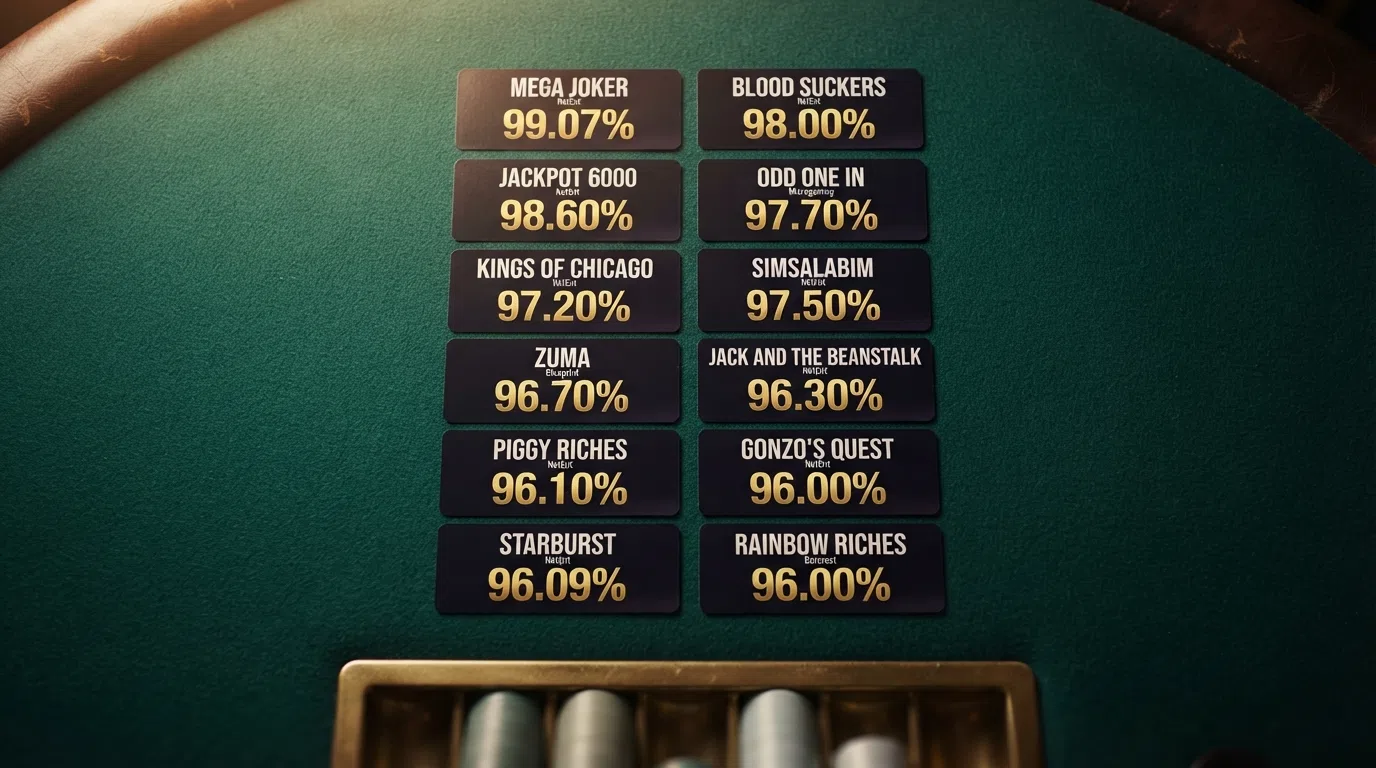
The table below ranks the twelve highest-RTP slot titles available to UK players at UKGC-licensed casinos, sorted by published RTP in descending order. Volatility and max win are listed where research confirms them; where research does not carry a figure, the cell carries an em dash rather than a guess. The Mega Joker entry is the one every player should read carefully.
| Slot Title | Provider | RTP | Volatility | Max Win |
|---|---|---|---|---|
| Ugga Bugga | Playtech | 99.07% | Low | 10,000x |
| Book of 99 | Relax Gaming | 99% | High | 12,075x |
| Mega Joker (Supermeter, max bet) | NetEnt | 99% | Varies by mode | — |
| Mystery Joker 6000 (Supermeter) | Play’n GO | 98.20% | Low | 6,000x |
| 1429 Uncharted Seas | Thunderkick | 98.5–98.6% | Low | — |
| Marching Legions | Relax Gaming | 98.12% | High | 10,000x |
| The Catfather | Pragmatic Play | 98.10% | Low | — |
| Blood Suckers | NetEnt | 98% | — | — |
| Starmania | NextGen / Light & Wonder | 97.87% | Low | 1,000x |
| Blood Suckers Megaways | Red Tiger | 97.66% | High | 20,521.9x |
| White Rabbit Megaways | Big Time Gaming | 97.24–97.72% | High | 10,000x |
| Big Bass Bonanza (default tier) | Pragmatic Play | 96.71% | — | — |
Ugga Bugga tops the list at 99.07%, a Playtech release operating on a 3×1 grid with ten fixed paylines and a low-volatility profile. Book of 99 sits at 99% from Relax Gaming, but the shape of the play is different: high volatility, a 12,075x max win, and the kind of variance that punishes small bankrolls.
Mega Joker deserves its own paragraph. The marketed 99% RTP applies only in Supermeter mode, played at maximum bet level. The base-game RTP is 76.9%, and most UK casinos in 2026 deploy the slot at 94.05%, a 4.95-percentage-point haircut from the headline figure that nobody flags in the lobby. The 99% is a theoretical ceiling, not the game most players load. Blood Suckers, by contrast, is fixed at 98% with a single certified configuration: every UK casino runs the same version, the same payout, the same return.
Big Bass Bonanza is the slot to watch for variable-RTP deployment. The default tier is 96.71%, but Sky Vegas has been verified at 95.67%, Paddy Power and Betfair at 94.02%, and William Hill at 92.00%. The gap between the highest and the lowest deployment of the same title is 4.71 percentage points, a structural difference the player can neither see from the lobby nor predict from the studio name.
Where to Find and Verify a Slot’s RTP at a UK-Licensed Casino
Every UKGC-licensed slot must display its RTP to the player. The figure sits in the in-game information panel, accessed from a small “i” or paytable icon inside the game itself, and it is the only authoritative source for the version of the slot running at your specific casino. A slot’s studio page, the operator’s marketing page, and any third-party ranking may all carry a different figure, and none of them is the one your session will use.
The check takes five seconds. Open the game in demo or real-money mode, tap the information icon, scroll to the payout or return-to-player section, and read the percentage. If the figure matches the published headline, the casino is running the slot at its top tier. If the figure is lower, the casino has deployed a reduced configuration, and the gap is the house edge you did not expect.
Pragmatic Play titles are the ones most worth checking: the studio’s three-tier deployment system means the same game title can return 96.71%, 95.67%, or 92.00% depending on the operator, and the choice is static and almost never advertised. Play’n GO’s five-tier system runs the same risk. NetEnt’s Blood Suckers is the exception that proves the rule: a single fixed configuration at 98%, identical at every UK casino, with nothing to check because there is only one version in circulation.
Online vs Land-Based — Why the RTP Gap Is a Chasm
The online versus land-based RTP gap in the UK is not marginal. Online slots routinely return 95% to 99% of stakes, while land-based gaming machines in British pubs, arcades and betting shops can run as low as 80%, a fifteen-to-nineteen-percentage-point difference that compounds over every session. The gap is structural, not accidental.
Online operators face lower overheads than their land-based counterparts, compete more aggressively on payout to attract and retain players, and operate under the UKGC’s Remote Technical Standards, which mandate RTP transparency and game-cycle auditing. Land-based Category B, C and D machines under the Gambling Act 2005 carry lower minimum RTP requirements, and the older-style fruit machines in arcades and seaside venues were never built to compete on return. The published RTPs reflect those different economics: a 96% online slot and an 80% land-based fruit machine are responding to different cost bases, different competition, and different regulatory floors.
The Q1 2026 data from the Gambling Commission puts the online market’s scale into focus: £773 million in gross gambling yield from online slots, with 25.1 billion spins across the quarter. That is a market where RTP matters at the aggregate level, even if individual sessions still diverge from the long-run average.
The Best UK Casinos for High-RTP Slots — and the Bonus Terms That Change Everything
The casino you choose matters more than the title you spin. Two players at two different UKGC-licensed casinos loading the same Pragmatic Play slot may be playing different games: the studio’s three-tier deployment system means one player sees a 96.71% return while the other sees 92.00%, and the welcome bonus that brought them to the casino can compound or erase the difference depending on the wagering requirement attached to it. A wager-free spin on a 94% slot is worth more than a 10×-wagered spin on a 98% one, because the clearance cost on the latter eats into the edge the high-RTP title was supposed to provide.
The table below ranks ten UKGC-licensed casinos by their high-RTP slot welcome offers. Every operator on this list holds a valid GB licence, verified against the UKGC public register. The wagering column is the one to read first: 0× means winnings are paid as cash with no playthrough, 10× means the standard UKGC cap applies. The spin count is the headline; the spin value, validity window and cashout terms are what determine what the offer is actually worth.
| Casino | GB Licence | Welcome Offer | Wagering on Spins | Bonus Validity | What Stands Out |
|---|---|---|---|---|---|
| PlayOJO | UKGC | 50 wager-free spins on Book of Dead (96.21% RTP) for £10 deposit | 0× | 3 days from credit | No wagering, no cashout cap, 50 spins on a 96.21% title |
| bet365 Games | UKGC | Up to 500 free spins for £10 lifetime minimum deposit | 0× | 30 days to claim; spins over 10 days | Largest spin allocation in the featured set, wager-free |
| LeoVegas | UKGC | 50 wager-free spins on Big Bass Splash (96.71% RTP) for £10 deposit | 0× | 3 days from credit | Wager-free spins on a high-RTP Pragmatic title |
| William Hill Vegas | UKGC | 200 free spins on Big Bass Splash (96.71% RTP) for £10 deposit & stake | 10× | 72 hours from credit | Large spin count but £50 cap on spin winnings |
| Mr Green | UKGC | 200 free spins for £10 deposit | 10× | 7 days | Longest validity window in the featured set |
| Betway | UKGC | 150 wager-free spins on selected slots | 0× | — | Wager-free at a Microgaming-anchored catalogue |
| Betfred | UKGC | Stake £10 get 200 free spins | 10× | 72 hours from credit | 200 spins at 10p each across a deep provider bench |
| Sky Vegas | UKGC | 70 no-deposit free spins + 200 free spins on £10 spend | 0× | — | Only deposit-free welcome in the featured set |
| Paddy Power | UKGC | 60 no-deposit spins + 200 deposit-triggered spins | 0× on no-deposit; 10× on deposit spins | — | Two-tier welcome; spin values as low as £0.01 |
| Grosvenor | UKGC | Stake £10 get £30 cash bonus | 10× | 30 days | Only cash bonus in the featured set, no free spins |
The single most important number in the table is the wagering multiplier. Since 19 December 2025, UK-licensed casino bonus wagering requirements have been hard-capped at 10× under LCCP Social Responsibility Code 5.1.1, down from a previous ceiling that reached 60×. That cap rewrote what a bonus actually costs to clear: turning £20 of free-spin winnings into withdrawable cash at the new 10× cap means £200 of qualifying turnover, compared to £1,200 at the old 60× standard. Even at 10×, though, the clearance cost is real, which is why the wager-free offers at PlayOJO, bet365 Games, LeoVegas, Betway and Sky Vegas sit at the top of the value ranking. Zero wagering means the spin winnings are cash the moment they land, with no turnover requirement to clear before withdrawal.
PlayOJO — 50 Wager-Free Spins With No Wagering and No Cashout Cap
PlayOJO is the cleanest welcome in the featured set: 50 wager-free spins on Book of Dead, a Play’n GO title with a 96.21% RTP and 5,000x max win, triggered by a £10 deposit. There is no traditional bonus structure. Winnings are paid as cash immediately, with no playthrough requirement, no maximum cashout ceiling, and a three-day validity window from credit. The provider mix spans NetEnt, Play’n GO, Pragmatic Play, Microgaming, Big Time Gaming and Red Tiger, which means the wager-free model extends across the full catalogue, not just the welcome slot.
The value of the offer is straightforward: every penny won from the 50 spins at 10p each is yours to withdraw, subject to standard account verification. No turnover to clear, no max-cashout cap to worry about, no games excluded from withdrawal. For a player who values transparency over headline spin count, PlayOJO’s model is the reference point the rest of the market is measured against.
bet365 Games — Up to 500 Free Spins With Zero Wagering
bet365 Games carries the largest free-spin allocation in the featured set: up to 500 spins for a £10 lifetime minimum deposit, all wager-free, with winnings paid as cash. The spins are delivered over ten days across four titles: Book of Horus, Curse of the Bayou, Magic Forge and Wrath of the Deep. Claiming the full allocation requires logging in across the full ten-day window, and the full 30-day period from registration to claim applies.
The provider catalogue spans Playtech, NetEnt, Pragmatic Play, Play’n GO and Blueprint, a deep enough bench to keep the post-welcome play interesting. The 500-spin headline is generous, but the 10p spin value per spin keeps the maximum theoretical return bounded; what matters is the zero-wagering structure, which means whatever those spins produce is cash.
LeoVegas — 50 Wager-Free Spins on Big Bass Splash
LeoVegas offers 50 wager-free spins on Big Bass Splash, a Pragmatic Play title with a 96.71% RTP and a 5,000x max win, for a £10 deposit. Zero wagering, unlimited cashouts, and a three-day validity window from credit. The provider catalogue spans Pragmatic Play, NetEnt, Play’n GO, Evolution and Red Tiger, covering most of the major studios a UK player expects to find.
The Big Bass Splash title at 96.71% sits in the variable-RTP category where Pragmatic Play’s three-tier deployment applies, and the figure is the default top tier. Players should still check the in-game info panel at LeoVegas to confirm the active tier, but the headline figure is the one most commonly deployed.
William Hill Vegas — 200 Spins at 10× Wagering With a £50 Cashout Cap
William Hill Vegas offers 200 free spins on Big Bass Splash (96.71% RTP) for a £10 deposit and stake, with the standard 10× wagering on spin winnings under the UKGC cap. The 72-hour validity window from credit is tighter than most, and the £50 cap on spin winnings is a hard ceiling unique among the featured operators. No other casino in the ranking imposes a maximum-cashout limit on free-spin winnings.
The trade-off is the spin count: 200 spins at 10p is a larger headline than PlayOJO’s or LeoVegas’s 50, but the £50 cap means the practical ceiling on what the welcome can pay out is £50, regardless of how the spins land. For a player who values spin volume over withdrawal potential, the offer reads one way; for a player who values cashout flexibility, the £50 cap makes other featured operators more attractive.
Mr Green — 200 Free Spins Across a Broad Provider Mix
Mr Green offers 200 free spins for a £10 deposit, with 10× wagering on spin winnings under the UKGC cap and a seven-day validity window, the longest in the featured set. The qualifying slot title is not specified in available material and may vary by promotion period. The provider catalogue spans NetEnt, Play’n GO, Microgaming, Pragmatic Play and Big Time Gaming, one of the widest mixes in the ranking.
The seven-day validity gives more breathing room than the 72-hour windows at William Hill Vegas and Betfred, which matters for players who cannot log in daily. The 10× wagering means the spin winnings carry a clearance cost before withdrawal, unlike the wager-free offers at PlayOJO, bet365 Games, LeoVegas, Betway and Sky Vegas.
Betway — 150 Wager-Free Spins From a Microgaming-Anchored Casino
Betway offers 150 wager-free spins on selected slots with a deposit, at zero wagering, with winnings paid as cash. Bonus validity is not confirmed in available material. The provider catalogue is anchored by Microgaming, with NetEnt, Pragmatic Play and Play’n GO alongside, giving the wager-free spins a deeper pool of high-RTP titles to draw from than most featured operators.
The Microgaming anchor is the differentiator: Betway’s catalogue leans heavily on the studio’s progressive jackpot network and high-RTP classic slots, which sit alongside the standard NetEnt and Pragmatic Play bench. If Microgaming titles are your primary focus, Betway stands out as a clear wager-free destination.
Betfred — Stake £10, Get 200 Free Spins
Betfred offers 200 free spins at 10p each, triggered by a £10 stake, with 10× wagering on spin winnings under the UKGC cap and a 72-hour validity window from credit. Maximum cashout is not confirmed in available material. The provider catalogue spans Playtech, NetEnt, Pragmatic Play, IGT and Blueprint, covering the major UK-facing studios.
The 200-spin count at 10p each gives a £20 maximum theoretical return before wagering, which the 10× clearance requirement then turns into £200 of qualifying turnover before withdrawal. The 72-hour window is tight, so claiming and using the spins promptly matters.
Sky Vegas — 70 No-Deposit Free Spins, the Only Deposit-Free Welcome in the Featured Set
Sky Vegas is the only operator in the featured set to offer a genuinely deposit-free welcome: 70 free spins with no deposit required, plus a further 200 spins on a £10 spend, all at zero wagering with unlimited cashouts. Bonus validity and qualifying slots are not confirmed in available material. The provider catalogue spans Playtech, NetEnt, Pragmatic Play, Blueprint and SG.
The 70 no-deposit spins are the standout feature: a player can register, verify their identity and play 70 wager-free spins without funding their account, which is a structural advantage no other featured operator matches. Sky Vegas has also been verified deploying Pragmatic Play’s Big Bass Bonanza at 95.67% RTP, a 1.04-percentage-point reduction from the default 96.71% tier that is worth checking in the in-game info panel before staking.
Paddy Power — 60 No-Deposit Spins Plus 200 on Deposit
Paddy Power offers a two-tier welcome: 60 no-deposit free spins at zero wagering plus 200 deposit-triggered spins at 10× wagering, triggered by a £10 deposit. Spin values range from £0.01 to £0.10, the widest spread in the featured set, and bonus slots include Paddy’s Mansion Heist. Maximum cashout is not confirmed in available material. The provider mix spans Playtech, NetEnt, Pragmatic Play, Blueprint and Red Tiger.
The 60 no-deposit spins match Sky Vegas’s deposit-free element, though Paddy Power pairs them with a deposit-triggered top-up at 10× wagering rather than zero. Big Bass Bonanza has been verified at 94.02% RTP at Paddy Power, a 2.69-percentage-point reduction from the default tier that is worth knowing before loading the title.
Grosvenor — the Only Cash Bonus in the Featured Set
Grosvenor offers a £30 cash bonus for a £10 stake, with 10× wagering under the UKGC cap and a 30-day validity window, the longest in the featured set. There is no free-spins component; the offer is a pure cash bonus, the only one in the ranking. The provider catalogue spans Novomatic, NetEnt, IGT, Playtech, Evolution and Pragmatic Play, anchored by Novomatic’s land-based-favourite library.
The 30-day validity is the practical advantage: players who cannot log in daily have a full month to clear the £300 of qualifying turnover the 10× wagering requires. The absence of free spins is a genuine departure from the rest of the featured set, which makes Grosvenor the right choice for a player who prefers a cash bankroll to spin-based welcome offers.
The Slot Studios Behind the Highest RTP Games — and the Tier Systems They Hide
The highest-RTP slots in the UK market come from a relatively small group of studios, and the way each studio deploys its RTP configuration matters as much as the headline figure. Fixed-RTP titles, where the same payout percentage applies at every UK casino, are the safest choice: the figure the studio publishes is the figure the player gets. Variable-RTP titles, where the operator picks from a range of configurations, carry a hidden discount that the player can only see by opening the in-game information panel before staking.
Playtech ships the single highest-RTP title in the UK market: Ugga Bugga at 99.07%, a 3×1 grid with ten fixed paylines, low volatility and a 10,000x max win. Relax Gaming holds the second 99% title with Book of 99, paired with Marching Legions at 98.12%, both high-volatility games that reward patience with bigger payouts. NetEnt offers the cleanest fixed-RTP catalogue in the market through Blood Suckers at 98%, a single-configuration title that returns the same figure at every UK casino, and a variable flagship in Mega Joker whose 99% headline is a theoretical ceiling most UK players never reach. Pragmatic Play’s three-tier deployment system means the studio’s titles, including Big Bass Bonanza, can run at 96.71%, 95.67% or 92.00% depending on the operator. Play’n GO’s five-tier system spans approximately 84% to 96.5%, with Mystery Joker 6000 at 98.20% in Supermeter mode as the studio’s highest published figure.
The pattern across the provider landscape is clear: studios that ship fixed configurations reward the player with certainty, while studios that ship tiered systems leave the figure to the operator’s choice. The studios worth tracking for high-RTP play are the ones whose catalogues lean toward fixed configurations, and the titles worth checking in-game are the ones from studios that do not.
Pragmatic Play — the Three-Tier Trap
Pragmatic Play’s three-tier deployment system is the most consequential variable-RTP structure in the UK market. The studio ships its titles at up to three payout configurations, and the operator picks one tier statically when integrating the game. The choice is almost never disclosed outside the in-game information panel, which means the player has no way to know the figure from the lobby, the promotional page or the casino’s terms and conditions.
The Big Bass Bonanza data illustrates the trap clearly. The default top tier runs at 96.71%, but Sky Vegas has been verified deploying the title at 95.67%, Paddy Power and Betfair at 94.02%, and William Hill at 92.00%. The gap between the highest and lowest deployment of the same slot at four major UK operators is 4.71 percentage points, a structural reduction in long-run return that no marketing page will mention. The Catfather, at 98.10% with low volatility, is the studio’s highest published figure and a rare fixed-configuration bright spot, but the rest of the Pragmatic catalogue requires an in-game check before staking.
NetEnt — Fixed Gems and the Mega Joker Divide
NetEnt offers two distinct propositions under one studio name. Blood Suckers, at 98% RTP, is a fixed-configuration title certified at a single payout percentage across all UK casinos. There is no tier to choose, no operator discount, and no hidden configuration: the figure the studio publishes is the figure every UK player gets. For a player who values certainty over headline percentage, Blood Suckers is the cleanest high-RTP slot in the NetEnt catalogue.
Mega Joker is the opposite. The slot reaches 99% RTP only in Supermeter mode when played at maximum bet level, and the base-game RTP is 76.9%, a figure that would make it one of the worst-paying slots in the UK market if anyone actually played it that way. Most UK casinos in 2026 deploy the slot at 94.05%, a 4.95-percentage-point discount from the headline figure that the lobby page does not flag. The 99% is a theoretical ceiling, not the game most players load, and it is the reason Mega Joker sits in the rankings with an asterisk that every reader should read.
Play’n GO — Five Tiers and a 98.20% Hidden Gem
Play’n GO operates a five-tier RTP deployment system spanning approximately 84% to 96.5% on most variable titles, the widest tier range of any major studio. The structure means the same Book of Dead title can return anywhere from the low end of the range to 96.21% depending on the operator, and the default top tier for Book of Dead is 96.21%, the figure most players see. Reactoonz, another studio favourite, runs at 96.51% at its top tier.
Mystery Joker 6000 is the studio’s highest published figure at 98.20% in Supermeter mode, with a 50x base-game max win and a 6,000x Supermeter max win. The low-volatility profile makes it a longer-session proposition than the higher-headline high-volatility titles, which is exactly the trade-off the sweet-spot players are looking for. Like Mega Joker, the Supermeter mode is the configuration that delivers the published figure; the base game runs at a different return.
Relax Gaming, Thunderkick, BTG and the Rest — the Smaller Studios Punching Above Their Weight
The studios outside the Big Three have built some of the highest-RTP slots on the market, and two of the three 99% titles come from this group. Relax Gaming holds Book of 99 at 99% with high volatility and a 12,075x max win, and Marching Legions at 98.12% with high volatility and a 10,000x max win, both high-variance games that reward patience with substantial payouts. Thunderkick’s 1429 Uncharted Seas runs at 98.5–98.6% with low volatility, expanding wilds and up to 50 free spins on a 5×3 grid with 25 paylines, a longer-session proposition that stretches a bankroll further than the high-volatility alternatives.
Big Time Gaming’s White Rabbit Megaways runs at 97.24–97.72% with high volatility, up to 248,832 ways to win and a 10,000x max win, the highest-RTP Megaways title in the UK market. Red Tiger’s Blood Suckers Megaways carries a 97.66% RTP with high volatility, 117,649 ways to win and a 20,521.9x max win, the largest max win in the high-RTP set. NextGen’s Starmania, now under the Light & Wonder umbrella, runs at 97.87% with low volatility and a 1,000x max win, a calmer ride than the Megaways titles at a comparable return.
Beyond Slots — the Highest RTP Casino Games UK Players Can Access
Slots dominate the RTP conversation because the figures are published, ranked and compared, but table games routinely offer higher long-run returns than any slot on the market. Blackjack played with basic strategy returns above 99% in most configurations, a figure no slot in this ranking reaches. Video poker, baccarat and certain roulette variants sit in a similar range, depending on the rules and the player’s strategy.
The regulatory distinction matters here. The UKGC’s £5 and £2 stake caps apply to online slots only, not to roulette, blackjack, live casino, bingo or sports betting. A player who wants the highest long-run return with the fewest regulatory restrictions can find it outside the slot lobby entirely, which is a structural feature of the UK market rather than a quirk. The slot-versus-table RTP gap has real implications for bankroll strategy over a session, because a blackjack hand at a 99.5% return costs the player half as much in expectation as a 96% slot at the same stake.
How UK Regulation Shapes Every RTP Figure You See
The UK Gambling Commission is the regulator of the GB gambling market, an executive non-departmental public body sponsored by the Department for Culture, Media and Sport. The Commission operates under the Gambling Act 2005, extended to remote operators by the Gambling (Licensing and Advertising) Act 2014, which made a GB licence compulsory for any operator taking GB players, wherever the operator is based. The three licensing objectives set out in section 1 of the Act are preventing gambling from being a source of crime or disorder, ensuring gambling is conducted in a fair and open way, and protecting children and other vulnerable persons from harm or exploitation.
The instruments the Commission uses to enforce those objectives are the Licence Conditions and Codes of Practice (LCCP) and the Remote Technical Standards (RTS). The LCCP sets the conditions every licensee must meet, from social responsibility codes to anti-money-laundering requirements. The RTS sets the technical standards for remote gambling products, covering everything from game-cycle auditing to the display of return-to-player information. Together, they are the reason a published RTP at a UKGC-licensed casino carries weight: the operator is audited, the game is tested, and the figure is displayed to the player.
Since 31 October 2021, the game-design rules under the RTS have banned auto-play, imposed a 2.5-second minimum spin speed per game cycle, banned features that speed up play, banned losses disguised as wins, permanently banned reverse withdrawals, and required total losses, wins and time played to be displayed during slots sessions. Since 7 May 2019, remote licensees have been required to verify a customer’s name, address and date of birth before their first deposit or any gambling activity, including free bets and bonuses. Since 14 April 2020, credit cards have been banned for all remote gambling payments under LCCP licence condition 6.1.2, a prohibition that extends to credit-card-funded e-wallet payments. These are the structural features that make the GB market the most tightly regulated online gambling jurisdiction in the world.
What the Age-Banded Stake Cap Means for High-RTP Slot Strategy
The UK is the only major market to impose an age-banded stake cap on online slots. Under SI 2025/215, the maximum stake per game cycle is £5 for players aged 25 and over, in force since 9 April 2025, and £2 for players aged 18 to 24, in force since 21 May 2025. The cap applies to the total staked within a single game cycle, meaning a single spin at maximum lines and maximum coin value. Two adults at the same casino, on the same slot, at the same time, can face different maximum bets depending on their age.
The implications for high-RTP strategy are direct. A player at the £5 cap clears wagering requirements faster and generates more expected loss per spin than a player at the £2 cap, because the stake is higher and the house edge is a percentage of stake. For a player chasing wagering requirements on a 10× bonus, the £5 player needs fewer spins to reach the qualifying turnover but loses more per spin in expectation. For a player managing a fixed bankroll, the £2 player stretches the same money over more spins, which is the longer-session proposition the low-volatility high-RTP slots are designed for.
The Q1 2026 market data from the Gambling Commission shows the cap has not suppressed volume. Slots GGY rose 12% year-on-year to £773 million in the quarter, with total spins up 7% to 25.1 billion, the fourth quarter since the stake limits were introduced. The market adapted: players are spinning more, not less, even with the lower per-spin ceiling.
How the 10× Wagering Cap Rewrote UK Casino Bonuses
Before 19 December 2025, UK casino bonuses could carry wagering requirements as high as 60×, a figure that turned most welcome offers into clearance marathons with negative expected value for the player. Under LCCP Social Responsibility Code 5.1.1, in force from that date, wagering requirements are now hard-capped at 10×, and mixed-product promotional offers (combining casino, bingo, lottery and betting products) are banned. The cap applies to the bonus itself and sometimes to the deposit plus bonus combined, and it has rewritten what a UK bonus is worth.
The arithmetic makes the change concrete. Free-spin winnings of £20 at the old 60× cap required £1,200 of qualifying turnover before withdrawal, enough to grind through most small bankrolls before the wagering cleared. The same £20 at the new 10× cap requires £200 of qualifying turnover, a clearance cost that a single extended session can realistically complete. Even at 10×, though, the wagering requirement is a real cost: every pound of turnover is a pound exposed to the house edge, and the edge accumulates. The wager-free offers, at 0×, eliminate the clearance cost entirely, which is why they sit at the top of every value ranking of UK casino bonuses.
Deposit Limits, Reality Checks and the Tools Every UK Player Has
Beyond stake caps and wagering limits, UK regulation gives every player a set of mandatory tools to control their spending. From 31 October 2025, every UKGC-licensed operator must prompt a customer to set a financial limit before their first deposit, and any decrease to a customer-set limit must be actioned immediately. From 30 September 2026, a “gross deposit limit” covering the total money paid in over a set period must be offered with at least equal prominence to any other limit type, and only this form may be called a “deposit limit” under the Remote Technical Standards.
The financial vulnerability check, in force from 28 February 2025 under LCCP Social Responsibility Code 3.4.4, is a light-touch check triggered at £150 net deposit in a rolling 30-day period. It uses publicly available data only, such as county court judgments, bankruptcy orders and individual voluntary arrangements, and is not a credit check on the player’s income. Financial risk assessments, the heavier affordability checks, have had their thresholds announced: £5,000 and £2,500 in a rolling 24-hour period for the first stage, with final thresholds of £1,000 to £3,000 for players aged 25 and over and £750 to £2,000 for under-25s. The Commission board confirmed a staged rollout on 7 July 2026, but the start date has not yet been formally commenced. The vulnerability check and the risk assessment are distinct tools, and the difference matters: the former is a flag, the latter is a barrier.
What RTP Actually Means for Your Bankroll — and Your Safety
A high RTP does not make a slot safe. It makes it, on average over millions of spins, slightly less expensive to play than a lower-RTP alternative. In a single session, the difference between a 99% slot and a 94% slot may not show up at all, because variance dominates the experience at every stake level. A 99% slot can drain a bankroll in twenty minutes; a 94% slot can hand you a bonus round that triples your stake on spin ten. RTP is the long-run destination; the session is the road.
The worked calculation below uses the prescribed session-loss formula: expected loss = spins × stake per spin × (1 − RTP). For 500 spins at £5 each on a 98.5% RTP slot, the calculation runs 500 × £5 × 0.015, which gives an expected loss of £37.50. That figure is a statistical average, not a guaranteed outcome. The same 500 spins could return £400 in profit or a £2,500 loss, because the variance around a 98.5% RTP is wide. What the figure tells you is what the session costs in the long run, across many sessions, assuming only the stake is wagered with no bonus clearance. Over enough spins, the house always wins; “enough” for a typical player is the number at which the variance stops mattering and the RTP converges.
The safety net around the session is the responsible-gambling infrastructure. GAMSTOP, the national multi-operator online self-exclusion service, carried 561,983 active exclusions at the end of 2025, with 117,756 new registrations during the year; nearly half of registrants chose five-year or auto-renewal exclusion periods. The National Gambling Helpline, run by GamCare, receives over 52,000 calls per year and operates 24/7 on 0808 8020 133, with live chat and WhatsApp support. Treatment waiting times through the National Gambling Support Network are under two weeks from initial referral, and NHS gambling harm clinics operate in England, Scotland and Wales. The prevalence data from the Gambling Commission’s GSGB Year 3 survey shows 2.4% of GB adults aged 18 and over scored 8+ on the PGSI in 2025, indicative of problem gambling, while the NHS Health Survey for England 2024 found 5% of adults at PGSI 1+ and under 1% at PGSI 8+, with prevalence stable between 2012 and 2024.
The Numbers Behind a Session — What You Really Risk on a High-RTP Slot
A session-loss calculation makes the cost of play concrete. Using 1429 Uncharted Seas, a Thunderkick title with a 98.5% RTP and low volatility, as a high-RTP benchmark at the £5 per-spin cap for players aged 25 and over, a 500-spin evening session carries an expected loss of 500 × £5 × (1 − 0.985), which equals 500 × £5 × 0.015, or £37.50. That is the statistical cost of the session in the long run, averaged over many identical evenings.
The figure is small enough to feel trivial, which is the trap. £37.50 per session, twice a week, over a year, is nearly £4,000. The house edge compounds the way interest compounds, only in the house’s favour, and the only thing that stops it is the player walking away. RTP tells you how fast the compounding happens; volatility tells you how bumpy the road is on the way. A 98.5% low-volatility slot is a slow bleed; a 96% high-volatility slot is a faster bleed with the chance of a dramatic hit along the way. Neither is “safe” in the sense a player looking for a sure thing would mean, and both are honest about the cost.
No tax applies to UK gambling winnings. The player-side betting duty was abolished in 2001, and there is no levy on winnings or deposits at the player level. The 40% Remote Gaming Duty that took effect on 1 April 2026 is an operator tax, not a player tax, and the statutory levy under the Gambling Levy Regulations 2025 is funded from operator gross gambling yield, not from player deposits.
Where to Get Help — Every UK Resource That Works
GAMSTOP is the national multi-operator self-exclusion service, mandatory for all GB-licensed online operators since 31 March 2020. Registration blocks access to every UKGC-licensed gambling site for the chosen exclusion period: six months, one year, five years, or five years with auto-renewal. The exclusion cannot be cancelled early. GAMSTOP covers GB-licensed operators only, which means offshore and unlicensed sites remain accessible; the tool works because the licensed market is where most UK players actually play.
GamCare runs the National Gambling Helpline on 0808 8020 133, free, confidential and available 24/7, with live chat and WhatsApp support alongside the voice line. The helpline takes over 52,000 calls per year and routes callers to appropriate treatment. The National Gambling Support Network, formerly the National Gambling Treatment Service, provides free confidential treatment with NHS gambling harm clinics in England, Scotland and Wales, and waiting times from initial referral are under two weeks. GambleAware funds and commissions research, prevention and treatment, including the NGSN’s annual statistics. Gamblers Anonymous runs peer-support groups across Great Britain for players who prefer mutual-support settings.
A player who needs help can reach these services directly, without going through the operator. The infrastructure exists; the friction is in the decision to use it.
How We Selected and Ranked These High-RTP Slots
The slot rankings on this page are built from verified RTP figures sourced from RTPTrack, OLBG, Virlan.co, matchedbets.com, Covers.com and Compare.bet, all accessed in 2026. The primary sort is published RTP percentage, descending; secondary sorts are volatility class and max win where research carries them. The featured operators were verified against the UKGC public register of licence holders, the single authoritative source for GB licensing status, and every operator in the table holds a valid GB licence.
The ranking criteria go beyond the RTP figure. Welcome-offer quality is measured by wagering requirement (0× ranked above 10×), spin value, cashout terms, deposit trigger and bonus validity. A wager-free offer on a 96% slot ranks above a 10× offer on a 98% slot, because the clearance cost on the latter eats into the edge the higher RTP was supposed to provide. The variable-RTP trap is flagged for every Pragmatic Play and Play’n GO title, and the in-game information panel is recommended as the only authoritative source for the RTP tier active at a specific session.
What this page does not and cannot cover: no operator is ranked by commercial relationship, no ranking guarantees future RTP deployment, and no figure from a third-party source substitutes for the in-game check. The studios can reconfigure their tiers; the operators can change their deployment; the only way to know the figure your session will use is to open the game and look. Treat the rankings as a guide to where to start looking, not as a promise about what you’ll find.
Is Chasing the Highest RTP Slot Worth It? What the Numbers Say
The arithmetic on chasing the highest RTP is honest. A three-percentage-point RTP gap, the difference between a 99% slot and a 96% slot, saves £3 per £100 wagered in expectation. Over a 500-spin evening at £5 per spin, the total wagered is £2,500, and the saving from a three-point RTP edge is £75. That is a meaningful number, but it is meaningful in the context of a year’s play, not a single evening. The session-to-session variance is wide enough to swallow the RTP edge in any individual outing.
What matters more than the headline RTP is the operator’s deployed tier. Mega Joker at 94.05% is a 4.95-percentage-point haircut from the marketed 99%, a structural reduction set by the casino, not the studio. Big Bass Bonanza at William Hill, deployed at 92.00%, is a 4.71-percentage-point reduction from the default 96.71% tier. These are the discounts a high-RTP ranking cannot capture, because the figure depends on which casino you load the game at. The in-game information panel is the only way to know.
What matters more than the deployed tier is the bonus you accept. A 0× wager-free spin on a 94% slot is worth more than a 10× spin on a 98% slot, because the clearance cost on the latter is real turnover exposed to the house edge. The 10× cap under LCCP Social Responsibility Code 5.1.1 is a ceiling, not a floor, and the wager-free offers at PlayOJO, bet365 Games, LeoVegas, Betway and Sky Vegas sit at the top of the value ranking because they eliminate the clearance cost entirely. The headline RTP is one piece of a smart strategy; the operator you choose, the tier it deploys, and the bonus terms you accept change your real return far more than the published figure of the title alone. Chase the highest RTP, but check the in-game panel, read the wagering terms, and remember that the house always has an edge, whatever the lobby says.
Frequently Asked Questions
What does RTP mean in online slots?
RTP, or Return to Player, is the percentage of total wagers a slot is programmed to return to players over its full operational life. A 97% RTP slot will, on average, return £97 for every £100 wagered across millions of spins. The remaining £3 is the house edge, the operator’s structural margin. RTP describes the slot’s long-run behaviour; it does not predict what will happen in any individual session, where variance dominates the outcome.
What is the difference between RTP and volatility?
RTP is the long-run return percentage, calculated over millions of spins. Volatility, sometimes called variance, describes how that return is distributed across individual sessions. A low-volatility slot pays small wins frequently, keeping your balance stable. A high-volatility slot pays rarely and dramatically, with most of your session spent waiting for a bonus round. A 99% RTP on a high-volatility slot is a different proposition from a 97% RTP on a low-volatility one: the higher-RTP game returns more in aggregate but punishes you along the way.
Are RTP percentages the same at every UK casino?
Not always. Fixed-RTP titles like NetEnt’s Blood Suckers (98%) run at the same percentage at every UK casino. Variable-RTP titles like Pragmatic Play’s Big Bass Bonanza can be deployed at different tiers depending on the operator: 96.71% at default, 95.67% at Sky Vegas, 94.02% at Paddy Power and Betfair, 92.00% at William Hill. The in-game information panel at your specific casino is the only authoritative source for the figure your session will use.
What is the maximum stake allowed on online slots in the UK?
The maximum stake per game cycle is £5 for players aged 25 and over and £2 for players aged 18 to 24, imposed by SI 2025/215. The £5 cap has been in force since 9 April 2025; the £2 cap since 21 May 2025. The cap applies to the total staked within one game cycle. The age band means two adults at the same casino can face different maximum bets on the same slot. These limits apply to online slots only, not roulette, blackjack, live casino, bingo or sports betting.
Do high-RTP slots guarantee I will win more money?
No. RTP is a long-run statistical average, not a session promise. A 99% RTP slot can drain a bankroll in an evening of bad variance, and a 94% slot can pay out a five-figure hit on spin three. Over enough spins, the RTP converges toward the published figure, but “enough” is a number no individual session reliably reaches. High RTP improves your odds in the long run; it does not protect any single session from variance.
What is the highest RTP Megaways slot available to UK players?
White Rabbit Megaways from Big Time Gaming, at 97.24–97.72% RTP with high volatility, up to 248,832 ways to win and a 10,000x max win. Blood Suckers Megaways from Red Tiger is close behind at 97.66% RTP with a 20,521.9x max win, the largest in the high-RTP set. Megaways titles tend to run slightly lower RTPs than fixed-payline games at comparable volatility, because the random reel modifier adds variance the math has to price in.
Megaways Slots With the Highest RTP — More Ways to Win, but at What Return?
The Megaways mechanic delivers a variable number of winning combinations on every spin, sometimes reaching hundreds of thousands of ways to win, and the format has reshaped what a slot max win can look like. Blood Suckers Megaways, for instance, carries a 20,521.9x max win, more than double the figure on most fixed-payline high-RTP titles. The trade-off is RTP: Megaways slots tend to run slightly lower long-run returns than fixed-payline games at the same volatility tier, because the random reel modifier adds variance the math has to price in.
White Rabbit Megaways is the exception worth knowing. At 97.24–97.72% RTP with high volatility and up to 248,832 ways to win, it is the highest-RTP Megaways title available to UK players, sitting comfortably above the 96% floor most Megaways games hover around. Blood Suckers Megaways at 97.66% is close behind, with a larger max win but a narrower ways-to-win ceiling at 117,649. For a player who wants the Megaways format without taking the usual RTP discount, these two titles are the picks.
Limits – fastestpayout-casinos-uk
Content created by the «fastestpayout-casinos-uk» team