
Where Mastercard Still Works at UK Online Casinos
 Available in GB
Data current as of September 8, 2026 and verified against the UK Gambling Commission’s public register.
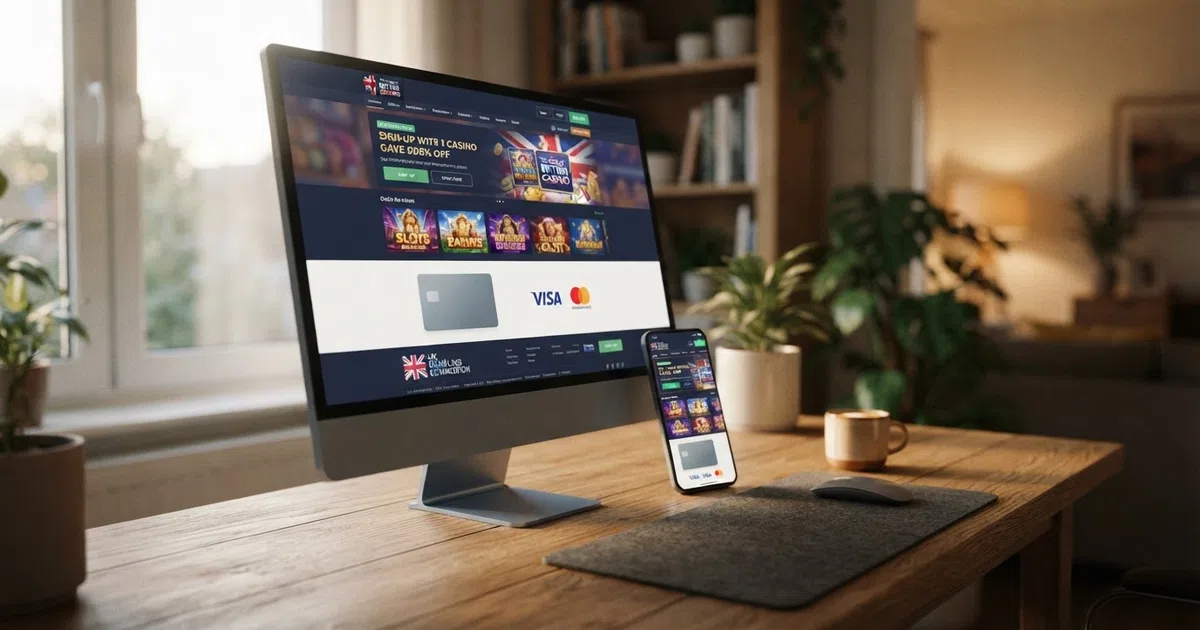
A “Mastercard casino” in the UK means something narrower than it did five years ago. Since the credit card ban took effect in April 2020, every UKGC-licensed site has accepted only debit cards: no Visa credit, no Mastercard credit, no Amex credit, no credit-card-funded e-wallet. A player landing on a UK casino cashier in 2026 will see Mastercard in the deposit list, but the card behind that logo must be a debit card. That distinction shapes everything: the type of card, the speed of withdrawal, the protections a player keeps, and the offers a casino is allowed to attach to the deposit. This guide works through that reality — what Mastercard actually delivers at a UK casino, which ten operators do it best, and where the friction lives.
What a Mastercard Casino Actually Means for UK Players
What “Mastercard Casino” Means After the Credit Card Ban
The shift happened on 14 April 2020, when the UK Gambling Commission’s licence condition 6.1.2 came into force. The rule is blunt: a UKGC-licensed operator may not accept any credit card payment for any form of remote gambling. The ban covers Visa credit, Mastercard credit, and Amex credit. It extends to e-wallets funded by a credit card. Debit cards are the only card-based route left, and they remain legal because the regulatory intent was to stop borrowing from funding gambling, not to stop card payments wholesale.
The Commission’s published rationale, drawn from its own research at the time, noted that 22% of online gamblers who used credit cards were classed as problem gamblers, a far higher rate than for non-credit-card users. The measure was consumer protection, not payment-system politics. For a player, the practical effect is that “Mastercard accepted” at a UK casino now means “Mastercard debit accepted” — the credit card in your wallet is not a valid funding source, and the cashier will decline it.
The distinction matters more than the branding suggests. A credit card transaction is a borrowing transaction; the bank pays the casino and the player owes the bank, often with interest. A debit card transaction draws from funds already in the current account. Under the ban, only the latter is permitted. A player trying to use a credit Mastercard will not find an override or a workaround — the operator’s payment processor rejects the transaction before the casino ever sees it.
How a Mastercard Casino Deposit Actually Works
Funding a UK casino account with a Mastercard debit card follows the same flow as any other online card payment. The player navigates to the cashier, selects “Debit Card” or “Mastercard” from the deposit methods, and enters the card number, expiry date, CVV, and the deposit amount. The casino’s payment processor then routes the transaction through the card network, and the player’s bank pushes a 3D Secure prompt to the banking app or via SMS — a one-time code, a fingerprint check, or a redirect to the bank’s own authentication page. Once the 3D Secure step clears, the balance lands in the casino account.
Card deposits land instantly at most UKGC operators. The network authorisation, the 3D Secure step, and the operator’s balance credit all happen within the same session, typically under thirty seconds. The player does not wait for a clearing period; the money is available to play with the moment the confirmation screen appears.
The operator side of this flow is invisible to the player, but it is structured. Every UKGC casino routes card payments through a payment service provider that handles the technical compliance: PCI-DSS security standards, Strong Customer Authentication under PSD2, and anti-fraud monitoring. The casino never sees the raw card data in many cases — the payment page may be hosted by the processor, with the casino only receiving an authorisation token. This is why the cashier page often looks different from the rest of the site: it is, in a literal sense, a different company’s page.
The Real Pros and Cons of Using Mastercard at Online Casinos
The upside is straightforward. Mastercard debit is accepted at virtually every UKGC-licensed casino — ten of ten operators in this guide’s featured set take it, and a player who has narrowed the field to licensed sites can assume Mastercard is on the deposit list until proven otherwise. Deposits clear instantly. The card is already in the wallet, the bank app is already set up, and there is no third-party account to fund first. For a player who values simplicity, Mastercard debit is the lowest-friction legal funding route in the UK market.
The downside is the withdrawal side. Cashouts back to a debit Mastercard are slower than deposits: the industry benchmark is one to three business days, against a deposit that lands in seconds. The mechanism is the Original Credit Transaction (OCT) — a card-network rail designed for refunds and merchant credit, not for real-time payouts. The same network that authorises a deposit in under a second takes two to three working days to push a withdrawal back to the card. Mastercard Send, the network’s faster payout rail, exists but is available at fewer UK casinos than Visa Direct. For most players, a Mastercard withdrawal means a multi-day wait.
The other constraint is the credit card ban itself. A player whose only card is a credit Mastercard has no fallback at a UKGC site. The ban is absolute at licensed operators. This affects bankroll management in a way the marketing pages do not flag: a player cannot, for example, front a short-term bankroll gap with a credit card and pay it off at month end. The money has to be in the current account. For players with thin bank balances or irregular income, that constraint is real.
What to Look for in a Mastercard Casino Before You Sign Up
A pre-registration routine takes ten minutes and catches most problems before they start. The first check is the UKGC public register — the Commission maintains a searchable list of every licensed operator, filterable by business name, trading name, domain name, or account number, and the register was last updated on 29 July 2026. A player who types the casino’s domain into the register should see a live entry with an “Active” status. If the entry does not exist, the licence number in the footer is a fabrication, and the site is unlicensed.
The second check is the payment page itself. The Mastercard logo in the cashier, with the word “Debit” attached, confirms the operator has set up the deposit flow correctly. A site that lists “Mastercard” without specifying debit may still be operating, but the ambiguity is a yellow flag. The third check is the operator’s stated deposit and withdrawal limits for Mastercard specifically — these vary widely across the featured set, from a £3,000 per-transaction ceiling at BetMGM to a £40,000 per-transaction ceiling at William Hill. A player whose bankroll does not fit the operator’s limits should know before funding the account.
The fourth check is the operator’s track record: how long the UKGC licence has been active, which alternative dispute resolution (ADR) provider is listed, and whether any enforcement action appears in the Commission’s published regulatory action log. A long-running licence, a recognised ADR provider (eCOGRA, IBAS, or similar), and a clean record are the baseline signals of a legitimate operation.
Paying at UK Casinos with Mastercard: What Works and What Does Not
How to Deposit with Mastercard at a UK Casino
The deposit flow at a UK casino is built around the card-payment page, and it is consistent across operators. The player logs in, opens the cashier, and chooses the deposit method. Most UKGC casinos list debit cards under a single entry — “Debit Card” or “Visa/Mastercard” — rather than splitting Visa and Mastercard into two buttons. The player enters the deposit amount, then the card details: number, expiry, CVV, name on card. The first deposit at a new casino typically triggers a 3D Secure challenge; subsequent deposits may be authenticated by the bank’s frictionless-risk engine without a prompt.
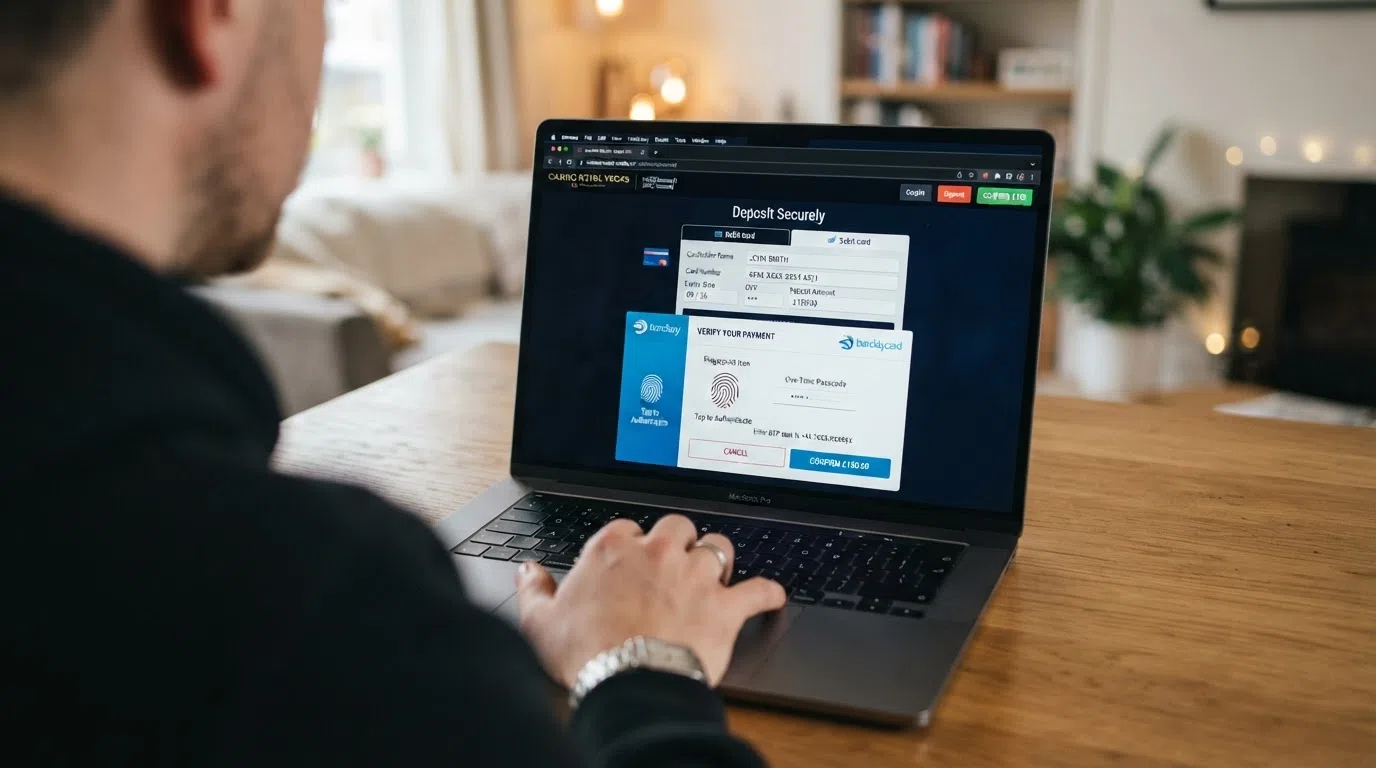
Card deposits land instantly at most operators. The instant credit is the marketing point of card payments at online casinos, and it is real: the authorisation, the fraud screen, the 3D Secure check, and the operator’s balance update all run in a single transaction. There is no “pending” status, no “processing” delay, and no batch settlement. A player who deposits £50 at 22:00:15 has £50 in their casino balance at 22:00:16, give or take a second of network latency.
The 3D Secure step is the only part of the flow where a player can get stuck. The bank may require a code from a card reader, a push notification to the banking app, or a biometric check. If the player fails the challenge — wrong code, timed-out session, app not installed — the deposit is declined. The casino balance is not affected. Most UK banks have frictionless 3D Secure on low-value, low-risk transactions, but a first deposit or a deposit above a certain threshold will trigger the full challenge.
Mastercard Withdrawals: How Your Winnings Actually Reach You
Withdrawing winnings back to a Mastercard debit card uses a different rail from the deposit. The card networks process payouts through the Original Credit Transaction mechanism, which was designed for merchant refunds rather than real-time consumer payouts. The result is a one to three business day settlement window at most UK casinos. A player requesting a withdrawal on a Monday afternoon may see the funds on Wednesday or Thursday; a Friday request waits over the weekend.
The reason for the gap is structural. The OCT rail routes through the card network’s batch settlement system, not its instant-authentication system. The casino’s payment processor initiates the credit, the network clears it in the next batch, and the player’s bank posts it on the receiving side. Weekends and bank holidays extend the window because the batch cycles pause. A player who needs the money on a specific day should request the withdrawal two to three business days ahead.
Mastercard Send is the network’s instant-payout rail, designed to compete with Visa Direct and faster payment schemes. It is available at fewer UK casinos than Visa Direct, and the gap matters: a player choosing between two licensed operators, one on Visa debit and one on Mastercard debit, may find the Visa site offers same-day cashouts via Visa Direct while the Mastercard site does not. The feature is operator-by-operator, not card-network-wide.
Debit Cards vs Credit Cards: What the UK Ban Means for Your Play
The April 2020 credit card ban under LCCP 6.1.2 reshaped the UK online gambling market. Every UKGC-licensed operator must decline credit card deposits, including credit cards issued by any network — Visa, Mastercard, Amex — and any e-wallet funded by a credit card. The rule does not distinguish between card tiers or credit limits; a credit card is a credit card regardless of whether the player plans to clear the balance in full each month.
The Commission’s published ground for the ban was a 22% rate of problem gambling among credit-card-using online gamblers. The measure was a harm-reduction intervention aimed at a population the Commission identified as disproportionately at risk. The rule applies to all remote gambling — casino, sports betting, bingo, lottery — and it extends to non-remote betting as well. The only card-based funding source still legal at a UKGC site is the debit card, tied to funds already in the player’s current account.
For a player, the practical consequence is bankroll discipline by architecture. A player cannot overspend a credit card limit at a UK casino, because the credit card is rejected at the cashier. The debit card draw is limited to the current account balance, and the player feels the spend immediately. This is the regulatory intent made visible: the ban is not a payment-rail inconvenience, it is a guardrail against the specific harm pattern the Commission identified.
Fees, Minimum Deposits and Maximum Limits for Mastercard
UKGC-licensed casinos do not charge deposit fees on Mastercard debit transactions as a matter of standard practice. The deposit page at a licensed site will not add a processing surcharge; the player deposits £50, the casino balance shows £50, and the bank statement shows a £50 debit. Any operator that did levy a deposit fee would be out of step with the rest of the market, and a player who encounters one should treat it as a signal to read the small print carefully.
The bank side is where fees can appear. Some UK banks treat gambling transactions as a higher-risk merchant category and may apply a cash-advance fee or a foreign-transaction fee if the card is processed through an overseas entity. Most UKGC operators are registered domestically, so the foreign-transaction fee rarely applies, but a player with a premium bank account or a specialist card issuer should check the cardholder agreement before the first deposit. The fee, if it exists, is small — typically 1% to 3% — but it is the player’s bank that charges it, not the casino.
Minimum deposits across the featured set cluster around £5 to £10. William Hill accepts Mastercard debit from £5 per transaction; BetMGM, LeoVegas, Sky Vegas, and most other operators set the floor at £10. Maximum deposit limits vary more widely. BetMGM caps Mastercard deposits at £3,000 per transaction. Sky Vegas accepts up to £10,000 daily. William Hill allows up to £40,000 per transaction. A high-stakes player whose bankroll exceeds the lower ceilings will find the larger operators more accommodating; a casual player will not notice the difference.
Mastercard Alternatives for Casino Players: How They Compare
Mastercard debit is not the only legal funding route at a UK casino, and the alternatives are worth understanding for the situations where Mastercard is not the best tool. Visa debit is the closest substitute: the two card networks operate near-identically at the cashier, and a player who holds a Visa debit card rather than a Mastercard debit card will see no meaningful difference in deposit speed, withdrawal time, or acceptance. The exception is the fast-payout rail: Visa Direct is more widely deployed at UK casinos than Mastercard Send, so a player prioritising withdrawal speed may prefer Visa for that reason alone.
PayPal and other e-wallets offer faster withdrawals than either card network — minutes rather than days — but come with a structural cost. Several UKGC operators, including LeoVegas, exclude PayPal deposits from welcome bonus eligibility. The exclusion is in the bonus terms, not the deposit page, and a player who funds with PayPal expecting the standard welcome offer will not receive it. E-wallets are best for players who have already burned the welcome offer and prioritise cashout speed on subsequent play.
Apple Pay and Google Pay are not separate payment rails — they are tokenised layers over the underlying debit card. A player who pays with Apple Pay at a UK casino is, in network terms, paying with a debit Mastercard or Visa. The convenience difference is real (Face ID instead of card details) but the deposit and withdrawal mechanics are the same. Not every UK casino cashier supports Apple Pay or Google Pay; support is operator-by-operator, and a player who values the mobile-wallet experience should check the cashier before registering.
Open banking and bank transfer are slower for deposits but support much higher limits. A player moving £10,000 or £20,000 into a casino account will find the bank-transfer or open-banking route easier than any card-based method, because the card deposit ceilings at most operators are well below that figure. The processing time is longer — sometimes hours, sometimes a day — and the withdrawal side is slower still, but the higher limits make bank transfer the natural choice for high-stakes play.
No-Verification and No-Registration Mastercard Casinos
Searches for “no-verification” or “no-registration” Mastercard casinos run into a wall of UK regulation. Since 7 May 2019, every UKGC-licensed remote operator must verify the customer’s name, address, and date of birth before accepting the first deposit or allowing any gambling. The rule is not optional, and there is no fast-track for small deposits or known customers. A “no-verification casino” in the UK market is, by definition, not a UKGC-licensed casino.
“No-registration” or “Pay N Play” casinos do exist in the UK, but they are rare. The model — sign in via your bank, deposit and play immediately, no separate account creation — relies on open banking for identity verification, not Mastercard. The deposit flow is bank-transfer-based, and the player never enters card details. A player who values the no-registration experience is, in effect, opting out of Mastercard funding by design.
The trade-off is the protections verification unlocks. The age-verification check is the front line of the under-18 block; the address check supports affordability assessments; the identity check enables GAMSTOP enforcement. A player at a no-verification site loses these layers. For a UK player who values the safety net, the no-verification route is not a shortcut — it is a step outside the licensed market.
The UK’s Best Mastercard Casinos, Ranked for 2026
| Casino | UKGC Licence | Welcome Offer | Free Spins | Wagering on Winnings | Bonus Validity |
|---|---|---|---|---|---|
| BetMGM | 39198 | 200 free spins on Big Bass Splash | 200 | 0× | 7d deposit / 3d spin |
| Bet365 | 39563 | Up to 500 free spins (10-day reveal) | Up to 500 | 0× | 30d claim / 24h per reveal |
| LeoVegas | 39198 | 50 free spins on Big Bass Splash | 50 | 0× | 7d deposit / 3d spin |
| Sky Vegas | 39439 | 50 no-deposit + 200 on £10 spend | 250 | 0× | 7d spin / 30d registration |
| William Hill | 38718 | 200 free spins on Big Bass Splash | 200 | 10× | 7d / 72h spin |
| BetVictor | Active | £30 bonus + 50 free spins on Fishin’ Frenzy | 50 | 10× (bonus funds) | 7d trigger / 30d expiry |
| Betway | 39700 | 100 cash spins on Le Bandit | 100 | 10× | 48h spin |
| 888 Casino | 39028 | — | — | — | — |
| All British Casino | Active (L&L Europe) | 50 cash spins on October Fortune | 50 | 10× | — |
| Duelz | Active | — | — | — | — |
The table compares all ten featured operators across the dimensions a Mastercard player cares about. The wagering column carries the figure on free spin winnings where research confirms it; the “0×” entries are the wager-free offers, where every penny of spin winnings is withdrawable on credit. The bonus validity column combines the deposit-and-wager trigger window with the spin-expiry window, because both gates matter to a player who wants to convert the offer into withdrawable cash.
BetMGM — 200 Wager-Free Spins with Zero Wagering on Winnings
BetMGM’s welcome package is the strongest in the featured set by a clear margin: 200 free spins on Big Bass Splash at 10p per spin, no wagering on the winnings, and a low-friction trigger. A new player deposits £10 by Mastercard debit and wagers that £10 once, and the 200 spins land in the account. The spin winnings are withdrawable immediately — no playthrough, no max cashout, no game restrictions on how the money is used.
The Mastercard deposit range is £10 to £3,000 per transaction, with withdrawals from £10 to £8,000. The 7-day window to deposit and wager is tight but workable; the 3-day spin expiry after credit is the binding constraint, and a player who triggers the offer and walks away for a weekend will find the spins gone. The licence is UKGC 39198, held by LeoVegas Gaming PLC and active since 1 November 2014 — a long, clean record. BetMGM stands out here as our top-ranked operator for Mastercard users.
Bet365 — Up to 500 Free Spins via a Prize Reveal System
Bet365’s offer runs on a different mechanic: a 10-day prize reveal, with 5, 10, 20, or 50 free spins credited each day depending on what the player uncovers. The maximum is 500 spins, the minimum is well below that, and the daily reveal structure means the offer pays out over ten days rather than all at once. Free spin winnings carry zero wagering.
The trigger is heavier than BetMGM’s: a minimum of £10 in lifetime deposits with the operator, claimable within 30 days of opt-in. The 24-hour window per reveal is the constraint — a player who misses a day’s reveal loses that day’s spins. For a player who logs in daily and values the prize-reveal gamification, the 500-spin ceiling is the largest in the featured set. For a casual player, the effective spin count is lower than the headline number suggests. The licence is UKGC 39563 (Hillside (UK Sports) ENC), which confirms Mastercard debit is a fully supported deposit method here.
LeoVegas — 50 Wager-Free Spins on Big Bass Splash
LeoVegas runs a compact, no-strings welcome: 50 free spins on Big Bass Splash at 10p per spin, zero wagering, and a £10 Mastercard debit deposit plus a 1× wager to trigger. The 7-day deposit/wager window and 3-day spin expiry match BetMGM’s structure, and the licence is the same UKGC 39198 — LeoVegas Gaming PLC holds both brands.
The single point a player needs to know is the PayPal exclusion: PayPal deposits are not eligible for the welcome bonus at LeoVegas, and a player who funds with PayPal expecting the 50 spins will not receive them. A Mastercard debit deposit qualifies in full, so the offer is intact for the card-funded player. For a player who values the spin count over the total monetary value — 50 spins at 10p is £5 of spin credit, with no wagering on anything it returns — the offer is honest and the terms are clean.
Sky Vegas — 50 No-Deposit Spins Plus 200 More After a £10 Spend
Sky Vegas is the only featured operator with a genuinely deposit-free welcome component. The 50 free spins on registration require no deposit and no payment method on file; a player creates an account, verifies age and identity (mandatory under UKGC rules), and the spins appear. The 200 additional free spins credit after the player deposits and spends £10 — no wagering on any of the spin winnings.
The deposit range is £10 to £10,000 daily on Mastercard debit, the widest mid-range in the featured set. The 7-day spin expiry applies, and the £10 spend must happen within 30 days of registration. For a player who wants to test the casino before committing a deposit, the no-deposit 50 spins are the only route in the featured set that does not require a Mastercard transaction to unlock. The operator operates under UKGC 39439, licensed to the Flutter Entertainment group.
William Hill — 200 Free Spins with a £30 Winnings Cap
William Hill’s offer looks generous on the surface: 200 free spins on Big Bass Splash at 10p per spin, the same headline count as BetMGM. The mechanics are harsher. Free spin winnings carry 10× wagering — the highest in the featured set among the wagering-bearing offers — and the maximum winnings from the spins are capped at £30. The trigger is a £10 deposit plus a £10 stake, with 7 days to complete and a 72-hour spin expiry after credit.
For a player who clears the wagering, the £30 cap means a run of high-variance outcomes above that ceiling is paid at £30, not at the full amount. The comparison with BetMGM is sharp: BetMGM’s 200 wager-free spins have no ceiling, and any player who hits a £100 or £200 win keeps the full amount. William Hill’s 200 spins have a £30 ceiling and a 10× playthrough. The spin count is the same; the withdrawable value is not. William Hill holds UKGC licence 38718 via WHG (International) Limited, a member of the evoke group.
BetVictor — £30 Bonus Funds Plus 50 Spins with a £300 Cap
BetVictor runs one of the few welcome offers in the featured set that mixes bonus funds with free spins. The £30 in casino bonus funds carries 10× wagering, and the maximum withdrawal from the bonus funds is £300 — a higher ceiling than William Hill’s £30 cap, reflecting the different offer type. The 50 free spins are on Fishin’ Frenzy. The trigger is a £10 deposit and £10 wager within 7 days, and the bonus expires 30 days after credit.
The bonus-funds structure suits a player who prefers cash to spin credit. A player who treats the £30 as a small bankroll and plays table games or slots conservatively can work through the 10× playthrough (£300 in qualifying wagers) within the 30-day window and withdraw up to £300. The free spins are a sweetener on top. The licence is active on the UKGC register under BetVictor’s standard operating entity.
Betway — 100 Cash Spins on Le Bandit
Betway’s offer is 100 cash spins on Le Bandit, with 10× wagering on the winnings. The spin count is mid-range, the wagering is mid-range, and the standout feature is the slot title — Le Bandit is a Hacksaw Gaming release, less common across the featured set than Big Bass Splash, and it attracts players who prefer a different visual and mechanical style.
The constraint is the validity window: 48 hours to use the spins after credit, the tightest in the featured set. A player who triggers the offer on a Friday evening and returns Monday morning will find the spins expired. The wagering on winnings is the standard 10× for this tier of offer. Mastercard debit is accepted, and the licence is UKGC 39700. For a player who logs in frequently and values the Hacksaw Gaming catalogue, the offer is competitive; for a player who plays weekly, the 48-hour expiry is a real friction point.
888 Casino — Established Brand, Welcome Offer Unconfirmed
888 Casino is a household name in UK online gambling, with a proprietary game catalogue layered onto the major studios. The UKGC licence is 39028, active and long-standing. Mastercard debit is accepted, and the site offers a full casino product — slots, table games, live dealer — under the 888 brand.
The current welcome offer terms are available on the 888 Casino promotions page. The 888 promotions page carries the authoritative current terms, and a player considering the brand should check the live page before depositing. The site is legitimate and the licence is in order; what the welcome package looks like in 2026 is a moving target, and this guide does not print terms it cannot verify against the operator’s own current page.
For a player who already has an 888 account or values the proprietary games, the brand is a safe Mastercard deposit destination. For a new player comparing welcome offers, the absence of confirmed terms means the offer cannot be ranked against the wager-free alternatives at BetMGM, Bet365, LeoVegas, and Sky Vegas.
All British Casino — 50 Cash Spins with a UK-Facing Brand
All British Casino runs a straightforward 50 cash spins offer on October Fortune, with 10× wagering on the winnings. The brand is UK-facing — the name, the theme, and the licence holder (L&L Europe Ltd) position the site for a British player. The trigger is a £10 deposit and a qualifying wager, and the wagering burden is the standard 10× for the post-January 2026 bonus landscape.
The offer is unflashy: 50 spins at 10p is £5 of spin credit, with 10× wagering on whatever it returns. For a player who values the brand fit over headline spin count, the package is honest. Check the official All British Casino promotions page for the current offer validity. Mastercard debit is accepted, and the licence is active on the UKGC register.
Duelz — Gamified Casino with Ultra-Fast E-Wallet Payouts
Duelz is the outlier in the featured set: a gamified casino with a player-versus-player duel mechanic, a distinctive visual identity, and the fastest recorded payout in the set — six minutes via e-wallet, verified through Trustpilot. The UKGC licence is active, Mastercard debit is accepted, and the game catalogue draws from the major studios.
Check the official Duelz promotions page for current terms before depositing. The payout speed is the standout feature, and it runs on the e-wallet rails, not on Mastercard. A player prioritising same-session access to winnings via e-wallet will find Duelz competitive; a player who needs fast payouts specifically to a debit card will not benefit from the e-wallet speed. The site’s gamification is a matter of taste — some players enjoy the duel mechanic, others find it a layer on top of the games they came to play.
Why Your 2026 Mastercard Casino Bonus Is Smaller Than It Looks
Welcome Bonuses You Can Claim with a Mastercard Deposit
The headline numbers at UKGC casinos in 2026 are smaller than they were three years ago, and that is the regulatory design working. Since January 2026, wagering requirements on bonuses have been capped at 10× the bonus amount, replacing the 30× to 50× multiples that were standard in the previous era. A player who sees a 200-spin offer at a 0× wagering multiple today is looking at a genuinely withdrawable bonus, not a marketing figure obscured by a playthrough that would take a weekend to clear.
The shift in offer structure is visible across the featured set. Eight of the ten operators route their welcome package through free spins rather than deposit-match cash, and the four with 0× wagering (BetMGM, Bet365, LeoVegas, Sky Vegas) sit at the top of the value ranking. The two offers that mix bonus funds with spins (BetVictor, William Hill) carry the 10× wagering cap as the new floor. The free-spins-dominant pattern is not an accident; it is the bonus shape that the 10× cap makes commercially viable.
Mastercard eligibility is near-universal for bonus-qualifying deposits. Every operator in the featured set accepts Mastercard debit for the welcome offer, and the only exclusion in the set is PayPal at LeoVegas. A player funding with a debit Mastercard will trigger the offer in full at every site reviewed here. The value ranking among those sites is the player’s real decision: 0× wagering offers with no cashout cap versus 10× wagering offers with caps between £30 and £300.
No-Deposit Bonuses at Mastercard Casinos
No-deposit bonuses are the rarest offer type in the UKGC market, and the rarity is structural. A no-deposit offer is a pure cost to the operator — the player gets something for free, with no purchase commitment — and the compliance overhead of verifying the player, enforcing the bonus terms, and preventing abuse is the same as for a deposit-gated offer. The economics only work if the bonus is small, the wagering is achievable, and the cap on winnings is tight. Most operators decide the numbers do not add up.
Sky Vegas is the only featured operator with a genuine no-deposit component: 50 free spins on registration, before any deposit, with no wagering on the winnings. The offer is small — 50 spins at 10p is £5 of spin credit — but it is genuinely free, and a player who wants to test the casino before committing a deposit has no other no-deposit option in the featured set. The pattern holds across the wider UKGC market: no-deposit offers exist, but they are scarce, and the terms are usually harsher than the headline suggests.
A player who encounters a no-deposit offer outside the featured set should read the terms with particular care. Wagering requirements on no-deposit bonuses are often higher than on deposit-gated offers, max cashout caps are common, and game restrictions frequently exclude the highest-RTP slots. The “free” in no-deposit is real, but the “bonus” part is smaller than it looks.
Free Spins Offers for Mastercard Players in 2026
Free spins dominate the UKGC welcome landscape, and the shape of the offers is consistent enough to map. Spin counts across the featured set range from 50 (LeoVegas, All British Casino) to 500 (Bet365, via the 10-day reveal). The spin value is the UK market standard of 10p across all operators, a consistency set by the major studios and the platform providers. Big Bass Splash (Pragmatic Play) appears across four operators — BetMGM, LeoVegas, William Hill, and Sky Vegas — and is the closest thing the UK free-spins market has to a default slot.
The variation is in the conditions. Wagering on free spin winnings is 0× at BetMGM, Bet365, LeoVegas, and Sky Vegas; 10× at William Hill, BetVictor, Betway, and All British Casino. Maximum cashout caps vary: no cap at the 0× operators, £30 at William Hill, £300 from bonus funds at BetVictor. Validity windows range from 48 hours (Betway) to 30 days (Bet365, BetVictor). The headline spin count is the least informative number on the offer; the wagering, the cap, and the window are what determine the withdrawable value.
“Cash spins” and “wager-free spins” are the same category in practice: spins where the winnings are yours to withdraw immediately, without a playthrough multiplier. A 50-spin wager-free offer is mechanically identical to a 50-spin cash-spin offer. The terminology varies by operator, but the player experience is the same: the winnings land in the withdrawable balance, not in a bonus lock-up.
No-Wagering Bonuses: Keep What You Win
The wager-free offers are the real value tier in the post-January 2026 landscape. Four of the ten featured operators — BetMGM, Bet365, LeoVegas, and Sky Vegas — attach 0× wagering to free spin winnings, and the comparison with the 10× tier is sharp. A 50-spin wager-free offer at 10p per spin, with no cap, is worth more in expected value to most players than a 200-spin 10×-wagering offer capped at £30.
The arithmetic is straightforward. A 200-spin 10×-wagering offer at 10p per spin generates £20 of spin credit; the cap at £30 means a player who wins more than £30 from the spins sees the excess voided, and the 10× playthrough on the retained £30 is £300 of qualifying wagers. A 50-spin wager-free offer at 10p per spin generates £5 of spin credit with no playthrough, no cap, and immediate withdrawability. The 50-spin offer is smaller in headline credit but cleaner in realised value.
The 10× wagering cap still creates a gap between 0× and 10× operators. A player who values simplicity and wants to convert the welcome offer into withdrawable cash without grinding through a playthrough will find the 0× operators the better fit. A player who values the larger spin count and is willing to clear the wagering may prefer the 10× tier. Both are legitimate choices; the marketing spin count should not be the deciding factor.
Bonus Codes and Promo Offers for Mastercard Users
Bonus codes are not a standard feature of the UKGC welcome landscape. None of the featured operators’ welcome offers requires a code to claim — the bonus credits automatically on a qualifying Mastercard deposit. The page a player lands on after registering will show the offer, and the deposit triggers it. A code field, where it appears at all, is typically for reload or seasonal promotions, not for the headline welcome package.
A player who sees a “bonus code required” instruction for a welcome offer at a UKGC casino should treat it as a yellow flag. The standard practice is opt-in via a checkbox on the registration form or the deposit page, not a code. Codes are an affiliate-marketing mechanism for tracking where a player came from, and a legitimate welcome offer does not require the player to enter one. A required code may indicate the offer is being run through a specific affiliate channel with different terms.
The distinction this guide draws is between offer terms and distribution tokens. The offer terms are the wagering, the cap, the validity, the eligible games, the deposit method — the shape of the deal. A bonus code is the mechanism for claiming the deal, and it does not change the shape. This guide describes the offer shape, not the distribution token, and a player who needs a code to claim should find one through the operator’s own promotions page or a verified affiliate partner.
The Slots and Games You Can Actually Play with Mastercard
Online Slots You Can Play with Mastercard: RTPs That Matter
| Slot | Provider | RTP | Volatility | Max Win |
|---|---|---|---|---|
| Big Bass Splash | Pragmatic Play | 96.71% | High | 2,100× |
| Book of Dead | Play’n GO | 96.21%* | High | 5,000× |
| Starburst | NetEnt | 96.09% | Low | 500× |
| Gates of Olympus | Pragmatic Play | 96.50% | High | 5,000× |
| Sweet Bonanza | Pragmatic Play | 96.51% | High | 21,175× |
*Book of Dead is deployed at five different RTP configurations across UKGC casinos, ranging from 96.21% at the best-configured sites down to 84.25% at the worst. The 96.21% figure is the highest available; the same game can return 11.96 percentage points less at another licensed casino. The table shows the best-case configuration; the player’s experience depends on which configuration their operator has selected.
The RTP spread on a single title is the most important number on the table, and it is the one most players never see. Book of Dead, one of the most-played slots in the UK, ships from Play’n GO with five configurable RTP settings, and the operator chooses which to deploy. A player at a casino running the 96.21% configuration faces a house edge of 3.79%; the same game at a casino running the 84.25% configuration faces a house edge of 15.75%. The game looks identical, the bonus features are identical, but the long-run return to the player is more than four times worse.
The UKGC does not set a minimum RTP floor for online slots. The requirement is that the operator display the RTP somewhere accessible — typically in the game’s help or information page — and that the displayed figure match the deployed configuration. A player who wants to know the RTP of the specific game they are playing should open the information page before the first spin. The figure in the table is the best available configuration across the named titles; the deployed figure may be lower.
Blackjack and Roulette at Mastercard Casinos
Table games at UKGC casinos are funded by Mastercard debit deposits through the same cashier flow as slots, and the experience is functionally identical at the deposit stage. What differs is the product. Blackjack variants at UK online casinos typically return over 99% to the player with optimal strategy, well above the 96% range that defines a high-RTP slot. Roulette’s return depends on the variant: European roulette, with a single zero, returns 97.3%; American roulette, with the additional double zero, returns 94.74%. The difference between the two is a 2.56 percentage point house edge, and it is the player’s choice to make.
The statutory slot stake limits — £5 per spin for players aged 25 and over, £2 for players aged 18 to 24 — do not apply to table games. A player at a blackjack table can bet above the slot ceiling without restriction, and the same applies to roulette, live casino, bingo, and sports betting. The stake limits are a slots-specific measure, imposed by SI 2025/215, and the table-game products sit outside their scope. Table games thus provide a higher-stakes alternative to standard slot play.
Live Dealer Games with Mastercard Deposits
Live dealer studios at UK online casinos are dominated by Evolution and Pragmatic Play Live, with a handful of smaller providers filling specific niches. The games run on real-time video from studio floors, with human dealers managing blackjack, roulette, baccarat, and game-show formats like Crazy Time and Monopoly Live. The deposit flow is identical to slots: the player funds the casino account with a Mastercard debit transaction, and the balance is available across all products, including live casino.
Stake ranges at live dealer tables vary. Most UK live casino blackjack tables accept bets from £1 to £5,000, with VIP tables extending the ceiling. Roulette tables run from £0.10 to £10,000 or more on the high-roller variants. Game-show products typically accept lower maximum bets, in the £500 to £1,000 range, reflecting the higher house edge on bonus-round mechanics. The slot stake limits do not apply to live dealer, so a player at a live blackjack table is not constrained by the £5 or £2 ceiling.
Bingo Sites That Accept Mastercard
Several featured operators carry bingo alongside their casino product. William Hill and Bet365 both run bingo rooms under the same account, funded by the same Mastercard debit deposit. The bingo product has its own bonus structure, its own game schedule, and its own community features, but the wallet is shared with the casino. A player who deposits £20 to play casino at William Hill can move to the bingo rooms with the same balance.
The 10× wagering cap applies to bingo bonuses as well as casino bonuses. The measure is product-neutral: any bonus offered by a UKGC-licensed operator, regardless of which product it attaches to, is subject to the same wagering ceiling. A player comparing a casino welcome offer to a bingo welcome offer at the same operator will find the wagering terms aligned.
Free-Play Demo Mode vs Real-Money Slots with Mastercard
Every UKGC-licensed casino offers free-play demo versions of its slots, accessible without registration and without a Mastercard deposit. The demo mode runs the same game software as the real-money version, with the same RTP, the same volatility, the same bonus features. A player who wants to test a slot’s mechanics, its bonus frequency, or its visual style can do so without committing a deposit.
What demo mode does not show is the wrapper around the game. The withdrawal friction — the pending period, the OCT processing, the bank posting time — is invisible in demo mode. The bonus terms — the wagering, the cap, the validity — do not apply. The deposit-limit prompt does not fire. The reality-check pop-up does not trigger. A player who tests a casino in demo mode and then funds it with a Mastercard debit deposit encounters a different experience: a cashier page, a 3D Secure step, a balance confirmation, and the full set of safer-gambling tools the UKGC requires.
The legitimate use of demo mode is to test the game catalogue before committing. A player who wants to know whether a casino has the right mix of slots, whether the game-loading speed is acceptable, and whether the site layout works on their device can answer all three in demo mode. The questions demo mode cannot answer — bonus terms, withdrawal speed, ADR process — require a different kind of testing, and the safest approach is to start with a small deposit, test the withdrawal flow with a modest cashout, and scale up only once the operator has proved itself.
The Cost of a Real-Money Slots Session with Mastercard
A session at an online slot, funded by a Mastercard debit deposit, costs what the math says it costs. The average UK online slots session in early 2026 runs about 15 minutes and includes 124 spins — down from 136 spins per session before the April–May 2025 stake limits, a drop that reflects the per-spin cap binding at the high-stakes end. At the £5 maximum stake for players aged 25 and over, a 124-spin session at full stake bets £620. At the £2 maximum for players aged 18 to 24, the same session bets £248.
The expected return depends on the slot’s RTP. Big Bass Splash, at 96.71% RTP, returns 96.71p for every £1 wagered over the long run; the 124-spin session at £5 per spin has an expected loss of £620 × (1 − 0.9671) = £20.37. Book of Dead at its best configuration (96.21% RTP) returns 96.21p per £1; the same session has an expected loss of £620 × (1 − 0.9621) = £23.50. At Book of Dead’s worst UK configuration (84.25% RTP), the expected loss on the same session is £620 × (1 − 0.8425) = £97.45. The configuration choice at the same game moves the expected cost by more than a factor of four.
For a player aged 18 to 24, the £2 stake cap cuts both the session spend and the expected loss. A 124-spin session at £2 per spin on Big Bass Splash bets £248 and carries an expected loss of £248 × (1 − 0.9671) = £8.16. The lower stake is the regulatory protection working: the same time at the screen, the same 124 spins, but a quarter of the financial exposure.
These are statistical estimates — averages over many spins under the stated assumptions, not a prediction for any individual session. A player on any given 15-minute run will see a different outcome, sometimes substantially so. The math describes what a session costs in the long run, and the long run is the only place the RTP figure is meaningful.
Mastercard Casinos on Mobile: Apps, Browsers and What Actually Works
Mobile Browser vs Dedicated Casino Apps for Mastercard Play
Every UKGC-licensed casino works in a mobile browser. A player who navigates to the casino’s URL on Safari, Chrome, or any other mobile browser sees the full site, adapted to the screen size, and the Mastercard debit deposit flow works identically to the desktop version. No app is required. The browser is the default, and for a player who plays occasionally, the browser is enough.
Dedicated apps add three things the browser does not have: push notifications for bonus offers and session reminders, biometric login via Face ID or fingerprint, and faster reload times because the app caches the game assets locally. A player who plays frequently and values the convenience of tapping an icon rather than opening a browser will find the app worth the install. A player who plays occasionally will not notice the difference.
App availability across the featured set is broad but not universal. BetMGM, Bet365, LeoVegas, William Hill, and Sky Vegas all offer iOS and Android apps. The newer 2026 launches — Bet Ahoy and Happy Tiger — have launched with dedicated apps from day one. The browser remains the fallback at every site, and a player who cannot or does not want to install an app loses nothing functional.
Android Mastercard Casinos: What to Expect
Google Play does not permit real-money gambling apps in the UK, and the workaround is the standard industry practice: casino Android apps are distributed as APK files, downloaded directly from the operator’s website. The player enables “install from unknown sources” for the operator’s domain, downloads the APK, and installs it. The process is well-documented on every operator’s site, and the apps are signed and verified — they are not third-party APKs of uncertain origin.
The security consideration is the same as any sideloaded app: the source matters. A player who downloads a casino APK from the operator’s own site is installing software the operator controls. A player who downloads the same APK from a third-party mirror is taking a risk, and a player who encounters a “casino app” in a location that is neither the operator’s site nor Google Play should treat it as untrusted. The legitimate distribution channel is the operator’s site, and the player’s first step is to verify it.
Mastercard deposit flow on Android is identical to the desktop flow: cashier, card details, 3D Secure, instant credit. Google Pay is an alternative layer for players who prefer it, with the same underlying debit card funding the transaction. The slot stake limits and the bonus terms apply on mobile exactly as they do on desktop.
Mobile Slots with Mastercard: Performance and Data
Modern online slots are built in HTML5, the same technology that runs web applications on mobile browsers. The game software does not differentiate between mobile and desktop at the engine level; the visual layout adapts to the screen, but the math, the RNG, and the bonus mechanics are the same. A player who plays Big Bass Splash on a phone sees the same 96.71% RTP as a player on a laptop.
Data usage per session is modest. A 15-minute session at 124 spins, with standard slot animations and sound, consumes a few megabytes of mobile data. The figure varies by slot — heavier games with more elaborate animations use more — but for typical play, the data cost is negligible against any modern mobile plan. Wi-Fi is the default at home; mobile data is the fallback on the move, and the cost is not a barrier.
Mobile Payment Options vs Mastercard at UK Casinos
Apple Pay and Google Pay are the mobile-first payment methods at UK casino cashiers, and they are not separate payment rails. A player who pays with Apple Pay is, in network terms, paying with the debit card linked to their Apple Wallet — typically a Visa or Mastercard debit card. The tokenisation layer is what Apple Pay adds: the card number is never exposed to the casino, and the authentication is biometric (Face ID or Touch ID) rather than a 3D Secure code.
The convenience difference is the reason mobile wallets exist. A player who uses Apple Pay deposits without typing a card number, without an expiry date, without a CVV. The cashier opens, the player confirms with a fingerprint or a glance, and the balance credits. The 3D Secure step is replaced by the device authentication, and the deposit flow completes in seconds.
Availability is the constraint. Not every UK casino cashier supports Apple Pay or Google Pay, and the support is operator-by-operator, not card-network-wide. Mastercard debit, by contrast, is near-universal. A player who values the mobile-wallet experience should check the cashier before registering; however, those prioritising universal acceptance across UK sites will find Mastercard debit the more reliable choice.
New Mastercard Casinos Worth Your Time in 2026
The Latest Mastercard Casino Launches of 2026
Five new UK casino sites opened in 2026 and accept Mastercard debit deposits. Bet Ahoy launched in 2026 with a UKGC licence and dedicated iOS and Android apps. Betty UK went live on 1 June 2026 under a UKGC licence held by Betty Gaming (Malta) Limited, with the licence itself active from 1 April 2026. BetCrown launched in March 2026 with 2,100+ games in its catalogue. Play Kasino, another March 2026 launch, runs on the Skill On Net platform and offers 200 free spins on a £20 deposit. Happy Tiger launched in April 2026 under UKGC licence 57641, with dedicated iOS and Android apps.
All five accept Mastercard debit, and all five hold active UKGC licences. A player who registers at any of them is within the regulated market, with GAMSTOP coverage, ADR access, and the full set of safer-gambling tools the UKGC requires. The 2026 launches are not a separate category for compliance purposes; they are licensed operators in the same regime as the established brands.
New Sites Accepting Mastercard Deposits: What Changes
A 2026-vintage UK casino launches under the full current rule set, and that is a meaningful change from the pre-regulation market. The 10× wagering cap on bonuses is in force. The age-banded slot stake limits — £5 for 25+, £2 for 18 to 24 — apply. The mandatory deposit-limit prompt is required. Financial vulnerability checks at the £150 net-deposit threshold are standard. A new casino that opened in 2026 has never had a customer under the old rules, and its systems, its bonus structures, and its compliance processes are built for the current regime.
The game catalogue at a 2026 launch is competitive with established operators. BetCrown’s 2,100+ titles at launch is in the same range as LeoVegas’s 2,000+ and BetVictor’s 2,000+, and the difference is the depth of the back catalogue rather than the breadth of the current offering. Play Kasino’s 200 free spins on a £20 deposit is a competitive welcome offer, comparable in headline value to the 10×-wagering offers at the established brands. The newer sites tend to support modern payment rails more aggressively, including Mastercard Send where the operator has chosen to deploy it, because the payment integration is built fresh rather than layered onto legacy infrastructure.
What to Check Before Joining a New Mastercard Casino
The due-diligence routine for a new casino is the same as for an established one, with two extra steps. The UKGC public register check is the first: search by domain name or trading name, confirm the licence is active, and note the account number. The register was last updated 29 July 2026, and a player who checks on a later date should refresh and confirm the status has not changed.
The second step is the Mastercard terms. New casinos may set provisional deposit and withdrawal limits that differ from the established operators, and a player who has a specific bankroll in mind should check the cashier page before registering. The third step is the welcome offer: confirm the wagering is at or below the 10× cap, check the max-cashout clause, and read the game restrictions. The fourth step is the ADR provider: a legitimate UKGC casino names an approved ADR body (eCOGRA, IBAS, or similar) in the complaints process, and a site that does not should be avoided.
Crypto Casinos and Mastercard: A Side Door, Not a Shortcut
Bitcoin Casinos with a Mastercard On-Ramp
Using Mastercard to fund a crypto casino in the UK is a two-step process, and the first step happens off the casino site. A player who wants to deposit Bitcoin at a crypto casino buys the Bitcoin first — typically through a FCA-registered exchange — and then transfers the Bitcoin from the exchange wallet to the casino wallet. The Mastercard enters at the purchase step, not the deposit step. The casino never sees the card.
The exchanges that accept Mastercard for Bitcoin purchases in the UK are a mix of large platforms (Coinbase, Kraken, Crypto.com) and smaller FCA-registered providers. The purchase flow is standard: the player enters card details, completes 3D Secure, and the Bitcoin lands in the exchange wallet after the exchange’s confirmation window. From there, the player sends the Bitcoin to the casino’s deposit address, and the casino credits the balance after the blockchain confirmation (typically one to three block confirmations, depending on the casino).
The friction is in the details. Exchange fees on Mastercard purchases are higher than on bank transfer — typically 1.5% to 4% — and the spread between the market price and the execution price adds a further cost. Blockchain confirmation times vary: Bitcoin blocks average ten minutes, and a player who buys and deposits immediately may wait thirty minutes for the casino balance to update. Price volatility between purchase and deposit is the real risk: a player who buys £100 of Bitcoin and waits two hours for the casino credit may find the Bitcoin is now worth £95 or £105, and the casino balance reflects the latter figure.
Crypto as a Mastercard Alternative: The Risk Trade-Off
The stated appeal of crypto casinos is the absence of the UKGC’s compliance layer. No GAMSTOP, no age verification at the cashier, no financial vulnerability checks, no 10× wagering cap, and — critically for some players — credit card deposits accepted. For a player who has self-excluded via GAMSTOP and is looking for a way back in, or for a player whose bank blocks gambling transactions, the offshore crypto casino offers an unregulated route.
What the player gives up is the UKGC’s protection layer. No GAMSTOP means no enforced self-exclusion. No ADR means disputes with the casino go to the casino’s licensing jurisdiction — typically Curaçao, where the complaints process is slower and less enforceable. No fund segregation means the player’s balance is not ringfenced from the operator’s operating funds, and an operator insolvency puts the player’s money at risk. No advertising standards means the player does not have the ASA’s rules protecting them from misleading bonus terms. The UKGC’s disruption programme — 3,140 notices issued April 2024 to June 2025, 447,778 URLs referred to search engines, 287,961 removed, and a 32% average engagement drop across 160 disrupted sites — is the regulator’s response, and it is disruption rather than blocking because the Commission does not have statutory ISP or DNS blocking powers.
Are Mastercard Casinos Legal in the UK? Your Rights, Your Risks
UKGC-Licensed Mastercard Casinos: What the Licence Actually Means
A UK Gambling Commission licence is the single legal gateway for an operator taking customers from Great Britain. The requirement was established by the Gambling (Licensing and Advertising) Act 2014 — the point-of-consumption reform — and it removed the previous system under which an operator licensed in another jurisdiction could serve UK customers without a GB-specific licence. Every Mastercard casino a UK player should consider holds a UKGC remote casino licence, and the licence number is verifiable on the Commission’s public register.

The three licensing objectives, set out in Section 1 of the Gambling Act 2005, define what the licence requires of the operator. The first is preventing gambling from being a source of crime or disorder — anti-money-laundering compliance, source-of-funds checks, and the financial vulnerability assessment framework. The second is ensuring gambling is conducted in a fair and open way — game certification, RNG testing, transparent RTP display, and the prohibition on practices like losses disguised as wins. The third is protecting children and other vulnerable persons from being harmed or exploited — age verification, GAMSTOP integration, reality checks, and the deposit-limit prompt.
Operating without a UKGC licence while serving GB customers is a criminal offence under section 33 of the Gambling Act 2005. The penalty is up to 51 weeks’ imprisonment, an unlimited fine, or both. The penalty sits on the operator, not the player — no UK law criminalises a player for gambling at an unlicensed site — but the enforcement reality is that the Commission uses disruption (cease-and-desist notices, payment-provider referrals, search-engine delisting) rather than ISP blocking, because the Commission does not currently have statutory blocking powers.
GAMSTOP Self-Exclusion and Your Mastercard Play
GAMSTOP is the national self-exclusion scheme for online gambling, and it is mandatory for every GB-licensed operator. Since 31 March 2020, no UKGC-licensed casino, sportsbook, or bingo site may accept a customer who has registered with GAMSTOP. The check runs at registration and at deposit, and a player who has self-excluded cannot fund an account with a Mastercard debit card or any other method.
The exclusion periods are fixed: six months, one year, five years, or five years with auto-renewal. A player who chooses the auto-renewal period cannot cancel the exclusion early — the five-year period extends indefinitely until the player actively contacts GAMSTOP to end it, and even then, a cooling-off period applies. The period a player chooses should be the one they are confident they need; shortening it is not an option mid-term.
GAMSTOP covers every UKGC-licensed site, and the coverage includes Mastercard-funded deposits. The scheme does not cover unlicensed or offshore sites, and that gap is the critical limitation. A player who has self-excluded via GAMSTOP and then opens an account at a non-UKGC casino using a Mastercard debit deposit will not be blocked by GAMSTOP, because the casino is not in the scheme. The offshore casino is outside the UKGC’s regulatory reach, and the player has lost the protection the self-exclusion was designed to provide.
Non-Gamstop Mastercard Casinos: What They Are and What You Risk
Non-Gamstop casinos are online gambling sites that do not hold a UKGC licence. They operate under licences from other jurisdictions — Curaçao, Malta, Gibraltar, and a handful of smaller regulators — and they are not required to participate in GAMSTOP, to verify age before first deposit, to cap wagering at 10×, or to offer the deposit-limit prompt. They accept Mastercard debit, and some accept Mastercard credit — a payment method no UKGC site will take.
A UK player who gambles at a non-Gamstop casino is not committing a criminal offence. The legal responsibility sits with the operator, not the player, and the penalty under section 33 of the Gambling Act 2005 is for the operator that serves GB customers without a licence. The player is on the right side of the law. But the player is on the wrong side of the protection framework, and the gap is wide.
What the player loses at a non-Gamstop casino: GAMSTOP self-exclusion coverage, so a self-excluded player can open an account and deposit. The UKGC complaints route, so disputes go to the offshore licensing jurisdiction’s process — typically slower, less enforceable, and conducted in a legal system the player does not live in. Approved ADR access, so there is no independent UK-based dispute resolution body. Fund-segregation protections, so the player’s balance is not ringfenced from the operator’s operating accounts. Advertising standards oversight, so bonus terms and promotional claims are not subject to ASA review. And the credit card ban does not apply, so a credit Mastercard may be accepted — a risk factor that is absent from UKGC sites and present at offshore ones.
Offshore and Unlicensed Mastercard Casinos: The Enforcement Reality
The UKGC’s response to offshore operators is disruption, not blocking. The Commission issues cease-and-desist notices, refers URLs to search engines for delisting, alerts payment providers to block transactions, and coordinates with international regulators on jurisdiction-specific action. Between April 2024 and June 2025, the Commission issued 3,140 disruption notices, referred 447,778 URLs to search engines, saw 287,961 URLs removed, and measured a 32% average drop in engagement across 160 disrupted sites.
The numbers are large, and the trend is real, but the mechanism is not blocking. No statutory ISP or DNS blocking powers exist under UK law, and legislation to grant those powers has been proposed but not enacted. A UK player who wants to reach an offshore casino can do so — the site is not blocked at the network level. The Commission’s disruption makes the site harder to find through search, harder to trust through visible enforcement, and harder to fund through mainstream payment providers. The site itself remains reachable.
For a player, the practical reality is that offshore casinos are accessible but unprotected. The Commission’s disruption programme reduces the supply of visible offshore options and removes the most egregiously non-compliant sites, but the surviving offshore market continues to take Mastercard deposits from UK players. The player’s choice to use an offshore site is personal, and the protection gap is the cost.
Safety Checks Every Mastercard Casino Player Should Run
A ten-minute routine catches most problems before a deposit. The first check is the UKGC public register: search by domain name, confirm the licence is active, and note the account number. The register is searchable by business name, trading name, domain name, or account number, and it was last updated 29 July 2026. A player who checks on a later date should refresh and confirm the status has not changed.
The second check is the site footer. A legitimate UKGC casino displays its licence number and a link to the Commission’s register. A site that shows a badge but no number, or a number that does not resolve on the register, is a red flag. The third check is the cashier page: confirm Mastercard appears as a deposit method and that the “Debit” qualifier is explicit. A site that lists “Mastercard” without specifying debit may be operating correctly, but the ambiguity is worth a closer look.
The fourth check is the safer-gambling infrastructure. A UKGC-licensed casino links to GamCare, displays the BeGambleAware logo, and offers GAMSTOP registration, deposit limits, time-outs, and self-exclusion. A site that lacks these elements is either not UKGC-licensed or is licensed but non-compliant, and either way is not a safe Mastercard deposit destination. The fifth check is the ADR provider: a legitimate casino names an approved Alternative Dispute Resolution body, and a site that does not should be avoided.
Staying in Control: Responsible Gambling Tools for Mastercard Players
Setting Deposit Limits on Your Mastercard: How It Works
Every UKGC-licensed casino must offer a deposit limit, and from 31 October 2025, the operator must prompt the customer to set one before the first deposit. The prompt appears at registration or at the deposit page, and the player can set a daily, weekly, or monthly limit on the amount they can fund into the account. The limit is player-set, not operator-set; the operator’s role is to offer the tool and enforce it.
The technical requirement, set out in RTS 12 and effective from 30 September 2026, is that the deposit limit be a gross deposit limit — a cap on the total amount deposited, not a net-of-withdrawals figure — and that only this form be labelled “deposit limit” in the cashier. A decrease in the limit takes effect immediately. An increase has a cooling-off period, typically 24 hours, to prevent a player from raising the limit in the heat of a session and reversing the decision before they have cooled off.
A separate layer is the financial vulnerability check. From 28 February 2025, every UKGC operator must run a check at a £150 net deposit threshold in a rolling 30-day period, using publicly available data only — County Court Judgments, bankruptcy orders, Individual Voluntary Arrangements, and Debt Relief Orders. The check does not require a credit reference agency; it is a search of public records. This check ensures that players who have a public record of financial distress can be identified and prompted for a more detailed affordability assessment.
Self-Exclusion Tools That Cover Mastercard-Funded Play
GAMSTOP is the first layer. A player who registers with GAMSTOP is blocked from opening an account or depositing at every UKGC-licensed operator, and the block applies regardless of the deposit method — Mastercard debit, bank transfer, e-wallet, all of them are refused. The exclusion periods are six months, one year, five years, or five years with auto-renewal, and the choice cannot be reversed early.
Site-level time-outs and self-exclusion are the second layer. Every UKGC casino offers a shorter-term time-out (24 hours to six weeks) and a longer-term self-exclusion (six months to permanent). The site-level exclusion applies only to the specific operator, which is useful for a player who wants to step back from one site without affecting their play elsewhere. GAMSTOP is the broader lever; site-level exclusion is the finer one.
Reality checks are the third layer. Every slot session at a UKGC casino must display a pop-up at set intervals — typically every 30 to 60 minutes — showing the time played and the net win or loss. The pop-up is mandatory, and the player cannot disable it for the duration of the session. The check is a nudge, not a block: the player can acknowledge it and continue, but the pause breaks the session rhythm and surfaces the financial position.
Gamban is the fourth layer, and it covers the gap GAMSTOP leaves. Gamban is a device-level blocking tool that prevents the device from reaching gambling sites and apps, including offshore sites that GAMSTOP does not cover. Players who have self-excluded via GAMSTOP and wish to extend that protection to offshore casinos can install Gamban, creating a significant barrier that operates at the device level.
Where to Get Help: GamCare, BeGambleAware and the National Gambling Helpline
The National Gambling Helpline, run by GamCare, is available 24/7 on 0808 8020 133. The call is free, confidential, and routes the caller to advisers who can provide immediate support, treatment referrals, and peer-based connections. In January 2026, the helpline made 996 referrals to treatment and peer support — a 48% increase on the 674 referrals in January 2025, and a sign of the demand the post-2025 regulatory environment is surfacing. Of the contacts in 2026, 81.5% cited online gambling as the source of harm, reflecting the shift in gambling activity from retail to remote.
GambleAware publishes the GB Treatment and Support Survey, the most comprehensive annual dataset on gambling harm in Great Britain. The 2024 survey found 13.1% of adults — approximately 6.8 million people — were classified at any level of gambling problems (PGSI 1+), and 2.5% were classified as problem gamblers (PGSI 8+). The figures are large, and the gap between “any level” and “problem” is the gap between a player who has experienced some harm and a player whose life is being disrupted. Both populations are larger than the regulated industry acknowledges, and both are served by the helpline infrastructure.
The National Gambling Support Network treated 11,960 clients between April 2024 and March 2025, an 11% increase year-on-year. The network provides structured treatment — cognitive behavioural therapy, motivational interviewing, relapse prevention — through regional providers across England, Scotland, and Wales. Gamblers Anonymous UK runs peer-support meetings in person and online, and the meetings are free and confidential. The infrastructure exists; the gap is awareness, and a player who needs help is one phone call away from the entry point.
How We Selected and Ranked These Mastercard Casinos
The ten operators in this guide’s featured set were drawn from the UKGC public register of licensed gambling businesses, which was last updated 29 July 2026. Every operator holds an active UKGC remote casino licence, and every operator accepts Mastercard debit deposits. The licence check is the floor; no operator without a current UKGC entry made the set.
The ranking criteria are qualitative, not weighted. UKGC licence status is the first gate, and it is binary — active or not. Welcome offer value is the second: the comparison looks at spin count, wagering burden, and cashout cap together, because each one changes what the offer is worth. A 200-spin 0×-wagering offer with no cap is a different proposition from a 200-spin 10×-wagering offer with a £30 cap, and the ranking reflects the difference.
Mastercard deposit support is the third criterion: the operator must accept Mastercard debit, and the deposit and withdrawal limits are part of the comparison. Operator track record is the fourth: a long-running licence, a recognised ADR provider, and a clean regulatory record are the baseline. The ranking does not assign numerical weightings to these criteria, and the ordering reflects a qualitative judgement about which operator offers the strongest combination for a typical UK player depositing with a Mastercard debit card.
All bonus terms and licence details were verified against operator promotions pages and the UKGC public register as of 2026. Offers change, and a player who is about to deposit should check the operator’s own site for the current terms. The facts in this guide are current at the time of writing; the operator’s page is current at the time of reading, and the operator’s page is the one that governs the deposit.
Your Mastercard Casino: What to Actually Do Next
The Mastercard debit casino landscape in the UK in 2026 is safer and more tightly regulated than at any point in its history. The credit card ban, in force since April 2020, has removed borrowing as a funding route. The 10× wagering cap, in force since January 2026, has flattened the bonus structure and made offers genuinely achievable. The age-banded slot stake limits, in force since April and May 2025, have cut the per-spin exposure. The mandatory deposit-limit prompt, in force since October 2025, has put a player-set guardrail at the front of every first deposit. These measures layer into a safety net that did not exist five years ago, and the result is a market where the worst excesses of the pre-regulation era are no longer available to the operator or accessible to the player.
The bonus landscape has shifted from large headline numbers with punishing wagering to smaller, achievable offers. A 50-spin wager-free offer at 10p per spin is worth £5 of spin credit with no playthrough and no cap — modest in headline, but genuinely withdrawable. A 200-spin 10×-wagering offer with a £30 cap is worth £20 of spin credit, but the cap and the playthrough cut the realised value. The choice between them is a choice between simplicity and volume, and the player who values the former will find the wager-free tier at BetMGM, Bet365, LeoVegas, and Sky Vegas the right fit.
The choice between operators turns on three things: the welcome offer’s real value (wagering multiple, cashout cap, validity window), the withdrawal speed for Mastercard specifically (the 0× tier does not change the OCT rail, but the operator’s pending period does), and whether the operator’s licence checks out on the UKGC public register. No single operator is “the one.” The right operator is the one whose terms the player has read and whose licence the player has verified, and the ten operators in this guide’s featured set are all legitimate destinations for a Mastercard debit deposit.
If the player is not sure where to start: open a free-play demo session at one or two casinos to test the game catalogue and the site layout, set a deposit limit before funding the account, and keep the GamCare number — 0808 8020 133 — saved in the phone. The tools are there whether the player needs them now or later, and using them is not a sign of a problem. It is the way the system is designed to be used.
Frequently Asked Questions
Can I use a Mastercard credit card to deposit at UK online casinos?
No. Since 14 April 2020, UKGC licence condition 6.1.2 has prohibited every licensed operator from accepting credit card payments for remote gambling, including Mastercard credit. Only Mastercard debit is accepted. A credit card transaction will be declined at the cashier.
What is the minimum deposit amount when using Mastercard at UK casinos?
The minimum is typically £5 to £10 across the featured set. William Hill accepts Mastercard debit from £5 per transaction; BetMGM, LeoVegas, Sky Vegas, and most other operators set the floor at £10. Check the operator’s cashier page for the specific minimum before registering.
How long do Mastercard withdrawals take at UK casino sites?
Mastercard debit withdrawals typically take one to three business days at UKGC-licensed casinos, using the Original Credit Transaction rail. The pending period at the operator adds to the total. Mastercard Send, the network’s faster rail, is available at fewer UK casinos than Visa Direct.
Do UK casinos charge fees for Mastercard deposits?
No. UKGC-licensed casinos do not charge deposit fees on Mastercard debit transactions. The player’s bank may apply a cash-advance or foreign-transaction fee in rare cases; check the cardholder agreement. The deposit itself is free at the casino level.
Can I withdraw my winnings back to my Mastercard debit card?
Yes, at every operator in this guide’s featured set. Mastercard debit withdrawals are the standard payout method for card-funded accounts, and the funds arrive in one to three business days via the OCT rail. The operator’s pending period and the network’s settlement schedule determine the exact window.
What is the maximum I can deposit with Mastercard at a UK casino?
Maximum deposit limits vary by operator. BetMGM caps Mastercard deposits at £3,000 per transaction. Sky Vegas accepts up to £10,000 daily. William Hill allows up to £40,000 per transaction. The limit is operator-specific, and high-stakes players should verify the ceiling before registering.
How Fast Are Mastercard Casino Payouts in the Real World?
The one-to-three business day benchmark for Mastercard debit withdrawals is a real-world range, not a marketing claim. A player who requests a withdrawal from a UKGC casino on a weekday morning typically sees the funds within 24 to 48 hours, assuming the casino’s internal pending period is short. The pending period — the window between requesting the withdrawal and the casino releasing the funds to the payment processor — is where delays actually accumulate.
Most UKGC casinos have moved to short or zero pending periods on card withdrawals, but the practice varies. An operator with a 24-hour pending window adds a day to the total; an operator with instant release puts the player at the mercy of the card network’s settlement speed. A player who wants the fastest Mastercard payout should look for an operator that advertises “instant withdrawal” or “same-day processing” on debit card cashouts, and should read the withdrawal terms page before requesting the first payout.
Weekend and bank holiday withdrawals are slower. The OCT rail pauses outside business hours, and a Friday evening request may not reach the player’s bank until Tuesday. Mastercard Send, where available, bypasses the batch settlement and delivers same-day or even instant payouts, but its UK casino availability is narrower than Visa Direct. The fastest payout in the featured set, Duelz’s six-minute e-wallet cashout, does not run on Mastercard — it runs on the e-wallet rails, which are a separate payment network.
Is Mastercard Still Accepted at UK Casinos in 2026?
Yes. Every operator in this guide’s featured set accepts Mastercard debit, and the wider UKGC-licensed market follows the same pattern. A player who filters to licensed casinos and checks the cashier before registering will find Mastercard on the deposit list at the vast majority of sites. The credit card ban has not reduced Mastercard’s role in the UK market; it has narrowed it to debit only, and the volume of debit-card gambling transactions has held steady or grown as a share of total deposits.
A small number of operators have shifted their payment mix away from cards — towards e-wallets, open banking, or instant bank transfer — and may deprioritise card payments in the cashier layout. The cards still work; they are just not the first option the player sees. A handful of sites have dropped card support entirely, but these are the exception, not the rule, and a player who encounters one has nine other licensed operators to choose from.
The driver of any decline is commercial. Card transactions cost operators more in processing fees than e-wallets or bank transfer, and the slow OCT withdrawal creates customer-service friction. A casino that can push players to a cheaper, faster rail saves money and reduces complaints. Mastercard debit remains ubiquitous at UKGC sites because the alternative routes are not yet universal, and because the player base expects to be able to use the card in their wallet.
Buying Crypto with Mastercard for Casino Play: Is It Worth It?
The cost calculation favours the direct route. A Mastercard debit deposit at a UKGC casino clears instantly, costs no exchange fee, and triggers the full welcome bonus. A Bitcoin purchase with Mastercard costs 1.5% to 4% in exchange fees, takes thirty minutes to two hours to land in the casino balance, and exposes the player to price volatility in the window. The expected-value calculation for the bonus offer is the same, but the transaction cost is higher and the convenience is lower.
The regulatory ambiguity is the harder question. The credit card ban covers credit-card-funded e-wallet deposits at UKGC-licensed operators, and the spirit of the ban — preventing borrowing from funding gambling — applies to credit-card-funded crypto purchases. A player using a credit Mastercard to buy Bitcoin for gambling is, in substance, doing what the ban was designed to prevent. A debit Mastercard sits in a grey area: the money is already in the current account, the credit mechanism is not engaged, and the ban’s letter does not reach the crypto-exchange step. The risk is not legal — no UK law criminalises a player for gambling at an unlicensed site — but reputational and practical. A UK bank that flags a crypto-exchange purchase from a debit card may decline future transactions, and the player has no recourse.
For a player who wants the crypto casino experience, the direct route through a UKGC-licensed operator accepting Mastercard debit is faster, cheaper, and legally cleaner. The offshore route exists, and the player’s choice to use it is a personal one, but the cost-benefit calculation does not favour it for the player who values speed, bonus eligibility, and protection.
Payments – fastestpayout-casinos-uk
Content created by the «fastestpayout-casinos-uk» team