
The Best Real-Money Online Casinos in the UK Right Now
 Available in GB
Real money at a UK online casino means pounds and pence changing hands against a licensed operator, with a real withdrawal waiting at the end of a session if the maths goes your way. It is not demo play, it is not free-to-enter slots, and it is not a social casino chip with no cash value. The label carries weight because almost every adult in Great Britain has staked a pound somewhere: 47% of GB adults gambled in the past four weeks, and 27% did so excluding lottery-only play. The market is dense, the offers are loud, and the regulatory floor is unusually high. That floor is the reason a UKGC-licensed casino behaves differently from anything else a player can find on a search results page, and it is the reason this page starts there.

Current as of September 8, 2026 and cross-checked against the UK Gambling Commission’s public operator register.
Real-Money Online Casinos in the UK: What the Label Actually Means
A real-money online casino in Great Britain is a remote operator licensed by the UK Gambling Commission to take bets on slots, table games and live-dealer products, paying cash winnings back to a verified player account. The category is a single product line under the Commission’s regime, and the framework it sits inside is the most prescriptive gambling regime in operation anywhere. Every operator on this page is checked against that regime first, before a single bonus is compared.
The market has been point-of-consumption licensed since 2014. The Gambling (Licensing and Advertising) Act 2014 closed the previous loophole under which an operator based anywhere in the European Economic Area could legally serve British customers from an offshore licence. From that point on, a GB licence has been compulsory for any operator taking deposits from customers physically present in Britain. This is the first thing a player should know about any site they are considering: a UKGC licence number on a footer is the only thing that puts that site inside the British consumer-protection framework, and the Commission’s public register is the place to verify it.
The category behaves a certain way because the rules underneath it are unusually specific. Game-design rules extended to every online casino product from January 2025, not just slots. From 31 October 2025, every operator must prompt a player to set a financial limit before the first deposit, and decreases have to be applied instantly. The point of these rules is not to make the casino less enjoyable; it is to make the product legible to the people spending money on it.
What “Real Money” Means at a UK-Regulated Casino
Real money at a UK-regulated casino is cash staked on games of chance against a licensed operator, with the chance of cash winnings withdrawn back to a payment method in the player’s own name. It is set apart from three other categories the same search results often return: demo play (free practice credits with no cash value), social casino play (free-to-enter games that mimic casino products without paying real prizes) and bonus-only play (where any “win” is a bonus balance subject to wagering terms and not a real-money withdrawal).
The regulatory backstop matters. No UKGC-licensed casino accepts cryptocurrency in 2026 — the Commission has opened an exploratory review of a stablecoin payment pathway, but as things stand today, the only way to put money in is a UK-issued debit card, an e-wallet, a bank transfer or one of the other rails the regulator has approved. A player cannot move anonymously through the system: identity is verified before the first deposit, and that verification ties every deposit and every withdrawal to a named account holder. This is the part of the system that makes the consumer-protection framework work, and it is also the part that surprises players used to offshore sites where the sign-up is a username and a password.
The distinction between a UK-licensed casino and an offshore alternative is not a marketing distinction. An offshore site may use the same software, the same games, the same slot catalogue. What it cannot offer is GAMSTOP coverage, an alternative dispute resolution route, the Commission’s complaints procedure, the stake caps and the speed limits, the affordability checks, or the section 33 criminal-offence backstop that defines what recourse a British player has if the operator disappears with the balance. For a UK player, those protections are the entire reason to stay on the licensed side of the market.
How UK Online Casinos Actually Work: From Sign-Up to Cashout
A UK-licensed online casino runs a regulated lifecycle that begins before the first deposit and ends at a verified withdrawal. The first step is registration: name, address, date of birth, email, then identity verification. Operators are required to confirm the customer’s age and identity before allowing any gambling activity, and a deposit that gets through without that check is a sign the operator is cutting corners. KYC, as it is usually called, is not optional friction; it is the gateway to the regulated product.
Before the first deposit goes through, the operator must display a financial limit prompt. From 31 October 2025, every gambling business has to ask the customer to set a deposit limit and to action any request to lower that limit immediately. A raise to the limit, by contrast, takes effect only after a cooling-off period, and most operators apply a 24-hour delay. This prompt is the moment the safer-gambling conversation begins, and it sits inside the registration flow rather than behind a separate settings menu.
Once a session starts, the games themselves run on the UK design rules. On slots, autoplay has been banned since 31 October 2021 and every spin takes at least 2.5 seconds from start to result, with features that speed up play banned outright. The session displays time played and net position throughout. When the player wants to withdraw, the money moves to a payment method in their own name, and the operator re-runs identity checks on the withdrawal to confirm the funds are going to the same person who deposited them. Credit cards have been banned for all remote gambling in Great Britain since 14 April 2020, including credit-card-funded e-wallet deposits, so the rails open to a UK player are debit cards, bank transfers, e-wallets and a handful of approved alternatives.
The Top 10 UK Real-Money Online Casinos in 2026
The ten operators below are the ones that combine the strongest welcome-offer value with the fastest verified payout speeds and the broadest game libraries, all on a confirmed UKGC licence. The ranking is built on four criteria: licence status, bonus value measured against the 10× statutory wagering cap, payout speed by payment method, and the breadth and quality of the game lobby.
| Operator | Welcome Offer | Free Spins | Wagering | Payout Speed |
|---|---|---|---|---|
| bet365 | Up to 500 wager-free spins over 10 days | Up to 500 | 0× | 1–4 hours (PayPal, debit); instant (Apple Pay) |
| William Hill | 200 free spins on Big Bass Splash (deposit + wager £10) | 200 | 10× | Under 4 hours (PayPal); Visa Fast Funds available |
| Sky Vegas | 200 no-wagering spins (deposit + stake £10) | 200 | 0× | Same-day e-wallets |
| Ladbrokes | Bet £10: 100 spins + 300 LadBucks | 100 | 10× spins; 40× on bonus credit | 1–2 hours (Visa Fast Funds); 2–4 hours (PayPal) |
| Paddy Power | 60 no-deposit spins + 200 deposit spins | 260 | 0× on first 60; 10× on rest | 1–4 hours |
| Coral | Bet £10 on slots: 100 free spins | 100 | 10× | 1–2 hours (e-wallets) |
| Betfred | Stake £10 on slots: 200 wager-free spins | 200 | 0× | 4–6 hours |
| Betfair | No-deposit free spins | — | 10× | Standard e-wallet processing |
| Virgin Games | Play £10: 30 no-wagering spins on Big Bass Splash | 30 | 0× | 1–4 hours |
| 888 Casino | 100% deposit match up to £100 | — | 10× on bonus funds | 24–48 hours |
The single biggest splitter in this table is the wagering column. Five of the ten welcome offers — bet365, Sky Vegas, Betfred and the no-wagering components at Paddy Power and Virgin Games — carry no wagering requirement at all. The other five sit at the statutory 10× cap. There is no operator on this list charging 35× or 50× any more; that was the industry norm before 19 December 2025, and it is now impossible at any UKGC-licensed site. The wagering line tells the reader almost everything they need to know about how much real cash a bonus is likely to convert into.
What Makes a UK Online Casino Worth Your Time in 2026
The first filter is non-negotiable: every operator on this list holds a live UKGC remote operating licence, verifiable on the Commission’s public register. A site without a GB licence is not a “UK casino” in the regulatory sense, whatever its marketing says, and a site that has lost its licence is not a place to deposit. The licence is the floor.
Above that floor, the welcome offer is the next most visible differentiator — and the one that needs the most reading. The 10× wagering cap in force since 19 December 2025 means a £100 bonus costs £1,000 in required turnover to clear, against the £3,500 to £5,000 it would have cost under the old 35×–50× norms. That is a genuine improvement, and it makes bonus value a more meaningful axis of competition than it was a year ago. Within the cap, the operators that distinguish themselves are the ones that run wager-free welcome offers — bet365, Sky Vegas, Betfred, the no-deposit component at Paddy Power, and Virgin Games — because a 0× offer turns a bonus into real cash without the playthrough friction.
Payout speed has become a real-world differentiator in a way it was not five years ago. The 1–4 hour window at bet365 on PayPal and debit cards, the sub-4-hour window at William Hill, the 1–2 hour Visa Fast Funds route at Ladbrokes, and the 4–6 hour window at Betfred are not marketing claims; they are operating norms that show up in the small print of the banking pages. The 24–48 hour window at 888 Casino is honest about being a tier below the leaders, and that gap is now wide enough to matter to anyone withdrawing more than a few hundred pounds.
Game variety is the softer factor. The leading brands carry NetEnt, Playtech, Pragmatic Play, Microgaming, Evolution and Play’n GO, and the live-dealer lobby at any of them runs into the hundreds of tables. Below that tier, the catalogue thins out and the rarer providers drop off, but the staple slots and table games are present at every UKGC-licensed site. Mobile play, app availability and customer-support quality are the tiebreakers at the top of the market, and they are roughly equivalent across the ten operators featured.
bet365
Bet365 is the market leader in the UK, and the welcome offer explains a good deal of why. New customers can claim up to 500 free spins via a “10 Days of Free Spins” structure, with 5, 10, 20 or 50 spins released per day for ten daily reveals. A minimum £10 lifetime deposit unlocks the offer, and each daily reveal is valid for seven days. The critical detail is that winnings are wager-free — a 0× multiplier — which is what separates this offer from anything the pre-2026 market would have looked like.
Payout speed is the other headline. PayPal and debit card withdrawals typically clear in 1–4 hours, and Apple Pay withdrawals are processed instantly. The game library is among the broadest in the UK, drawing on NetEnt, Playtech, Pragmatic Play, Microgaming, Evolution and Play’n GO. Bet365 sets the pace for the rest of the field, making it the primary choice for players who prioritize transparent bonus terms and swift withdrawal processing over a higher spin count.
William Hill
William Hill’s welcome offer looks generous on the surface — 200 free spins on Big Bass Splash at £0.10 each, triggered by depositing and wagering £10 on slots — but the small print is the most restrictive in the featured set. The wagering requirement is 10× (the statutory cap), the spins expire after 72 hours, and the maximum cashout on free spins winnings is capped at £30. That £30 ceiling sharply limits the upside of a 200-spin offer when each spin is worth ten pence, because the per-spin return can never compound into a five-figure win.
The withdrawal side is faster than the welcome offer suggests. PayPal withdrawals typically clear in under four hours, and Visa Fast Funds is available for debit card cashouts. The game library is built on Playtech, NetEnt, Evolution, IGT and Pragmatic Play, with a high-street brand behind the operation. William Hill is a sound pick for a player who already has an account and values the brand, but the £30 cap is the kind of small-print ceiling that turns a 200-spin headline into a small-cash outcome.
Sky Vegas
Sky Vegas offers 200 wager-free spins on registration, released once the player has deposited and staked £10 on slots or instant-win games within 30 days of sign-up. Spins expire after seven days, and there is no stated cashout cap on winnings. The wagering line is 0×, which puts Sky Vegas in the same tier as bet365 and Betfred for bonus mechanics, and the absence of a published cashout ceiling is a meaningful differentiator against William Hill’s £30 limit.
The Flutter group operates Sky Vegas alongside Paddy Power and Betfair, and the same-day e-wallet withdrawal processing is the group-level norm. The game library draws on NetEnt, Playtech, Pragmatic Play, Evolution and Blueprint, with a strong slots roster. Sky Vegas is a clean fit for the player who wants wager-free welcome spins without the ten-day reveal structure at bet365.
Ladbrokes
Ladbrokes runs a dual-reward welcome: bet £10 on slots and receive 100 free spins at £0.10 each plus 300 LadBucks (the brand’s loyalty credit). Free spins carry 10× wagering under the post-2025 cap, and LadBucks bonus credit carries 40× wagering on variant offers. The 48-hour acceptance window and 7-day spin validity are standard. The headline offer mixes two products in a way the regulator no longer permits operators to construct from scratch — the mixed-product ban under LCCP SR Code 5.1.1 stops new welcome offers chaining a sports bet to casino spins, but LadBucks is a pre-existing loyalty credit and sits outside that rule.
The standout feature on the payment side is the 1–2 hour Visa Fast Funds window, paired with a 2–4 hour PayPal norm. That puts Ladbrokes in the top tier for withdrawal speed. The game library is built on Playtech, NetEnt, Evolution, Pragmatic Play and IGT. For a player who values the payment-rail speed over the headline spin count, Ladbrokes earns its place at the top of the table.
Paddy Power
Paddy Power runs a welcome structure that genuinely starts without a deposit. Sixty no-wagering free spins are available on registration with no deposit required, and a further 200 deposit-triggered spins can be claimed once the player funds the account. The first 60 carry 0× wagering and no stated cashout cap; the remaining 200 carry 10× wagering under the statutory cap.
The 1–4 hour payout window is standard across the Flutter group, and the game library draws on Playtech, NetEnt, Pragmatic Play, Evolution and Blueprint. Paddy Power is the pick for a player who wants to try a site before committing cash, because the 60 no-deposit spins are a genuine zero-cost entry — there is no deposit, no card required, and any winnings are real cash with no playthrough friction attached.
Coral
Coral runs the same Entain-group structure as Ladbrokes on the welcome side: bet £10 on slots and receive 100 free spins at £0.10 each, with a 48-hour acceptance window and 7-day spin validity. The wagering is 10× under the cap. The mechanics are simple and the small print is short, which is itself a kind of value when compared to the more complex multi-stage offers elsewhere.
The 1–2 hour e-wallet payout is the practical differentiator. Coral does not publish a Visa Fast Funds window, but the e-wallet route clears inside two hours in the operator’s own stated timelines. The game library is built on Playtech, NetEnt, Evolution, Pragmatic Play and IGT. Coral’s simplified offer structure and rapid e-wallet payout times make it a compelling alternative to more complex Entain-group welcome bonuses.
Betfred
Betfred offers 200 wager-free spins on a £10 stake on casino slots, with a debit card deposit required and an opt-in. The wagering is 0×, which puts the offer in the same tier as bet365 and Sky Vegas, and the 48-hour claim window with 7-day spin expiry and 14-day qualifying window is standard. The 0× wagering structure means any winnings land directly in the withdrawable balance, with no playthrough required.
The 4–6 hour payout window is the slowest in the wager-free tier — slower than bet365, slower than Sky Vegas, slower than Virgin Games — and that gap is the one real reason to look elsewhere if cashout speed is the priority. The game library draws on Playtech, IGT, Pragmatic Play, Blueprint and Evolution. Betfred suits a player who values the 0× wagering and is not in a hurry to see the cash.
Betfair
Betfair also offers a no-deposit free-spin package, which serves as a genuine entry point without an initial deposit. The spins are available without funding the account, winnings carry 10× wagering under the statutory cap, and there is no stated cashout cap on no-deposit spin winnings. The published detail is thinner than at the other featured operators, but the structure is clear.
The payment side runs at standard Flutter-group e-wallet processing speeds, which is fast but not class-leading. The game library draws on Playtech, NetEnt, Evolution, Pragmatic Play and Blueprint. Betfair is the pick for a player who wants to test a site without committing a deposit and is comfortable with the 10× playthrough on any winnings the no-deposit spins produce.
Virgin Games
Virgin Games runs the smallest spin count in the featured set — 30 wager-free spins on Big Bass Splash for a £10 deposit and play — but the wagering is 0× and the per-spin value is the same £0.10 as the rest of the field. The total headline value is around £3, which is the lowest in the table, but the 0× wagering means every penny of any winnings is withdrawable without further playthrough.
The 1–4 hour payout window is competitive, and the game library draws on NetEnt, Evolution, Pragmatic Play, IGT and Red Tiger. Virgin Games suits a player who would rather have 30 clean spins than 200 spins tangled in 10× wagering, and who values the Gamesys / Bally’s group catalogue.
888 Casino
888 Casino is the only featured operator running a percentage deposit match rather than free spins: 100% up to £100, available on a first deposit of £10 or more, with the bonus funds carrying 10× wagering under the statutory cap. The 48-hour claim window and 90-day wagering window are the longest in the table by some distance, and the wagering-on-bonus-funds structure is materially different from wager-free spin offers — a £100 bonus still requires £1,000 in slot turnover before it can be withdrawn.
The 24–48 hour payout window trails the rest of the field, and that is the trade-off the player is making: a deposit match up to £100 with a longer playthrough window, against slower cashout. The game library draws on NetEnt, Playtech, Evolution, Pragmatic Play and Red Tiger. 888 Casino is the fit for a player who wants a meaningful first-deposit match rather than a bundle of spins, and who can wait a couple of days for the cashout.
The Games That Pay Real Money: Slots, Tables and Live Play in the UK
UK real-money play splits into three categories that behave quite differently from each other: online slots, table games (RNG and live dealer) and live-dealer streams that put a human croupier on the screen. The regulator does not treat them as one product, and neither should the player. Slots run on the 2.5-second minimum spin cycle and the £5/£2 age-banded stake cap. Table games run on the 5-second minimum cycle that was extended to non-slot products from January 2025. Live-dealer products run on the same minimum cycle as RNG table games, with the added layer of studio-side decisions the operator does not control.
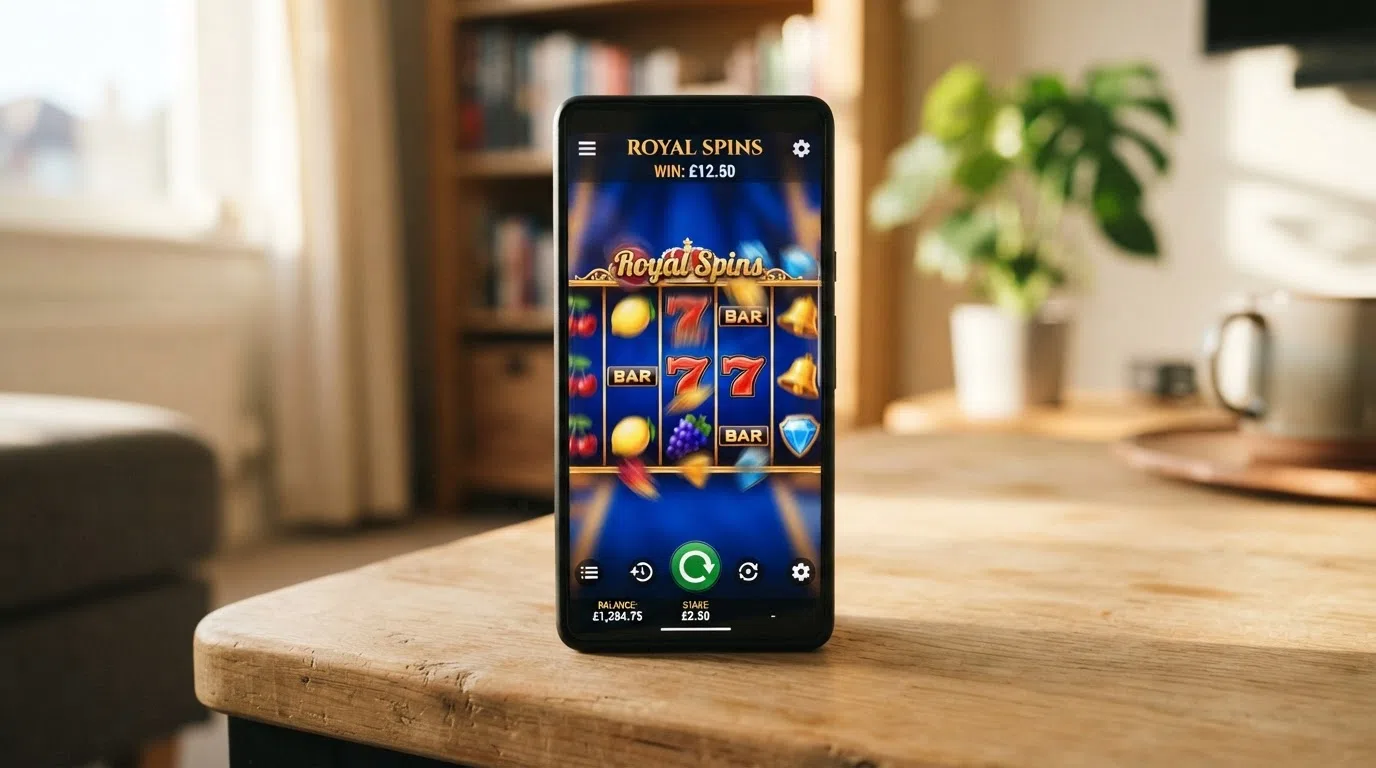
The product-level regulations explain why a UK slot session feels different from anything on an offshore site. The autoplay ban means every spin is a deliberate click. The 2.5-second minimum game cycle means the reels cannot be rushed. The losses-disguised-as-wins ban means a spin that returns less than the stake cannot be celebrated as a win. Reverse withdrawals — the ability to cancel a withdrawal request and gamble the money back — have been permanently banned. These are the friction points the regulator has decided the British player needs, and they shape every minute of every session.
Online Slots: From Classic Reels to Megaways and Progressive Jackpots
Online slots are the largest category of UK real-money play by volume, and the range runs from classic three-reel fruit machines through five-reel video slots, Megaways titles with up to hundreds of thousands of ways to win, and progressive jackpot slots where the top prize pools across a network of operators. The mechanics differ, but the regulatory frame is the same: every slot in a UKGC-licensed casino runs on the 2.5-second minimum spin cycle, the autoplay ban, and the £5/£2 age-banded stake cap per game cycle.
The stake cap is the single most important figure on a UK slot page. For players aged 25 and over, the maximum stake is £5 per game cycle, in force since 9 April 2025. For players aged 18 to 24, the maximum is £2 per game cycle, in force since 21 May 2025. The age banding is not a marketing tier; it is set in statute under the Gambling Act 2005 (Operating Licence Conditions) (Amendment) Regulations 2025. A slot that runs at higher stakes on an offshore site is running illegally if the player is in Britain and the operator is unlicensed.
The session-shaping rules — autoplay banned, 2.5-second minimum, features that speed up play banned — mean a typical UK slot session looks like a sequence of deliberate clicks at a steady pace, with no way to fast-forward through spins and no automatic sequences. The result is a slower game than the same title would run on an offshore site, and that is by design.
Table Games and Live Dealer: Blackjack, Roulette and the Human Element
RNG table games — blackjack, roulette, baccarat, casino poker — are the second pillar of the UK real-money product. They run on a certified random number generator, the rules are standard, and the house edge is published by the game provider. A UK player who wants a quick blackjack hand without waiting for a croupier can play the RNG version at any licensed operator.
Live dealer is the bridge between online convenience and the floor-level experience. The croupier is in a studio, the cards are dealt physically, the roulette wheel is real, and the player places bets through the on-screen interface while watching the result live. Evolution and Playtech are the two dominant live-dealer providers in the UK market, and the larger UKGC-licensed operators run live lobbies into the hundreds of tables, including game-show formats and exclusive-branded rooms.
From January 2025, the 5-second minimum game cycle on non-slot products applies to both RNG and live-dealer products. A hand of blackjack cannot be dealt faster than once every five seconds, a spin of live roulette cannot be completed in less. The same ban on autoplay, on features that speed up play, and on losses disguised as wins applies. The effect is a more deliberate table game than the same product would be on an offshore site, and the player who has played both knows the difference in the first minute.
How Slot RTP, Volatility and UK Design Rules Shape Every Session
Return to Player (RTP) is the long-run theoretical percentage of stake a slot returns to players across millions of spins. It is set by the game provider, not the operator, and it varies by title. UKGC rules do not set a minimum RTP for online slots — there is no statutory floor above the provider’s own published number. Players who want to check the RTP of a particular title should look at the game’s information page inside the casino lobby or the provider’s own site; the figure is not a marketing claim and it is not negotiable.
Volatility is the short-term risk/reward profile the player experiences session by session. A high-volatility slot pays out less often but in larger amounts when it does; a low-volatility slot pays out more often but in smaller amounts. Neither is “better” than the other; they are different shapes of session. A player with a small bankroll who wants a long session will tend to prefer low-to-medium volatility; a player chasing a larger single hit will tend to prefer high volatility. The choice is the player’s, and the game information page carries the volatility classification.
The UK design rules change the math of how a session feels, even when the underlying game is the same. A 2.5-second minimum cycle means a player who runs 100 spins in an hour is running fewer spins than the same session would on an unregulated site, which means less exposure to the house edge per hour of play. The 5-second minimum on non-slot products does the same thing for table games. The losses-disguised-as-wins ban and the reverse-withdrawal ban remove the false-positive feedback loops that offshore products are built around. None of these rules changes the house edge on a single spin or hand; they change the rate at which the edge is collected, and that is a meaningful difference over a session.
Why Your 2026 UK Casino Bonus Is Smaller Than the Headline
A £100 welcome bonus at a UK online casino is not £100 of real money. It is £100 of bonus credit that has to be turned over ten times in qualifying wagers before any of it converts into a real-money balance. That £1,000 of required play is the cost of clearing the bonus, and it has to be absorbed before the player sees a penny in withdrawable cash. At a £5 maximum stake per spin (the limit for players aged 25 and over), the £1,000 of turnover works out to 200 spins at the maximum stake. At the 2.5-second minimum cycle, those 200 spins take at least 500 seconds of play — just over eight minutes of clicks — but the realistic session including thinking time and the fact that the player is unlikely to stake the maximum on every spin is several hours.
The £1,000 turnover has to be played through. Once it is, the house edge on a typical online slot takes its cut on the way through. A 96% RTP slot returns £960 of the £1,000 in wagered cash, leaving an expected £40 cost on the bonus itself. That is the arithmetic that turns a headline “£100 bonus” into a real cost: a player who claims and clears the bonus can expect to walk away with roughly £60 of the original £100 in cash, after the £40 the house edge takes on the way through the wagering. The number varies with the RTP of the slot, but the principle is constant.
The regulator has put two specific rules in place to keep this number from getting worse. The 10× wagering cap, in force since 19 December 2025, means no UKGC-licensed operator can charge more than £1,000 of turnover on a £100 bonus. The mixed-product promotional offers ban under the same instrument means the operator cannot chain the bonus to a different product type — “deposit and bet on the football, get 200 casino spins” is no longer a permitted welcome structure. The headline number still looks generous, but the small print is now shorter and the worst-case is now capped.
No-Deposit vs Deposit-Match: The Two Welcome-Bonus Models in the UK
No-deposit bonuses are a genuine zero-cost entry point. Paddy Power’s 60 no-wagering spins and Betfair’s no-deposit spins both let a player open an account, claim the spins, and play without funding the account first. The trade-off is that the spin count is small (Paddy Power: 60), the wagering on winnings can be substantial (Betfair: 10×), and the cap on the no-deposit winnings may be lower than on a deposit-triggered offer. A player who wants to test a site before committing cash gets a real taste of the product; a player chasing headline value will find a deposit-triggered offer delivers more.
Deposit-match and deposit-triggered offers are the dominant model across the featured set. A player deposits £10 (the standard minimum) and triggers a welcome offer worth anything from 30 wager-free spins (Virgin Games) to 500 spins over 10 days (bet365) to a 100% deposit match up to £100 (888 Casino). The wagering varies from 0× (bet365, Sky Vegas, Betfred, the wager-free components at Paddy Power and Virgin Games) to 10× (William Hill, Ladbrokes spins, Coral, 888 Casino). A 0× offer means any winnings land in the withdrawable balance with no further play; a 10× offer means the winnings have to be turned over before withdrawal.
The trade-off between the two models is real. A 0× offer on a smaller spin count often converts more of the headline value into real cash than a 10× offer on a larger spin count, because the wagering friction eats a chunk of the larger headline. A player with a small bankroll who values certainty of cashout will tend to favour the wager-free deposit-triggered offers; a player who wants the largest possible spin count and is comfortable with the playthrough will tend to favour the 10× offers.
Free Spins Offers: What the Terms Actually Mean for Your Winnings
A free spins offer is a bundle of spins at a fixed per-spin value, with terms that determine how much of the resulting winnings reach the withdrawable balance. The headline number is the spin count; the small print is the value. Across the featured set, the per-spin value is £0.10 at William Hill, Ladbrokes, Coral and Virgin Games, and the spin count varies from 30 (Virgin Games) to 500 (bet365 over 10 days). The headline value of a 200-spin offer at £0.10 is £20 of slot play; the headline value of a 30-spin offer at £0.10 is £3.
Expiry is the next most important term. The 7-day expiry is the industry standard (bet365, Sky Vegas, Betfred, Virgin Games, Ladbrokes, Coral); William Hill runs a tighter 72-hour window. A 7-day window gives a player time to use the spins on their own schedule; a 72-hour window concentrates them into a short window that can be missed if the player is away or busy.
Wagering separates the field. The 0× offers at bet365, Sky Vegas, Betfred, the wager-free component at Paddy Power, and Virgin Games mean winnings land in the real-money balance and can be withdrawn immediately. The 10× offers at William Hill, Ladbrokes, Coral and 888 Casino mean the winnings have to be turned over ten times before they convert. The £30 cashout cap at William Hill is the most restrictive ceiling in the featured set, sharply limiting the upside of an otherwise standard 200-spin offer.
The 10× Wagering Cap: What It Changed and What It Didn’t
Before 19 December 2025, a UK welcome bonus of £100 typically carried a 35×–50× wagering requirement — £3,500 to £5,000 of qualifying turnover before any of the bonus converted to withdrawable cash. The 10× cap under LCCP SR Code 5.1.1 cut that figure to £1,000, and the same instrument banned mixed-product offers. A player claiming a £100 bonus at any UKGC-licensed operator today knows the worst-case playthrough is £1,000; a player claiming the same offer at an offshore site can still face 35× or higher.
The cap did not touch every friction point. The validity windows survived — 7 days is still the industry standard, 90 days at 888 Casino is the longest. The cashout caps survived — William Hill’s £30 cap on free-spin winnings is still in place. The per-spin value of £0.10 on most free-spin offers is still £0.10. The headline numbers on welcome offers are still 200 or 500 spins, even though the wagering underneath is now half what it was. The cap reduced the worst-case cost; it did not eliminate the small-print terms that erode headline value.
A player comparing offers today should read the cap, the validity window and the cashout cap as three separate numbers. A 0× wagering offer with a 7-day expiry and no cashout cap (Sky Vegas) is the cleanest structure in the featured set. A 10× wagering offer with a 72-hour expiry and a £30 cashout cap (William Hill) is the most restrictive. Both are legal; the choice is about how the player values certainty of cashout against the size of the headline.
Getting Paid: Which UK Casinos Put Winnings in Your Account Fastest
Payout speed is the differentiator that has become visible over the past two years, and the gap between the fastest and slowest of the featured operators is wide enough to matter on a £500 withdrawal. The leaders — bet365, William Hill, Ladbrokes, Coral — clear PayPal and debit card withdrawals in 1–4 hours. The middle of the field — Sky Vegas, Paddy Power, Virgin Games — runs at the same-day e-wallet processing. The trailing end — Betfred at 4–6 hours and 888 Casino at 24–48 hours — is the slower norm.
The credit card ban in force since 14 April 2020 means the payment rails open to a UK player are debit cards, bank transfers, e-wallets (PayPal, Skrill, Neteller at some sites) and a handful of alternative methods (Apple Pay at bet365, Paysafecard at some sites, Trustly at others). The rail a player chooses determines the speed: PayPal and Visa Fast Funds are the consistently fastest routes, standard debit card clearance runs a day, and bank transfer is the slowest.
Withdrawal Speed by Payment Method: PayPal, Debit Cards and Visa Fast Funds
PayPal is the consistently fastest route across bet365, William Hill, Ladbrokes and Coral, with stated clearing times of 1–4 hours. The PayPal wallet has to be in the player’s own name, and the player’s PayPal account has to be verified before the first withdrawal. The 1–4 hour window is the operator’s own published timeline; in practice, the cashout can land in minutes for verified accounts.
Visa Fast Funds is the debit-card acceleration available at William Hill and Ladbrokes, with the 1–2 hour window at Ladbrokes a standout. The technology is a Visa network feature, not an operator feature, and it requires the player’s bank to support it. Most UK high-street banks now do; the cashout arrives as a faster-payment-style credit rather than the standard next-day card clearing.
Apple Pay at bet365 is processed as an instant withdrawal. The same identity-verification rules apply — the payment method has to be in the player’s own name — and the withdrawal is gated by the operator’s standard checks. The 888 Casino 24–48 hour window reflects standard e-wallet and debit card processing, not a payment-rail limitation, and it is the slowest of the featured operators.
Low-Deposit and No-Minimum Play: Getting Started Without the Risk
The £10 minimum deposit is the most common entry point across the featured set. Every operator on the list qualifies the welcome offer on a £10 deposit and a £10 stake, and the £10 figure is the floor for any of the welcome offers to trigger. A player with a smaller bankroll can fund an account with less than £10 — most operators accept deposits from £5 — but the welcome offer will not unlock until the cumulative deposits or qualifying stake reach £10.
There is no genuine £1-deposit option among the featured operators. Sub-£10 real-money play is possible at the account level, but it will not trigger any of the welcome offers listed above, and the player is paying the same verification and processing overhead for a smaller balance. The £10 floor is the point at which the welcome offer economy starts working for the player.
No-deposit offers are the genuine low-risk entry. Paddy Power’s 60 no-wagering spins and Betfair’s no-deposit spins both let a player test the product without funding the account, with the winnings (if any) treated as real cash subject to the wagering terms on the no-deposit winnings. A player who wants to try a site before committing any money has a real, two-operator route to do so within the UKGC framework.
Casino Apps vs Mobile Browser: What Actually Works for UK Players
UK players can play at every featured operator on a mobile device, and the choice between a native app and a mobile browser comes down to a small set of trade-offs. The native app downloads from the App Store or Google Play, lives on the home screen, and offers push notifications for offers and session reminders. The mobile browser runs from a URL with no download required, and the experience is increasingly close to the desktop site on modern phones.
App availability varies. Bet365, William Hill, Sky Vegas, Ladbrokes, Paddy Power, Coral, Betfair and Betfred all run native iOS and Android apps. Virgin Games and 888 Casino are present on the app stores too, though the smaller operator footprints mean the app catalogue is sometimes thinner. The games on a mobile app are typically the full HTML5 catalogue the operator offers, with live-dealer streams and progressive jackpot slots all available.
The trade-off is rarely about game selection any more — the operators have spent several years making sure the mobile and desktop lobbies match. It is about performance on slower connections, about how push notifications feel to the player, and about whether the player wants the casino to live on the home screen as a permanent icon or to be opened from a browser when the session starts. None of the featured operators runs an app-exclusive welcome offer in the current research, so the choice is genuinely a player-preference question.
Native Casino Apps vs Mobile-Browser Play: The Trade-Offs
Native apps carry a download-and-install step that the browser does not, and the first launch typically requires a few seconds of loading. The benefit is that the app caches the game library locally, so subsequent sessions open faster and run more smoothly on a weaker connection. Push notifications give the operator a route to remind the player of offers, reality checks and session length; the player controls them in the phone’s settings, and they can be turned off entirely.
Mobile-browser play is the zero-download alternative. The URL opens, the lobby loads, the games stream. The experience is increasingly indistinguishable from a native app on a modern phone, and the player does not give the operator a permanent presence on the home screen. Game selection is broadly equivalent to the app on the featured operators; live-dealer streams and progressive jackpot slots both run in the browser.
App-exclusive promotions are common on competitor pages, but the featured operators in this ranking do not run app-only welcome offers in the current research. The choice is about user experience rather than value. A player who plays weekly from the same device will probably prefer the app; a player who plays occasionally and does not want a permanent casino icon on the home screen will probably prefer the browser.
Bitcoin at UK Online Casinos: Why It Still Isn’t an Option in 2026
The shortest answer is also the most complete: no UKGC-licensed casino accepts cryptocurrency in 2026. A player who searches for “Bitcoin casino UK” or “crypto casino UK” will not find a legitimate, licensed British operator in the results. The UKGC has opened an exploratory review of a crypto payment pathway, announced at the Betting and Gaming Council’s AGM in February 2026, and the initial focus is on stablecoins — but the review is exploratory, the consultation has not closed, and no operator has been given a route to take crypto deposits from British customers.
The Commission’s executive director, Tim Miller, framed the review in terms of a “potential path forward to create a way for crypto assets to be used as a consumer payment option for licensed and regulated gambling here in Great Britain.” That is a clear statement of direction without a timetable. The position today is unchanged: a player who wants to deposit with Bitcoin, Ethereum, USDT or any other cryptocurrency has to leave the UKGC-licensed market, and the moment they do, every protection the British framework offers goes with them.
The Crypto Gap: What UK Players Actually Find When They Search
The crypto casinos that show up in UK search results are licensed in Curaçao, Anjouan or Costa Rica, not in Great Britain. They are not authorised to take GB customers — the Gambling (Licensing and Advertising) Act 2014 makes a GB licence compulsory for any operator serving British customers, and operating without one is a criminal offence under section 33 of the Gambling Act 2005. The Commission’s enforcement is disruption-led: 3,140 disruption notices, 447,778 URLs referred to search engines, and 287,961 URLs removed across the April 2024 to June 2025 window, with an average 32% fall in engagement across 160 disrupted sites.
The consumer protections the offshore sites do not offer are the entire reason to stay on the UKGC side. No GAMSTOP coverage means a player who has self-excluded in Britain can still open an offshore account. No alternative dispute resolution means a complaint against the operator has no independent route. No Commission complaints procedure means the UKGC cannot investigate or sanction the operator on a British player’s behalf. No deposit limits, no stake caps, no spin-speed limits, no losses-disguised-as-wins ban. The site may look the same as a UKGC-licensed casino and run the same games, but the regulatory floor underneath it is not there. A player who deposits on an offshore crypto casino is gambling on the goodwill of an operator the British framework cannot reach.
New UK Casino Sites in 2026: Fresh Faces vs the Established Order
A new UKGC-licensed casino has to clear the same regulatory bar as every established operator on the market. The licence application is the same, the safer-gambling tooling is the same, the LCCP and RTS obligations are the same. What a new entrant offers is welcome-offer aggression — the marketing budget a fresh brand has to spend to win its first ten thousand players typically translates into bigger welcome packages than the established order is willing to run. A new site will sometimes carry a larger headline spin count or a more generous deposit match than the bet365 or Sky Vegas tier, because it does not yet have a player base to defend.
The trade-off is certainty. An established operator has a known payout speed, a known support response time, a known bonus mechanic. A new entrant has none of those yet, and the player is the one finding out where the operator falls short. The 10× wagering cap levels the playing field on the cost of the bonus, but it does not level the experience of clearing it.
The market is under margin pressure that affects new entrants more than established operators. Remote Gaming Duty rose from 21% to 40% from 1 April 2026, the steepest tax increase in the history of the British online gambling market. A new entrant building a player base from scratch is paying the new duty rate on every pound of GGY, and the marketing budget has to absorb that cost. The established operators are funded by their existing player base, and the impact is smaller. The result is a market where new entrants will be competing aggressively on welcome offers, and where the marketing pressure will be the loudest signal — but the licence, the wagering cap and the safer-gambling tooling underneath are the same as on the established sites.
New-Casino Welcome Offers vs the Established Operators
A new UKGC-licensed casino will sometimes offer a 200% or 300% deposit match in its first six months, against the 100% match at 888 Casino or the spin bundles at bet365. The headline is bigger. The 10× wagering cap still applies, so the cost of clearing the bonus is still ten times the bonus amount, but a larger bonus amount means a larger turnover requirement. A 200% match on a £50 deposit creates £100 of bonus credit and £1,000 of required turnover, exactly as a 100% match on a £100 deposit would. The mechanic is the same; the headline is louder.
The due-diligence items a player should check before depositing at a brand-new site are the same as at any established operator: a live UKGC licence on the public register, a published game lobby with named providers, a deposit-limit prompt before the first deposit, GAMSTOP coverage, and a published payout timeline. None of those are different at a new site; the question is whether the operator has actually implemented them in the way the regulator requires. A player who values certainty will tend to stay on the established order; a player who is willing to take the risk of a fresh brand in exchange for a larger welcome offer can find real value, provided the licence and the safer-gambling tooling check out.
Your Rights as a UK Casino Player: Licensing, Limits and the Law
The UK framework is the most prescriptive gambling regime in operation anywhere, and the rights underneath it are statutory rather than contractual. A player at a UKGC-licensed casino has a defined set of protections: a live licence verifiable on a public register, a deposit-limit prompt before the first deposit, GAMSTOP self-exclusion, financial vulnerability checks, age-banded stake limits on slots, and a route to complain to the Commission if the operator fails to honour its terms. None of these are discretionary. They are the framework the Gambling Act 2005 sets up and the LCCP and RTS implement.

The Commission’s enforcement is real. From April 2024 to June 2025, the Commission issued 3,140 disruption notices, referred 447,778 URLs to search engines, saw 287,961 URLs removed, and measured an average 32% fall in engagement across 160 disrupted sites. The Commission does not currently hold statutory ISP or DNS blocking powers — legislation has been proposed but is not enacted — and the player who chooses to ignore the disrupted sites is the player who gives up the protection the framework offers.
| Rule | What It Restricts | Limit or Cap | In Force Since |
|---|---|---|---|
| Maximum stake on slots (25+) | Per-game-cycle stake | £5 | 9 April 2025 |
| Maximum stake on slots (18–24) | Per-game-cycle stake | £2 | 21 May 2025 |
| Minimum spin speed (slots) | Game cycle | 2.5 seconds | 31 October 2021 |
| Minimum game cycle (non-slots) | Game cycle | 5 seconds | 17 January 2025 |
| Auto-play | All online products | Banned | 31 October 2021 |
| Losses disguised as wins | Visual/audio treatment | Banned | 31 October 2021 |
| Reverse withdrawals | Cancellation of withdrawal | Permanently banned | 31 October 2021 |
| Wagering requirements on bonuses | Multiplier on bonus | 10× cap | 19 December 2025 |
| Mixed-product promotional offers | Conditioning bonus on other product | Banned | 19 December 2025 |
| Credit card deposits | All remote gambling | Banned | 14 April 2020 |
| Financial limit prompt | First deposit | Mandatory | 31 October 2025 |
| Gross deposit limit definition | Use of “deposit limit” label | Net-of-withdrawals figure | 30 September 2026 |
| GAMSTOP self-exclusion | All GB-licensed online operators | Mandatory | 31 March 2020 |
| Financial vulnerability checks | Net deposit threshold | £150 in 30 days | 28 February 2025 |
| Marketing opt-in | Per product and per channel | Unticked boxes | 1 May 2025 |
UK Gambling Commission Licensing: What It Requires and Covers
A UKGC remote operating licence is the credential a player should check before depositing anywhere. The licence is verifiable on the Commission’s public register, which lists the operator, the licence number, the licence type, the date the licence was issued and any conditions attached. A site without a live licence on the register is not a UK-licensed site, whatever the footer says. A site with a licence but with conditions or a pending review is a site to approach carefully, and the Commission’s register is the place to see the difference.
The point-of-consumption rule, in force since the Gambling (Licensing and Advertising) Act 2014, requires a GB licence for any operator serving GB customers, regardless of where the operator is based. An offshore-licensed operator serving British customers is operating without a GB licence, and the Gambling Act 2005 makes that a criminal offence under section 33 — up to 51 weeks’ imprisonment, an unlimited fine, or both. The Commission’s enforcement toolkit is disruption-led, not blocking-led: the regulator issues disruption notices to advertisers and payment providers, refers URLs to search engines, and works with payment providers to cut off the flow of funds. The Commission does not currently have statutory ISP or DNS blocking powers; legislation has been proposed but is not enacted.
The three licensing objectives under section 1 of the Gambling Act 2005 are preventing gambling from being a source of crime, ensuring fair and open gambling, and protecting children and vulnerable persons. Every licence condition the Commission issues maps back to one of those three objectives. The LCCP and RTS are the working instruments that translate the statute into player-facing rules, and they are the documents the Commission uses to enforce.
The Rules That Shape Every Spin: Stake Caps, Speed Limits and Game Design
The product-level regulations are the rules a UK player feels inside a session. The age-banded stake cap is the headline: £5 per game cycle for players aged 25 and over, £2 per game cycle for players aged 18 to 24, both in force in 2025. The age banding is set in statute under the Gambling Act 2005 (Operating Licence Conditions) (Amendment) Regulations 2025 (SI 2025/215), and the tier the player sits on is determined by the date of birth on the verified account, not by the player’s claim about themselves.
The spin-speed rules are the next most visible. Auto-play has been banned on all online slots since 31 October 2021, and every spin must take at least 2.5 seconds from start to result. Features that speed up play — turbo mode, slam-stop — are banned. From January 2025, the same minimum cycle was extended to non-slot products, with a 5-second minimum game cycle on table games, live-dealer products and any other online casino product. Losses disguised as wins — a slot spin that returns less than the stake but is celebrated with sounds and visuals as a win — are banned. Reverse withdrawals — the ability to cancel a withdrawal request and play the money back — are permanently banned.
These rules shape every minute of a UK real-money session. A player who is used to an offshore product will notice the 2.5-second cycle as a slower pace than they are accustomed to, and the autoplay ban as a more deliberate session. The slower pace is the point. The Commission has decided the British player needs the friction, and the rules reflect that decision.
GAMSTOP, Deposit Limits and Your Right to Step Away
GAMSTOP self-exclusion has been mandatory at every GB-licensed online operator since 31 March 2020. A player who registers with GAMSTOP is excluded from every GB-licensed online gambling site for a period of their choice — six months, one year, five years, or five years with auto-renewal — and the exclusion cannot be cancelled early. The system is the single most effective player-protection tool in the British framework, and it is available to any player who wants it, free of charge.
The deposit-limit prompt is the second layer. From 31 October 2025, every operator must prompt a customer to set a financial limit before the first deposit, and any request to decrease the limit must be actioned immediately. A request to increase the limit takes effect only after a cooling-off period (24 hours at most operators). From 30 September 2026, a “gross deposit limit” must be offered — based solely on money paid into the account — and only that form may be called a “deposit limit”. The Commission has been explicit that the old net-deposit figure (deposits minus withdrawals) was confusing players, and the new definition standardises what the label means.
Financial vulnerability checks are the third layer. From 28 February 2025, operators must run a light-touch check at a £150 net deposit threshold in a rolling 30-day period, using publicly available data only — bankruptcy orders, county court judgments, individual voluntary arrangements, debt relief orders. The check is not a credit check or an income check, and the vast majority of players sail through it. The threshold is the point at which a light-touch review becomes mandatory, not the point at which play is restricted.
The Safety Switch: How UK Casinos Help You Stay in Control
The safer-gambling infrastructure underneath UK real-money play is built from operator tools, regulatory mandates, and a treatment and support network that runs from the National Gambling Helpline to the NHS gambling clinic network. The scale of the need is real: GOV.UK estimates that almost 1.6 million adults in England who gamble may benefit from treatment or support for harmful gambling, and almost 1.6 million is the same order of magnitude as the entire active player base. The 47% of GB adults who gambled in the past four weeks is the denominator; the 1.6 million is the numerator that the support network has to reach.
The operator-side tools sit inside the account. Deposit limits, reality checks, time-outs and self-exclusion are all available to every player, and the deposit-limit prompt before the first deposit is the moment the conversation begins. The treatment-side infrastructure sits outside the operator: GamCare’s helpline, GambleAware’s treatment service, the NHS gambling clinics, and the peer support offered by Gamblers Anonymous.
Deposit Limits, Reality Checks and Time-Outs: The Tools Built Into Every UK Account
The deposit-limit prompt before the first deposit is the starting point. A player sets a limit — daily, weekly or monthly — and the operator enforces it from the first deposit onward. Any request to decrease the limit is actioned immediately. A request to increase the limit takes effect only after a cooling-off period (24 hours at most operators), and the request can be cancelled during that window. The Commission has standardised the term “deposit limit” to refer to the gross deposit figure (money paid in) from 30 September 2026, so the label on the button means the same thing at every operator.
Reality checks are the in-session prompts. A player sets an interval — typically 20, 30, 60 or 90 minutes — and the operator interrupts the session at that point to show time played and net position. The check is mandatory, the dismissal is one click, and the player can return to the session. Reality checks do not stop a player from playing, but they put a regular moment of reflection inside the session.
Time-outs are short-term cooling-off options, separate from GAMSTOP. A time-out of 24 hours, 48 hours, one week or up to six weeks stops the player from accessing the account for the chosen period. GAMSTOP is the longer-term option, with periods from six months to five years. Both are free, both are confidential, and both are reversible only at the end of the chosen period.
Where to Get Help: GamCare, GambleAware and NHS Support in 2026
GamCare runs the National Gambling Helpline — free, confidential, available 24/7 on 0808 8020 133. The charity made 996 referrals to treatment and peer-based support services in January 2026, a 48% year-on-year increase from the 674 it made in January 2025. The line is the front door of the British support infrastructure, and the referrals it makes are the route into structured treatment.
GambleAware commissions the National Gambling Treatment Service. In 2024/25, the service treated 11,960 clients, an 11% increase on the prior year, and 93% of clients completing treatment saw improvement. The service is free, it is geographically distributed across Britain, and it is accessible via self-referral or via a route from the helpline. GambleAware also funds prevention and research, and the 50% of statutory-levy proceeds allocated to treatment flows through the commissioning system it operates.
The NHS runs 15 specialist gambling clinics in England, doubled from the original seven since 2019. NHS gambling referrals reached 4,355 in 2024/25, up from 2,284 in 2023/24 — a near-doubling in a single year and a clear signal of the rising demand. The clinics are free at the point of use, accessible via GP referral or self-referral, and they provide cognitive-behavioural therapy and pharmacological treatment for the most severe presentations. Gamblers Anonymous provides peer support alongside the clinical infrastructure. A player who thinks they may have a problem has a real, multi-channel route to help that is free, confidential and immediate.
How We Picked and Ranked the Casinos on This Page
The ranking rests on five checks, applied in this order.
- UKGC public register. Every operator on this page holds a live remote operating licence from the UK Gambling Commission, verified on the Commission’s public register. The licence status, account number, operating entity and date of last register update are the floor. An operator without a live licence does not appear on the list.
- Bonus value. Each welcome offer is measured against the statutory 10× wagering cap (in force since 19 December 2025), and the headline spin count, per-spin value, validity window, and cashout cap are read against the small print. A 0× wagering offer is weighted ahead of a 10× offer; a 7-day validity is weighted ahead of a 72-hour window; an offer with no cashout cap is weighted ahead of one with a £30 ceiling.
- Payout speed. Each operator’s published payout timeline is read by payment method, and the fastest verified route is the figure that goes into the table. PayPal, Visa Fast Funds and Apple Pay are the accelerated rails; standard e-wallet and debit card processing are the slower defaults. Operators that publish 1–4 hour timelines outrank those that publish 24–48 hour timelines.
- Game variety and provider quality. Each operator’s published game lobby is checked for the major providers — NetEnt, Playtech, Pragmatic Play, Microgaming, Evolution, Play’n GO — and the live-dealer catalogue is checked for Evolution or Playtech Live presence. The depth of the progressive jackpot and Megaways selections is read as a softer factor.
- Mobile accessibility. The mobile-browser experience is checked across the operators’ published mobile lobbies, and the availability of a native iOS or Android app is noted. The featured operators all offer mobile-compatible browser play with the majority of their game libraries accessible.
The list is not exhaustive. There are more than ten UKGC-licensed real-money casinos; the ranking covers the ten that combine the strongest welcome-offer value with the fastest payout speed and the broadest game libraries. A new UKGC licensee that meets the same checks would be a candidate for a future update.
Your 2026 UK Casino Checklist: What to Check Before You Deposit
Five checks before the first deposit. They are short, they are worth the two minutes, and they will save most of the problems a UK player can run into at a licensed casino.
- Check the UKGC public register. Confirm the operator holds a live remote casino licence, note the account number, and check the date of the last register update. A site without a live licence is not a UK-regulated casino, whatever the footer says.
- Read the wagering terms and cashout cap on the welcome offer. A 0× wagering offer is materially different from a 10× offer, and a cashout cap of £30 is materially different from no stated cap. The headline number is not the offer; the small print is.
- Test payout speed with a small withdrawal early. A £20 withdrawal processed inside 24 hours is a much better signal than a £500 withdrawal stuck in a 48-hour queue. Run a small cashout in the first week of play, before any larger balance builds up.
- Set a deposit limit before the first deposit and know where the reality-check controls are. The deposit-limit prompt is mandatory, the controls are in the account settings, and the first session is the time to find them. The £150 net-deposit threshold for the financial vulnerability check is the regulator’s trigger, not the player’s.
- Save the GamCare helpline number (0808 8020 133) and know your GAMSTOP options before you need them. The helpline is free, confidential and 24/7. GAMSTOP is the longer-term option. Both are easier to set up in advance than in a moment of regret.
Frequently Asked Questions
What is the minimum age to gamble online in the UK?
The minimum age to gamble online at a UKGC-licensed casino is 18. Every operator must verify the customer’s age and identity before the first deposit, and a deposit that gets through without age verification is a sign the operator is cutting corners. Players aged 18 to 24 also sit on a lower slot stake cap (£2 per game cycle, against £5 for players aged 25 and over), under SI 2025/215.
How can I verify a gambling site holds a genuine GB licence?
The UK Gambling Commission’s public register lists every licensed operator, with the account number, the operating entity, the licence type and the date of last update. A player can search the register by operator name or by the brand name used on the site. A site without a live entry on the register is not a UK-regulated casino, regardless of any claim in the footer.
How much can I stake on a single online slot spin in the UK?
The maximum stake on a single online slot spin at a UKGC-licensed casino is age-banded: £5 per game cycle for players aged 25 and over (in force from 9 April 2025), and £2 per game cycle for players aged 18 to 24 (in force from 21 May 2025). The age banding is set in statute under the Gambling Act 2005 (Operating Licence Conditions) (Amendment) Regulations 2025.
Do any UK casino sites give you free play without making a deposit?
Yes. Paddy Power offers 60 no-wagering free spins with no deposit required, and Betfair runs a no-deposit free-spin package. The winnings on no-deposit spins are real cash, but wagering terms apply (0× on the Paddy Power 60; 10× on the Betfair no-deposit winnings). No-deposit offers are the only genuine zero-cost entry into the UKGC-licensed market.
Can I gamble for cash on a mobile device at UK online casinos?
Yes. Every featured operator offers a mobile-compatible browser experience, and most run native iOS and Android apps. The game libraries on mobile are broadly equivalent to the desktop sites, including live-dealer streams and progressive jackpot slots. The choice between app and browser is a user-experience question rather than a value question; no featured operator runs an app-exclusive welcome offer in the current research.
What should I do if I think I have a gambling problem?
Contact GamCare’s National Gambling Helpline on 0808 8020 133 — free, confidential, 24/7. GamCare made 996 referrals to treatment and peer-based support services in January 2026, a 48% year-on-year increase. The NHS runs 15 specialist gambling clinics in England (4,355 referrals in 2024/25), and GAMSTOP is the route to a self-exclusion period of six months to five years from every GB-licensed online operator. Gamblers Anonymous provides peer support alongside the clinical infrastructure.
Casinos – fastestpayout-casinos-uk
Content created by the «fastestpayout-casinos-uk» team