
POLi UK Casinos: Why the Search Returns Nothing and What to Use Instead
 Available in GB
The search for “casinos that accept POLi UK” runs into a wall at the first step: no UK-licensed casino accepts POLi, and none ever has. POLi is an Australian-origin instant bank-transfer method that pulled out of Australia in September 2023 and now operates only in New Zealand. No UK bank has ever integrated it, no UK Gambling Commission (UKGC) operator has ever listed it, and the model that defined it (asking customers to hand over online banking login credentials to a third party) would not have survived UK financial regulation anyway. The page that follows is what someone arriving at that wall needs instead: an honest account of why POLi never reached UK casinos, the deposit rails that deliver the same instant bank-to-casino experience under proper UK regulation, and the ten UKGC-licensed operators that accept them.
Data current as of September 8, 2026, verified against the UK Gambling Commission’s public licence register and operator banking pages.
What POLi Actually Was — and Why It Never Reached UK Casinos
What POLi Payments Actually Was and How It Worked at Online Casinos
POLi Payments was an instant bank-transfer rail built for the Australian and New Zealand markets. The customer picked POLi at the casino cashier, was redirected to a POLi-hosted interface, selected their bank, entered their online banking username and password, and POLi initiated the transfer from the customer’s bank account to the casino’s merchant account. The whole flow took under a minute and produced an instant deposit confirmation without the customer ever typing a card number.
The mechanism was simple, but it carried a structural problem that defined the product’s history. To log into a bank on a customer’s behalf, POLi had to receive the customer’s online banking credentials. That is precisely the pattern every UK and Australian bank’s terms of service prohibit, and it is the reason POLi’s Australian bank support collapsed in 2023. As of 2026, POLi operates in New Zealand only, supported by ANZ, ASB, BNZ, Westpac, Kiwibank, TSB, SBS Bank, and The Co-operative Bank. It was also a deposit-only method. No POLi casino anywhere ever offered a POLi withdrawal — players who deposited by POLi had to choose a second method to cash out, usually a bank transfer or an e-wallet.
Is POLi Still Available at UK Online Casinos? The Short Answer
No, and it never was. POLi was built for the Australian and New Zealand markets; no UK bank has ever integrated it, no UKGC-licensed operator has ever listed it as a payment method, and the UKGC’s public register contains no POLi service provider among its approved payment suppliers. The aggregator directories that publish POLi casino lists (Casino.guru, Casinos.org, Mr-gamble.com) confirm the same fact: filter for the United Kingdom and the list comes back empty. “No Casinos available” is the literal return on Casinos.org for that filter. The search for a “POLi UK casino” is, in practical terms, a search for something that does not exist in this market.
Why POLi Closed in Australia and What That Means for UK Players
The Australian shutdown is the chapter that explains why POLi is NZ-only today. Westpac, one of Australia’s “big four” banks, withdrew support in 2023 because POLi’s model required customers to share their online banking login and password with a third party, a pattern that breached the bank’s terms of service. The market’s reaction then forced Australia Post, which had acquired POLi in 2014, to close the Australian arm entirely. The closure took effect on 30 September 2023. Australia Post described the decision as a “difficult decision to close the POLi business in Australia,” and the New Zealand operation continued independently under Merco Limited.
For UK players, the Australian collapse is the proof of concept that the credential-sharing model does not survive a serious regulated market. UK banks operate under the same prohibitions as Westpac, and the UKGC’s verification-before-play regime requires operators to know exactly who their customer is. A payment method that depends on a customer surrendering their bank login to a third party sits squarely outside that framework.
The Pros and Cons POLi Brought to Online Casino Banking
- What POLi got right: instant deposits, no card or e-wallet account required, a direct bank-to-casino flow, and no deposit fees for the player.
- What killed it: requiring customers to share their online banking login and password with a third party, being deposit-only with no withdrawal path, and limited bank support even in its home markets — and, of course, never being available in the UK at all.
Types of POLi Casino Sites That Once Existed and the UK Reality
In Australia and New Zealand, the POLi casino category split into POLi-accepting, POLi-verified, and POLi-friendly sites, a distinction based on how thoroughly each operator integrated the rail. None of those labels apply in the UK. There has never been a UKGC-licensed POLi casino, never a POLi-verified UK site, and never a POLi-friendly UK brand. Every UKGC-licensed operator in 2026 uses the standard UK payment methods: Trustly Pay by Bank, Open Banking via Faster Payments, debit cards, PayPal, Apple Pay, and bank transfer.
Fast Registration and Account Setup at UK Casinos: No POLi Required
The UKGC requires every licensed operator to verify a customer’s identity before they can gamble. “Anonymous play” and “no-registration” casinos do not exist in the UK licensed market. That is the structural reason Trustly’s Pay N Play model, which works in Sweden and Finland, has not taken off in Britain: the UK requires full KYC (Know Your Customer) checks before a first bet, not a bank-ID hand-off at deposit. The practical UK experience is a normal sign-up, a Trustly or debit-card deposit, and KYC completed before any withdrawal. The first deposit lands faster than POLi ever managed, because the customer’s bank app already sits on the same device.
How UK Casino Payments Work Without POLi: Deposits, Speed and What You Will Pay
The UK payment landscape for casino players has every rail POLi offered in its home markets and several it never had. What it lacks is the POLi brand, and that is the only thing missing. The deposit methods below all clear through the UK Faster Payments rail, the same real-time bank-transfer infrastructure that moves money between British bank accounts in seconds.
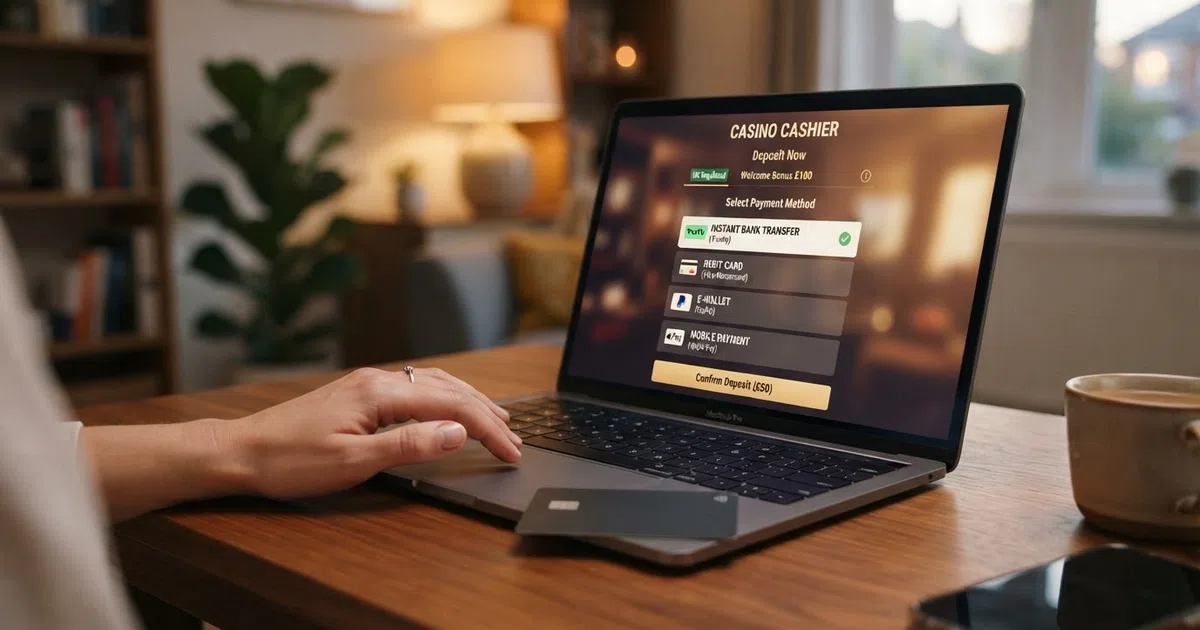
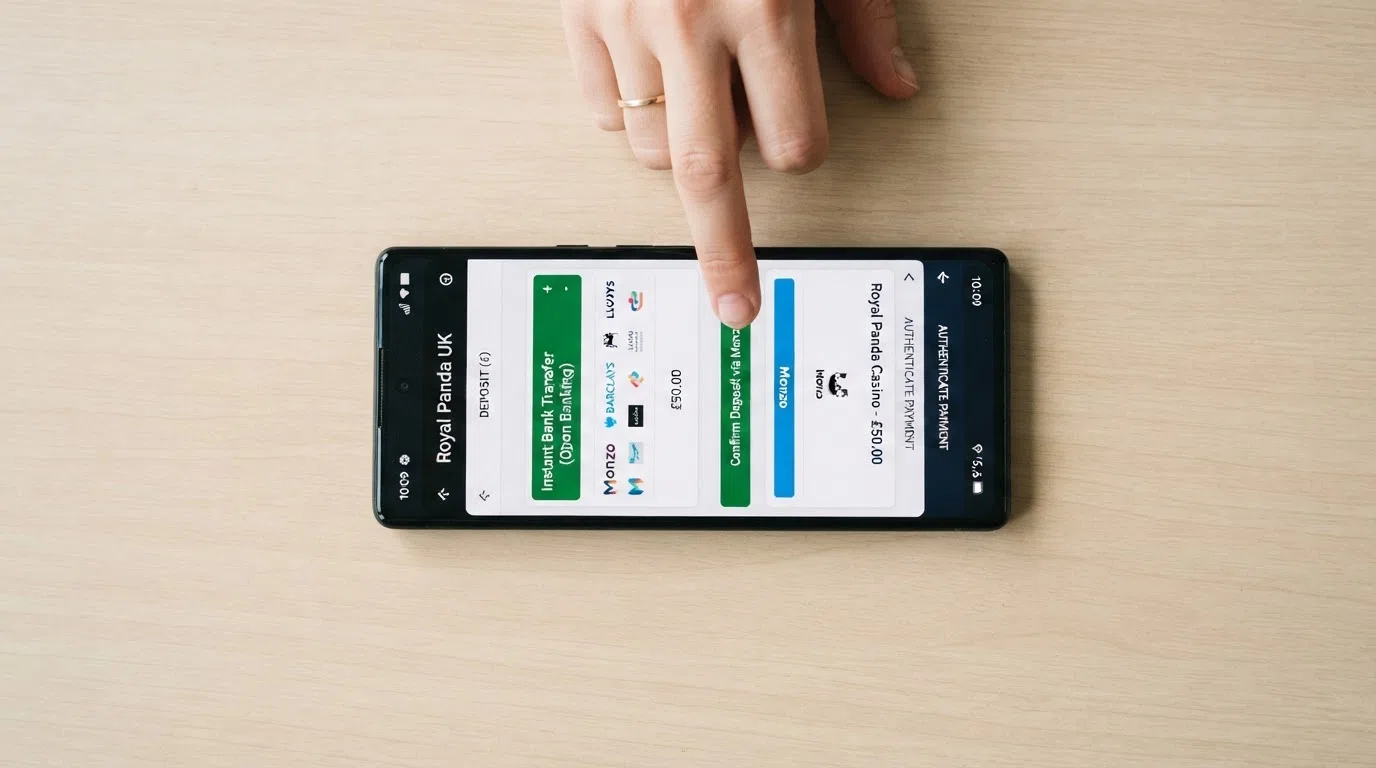
The headline group is instant bank deposits: Trustly (often branded “Pay by Bank” at the casino cashier), TrueLayer Pay by Bank, and the underlying Open Banking / Faster Payments framework. A player selects the method, picks their bank, authenticates in the bank’s own app using Face ID or fingerprint, and the deposit appears in the casino balance immediately. No card number, no e-wallet top-up, no third-party portal. The authentication is biometric and runs entirely inside the customer’s bank app, which is why this rail is regulated under PSD2 (the EU’s Revised Payment Services Directive) and Open Banking rather than the credential-sharing model POLi relied on. Around it sit debit cards (universal), PayPal (widest bonus eligibility among e-wallets), Apple Pay (fastest mobile flow), and bank transfer (for withdrawals). Credit cards have been banned for UK gambling deposits since April 2020 — absolute, no UKGC operator can accept them.
How to Deposit at a UK Online Casino With Instant Bank Transfer
The flow takes around twenty to thirty seconds. From the casino cashier, select “Pay by Bank” or “Trustly,” pick your bank, and enter the deposit amount. The casino’s interface hands off to your bank’s own authentication screen — never a third-party portal — where Face ID, fingerprint, or the bank’s standard login confirms the transfer. The casino balance updates the moment the bank returns confirmation. The crucial difference from POLi: the bank app is the only system that sees the customer’s credentials. The casino and the payment processor never see them. That is what makes the UK rail compatible with both UKGC rules and the FCA’s (Financial Conduct Authority) payment-services framework.
Which UK Casinos Accept Instant Bank Deposits: Our Full List
Every one of the ten UKGC-licensed operators ranked later in this page accepts Trustly or an equivalent instant bank-transfer rail — nine of ten with Trustly/Pay by Bank confirmed, and bet365 routing through TrueLayer Pay by Bank, which sits on the same Open Banking framework. The one gap in the featured set is MrQ, whose cashier lists debit card, PayPal, and Pay by Mobile but does not show Trustly support in the data available. For the rest, the instant bank-deposit experience is a default feature, not an upgrade. The places to confirm before signing up are the operator’s banking page and the cashier itself: payment-method availability can vary by licence tier and by promotion, and a welcome offer that excludes PayPal deposits (LeoVegas is the clearest example) is a fine print worth checking before the first deposit.
POLi Withdrawals and Cashouts: Why They Never Existed and What UK Players Use Instead
POLi was deposit-only in every market where it operated, and that limitation is the most useful single fact about it. Even Australian and New Zealand players who used POLi to fund an account needed a second method to withdraw — typically a bank transfer or an e-wallet. UK players do not have that friction. Trustly handles deposits and withdrawals at most UKGC-licensed operators, with withdrawals completing in two to six hours at the operators profiled below. PayPal is the faster cashout option for many players, often completing within hours. Debit-card refunds are universal but slower, typically one to three working days. MrQ’s 60-second withdrawal guarantee is the fastest commitment in the featured set, with a £100 penalty paid to the player if the operator misses it. The UKGC also requires operators not to restrict withdrawal of the deposit balance, a guarantee POLi’s home markets never offered.
Deposit and Withdrawal Speed: How Fast UK Casino Payments Actually Land
Deposits are instant across the board at every UKGC-licensed operator reviewed here. Trustly, debit card via Visa or Mastercard, PayPal, and Apple Pay all credit the casino balance the moment the customer’s bank or wallet confirms the transfer. The genuinely variable line is withdrawals. Trustly withdrawals are quoted within two hours at Paddy Power and within six hours at Sky Vegas; PayPal withdrawals typically complete within hours; debit-card refunds take one to three working days; bank transfers run one to two working days depending on the receiving bank. The factors that slow a withdrawal down are the operator’s pending period (the time between requesting a cashout and the operator approving it), the player’s KYC status (unverified accounts wait for document checks), and the receiving bank’s own processing windows for Faster Payments. An account that verified at registration and requests a withdrawal during business hours usually sees same-day settlement; a request on a Friday evening may not clear until Monday.
POLi Casino Fees and Deposit Limits: What UK Players Actually Pay
POLi itself charged no player fees in its operating markets, and neither do the UK instant-bank methods that replaced it. Trustly, TrueLayer, Open Banking via Faster Payments, debit cards, and PayPal all deposit free of charge to the player at UKGC-licensed casinos. The real numbers to watch are minimum deposits, maximum transaction caps, and the operator’s own per-deposit ceiling. The minimums across the featured set are tight: MrQ £10, LeoVegas £10, Casumo £20. Small minimum deposits are the right filter for a player with a small bankroll who wants to test a casino before committing more. From 30 September 2026, the UKGC also requires all online operators to offer gross deposit limits, a player-set ceiling on how much can be deposited over fixed time periods. The terminology change matters: what used to be called “spend limits” is now “stake limits,” and the deposit-limit definition sits in a separate, more specific category. The two controls together are the most consequential player-protection framework the UKGC has introduced in the post-2025 stack.
POLi Card Payments: Debit Cards, Credit Cards and What UK Rules Allow
POLi was never a card product. It was a direct bank-transfer rail, which is why searches for “POLi card” reach this page rather than a card-network answer. UKGC-licensed casinos accept debit cards universally — Visa Debit, Mastercard Debit, Maestro — and most accept prepaid cards issued by the same networks. Credit cards have been banned for UK gambling deposits since April 2020, with no exceptions, no opt-outs, and no licensed operator permitted to accept them. The ban covers credit-card-funded e-wallet top-ups as well, which is why some players who relied on credit-card-funded PayPal deposits at offshore sites find that route closed at any UKGC-licensed operator. Apple Pay, which tokenises a debit or credit card for mobile checkout, is permitted where the underlying card is a debit card and is rejected at registration where the underlying card is a credit card.
POLi Instant Banking and Direct Payments: What the UK Offers Instead
“Instant banking” in the POLi context meant a direct bank-to-casino flow with no intermediary wallet and no card. The UK delivers exactly that through Trustly’s Pay by Bank brand and through the Open Banking / Faster Payments rail that sits underneath it. The customer experience on a phone is biometric: the casino cashier hands off to the bank app, the bank app reads the customer’s face or fingerprint, and the deposit is confirmed. On desktop, the flow runs through the bank’s web interface, often with a QR code (a machine-readable square barcode) that the bank app scans to complete the authentication. The whole exchange stays inside the customer’s bank and the casino’s payment processor; no third party ever holds the customer’s credentials. That is the structural improvement POLi never made.
POLi Payment Methods Compared: What the UK Casino Cashier Actually Offers
The UK casino cashier in 2026 is a clean four-rail landscape: Trustly / Pay by Bank, PayPal, debit card, Apple Pay, with bank transfer available for withdrawals. The choice between them is a question of priority. Trustly is the closest experience to what POLi offered — direct bank authentication, no card, instant settlement — and it qualifies for the welcome offer at every operator that lists it. PayPal is the fastest withdrawal method for most players and is widely accepted for bonuses, though LeoVegas explicitly excludes PayPal from its welcome offer. Debit cards are universal and the safest bet for bonus eligibility; the trade-off is slower withdrawals, typically one to three working days. Apple Pay is the fastest mobile deposit method (one biometric prompt and the deposit lands) but is not always available for withdrawals. The right answer depends on the player: a player who values the closest POLi experience picks Trustly; a player who values fast cashouts picks PayPal; a player who values universal acceptance picks debit card. The full payment-method breakdown by operator is in the comparison table later in this page.
Top 10 UK Casino Sites for Instant Bank Deposits in 2026
The ten operators below are all UKGC-licensed and were ranked by the fit between the POLi-shaped use case (instant bank-to-casino deposit, no card, no e-wallet top-up) and the offer each one actually runs. Weight was given first to UKGC licence status and confirmed instant bank-deposit support, then to welcome-offer terms — particularly the wagering multiple and any cap on cashout — and finally to withdrawal speed and game-provider breadth. Four of the ten (888 Casino, William Hill, bet365, Betfair Casino) have welcome-offer specifics that were not confirmed in the data available for this run; they are still in the ranking because their licence status and payment infrastructure warrant it, and the gap is stated in each write-up.
| Operator | UKGC Licence | Trustly / Pay by Bank | Welcome Bonus | Wagering | Game Providers |
|---|---|---|---|---|---|
| Paddy Power | 39126 | Yes | 50 free spins | 0× | Playtech, NetEnt, Evolution, Pragmatic Play, others |
| Sky Vegas | 67370 | Yes | Stake £5, up to 200 free spins | 0× | Playtech, NetEnt, others |
| LeoVegas | 39198 | Yes | 50 free spins on Big Bass Splash | 0× | NetEnt, Evolution, Pragmatic Play, Play’n GO, others |
| 888 Casino | 39028 | Yes | Not confirmed this run | Not confirmed this run | NetEnt, Evolution, Playtech, Pragmatic Play, others |
| William Hill | 39225 | Yes | Not confirmed this run | Not confirmed this run | Playtech, Evolution, NetEnt, others |
| Bet365 | UKGC-licensed | Yes (TrueLayer Pay by Bank) | Not confirmed this run | Not confirmed this run | NetEnt, Evolution, Playtech, Pragmatic Play, Microgaming, others |
| PlayOJO | UKGC-licensed | Yes | 50 free spins | 0× | NetEnt, Evolution, Pragmatic Play, others |
| MrQ | UKGC-licensed | Not confirmed | 100 free spins on Big Bass Splash | 0× | Multiple (slots, bingo, live casino) |
| Casumo | 61549 | Yes | 50% deposit match up to £100 | 0× on bonus | 32+ providers, 3,500+ games |
| Betfair Casino | UKGC-licensed | Yes | Not confirmed this run | Not confirmed this run | Playtech, NetEnt, Evolution, others |
| Operator | Trustly / Pay by Bank | PayPal | Debit Card | Bank Transfer |
|---|---|---|---|---|
| Paddy Power | Yes | Yes | Yes | Yes |
| Sky Vegas | Yes | Yes | Yes | Yes |
| LeoVegas | Yes | Yes (excluded from welcome) | Yes | Not listed |
| 888 Casino | Yes | Yes | Yes | Yes |
| William Hill | Yes | Yes | Yes | Yes |
| Bet365 | Yes (TrueLayer) | Yes | Yes | Not listed |
| PlayOJO | Yes | Yes | Yes | Yes (Faster Payments) |
| MrQ | Not confirmed | Yes | Yes | Not listed |
| Casumo | Yes | Yes | Yes | Not listed |
| Betfair Casino | Yes | Yes | Yes | Yes |
Paddy Power
Paddy Power runs a UKGC remote casino licence under account 39126, held by PPB Counterparty Services Limited, and is part of Flutter Entertainment alongside Betfair. The welcome offer is fifty free spins with no wagering — every penny of winnings converts to withdrawable cash, with no cashout cap. Trustly deposits land instantly and Trustly withdrawals clear within two hours, which is the fastest quoted Trustly withdrawal in the featured set. The cashier also accepts debit card, PayPal, Apple Pay, and bank transfer; game providers include Playtech, NetEnt, Evolution, and Pragmatic Play. The combination of a clean zero-wagering welcome and a two-hour Trustly withdrawal makes Paddy Power the strongest payment-fit pick in the ranking.
Sky Vegas
Sky Vegas holds UKGC licence 67370 through Bonne Terre Limited, which also covers Sky’s casino, bingo, and poker products. The welcome offer is the largest free-spin package in the featured set: stake £5 and unlock up to 200 wager-free spins, with uncapped cashout. Trustly deposits are instant, and Trustly withdrawals clear within six hours. The cashier also lists debit card, PayPal, Apple Pay, and bank transfer, and the game library runs Playtech, NetEnt, and other major studios. The 200-spin ceiling on the welcome is the headline number; the wager-free structure is what gives it real value.
LeoVegas
LeoVegas has held a UKGC casino remote licence since 1 November 2014 (account 39198, LeoVegas Gaming PLC), one of the longest tenures in the featured set. The welcome is fifty wager-free spins on Big Bass Splash at £0.10 per spin, with a £5 total bonus value and a tight three-day validity window from credit. The cashout is uncapped. There is a meaningful fine print here: the bonus requires a debit card or Open Banking deposit, and PayPal deposits are explicitly excluded from the welcome. That is worth knowing for any player who would otherwise have defaulted to PayPal. The cashier otherwise supports Trustly, debit card, PayPal, and Apple Pay; the game library spans NetEnt, Evolution, Pragmatic Play, and Play’n GO.
888 Casino
888 Casino is one of the UK’s longest-running online casino brands, licensed by the UKGC since 1 November 2014 (account 39028, 888 UK Limited). The welcome-offer specifics were unavailable at the time of this review; 888 runs a standard UK welcome package, and the terms should be checked on the operator’s promotions page before depositing. The payment infrastructure is solid: Trustly, debit card, PayPal, and bank transfer are all listed. The game library runs NetEnt, Evolution, Playtech, and Pragmatic Play. The lack of a confirmed welcome offer is the one gap; everything else is in line with the rest of the featured set.
William Hill
William Hill is a UK high-street name with a full UKGC remote casino licence (account 39225, WHG International Limited) and an extensive payment and provider infrastructure. The welcome-offer specifics were not published in the latest data; the operator runs a standard UK welcome offer, and the live terms should be checked directly. The cashier lists Trustly, debit card, PayPal, Apple Pay, and bank transfer, and the game providers include Playtech, Evolution, and NetEnt. William Hill is a useful inclusion in the ranking for players who want a familiar brand with the full UK payment-method spread.
Bet365
Bet365 is the UK’s largest online gambling operator and is UKGC-licensed (the specific register account number was not confirmed in the data available for this run; verify on the UKGC public register). The distinguishing payment feature is TrueLayer Pay by Bank, confirmed in industry payment-solution reporting as a recommended deposit method — the same Open Banking rail Trustly sits on, accessed through a different provider. The welcome-offer specifics were not confirmed in this run. The cashier also lists debit card, PayPal, and Apple Pay, and the game library is broad: NetEnt, Evolution, Playtech, Pragmatic Play, and Microgaming. bet365 is the top choice for players prioritizing the largest operator with Open Banking support.
PlayOJO
PlayOJO holds both UKGC and Malta Gaming Authority (MGA) licences and is the UK market’s pioneer of the zero-wagering model. The welcome is fifty free spins with no wagering — winnings are paid as cash with no cap. The cashier lists Faster Payments, PayPal, debit card, and Trustly, and the game library runs NetEnt, Evolution, and Pragmatic Play. The reason PlayOJO sits in the ranking ahead of operators with more generous-looking headline offers is structural: a 50-spin wager-free package is mathematically worth more to the player than a larger-spin package with even a 10× playthrough, because every £1 won on PlayOJO is £1 withdrawable.
MrQ
MrQ is the standout of the featured set on two specific commitments: a 100 free-spin welcome on Big Bass Splash at £0.10 per spin, all wager-free, and a 60-second withdrawal guarantee backed by a £100 cash penalty if MrQ misses it. The bonus has a 48-hour validity from the qualifying deposit, and the minimum deposit is £10. The cashier lists debit card, PayPal, and Pay by Mobile; Trustly support was not confirmed in the data available, which is the one payment-method gap in an otherwise strong profile. The 60-second cashout promise is the fastest commitment any UKGC-licensed operator publishes, and the £100 penalty clause is the part of the marketing material a sharp reader should take seriously — it is a real money-back commitment, not a slogan. For those valuing cashout speed, MrQ is unmatched; however, check the cashier for Trustly support if instant bank-to-casino deposit is your main priority.
Casumo
Casumo is the only operator in the featured set with a percentage-match welcome rather than a free-spin package: 50% deposit match up to £100, with zero wagering on the bonus amount. The minimum deposit is £20, the bonus validity is seven days, and the maximum bet during the bonus is £5. The cashier lists Visa, Mastercard debit, PayPal, and Trustly; Skrill and Neteller are excluded from the bonus. The game library is the largest in the featured set at 3,500+ titles from 32+ providers. The 0× on the bonus is the meaningful number — a £100 bonus with no playthrough is a £100 cash credit with conditions, which makes Casumo the right pick for a player who would rather have bonus money to deploy across the catalogue than a fixed free-spin allocation.
Betfair Casino
Betfair Casino sits within Flutter Entertainment alongside Paddy Power, which means the group-level payment and game-provider infrastructure is shared. Betfair is UKGC-licensed (the specific register account number is not listed in current public records; verify on the UKGC public register), and the cashier lists Trustly, debit card, PayPal, and bank transfer. The welcome-offer specifics were unlisted in current promotions data, and the gap is worth flagging because Betfair’s casino product is often marketed separately from its sportsbook. The game library runs Playtech, NetEnt, and Evolution. For a Flutter group player who already has a Paddy Power account and wants a second product under the same parent, Betfair is a sensible inclusion.
UK Casino Bonuses: Why Wager-Free Offers Matter More Than Big Numbers
The UK bonus market in 2026 runs under a tighter rule set than it did two years ago. The headline change is the UKGC’s 10× cap on wagering requirements, effective from 19 January 2026, which means no UKGC-licensed operator can attach a wagering multiple higher than 10× to a welcome offer. Stop and Step, reporting the UKGC announcement, summarised the rule plainly: “wagering requirements are capped at 10×.” That sounds generous until the arithmetic lands. A £100 bonus at 10× wagering requires £1,000 in qualifying turnover before withdrawal. At an average slot stake of £1 per spin, that is a thousand spins, which at the UKGC’s 2.5-second minimum spin speed is around 42 minutes of continuous play — and that is before any house edge is paid. A wager-free offer has no such requirement, because the winnings are paid as cash the moment they land.
The other structural change is the ban on mixed-product promotions, which prevents an operator from requiring play across multiple product categories (slots plus sportsbook, for instance) to qualify for a single bonus. That is a player-friendly rule: the bonus terms must be self-contained within a single product. The combined effect of the 10× cap and the mixed-product ban is a market in which the operators that went further and dropped wagering to zero (Paddy Power, Sky Vegas, LeoVegas, PlayOJO, MrQ, and Casumo on the bonus amount) are offering the player something that the rest of the market cannot beat. A 50-spin wager-free package delivers more withdrawable cash, in expectation, than a 200-spin package with a 10× playthrough, and the gap widens at every spin count above 50.
POLi Casino Welcome Bonuses: What UK Players Actually Get
The “POLi welcome bonus” search is asking a different question than the words suggest: it is asking what welcome offer is available at a UK casino that takes instant bank deposits. Across the ten featured operators, six welcome offers are confirmed. Five are free-spin packages: Paddy Power (50 free spins, 0×), Sky Vegas (up to 200 free spins, 0×), LeoVegas (50 free spins on Big Bass Splash, 0×), PlayOJO (50 free spins, 0×), and MrQ (100 free spins on Big Bass Splash, 0×). One is a deposit match: Casumo (50% up to £100, 0× on the bonus). The remaining four operators (888 Casino, William Hill, bet365, Betfair Casino) have welcome-offer specifics that were not confirmed in the data available for this run, and that gap is worth checking on each operator’s promotions page before signing up. The fine print that varies across the confirmed offers is bonus eligibility: LeoVegas excludes PayPal from its welcome, and Casumo excludes Skrill and Neteller. Checking these terms ensures players don’t forfeit the offer.
No-Deposit Bonuses at UK Casinos Accepting Instant Bank Deposits
A no-deposit bonus is credit awarded without requiring the player to fund the account first — typically a small free-spin allocation or a token cash credit, always with attached terms. None of the ten featured operators is confirmed as offering a no-deposit bonus in the data available for this run. That is a meaningful statement to make plainly: a player searching for a “POLi no-deposit bonus” at a UK casino is searching for something the featured set does not currently carry. Where no-deposit offers do exist in the UK market, they are subject to the 10× wagering cap and cannot lock the player’s deposit balance — both UKGC rules that constrain what a no-deposit offer can look like.
Free Spins Offers With Instant Bank Deposits
Free-spin packages dominate the welcome landscape at the featured operators. Five of the six confirmed offers are free-spin based, and the spin value is £0.10 across the set. Paddy Power’s 50, LeoVegas’s 50 on Big Bass Splash, PlayOJO’s 50, and MrQ’s 100 on Big Bass Splash all sit at that value; Sky Vegas’s up to 200 spins scales the count but not the per-spin value. Casumo is the exception: its welcome is a deposit match rather than a free-spin package, and its free-spin offers live in separate promotions rather than the main welcome. The distinction that matters for the player is between free spins on a specific named title (LeoVegas and MrQ both lock to Big Bass Splash) and flexible free-spin allocations (Paddy Power, PlayOJO, and Sky Vegas allow more title choice). Choosing between specific or flexible options is simply a preference for the player.
No-Wagering Bonuses and Free Spins: The Real Value of Keeping What You Win
Six of the ten featured operators offer wager-free bonuses: Paddy Power, Sky Vegas, LeoVegas, PlayOJO, MrQ, and Casumo (the last on the bonus amount only). For these operators, every £1 of bonus winnings is £1 of withdrawable cash the moment the spin settles. The contrast with a 10× wagering bonus is not subtle. A £100 bonus at 10× means £1,000 in qualifying turnover before any withdrawal. On a 96% return-to-player (RTP) slot, the £1,000 in turnover costs about £40 in expected house edge — and that is the cost before the bonus is even unlocked. A wager-free bonus pays the same headline amount without the £40 cost. PlayOJO’s role in the UK market is the one worth naming in this context: it was the first major UK operator to drop wagering to zero across its promotions, and the rest of the market has been catching up since.
POLi Bonus Codes and Promo Codes: What the Search Actually Means
The “POLi bonus code” search is, in most cases, asking what to type at the cashier to claim a welcome offer. At UKGC-licensed operators, the answer is increasingly nothing. Most featured operators auto-credit the welcome offer on a qualifying deposit — the player opts in, deposits, and the bonus lands. Where a code is required, it appears on the operator’s own promotions page, not on a third-party code-aggregator site. The UKGC requires that bonus terms be clear and accessible, which is one of the reasons the auto-credit model has spread. A player who sees a “POLi promo code” advertised on a third-party site should treat it as a marketing affiliate link, not as a required input — the real terms are always on the operator’s own page, and that is where the eligibility check should happen.
Slots, Blackjack and Live Dealer: What You Can Play With an Instant Bank Deposit
A Trustly or debit-card deposit at a UKGC casino unlocks the same full game library as any other payment method, and the choice of rail has no bearing on which slots, table games, or live-dealer tables a player can access. What the choice of rail does not change, and what the UK regulatory framework does change, is what a session costs the player. Three forces shape the UK slot experience in 2026: stake caps, a minimum spin speed, and a tax-driven compression of slot return-to-player percentages.
The stake caps, effective 9 April 2025 for players aged 25 and over and 21 May 2025 for players aged 18 to 24, sit at £5 and £2 per game cycle respectively. A “game cycle” is a single completed spin, including any feature rounds or bonus sequences triggered within it. The minimum spin speed of 2.5 seconds is enforced at game-certification level, not at the operator level, which means a slot cannot legally be played faster than 2.5 seconds per spin in the UK market. The third force is the Remote Gaming Duty (RGD) increase from 21% to 40%, effective 1 April 2026, the largest single tax increase in UK online gambling history. The 40% rate compresses operator margins on slots, and the operator response has been a downward shift in slot RTPs. The combined effect is a UK slot market in 2026 that returns less per pound wagered than the same slots returned two years ago, and that is the single most important number to understand about what a session actually costs. The scale of the market is large: UK slots GGY (gross gaming yield — the total amount retained by operators after winnings are paid out) reached £788 million in Q3 of FY2025-26, with 4.6 million average monthly active accounts.
POLi Slots: Real-Money Slot Sites Accepting Instant Bank Deposits
The “POLi slots” cluster is looking for slot sites that accept instant bank deposits, and every featured operator fits that brief. The slot libraries run the major UK studios: NetEnt (Starburst, Gonzo’s Quest), Playtech (the Age of the Gods series), Pragmatic Play (the Big Bass series that anchors several featured welcome offers), Play’n GO (Book of Dead), and Microgaming (the Mega Moolah progressive jackpot network). The market context is the one worth keeping in mind: the UK slots sector handled £788 million in GGY in the third quarter of FY2025-26, with 4.6 million monthly active accounts, which makes it one of the largest regulated online gambling markets in the world. The stake caps apply identically to every slot a player can reach from a Trustly deposit: £5 per spin for the 25+ age band, £2 per spin for the 18–24 band, and a 2.5-second floor on the spin speed. Those are not operator settings; they are statutory limits on what a UKGC-licensed slot can do.
Blackjack and Roulette Tables at UK Instant-Deposit Casinos
Blackjack and roulette are the table-game staples at every featured operator, and Evolution Gaming’s live-dealer studios are the dominant supplier across the set. Pragmatic Play Live runs a secondary presence at several operators. The structural difference from slots is that table games are not subject to the £5 and £2 stake caps; the £5 cap on a single blackjack hand would change the game entirely, and the UKGC’s stake-cap regime was deliberately scoped to online slots. What carries over from the slot framework is the RTP differential: table games return 97 to 99 percent-plus to the player in the long run, while UK slots now sit at a market average below 96 percent after the RGD-driven compression. The practical upshot is that a £100 bankroll lasts longer on blackjack than on slots, in expectation, even with the same deposit rail. The choice between RNG (random number generator) table games and live-dealer tables is mostly one of pace: RNG tables play as fast as the player can click, while live-dealer tables run at the dealer’s natural speed with a small fixed time per hand.
Bingo Sites Accepting Instant Bank Deposits
Bingo operates under a separate UKGC remote-bingo licence, distinct from the remote casino licence that covers slots and table games. From April 2026, the bingo duty rate falls to zero as part of the wider Remote Gaming Duty restructure — a meaningful change for operators and a structural reason more of them are adding or expanding bingo products. MrQ and Sky Vegas both carry bingo alongside their casino product, and the deposit and withdrawal rails are the same: Trustly, debit card, PayPal. For a player who would rather play 90-ball or 75-ball bingo than slots, the bingo product at MrQ and Sky Vegas is the natural entry point; the casino product on the same account is a separate licence tier and a separate game library.
Live Dealer Casinos With Instant Bank Deposits
Evolution and Pragmatic Play live-dealer studios appear across almost the entire featured set. The experience is what a player would expect from a real casino floor, except the dealer is on a studio camera feed and the betting interface is on the same screen. An instant Trustly deposit lands the player at a live blackjack, roulette, or game-show seat in under a minute from cashier confirmation, which is the practical point of instant bank deposits in a live-dealer context: there is no “real money” button to press, no separate top-up flow. Live-dealer games operate outside the slot stake-cap regime, so a live roulette player is not bound by the £5 or £2 limits, and the table-minimum and maximum stakes at each table are set by the operator rather than by statute.
Slot Sites That Accept Instant Bank Deposits: What to Look For
A slot site worth depositing at is defined by more than a large game library. The criteria that matter, in order, are UKGC licence status (verifiable on the UKGC public register), game-provider mix (a healthy roster of NetEnt, Playtech, Pragmatic Play, Play’n GO, Evolution), stake-limit compliance (every slot must respect the £5 / £2 cap and the 2.5-second spin floor), and withdrawal speed (Trustly within hours, PayPal within hours, debit card within days). The RGD-driven RTP compression is the one filter that has changed in the last year. Slot RTPs at UK-licensed operators are lower in 2026 than in previous years because the 40% duty has forced operators to rebuild margin somewhere, and the RTP line was the most elastic. Comparing RTP across platforms often reveals distinct percentage differences.
Online Slots Games Playable With an Instant Deposit: The Stakes Have Changed
The UK slot experience in 2026 is shaped by the three regulatory forces above, and the practical question for a player is what a session costs. The arithmetic works like this. A typical session of 200 spins at the £5 maximum stake for a player aged 25+ is £1,000 in total wager. At a 95% RTP slot, the expected loss is £50. At a 96% RTP slot, it is £40. At a 97% RTP slot, it is £30. The choice of title now matters more than it did two years ago, because the spread between a compressed-RTP slot and a competitively-set slot is wider than the spread was under the old RGD rate. The 2.5-second minimum spin speed fixes the maximum pace at 24 spins per minute, so a 200-spin session runs for at least 8 minutes and 20 seconds of pure spin time, before any bonus-round pacing. The stake caps mean a player with a £200 session budget and a £5 max stake will hit 40 spins before the budget runs out if every spin loses, which is the worst-case scenario and the one to plan around.
Mobile Casino Apps and Instant Deposits: Playing on the Go
Every featured operator offers a mobile experience, and on the devices most UK players actually use (Android and iOS phones), the deposit flow is faster than on desktop for one structural reason: the customer’s bank app is already installed on the same device. A Trustly or Open Banking deposit from a mobile casino app hands off to the bank app for biometric authentication, and the deposit is confirmed before the player has switched back to the casino. On desktop, the same flow typically requires a QR code scan or a redirect to a mobile bank app, which adds a step. The mobile-first deposit experience is the one place the UK rail beats POLi most clearly: POLi was a desktop-era product that asked for typed credentials, and the modern UK equivalent uses the phone’s biometric hardware instead.
Casino Apps for Android That Accept Instant Bank Deposits
Android casino apps at UKGC operators are not distributed through Google Play, because Google’s real-money gambling policy prohibits them. Instead, the operator’s mobile site links to a direct APK (Android Package Kit, the file format used to install apps on Android) download from the operator’s own domain, and the player installs the app after enabling a single permission toggle. The deposit flow inside the Android app runs exactly as the desktop flow does: select Trustly or Pay by Bank, authenticate in the bank app, confirm. Most of the featured operators offer dedicated Android apps, and the rest offer a fully featured mobile web experience that covers the same cashier and game library.
Mobile Slots With Instant Deposits: Same Games, Same Stake Caps
The mobile slot experience at UKGC operators is functionally identical to the desktop experience, with the same game library, the same RTP, and the same stake caps. The £5 / £2 per-spin limits apply identically on mobile, and the 2.5-second spin floor is enforced at game-certification level, so it is impossible to bypass on a mobile device. The deposit-to-spin flow is faster on mobile than on desktop for the reason above: the bank app is on the same device, the biometric prompt is one tap, and the casino balance updates within seconds. The mobile-specific slot features worth noting are portrait-mode games (which Pragmatic Play and Play’n GO both produce for the format) and touch-optimised interfaces that move the spin button and bet selector to the bottom of the screen. None of these change the underlying RTP or the stake-cap compliance; they are presentation layers over the same regulated product.
POLi Mobile Payment at Casinos: What the UK Mobile Cashier Uses Instead
The UK mobile casino cashier in 2026 offers four standard rails: Trustly, PayPal, debit card, and Apple Pay. POLi never had a mobile app and was never integrated into any UK cashier, on mobile or desktop. The fastest mobile-deposit method at most featured operators is Apple Pay, because the Face ID or fingerprint prompt confirms the transaction in a single step and the casino balance updates before the player has put the phone down. The trade-off is that Apple Pay is deposit-only at most UK operators, and withdrawals go back to the underlying debit card rather than to the Apple Pay wallet. Trustly and PayPal handle both directions; debit card is universal for deposits and slower for withdrawals. For a player who values the fastest mobile deposit, Apple Pay is the right answer; for a player who values both fast deposits and fast withdrawals, PayPal is.
New UK Casino Sites in 2026: Fresh Brands, Same Payment Reality
New UK casino sites launching in 2026 are born into the post-RGD, post-wagering-cap, post-stake-limit regime. They compete on withdrawal speed, game-provider breadth, and bonus structure, and the payment-method question is largely settled before launch: a new UKGC remote casino licence comes with Trustly, debit card, PayPal, and Apple Pay as standard, because those are the four rails the UK market runs on. No new UK casino in 2026 is going to differentiate on payment-method novelty, and none of them will ever carry a POLi button.
The new-entrant differentiation is in the bonus terms, the withdrawal-speed commitment, and the game-provider roster. The UKGC licence application process and the game-provider integration work are slow enough that a launch in 2026 reflects investment decisions made in 2024 or 2025, which means the new entrants have already priced in the 40% RGD and the 10× wagering cap. The offers they bring to market are tighter on bonus generosity and faster on cashout than the offers a 2023 launch could afford.
The Newest UK Casino Sites Accepting Instant Bank Deposits
The UKGC public register is the definitive source for newly licensed UK casino operators, and it is searchable by licence type, by licence status, and by licence date. Every new remote casino licence issued in 2026 carries Trustly or Open Banking deposit support by default, because those are the UK market’s standard rails. The new entrants differentiate on the welcome-offer structure (lower wagering, faster expiry, more flexible game eligibility), the game-provider count (some new launches sign exclusive deals with a single studio, others chase the broadest possible catalogue), and the withdrawal-speed guarantee (some new entrants publish a 24-hour cashout commitment to compete with established operators on speed). A player evaluating a new UK casino should verify the licence on the UKGC public register, check the payment-method list at the cashier, and read the welcome-offer terms before depositing.
New Casino Sites Accepting Instant Deposits: What Changed in 2026
A new UK casino in 2026 operates under a regulatory stack that did not exist two years ago. The 10× wagering cap (January 2026), the 40% RGD (April 2026), the £5 and £2 stake limits (April and May 2025), and the gross deposit-limit requirement (September 2026) all arrived in quick succession, and each one constrains the offer a new launch can make. The combined effect is a welcome-offer landscape that is structurally less generous on headline bonus value and more player-friendly on the terms attached. The 10× cap is the most visible change: a new launch cannot offer a 35× wagering bonus even if it wanted to. The 40% RGD is the most consequential change: it compresses margins, which compresses RTPs, which reduces the value of every spin to the player. The September 2026 gross deposit-limit requirement closes the last structural gap in the responsible-gambling framework, and it is the change that will most affect how a new launch can market its welcome offer, because a player who sets a tight deposit limit at registration is not the player who chases a large headline bonus. The operator response across the market has been consistent: lower RTPs on slots, tighter bonus terms, faster withdrawals as the new competitive battleground.
Latest POLi Casino Additions: Why None Will Ever Arrive
The “latest POLi casinos” search will never return a UK result. POLi operates only in New Zealand as of 2026, has no UK bank support, and its credential-sharing model would not pass UKGC or Financial Conduct Authority scrutiny. A UK player searching for the latest POLi casinos is better served by searching for the latest Trustly and Open Banking casinos instead, which is the operator set ranked in the table above. The structural barrier is the same one that closed POLi in Australia: no UK bank will integrate a payment rail that asks customers to share their online banking login and password with a third party, and the UKGC will not certify a casino cashier that runs through such a rail. Both of those positions are durable, and neither is going to change.
Crypto Casinos and POLi: Two Deposit Rails the UK Never Permitted
Bitcoin and POLi share a structural similarity in UK gambling: neither is permitted as a deposit method at UKGC-licensed casinos. The UKGC does not permit cryptocurrency payments from licensed operators, and POLi was never integrated into the UK market at all. The parallel is useful because it makes the regulatory logic visible. A UKGC licence is permission to offer remote gambling to persons in Great Britain, and that permission is conditional on operating within a defined payments perimeter (debit cards, bank transfers, e-wallets, prepaid solutions, and Open Banking rails, with credit cards banned since April 2020). Anything outside that perimeter, whether it is bitcoin or a credential-sharing bank-transfer rail, sits outside the UK licensed market by design. The search results that pair crypto and POLi are nearly all pointing at offshore operators that bundle multiple non-UK payment methods for marketing reach, and an operator offering both is almost certainly unlicensed for the GB market. A player who deposits at an unlicensed casino gives up stake-cap protection, GamStop coverage, ADR (Alternative Dispute Resolution) access, and fund segregation, and the recourse if funds go missing is effectively zero. The UKGC public register is the only reliable licence check.
Bitcoin Casinos That Claim to Accept POLi Deposits: What Is Really Happening
The “bitcoin casinos POLi” search reflects offshore operators bundling multiple payment methods to maximise marketing reach, and the cluster of casinos that offer both crypto and POLi deposits is almost entirely unlicensed for the UK market. No UKGC-licensed operator offers either method. The structural test for a player is the UKGC public register: an operator is licensed for the GB market if and only if it appears on the register, and an operator offering bitcoin or POLi will not. The risk of playing at an unlicensed site is not abstract. The player loses access to GamStop self-exclusion, to ADR (the independent dispute resolution services the UKGC requires every licensed operator to fund), to fund segregation (the requirement that player balances be held in segregated accounts, separate from operator operating funds), and to the stake-cap and deposit-limit protections. The games are not certified by the UKGC’s testing houses, which means the published RTP is not independently verified. The bonus terms are not subject to the 10× cap. The KYC checks are not subject to UKGC oversight.
Crypto-Friendly Casinos With POLi: The Offshore Reality
Operators offering both crypto and POLi deposits are operating outside the UKGC’s framework, and the practical upshot is that a UK player depositing at one of them has no recourse under UK law. The UKGC does not license or regulate offshore operators, and the protections a UK player takes for granted (GamStop, ADR, fund segregation, stake caps, deposit limits, KYC) do not exist at an offshore site. The most reliable single check is the UKGC public register: an operator not on the register is unlicensed for the GB market, and a UK player at that operator has no UK statutory protection. The marketing language on offshore sites often borrows UKGC-adjacent terms (“licensed,” “regulated,” “verified”) without specifying the regulator, and a player who reads those terms should treat them as a red flag rather than a reassurance.
Your POLi Replacement: The Payment Methods Every UK Casino Player Should Know
The “POLi alternative” search has a clear answer in the UK market, and the right pick depends on the player. Trustly Pay by Bank is the closest functional equivalent: it is a direct bank-to-casino deposit, authenticated in the customer’s own bank app, with no card and no e-wallet top-up. Open Banking via Faster Payments is the underlying UK rail. PayPal is the widest-acceptance e-wallet and the fastest withdrawal method for most players. Debit card is universal, required for some welcome offers, and slower for withdrawals. Apple Pay is the fastest mobile-deposit method. The hierarchy for a player who wants the POLi experience specifically is Trustly first, then Open Banking via TrueLayer or another provider, then debit card as the fallback. For a player who values fast withdrawals over fast deposits, PayPal is the right pick. For a player who values universal acceptance, debit card is the right pick. The full payment-method breakdown by operator is in the comparison table in the Top 10 section.
Best POLi Alternative for UK Casino Deposits: Trustly Pay by Bank
Trustly is not POLi, and the difference matters. POLi asked for the customer’s online banking login and password; Trustly hands off to the customer’s own bank app, where the authentication is biometric and the credentials never leave the bank. POLi had no regulatory framework around the credential handoff; Trustly sits inside PSD2 and the UK Open Banking framework, which means the customer’s explicit consent is required for every payment, and the customer’s bank is the only system that sees the credentials. POLi was NZ-only by 2026; Trustly operates across the UK and Europe. Both offer instant deposits. The user experience is similar — select bank, authenticate, deposit confirmed — but the security and regulatory posture is fundamentally different, and that is the point. This distinction is vital for security.
Payment Methods Replacing POLi: Open Banking and Faster Payments
Underneath the brand names, the UK rail is Faster Payments and the Open Banking framework that sits on top of it. Faster Payments is the UK’s real-time bank-transfer infrastructure, operational since 2008, and it is what actually moves the money when a Trustly or TrueLayer deposit clears. Open Banking is the regulatory framework, established under PSD2, that lets authorised third-party providers initiate payments from a customer’s account with the customer’s explicit consent. The two together are what make a UK casino deposit feel instant: the customer’s bank authorises the transfer, the Faster Payments rail settles it within seconds, and the casino’s balance updates the moment settlement is confirmed. Trustly and TrueLayer are the two major third-party providers that UKGC-licensed casinos use to sit on top of this rail, and the choice between them is mostly an operator preference. For the player, the experience is the same.
Comparing POLi Alternatives for Deposits and Withdrawals
The method a player picks for deposits is not always the best method for withdrawals, and the full picture looks like this. Trustly handles both deposits and withdrawals at most featured operators, with withdrawals completing in two to six hours. PayPal handles both at the operators that accept it, and the withdrawal speed is typically faster than Trustly. Debit card is universal for deposits and works for withdrawals, but the withdrawal is processed as a card refund, which takes one to three working days. Apple Pay is deposit-only at most featured operators, with withdrawals routed back to the underlying debit card. Bank transfer is available for withdrawals at several operators and runs one to two working days depending on the receiving bank. The right pair of methods for a player is one fast-deposit option and one fast-withdrawal option, and for most UK players that pair is Trustly or Apple Pay for the deposit and PayPal for the withdrawal.
UK Casino Licensing: What the Law Says About Your Deposit, Your Data and Your Rights
Every casino on this page holds a UKGC remote casino operating licence, and that single fact is the most important consumer-protection statement the article can make. The UKGC is the regulator established under the Gambling Act 2005, and the Licence Conditions and Codes of Practice (LCCP) version effective 6 April 2026 is the binding rule set every UKGC-licensed operator must follow. A UKGC licence means the operator is subject to stake caps, the credit-card ban, GamStop coverage, ADR access, KYC verification before play, fund segregation, and the 10× wagering cap on bonuses. It also means the operator is subject to UKGC enforcement: licence reviews, financial penalties, and the ultimate sanction of licence suspension or revocation. The UKGC public register is the verification tool. A player who wants to confirm that an operator holds a current licence can search the register by name or by licence number, and the result is definitive.

The stake caps, the wagering cap, the credit-card ban, the deposit-limit requirement, the verification-before-play rule, and the GamStop mandate are all LCCP conditions, and they apply to every operator named on this page. The protections are not optional, and the operator cannot waive them by agreement. Terms and conditions at any UKGC-licensed operator will reflect these requirements; any operator claiming otherwise is non-compliant and should be avoided entirely.
UKGC Licensing and POLi Casinos: Why the Two Never Overlapped
POLi never applied for UK payment-system recognition, no UK bank ever integrated it, and no UKGC-licensed operator has ever carried a POLi deposit button. The reason is structural: POLi’s model required customers to share online banking login credentials with a third party, which sits outside the UKGC’s KYC framework and outside every UK bank’s terms of service. The UKGC does not maintain a list of banned payment methods; the ban on credit cards is the only payment-method-specific prohibition, and it was enacted because of the specific harm credit-card-funded gambling can cause. POLi is not on any list because it never arrived, not because it was turned away. A player who encounters a site claiming to be a “UKGC-licensed POLi casino” is looking at a claim that contradicts itself: a UKGC-licensed casino cannot accept POLi, because POLi is not integrated into the UK payment system, and a casino accepting POLi cannot be UKGC-licensed, because no UKGC-licensed operator has integrated it. The right response to such a claim is to check the operator’s licence on the UKGC public register, and the result will settle the question.
GamStop and Non-GamStop POLi Casinos: What the Distinction Actually Means
Every UKGC-licensed online operator must participate in GamStop, the free multi-operator self-exclusion scheme. GamStop registration is online, takes a few minutes, and lets the player choose a six-month, one-year, or five-year exclusion period. Once active, the exclusion blocks the player from depositing, playing, or receiving marketing from every UKGC-licensed online operator simultaneously, and the period cannot be reversed once set. A separate scheme, GamStop Betting Shops, covers land-based bookmakers, and its helpline is 0800 294 2060. The distinction that matters for the “non-GamStop” search is straightforward: a “non-GamStop” label means the operator holds no UKGC licence, which is the same as saying the operator is unlicensed for the GB market. There is no such thing as a UKGC-licensed, non-GamStop casino. Any casino advertising “non-GamStop” access is an offshore entity; utilizing professional support services is strongly recommended for those needing assistance.
Safety and Security: Trusted, Verified and Licensed UK Casino Deposits
A “safe POLi casino” in the UK is a contradiction in terms, because POLi is not available in the UK. The safety check that matters is the UKGC licence, and the most important single action a player can take before depositing is to verify the operator’s licence number on the UKGC public register. The components of a safe UK casino deposit, beyond the licence, are KYC verification before play (so the operator knows who the customer is), payment-method security (biometric authentication for Trustly and Apple Pay, regulated under PSD2), and responsible-gambling tools (deposit limits, session reminders, reality checks, time-outs, self-exclusion). Anyone seeing a “POLi scam” warning should confirm the site’s licence on the official register; if it is missing, avoid the site immediately.
Offshore POLi Casinos: What They Are and Why They Operate Outside UK Law
An offshore casino is an operator targeting GB consumers without a UKGC licence. Offshore operators list POLi because it is a deposit rail available in other markets, and they market POLi to UK players alongside bitcoin and other non-UK methods. The protections a UK player loses at an offshore site are the entire UKGC framework: stake caps, deposit limits, GamStop coverage, ADR access, fund segregation, KYC oversight, and the 10× wagering cap. The games are not certified by UKGC-recognised testing houses, so the published RTP is not independently verified. The operator is not subject to UKGC enforcement, so a complaint has no statutory route. The licence, where one exists, is from a jurisdiction with weaker player-protection rules. Always search the UKGC public register before engaging with any site; an absence from this official list confirms the site is unlicensed for the GB market.
Playing Without Verification, Registration or a Licence: What UK Law Requires
The UKGC requires identity verification before a customer can gamble, which means “no-verification” and “no-registration” casinos do not exist in the UK licensed market. Trustly’s Pay N Play model — instant deposit, no registration, KYC via bank-ID — works in Sweden, Finland, and several other European markets, but the UKGC’s verification-before-play rule makes it incompatible with the UK licensing regime. The closest UK equivalent is an instant Trustly deposit followed by automated KYC at the first withdrawal, which delivers most of the speed advantage of Pay N Play while keeping the UKGC’s player-identification framework intact. A player searching for a “no-verification POLi casino” is searching for a product that does not exist in the UK licensed market, and the only sites offering it are unlicensed.
No-Account Pay-N-Play Casinos: Why the UK Market Does Not Have Them
Pay N Play is Trustly’s product for markets where bank-ID-based identification is sufficient to register and play. It works in Sweden and Finland because the bank-ID infrastructure is government-backed and meets the local regulator’s KYC standard. The UK does not have an equivalent government-backed bank-ID system at the same scale, and the UKGC’s verification-before-play rule requires more than a bank-ID handoff. A UK player who wants the closest possible experience can use Trustly for an instant deposit and complete automated KYC at the first withdrawal, but the no-registration phase does not extend to real-money play in the UK market. The structural reason is player protection: a UKGC-licensed operator is required to verify age and identity before the first bet, and the bank-ID handoff is not sufficient on its own. A player who wants Pay N Play in the UK is asking for a product the UK regulator has not approved, and the licensed market does not offer it.
Staying Safe: Responsible Gambling Tools Every UK Casino Player Has by Law
Responsible gambling in the UK is not optional. It is built into every UKGC licence through mandatory deposit limits, session reminders, reality checks, time-outs, self-exclusion, and free 24/7 support via the National Gambling Helpline. The scale of need is real: 13.1% of GB adults experience some level of gambling problems (PGSI 1+, the lowest of four tiers on the Problem Gambling Severity Index, a 0–27 scale where 1+ means any level of problem), equivalent to approximately 6.8 million people, and the National Gambling Helpline is the single front-line service for any player who is worried about their own gambling or someone else’s. The helpline number is 0808 8020 133, it is free, it is staffed 24/7, and it is also reachable via Live Chat, WhatsApp, and Facebook. The January 2026 data from GamCare shows 996 referrals to treatment and peer-based support in the month, a 48% increase year-on-year, and 81.5% of Helpline contacts cited online gambling as the form involved, the highest share in five years.
The practical RG tools available at every UKGC-licensed casino are these: gross deposit limits (player-set ceilings on how much can be deposited over fixed periods, mandatory from 30 September 2026), session reminders (duration-based alerts, configurable by the player), reality checks (pop-up windows showing session time and spend), time-outs (24 hours to 6 weeks, applied at the operator level), and self-exclusion via GamStop (6 months, 1 year, or 5 years, applied across every UKGC-licensed online operator simultaneously). The terminology matters: the UKGC’s September 2026 changes replaced “spend limits” with “stake limits” and reserved “deposit limits” for the gross-deposit ceiling specifically, which makes the player-facing terms more precise and reduces the chance of confusion between deposit and stake controls.
UKGC Responsible Gambling Tools: What Every Licensed Casino Must Provide
Every UKGC-licensed casino must offer the following player-protection tools, and the September 2026 changes extend the list. Gross deposit limits, set over fixed time periods, become mandatory from 30 September 2026 across all online operators. Session reminders are duration-based alerts that the player can configure. Reality checks are pop-up windows that surface during play to show session time and net spend. Time-outs run from 24 hours to 6 weeks and apply at the operator level. Self-exclusion via GamStop runs from 6 months to 5 years and applies across every UKGC-licensed online operator simultaneously. The UKGC’s September 2026 changes also renamed “spend limits” to “stake limits” and clarified that “deposit limits” refers to the gross-deposit ceiling, which gives players a more accurate vocabulary for the controls they are setting. Responsible play requires establishing a deposit ceiling during the initial sign-up process.
GamStop Self-Exclusion: How It Works and When to Use It
GamStop is free, online, and takes a few minutes to register. The player chooses an exclusion period of six months, one year, or five years, and the exclusion activates across every UKGC-licensed online gambling operator simultaneously. Once active, the operator is required to block the player from depositing, playing, and receiving marketing. The exclusion cannot be reversed once set, which is the structural feature that gives GamStop its weight: a six-month exclusion is a six-month exclusion, and the player cannot lift it early because the temptation to do so will be highest in the first weeks. A separate scheme, GamStop Betting Shops, covers land-based bookmakers; its helpline is 0800 294 2060. For a player who has decided to stop, GamStop is the single most powerful tool available, and it is the right first step before contacting the National Gambling Helpline for treatment referral.
Deposit Limits, Session Reminders and the Help That Is Always Free
The most useful single habit a UK player can build is to set a deposit limit before the first session, not after. The deposit limit is a hard ceiling on how much money can move from a bank account to a casino cashier over a chosen period (daily, weekly, or monthly), and the player cannot exceed it without first lowering the limit, which itself carries a cooling-off period. Session reminders and reality checks are the in-play tools: a session reminder is a configurable alert (typically at 30 minutes or 60 minutes), and a reality check is a pop-up showing session time and net spend. Both are most useful when set in advance and left alone. The help infrastructure behind these tools is the National Gambling Helpline (0808 8020 133, free, 24/7, 365 days a year, also reachable via Live Chat, WhatsApp, and Facebook), GambleAware’s National Gambling Support Network (treatment in under two weeks from referral, with nine in ten who complete treatment seeing improvement), and the NHS gambling addiction support pages at nhs.uk. The January 2026 GamCare data point is the one worth holding onto: 996 referrals in a single month, up 48% year-on-year, and 81.5% of Helpline contacts citing online gambling as the form involved. The help is real, it is free, and it works.
How We Selected and Ranked the Casinos on This Page
The ten featured operators were selected from the UKGC public register of licensed remote casino operators and ranked by the fit between each one’s offer and the POLi-shaped use case. The selection criteria, in order of weight, were: UKGC remote casino licence status, confirmed Trustly or Open Banking / Pay by Bank deposit support, welcome-offer terms and wagering requirements verifiable from operator sources, withdrawal speed, and game-provider breadth. The evaluation is qualitative rather than scored: each operator is described against the criteria, the confirmed facts are reported, and the gaps (where welcome-offer specifics were not confirmed) are stated plainly rather than filled in with assumed values. The four operators with unconfirmed welcome data (888 Casino, William Hill, bet365, Betfair Casino) are included because their licence status and payment infrastructure warrant it, and the reader is directed to the operator’s own promotions page for the live terms.
The sources for the licence and payment-method data are the UKGC public register (for licence numbers and status) and the operator’s own banking and promotions pages (for current payment-method lists and welcome terms), with independent casino-review sources used for cross-reference on bonus specifics where the operator’s own page was ambiguous. The data is current as of September 8, 2026.
What UK Casino Players Should Actually Do About the POLi Question in 2026
The page has now established three things. POLi never operated in the UK and is NZ-only as of 2026. The UK instant-bank-deposit alternatives (Trustly, Open Banking via Faster Payments, PayPal, debit card) are faster, safer, and more regulated than POLi ever was. And the ten featured operators all hold UKGC licences and accept Trustly or an equivalent. The actionable conclusion, argued from those three facts, is straightforward.
Pick a UKGC-licensed operator from the table above, prefer a no-wagering welcome offer where one is available (Paddy Power, Sky Vegas, LeoVegas, PlayOJO, MrQ, or Casumo), and set a deposit limit before the first session. Verify the operator’s licence on the UKGC public register before depositing, and treat the payment method as a hygiene factor rather than a primary criterion: the licence, the wagering terms, and the withdrawal speed are what determine the experience, and the payment rail is a means to that experience. The two structural changes in the UK market that most affect a new player in 2026 are the 40% Remote Gaming Duty (which has compressed slot RTPs across the market) and the September 2026 gross deposit limit requirement (which makes the responsible-gambling framework more complete). The combined effect of those changes, plus the 10× wagering cap and the stake limits already in force, is a UK licensed market that is structurally less generous on headline bonus value, more player-friendly on bonus terms, and more protective on player behaviour than the same market was two years ago. A player who reads the welcome terms, sets a deposit limit, and verifies the licence has done the three things the UKGC framework was designed to enable. Everything else is entertainment.
Frequently Asked Questions
What happened to POLi payments in Australia and when did it close?
Australia Post shut down POLi’s Australian arm on 30 September 2023, after Westpac withdrew support earlier in the year because POLi asked customers for their online banking login and password. Australia Post described it as a “difficult decision to close the POLi business in Australia.” The New Zealand operation continued independently under Merco Limited, and as of 2026 POLi is NZ-only.
Is Trustly the same as POLi for casino deposits?
No, and the difference is structural. POLi asked customers to share their online banking credentials with a third party, which is what got it shut out of Australia. Trustly hands off to the customer’s own bank app for biometric authentication, the credentials never leave the bank, and the whole flow is regulated under PSD2 and Open Banking. The user experience is similar — select bank, authenticate, deposit confirmed — but the security model is fundamentally different.
Are credit cards accepted at UK online casinos?
No. The UKGC banned credit card use for all gambling deposits in April 2020, and the ban is absolute: no UKGC-licensed operator can accept a credit card deposit, and credit-card-funded e-wallet top-ups are also blocked. Debit cards, bank transfers, e-wallets (PayPal), prepaid solutions, and Open Banking rails are all permitted.
How do Open Banking deposits work at UK casinos?
Open Banking deposits run on the UK’s Faster Payments rail, the real-time bank-transfer infrastructure that settles within seconds. The customer selects Trustly or Pay by Bank at the casino cashier, picks their bank, authenticates in the bank’s own app using Face ID or fingerprint, and the deposit clears instantly. No card number, no e-wallet top-up, no third-party portal holds the credentials.
Is POLi available for New Zealand casino players only now?
Yes. As of 2026, POLi operates in New Zealand only, supported by ANZ, ASB, BNZ, Westpac, Kiwibank, TSB, SBS Bank, and The Co-operative Bank. The Australian arm was closed in September 2023, and POLi has never been available in the UK.
What is the fastest way to deposit at a UK online casino?
Trustly, Pay by Bank, debit card, PayPal, and Apple Pay all deposit instantly at UKGC-licensed casinos. The fastest single method on a mobile device is Apple Pay, because Face ID confirms the transaction in one step. On desktop, Trustly is the fastest, with no card number to type and no e-wallet top-up to wait for.
Payments – fastestpayout-casinos-uk
Content created by the «fastestpayout-casinos-uk» team