
Progressive Slots Online UK: How Jackpots Build, Which Titles Pay, and Where to Spin Legally
 Available in GB
Every spin of a progressive slot feeds a fraction of the stake into a pool that pays out, eventually, as a life-changing sum. That mechanic — and the regulatory frame that surrounds it in Great Britain — is what this page lays out. A progressive slot is not a better-paying version of a regular slot; it is a different product with a lower base-game return, a longer odds tail, and a stake cap that the Gambling Commission has now written into statute. The player who understands that trade-off before the first spin is the player who walks away having paid for entertainment rather than having chased a promise the marketing never quite made.

Current as of September 8, 2026, with operator licence claims verified against the UK Gambling Commission’s public register.
How Progressive Jackpots Grow — And Why That Matters for Your Stake
A progressive slot differs from a fixed-jackpot game in one structural respect: a slice of every stake, on every spin, at every casino hosting the game, goes into a shared pool. That pool grows continuously between wins and resets to a seed figure when it pays out. The slot’s base game pays smaller, more frequent prizes in the ordinary way; the jackpot sits on top of it as a separate, accumulating prize with its own trigger condition.
What a Progressive Slot Actually Is
The mechanism is straightforward once stated plainly. Every time a player places a stake, the software routes a small percentage of that stake — typically a fraction of a percent to a few percent, varying by game — into the jackpot pool rather than into the regular paytable. The pool’s size, displayed prominently above the reels, is the sum of those contributions across every connected player, minus any recent win. When a qualifying spin hits the trigger condition, the entire pool is paid to that spin and the meter resets to the seed amount, an operator- or network-defined minimum that keeps the next cycle above zero.
Mega Moolah illustrates the trade-off this creates. Its published RTP is 88.12%, well below the 96% range that fixed-jackpot slots typically occupy. The reason is mechanical, not punitive: a meaningful slice of every stake leaves the base game and joins the jackpot pool, dragging the base-game return down. The player is not being charged extra to access the jackpot; the jackpot is being funded by the lower per-spin return. Anyone evaluating a progressive on RTP alone, comparing it to a non-progressive title at 96%, has missed where the missing 8 percentage points went.
The seed amount matters because it determines how fast a freshly-reset pool grows back to a meaningful size. A small seed — a few thousand pounds — means a brief dry period before the pot becomes worth chasing; a large seed — several hundred thousand pounds — means the jackpot is interesting from the moment it resets. Networked progressives tend to seed in six figures because the pool feeds from so many players simultaneously; standalone progressives, hosted on a single machine or a single casino’s floor, seed lower because the contribution base is smaller.
Standalone, Networked, Mystery, and Must-Hit-By — The Four Jackpot Types
Not every progressive pool behaves the same way. Four architectures dominate the UK market, and the differences between them govern how fast a jackpot grows, how big it gets, and how predictable its trigger is.
| Jackpot Type | Prize Pool Source | Typical Ceiling | How the Jackpot Triggers |
|---|---|---|---|
| Standalone | A single machine or a single casino’s floor | Modest, often five-figure | Random or symbol-based on the host machine only |
| Networked / Wide-Area | Every casino carrying the same game across the network | Seven-figure, occasionally eight | Random or symbol-based; any networked spin can trigger |
| Mystery / Must-Drop | A network-wide pool with a guaranteed ceiling and a timer | Smaller than networked, but paid on schedule | Random within a defined window — typically daily or hourly |
| Must-Hit-By | A network pool tied to a published threshold | Variable, with a known upper bound | Triggers when the pool reaches the stated ceiling |
Standalone progressives build slowly because only one machine — or one casino’s set of machines — is feeding them. They appeal to players who prefer a smaller, more frequent win over a moonshot. Networked progressives are the headline-makers: Mega Moolah, WowPot, Jackpot King, Dream Drop, MegaJackpots, and Age of the Gods all run across hundreds of operator sites, with every spin on every site contributing to the same shared pool. The ceilings climb into the seven figures because the contribution base is, in effect, the entire internet.
Mystery and must-drop jackpots solve a different problem. Players do not trust an indefinitely accumulating pool because it could, in theory, sit unclaimed for months. A must-drop jackpot pays before a stated ceiling — often within a 24-hour window for daily drops or a one-hour window for hourly drops — guaranteeing that the marketing claim of “must drop by” is not just rhetoric. Pragmatic Play’s Drops & Wins network runs this architecture: the prize is paid within the window whether the pool has hit its ceiling or not, and the RNG picks the winner from the spins played during the window. Must-hit-by progressives, the fourth type, trigger when the pool reaches a published threshold that the network updates in real time.
The practical reading: a player who wants the largest possible ceiling plays networked progressives. A player who wants certainty that a jackpot will land today plays a daily or hourly drop. A player who wants the most frequent — if smaller — payouts plays a standalone. The marketing line “any spin could win” is true across all four, but the meaning of “any spin” differs sharply by architecture.
Progressive vs Regular Slots — Where Your Stake Actually Goes
The mechanical split inside a progressive slot changes what the player is buying per spin. In a fixed-jackpot slot, almost the entire stake feeds the base-game paytable; the return to player is concentrated in the game’s regular hit frequency. In a progressive slot, the stake splits into two streams — one to the base paytable, one to the jackpot pool — and the share that goes to the pool is not returned through the base game. That is why progressive base-game RTPs sit lower. The slot is not paying out less because the operator is being stingier; it is paying out less through the base game because the jackpot is the other payout channel.
A typical fixed-jackpot slot returns around 96% through the base game. Mega Moolah’s 88.12% is roughly 8 percentage points lower, and the difference is the jackpot contribution. On a £1 spin, about 8p of the missing return has gone into the pool. On a £5 spin — the statutory ceiling for adults aged 25 and over — about 40p per spin feeds a networked pool. Multiply that by thousands of spins per session and the contribution becomes a meaningful slice of turnover.
Volatility follows the same logic. A progressive slot’s wins are heavily skewed toward the jackpot event, which is rare, so the variance around the mean return is much wider than on a fixed-jackpot game. Most sessions end below the base-game RTP because the jackpot never lands. A session that lands the jackpot pays out many multiples of the total contribution. The mathematics is honest about both ends; the marketing tends to talk about the latter.
Why Progressive Base-Game RTP Sits Lower — And Why That Is Only Half the Story
A reader scanning the RTP column and finding 88.12% beside a non-progressive slot’s 96% is right to ask whether the progressive is “worth playing”. The honest answer is that the comparison is incomplete. RTP for a progressive slot is typically reported in two figures: the base-game return, which excludes jackpot contribution, and the total return, which includes it. A 96% total RTP on a progressive slot means the base game is paying out below 90% and the jackpot is making up the difference over the long run. A player who never wins a jackpot is collecting only the base-game return; a player who wins one jackpot is collecting far more than 100% of turnover over the lifetime of their play.
The trade-off is therefore not “lower RTP vs higher RTP” but “lower base-game RTP plus a small chance of a very large payout” versus “higher base-game RTP plus no chance of a large payout”. Both are entertainment products priced differently. The progressive slot costs more per spin because the player is buying a ticket in a lottery; the fixed-jackpot slot costs less per spin because the player is buying a stream of small, regular returns.
Hit frequency compounds the picture. A progressive slot’s base game is calibrated to deliver wins at a similar rate to a non-progressive title, so the spin-to-spin experience feels comparable. But the bulk of the theoretical return sits in an event that hits once every several million spins. Most sessions collect only the base-game portion; a vanishing minority collect the full theoretical return. That is not a flaw in the design — it is the design. The game is paying for a chance, not a guarantee.
Hit Frequency, Odds, and the Real Probability of a Life-Changing Spin
The “any spin could win” line is technically true and practically misleading. Networked progressives such as Mega Moolah have published odds in the tens-of-millions-to-one range for the top tier of the jackpot wheel. WowPot sits in similar territory. Jackpot King and Age of the Gods are less extreme but still measured in millions. A player who spins once per second, non-stop, for twelve hours, will place about 17,000 spins — three to four orders of magnitude short of a single top-tier hit. The house edge does the rest of the work over a session.
The 2.5-second minimum spin-speed rule that applies to every UK-licensed slot slows a session further. A player who respects the rule spins at most 1,440 times per hour. Auto-play is banned in Great Britain, so there is no way to delegate the spinning to software. Features that speed up play are also banned, so the player cannot buy time back through turbo mode or quick-stop settings. The session length, in other words, is bounded by human reaction time plus the statutory floor. The mathematics of the jackpot chase is deliberately exposed rather than hidden behind automation.
The honest framing: a progressive slot is a lottery ticket priced as a slot spin. The base game provides the small, regular returns that keep a session from feeling like a pure loss. The jackpot is the long-tail event that funds itself by lowering those returns. Most players collect only the base-game return and pay a premium, in the form of lower RTP, for the chance at the pool. A few collect everything.
Progressive Slot Strategy — What You Can (and Cannot) Control
The single most important pre-spin check is whether the title’s minimum stake qualifies for the jackpot. Some progressives require a maximum-coin stake or a specific bet configuration to be eligible; others qualify at any stake but pay a smaller share of the jackpot at lower stakes. The information is published in each game’s paytable and rules screen, and a player who skips it can spin for an hour on a non-qualifying stake without ever having had a chance at the pool. The check takes thirty seconds and matters.
The £5 statutory cap on online slots in Great Britain, £2 for players aged 18 to 24, frames every bankroll decision. A player staking the maximum contributes more to the jackpot pool per spin but burns through their bankroll faster; a player staking the minimum preserves bankroll but may not qualify for the full jackpot on titles that gate eligibility by stake size. The strategy is not “stake high to win more” — it is “stake at the threshold that qualifies for the full jackpot and no higher”. Beyond that threshold, every additional pound per spin is buying faster bankroll depletion, not better odds.
No strategy changes the RNG outcome. No pattern of wins or losses predicts the next spin. The myth of the “due” jackpot — that a pool which has not paid in months is more likely to pay tonight — is exactly backwards: each spin is independent, and the pool’s size does not change the probability of the trigger. The one lever a player holds is the decision to stop. Auto-play is banned, so the software cannot make that decision for the player. Reality-check prompts and session-time displays are mandatory on UK-licensed slots, and they are designed to surface the stop decision at moments when a player is most likely to have forgotten it.
UK Progressive Slot Directories — Where to Find the Full Libraries
A UK player looking for the full progressive landscape does not need to scroll every operator lobby. The networks concentrate the catalog: Jackpot King (Blueprint), WowPot (Games Global), Mega Moolah (Games Global), Dream Drop (Relax Gaming), MegaJackpots (IGT), and Age of the Gods (Playtech) each run dozens of titles across dozens of operators. Identifying the network narrows the search to a few dozen games rather than a few thousand.
The aggregator sites — such as SlotCatalog — index progressive titles by network, jackpot size, RTP, and volatility. They are the fastest route to a full picture of availability. Operator lobbies surface these titles under a “Jackpots” tab, and the network badges on individual game tiles confirm which pool the title feeds. Checking the badge is the quickest filter available.
Penny Slots, Low Stakes, and the £5 Cap — What a Smaller Budget Unlocks
Low-stakes progressive play is not an oxymoron. Many titles qualify for the jackpot at minimum stake, and a player staking 10p or 20p per spin can still feed the pool, just at a slower rate. The pool does not care whether the contribution came from a £5 spin or a 20p spin; both add to the same shared meter. The trade-off is contribution speed: a smaller stake takes longer to grow the pool, so the player is competing against fewer contributions per minute than a max-stake player.
The £5 ceiling — £2 for under-25s — caps the maximum exposure but does not impose a minimum. A player with a £20 bankroll can place forty 50p spins and remain within the rules. The question is whether the title being played qualifies for the jackpot at 50p. Many do; some require higher stakes. The paytable check matters more at low stakes than at high ones because a non-qualifying spin at 50p burns bankroll on a game the player cannot actually win the pool on.
Mobile Progressive Slots and Apps — Same Jackpots, Any Screen
UK-licensed operators deliver their full progressive libraries on mobile, typically through a browser-based responsive site rather than a dedicated app. The 2.5-second spin-speed rule applies on mobile exactly as it does on desktop, and auto-play remains banned. Jackpot eligibility is identical across platforms: a stake on mobile feeds the same pool as a stake on desktop on the same game. There is no mobile-only progressive and no mobile exclusion from a pool the desktop site serves.
The practical difference is interface. Mobile screens surface the jackpot meter above the reels at smaller scale; some titles optimise the layout to keep the meter legible on a phone. App-based play, where offered, mirrors the browser experience. A player who prefers a tablet or phone screen is not forfeiting any feature of the chase.
The Progressive Slots Worth Your Time in 2026
The UK progressive landscape is dominated by a handful of networks whose titles account for the bulk of player attention and the bulk of the seven-figure payouts. Picking from this list is not about finding the “best” game in some abstract sense — it is about matching the game’s profile to the player’s bankroll and risk tolerance. The titles below are the ones that recur across UK operator lobbies and the ones that the published jackpot sizes most often refer to.
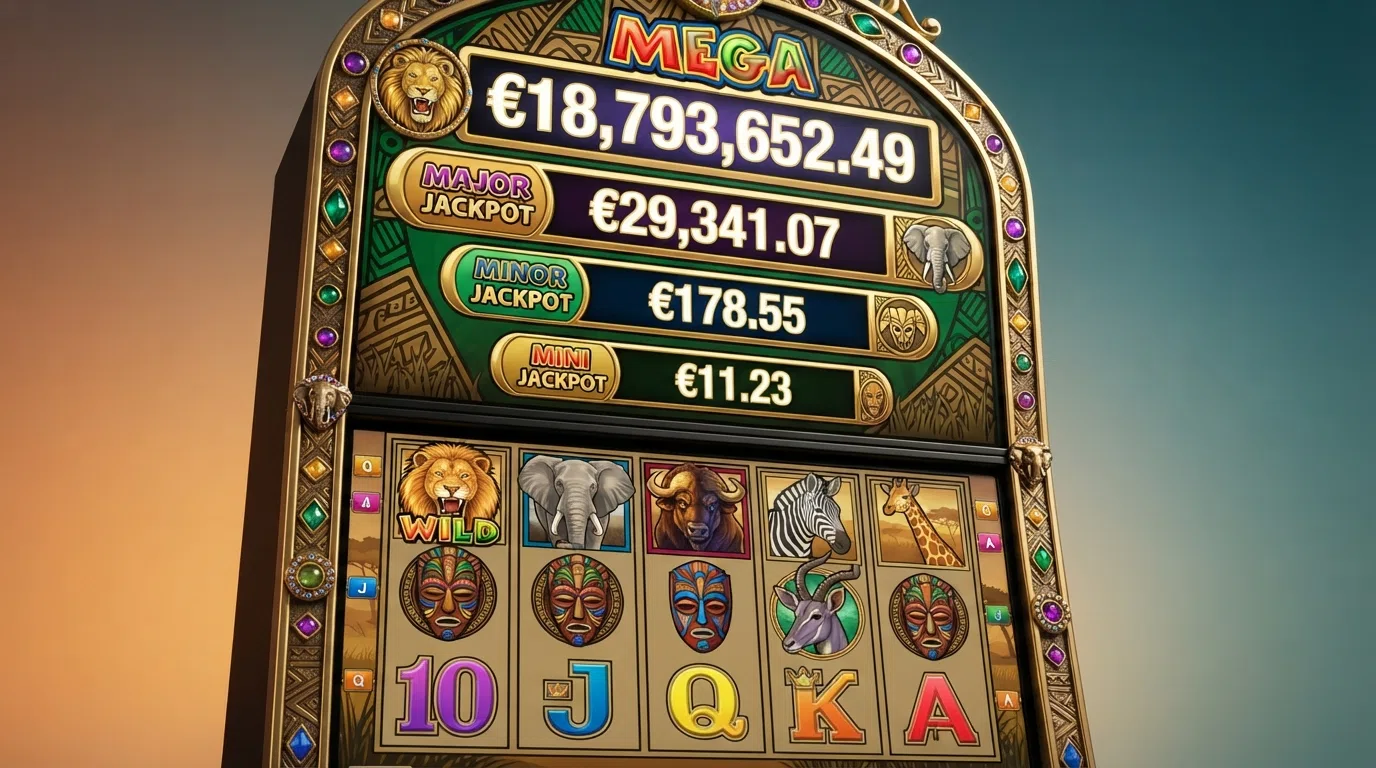
Mega Moolah remains the headline title. Its 88.12% RTP, low-to-medium volatility classification, and record-breaking payout history make it the reference point against which every other networked progressive is measured. Book of Atem WowPot runs on the WowPot network and carries a base-game maximum win of 5,000x stake at high volatility, which makes it a faster-burn alternative for players who prefer a steeper variance curve. Jackpot King titles span multiple themes and stake configurations under a shared Blueprint pool. Dream Drop, the Relax Gaming network, has become a fast-rising contender with a similar structure. MegaJackpots (IGT) and Age of the Gods (Playtech) round out the established set.
Best Progressive Slots by Jackpot Size — The Giants in Play
Mega Moolah’s record payouts sit in the multi-million tier, and the game’s African-safari theme has become almost synonymous with online progressive jackpots. WowPot’s ceiling has grown at a faster rate in recent years because the network launched more recently and the contribution base has been expanding. Jackpot King pools tens of Blueprint titles into a shared meter, which keeps individual games fresh while concentrating the jackpot size. Dream Drop and MegaJackpots are the fast-rising contenders, with pools that climb into seven figures within weeks of a reset.
The headline figure — the jackpot size displayed on the game’s tile — is the most visible signal but not the only one. RTP, volatility, and minimum qualifying stake together determine whether the title is a fit for a particular bankroll. Mega Moolah’s low-to-medium volatility means longer sessions with smaller variance; Book of Atem WowPot’s high volatility means shorter, sharper sessions with more of the return concentrated in rare events. The player who picks a title by jackpot size alone is picking by the marketing signal, not the playing experience.
Most Popular Progressive Slots Among UK Players in 2026
The titles UK players actually return to are not always the ones with the largest current pots. Fishin’ Frenzy Jackpot King has become a cross-audience favourite because the base game is familiar from the non-progressive version and the Jackpot King layer adds a seven-figure tail without changing the core gameplay. Age of the Gods titles, themed around Greek mythology, hold a loyal following in the UK market. Jackpot Giant and Hall of Gods are steady performers whose pools grow consistently across cycles.
Player behaviour tells a different story than jackpot size. A title with a smaller current pool can be more popular than a giant because the base game is more entertaining or the qualifying stake is more accessible. The jackpot is the headline; the base game is what brings players back.
New and Trending Progressive Slot Releases Worth Watching
The current pipeline of progressive releases adds titles to existing networks rather than launching new networks. A new Jackpot King title grows the same pool as the existing Jackpot King titles, so a player who already plays one Blueprint progressive is feeding the same meter by playing another. New WowPot, Mega Moolah, and Dream Drop titles work the same way. The early-life phase of a new networked title is a smaller pool growing from a recently-reset seed, which means faster growth per spin but a smaller headline figure than the established giants.
The practical effect is that new progressive titles offer the same networks with fresh themes. They are not a route to different odds. Preferring the new release for its theme is a cosmetic choice; the jackpot’s mathematics remains anchored to the network it belongs to.
How to Evaluate a Progressive Slot Before You Spin
- Check the RTP — both the base-game figure and the total-return figure, if the paytable reports both.
- Confirm the minimum stake for jackpot eligibility — non-qualifying spins feed the base game but not the pool.
- Look up the current seed amount — a freshly-reset pool starts from the seed and grows until it pays.
- Identify the trigger mechanism — random, symbol-based, or mystery — and read the published odds.
- Verify the provider and network — an established network with a long payout history is a different proposition from a standalone pool with one reset behind it.
Ten UK Casino Sites for Progressive Jackpot Play, Compared
The ten operators below all hold active GB licences verified against the UK Gambling Commission’s public register. The table is the starting point; the write-ups that follow add what the columns cannot — the progressive-specific features, the welcome terms relevant to jackpot play, and where each operator’s offer fits the reader’s situation. No invented weightings, no fabricated scores: the comparison is what the licence register, the operator sites, and the published progressive libraries actually show.
How the Ten Operators Compare — At a Glance
| Operator | UKGC Licence | Welcome Offer for Slot Players | Progressive Networks & Key Providers |
|---|---|---|---|
| Bet365 | GB-licensed | — | bet365 originals, Games Global, Playtech, Blueprint, Pragmatic Play |
| William Hill | GB-licensed | £10 deposit/stake → 200 free spins at 10p, 10x wagering, 72h validity | Games Global / Microgaming, NetEnt, Blueprint, Playtech, Pragmatic Play |
| Sky Vegas | GB-licensed (065519-R-339675-002) | £10 deposit + spend → 200 free spins, 0x wagering, 7-day expiry | Blueprint / Jackpot King, Games Global, Pragmatic Play |
| Ladbrokes | GB-licensed (Casino Remote, active 1 Nov 2014) | £10 spend → 100 free spins, 0x wagering | Pragmatic Play Drops & Wins, Blueprint / Jackpot King, Games Global |
| Paddy Power | GB-licensed | — | Blueprint / Jackpot King, Pragmatic Play, Playtech, Games Global |
| Coral | GB-licensed (LC International) | — | Pragmatic Play, Blueprint / Jackpot King, Games Global |
| Betfred | GB-licensed | £10 stake on slots → 200 free spins, 0x wagering, 14-day window | Games Global, Blueprint, Pragmatic Play |
| Gala Bingo | GB-licensed (LC International) | £10 deposit + £10 spend → 100 free spins at £0.10, 7-day claim | Pragmatic Play, Blueprint, Games Global |
| Sky Bet | GB-licensed | — | Blueprint, Pragmatic Play, Games Global |
| Betfair | GB-licensed | — | Playtech, Blueprint, Pragmatic Play, Games Global |
Em-dashes in the welcome column mark operators whose current slot-specific welcome terms were not confirmed in this review. Where a column repeats one value across most rows, the table drops it; where a column would be half-empty because research did not carry the figure, the column drops rather than printing gaps.
The spread on welcome terms is the most informative pattern. Three operators (Sky Vegas, Ladbrokes, Betfred) offer 0x wagering on free-spin winnings — meaning free-spin returns are paid as withdrawable cash, not bonus funds. William Hill’s 10x wagering is at the new statutory ceiling that took effect 19 December 2025, which is the maximum any UK-licensed welcome offer can carry. The remaining operators either did not surface a slot-specific welcome in the available data or carry terms the page has not confirmed; the write-ups below state the position plainly rather than filling the gap with a guess.
On progressive-network coverage, every operator in the table carries at least one of the four dominant networks (Games Global/Mega Moolah/WowPot, Blueprint/Jackpot King, Pragmatic Play/Drops & Wins, Playtech/Age of the Gods). The variation is in which networks and how deep the catalog goes. Games Global is the most widely stocked because Mega Moolah alone drives substantial traffic. Blueprint Jackpot King is a near-universal fixture because it spans so many theme variations under a shared pool.
Bet365 — Jackpot365 Pays Progressive Wins as Cash
Bet365’s progressive proposition sits on the Jackpot365 mechanic, an in-house progressive layer that pays jackpot winnings as cash with no wagering requirements attached. For a progressive-slot player, that distinction matters: a jackpot paid as withdrawable cash does not need to be turned over before withdrawal, which removes the typical bonus-funded friction on a large payout. The licensed provider list confirms Games Global, Playtech, Blueprint, and Pragmatic Play progressive content alongside bet365 originals, so the major networked pools are represented. Verdict: the cash-payout mechanic is the standout feature for a player who wants the cleanest possible path from jackpot trigger to withdrawal.
William Hill — 200 Free Spins and Mega Moolah Access
William Hill’s welcome path is £10 deposit or stake to 200 free spins at 10p each, with 10x wagering on free-spin winnings and a 72-hour validity window. The 10x wagering sits at the new statutory ceiling and is competitive with the broader UK market post-December 2025. The progressive library confirms Mega Moolah and other Games Global titles alongside NetEnt, Blueprint, Playtech, and Pragmatic Play content. Verdict: a legacy UK brand with a clear welcome path and a deep progressive catalog — a strong fit for a player who values brand longevity alongside jackpot access.
Sky Vegas — Zero-Wagering Free Spins and Jackpot King
Sky Vegas carries licence number 065519-R-339675-002 and offers 200 free spins on a £10 deposit and spend path. The wagering requirement is 0x: free-spin winnings are paid as cash with no turnover condition. Free-spin validity runs seven days. The progressive lobby features Blueprint Jackpot King and Games Global titles alongside Pragmatic Play. Verdict: the 0x wagering is the headline — a player who values cash-out simplicity over bonus size will find this clean.
Ladbrokes — Daily Drops Eligible at Full Slot Contribution
Ladbrokes’ Casino Remote licence has been active since 1 November 2014, and the welcome offer is 100 free spins on a £10 spend path at 0x wagering. The progressive-relevant detail is structural: traditional multi-operator networked progressives are excluded from welcome wagering, but daily-drop jackpots from the Pragmatic Play Drops & Wins network contribute at 100% toward any slot wagering requirement. That means a player working through the welcome offer can chase a daily drop without the exclusion that blocks the larger networked pools. Verdict: a strong fit for a player who wants to combine welcome wagering with daily-drop jackpot play — the two are not in conflict here.
Paddy Power — Jackpot King and Flutter Progressive Network
Paddy Power’s progressive lobby confirms Jackpot King titles under Blueprint alongside Pragmatic Play, Playtech, and Games Global content from the broader Flutter portfolio. The slot-specific welcome offer was not confirmed in this review. Verdict: the progressive coverage is the story here — Jackpot King plus the Flutter network gives a player access to multiple major pools under one roof, even where the welcome terms are not the headline.
Coral — Daily and Hourly Jackpot Drops Without Wagering Barriers
Coral runs under LC International Limited and shares the Entain network’s structure: traditional networked progressives are excluded from welcome wagering, but daily and hourly drop jackpots remain eligible. Pragmatic Play and Blueprint Jackpot King content is confirmed alongside Games Global titles. The slot-specific welcome offer was not confirmed. Verdict: a player who prefers shorter-cycle drops over the longer networked pools will find the daily and hourly Drops & Wins schedule well-stocked here.
Betfred — 200 Free Spins with Winnings Paid as Cash
Betfred’s welcome is 200 free spins on a £10+ stake path, with 0x wagering — free-spin winnings are added directly to the withdrawable balance. The qualifying window runs 14 days. Games Global, Blueprint, and Pragmatic Play progressive content is confirmed. Verdict: the 14-day window is more generous than the 72-hour terms some competitors carry, and the 0x wagering keeps the cash-out path clean.
Gala Bingo — 100 Free Spins with a Slots-First Welcome
Gala Bingo’s slots welcome requires a £10 deposit and a £10 spend on slots for 100 free spins at £0.10 each on selected games, with seven days from registration to claim. The progressive catalog runs through Pragmatic Play, Blueprint, and Games Global. Verdict: a bingo-rooted brand whose slots welcome works for a player who wants a longer claim window and access to the major progressive networks through the Entain stack.
Sky Bet — Flutter Portfolio Progressive Access
Sky Bet’s casino side carries the Flutter portfolio’s progressive content, including Blueprint, Pragmatic Play, and Games Global titles. UK guides frequently recommend Sky Bet for progressive jackpot play. The exact progressive lobby details and current slot welcome offer were not confirmed in this review. Verdict: a sound secondary option within the Flutter network — a player already using Flutter brands will find the same progressive coverage.
Betfair — Playtech and Blueprint Progressive Content
Betfair’s casino carries Playtech and Blueprint progressive content alongside Pragmatic Play and Games Global titles from the broader Flutter network. UK Gambling Commission licence numbers are listed on the operator’s regulatory page. The current progressive-slot welcome offer was not confirmed. Verdict: a player who values Playtech’s Age of the Gods catalog will find it here alongside the major Blueprint and Games Global pools.
Free Progressive Slots vs the Real-Money Jackpot Chase
Demo mode exists at every UK-licensed operator, and it is genuinely useful — for the base game. A player in demo mode sees the same reels, the same hit frequency, the same volatility profile, and the same bonus features as a real-money player. The progressive meter is visible. The gameplay feels identical. What demo mode does not offer is the jackpot itself. The pool is fed by real-money stakes only; a demo spin contributes nothing to the meter and is not eligible for the trigger. A player who has spent an hour in demo mode has learned how the slot plays but has not entered the lottery.
Free Progressive Slots — No-Download, Instant Play at UK Casinos
UK-licensed operators offer demo mode on the majority of their progressive titles without requiring a deposit, though some gate demo access behind account registration. The no-download browser experience is the standard path: a player visits the operator site, opens the game in browser, and spins in demo mode without installing software. The full progressive library is typically available in demo, including Mega Moolah, Jackpot King, WowPot, and Age of the Gods titles.
Demo Mode vs Real-Money Progressive Play — The Trade-Off
The decision is simple: demo mode for learning, real money for the jackpot. A player who has not spun a particular progressive title before should use demo mode to learn the bonus mechanics, the volatility feel, and the hit frequency of the base game. That learning costs nothing and protects bankroll from the cost of discovering an unfavourable game the hard way. The switch to real money happens once the player has decided the title is worth a stake — and only real money qualifies for the jackpot.
The £5 ceiling — £2 for under-25s — defines the minimum real-money cost of eligibility on most titles. A player who intends to chase the pool is committing at least the qualifying stake per spin, in real money, with real bankroll at risk. Demo mode does not impose that cost, which is the point.
Crypto and Progressive Jackpots — A UK Player’s Reality Check
The intersection of cryptocurrency and progressive jackpot slots exists, but it sits largely outside the UK-licensed market. Most UKGC-licensed operators do not accept cryptocurrency deposits; the regulatory framework under the Gambling Act 2005 and the LCCP treats crypto as a payment method requiring the same source-of-funds and identity verification as any other. A player who wants to stake crypto on a progressive slot typically ends up at an offshore operator licensed in Curaçao, Malta, or Gibraltar but not in Great Britain.
The trade-off is severe. An offshore-only operator does not fall under UKGC supervision. The £5 and £2 stake caps do not apply. The 2.5-second spin-speed rule does not apply. GAMSTOP does not block access. The mandatory deposit-limit prompt does not appear. AGB-licensed player using an offshore crypto casino has access to the same Mega Moolah or WowPot pool in principle, but has none of the consumer protections that make the GB-licensed version a regulated product. The Gambling Commission’s enforcement model targets operators, not players, and does not include statutory ISP or DNS blocking — which means the offshore site remains reachable even after enforcement action.
The honest framing: a UK player who wants a progressive jackpot slot and the protections of UK regulation uses a UKGC-licensed operator and pays in sterling. A player who specifically wants crypto deposits accepts the protection gap as the cost of that choice.
The UK Rules That Shape Every Progressive Spin
Every progressive slot played at a UK-licensed operator sits inside a statutory framework that constrains the game design, the stake size, the spin speed, and the bonus terms. The rules are not advisory. They are conditions of the licence, and the Gambling Commission enforces them through compliance reviews, financial penalties, and licence suspension. A player who understands the framework is in a better position to evaluate what any operator is offering.
The single regulator for Great Britain is the Gambling Commission (UKGC), operating under the Gambling Act 2005 and the Gambling (Licensing and Advertising) Act 2014. Three licensing objectives guide its work: preventing crime and disorder, ensuring fair and open gambling, and protecting children and other vulnerable persons. A GB licence is compulsory at the point of consumption for any operator serving GB customers — an MGA, Gibraltar, or Curaçao licence is not a substitute, and players using unlicensed sites lose the UKGC protections entirely.
Stake Limits, Spin Speed, and the End of Auto-Play — The Mechanical Rules
| Rule | What It Caps or Requires | Effective Date | How It Affects Progressive Play |
|---|---|---|---|
| £5 maximum stake per game cycle (age 25+) | The largest stake a single spin can carry | 9 April 2025 | Caps exposure per spin; does not affect jackpot eligibility on titles that qualify at lower stakes |
| £2 maximum stake per game cycle (age 18–24) | The largest stake for younger adults | 21 May 2025 | Same cap structure at a lower ceiling; under-25s face higher contribution rate to the house edge per spin |
| Minimum 2.5-second spin cycle | The fastest pace any spin can run | 31 October 2021 | Bounds the number of spins per hour at 1,440; auto-play banned so the player controls the pace |
| Auto-play banned | The player must initiate every spin | 31 October 2021 | Removes the delegation of pace to software; the stop decision stays with the player |
| Speed-up features banned | Turbo mode, quick-stop, and similar cannot be used | 31 October 2021 | Prevents the player from buying back time within the 2.5-second floor |
| Losses disguised as wins banned | Sounds and visuals that celebrate a net loss cannot be used | 31 October 2021 | Removes a category of misleading feedback from the spin experience |
| Reverse withdrawals banned | A pending withdrawal cannot be cancelled to fund more play | 31 October 2021 | Forces a separation between withdrawal decisions and continued play |
| Session display mandatory | Total session time and net wins/losses must be shown | 31 October 2021 | Surfaces cumulative results during play, not only at the end |
| 10x wagering cap on bonuses | No welcome offer can require more than 10x turnover | 19 December 2025 | Limits the cost of clearing bonus funds; free-spin winnings at 0x wagering are the cleanest path |
| Mixed-product promotional offers banned | Free spins cannot be conditioned on a sport bet or other non-slot activity | 19 December 2025 | Decouples slot welcome offers from cross-product conditioning |
The cluster of rules effective 31 October 2021 — spin speed, auto-play ban, speed-up ban, losses-disguised-as-wins ban, reverse-withdrawal ban, session display — fundamentally restructured the UK online slot product. Auto-play had been a standard feature; its removal means every spin is a deliberate act. Speed-up features had let players compress a session into minutes; their removal restores the 2.5-second floor as the genuine minimum. The losses-disguised-as-wins ban closes a feedback gap where the slot celebrated outcomes that were, on balance, losses. Together these rules make the session visible to the player in a way the previous design did not.
UKGC Licensing, eCOGRA Certification, and Why Fairness Is Audited
A UKGC licence is the entry condition; independent testing is the verification layer. Progressive slots in the UK must use RNG systems certified as fair by independent testing laboratories — eCOGRA, iTech Labs, and international test labs are the three most frequently cited. The certification process tests the RNG output over millions of simulated spins to confirm that the published RTP holds within an acceptable tolerance and that the game’s outcomes are not predictable from prior results. A slot without this certification cannot be offered by a UKGC-licensed operator.
GAMSTOP has been a mandatory condition of every UKGC online operating licence since 31 March 2020. A player who registers with GAMSTOP is blocked from every GB-licensed online gambling site for the chosen exclusion period. The available periods are six months, one year, five years, or five years with auto-renewal. The scheme is a population-level safety net: it does not require the player to identify which sites they use, because every GB-licensed site checks the GAMSTOP database before allowing access.
The Gambling Commission’s enforcement model is disruption rather than blocking. The Commission does not currently hold statutory ISP or DNS blocking powers. Enforcement runs through operator-facing action — financial penalties, licence suspension, and operating conditions — not through player access at the network level. The implication for a player is that unlicensed offshore sites remain reachable; the protections the Commission can guarantee end at the GB-licensed perimeter.
Bonus Wagering, the 10x Cap, and What It Means for Progressive Offers
The 19 December 2025 rule that capped bonus wagering at 10x under LCCP Social Responsibility Code 5.1.1, combined with the ban on mixed-product promotional offers, rewrote the arithmetic of every UK welcome package. A 10x cap means a £10 bonus requires £100 of qualifying turnover before withdrawal — tight, but bounded. Pre-2026 offers of 30x, 40x, or higher were the norm; the statutory ceiling is now the maximum any operator can impose.
The practical effect on progressive play is significant. Free-spin winnings at 0x wagering — paid directly as cash — are the cleanest path from bonus to bankroll. Operators that offer this structure (Sky Vegas, Ladbrokes, Betfred) deliver free-spin returns without the turnover friction. Operators carrying 10x wagering (William Hill) deliver larger spin counts but require the player to grind through the turnover before withdrawal. Both structures are now legal; both sit under the same statutory ceiling.
The mixed-product ban closes a category of cross-conditioning — for example, a free-spin offer requiring a sports bet to unlock. A welcome offer at a UK-licensed operator is now slot-only or non-slot-only; the player is not forced to engage with a product they did not intend to play. For a progressive-slot player, that means the welcome path stays inside the slot vertical.
Playing Progressive Slots Without Losing Track
The progressive jackpot chase has a particular shape: long sessions, flat base-game returns, and a payoff event so rare that most sessions end without it. That shape is what the responsible-gambling infrastructure in Great Britain is designed to support. Statutory tools are built into every UK-licensed slot, and they sit alongside the national safety net of GAMSTOP and the support lines run by GamCare and the NHS.
The prevalence context matters. GambleAware’s Annual Treatment and Support Survey classified 13.1% of adults — roughly 6.8 million GB adults — as experiencing any level of gambling problems under the PGSI 1+ classification. The progressive chase, with its long sessions and its long odds, sits at the higher-engagement end of the spectrum. The tools below are not pitched at any individual reader’s situation; they are the standard infrastructure that every UK-licensed slot carries.
Deposit Limits, Session Limits, and Reality Checks — The Built-In Brakes
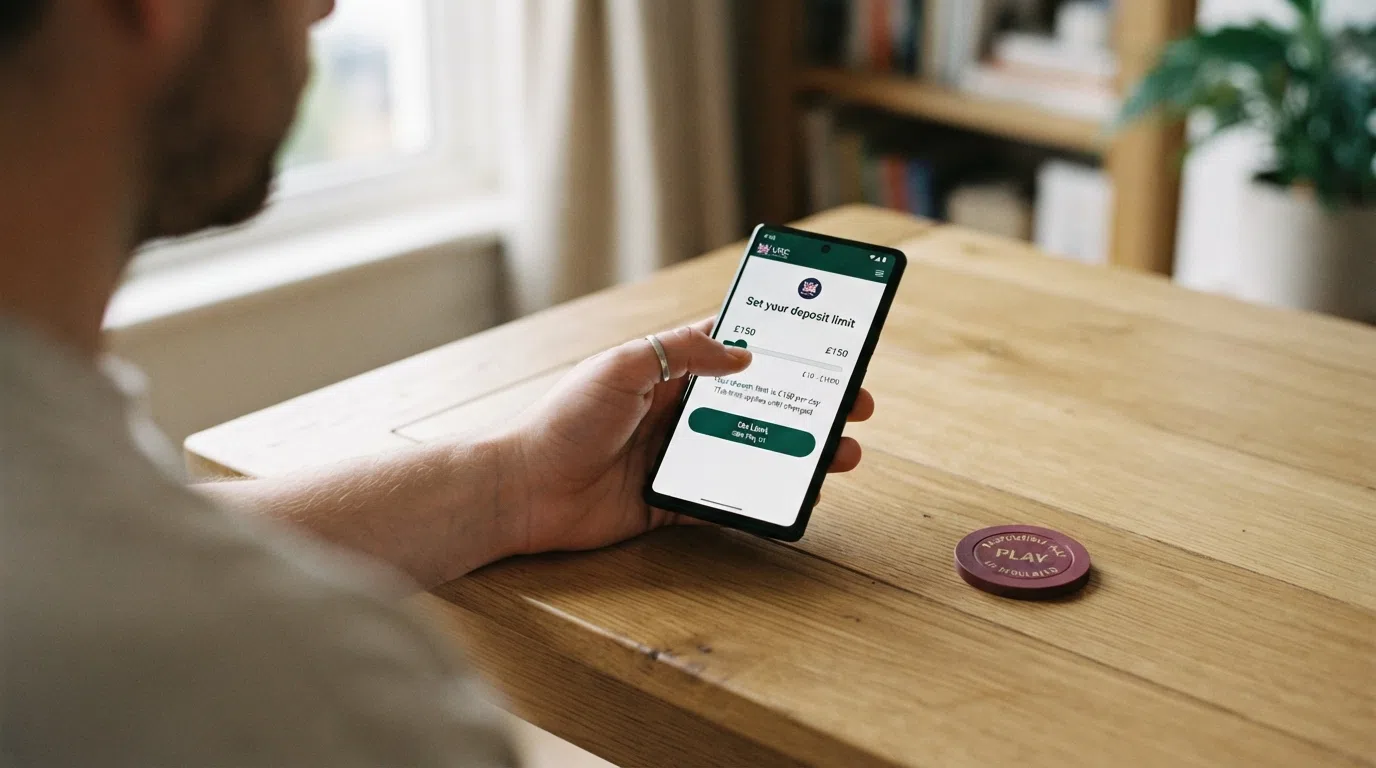
Deposit limits are mandatory at every UK-licensed operator. Since 31 October 2025, the operator must prompt the customer to set a financial limit before their first deposit and action any decrease immediately. A deposit limit is a ceiling, not a target; setting one at £50 per week means a player cannot deposit the 51st pound without first raising the limit, and a raise typically carries a cooling-off period. For a progressive-slot player, the deposit limit is the binding constraint on session cost — even if every spin loses, the session stops when the deposit ceiling is reached.
Session-time and total-win/loss displays are mandatory on every UK-licensed slot. The display updates as play continues, showing cumulative time and net position. The figure is honest: it counts every spin’s contribution to the running total, including the small base-game wins that disguise the underlying house edge. A player who reads the display regularly is reminded of the session’s actual cost in a way the per-spin feedback does not provide.
Reality-check prompts are configurable. A player can set a prompt at 15 minutes, 30 minutes, 60 minutes, or any interval the operator allows. The prompt surfaces the session time and net position and asks the player to confirm they wish to continue. For a progressive-slot session, where the natural temptation is to continue until the jackpot lands or the bankroll empties, the prompt is the moment the stop decision re-enters the player’s awareness.
GAMSTOP, Self-Exclusion, and Where to Get Help
GAMSTOP is the national self-exclusion scheme for Great Britain. Registration blocks access to every GB-licensed online gambling site at once, for the chosen exclusion period. The available periods are six months, one year, five years, or five years with auto-renewal. The registration is a single form; the player does not need to identify which sites they use, because every operator checks the database. For a player who has decided the progressive chase is no longer entertainment, GAMSTOP is the most decisive available step.
GamCare’s National Gambling Helpline is available on 0808 8020 133, 24 hours a day, 7 days a week. The line is staffed by advisers trained in gambling-related harm and is free from any UK phone. GambleAware publishes self-assessment tooling for players who want to evaluate their own relationship with gambling — the PGSI screen is the standard instrument. NHS gambling harm clinics offer treatment in several regions across Great Britain. Gamblers Anonymous runs peer-support meetings. None of these is a substitute for the others; a player in difficulty can start with any of them.
The Mental Arithmetic of the Jackpot Chase — What the House Edge Really Means
The expected loss on a session of progressive play is the cost the player pays for the chance at the jackpot. On Mega Moolah, the published RTP is 88.12% — meaning the slot returns £88.12 for every £100 wagered, on average over millions of spins. The gap, £11.88 per £100, is the house edge. On a session of 200 spins at the £5 statutory ceiling — £1,000 in total stake — the expected loss is roughly £118.80. That is the price of 200 chances at a jackpot with odds in the tens of millions.
The £5 cap bounds the per-spin exposure but does not eliminate the edge. A player staking £5 per spin faces the same 11.88% house edge as a player staking 50p; the larger stake simply burns through bankroll faster. The arithmetic does not reward higher stakes per spin; it only rewards more spins, which the 2.5-second floor and the auto-play ban keep bounded at human pace.
A worked session-loss example using the Mega Moolah benchmark: 200 spins at the £5 ceiling, £1,000 in turnover, expected loss of £118.80 at the 88.12% RTP. The 2.5-second spin floor caps the session at roughly 500 seconds — about 8 minutes and 20 seconds — if the player spins at the maximum legal pace. In practice, with decision time between spins, a 200-spin session stretches longer, but the turnover figure and the expected-loss figure do not change with pace; they change only with the number of spins and the stake per spin.
The honest framing: a progressive slot session is entertainment priced by the house edge. The jackpot is a long-tail event that almost no individual session reaches. The expected-loss figure is the cost of admission; the jackpot is the prize that almost nobody collects. A player who treats the session as the former and the jackpot as the latter has the right mental model. A player who reverses them is paying for an illusion.
How We Evaluated and Ranked These Progressive-Slot Operators
Every operator on this page was verified against the UK Gambling Commission’s public register for an active GB licence before being included. The verification step is not optional — an operator without a current GB licence does not appear, regardless of its progressive catalog or its welcome terms. The register is the source of truth for the “GB-licensed” claim in every row of the comparison table.
Game-provider and progressive-network data was collected from operator sites, where providers and jackpot categories are typically listed in the game’s information panel or the lobby’s network filter. Where the operator site did not surface the data clearly, the SlotCatalog index was used as a secondary source — SlotCatalog aggregates progressive titles by network and provider and is the most complete independent catalog of online progressive slots.
Bonus terms and progressive-specific features were checked against operator offer pages and specialist UK-facing review data — CasinoAppsOnline.co.uk for daily-drop contribution rules, BritishGambler.co.uk for free-spin terms, and Racing Post for ecosystem features such as Bet365’s Jackpot365 mechanic. Where a current offer was not confirmed in this review, the table shows an em dash and the write-up states the position plainly.
The ranking itself is descriptive, not scored. There is no composite score, no weighted formula, and no editor’s pick. The ordering reflects the breadth of progressive-network coverage and the clarity of the welcome terms: operators with confirmed progressive-specific features and clean welcome terms appear earlier; operators where the progressive credentials are confirmed but the welcome specifics were not sit later. A reader who wants a different ranking — by welcome generosity, by minimum stake, by specific network — can build it from the table.
Should You Chase a Progressive Jackpot? What the Numbers Tell You
The trade-off this page has documented is honest on both sides. The base-game return on a progressive slot sits below the return on a fixed-jackpot slot because a slice of every stake funds the jackpot pool. The Mega Moolah benchmark of 88.12% is roughly 8 percentage points below the typical fixed-jackpot figure, and the gap is the price of admission to a lottery whose top tier pays out in the millions. Most sessions collect only the base-game portion of the return; a vanishing minority collect everything. The mathematics is not a marketing claim; it is the published RTP.
The UK statutory framework gives the player protections that unregulated markets do not. The £5 stake cap — £2 for under-25s — bounds per-spin exposure. The 2.5-second spin floor and the auto-play ban keep the session at human pace. Mandatory deposit-limit prompts, immediate-action decreases, and session-time displays surface the cost of play in real time. GAMSTOP provides a single-registration route out of every GB-licensed site at once. The 10x wagering cap and the mixed-product ban keep welcome terms within defined bounds. None of these rules eliminate the house edge; they ensure the edge is paid on a regulated product rather than an unprotected one.
The decision the reader faces is not “which progressive slot will pay out” — no analysis can answer that — but “is the entertainment value of the chase worth the arithmetic cost”. The tools for making that decision are now on the page: the RTP benchmarks, the stake-limit awareness, the operator comparison data, the reality-check infrastructure, and the responsible-gambling safety net. A player who reads the page and decides the chase is worth the cost can stake with a clear sense of what they are buying. A player who decides it is not has the framework to walk away from.
Frequently Asked Questions
What stake do you need to qualify for a progressive jackpot in the UK?
Each progressive title publishes a minimum qualifying stake in its paytable, and the figure varies by game. Some networked progressives qualify at any stake; others require a maximum-coin configuration or a specific stake threshold. The £5 statutory ceiling — £2 for players aged 18 to 24 — caps the maximum, not the minimum. The qualifying-stake check is in the game’s rules screen and takes seconds; a non-qualifying stake still feeds the base game but not the jackpot pool.
How often do progressive jackpots hit, and what are the odds?
Networked progressives such as Mega Moolah and WowPot have published odds in the tens-of-millions-to-one range for the top tier of the jackpot wheel. Mystery and must-drop jackpots pay on a defined schedule — daily or hourly — which guarantees a win within the window but at a smaller ceiling. A player who respects the 2.5-second spin-speed rule and the auto-play ban is limited to roughly 1,440 spins per hour; even an extended session is several orders of magnitude short of a top-tier hit.
What UK gambling limits or rules affect progressive slot play in 2026?
The headline changes are the £5 per-spin cap for adults aged 25 and over (effective 9 April 2025), the £2 cap for adults aged 18 to 24 (effective 21 May 2025), the 10x wagering cap on welcome bonuses (effective 19 December 2025), and the mandatory deposit-limit prompt with immediate-action decreases (effective 31 October 2025). The 2.5-second spin floor, the auto-play ban, and the session-display rule have been in force since 31 October 2021. GAMSTOP has been mandatory for every UKGC online licence since 31 March 2020.
Are progressive jackpot slots legal and fair at UK-licensed casinos?
Yes, under the conditions the Gambling Commission imposes. Every UKGC-licensed operator must use RNG systems certified as fair by independent testing laboratories — eCOGRA, iTech Labs, and international test labs are the most frequently cited. The certification tests millions of simulated spins to confirm the published RTP holds within tolerance. GAMSTOP, deposit-limit prompts, session displays, and the stake caps are all licence conditions. The protection applies only at GB-licensed sites; offshore operators without a GB licence do not fall under UKGC supervision.
What is the difference between standalone, networked, and must-drop progressive jackpots?
Standalone progressives feed from a single machine or a single casino’s floor and grow modestly. Networked progressives feed from every casino carrying the game across the network and grow into seven figures. Must-drop jackpots — daily or hourly — guarantee a win within a defined window regardless of the pool size. The architecture determines the ceiling, the growth rate, and the predictability of the trigger.
Can you play progressive slots for free before betting real money?
Demo mode is available at most UK-licensed operators, including on progressive titles, without a deposit in many cases. Demo mode replicates the base game — reels, hit frequency, volatility feel, bonus features — but does not feed the jackpot pool and does not qualify for the trigger. The pool is funded by real-money stakes only. Demo mode is the right tool for learning a title’s mechanics; real money is the only route to the jackpot itself.
Slots – fastestpayout-casinos-uk
Content created by the «fastestpayout-casinos-uk» team