
Penny Slots in the UK: What a 1p Spin Really Costs and Where to Play
 Available in GB
The marketing line writes itself: a slot you can play for a penny. It looks like the friendliest game in the casino, the one a small bankroll can stretch for hours, the one a first-timer can pick up without reading the paytable. That is the version the name sells, and the version every other penny-slot guide in the UK repeats back to you. The version the arithmetic produces is less generous. A genuine penny slot lets you set the line stake to £0.01, but the games that carry the name run 10, 20, 25 or 50 paylines at once. At a 20-line game with every line active, the real minimum is £0.20 a spin, not £0.01. The “penny” describes the cost of one line out of twenty, twenty-five or fifty, and the gap between that figure and what leaves the balance is the one detail the marketing skips.

That gap is the subject of this page. We will work through what a penny slot actually is, what the per-spin cost really runs in the games you can find at UK-licensed casinos, how the Gambling Commission’s stake limits and bonus rules reshape the market, and which operators and titles are worth your time once the numbers are on the table. Everything that follows traces to a named source or the calculation it implies; the reader-facing version of those numbers is on the page below.
*Current as of September 8, 2026 and verified against the Gambling Commission’s public register of licence holders.*
What a Penny Slot Actually Is — and Why the Name Misleads
A penny slot is a slot machine with a minimum line stake of £0.01. That is the definition every UK guide agrees on, and it is the definition the slot’s settings screen shows you when you open the stake menu. Pull the line stake down to its floor and the display reads 1p. So far, so literal. Where the name stops describing the cost is in how the game totals that 1p into a spin.
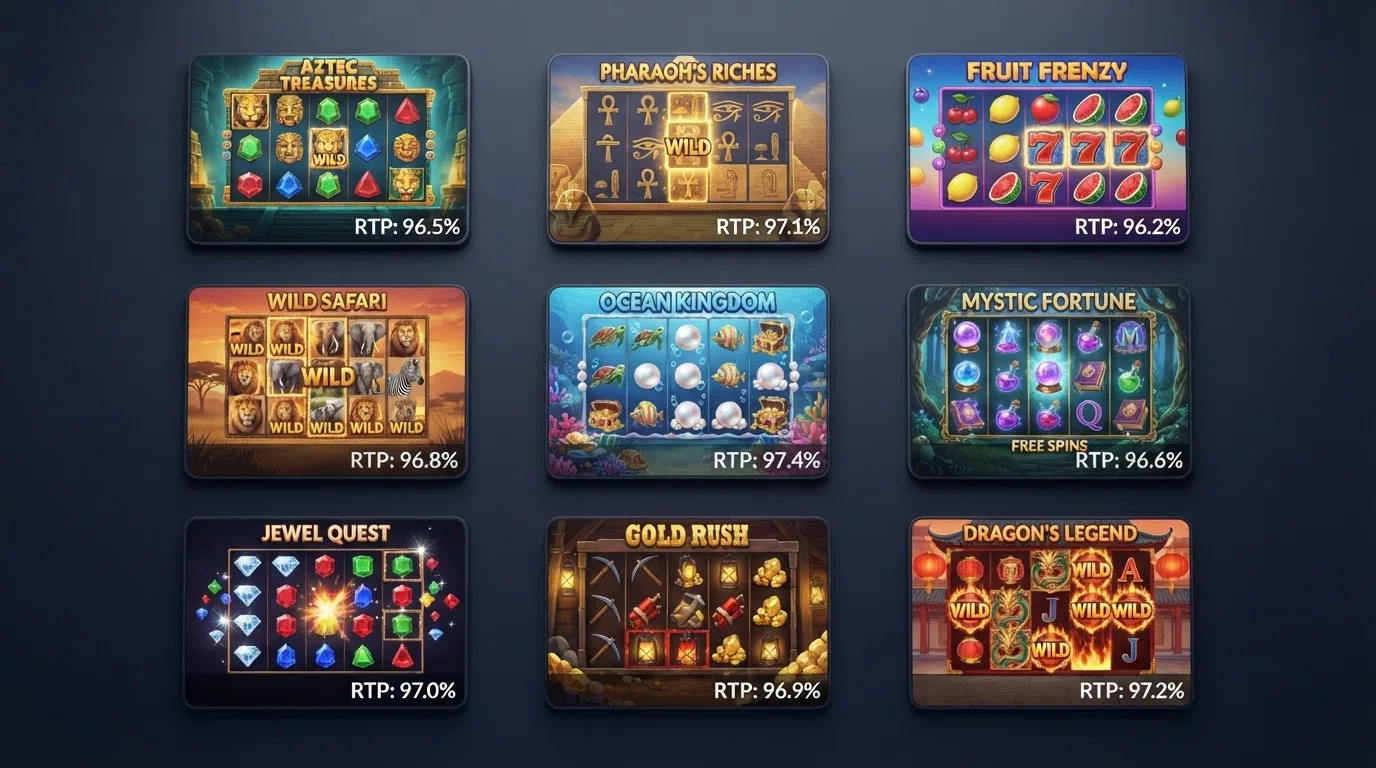
Modern penny slots do not run on a single payline. The standard catalogues at UK-licensed casinos lean on five-reel, multi-line layouts: 10 paylines on Book of Dead and Legacy of Dead, 25 on Fluffy Favourites, 50 on a long list of cascading and Megaways titles. Every payline is a separate bet at the line stake you set. A 25-line game with every line active costs 25 × £0.01 = £0.25 a spin. A 50-line game costs 50p. Adjustable-line games like Book of Dead let you switch paylines off, but doing so cuts both your cost and your win potential in equal measure — turning the line count down is a bankroll lever, not a free pass back to 1p.
The distinction matters because the player’s mental model of “cheap” is anchored to the name. “A penny a go” reads as a budget feature; in practice it is a cost-control feature, useful for a player who deliberately wants to size a spin at ten or twenty pence and is willing to accept a smaller win surface to get there. The two are not the same thing, and the rest of this page reads very differently depending on which one you are shopping for.
How Paylines Multiply the Real Cost of a Spin
The arithmetic is short, and it is worth running once in plain numbers so it sticks. Take a 20-line penny slot with every line active. Each spin costs 20 × £0.01 = £0.20. At a comfortable spin cadence of one game every five seconds, that runs out to 12 spins per minute and £2.40 of stake per minute. An hour of unbroken play at the same rate spends £144 of bankroll. That is the same as 14,400 spins. On a 96% RTP slot, the expected loss over those 14,400 spins is roughly £5.76 per hour.
The line count changes the picture cleanly:
| Lines active | Line stake | Per-spin cost | Per minute (12 spins) | Per hour (720 spins) | Expected loss per hour at 96% RTP |
|---|---|---|---|---|---|
| 10 | £0.01 | £0.10 | £1.20 | £72.00 | £2.88 |
| 20 | £0.01 | £0.20 | £2.40 | £144.00 | £5.76 |
| 25 | £0.01 | £0.25 | £3.00 | £180.00 | £7.20 |
| 50 | £0.01 | £0.50 | £6.00 | £360.00 | £14.40 |
The statutory caps for online slots — £5 per game cycle for players aged 25 and over (in force from 9 April 2025) and £2 for players aged 18 to 24 (in force from 21 May 2025) — look generous until you are on a 50-line game. At 50 lines, the cap is effectively built in: the player cannot stake more than 40 lines at the penny line stake, and any attempt to raise the line stake above 4p hits the ceiling. On a 200-line Megaways title the cap is the real ceiling for the whole game. For a 25-year-old on a 100-line game at 2p a line, the cap still bites. The £5 cap for over-25s gives more headroom, but on a 50-line game it caps the line stake at 10p and the spin at 50p — which is exactly where the floor already sits.
The slots the UK market stocks as penny titles are mostly in the 10-to-50-line band, and a working rule of thumb is that “penny slot” at a UK casino means a 10p-to-50p minimum spin, not a 1p one. Adjustable-line games give you a way back down to the line stake you actually want to play at, but they also reduce what the game can pay on a single line hit.
Penny Slot RTP and What the Percentage Actually Returns
Return to Player is the share of every pound staked that a slot is programmed to return to players over a long run. It is the only honest number on the screen, and it is also the number most likely to be different on the version of the game you happen to load. UK-licensed penny slots typically return between 94% and 96%, with anything above 96% considered good value. Book of Dead sits at 96.21%, Starburst at 96.09%, Fluffy Favourites at 95.39%, Big Bass Bonanza at 96.71%. The spread is narrow, but on a long session the gap between 94% and 96.71% is the difference between losing £6 and losing £3.29 for every £100 staked.
A point worth saying out loud: RTP is calculated over hundreds of thousands of spins and never describes a session. A 96% slot is not “guaranteed” to return £96 of every £100. It is a long-run average; the actual return on a session of a few hundred spins can be anything from zero to several multiples of the stake. RTP is the figure you use to compare one slot to another, not the figure you bet on.
Two further points the marketing copy skips. First, the Gambling Commission requires RTP to be constant regardless of stake size: a £0.20 spin and a £5.00 spin on the same game must return the same percentage over the long run. That is the rule, and it removes the old “bet more to get more back” pitch from the conversation. Second, operators can deploy different RTP builds of the same game. Book of Dead has a default build at 96.21% and a lower build at 94.24%; Starburst at 96.09% and 94.05%; Fluffy Favourites at 95.39% and 93.29%. The lower versions are legal under UK rules, and the casino you load the game on decides which one you get. The only place to know is the in-game information or help screen. We will return to that check in the section on evaluating a slot, because it is the single most important number on the page.
Progressive Penny Slots — Can a 10p Stake Really Win Millions?
The honest answer is yes, with the qualifier that “can” is doing a lot of work in that sentence. Two documented UK wins from penny-level stakes make the point precisely. In March 2026, a BetVictor customer won £1,744,000 from a 10p jackpot side bet on Magnificent Power Spartan through The Jackpots progressive system. A bet365 customer in London became the first Jackpot365 millionaire, winning over £1,300,000 from a 10p stake on Ballin’. Both wins came from bets a player could comfortably classify as “small”. The progressive system that paid them sits on top of a base game whose RTP is usually lower than the equivalent non-progressive title — the trade for funding the seed.
For the player evaluating a progressive penny slot, the relevant comparison is between two expected returns. A 96.5% non-progressive slot pays out, on average, £96.50 per £100 staked across the long run. A 94% progressive with a £1.5m seed on top pays out £94 per £100 staked plus an infinitesimally small expected share of the seed — small enough that a hundred thousand spins at the stake does not move the needle. The headline number is real, and the arithmetic of the base game is what actually compounds while you play. Treat the progressive as a free lottery ticket funded by the gap between your slot’s RTP and the non-progressive equivalent, and play the slot for its base mechanics rather than its seed.
Penny Slots vs Pound Slots — What Actually Changes When You Raise the Stakes
The cleanest way to see the difference is to look at what stays the same and what does not. The RTP is identical at every stake under UKGC rules — that is the law, and it is the line every comparison of stake size has to start from. What changes is the absolute cost per spin, the absolute cost per session, and the volatility profile the player is likely to feel.
A penny slot at £0.20 a spin on a 20-line game spends £0.20 per game cycle; the equivalent pound slot on the same layout, at 5p a line, spends £1.00. Ten times the per-spin cost is not ten times the per-session cost, because the player tends to adjust the number of spins downward on a higher-stake game. The line cost moves the floor, not the volume. The volatility hit is sharper: a 5,000x max win on Book of Dead pays £500 on a £0.10 spin and £25,000 on a £5.00 spin. The high-volatility game that feels like a long, quiet drift at 10p a spin can feel like a minefield of small wins and big dead spins at £5.00, because the absolute swings hit harder on the bankroll.
The stake limit for online slots is set per game cycle, so a player aged 18 to 24 is bounded at £2 and a player aged 25 or over is bounded at £5. The choice between penny and pound slots is, in practice, a choice between spending well below the cap and spending at it. The legal regime is the same for both; the player’s session shape is the only thing that changes.
Smart Play on a Small Budget
The mechanics above are not strategy — they are arithmetic. The strategy is the part the player decides, and for a £20-to-£50 deposit the difference between a sensible plan and a hopeful one is a few minutes of setup.
Set the deposit limit before the first deposit. The site will prompt you, and from 31 October 2025 every GB-licensed casino has to do this; the prompt is the system catching a player before the impulse catches them. Pick a daily or weekly figure you can absorb without adjusting any other part of your life, set the gross-deposit limit with equal prominence, and treat the limit as a closed switch. Decreases apply immediately; increases do not, and the time delay exists for a reason.
Choose a low-volatility slot for longer sessions. Starburst at 96.09% RTP and low volatility is the cleanest example: a £20 deposit at 10p a spin runs about 200 spins, and a low-vol slot returns more of those spins as small wins than a high-vol slot would. The wins are smaller, the bankroll lasts longer, and the expected loss per hour is the same. A high-vol title like Money Train 4 (96.10% RTP, very high volatility, 150,000x max win) burns the deposit faster, returns it less often, and offers an outside chance of a payout large enough to reset the session. The trade is real, and the choice is yours.
Check the RTP on the game info screen before staking. A high-RTP build at 96.71% returns 2.47p per pound staked more than a low build at 94.24% — over a 1,000-spin session at 20p a spin, that gap is £4.94, which is the difference between a £10 session and a £5 session on the same game. The figure is on the help screen; it takes five seconds to find.
Mind the spin speed. From 1 October 2021, UKGC banned auto-play on online slots, set a minimum spin speed of 2.5 seconds per game cycle, banned features that speed up play, and banned losses disguised as wins. The point of these rules is to make the session shape the player’s choice rather than the slot’s. Use the slower spin speed in your favour — five seconds between spins is a reasonable working rhythm, and 2.5 seconds is the floor.
Free Penny Slots in the UK — No Deposit Needed, but Rules Still Apply
Demo mode exists at every UKGC-licensed casino on the majority of the penny-slot catalogue. PlayOJO carries 1,500+ slots, Ladbrokes 2,000+, Videoslots 3,000+, and most of those titles have a demo toggle on the game tile. The mode is the real-money game with a notional balance: identical RTP, identical mechanics, identical bonus behaviour. The only thing missing is the financial outcome.
The catch is the word “free”. Free-to-play now means “free after you have proved who you are”. Since 7 May 2019, every GB-licensed operator has had to verify a player’s name, address and date of birth before any deposit or gambling, and the rule extends to free-to-play games. The verification is a one-off per operator — once an account is verified, the demo is open. But the era of clicking a slot on a publisher’s site and spinning anonymously is, in the UK licensed market, closed.
Two consequences follow. First, demo play is the cleanest testing ground for a new slot. A player can trigger the free spins round, the cascading reels feature, the Hold and Win bonus, and the expanding symbol mechanic in demo mode exactly as the real-money game would fire them. Bonus frequency, base-game hit rate and the feel of the volatility are all observable. The information a player takes from twenty minutes of demo is worth more than any review.
Second, a demo is not a no-deposit bonus. A no-deposit bonus is a small cash or spin credit the casino credits to a new account; it carries the same wagering and withdrawal rules as a paid bonus. A demo balance pays out nothing. The two are routinely confused in marketing copy, and the player who treats them as the same thing is the player the marketing copy is written for.
Where to Play Free Penny Slots Online
Every operator on this page offers demo play on the bulk of its penny-slot catalogue. The standard path is the same: open a game tile, look for a “Demo” or “Play for Fun” toggle alongside the real-money option, and the slot loads with a notional balance. Where a casino gates the demo behind a logged-in account, the player registers, verifies their identity, and the toggle opens. Videoslots’ 3,000+ catalogue and PlayOJO’s 1,500+ are the two widest selections; Ladbrokes’ 2,000+ sits between them. Most of the same titles run as demos across all three, so the choice is less about what is available in demo and more about the welcome-offer terms if the player decides to switch to real money later.
For players exploring a brand-new release — Hacksaw’s Superstar Sevens landed in February 2026, for instance — demo mode is the only sensible way to learn the paytable before the bonus buy or feature trigger eats a real deposit. The same applies to Relax Gaming’s Money Train 4, where the bonus round is the bulk of the slot’s appeal and is best understood before any cash is on the line.
No-Download and No-Registration Free Play — What Remains
The old promise of “click and play” is narrower than it was. Standalone demo aggregators and provider websites may still offer a penny-slot demo without registration, and the experience is technically friction-free. What the player gives up is the UKGC’s protective layer. An unregistered demo on a non-licensed site is not covered by the Commission’s complaints procedure, by GAMSTOP, by an ADR provider, or by any British consumer redress if a real-money balance is later disputed. The convenience is real, and the cost of the convenience is also real.
For penny-slot play in the UK specifically, the licensed route is the only one that preserves the full set of protections. The handful of seconds it costs to register and verify is the price of every guarantee the rest of this page relies on.
Free Penny Slots with Bonus Rounds — What Demo Mode Actually Teaches You
Bonus rounds are where penny slots live or die. The base game on a high-vol title like Money Train 4 or Sweet Bonanza returns the small share of the RTP it is programmed to return; the bonus round carries the rest. Demo play is the only way to see how often a bonus triggers, what it pays when it does, and how the mechanics work in practice. Le Cowboy’s cascading reels, free spins and wilds all fire in demo at the same frequency they do for real money. The expanding symbols in Book of Dead and Legacy of Dead resolve the same way. The Hold and Win respins in Eyecon’s catalogue play identically. The Megaways engine on Big Bass Bonanza counts the symbol ways the same in demo and real-money mode.
The thing a demo does not teach is bankroll behaviour. The 5,000x max win on a 5-line Legacy of Dead spin looks the same with notional money and real money, but the felt experience of clicking the spin button with a £5 balance is not the same as clicking it with a £500 one. That gap is real, and it is the reason every player should make the switch to real money only after the demo session is over and the slot is understood.
Free Play vs Real Money — The Honest Comparison
The mechanics are identical; the experience is not. Demo play carries identical RTP, identical features, identical bonus frequency and zero financial outcome. Real money play carries the same RTP and features plus three things demo cannot give: a withdrawal right, eligibility for progressive jackpots, and a welcome-offer bonus that can be claimed once and once only. The flip side is the thing the marketing tends to skip: real money play also carries financial risk, the temptation to chase losses, and the full weight of the player’s own bankroll psychology.
A workable rule: spend twenty minutes on a new title in demo, learn the bonus trigger rate and the feel of the base game, then decide. If the slot is not for you, the demo session cost nothing and the information is yours. If it is, the real-money switch is a deliberate one, and the deposit limit set before the first deposit is what makes it deliberate.
The Best Penny Slots to Play Right Now
Nine titles earn a place on this shortlist. The selection is anchored on three factors: an RTP at or above 96% in the slot’s default build, a provider with a documented UK track record, and a feature set that holds up under sustained play. The table below ranks them by RTP.
| Slot Title | Provider | RTP | Volatility | Min Bet | Max Win |
|---|---|---|---|---|---|
| Big Bass Bonanza | Pragmatic Play | 96.71% | High | £0.10 | 2,100x |
| Legacy of Dead | Play’n GO | 96.58% | High | £0.01/line | 5,000x |
| Sweet Bonanza | Pragmatic Play | 96.49% | Medium-High | £0.20 | 21,175x |
| Superstar Sevens | Hacksaw Gaming | 96.37% | Medium | £0.10 | 10,000x |
| Le Cowboy | Hacksaw Gaming | 96.28% | — | £0.10 | 25,000x |
| Book of Dead | Play’n GO | 96.21% | High | £0.10 | 5,000x |
| Money Train 4 | Relax Gaming | 96.10% | Very High | £0.10 | 150,000x |
| Starburst | NetEnt | 96.09% | Low | £0.10 | 500x |
| Fluffy Favourites | Eyecon | 95.39% | Medium | £0.01/line | — |
Three readings from the table. First, the cluster at the top — Big Bass Bonanza, Legacy of Dead, Sweet Bonanza, Superstar Sevens, Le Cowboy and Book of Dead — runs 96.21% to 96.71% RTP. Any of the six is good value by the 96% benchmark the UK market treats as the working line. Second, Starburst’s 96.09% RTP combined with low volatility is the closest thing the penny-slot market has to a beginner’s slot: the game pays small wins often, the max win of 500x is modest, and a £20 deposit will last longer on Starburst than on any high-vol title in the same RTP band. Third, Fluffy Favourites at 95.39% sits just below the 96% line, but its £0.01-per-line minimum and Eyecon’s familiarity to UK players make it a sensible pick on those grounds alone.
The min-bet column is the one most players read first and the one most likely to mislead. The £0.10 minimum on Book of Dead, Big Bass Bonanza, Starburst, Superstar Sevens, Le Cowboy and Money Train 4 is the per-spin cost, not the per-line cost. The £0.01-per-line on Legacy of Dead and Fluffy Favourites is the per-line cost; the real per-spin cost depends on how many lines the player activates. This is the gap the name “penny slot” obscures, and the gap that decides what a “minimum bet” actually costs.
New Penny Slot Releases in 2026
Two titles from the current release calendar are worth flagging. Superstar Sevens by Hacksaw Gaming landed on 19 February 2026 with a 96.37% RTP, medium volatility, a 10,000x max win and a £0.10 minimum bet. The medium-volatility profile puts it between Starburst’s steadiness and Book of Dead’s sharper swings, and the max win is high enough to keep high-vol fans interested. Le Cowboy, also from Hacksaw, released a year earlier with a 96.28% RTP, cascading reels, wilds, free spins and a 25,000x max win. The cascading-reels mechanic means consecutive wins can chain in a single paid spin — a feature that benefits from a larger line count than the average penny slot, and one worth testing in demo before any real money lands.
A practical rule for new releases: check the RTP on the game info screen the first time you load the title. The default figure the developer publishes is the one most aggregators carry; the figure your casino deploys may be lower. Both Superstar Sevens and Le Cowboy are above 96% in their default builds, and that is the working assumption to start from.
How to Evaluate a Penny Slot — RTP, Volatility and What Else Matters
Three numbers decide whether a penny slot is worth a deposit. Treat them as a checklist rather than a single figure to chase.
RTP — target 96% or higher, and always check the in-game info screen. Operators can deploy lower builds of the same game, and the spread is wide enough to matter on a long session. The 94.24% build of Book of Dead returns 2p per pound staked less than the 96.21% build; on a 1,000-spin session at 20p a spin, that is a £4 gap on the same game at the same casino on a different week. The number is on the help screen. Find it.
Volatility — match the slot to your bankroll. Low-volatility games like Starburst return small wins often and let a £20 deposit run for hours. High-volatility games like Money Train 4 and Legacy of Dead return less often, and what they return is bigger. A £20 bankroll on a high-vol title is a short session with one or two meaningful moments; a £20 bankroll on a low-vol title is a long, quiet drift. The choice is the player’s, and the bankroll should make it.
Features and paylines — Megaways, cascading reels, cluster pays and Hold and Win all change what a single spin can do, and they change the cost-per-spin calculation along with it. A Megaways title with hundreds of ways to win is rarely a “penny” slot in the true sense; the per-spin cost climbs quickly even at the line stake floor. Read the paytable before depositing, and run the game in demo for twenty minutes before staking.
Top UK Casino Sites for Penny Slots — Compared
Ten UKGC-licensed casinos carry the bulk of the UK penny-slot market. All ten hold a GB operating licence verified against the Gambling Commission’s public register; the welcome offers reflect terms as they sit in 2026, and the wagering cap of 10x on bonuses (in force from 19 December 2025) applies to all of them.
| Operator | UKGC Licence | Welcome Offer | Free Spins | Wagering on FS | Slot Count |
|---|---|---|---|---|---|
| PlayOJO | Confirmed (public register) | Bet £10, get 80 free spins | 80 FS at £0.10 | 0x (winnings as cash) | 1,500+ |
| Ladbrokes Casino | Entain group | Bet £10, get 100 free spins | 100 FS | 10x | 2,000+ |
| Betfred | Petfre (Gibraltar) Limited | 200 free spins (£20 value) | 200 FS at £0.10 | 0x | — |
| Virgin Games | Nozee Limited / Gamesys | 100 free spins on Big Bass Splash | 100 FS (£1 total) | 0x | — |
| Paddy Power Games | PPB Counterparty Services / Flutter | 50 free spins | 50 FS | 0x | — |
| Sky Vegas | Flutter group | Not confirmed this run | Not confirmed this run | Not confirmed this run | — |
| LeoVegas | LeoVegas Gaming plc | 50 free spins on Big Bass Splash | 50 FS at £0.10 | 0x | — |
| Casushi | Dazzletag Entertainment | 100 free spins on Big Bass Splash | 100 FS at £0.10 | 0x | 1,500+ |
| BetVictor | BV Gaming Limited | Not detailed this run | 0x wagering on spins | 0x | — |
| Videoslots | Videoslots Limited | 100% up to £200 + 11 welcome spins | 11 welcome spins | 20x (verify current terms) | 3,000+ |
A few points the table carries that the numbers alone do not. Six of the ten operators route free spins at 0x wagering — winnings paid as cash with no playthrough — which is the direction the UK market has moved since the 10x cap came in. Videoslots is the largest catalogue (3,000+ slots) and the only operator in the table whose bonus terms carry a 20x playthrough on the deposit match, which exceeds the UKGC’s 10x statutory cap; the figure may have been updated, and the player should verify the current terms before depositing. The Slots-count column has gaps because the catalogue size was not part of every operator’s published data; the absence is honest, and the operator pages carry the current count.
PlayOJO
PlayOJO is the cleanest wager-free offering on this list, and the cleanest wager-free offering the UK market has. The welcome is bet £10, get 80 free spins at £0.10 each, with 0x wagering on winnings — what the spins pay, the player keeps as cash, with no ceiling on the cashout. The 30-day validity is generous against the industry norm, and the 1,500+ slot catalogue covers the bulk of the UK penny-slot market, with 50+ providers including NetEnt, Play’n GO, Pragmatic Play, Microgaming and Hacksaw Gaming. The terms are the same in the small print as they are in the marketing, which is the line PlayOJO has made its name on. For a player who wants a single welcome offer with no hidden roll-up, this is the one.
Ladbrokes Casino
Ladbrokes runs 2,000+ slots under a 50+ provider mix that includes Playtech, NetEnt, Play’n GO and Pragmatic Play, and the welcome offer — bet £10, get 100 free spins — sits inside a 30-day window. The 10x wagering on free-spin winnings is the UKGC cap applied as written, not as a marketing sweetener. The 100 free spins are a higher count than most operators on the list; the 10x playthrough is the cost of that count. The Entain group’s licence is one of the longest-standing on the UK register, and the catalogue’s depth is the reason a player looking for a specific penny title is more likely to find it here than on a smaller site.
Betfred
Betfred’s 200 free spins are the highest count on this list, valued at £20 total at £0.10 per spin and carrying 0x wagering on free-spin winnings with no cashout cap. The catch is the 3-day expiry, the tightest window on the table — a player who does not log in within 72 hours of claiming the offer loses the spins. For a player who is going to play the same week, 200 wager-free spins at £0.10 is the biggest free-spin value available; for a player who plans to play casually, the tight window makes the offer functionally smaller. The Petfre Gibraltar Limited licence is on the public register, and the 40+ provider mix includes Playtech, IGT, NetEnt and Pragmatic Play.
Virgin Games
Virgin Games runs 30+ providers including NetEnt, Eyecon, IGT and Pragmatic Play under the Nozee Limited / Gamesys group licence. The welcome is 100 free spins on Big Bass Splash — each spin valued at £0.01 on 10 lines for a £1 total value, 0x wagering, 30 days to use. The £1 face value of the spins is lower than the headline 100 figure suggests, and the player should weigh the count against the per-spin value when comparing to the wider list. The catalogue includes Fluffy Favourites and other Eyecon penny-classics.
Paddy Power Games
Paddy Power’s 50 free spins carry 0x wagering with an uncapped cashout, and the 7-day window is long enough to plan around. The 40+ provider mix includes Playtech, NetEnt, Red Tiger and Pragmatic Play under the PPB Counterparty Services / Flutter group licence. The straightforward structure — 50 wager-free spins, no rollover, no cap — is the appeal. For a player who values clear terms over spin count, this is the cleanest example on the list.
Sky Vegas
Sky Vegas runs an extensive slot library under the Sky Bet / Vegas Flutter group licence, with 40+ providers including NetEnt, Playtech, Blueprint Gaming and Pragmatic Play. The detailed welcome-offer and free-spin terms were not confirmed at the time of this review, and the player’s first stop before depositing should be the Sky Vegas promotions page directly. The brand’s market position and the Flutter licence make the catalogue a reasonable place to look for a specific penny title, and the safer-gambling tools on the platform match the rest of the UK-licensed market.
LeoVegas
LeoVegas runs 50+ providers including NetEnt, Play’n GO, Pragmatic Play and Evolution, and the welcome offer is 50 wager-free spins on Big Bass Splash at £0.10 per spin for a £5 total value, 0x wagering on free-spin winnings, 30-day validity, uncapped cashout. The mobile-first platform is the most polished in this list for a player who plays on a phone, and the catalogue is large enough to cover the bulk of the UK penny-slot market. The £10 deposit floor and the £5 face value of the spins are a fair trade against the wager-free structure.
Casushi
Casushi’s 100 free spins on Big Bass Splash at £0.10 each give a £10 face value with 0x wagering on free-spin winnings and an uncapped cashout. The 48-hour expiry is the second-tightest window on the list after Betfred’s, and the player who claims the offer has two days to use the spins. The 1,500+ slot catalogue and 30+ provider mix (NetEnt, Microgaming, Pragmatic Play, Eyecon) cover the bulk of the market, and the Dazzletag Entertainment licence is on the public register. For a player who is going to play the same weekend, 100 wager-free spins at £0.10 is competitive; for a player who plans to play later in the month, the expiry makes the offer functionally smaller.
BetVictor
BetVictor’s licence is held by BV Gaming Limited, and the 40+ provider mix includes NetEnt, Pragmatic Play, Microgaming and Evolution. Free spins carry 0x wagering with a 30-day standard validity, and the welcome-offer details were not fully surfaced in this review. What sets BetVictor apart on this list is the documented 10p-stake progressive win — a customer took £1,744,000 from a 10p jackpot side bet on Magnificent Power Spartan through The Jackpots progressive system in March 2026. For a player evaluating progressive penny slots, BetVictor is the operator with the public evidence that penny-level progressive wins pay out on this side of the marketing copy.
Videoslots
Videoslots is the largest penny-slot catalogue in the UK at 3,000+ slots, with 80+ providers including NetEnt, Play’n GO, Pragmatic Play, Hacksaw and Relax Gaming. The welcome is 100% up to £200 plus 11 welcome spins, with 20x wagering on the deposit match — a figure that exceeds the UKGC’s 10x statutory cap, and a figure the player should verify on the operator’s terms page before depositing. For a player who has exhausted the smaller catalogues and wants access to the long tail of penny titles, Videoslots is the broadest option; for a player weighing the welcome offer on its own terms, the 20x playthrough is the cost of the breadth.
What “Wagering” Actually Costs — The Calculation Behind a Welcome Offer
A worked example shows why the 0x vs 10x vs 20x distinction matters. Take a 100-free-spin welcome at £0.10 per spin, 0x wagering, which is the structure on Casushi and a few others. The face value of the spins is £10; the player does not need to stake that face value. The 0x wagering means any winnings land as cash and can be withdrawn without further play. The cost to the player is the £10 deposit and the time it takes to run the 100 spins at the slot’s spin speed. On Big Bass Splash with a 96.71% RTP, the expected loss across those 100 spins at £0.10 each is roughly 29p — 100 × £0.10 × (1 − 0.9671) = £0.329. The free spins are a paid chance to play the slot, and the cost of the chance is the expected loss the RTP implies.
The same 100 free spins on a 10x wagering structure change the picture. The face value is still £10, and the player still needs to clear the 10x playthrough on the winnings before withdrawing — so a £5 win becomes a £50 turnover requirement at the slot’s stake. The turnover rule, applied at a typical 20p minimum spin, runs 250 spins at the slot, with the same expected loss calculation on each one. Total turnover on the bonus: 50 × the winnings. For a £5 win, that is 250 spins of additional play. The bonus has not changed; the cost of withdrawing it has.
The third structure is the deposit-match bonus, which is the Videoslots welcome. A £10 deposit matched at 100% gives a £10 bonus. The 20x playthrough requires £200 of additional stake before withdrawal, which at 20p a spin is 1,000 spins. On a 96% RTP slot, the expected loss across 1,000 spins at 20p is roughly £8. The £10 bonus has been earned at a cost of £8 in expected loss, and the player keeps £2 of the bonus in expectation. Below the UKGC 10x cap on the same structure, the turnover is £100 (500 spins) and the expected loss is £4 — a £6 expected gain on a £10 bonus. The statutory cap is doing real work in that comparison, and any bonus that exceeds it should be read with that in mind.
How UK Gambling Law Protects Your Penny Slot Play
The UK has the most heavily regulated online slots market in the world, and a penny-slot player inside it is operating under a more layered set of rules than a player in any other major market. The structure of that regulation is worth laying out once, in full, so the rest of the page can refer back to it.

The single statutory regulator is the Gambling Commission, an executive non-departmental public body sponsored by the Department for Culture, Media and Sport. The Commission licenses operators, key personnel and software, and publishes a public register of licence holders. Every operator on this page has a GB operating licence on that register. The statute under which the Commission operates is the Gambling Act 2005, extended to remote operators by the Gambling (Licensing and Advertising) Act 2014, which brought all online gambling serving British customers into the point-of-consumption regime. Three licensing objectives sit at the top of the Act: preventing gambling from being a source of crime or disorder, ensuring gambling is conducted fairly and openly, and protecting children and vulnerable persons. Everything the Commission does — stake limits, age verification, GAMSTOP, deposit-limit prompts — traces back to one of those three.
A GB licence is compulsory at the point of consumption. Operating without one is a criminal offence under section 33 of the Gambling Act 2005, carrying up to 51 weeks’ imprisonment and/or an unlimited fine. The practical effect for a player is that any operator accepting UK customers without a GB licence is doing so illegally, and the player on that site is not protected by the Commission’s complaints procedure, by GAMSTOP, by an ADR provider, or by any British consumer redress if funds are withheld. The Commission’s enforcement is disruption-based rather than ISP-blocking: in the period from April 2024 to June 2025 the Commission issued 3,140 disruption notices, referred 447,778 URLs to search engines, and saw 287,961 of those URLs removed. ISP and DNS blocking powers are proposed but not enacted.
The UKGC Stake Limits — How the £5 and £2 Caps Affect Penny Slot Play
Online slots are the only product in Great Britain with a statutory per-spin cap. From 9 April 2025, the cap is £5 per game cycle for players aged 25 or over. From 21 May 2025, the cap is £2 per game cycle for players aged 18 to 24. The instrument is SI 2025/215. A game cycle is defined as the period from initiation to when all stakes are lost or all winnings are delivered; the cap applies to the total amount staked across the cycle, not to a single line. The limits apply to online slots only, not to roulette or blackjack, and they apply per player, not per casino — two adults at the same site can face different caps on the same game.
For penny-slot players specifically, the cap interacts with the line count in a way the marketing rarely explains. On a 50-line game, the £2 cap for an 18-to-24-year-old effectively caps the line stake at 4p, which is the same spin cost as a 200-line game at 1p a line. On a 200-line Megaways title, the cap is the real ceiling for the whole session. For over-25s, the £5 cap gives more headroom, but on a 100-line game the line stake is still capped at 5p, and on a 200-line game at 2.5p. The cap is not a “set a high number” choice for the player; it is a ceiling that the line count consumes.
Age Verification — Why You Must Prove Who You Are Before You Spin
Since 7 May 2019, every GB-licensed remote operator has had to verify a player’s name, address and date of birth before any deposit or any gambling — and the rule extends to free-to-play games, free bets and bonuses. The verification is a one-off per operator, and most casinos run it through an automated identity check on the registration form. The point of the rule is twofold: it closes the door on underage play at the account level, and it makes GAMSTOP self-exclusion enforceable because the operator knows who is trying to play.
The practical effect for a player is that the “click and play” path on a licensed site is closed. Demo play now requires a verified account, and the verification step is the price of every protection that follows. The same rule is also why a no-registration demo on a non-licensed site is not a free pass — the convenience is real, and the loss of UKGC coverage is the cost.
GAMSTOP — A Single Sign-Up That Blocks Every Licensed Site
GAMSTOP has been mandatory for every GB-licensed online gambling site since 31 March 2020. A single registration blocks the player from every licensed online casino, betting site and bingo site in Great Britain. Exclusion periods are six months, one year, five years, or five years with auto-renewal. The exclusion cannot be cancelled early. If the player does not actively contact GAMSTOP after expiry, the exclusion continues for up to seven further years.
GAMSTOP covers online only. It does not cover land-based venues — bookmakers, casinos, arcades — and it does not cover unlicensed offshore sites. The limit matters: a self-excluded player who turns to an offshore site is not covered by the GAMSTOP umbrella, and the offshore site has no obligation to honour the exclusion. The self-exclusion is a UK-licensed-market tool, and its full effect is felt only inside that market.
Offshore Sites — What You Lose Outside the UKGC System
A Curaçao, Malta or Gibraltar licence is not a substitute for a GB one. The point-of-consumption regime in force since 2014 means any operator serving British customers needs a GB licence, and an offshore licence is not enough. Operating without a GB licence is a criminal offence under section 33 of the Gambling Act 2005.
For the player, the cost of an unlicensed site is the loss of the entire UK protective layer. No GAMSTOP coverage, so a self-excluded player can still play. No Commission complaints route if a balance is disputed. No ADR provider. No British consumer redress if funds are withheld. The games on an unlicensed site may be the same games as on a licensed site, and the RTP numbers on the help screen may be the same, but the recourse when something goes wrong is the difference. The Commission’s enforcement figures — 3,140 disruption notices, 447,778 URLs referred, 287,961 URLs removed between April 2024 and June 2025 — show how much of the unlicensed market the Commission is actively disrupting, and how much of it is still reachable.
Deposit Limits, Reality Checks and Session Tracking
Three tools sit on every UK-licensed penny-slot page, and they are the most underused part of the safer-gambling infrastructure. The first is the deposit limit. Every player who deposits is prompted to set a financial limit before the first deposit, and the prompt is mandatory from 31 October 2025. A decrease in the limit applies immediately; an increase does not, and the time delay is the rule doing its work. The operator must offer a gross-deposit-limit option (money paid in over a set period) with at least equal prominence, and only the gross form may be called a “deposit limit”.
The second is the reality check. Players can set a pop-up to interrupt their session at intervals they choose — every 15 minutes, every 30, every hour — and the pop-up states how long the session has been running and what the net position is. The third is the session tracker. From 1 October 2021, every UKGC-licensed slot must display total losses, total wins and total time played during the session. The figure is on the screen in real time, and the screen is the player’s. Time-outs (24 hours to six weeks) are also available, alongside the GAMSTOP exclusion covered above.
Spotting Problem Gambling — The Signs That Matter
The warning signs that distinguish a recreational penny-slot session from a problem are well documented. Chasing losses — raising the stake or extending the session to recover a previous loss — is the most common single signal. Staking more than planned is a close second, and the deposit limit is the most direct counter to it. Hiding play from family or friends, or gambling money earmarked for bills, are the signals that point further along the same line.
The UK prevalence data puts numbers to the picture. Almost 1.6 million adults in England who gamble may benefit from some type of treatment or support for harmful gambling. The GambleAware Annual GB Treatment and Support Survey 2024 found that almost 1 in 3 adults (30%) who gamble and are experiencing any level of problems want treatment, support or advice — up from 17% in 2020. The rise is part of a wider shift in how the population understands gambling harm, and the willingness to ask for help has more than doubled over four years.
The Commission’s financial vulnerability checks, at the £150 net-deposit threshold since 28 February 2025, are the system’s first automated catch. The check uses publicly available data — county court judgments, individual voluntary arrangements, debt relief orders — and does not require documents. It is a light-touch, automated process, and it exists to flag a pattern rather than to police a transaction. The fuller financial risk assessments, with staged thresholds from £1,000 to £5,000 net deposit depending on age and stage, were announced on 7 July 2026 and have not yet commenced; the rollout date has not been confirmed.
Where to Get Help — Helplines, Clinics and Support Services
The support infrastructure in the UK is free, confidential and available around the clock. The National Gambling Helpline, run by GamCare, is on 0808 8020 133 and is open 24 hours a day, every day. The call is free from any UK landline or mobile, and the service covers advice, signposting and referral. GambleAware offers free confidential support and treatment referral across Great Britain, online and by phone. GAMSTOP, covered in detail above, is the self-exclusion route for every GB-licensed online gambling site. NHS gambling harm clinics operate in England, Scotland and Wales, with referral routes from GPs and from the helplines. Gamblers Anonymous runs peer-led support groups across the country, and a session finder is on the GA website. None of these services require a referral, an appointment or a fee; the only requirement is to make the call.
How We Selected and Ranked the Best Penny Slot Sites
Every operator on this page holds a GB operating licence verified against the Gambling Commission’s public register. The slot RTPs, paylines and feature sets are sourced from Bojoko, OLBG, SlotCatalog, CasinoBeats, iGamingNuts and provider documentation. The welcome offers, wagering multiples and validity windows are sourced from operator terms pages and from secondary review sites; the UKGC’s 10x wagering cap on bonuses (in force from 19 December 2025) is the working ceiling against which every welcome offer was checked, and one offer (Videoslots, 20x on the deposit match) was flagged for verification.
The ranking is built on four factors in order. The first is the size and depth of the penny-slot catalogue, on the working assumption that a wider catalogue means the player is more likely to find a high-RTP title that fits their volatility preference. The second is welcome-offer fairness, which is read as wagering multiplier, validity window and max cashout — the 0x wagering offers on free spins are ranked above the 10x offers, and the 10x offers are ranked above the 20x outlier. The third is the provider mix, on the working assumption that 50+ providers is a healthier long-term catalogue than 30. The fourth is documented player outcomes, which is the reason BetVictor’s progressive-win record earned it a place on the list. Every factual claim on the page traces to a named source published in 2024–2026.
What Every UK Penny-Slot Player Should Do Before They Spin
Four decisions decide whether penny slots are good value or a slow drain. Check the RTP on the game info screen before you stake — the figure on the developer’s default build is the one the marketing uses, and the figure your casino deploys may be lower. Set a deposit limit before the first deposit, and treat the limit as a closed switch. Start in demo mode on any new title until the bonus frequency and volatility are understood, and switch to real money only once that work is done. Pick an operator with 0x wagering on free spins and a catalogue large enough that five games is not the total selection.
Penny slots reward the player who treats the 1p line as a unit of cost control rather than a price tag. A 50-line game at 1p is a 50p spin, and the player who counts paylines gets more play per pound than the player who counts the name. The difference is measurable, and the arithmetic is on this page. Spend it accordingly.
Frequently Asked Questions
Do I pay tax on penny slot winnings in the UK?
No. UK gambling winnings are tax-free for the player. Player-side betting duty was abolished in 2001, and the tax burden sits entirely with the operator under Remote Gaming Duty — which rose from 21% to 40% from 1 April 2026. A penny-slot payout at any size is paid out gross, with no tax withheld at source and no declaration required on the player’s side.
Can I use a credit card to fund my penny slots account?
No. Since 14 April 2020, the Gambling Commission’s LCCP licence condition 6.1.2 has prohibited credit card payments for all remote gambling in Great Britain. The ban extends to credit-card-funded payments via e-wallets such as Skrill, Neteller and PayPal. Debit cards and bank transfers are the standard routes, and the credit-card ban is enforced at the payment-processor level.
What happens to my free spins if I don’t use them within the expiry window?
They lapse. The standard validity windows on the welcome offers in this list range from 48 hours (Casushi) to 30 days (PlayOJO, Ladbrokes, Virgin Games, LeoVegas, BetVictor). Unused free spins are removed from the account at the end of the window, and any winnings tied to them are forfeit. The short windows exist for a reason: a player who has not logged in within 72 hours of claiming a 200-spin offer is not the audience the offer was built for.
Can I play penny slots without verifying my identity in the UK?
Not on a GB-licensed site. Since 7 May 2019, every GB-licensed remote operator has had to verify a player’s name, address and date of birth before any deposit or any gambling, and the rule extends to free-to-play games. A non-licensed site may still offer no-registration play, but the loss of UKGC coverage — no GAMSTOP, no Commission complaints, no ADR provider, no British consumer redress — is the cost.
How can I check whether a penny slots site holds a genuine UKGC licence?
The Gambling Commission’s public register of licence holders is at the Commission’s website, and every GB-licensed operator is on it. Search the operator’s name; the licence number, the licence holder’s legal entity, and the licence status are all displayed. The licensed operator also displays the Commission’s badge in the site footer, with the licence number adjacent. If the badge is missing or the number does not resolve on the public register, the operator is not licensed.
Can a UK casino withhold my penny slot winnings?
Only on the specific grounds set out in the operator’s terms — for example, bonus-abuse flags, multi-accounting, or sanctioned-payment jurisdictions. The UKGC’s licence conditions require operators to pay winnings promptly and to have a clear complaints and ADR process. A licensed operator that withholds winnings without a stated reason can be complained about to the Commission and, if unresolved, to an ADR provider. An unlicensed operator is under no such obligation, and the Commission’s recourse does not apply.
Slots – fastestpayout-casinos-uk
Content created by the «fastestpayout-casinos-uk» team