
Playing Outside the UKGC: What UK Players Trade When They Go Offshore
 Available in GB
The phrase “non-UKGC casino” sounds technical until a player notices what it actually means: a site where none of the British safeguards apply, where the 10× wagering cap does not bind the operator, where GAMSTOP cannot block the account, and where a dispute over unpaid winnings has no British regulator behind it. The non-UKGC casino exists because the UK system sets rules that some players want to step around. Understanding what those rules are, and what is lost by leaving them behind, is the only way to make the choice with eyes open.
Current as of September 8, 2026 — operator licence claims and UKGC enforcement data verified against the Gambling Commission’s public register.
Beyond the UKGC: What a Non-UKGC Casino Is — and the Appeal That Draws the Search
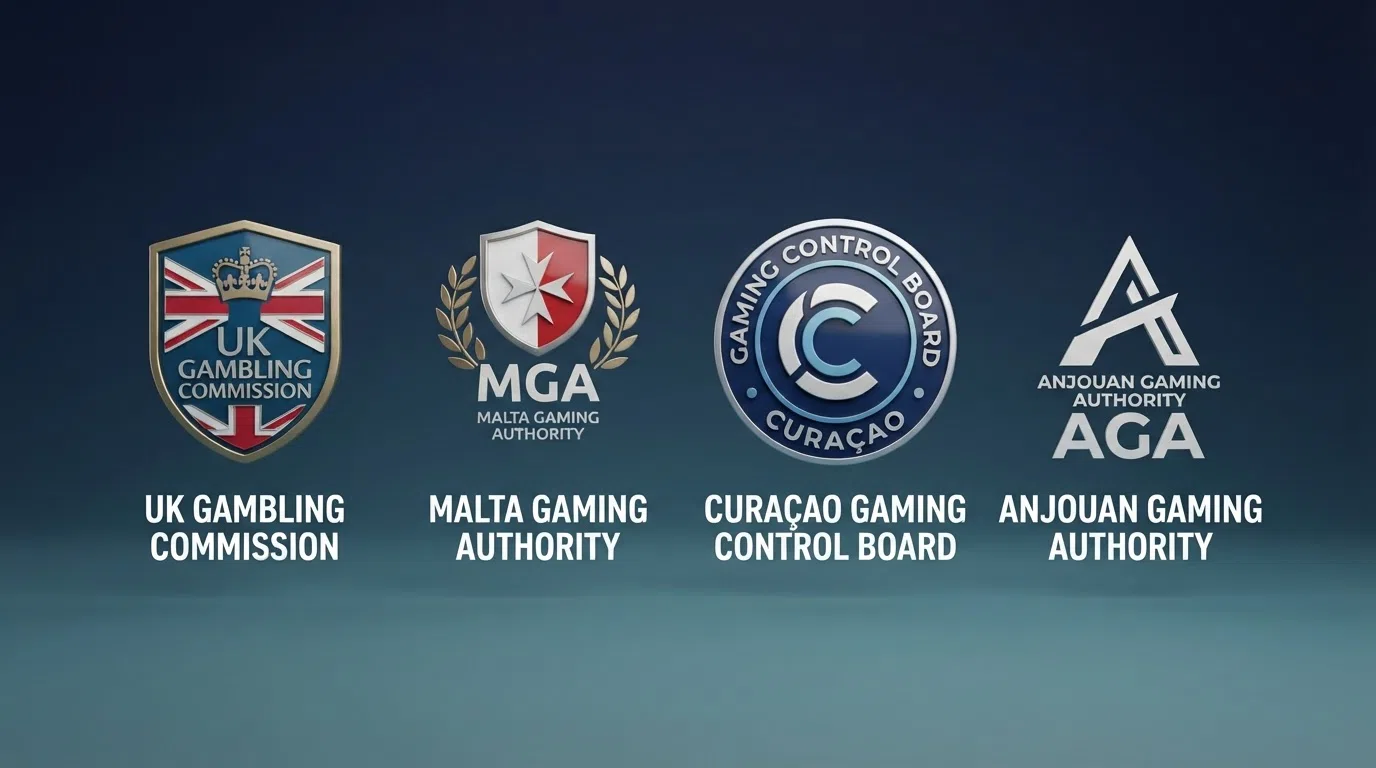
A non-UKGC casino is, simply, an online casino that does not hold a Great Britain operating licence from the Gambling Commission. The label does not describe the operator’s quality or honesty — it describes the regulatory regime the operator sits inside. Some non-UKGC brands run on a Malta Gaming Authority licence, which carries formal player support and dispute resolution. Others hold a Curaçao licence under the new GCB framework, and a growing number operate under Anjouan, the newest and least proven of the three main offshore jurisdictions. All three are legitimate regulatory bodies. None of them is the UKGC.
The split between the two regimes has a clear origin. The Gambling (Licensing and Advertising) Act 2014 extended the Gambling Act 2005 to require any operator serving GB customers to hold a UKGC licence, regardless of where the operator is based. Before that reform, an operator licensed in another jurisdiction could legally accept British customers without ever dealing with the British regulator. After 2014, doing so without a GB licence became a criminal offence for the operator. That is the line a “non-UKGC casino” sits on the wrong side of.
The label does not, on its own, say anything about how the operator treats players. A Curaçao-licensed casino that has run for a decade with a clean payout record is a different proposition from a brand-new Anjouan licensee that appeared last month. The label marks a regulatory gap, not a judgement of trust. That distinction matters because it shapes what a player can verify, what they can complain about, and what recourse exists if something goes wrong.
“Non-UKGC Casino” Defined: What the Label Actually Means
A non-UKGC casino is any operator that takes gambling transactions from customers in Great Britain without holding a GB operating licence from the Gambling Commission. The point-of-consumption reform introduced by the Gambling (Licensing and Advertising) Act 2014 made the GB licence compulsory at the point where the customer plays, not at the point where the company is incorporated. An operator based in Malta, Curaçao, Anjouan, the Isle of Man or anywhere else must obtain a UKGC licence if it wants to take GB customers lawfully.
A casino licensed offshore and not holding a UKGC licence is operating outside that regime. That sentence is the technical core of the term. It means the operator is not bound by the LCCP, the RTS technical standards, GAMSTOP participation, the statutory 10× wagering cap, the credit card ban, or the age-banded stake limits. It also means the operator cannot advertise in the British market through the channels open to licensed operators, and cannot use the dispute resolution routes the UKGC makes available.
The label does not say the operator is dishonest. It does say the operator is unregulated in Britain. A player at a Curaçao-licensed casino with a decade of payouts has more recourse than the label implies, because Curaçao, Malta and Anjouan each have their own complaints processes. The point is that none of those processes is British.
UKGC-Licensed vs Non-UKGC: The Two Worlds a UK Player Navigates
The two regimes look superficially similar from the lobby of a casino: slots, table games, live dealer, a welcome bonus and a cashier. Underneath, they are different products.
A UKGC licence buys the player a defined package of protections. GAMSTOP self-exclusion has covered every GB-licensed online operator since 31 March 2020 — registration blocks the customer’s access to every GB-licensed site for a chosen period (six months, one year, five years, or five years with auto-renewal) and cannot be cancelled early. ADR is available through an approved provider if a complaint cannot be resolved with the operator. Player funds are held in segregated accounts under the UKGC’s rules. Affordability checks and deposit protection are mandatory. From 19 January 2026, bonus wagering is capped at 10×, and credit cards have been banned for all remote gambling since 14 April 2020.
A non-UKGC casino offers a different package. The welcome bonus is larger — often 150% or 300% across multiple deposits. The wagering requirement is higher, commonly 20× to 60× or more. Stake limits, auto-play bans and reverse-withdrawal bans do not apply. Credit cards may be accepted, and the 2.5-second minimum spin speed that GB-licensed slots must respect is not enforced.
The trade-off is not a secret: the bigger bonus and the fewer restrictions are exactly what the player pays for with the absent safety net. A player who understands both sides of the equation is making a conscious choice. A player who does not is making an accident.
The UK Landscape: Why Players Look Beyond the UKGC System
The search for non-UKGC casinos is a response to specific pressures in the UK-regulated market, not a free-floating preference for offshore brands.
The UKGC’s online slots stake limit is age-banded: £5 per game cycle for players aged 25 and over, in force from 9 April 2025, and £2 for players aged 18 to 24, in force from 21 May 2025. The same slot machine, at the same casino, can carry a £2 maximum for one customer and a £5 maximum for another. For high-stakes slots players, that ceiling reshapes the product.
Game-design restrictions have piled on top. Since 31 October 2021, UKGC-licensed slots have banned auto-play, set a 2.5-second minimum spin interval, banned features that speed up play, banned losses disguised as wins, and permanently banned reverse withdrawals. The effect is to slow the game and remove features some players consider part of the experience.
From 19 January 2026, the 10× wagering cap ends a long stretch of unrestricted bonus turnover at UKGC-licensed sites. A headline bonus that used to carry 35× turnover now carries at most 10×. The cap has shifted the value of UK welcome offers sharply downward for high-roller players — which has pushed some of them offshore, where 20× to 60× on a 300% package is the alternative.
A separate current runs underneath the regulatory pressure. GAMSTOP covers GB-licensed sites only. A self-excluded player can still register, deposit and play at any operator on a non-UKGC list. That is a sensitive reality. It is a known motivator for the search and should be stated honestly, without promotion or enablement. The 561,983 active GAMSTOP exclusions at year-end 2025, with 117,756 new registrations during the year and a 40% year-on-year increase in the 16–24 age group in the second half of the year, put the scale of the demand in context.
The Legal Landscape: How UK Law Treats Non-UKGC Casinos — and the Protections It Cannot Reach
| Protection | UKGC-Licensed Casino | Non-UKGC Casino |
|---|---|---|
| GAMSTOP self-exclusion | Mandatory since 31 March 2020 | Not covered |
| Bonus wagering cap | 10× maximum from 19 January 2026 | No statutory cap; 20×–60× common |
| Credit card payments | Banned since 14 April 2020 | Often accepted |
| Slots stake limit (25+) | £5 per game cycle from 9 April 2025 | No statutory cap |
| Slots stake limit (18–24) | £2 per game cycle from 21 May 2025 | No statutory cap |
| Mandatory deposit limit | Required from 30 June 2026 (extended to 30 September 2026) (RTS 12) | Not required |
| Game-design rules (auto-play, 2.5s spin) | Mandatory since 31 October 2021 | Not required |
| ADR through approved UK provider | Required | Not available |
| Statutory levy contribution | 1.1% of GGY from 6 April 2025 | None |
| Remote Gaming Duty (40% from 1 April 2026) | Applies to operator | Does not apply |
What “Non-UKGC” Means Legally — and Who the Law Actually Targets
The legal architecture is older than the offshore casino industry that has grown up around it. Section 33 of the Gambling Act 2005, extended by the 2014 Act to the point of consumption, makes it a criminal offence to provide facilities for gambling to customers in Great Britain without the required licence. The offence carries up to 51 weeks’ imprisonment and an unlimited fine. It falls on the operator, not the player.
That distinction matters because it shapes how the law actually works. The Gambling Commission can pursue an offshore operator through disruption, through payment-provider pressure and through search-engine referrals. It cannot pursue the British customer who placed the bet. The choice to play at a non-UKGC casino carries consequences for the player’s protection, but it does not carry criminal liability.
When you choose to play at a casino without a UK licence, you are playing outside the UK regulatory system. The regulator that enforces the standards a UK player is used to — segregated funds, affordability checks, ADR, GAMSTOP — has no jurisdiction over the operator. The player is the one who loses the safety net, not the one who faces prosecution.
The UKGC as Regulator: What Its Licence Guarantees and What It Cannot Reach
The Gambling Commission is the single statutory regulator for Great Britain, sponsored by the Department for Culture, Media and Sport. Section 1 of the Gambling Act 2005 sets three licensing objectives: preventing gambling from being a source of crime or disorder, ensuring gambling is conducted fairly and openly, and protecting children and vulnerable persons. The day-to-day standards sit in the Licence Conditions and Codes of Practice and the Remote Technical Standards.
A UKGC licence guarantees a defined set of tools. GAMSTOP participation. The 10× bonus wagering cap. The credit card ban. The age-banded stake limits. Mandatory deposit limits and the gross deposit limit under RTS 12. Game-design rules that have banned auto-play, set the 2.5-second minimum spin, banned losses disguised as wins, and permanently banned reverse withdrawals. The statutory levy contribution at 1.1% of gross gambling yield, split 50% treatment, 30% prevention and 20% research.
The UKGC’s reach has a hard boundary. It does not hold statutory ISP or DNS blocking powers. Between April 2024 and June 2025, it issued 3,140 disruption notices and referred 447,778 URLs to search engines. That is the limit of the enforcement toolkit against unlicensed offshore operators. A Curaçao-licensed casino serving GB customers without a GB licence can be disrupted, pressured and delisted. It cannot be switched off.
GamStop and Self-Exclusion: Why Non-UKGC Casinos Sit Outside the Scheme
GAMSTOP has been mandatory for every UKGC-licensed online operator since 31 March 2020. A single registration blocks the customer’s access to every GB-licensed online gambling site for a chosen period — six months, one year, five years, or five years with auto-renewal. The exclusion cannot be cancelled early. The scheme is comprehensive within the GB-licensed perimeter.
The perimeter is the gap. GAMSTOP covers GB-licensed sites only. It has no jurisdiction over a Curaçao, MGA or Anjouan licensee. A player registered with GAMSTOP can still open an account, deposit and play at any operator on a non-UKGC list. The 561,983 active exclusions at year-end 2025, with 117,756 new registrations during the year and a 40% year-on-year increase in the 16–24 age group in the second half of 2025, put the scale of demand behind that gap in plain numbers.
Stating this honestly is a duty, not a recommendation. Self-exclusion exists because some players have identified that they cannot control their own gambling without an external barrier. The fact that a non-UKGC casino sits outside that barrier is information a reader needs. Promoting it is not.
Offshore Jurisdictions: Curaçao, Malta, Anjouan and What Their Licences Offer
The three regulatory bodies that license most non-UKGC casinos accepting UK players do not offer the same level of player protection, and the differences are not cosmetic.
The Malta Gaming Authority sits at the top of the offshore hierarchy. The MGA has formal player support and an established dispute-resolution function. A complaint that cannot be resolved with a Malta-licensed operator can be escalated to the MGA’s player support team. Among the operators on the list reviewed here, Nomini holds an MGA licence and stands alone as a result.
Curaçao’s framework is in transition. The 2024 reform split the old master-licence system into direct licences under the new Curaçao Gaming Authority, with an operator registry maintained at cert.cga.cw. The reform is tightening the rules, but the registry is still being populated and the framework is younger than the UKGC’s. MyStake, Goldenbet, Donbet, Velobet, Jackbit, Freshbet and WinSpirit all sit under Curaçao variants. Goldenbet holds licence OGL/2024/1587/0365, and WinSpirit holds OGL/2024/923/0383.
Anjouan is the newest and least proven of the three. The Anjouan Gaming Authority has minimal published supervision and no established track record of player redress. Casombie and Cloudbet report Curaçao/Anjouan dual licences, and the Anjouan element carries the lighter weight.
The practical hierarchy is straightforward. MGA provides the most recourse among the offshore options. Curaçao GCB is improving and offers a verifiable registry, but is still lighter than the UKGC. Anjouan offers the least oversight, and an Anjouan-only licensee should be approached with that in mind.
The Protections You Lose Outside UKGC Oversight — and What to Look For Instead
A non-UKGC casino is not required to provide any of the UKGC’s mandatory responsible-gambling tools. The list is long: GAMSTOP participation, the 10× wagering cap, the credit card ban, age-banded stake limits, mandatory deposit limits, the gross deposit limit under RTS 12, game-design rules, the ban on losses disguised as wins, and ADR through an approved UK provider. None of these travel with the player across the regulatory border.
The tools the player can still look for are different in kind. A verifiable licence on the issuing regulator’s own register is the starting point. The new Curaçao CGA registry at cert.cga.cw and the MGA’s public licensee register are both checkable. Published terms and conditions, written with the wagering multiplier, validity period, max-bet-during-wagering rule and withdrawal conditions clearly stated, are a second filter. A working complaints process, ideally with a named escalation route, is a third. Independent reviews from player communities give a sense of how the operator actually behaves. Device-level blocking software, notably Gamban, blocks access to gambling websites and apps across all jurisdictions on the device it is installed on, and works on non-UKGC sites where GAMSTOP cannot reach. Most UK banks also offer a gambling block feature that can prevent transactions to offshore gambling merchants.
The absence of the UK statutory levy matters at a structural level. Every pound lost at a non-UKGC casino contributes nothing to the UK treatment, prevention and research infrastructure funded by the 1.1% levy on GB-licensed operators. The operator is not paying for the safety net the player might later need.
How to Verify a UKGC Licence and Spot a False Claim
Every UKGC-licensed casino must display its licence number, typically a five- or six-digit reference, alongside the Gambling Commission logo in the site footer. The number can be searched on the UKGC’s public register at gamblingcommission.gov.uk/public-register/businesses by business name, trading name, domain name or account number. The register shows licence status (Active, Expired, Forfeited or Lapsed), licence type, and any regulatory action taken against the operator.
A missing licence number, a logo that does not link to the register entry, or a Curaçao or Anjouan licence presented as equivalent to a UKGC one are the standard red flags. The licence number on the operator’s footer should be the first thing a player checks, not the last.
For a Curaçao-licensed operator, the equivalent check is the CGA registry at cert.cga.cw. For an MGA licensee, the Malta Gaming Authority’s public register carries the same function. The pattern is the same: verify the licence against the regulator that issued it, not against the operator that claims to hold it.
The Best Non-UKGC Casinos for UK Players in 2026
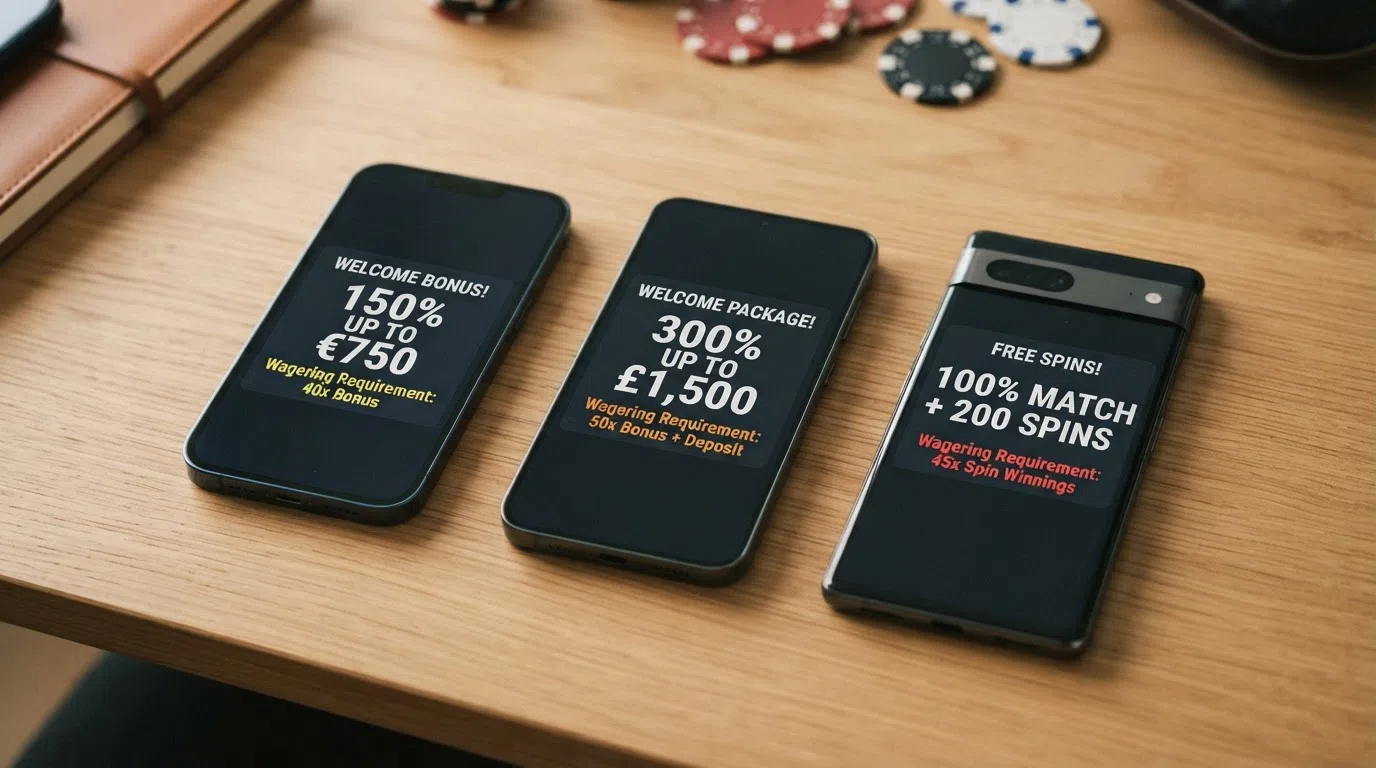
A worked example, using the MyStake offer. The welcome bonus is 150% up to €750, with a 30× wagering requirement on deposit plus bonus. Assuming the player receives the full €750 bonus and deposits €500 to unlock it, the required turnover is €500 + €750 = €1,250 multiplied by 30, which equals €37,500. At a typical stake of €1 per spin, that is 37,500 spins. At 5-second intervals between spins, that is 187,500 seconds, or roughly 42 minutes of continuous play. The same headline bonus under the UKGC’s 10× cap would require €12,500 in turnover — one third of the offshore figure.
| Operator | Licence & Jurisdiction | Welcome Offer | Wagering Requirement | Free Spins | Crypto Deposits |
|---|---|---|---|---|---|
| MyStake | Curaçao eGaming — not UKGC-licensed | 150% up to €750 (casino slots) | 30× (deposit + bonus) | — | 12+ cryptocurrencies |
| Goldenbet | Curaçao GCB (OGL/2024/1587/0365) — not UKGC-licensed | 300% up to £1,500 across three deposits | 35× (deposit + bonus) | 100 free spins | Yes |
| Donbet | Curaçao GCB — not UKGC-licensed | 150% up to £750 on first deposit | 30× | 50 free spins | Yes |
| Freshbet | Curaçao — not UKGC-licensed | 300% up to £3,000 across three deposits | — | 200 free spins | Yes |
| Velobet | Curaçao — not UKGC-licensed | 150% up to £500 + 70 FS (under £500 deposit); 100% up to £1,000 + 70 FS (£500+); crypto track 160% up to €1,000 | 30× (casino) / 35× (crypto) | 70 free spins | 7 cryptocurrencies |
| Jackbit | Curaçao — not UKGC-licensed | 100 wager-free spins | 0× (wager-free) | 100 wager-free spins | Crypto-only |
| WinSpirit | Curaçao GCB (OGL/2024/923/0383) — not UKGC-licensed | 100% match + 100 free spins on deposit, plus 20 no-deposit free spins | — | 100 (deposit) + 20 (no-deposit) | 11 cryptocurrencies |
| Casombie | Curaçao / Anjouan — not UKGC-licensed | Variable free-spins package by character choice | — | Yes, multiple themed options | Yes |
| Nomini | Malta Gaming Authority (MGA) — not UKGC-licensed | Gamified multiple bonus options | — | Included in multiple variants | Yes |
| Cloudbet | Curaçao / Anjouan — not UKGC-licensed | 100% match up to 5 BTC | — | — | Crypto-only |
How We Separated Safe Non-UKGC Casinos from the Rest
The selection drew on five checks, applied to every operator on the list:
- Licence verification: the claimed licence was checked against the issuing regulator’s public register where accessible — the UKGC public register for any GB-licence claim, the CGA registry at cert.cga.cw for Curaçao licensees, and the MGA’s public register for Malta operators. None of the ten operators holds a UKGC licence. Two hold an MGA licence tier. The rest sit under Curaçao variants, with two reporting Anjouan alongside Curaçao.
- Transparency of terms: wagering requirements, bonus validity periods, max-bet-during-wagering rules and withdrawal conditions were checked for clarity. Operators with thin terms coverage carry an honest note rather than an inferred figure.
- Payment methods for UK players: crypto, e-wallet and card options were assessed, with the UK credit card ban noted as inapplicable offshore. UK banks may block or flag payments to offshore gambling merchants; cryptocurrency deposits offer speed and privacy but introduce price volatility, network fees and irreversible transactions; e-wallet withdrawals typically arrive within 24–48 hours after casino approval.
- Responsible gambling tools: deposit limits, self-exclusion options and reality-check features were checked per operator where data was available. Coverage is inconsistent across the non-UKGC space.
- Data-coverage note: operators with thinner researched data — Casombie, WinSpirit, Nomini and Cloudbet — are included for market presence. Their profiles carry fewer confirmed specifics. That is stated honestly per operator rather than papered over.
MyStake
MyStake runs on a Curaçao eGaming licence and is not UKGC-licensed. The casino welcome bonus is 150% up to €750 on the first deposit, with a 30× wagering multiplier on deposit plus bonus, a 30-day validity window, and a €5 maximum bet per spin during wagering. An alternative package offers 120% up to €600. The minimum deposit is £10 for most methods and €20 to qualify for the welcome bonus.
Payment coverage is broad: Visa, Mastercard, Apple Pay, Google Pay, AstroPay, bank transfer, Skrill, Neteller and PayPal sit alongside 12+ cryptocurrencies, including BTC, ETH, USDT, LTC, XRP, DOGE, TRX, XMR, XLM, BCH, DASH and USDC. For a player who wants to move in and out through a familiar e-wallet and still has the option to switch to crypto, MyStake fits cleanly. The 30× on deposit plus bonus is the trade-off for the higher headline.
Goldenbet
Goldenbet operates under Curaçao GCB licence OGL/2024/1587/0365 and is not UKGC-licensed. The welcome package is 300% up to £1,500 across three deposits, with 100 free spins included under the VIPG code and a 35× wagering multiplier on deposit plus bonus. Slots contribute 100% to wagering. Payment methods include cards, e-wallets, bank transfer and cryptocurrency, with a minimum deposit of £10–£20 depending on the source.
The package is one of the higher-headline offers on the list, and the 35× wagering multiplier on the combined deposit and bonus is the price. For a player who plans to make three deposits and chase the full £1,500 bonus, the total turnover required will be substantial, and the bonus funds must be played through within the specific validity period to be eligible for withdrawal.
Donbet
Donbet is licensed by Curaçao GCB and is not UKGC-licensed; the operator was not found on the UKGC Public Register. The welcome bonus is 150% up to £750 on the first deposit with 50 free spins, a 30× wagering requirement, and a minimum deposit of £20. The game library runs to 6,500+ slots, which is one of the larger catalogues on the list. Payment methods include cards, e-wallets and cryptocurrency.
For a player who prioritises slot volume, Donbet is a fit. The 150% headline is identical to MyStake’s, the wagering multiplier is identical, and the 50 free spins are a small differentiator. The library size is the substantive reason to choose Donbet over a smaller catalogue.
Velobet
Velobet holds a Curaçao licence and is not UKGC-licensed. The welcome offer has two tracks on the casino side: 150% up to £500 plus 70 free spins on deposits under £500, or 100% up to £1,000 plus 70 free spins on deposits of £500 or more. A separate crypto track offers 160% up to €1,000. Wagering is 30× on the casino track and 35× on the crypto track.
The game library is 7,000+ titles from 90+ studios, the largest catalogue on the list. Payment methods include Visa, Mastercard, Skrill, Neteller, Payz, AstroPay, bank transfer and 7 cryptocurrencies (BTC, ETH, LTC, XMR, XRP, USDT plus altcoins). Velobet fits a player who wants a deep catalogue and is comfortable choosing between a card-funded track and a crypto track at the cashier.
Jackbit
Jackbit operates under a Curaçao licence and is not UKGC-licensed. The welcome offer is 100 wager-free spins, with a 0× wagering requirement — no turnover, no multiplier, the winnings are withdrawable subject to the standard terms. Payment is crypto-only: BTC, ETH, USDT and other major cryptocurrencies, with no card deposits accepted. The minimum deposit is approximately £20 equivalent in crypto, and withdrawals arrive in under an hour for most transactions. Weekly and monthly withdrawal limits sit at approximately £8,000 and £16,000 respectively.
For a player who prizes the absence of a wagering requirement above the headline bonus number, Jackbit is the standout on the list. The 0× multiplier is rare in the non-UKGC space, where 20× to 60× is the typical range. The cost is the crypto-only cashier and the absence of card or e-wallet options.
Freshbet
Freshbet runs on a Curaçao licence and is not UKGC-licensed; the operator is not registered with GamStop. The welcome package is 300% up to £3,000 across three deposits — 100% on the first, 50% on the second, 100% on the third — with 200 free spins included. Daily slot tournaments run alongside the standard library. Payment methods include cards, e-wallets and cryptocurrency.
Wagering requirements and the minimum deposit were not confirmed for the main package in this research run. A player considering Freshbet should verify the current terms directly with the operator before depositing. The headline is one of the larger numbers on the list, and the split across three deposits rewards commitment — but the missing terms data means the actual cost of clearing the bonus cannot be calculated from the figures available here.
WinSpirit
WinSpirit operates under Curaçao GCB licence OGL/2024/923/0383 and is not UKGC-licensed. The welcome offer is a 100% match with 100 free spins on deposit, plus 20 no-deposit free spins. Payment methods cover 11 cryptocurrencies alongside Visa, Mastercard, Skrill, Neteller, Apple Pay and bank wire. Withdrawal speed is 0–24 hours for crypto and e-wallets, and 3–7 days for cards and bank transfers.
The wagering multiplier and game providers were not confirmed this run. The no-deposit spins are the differentiator — they let a player try the games before committing a deposit. A player weighing WinSpirit should confirm the wagering terms on the current welcome package before relying on the headline match.
Casombie
Casombie is reported to hold Curaçao and Anjouan licences and is not UKGC-licensed. The welcome offer is a free-spins package that varies by character choice at sign-up, with multiple themed options on offer. The game library is a broad multi-provider selection, and payment methods include cards, e-wallets and cryptocurrency.
The licence number, wagering requirement and minimum deposit were not confirmed this run. The dual Curaçao / Anjouan licence arrangement is the structural feature worth noting — Curaçao carries the higher weight of the two, and a player can verify the Curaçao element on the CGA registry. Anjouan, the lighter of the two, is the regulator with the thinnest published supervision. A player considering Casombie should verify the licence on the issuing regulator’s register before depositing.
Nomini
Nomini holds a Malta Gaming Authority (MGA) licence and is not UKGC-licensed. The MGA is the strongest of the offshore regulators on this list, with formal player support and an established dispute-resolution function — a complaint that cannot be resolved with the operator can be escalated to the MGA’s player support team. The welcome offer is a gamified selection of multiple bonus options to choose from, with free spins included in several of the variants. Payment methods include cards, e-wallets and cryptocurrency.
Wagering requirements and the minimum deposit were not confirmed this run. The MGA licence is the substantive differentiator. For a player who wants the strongest available regulatory recourse short of the UKGC, Nomini is the natural pick on this list.
Cloudbet
Cloudbet reports Curaçao and Anjouan licences and is not UKGC-licensed. The welcome bonus is a 100% match up to 5 BTC. Payment is cryptocurrency-only, with BTC and other major coins accepted. The minimum deposit is 0.001 BTC, and withdrawals are described as instant for crypto.
Free spins and the wagering requirement were not confirmed as part of the standard welcome package this run. Cloudbet is the crypto-native pick on the list: a player who wants to deposit, play and withdraw entirely in BTC will find the cashier fits cleanly, and the instant withdrawal speed is the operational advantage. The dual Curaçao / Anjouan licence carries the same caveat as Casombie’s — Curaçao is the higher-weight regulator, Anjouan the lower.
UKGC-Licensed Casinos as a Benchmark: What the Best GB Operators Set as the Bar
The non-UKGC market is best read against the GB licensed market, not in isolation. The GB licensed market is dominated by established domestic groups: bet365, the Flutter brands (Sky Bet, Paddy Power, Betfair, Sky Vegas), the Entain brands (Ladbrokes, Coral, Gala, Foxy Bingo), William Hill and 888 under evoke, Betfred, Rank Group, Buzz Bingo, and Allwyn on the National Lottery. Each carries a verifiable UKGC licence number searchable on the public register.
The structural protections a UKGC-licensed casino must provide form the benchmark: GAMSTOP, the 10× wagering cap, the credit card ban, the age-banded stake limits, mandatory deposit limits, the gross deposit limit under RTS 12, affordability checks, and access to an approved ADR provider. A player who understands this benchmark can read a non-UKGC operator’s terms and see exactly what is missing.
That comparison is the most useful thing this page can give a reader. It is not a recommendation to choose one side over the other. It is a tool for reading the rest of the page accurately.
New Non-UKGC Casinos: Why a Fresh Licence Is No Substitute for a Track Record
A “new” non-UKGC casino is typically one that launched within the last 12 to 18 months. The label carries different weight outside the UKGC. A new UKGC licensee has passed a rigorous suitability assessment. A new Curaçao or Anjouan licensee has not faced equivalent scrutiny. The barrier to entry at Curaçao and Anjouan is lower than the UKGC’s full application process, which is why the non-UKGC space sees frequent new entrants.
The assessment challenge is structural. A new casino lacks the player-feedback history and the operator track record that established brands accumulate over years of payouts, complaints, KYC friction and support responsiveness. Without that history, the player is trusting a licence badge and a freshly written terms page — neither of which is a record of behaviour.
What Counts as “New” in the Non-UKGC Space
A non-UKGC casino is typically considered new if it launched within the last 12–18 months. The non-UKGC space sees frequent new entrants because Curaçao and Anjouan licensing barriers are lower than the UKGC’s full application process. The Curaçao GCB’s 2024 reform is still in transition, and Anjouan is the newest regulator with the least proven track record.
A new UKGC licensee has cleared suitability, source-of-funds checks, financial standing requirements and a documented compliance framework. A new Curaçao or Anjouan licensee has faced a faster, lighter process. The label “new” sits on top of that difference, and the result is a wider gap between the unknown and the established than the same label would carry in the GB licensed market.
How to Assess a New Non-UKGC Casino Before It Builds a Reputation
The due-diligence steps that substitute for a missing track record are concrete and verifiable.
Verify the licence on the issuing regulator’s own register. Do not rely on a badge in the footer. The CGA registry at cert.cga.cw and the MGA’s public register are the two checkable databases for the offshore space. A licence number that does not surface on the registry is not a licence.
Check the operator’s terms before depositing. The wagering requirements, withdrawal limits, processing times and dormant-account policies are the operational contract. A terms page that buries the wagering multiplier in a footnote or omits the max-bet-during-wagering rule is a warning.
Search player forums and community threads. Early reports on payout speed, KYC friction and support responsiveness are the closest substitute for a track record. The signal is in the pattern, not the individual complaint.
Test the support channel with a pre-deposit question. Response time and quality are a leading indicator of how the operator handles a withdrawal dispute later.
Approach with a small first deposit and withdraw early winnings to test the cashout process. This is the most reliable check, because it exercises the same system that will handle a larger withdrawal later.
Where New Non-UKGC Brands Typically Launch — and Why It Matters
Curaçao remains the most common launch jurisdiction for new non-UKGC casinos, because the reformed GCB framework still offers a faster path to market than the MGA or UKGC. Anjouan is emerging as an even lower-barrier alternative, with minimal published supervision and no established dispute-resolution track record. The choice of Anjouan over Curaçao or MGA is itself a signal about the operator’s regulatory ambition.
A new brand launching under an MGA licence is unusual and worth noting. It signals a higher compliance investment from day one — the kind of investment a player can read as a commitment to player support and dispute resolution.
Casombie and Cloudbet are the dual Curaçao / Anjouan examples on the reviewed list, and the dual arrangement carries the lighter Anjouan tier alongside the more established Curaçao tier. Nomini, the MGA licensee on the list, sits in a different regulatory neighbourhood — the same neighbourhood as the UKGC’s compliance expectations, minus the GB operating licence.
Staying in Control: Responsible Gambling Without the UKGC Safety Net
The UKGC framework provides mandatory responsible-gambling tools that non-UKGC casinos are not required to offer. The gap is structural, not accidental. The UKGC’s suite — affordability checks, the statutory levy contribution, mandatory deposit limits, GAMSTOP participation, and the game-design rules that slow the game down — does not apply outside the GB licensing perimeter.
The tools a player can still control across any jurisdiction are different in kind. Deposit limits set at account level depend on the operator offering them, and not all do. Session time-outs, self-exclusion requests directly to the operator, and device-level blocking software are the player-controlled layer that works regardless of the operator’s choices. The prevalence context makes the question material rather than abstract: in 2024, 2.7% of adults in Great Britain scored 8+ on the Problem Gambling Severity Index, approximately 0.5% of the adult English population experience problem gambling and 3.8% are at elevated risk, and an estimated 7% of the British population are negatively affected by someone else’s gambling.
Deposit Limits and Reality Checks: What Non-UKGC Casinos Offer
UKGC-licensed operators must offer deposit limits and, from 30 June 2026 (extended to 30 September 2026), a gross deposit limit based solely on money paid into the account over a set period under RTS 12. Non-UKGC casinos are not bound by this mandate.
At non-UKGC casinos, deposit-limit tools vary by operator. Some offer them voluntarily as a market-expectation feature. Others do not. The practical step is to check the responsible-gambling page before depositing and set a limit immediately if the option exists. If the operator offers no deposit-limit tool, the player must self-manage through bank gambling blocks, a separate e-wallet, or a personal budget held outside the gambling account.
The shift in burden is the point. Inside the UKGC framework, the operator must provide the tool. Outside it, the player must build the barrier.
Self-Exclusion Beyond GamStop: Tools That Work Across Jurisdictions
GAMSTOP covers GB-licensed sites only. It has no jurisdiction over non-UKGC casinos, and a self-excluded player can still register and deposit at any operator on the reviewed list. The scheme is comprehensive within its perimeter and silent outside it.
The tools that work across jurisdictions are:
- Gamban, device-level blocking software that works on non-UKGC sites. It blocks access to gambling websites and apps across all jurisdictions on the device it is installed on, and does not depend on operator participation.
- Bank gambling blocks, available from most UK banks, which can prevent transactions to gambling merchants including offshore operators.
- Direct self-exclusion, requested from each non-UKGC operator individually. There is no cross-operator scheme to enforce it, but the request is the operator’s own process.
The practical hierarchy is clear. Gamban is the strongest single tool for blocking non-UKGC access because it operates at device level and does not depend on the operator’s cooperation. Bank gambling blocks are the second line. Direct self-exclusion is the third, useful but uneven across operators.
How Non-UKGC Casinos Handle Problem-Gambling Safeguards
Non-UKGC casinos are not required to offer the UKGC-mandated suite. Affordability checks, the statutory levy contribution to treatment and research, and the mandatory deposit-limit framework do not apply. The absence of the UK statutory levy — 1.1% of gross gambling yield from 6 April 2025, split 50% treatment, 30% prevention and 20% research — means non-UKGC operators do not fund UK treatment, prevention or research. Every pound lost at a non-UKGC casino contributes nothing to the support infrastructure a UK player might later need.
What some non-UKGC operators do offer is voluntary: responsible-gambling pages, self-exclusion by request, and links to international support organisations. Coverage is inconsistent and unenforced. The player cannot assume these tools exist — they must be checked per operator before depositing.
The support infrastructure that does exist for UK players regardless of where they gamble sits outside the operator: the National Gambling Helpline, operated by GamCare, on 0808 8020 133, available 24 hours a day, every day of the year, by phone or live chat, receiving over 52,000 calls per year. NHS gambling harm clinics in England, Scotland and Wales. Gamblers Anonymous UK as peer support. GambleAware as the independent charity funding treatment, prevention and research.
The Player’s Own Responsibility Outside a UK-Regulated Framework
Inside the UKGC framework, the regulator, the operator and the player share responsibility. The regulator sets the rules, the operator must comply, and the player uses the mandated tools. Outside the UKGC framework, the regulator cannot reach the operator, and the operator may choose which safeguards to offer. The burden shifts disproportionately to the player.
The practical steps that compensate for the shift are concrete. Set a personal deposit cap before the first session — at the bank level if the operator does not offer one. Use a separate bank account or e-wallet for gambling funds, so the gambling budget is ringfenced. Enable bank gambling blocks as a backstop, even if the operator offers deposit limits. Install Gamban on all devices. Keep the National Gambling Helpline number — 0808 8020 133 — saved.
The decision to play at a non-UKGC casino is not risk-free. It is a calculated choice to trade regulated protections for higher bonuses and fewer restrictions, and it should be made with the trade-off fully visible.
How We Selected and Assessed These Non-UKGC Casinos
The operator set was drawn from non-UKGC casinos that accept UK players and are prominent in the non-UKGC space. Ten were selected for detailed review. Each operator’s licence was checked against the issuing regulator’s public register where accessible — the UKGC public register for any GB-licence claim, the CGA registry at cert.cga.cw for Curaçao licensees, and the MGA’s public register for Malta operators.
The criteria that ordered the ranking: licence jurisdiction and regulatory strength; transparency and fairness of bonus terms (wagering multiplier, validity period, max-bet rules); payment-method availability for UK players, including cryptocurrency support; depth of game library; and the presence or absence of responsible-gambling tools. The assessment is qualitative — no weightings or percentage scores are applied, because the data coverage varies across operators. MyStake, Goldenbet, Donbet, Velobet and Jackbit had the strongest data coverage. Casombie, WinSpirit, Nomini and Cloudbet had thinner per-operator data, and their inclusion reflects market presence rather than complete field data. That is stated honestly per operator rather than papered over with generalities.
The Choice Is Yours: What to Actually Do About Non-UKGC Casinos
The legal reality is the starting point. Playing at a non-UKGC casino is not a crime for the player. The law under section 33 of the Gambling Act 2005 targets the operator, not the customer. But the protections a UK player is used to — GAMSTOP, the 10× wagering cap, the credit card ban, affordability checks, an approved ADR provider, a regulator that can compel the operator to pay — are absent outside the UKGC perimeter. What the player loses is protection, not liberty.
The practical reality is the second layer. The bonuses are bigger and the restrictions are fewer. A 30× wagering requirement on a €750 bonus at MyStake means €37,500 in turnover before withdrawal, compared to €7,500 under the UKGC’s 10× cap for the same headline amount. The 30× is roughly three times the cost of clearing the same bonus under the British regime. The higher headline, in other words, is paid for in turnover.
The safer-gambling reality is the third. The tools that catch a player before harm escalates — GAMSTOP, mandatory deposit limits, affordability checks, the statutory levy-funded treatment infrastructure — are not guaranteed at a non-UKGC casino, and the operator contributes nothing to the UK treatment and research infrastructure through the statutory levy. The absence is structural.
The decision framework that follows from these three realities is concrete. A player who understands them and still chooses a non-UKGC casino should verify the licence on the issuing regulator’s register, test the withdrawal process with a small amount, set a hard personal deposit limit before the first session, install Gamban as a backstop, and keep the National Gambling Helpline number to hand. The list is short and the steps are not optional.
This page takes no position on whether a reader should or should not play at a non-UKGC casino. The facts, the gaps and the tools are on the page. The choice is where it belongs.
Frequently Asked Questions
Is it legal for UK players to use non-UKGC casinos?
Yes, in the sense that the player is not criminalised. Under section 33 of the Gambling Act 2005, the offence of providing gambling facilities to GB customers without the required licence falls on the operator, carrying up to 51 weeks’ imprisonment and an unlimited fine. The UK resident placing the bet is not the target of the law. What the player loses is protection, not liberty.
What protections do I lose playing at a casino without a UKGC licence?
The list is long: GAMSTOP self-exclusion, the 10× wagering cap, the credit card ban, age-banded stake limits (£5 for 25+, £2 for 18–24), mandatory deposit limits, affordability checks, the statutory levy contribution that funds UK treatment and research, ADR through an approved British provider, and game-design rules banning auto-play and setting the 2.5-second minimum spin. None of these apply at a non-UKGC casino.
How can I check if an online casino holds a UKGC licence?
Every UKGC-licensed casino must display its licence number alongside the Gambling Commission logo in the site footer. Search the public register at gamblingcommission.gov.uk/public-register/businesses by business name, trading name, domain name or account number. The register shows licence status, licence type and any regulatory action taken. A missing or unverifiable licence number is a red flag.
What payment methods work at non-UKGC casinos for UK players?
Cards, e-wallets and bank transfer are widely supported, and the UK credit card ban does not apply offshore — non-UKGC casinos may accept credit cards. Cryptocurrency is widely available and offers speed and privacy, but introduces price volatility, network fees and irreversible transactions. UK banks may block or flag payments to offshore gambling merchants, which can affect card and bank-transfer deposits.
What happens if a non-UKGC casino refuses to pay my winnings?
The route depends on the licensing jurisdiction. MGA-licensed operators sit under the Malta Gaming Authority’s formal player support and dispute-resolution function. Curaçao-licensed operators fall under the CGA’s process, which is lighter than the MGA’s. Anjouan-licensed operators have the least established recourse. There is no British ADR route outside the UKGC perimeter, and the UKGC cannot compel an unlicensed offshore operator to pay.
Do I pay tax on winnings from non-UKGC casinos in the UK?
No. Players pay no tax on gambling winnings in the UK. Player-side betting duty was abolished in 2001, and the burden sits with operators through Remote Gaming Duty — which rose from 21% to 40% from 1 April 2026. The tax treatment is identical for UKGC-licensed and non-UKGC winnings: both are tax-free for the player.
Licence – fastestpayout-casinos-uk
Content created by the «fastestpayout-casinos-uk» team