
Non-UK Registered Casinos in 2026: Licensing, Legality, and the Protection Gap
 Available in GB
A non-UK registered casino is, in plain terms, any gambling site that has not secured a licence from the UK Gambling Commission. That single fact reshapes everything a UK player encounters: which protections apply, what the welcome bonus actually costs to clear, which payment methods work, and what recourse exists if an operator refuses to pay out winnings. The distinction is legal and technical, not a matter of brand reputation. Twelve operators dominate the UK-facing market in 2026 — four on the UKGC’s public register, eight holding Curaçao licences with no presence on the British register at all. Understanding which is which is the foundation every other decision on this page rests on.
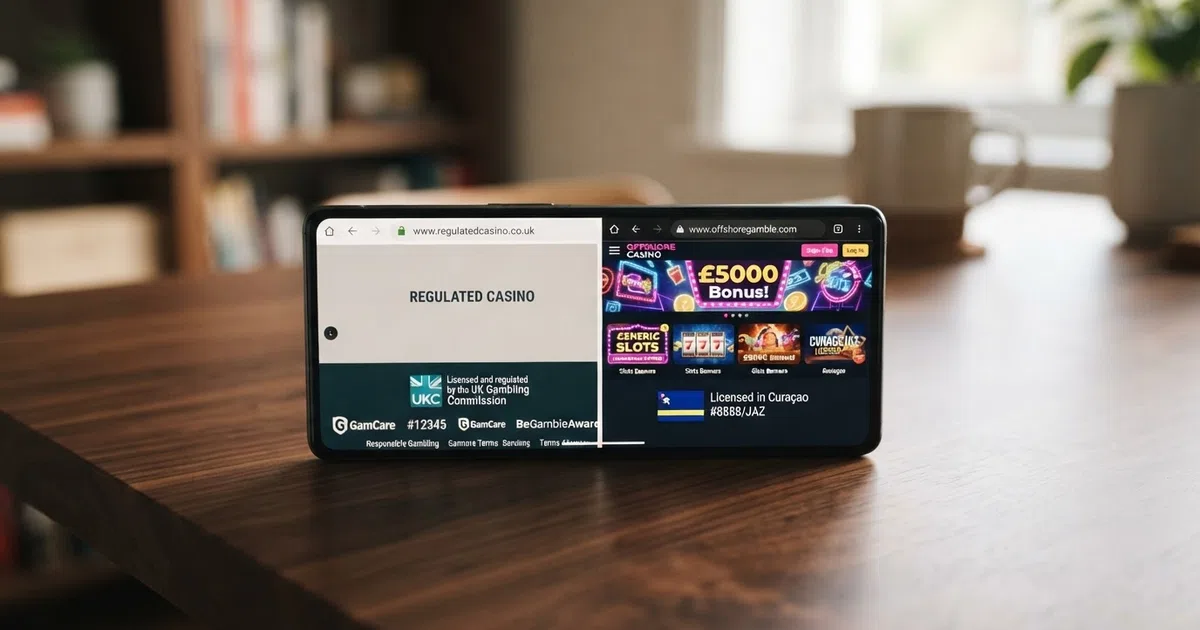
*Data current as of September 8, 2026 and verified against the UK Gambling Commission’s public register of licence holders.*
What “Non-UK Registered” Actually Means (And Why It Matters)
The Definition: What “Non-UK Registered” Actually Means
The term hinges on a specific piece of legislation: the Gambling (Licensing and Advertising) Act 2014. Before that Act, a casino could legally serve British customers from anywhere in the world provided it held a licence in its home jurisdiction. The 2014 reform ended that arrangement. From the point-of-consumption principle onward, any operator taking bets from customers in Great Britain — wherever that operator is incorporated — must hold a Gambling Commission licence. A Curaçao eGaming permit or a Malta Gaming Authority credential is no substitute.
“Registered” itself is precise language. It refers to the entry on the UKGC’s public register of licence holders, a searchable list of every operator authorised to provide gambling facilities to British consumers. A non-UK registered casino is simply an operator whose name does not appear on that register. The Gambling Commission has stated the position unambiguously: a licensed operator based in Curaçao is not permitted to offer gambling services within the UK without a licence from the Commission.
UKGC-Registered vs Non-UK-Registered: The Core Distinction
The practical difference between the two categories is not subtle. A UKGC-registered casino operates under the LCCP (Licence Conditions and Codes of Practice), the RTS (Remote Technical Standards), and a body of statutory obligations that include GAMSTOP participation, an approved alternative dispute resolution provider, mandatory fund segregation, and a defined complaints route through the Commission itself. Non-UK-registered casinos hold licences from jurisdictions that do not bind them to any of these obligations.
Providing facilities for gambling without the required licence is a criminal offence under section 33 of the Gambling Act 2005 — up to 51 weeks’ imprisonment, an unlimited fine, or both. That penalty targets operators and the intermediaries who supply them, not the players who use their sites. British consumers can and do access non-UK-registered casinos; the law pursues the supply side, not the demand side. What the player loses is protection, not liberty.
Why UK Players Look Outside the UKGC Framework
Three motivations drive UK traffic to offshore casinos, and each one maps to a specific UKGC restriction that does not apply offshore.
Self-excluded players who registered with GAMSTOP find every UKGC-licensed operator blocked. GAMSTOP has been mandatory for every UKGC online operating licence since 31 March 2020, with exclusion periods running six months, one year, five years, or five years with auto-renewal. Operators licensed in Curaçao or Anjouan sit entirely outside the scheme. An excluded British player is not protected on any of the eight offshore operators listed on this page.
Bonus-seekers chase headline percentages that the UKGC no longer permits. From 19 December 2025, wagering requirements at GB-licensed casinos are capped at 10× and mixed-product promotional offers are banned. Offshore welcome offers run from 150% to 600% with wagering at 30–35× — bigger numbers that demand far more turnover to clear.
Payment-flexibility seekers find doors closed at every UKGC site. Since 14 April 2020, GB-licensed operators have been prohibited from accepting credit card payments. Offshore casinos still accept Visa and Mastercard credit lines, and several now run on cryptocurrency rails. PayPal is the exception: it is largely unavailable offshore because Curaçao and Anjouan do not appear on PayPal’s approved regulator list for gambling transactions.
A fourth pressure point deserves mention: the £5 age 25+ and £2 age 18–24 per-spin stake cap on online slots, imposed by SI 2025/215 and in force from April and May 2025 respectively. Players who want higher-stakes play on a single spin have nowhere to find it within the UKGC framework.
Common Terms and Variants You Will See
Three labels circulate in this market, and they are not interchangeable:
- “Non-UK registered” is the precise legal description: absence from the UKGC’s public register of licence holders. It is the technical term the Gambling Act 2005 framework uses.
- “Non-GamStop” describes a narrower concept: any operator — UKGC-licensed or not — that does not participate in the GAMSTOP self-exclusion scheme. In practice, every UKGC operator participates, so “non-GamStop” and “non-UK registered” describe overlapping but not identical sets.
- “Offshore casino” is the broadest category: any operator licensed outside Great Britain, regardless of jurisdiction. Malta, Curaçao, Anjouan, Costa Rica, and Gibraltar all qualify.
Getting the terminology right matters because each label implies a different set of protections. A “non-GamStop” operator might still hold a strong Maltese licence with ADR access; a “non-UK registered” operator might offer nothing of the sort. The Gambling Act 2005 speaks in terms of registration, not self-exclusion.
Playing Outside the UKGC: What the Law Actually Says
GamStop: Where the Self-Exclusion Line Is Drawn
GAMSTOP is the national multi-operator online self-exclusion scheme for Great Britain. Every UKGC online operating licence carries GAMSTOP participation as a mandatory condition, in force since 31 March 2020. A player who registers with GAMSTOP is blocked from every UKGC-licensed site for their chosen exclusion period.
That boundary stops at the UK licensing line. Casinos licensed offshore in Curaçao, Anjouan, or Costa Rica sit entirely outside GAMSTOP’s reach — the scheme cannot enforce exclusion on an operator that has no contractual relationship with it. A self-excluded British player who opens an account with any of the eight offshore operators listed on this page will not be blocked, screened, or reported back to GAMSTOP. The protection the scheme offers is real but jurisdictionally bounded.
What a UKGC Licence Delivers (That Offshore Licences Do Not)
The checklist is long and concrete. A UKGC-licensed casino must offer:
- Mandatory GAMSTOP participation on every online operator.
- The £5 age 25+ and £2 age 18–24 stake cap on online slots, in force from April and May 2025.
- A 10× wagering requirement cap on all bonuses, in force from 19 December 2025.
- The credit card ban across all remote gambling since April 2020.
- An approved alternative dispute resolution provider and a Commission complaints route.
- Mandatory fund segregation with specific insolvency protections.
- An auto-play ban and a 2.5-second minimum spin speed.
- Financial vulnerability checks triggered at £150 net deposit in 30 days (from 28 February 2025).
- Deposit-limit prompts and reality-check requirements.
None of these obligations binds an offshore operator. The absence of GAMSTOP is the most visible gap for players who have self-excluded. The absence of ADR and fund protection is the most consequential gap for players whose winnings are disputed.
Offshore Licensing: Curaçao, Malta, and Beyond
| Jurisdiction | Regulatory Model | Player Protection Level | Dispute Resolution | UK Market Status |
|---|---|---|---|---|
| Curaçao | Direct CGA licensing under LOK framework (December 2024); all sub-licences expired | Moderate; segregation and ADR in development | CGA complaint route available; enforcement still maturing | UK listed as explicit restriction on service and marketing |
| Malta (MGA) | Tier 1 jurisdiction with established fund-segregation and ADR rules | High; segregation, ADR, self-exclusion all present | MGA complaint mechanism available | UK marketing not permitted without a UKGC licence |
| Anjouan (Comoros) | Minimal regulatory framework | Low; no formal player-protection regime | No formal dispute resolution comparable to Tier 1 | Marketed to UK players despite unclear UK status |
| Costa Rica | No formal iGaming licensing framework; operators register as general businesses | Very low; no gambling-specific oversight | None | Marketed to UK players; legal position unclear |
Curaçao is the most common licence among non-GamStop casinos targeting UK players. The December 2024 LOK reform abolished the old master/sub-licence structure; every operator must now apply directly to the Curaçao Gaming Authority. The UK is listed as an explicit restriction on service and marketing under the new framework, which means a Curaçao operator serving British customers is operating against its own licence terms as well as against UK law. Malta-licensed casinos offer stronger protections but moderate their bonus offers accordingly — typically 100–200% matches with 25–35× wagering, far below the 600% headline figures seen at Curaçao-licensed sites.
Payment Realities: What Works and What Does Not
Debit cards (Visa, Mastercard) are common at both UKGC-licensed and offshore casinos. Credit cards are the dividing line: banned at every UKGC site since April 2020, widely accepted at non-GamStop casinos. The distinction matters for players who fund gambling from a credit line.
PayPal is largely unavailable offshore. Curaçao and Anjouan do not appear on PayPal’s approved regulator list for gambling transactions, so the wallet cannot be used at most non-GamStop sites. UKGC-licensed operators and a handful of MGA-licensed brands are the exceptions.
Cryptocurrency (Bitcoin, Ethereum, USDT) is a common deposit and withdrawal channel at offshore casinos and rarely available at UKGC sites. E-wallets like Skrill and Neteller appear at some offshore operators but coverage is inconsistent.
Slots, Live Games, and Mobile: What Is Available
The game libraries at non-GamStop casinos overlap heavily with UKGC sites because the same providers supply both. Book of Dead (Play’n GO, 96.21% RTP, high volatility, 5,000× max win) appears across the market. Starburst (NetEnt, 96.09% RTP, low volatility, ~500× max win) and Big Bass Bonanza (Pragmatic Play, 96.71% RTP, high volatility, 2,100× max win) are equally common. Live casino tables from Evolution and Pragmatic Play are available at most offshore operators.
What changes is the gameplay environment. The auto-play ban and the 2.5-second minimum spin speed that bind UKGC sites do not apply offshore. A player used to manual spin presses and slower pacing will find faster, less interrupted sessions at non-GamStop casinos. Mobile browser access is universal.
New Non-GamStop Casinos in 2026
Emperia launched in 2026 as the most prominent new entrant, offering a library exceeding 12,000 titles under a Curaçao licence held by Fortuna Games N.V. Its welcome package — 450% plus 325 free spins across four deposits up to £3,000 — sits among the more aggressive offers in the featured set.
The Curaçao LOK reform is reshaping new-market entry. Every operator must now hold a direct licence from the Curaçao Gaming Authority; the old master/sub-licence model is gone. That change improves transparency around who actually holds a licence but does not change the underlying protection gap for UK players.
New offshore brands frequently launch under established operator groups. Santeda International B.V. operates four of the eight offshore operators listed on this page — MyStake, Goldenbet, DonBet, and Rolletto. Approaching a newly launched non-UK casino demands extra caution: there is no established withdrawal track record and no UKGC complaints route to fall back on if the operator withholds funds.
How to Assess a Non-UK Casino’s Safety and Trustworthiness
Verification starts with the licence itself, not the badge in a site’s footer. Check the operator directly on the Curaçao Gaming Authority or Malta Gaming Authority public register. A licence number that cannot be found there is not a licence.
Operator-group track record matters more than any individual brand. The Santeda International B.V. case — ordered to return €246,500 in seized winnings to one player, plus interest, legal costs, and a further €4,500 in expenses, with around 25 similar claims pending — illustrates what happens when a Curaçao-licensed group withholds funds. Four of the eight operators on this page fall under that group.
Player complaint patterns on independent forums offer a usable signal. Game provider legitimacy is a weaker proxy: NetEnt, Pragmatic Play, and Evolution supply both UKGC and offshore operators, so their presence at a Curaçao-licensed casino does not guarantee fair treatment. The hard ceiling remains: no offshore casino matches the UKGC-mandated protection set, regardless of reputation.
The UKGC’s Enforcement Reach: What It Can and Cannot Do
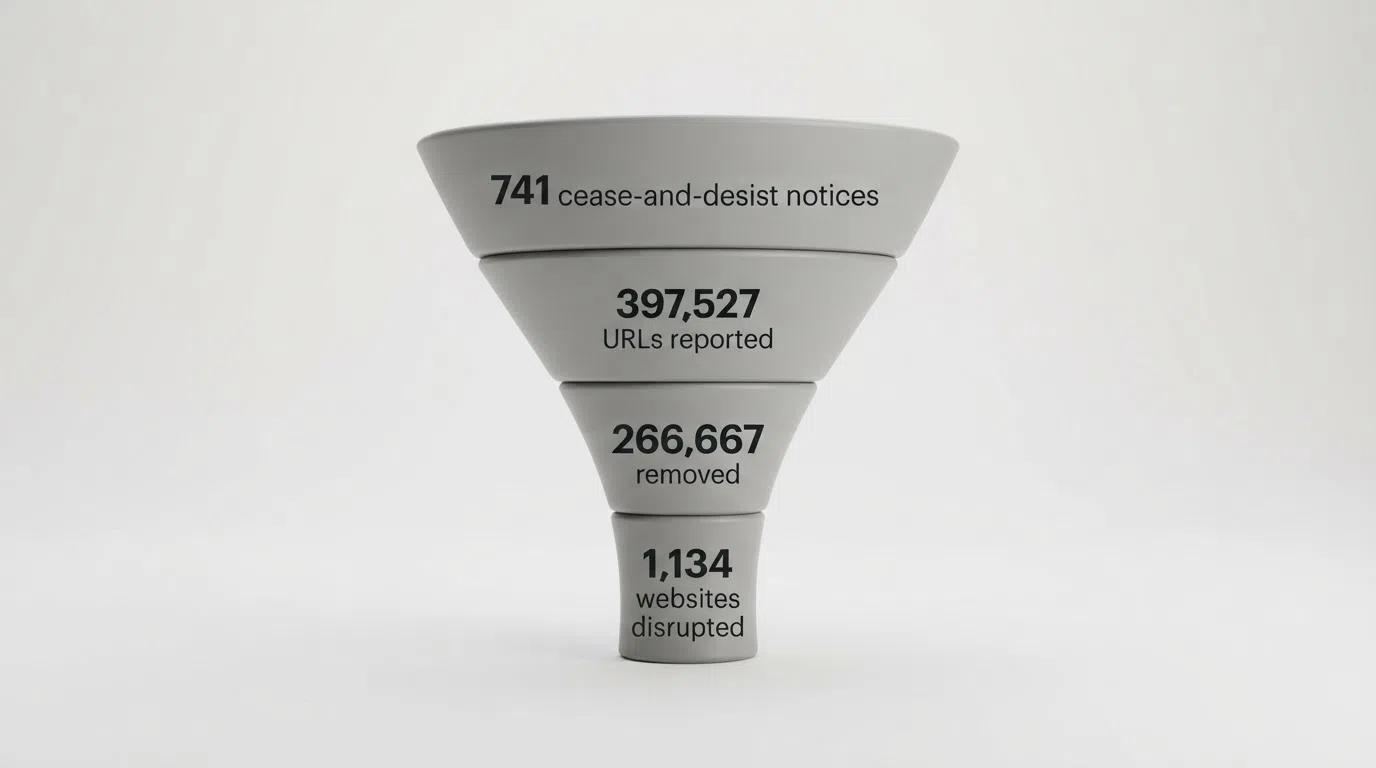
The Commission’s enforcement against offshore operators runs through disruption, not blocking. The 2025–26 figures show the scale: 741 cease-and-desist notices sent to operators and advertisers, 397,527 URLs reported to search engines (266,667 removed), 1,068 websites referred for delisting, and 1,134 websites disrupted through takedowns or geo-blocking.
The Commission currently holds no statutory ISP or DNS blocking power. Legislation has been proposed under the Criminal Justice Bill that would allow the Commission to apply to a court for a blocking order, but that proposal is not yet enacted. Enforcement targets operators, advertisers, and intermediaries — payment providers, domain registrars, and search engines — not individual players.
The gap is visible. Bloomberg reported in June 2026 that DonBet and MyStake remained accessible to British users despite not holding UKGC licences, following the Commission’s enforcement push. The pressure on intermediaries is real and growing. The ability to take an offshore site fully offline is not.
Where UK Players Can Play in 2026: Offshore and UK-Licensed Casinos Compared
| Operator | Licence / Regulator | UKGC Licensed? | Welcome Bonus | Wagering | GAMSTOP |
|---|---|---|---|---|---|
| Bet365 | UKGC (Account 38721) | Yes | UKGC-compliant (≤10×) | ≤10× | Yes |
| William Hill | UKGC (Account 2752) | Yes | UKGC-compliant (≤10×) | ≤10× | Yes |
| Ladbrokes | UKGC (Account 1611) | Yes | UKGC-compliant (≤10×) | ≤10× | Yes |
| Betfred | UKGC (Done Brothers) | Yes | UKGC-compliant (≤10×) | ≤10× | Yes |
| MyStake | Curaçao eGaming (1668/JAZ) | No | 150% up to £750 + 30 FS | 30× | No |
| DonBet | Curaçao Gaming Authority (OGL/2024/250/0115) | No | 150% up to €750 + 50 FS | 30× | No |
| Goldenbet | Curaçao | No | 300% up to £1,500 + 100 FS | 35× | No |
| Rolletto | Curaçao | No | 150% up to £500 + 200 FS | 30× | No |
| Winstler | Curaçao (5536/JAZ) | No | 600% up to £9,500 | 30× | No |
| Emperia | Curaçao | No | 450% + 325 FS up to £3,000 | 35× / 40× FS | No |
| Freshbet | Curaçao | No | 300% up to £3,000 + 200 FS | 30× | No |
| Velobet | Curaçao | No | 330% up to €/$2,000 + 300 FS | 30× / 40× | No |
The split is stark. Four UKGC-licensed operators offer bonuses capped at 10× wagering with full consumer protections. Eight Curaçao-licensed operators offer bonuses running 150% to 600% with wagering at 30–35× and none of those protections. Every operator in the second column is offering an unlicensed product to British consumers under the Gambling Act 2005.

UKGC-Licensed Operators: The Regulated Alternative
The four UKGC-licensed operators are the baseline against which the offshore set is measured. All four appear on the UKGC’s public register, confirmed as of 29 July 2026. Every one participates in GAMSTOP and provides ADR, fund segregation, deposit-limit prompts, and the £5/£2 stake cap. Welcome bonuses comply with the 10× wagering cap mandated since December 2025.
These operators are not recommendations. They are the regulated alternative — what compliance looks like, and the standard the offshore operators are measured against.
Bet365
Bet365 holds UKGC active licence account 38721, operated by Hillside (UK Gaming) ENC and Hillside (UK Sports) ENC. Its 12.77% market share makes it the UK market leader. The game provider roster runs long: Playtech, NetEnt, Microgaming, Pragmatic Play, and others. The welcome bonus sits at or below the 10× statutory cap. Bet365 is the benchmark against which every other operator on this page is read.
William Hill
William Hill holds UKGC active licence account 2752, operated by William Hill Organisation Ltd, with multiple active licence categories held since 1 January 2009. Its 10.86% market share makes it the second-largest UK operator. The welcome bonus complies with the 10× cap. William Hill is the established high-street name with full UKGC protections intact.
Ladbrokes
Ladbrokes holds UKGC active licence account 1611, operated by Ladbrokes Betting & Gaming Ltd, active since 1 January 2009. Its 7.31% market share places it third among UKGC-licensed operators. Bonus terms comply with UKGC standards. A legacy UK brand with the full regulated protection set.
Betfred
Betfred operates under a UKGC active licence held by Done Brothers (Cash Betting) Ltd. Its 4.85% market share places it fourth in the regulated set. Bonus terms comply with UKGC standards.
Offshore Casinos: What They Offer and What They Do Not
All eight offshore operators are licensed in Curaçao. None holds a UKGC licence. None participates in GAMSTOP. Welcome offers run from 150% to 600% — well beyond what the UKGC 10× cap permits. Wagering sits at 30–35× for deposit bonuses, against the UKGC’s 10× maximum.
The Santeda International B.V. group operates four of the eight: MyStake, Goldenbet, DonBet, and Rolletto. That group was ordered to return €246,500 in seized winnings to one player, plus interest, legal costs, and €4,500 in expenses, with around 25 similar claims pending. The operator-group concentration is a real risk factor, not a footnote.
The eight are presented in alphabetical order with full terms stated. This is a factual overview, not a recommendation.
DonBet
DonBet holds Curaçao Gaming Authority direct licence OGL/2024/250/0115, issued 1 July 2024 under the post-LOK framework, operated by GTW B.V. The welcome bonus is 150% up to €750 plus 50 free spins, with 30× wagering on deposit and bonus combined. Fifteen no-deposit free spins are also available. Minimum deposit is €20 with 30-day bonus validity and 14 days to meet wagering. Bonus play is restricted to €5 per spin, and free-spin winnings are capped at €100.
Emperia
Emperia holds a Curaçao licence operated by Fortuna Games N.V. and launched in 2026 with a library exceeding 12,000 titles. The welcome bonus is 450% plus 325 free spins across four deposits, up to £3,000. Wagering is 35× on deposit plus bonus for matched funds and 40× on free-spin winnings. The minimum deposit is £17 (€10), and the operator caps bonus-round wagers at £4 per spin.
Freshbet
Freshbet holds a Curaçao licence. The welcome bonus is 300% up to £3,000 plus 200 free spins, structured across three deposits: 150% up to £1,500 plus 100 free spins on the first, 100% up to £1,000 plus 50 free spins on the second, and 50% up to £500 plus 50 free spins on the third. Wagering is 30× with a £20 minimum deposit.
Goldenbet
Goldenbet holds a Curaçao licence operated by Santeda International B.V. The welcome bonus is 300% up to £1,500 across three deposits plus 100 free spins. Wagering is 35× with a £20 minimum deposit.
MyStake
MyStake holds Curaçao eGaming licence 1668/JAZ, operated by Santeda International B.V. The welcome bonus is 150% first-deposit match up to £750 — reaching 300% to £1,500 total across three deposits — with 30× wagering. Thirty no-deposit free spins are available. Minimum deposit is £20 with 30-day bonus validity.
Rolletto
Rolletto holds a Curaçao licence operated by Santeda International B.V. The welcome bonus is 150% first-deposit match up to £500 plus 200 free spins, with subsequent deposit matches reaching £5,500 total. Wagering is 30×. Players should note that the operator enforces a £5-per-spin limit on bonus rounds and sets a 30-day expiration window for bonus funds.
Velobet
Velobet holds a Curaçao licence. The welcome bonus is 330% up to €/$2,000 plus 300 free spins. Wagering is 30× on the first deposit and rises to 40× on subsequent deposits. Maximum withdrawal from free spins is €100; minimum deposit is £20 (€10).
Winstler
Winstler holds Curaçao master licence 5536/JAZ, operated by Favorit United N.V. since October 2022. The welcome bonus is 600% up to £9,500 — the largest headline percentage in the featured set. Wagering is 30× on the bonus only. Bonus validity is 7 days — the shortest window among the featured operators. Minimum deposit is £20.
What Those Headline Bonus Numbers Actually Mean
The percentages are bait, and the wagering is the hook. A 30× wagering requirement on a £750 bonus creates £22,500 in required turnover before any withdrawal is possible. At £1 per spin, that is 22,500 spins. At five seconds per spin, that is roughly 42 minutes of continuous play — before the player sees a penny of their own money back.
The 7-day validity on Winstler’s 600% bonus compounds the problem. Thirty-one hours of play in seven days demands roughly four and a half hours per day, every day, for a week. Other featured operators offer 30-day windows, which spreads the load more realistically but still demands sustained, high-volume play.
Max-bet-during-bonus limits of £4–£5 per spin lengthen the clearing time further. A player who might otherwise complete wagering in fewer, larger spins is forced into more spins at a lower ceiling. The clock expands.
Free-spin winnings are capped at €100 at DonBet and Velobet. The headline “50 free spins” or “300 free spins” is not what the player can withdraw from those spins; it is the input, and the output is capped.
The gap between a 600% headline match and what a player can realistically clear and withdraw under 30× wagering and a 7-day window is the entire bonus math compressed into one sentence. The advertised percentage is the ceiling; the wagering, validity, and cashout caps are the floor.
Taking MyStake’s 150% first-deposit bonus of £750 at 30× wagering on Book of Dead (96.21% RTP, £1 per spin, 5-second interval) as a representative example: required turnover is £22,500; at £1 per spin that is 22,500 spins; at 5 seconds per spin that is 112,500 seconds, or roughly 42 minutes of continuous play. The expected loss on that turnover, at the slot’s 96.21% RTP, is £22,500 × (1 − 0.9621) = £852.75 — the statistical cost of clearing the bonus, assuming only the bonus amount is wagered.
The Protections You Lose (And How to Stay in Control Anyway)
The Protection Gap: What You Leave Behind
The full list of UKGC-mandated protections absent at non-UK casinos is concrete and itemised. There is no GAMSTOP participation, as the national self-exclusion scheme does not reach Curaçao, Anjouan, or Costa Rica operators. The UKGC complaints route is unavailable, and the Commission cannot investigate disputes with unlicensed operators. Similarly, no approved ADR provider exists because offshore operators are not bound to offer one. Players also lose mandatory fund segregation with insolvency protection, the £5/£2 age-banded stake cap on online slots, and the 10× wagering cap on bonuses. Offshore casinos accept credit cards, which are banned in the UK, and they do not enforce an auto-play ban or a 2.5-second minimum spin speed. Finally, there are no mandatory financial vulnerability checks equivalent to the UK’s £150 net-deposit-in-30-days threshold, and no requirement for deposit-limit prompts or reality checks.
Every item on this list is a UKGC obligation that binds a GB-licensed operator. Every one of them is absent at every offshore casino on this page.
Self-Exclusion at Offshore Casinos: What GamStop Can and Cannot Do
GAMSTOP covers every UKGC-licensed online operator and has done so since 31 March 2020. It cannot reach Curaçao, Anjouan, or Costa Rica. An excluded British player who opens an account at any of the eight offshore operators listed here will not be blocked.
Gamban offers device-level blocking that works regardless of licensing jurisdiction. It blocks gambling sites at the device rather than the operator, so it catches offshore sites that GAMSTOP misses. SENSE covers land-based casinos. For a self-excluded player who wants to stay stopped, GAMSTOP is effective only within the UKGC ecosystem; Gamban extends the boundary outward.
Deposit Limits and Practical Controls You Can Set Yourself
UKGC operators must prompt deposit-limit setting; offshore operators may or may not offer this, and the prompt is not enforceable if they do. A player who wants a deposit cap at an offshore casino has to set it themselves and hold themselves to it.
The £150 net-deposit-in-30-days threshold that triggers a public-data vulnerability check at UKGC sites has no offshore equivalent. Stage 1 affordability check thresholds (£5,000 net deposits in 24 hours for players 25+, £2,500 for under-25s) were announced by the UKGC Board on 7 July 2026 but have not yet commenced even for UKGC operators.
Self-imposed controls work the same regardless of where a player gambles. A personal deposit cap, a session timer, a reality-check alarm set on a phone, and a hard rule against chasing losses are all tools that no operator can grant or withdraw. The absence of platform-level enforcement means the discipline falls on the player.
Where to Get Help: UK Support Services
The help infrastructure in Great Britain is free, confidential, and open regardless of where someone gambles.
The National Gambling Helpline runs 24/7 on 0808 8020 133, operated by GamCare. It is also available via live chat and WhatsApp. In January 2026, GamCare made 996 referrals to treatment and peer-based support services via the helpline — up 48% year-on-year from 674 in January 2025. Eighty-one and a half percent of contacts in 2026 disclosed online gambling, hitting a five-year high for the proportion struggling specifically with online play.
The National Gambling Support Network provides free, confidential early intervention and treatment services across Great Britain, with over 52,000 calls to the National Gambling Helpline per year. NHS gambling harm clinics operate in England, Scotland, and Wales. Gamblers Anonymous runs peer support meetings. GambleAware hosts self-assessment tools and treatment-and-support survey data.
Prevalence data gives the scale of the problem. The NHS Adult Psychiatric Morbidity Survey 2023–24 found 0.4% of adults in England with a PGSI score of 8+ (problem gambling) and 1.6% at moderate risk or above (PGSI 3+). GambleAware’s Annual Treatment and Support Survey found 13.1% of adults (approximately 6.8 million GB adults) experiencing any level of gambling problems (PGSI 1+), with almost 1 in 3 wanting treatment, support, or advice — nearly double the 17% recorded in 2020.
How We Evaluated These Non-UK Casinos
The selection began with a review of the non-GamStop casino ranking landscape. The dominant sources in that space are affiliate review and listicle sites — Betzoid, Pamtree, CasinoBuddies.co.uk, Independent-casinos.org.uk, and others. They share a common structure: a top-of-page comparison table, individual operator reviews with structured bonus and licence data, payment-method sections, and a legal/regulation explainer. Most are thin on the honest side-by-side of what UKGC protections are lost offshore — the gap this page was built to close.
Every offshore operator listed here was verified against the UKGC’s public register, last updated 29 July 2026, to confirm non-UK-registered status. None of the eight appears on the register. Every UKGC-licensed operator was verified as appearing on the register with an active licence.
The evaluation criteria are qualitative, not scored. Licence jurisdiction and regulatory standing after the Curaçao LOK reform of December 2024 set the licensing baseline. Bonus-term transparency — wagering multiples, validity windows, max-cashout caps, and max-bet limits — determined whether the headline offer could be read at face value. Operator-group track record and public enforcement history, particularly the Santeda International B.V. case, weighed the risk of fund withholding. Game-provider legitimacy (NetEnt, Pragmatic Play, Evolution) was a secondary signal, not a guarantee.
No proprietary scoring system or numerical weightings are applied. The four UKGC-licensed operators are included as the regulated benchmark, not as recommendations. The eight offshore operators are a factual overview of the brands holding the largest market presence among UK players seeking non-UK-registered casinos. A reader who wants a recommendation has come to the wrong page; a reader who wants to know what is actually on offer and what is actually lost has come to the right one.
What a UK Player Should Actually Weigh Before Playing Offshore
The trade-off is concrete. Headline bonuses run three to sixty times larger than the UKGC cap. Welcome offers of 150% to 600% with 30–35× wagering replace the UKGC’s regulated 10× maximum. In exchange, the player gives up GAMSTOP, ADR, fund protection, deposit-limit enforcement, the £5/£2 stake cap, the auto-play ban, the spin-speed minimum, and the credit card ban. Every one of those protections exists because the UKGC decided, after years of evidence, that players need them. Every one of them is absent at the eight Curaçao-licensed operators on this page.
The Santeda case is the closest thing to a worked example. One player won funds the operator refused to pay out; enforcement action ordered €246,500 returned, plus interest, legal costs, and €4,500 in expenses. Around 25 similar claims are pending. The mechanism is real, the outcome was positive, and the process was long enough that most players would not have seen it through without legal support.
Three reader profiles map to this market, and each carries a distinct risk calculus. GamStop self-excluded players who want to continue gambling are using offshore casinos to circumvent a protection they voluntarily signed up for; the protection gap includes everything that made GAMSTOP worth registering for. Bonus-seekers chasing bigger offers than the UKGC 10× cap permits are choosing headline percentage over cost-of-clearing, and the wagering math is unforgiving at 30–35×. Payment-flexibility seekers wanting credit card or crypto deposits are choosing convenience over the ban that exists because credit-funded gambling correlates with higher harm.
The practical bottom line, drawn from this page’s own figures: if a player chooses to play offshore, the operators with direct CGA licences under the post-LOK framework and the clearest published terms carry the fewest unknowns. DonBet holds a direct CGA licence issued 1 July 2024 under the post-LOK framework; that is a verifiable credential, not a footer badge. Operators within the Santeda group carry the most documented enforcement risk. The four UKGC-licensed operators are the only entries on this page where the consumer protection set is intact and the GAMSTOP boundary holds.
This page does not recommend a brand. It sets out what is gained — bigger bonuses, payment flexibility, no GAMSTOP block — and what is lost — every UKGC-mandated protection, plus any practical recourse if an operator withholds funds. The decision is the reader’s. The arithmetic belongs to the reader. The protection gap is the page’s subject, and it does not close because an operator is well-known.
Frequently Asked Questions
Do non-GamStop casinos accept UK players?
Yes. The eight offshore operators on this page accept UK players and are actively marketed to them. None holds a UKGC licence, so accepting those players is operating against UK law — but the law targets operators and intermediaries, not players. A British consumer who signs up is not committing an offence; they are gambling on a site whose legal status in Great Britain is unlicensed.
Is it legal for UK players to use casinos not registered with the UK Gambling Commission?
The Gambling Commission has not established a penalty for players who gamble on unlicensed sites. Section 33 of the Gambling Act 2005 criminalises providing facilities for gambling without a licence — the operator side, not the player side. What the player loses is protection, not liberty. The Commission has stated that consumers who gamble with unlicensed operators are unlikely to receive the protections the Commission requires from its licensees.
Are winnings from non-UK registered casinos tax-free in the UK?
Yes. Gambling winnings are not treated as income in the UK and fall outside capital gains tax. Player-side betting duty was abolished in 2001. The tax falls on the operator: Remote Gaming Duty rose from 21% to 40% on 1 April 2026, but that is an operator liability, not a player obligation.
What wagering requirements do non-GamStop casinos typically have?
The eight operators on this page run 30× to 35× wagering on deposit bonuses, with free-spin winnings sometimes carrying 40×. The UKGC cap of 10× has been in force since 19 December 2025, but it binds GB-licensed operators only. Offshore wagering is unregulated at that level. A £750 bonus at 30× creates £22,500 in required turnover before withdrawal.
Can I set deposit limits at casinos not registered in the UK?
Offshore casinos may offer deposit-limit tools, but they are not required to and enforcement is not guaranteed. The UKGC requires operators to prompt deposit-limit setting; offshore operators are not bound. A player who wants a hard cap at an offshore casino should set it themselves, document it, and hold to it — the operator-level tool is a courtesy, not a safeguard.
Account – fastestpayout-casinos-uk
Content created by the «fastestpayout-casinos-uk» team