
Non UK Licence Casinos for British Players
 Available in GB
A “non UK licence casino” is an offshore operator — Curaçao, Anjouan, Malta — that takes British customers without holding a Gambling Commission licence. Roughly 47% of UK adults gambled in the four weeks to January 2026 (Gambling Commission GSGB Wave 4), and a growing share of that activity now happens outside the UKGC’s perimeter. This page is a working brief on what that move buys, what it costs, and how to check the licence before a deposit goes in.
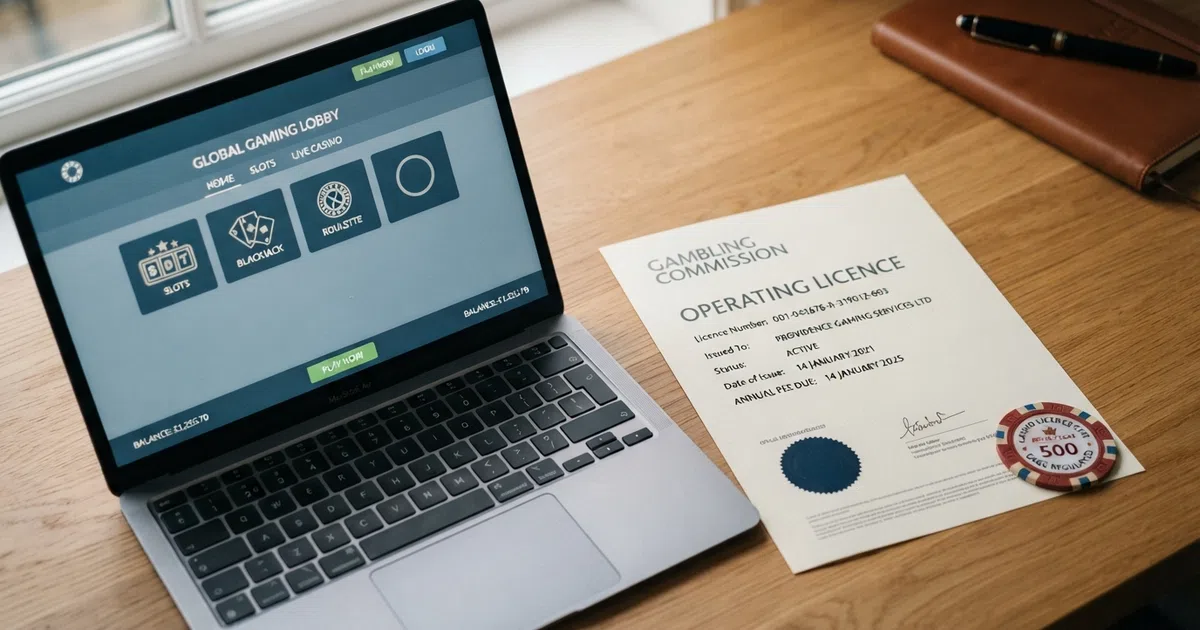
*Current as of September 8, 2026. Operator offers, licence status and statutory figures cross-checked against the Gambling Commission’s public register and operator terms as published.*
A Casino Licence Is Only as Strong as Its Regulator
A licence is a standing permission, not a one-off badge. It obliges the operator to keep its games fair, to handle player funds in a defined way, and to submit to a named regulator’s supervision for as long as the licence is live. Drop any one of those three — fairness, fund handling, or supervision — and the licence stops meaning what a reader assumes it means.
What a casino licence is and what it certifies
The Gambling Act 2005 sets three licensing objectives for Great Britain: preventing gambling from being a source of crime, ensuring it is conducted fairly and openly, and protecting children and other vulnerable people. The UKGC is the single statutory regulator charged with delivering those objectives. A UKGC licence is the live proof that an operator has been vetted against them, is being watched against them, and can be sanctioned against them when it falls short. The “Gambling Commission” name on a footer is not decoration; it is the named party with the power to revoke, fine and disrupt.
The same shape holds outside the UK, with different muscle behind it. An MGA licence from Malta, a Curaçao GCA licence, an Anjouan authorisation — each is a regulator’s promise that a defined rulebook applies, and each is enforceable only to the extent that the regulator chooses to enforce it. The promise and its reach are not the same thing.
Licensed vs unlicensed: the difference that matters
A licensed operator answers to a named regulator with statutory enforcement powers. An unlicensed one answers to no one. The practical gap shows up where it hurts: an unlicensed site offers no approved alternative dispute resolution, no guaranteed segregation of player funds, and no route into the UK’s GAMSTOP self-exclusion scheme. The phrase “fully licensed” is meaningless without the next question — licensed by whom, and what does that regulator actually do.
What You Gain and Give Up Outside the UKGC
Moving to a non-UK casino is not a swap of equals. It is a deliberate trade: bigger bonuses, crypto rails, no stake caps, and bonus-buy slots, against every protection the UKGC would otherwise have made compulsory.
What “non-UK licence” actually means
“Non-UK” is a licensing label, not an absence of one. A Curaçao-licensed or Anjouan-licensed casino has a regulator, just not the UKGC. The legal burden sits squarely on the operator. Section 33 of the Gambling Act 2005 makes it a criminal offence to provide gambling facilities to GB customers without a UKGC licence, carrying up to 51 weeks’ imprisonment and/or an unlimited fine — and the sanction is aimed at the operator, not the player. No established UK penalty falls on the person who simply opens an account offshore and plays.
How offshore licensing works
GB licensing became compulsory at the point of consumption under the Gambling (Licensing and Advertising) Act 2014. An operator anywhere in the world serving a customer in Great Britain needs a UKGC licence to do so legally. The non-UK brands on this list have not taken one. They are licensed elsewhere instead, and the UKGC’s enforcement model targets the operators, their advertisers and their intermediaries — cease-and-desist notices, search-engine delistings, payment-provider referrals — rather than the customers playing on them. Between April 2024 and June 2025, the Commission issued 3,140 disruption notices and referred 447,778 URLs to search engines. The model disrupts reach, not access.
What you risk without UKGC backing
The cleanest way to see the cost is the protection you stop being able to assume. UKGC rules require player funds to be segregated from operator funds, so a folded licensee still has your balance ring-fenced. They require an approved alternative dispute resolution provider, so a dispute with a UK-licensed site can be escalated past the operator’s own complaints team. They require GAMSTOP participation, so a self-excluded player is locked out of every UK-licensed site at once. The Curaçao Gaming Authority has stated explicitly that it does not handle individual player complaints and cannot order operators to compensate players. Offshore, each of those assumptions is on the operator’s own terms, and the player has no UK regulator to fall back on if the operator decides not to honour them.
Bonuses are bigger offshore — and come with different terms
The headline figures on offshore offers are real, and they are larger than what UK-licensed sites can match under current rules. From 19 January 2026, the UKGC’s Social Responsibility Code 5.1.1 caps bonus wagering at 10× and bans mixed-product offers. Jackbit ships a 0× wagering welcome. Stake runs wager-free rewards across daily races, reloads and rakeback. BC.Game advertises a four-tier package up to 360%, with 180% on the first deposit alone.
The marketing word the industry reaches for here is “generous.” The figure on the banner is the size of the gift, not the value of it. A 360% match with a 40× wagering multiple is worth very different money to a 100% match with 0×; the page carries the headline so the reader can compare, and the wagering is the rest of the story.
The Protections a UKGC Licence Buys You
The rulebook a UK player leaves behind is concrete. It is not a vibe, and it is not optional for UK licensees.
What UK licensing requires of an operator
The Gambling Act 2005 is the statutory backbone, and the Gambling (Licensing and Advertising) Act 2014 extended its reach to every operator serving GB customers, regardless of where the operator is based. The UKGC enforces it. Since 7 May 2019, name, address and date of birth have to be verified before the first deposit — pre-verification, not a check that happens at withdrawal. The Commission runs the public register where every active licensee is named, with its status and licence type, at gamblingcommission.gov.uk/public-register/businesses.
The caps and rules UK players give up
The list of UKGC obligations an offshore site is not bound by is long, and the items on it are the items players most often cite as their reason for going offshore:
- Online slots: maximum stake of £5 per game cycle for players aged 25 and over, and £2 for players aged 18–24, under SI 2025/215.
- Bonuses: wagering capped at 10× and mixed-product promotional offers banned, from 19 January 2026.
- Credit cards: banned for gambling since 14 April 2020 under LCCP condition 6.1.2.
- Game design: autoplay banned, spin speeds faster than 2.5 seconds banned, turbo and quick-spin banned, losses disguised as wins banned — RTS 14, in force 31 October 2021.
- Bonus-buy / feature-buy slots: not permitted at UK-licensed sites.
- Self-exclusion: GAMSTOP participation mandatory for every UK-licensed remote operator since 31 March 2020.
- Affordability: a £150 net-deposit financial vulnerability check has applied since February 2025.
Offshore, every line on that list is a feature that may or may not exist on a given brand’s terms page, and a player has no UK regulator to enforce it if it doesn’t.
The UKGC register: where the UK-licensed list lives
The public register is the self-service “list” of UKGC casinos, kept current by the Commission itself. It is the same tool for checking a UK claim and for sanity-checking an offshore one — if a brand claims a UK presence, the register shows it; if it doesn’t, the register shows the absence just as clearly. No ranked “best UK-licensed” list is carried on this page; the register is the source of truth for UK status, and what sits on it is not this page’s brief.
The 10 Casinos Without a UK Licence We Reviewed for UK Players
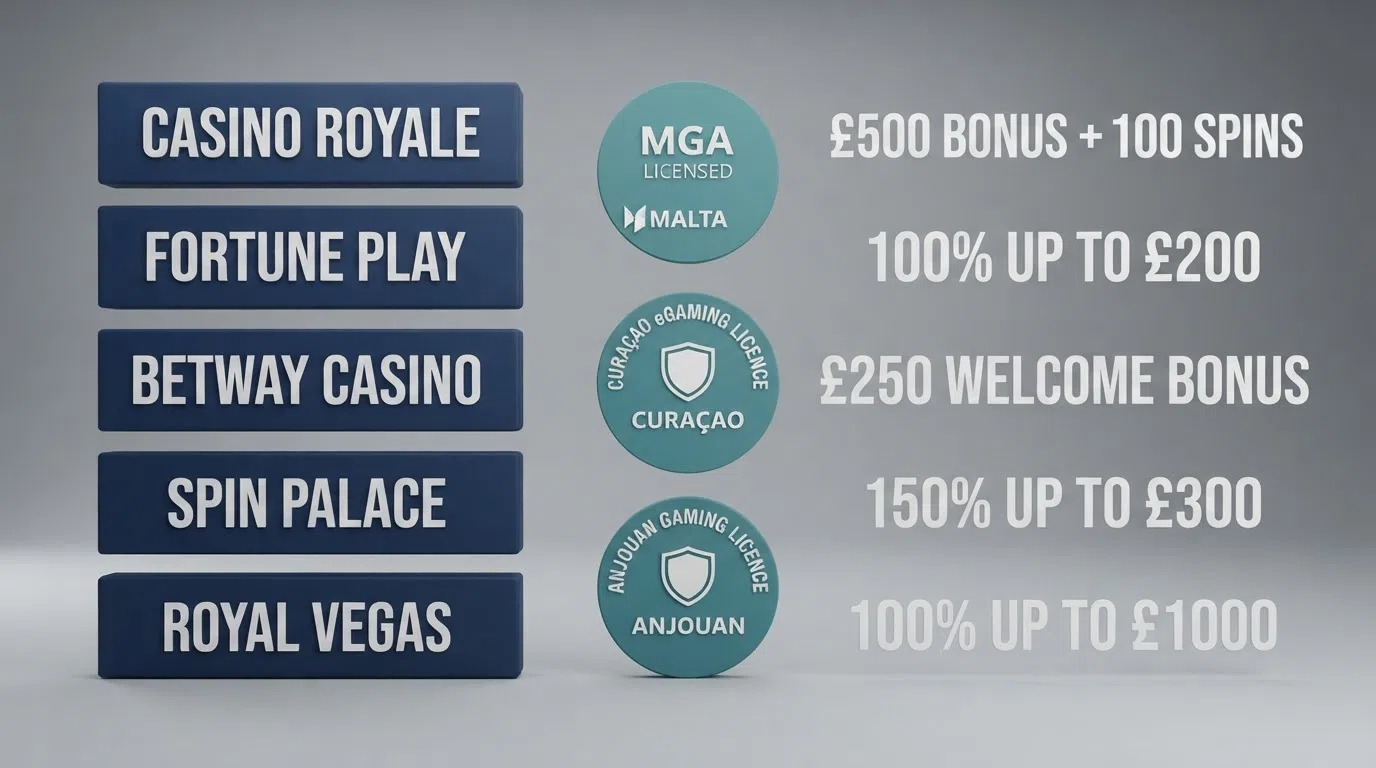
Every operator below is licensed outside the UK. None holds a GB operating licence. At each one, a UK player loses the UKGC protections described in the section on what a UKGC licence buys — the segregation guarantee, the ADR route, the GAMSTOP coverage. The comparison is between the brands on their own terms, not against the licensed market.
| Operator | Licence jurisdiction | GB licence | Welcome bonus | Crypto payments | KYC verification |
|---|---|---|---|---|---|
| Stake | Curaçao GCA | None | Daily races, reloads, rakeback (no headline deposit match) | BTC, ETH, LTC, USDT, DOGE, SOL, XRP, TRX and more | Verified at signup; no extra at withdrawal for moderate amounts |
| Jackbit | Curaçao GCA (OGL/2024/1049) | None | Wager-free welcome, 0× wagering | BTC, ETH, LTC, USDT, XRP, BNB, DOGE, BCH, USDC, SOL, TRX, XMR, DASH | No ID at signup; no ID to withdraw |
| BC.Game | Anjouan | None | Four-tier package up to 360% (180% first deposit) | 150+ cryptocurrencies | Standard verification |
| WinSpirit Casino | Curaçao GCA (OGL/2024/923/0383) | None | 100% match + 100 free spins + 20 no-deposit spins | 11 cryptos + Visa, Mastercard, Skrill, Neteller, Apple Pay, bank wire | Standard verification |
| CoinCasino | Anjouan | None | 200% up to $30,000 + 50 bonus spins at $4 each | Cryptocurrency focused | Not specified in sources |
| Cloudbet | Curaçao, Anjouan | None | 100% match up to 5 BTC | BTC, ETH, LTC, USDT and more | Minimal for crypto; accepts VPN |
| FortuneJack | Curaçao GCA | None | 500% free spins welcome | BTC, DOGE, LTC, USDT + Visa, Mastercard, Google Pay, Apple Pay | Kicks in at $10,000 cumulative deposits/withdrawals |
| Metaspins | Curaçao GCB (OGL/2024/1063/0437) | None | 100% up to 1 BTC | BTC, BCH, BNB, LTC, USDT, USDC, ETH, TRX, ADA, XRP, DOGE, SOL + fiat on-ramp | Standard verification |
| Crypto-Games | Curaçao | None | Not specified in sources | Multiple cryptocurrencies | No KYC checks at all |
| Rainbet | Anjouan | None | $1.7M in races | 24 cryptocurrencies + wrapped versions | 4-level system; most players never leave Level 1 |
The table is a fact file, not a leaderboard. A higher welcome match does not make a brand “safer” in any of the senses that matter offshore, and a brand with no welcome at all is not the page’s way of saying it has nothing to offer.
Stake
Stake runs on a Curaçao GCA licence and a wager-free rewards model. There is no traditional welcome deposit match, and that is the shape of the offer: daily races, reload promos, rakeback. The games library runs Pragmatic Play, Evolution, Hacksaw Gaming, Push Gaming, Nolimit City and Stake Originals (the brand’s own provably fair titles). Crypto covers BTC, ETH, LTC, USDT, DOGE, SOL, XRP, TRX and more, with withdrawals running instant to around eight minutes in the May 2026 test. KYC is verified at signup, with no further check at withdrawal for moderate amounts. If you prioritise wager-free rewards over traditional welcome matches, Stake is the industry standard.
Jackbit
Jackbit holds Curaçao GCA licence OGL/2024/1049. The welcome is wager-free, with 0× on the bonus — a feature the UK market has not offered since the 10× cap took effect, and that few offshore sites match. Crypto covers a long list and includes native Monero (XMR) for players who treat privacy as a feature. The KYC posture is the most permissive in the set: no ID at signup, no ID to withdraw, and the policy has held since 2022. Jackbit is a top choice for anyone prioritising both bonus simplicity and crypto privacy.
BC.Game
BC.Game migrated from Curaçao to Anjouan in 2024 and formally withdrew its Curaçao licence in December 2025. The welcome is a four-tier package up to 360%, with 180% on the first deposit. The crypto list is the widest in the set at 150+. Crypto withdrawals run under ten minutes; fiat takes one to five days. The asterisk is a court record: a bankruptcy ruling over approximately $2.5M in unpaid player claims, under appeal as of 2025. Potential players should weigh that record as a critical data point before proceeding.
WinSpirit Casino
WinSpirit operates under Curaçao GCA licence OGL/2024/923/0383. The welcome is a 100% match with 100 free spins on deposit, plus 20 no-deposit spins. Payments span 11 cryptocurrencies and the familiar card and e-wallet set — Visa, Mastercard, Skrill, Neteller, Apple Pay, bank wire. Withdrawals run 0–24 hours on crypto and e-wallets, 3–7 days on cards and bank. It is the most UK-shaped payment mix in the table, and the welcome is on the modest end of the offshore range.
CoinCasino
CoinCasino is Anjouan-licensed. The welcome is a 200% match up to $30,000 with 50 bonus spins valued at $4 each. Withdrawals are instant to a few minutes for standard cashouts and 1–2 hours for large ones. Game providers and KYC terms are not specified in the sources available, and the absence is itself a fact: a reader who needs the provider list to feel comfortable has fewer grounds to feel comfortable here.
Cloudbet
Cloudbet runs on dual Curaçao and Anjouan licences and has been operating since 2013 — the longest track record in the table. The welcome is a 100% match up to 5 BTC. Providers are Pragmatic Play, Evolution, Microgaming and Betsoft. Crypto withdrawals are instant, KYC is minimal for crypto, and VPN is accepted. Cloudbet’s thirteen-year operating history stands as the brand’s primary credential.
FortuneJack
FortuneJack is Curaçao GCA-licensed and has been operating since 2014. The welcome is a 500% free-spins package, and the loyalty scheme runs 16 tiers with 2%–14% cashback. Payments span BTC, DOGE, LTC, USDT plus Visa, Mastercard, Google Pay and Apple Pay. KYC kicks in at $10,000 in cumulative deposits and withdrawals — a threshold that pushes the check well past where most players ever reach.
Metaspins
Metaspins holds Curaçao GCB licence OGL/2024/1063/0437. The welcome is a 100% match up to 1 BTC. Crypto coverage is broad and includes a fiat on-ramp through Onramper and Changelly, which is the distinguishing feature for a player who wants to fund an account in pounds and play in Bitcoin without leaving the cashier.
Crypto-Games
Crypto-Games is the privacy play of the set. The Curaçao licence is paired with no KYC checks at all — no personal details, no identity verification. The games are provably fair crypto titles from Pragmatic Play, Evolution and BGaming. Withdrawals are instant. The welcome bonus is not specified in the sources, and that gap is one a reader who treats the welcome as the deciding feature should notice.
Rainbet
Rainbet is Anjouan-licensed. The marquee offer is $1.7M in races, rather than a deposit match. Crypto coverage runs 24 currencies plus wrapped versions, with minimum deposits from $5 (SOL, LTC, DOGE, TRX, XLM, ADA, XRP) to $15 (BTC, ETH, USDT). KYC runs four levels; most players never leave Level 1, which is basic personal details with no document upload required.
MGA, Curaçao or Anjouan: The Protection Gap Between Licences
The three offshore tiers are not interchangeable. The differences show up in the three places a player actually feels them: whether their money is ring-fenced, whether a dispute can be escalated, and whether the operator is required to look for harm markers.
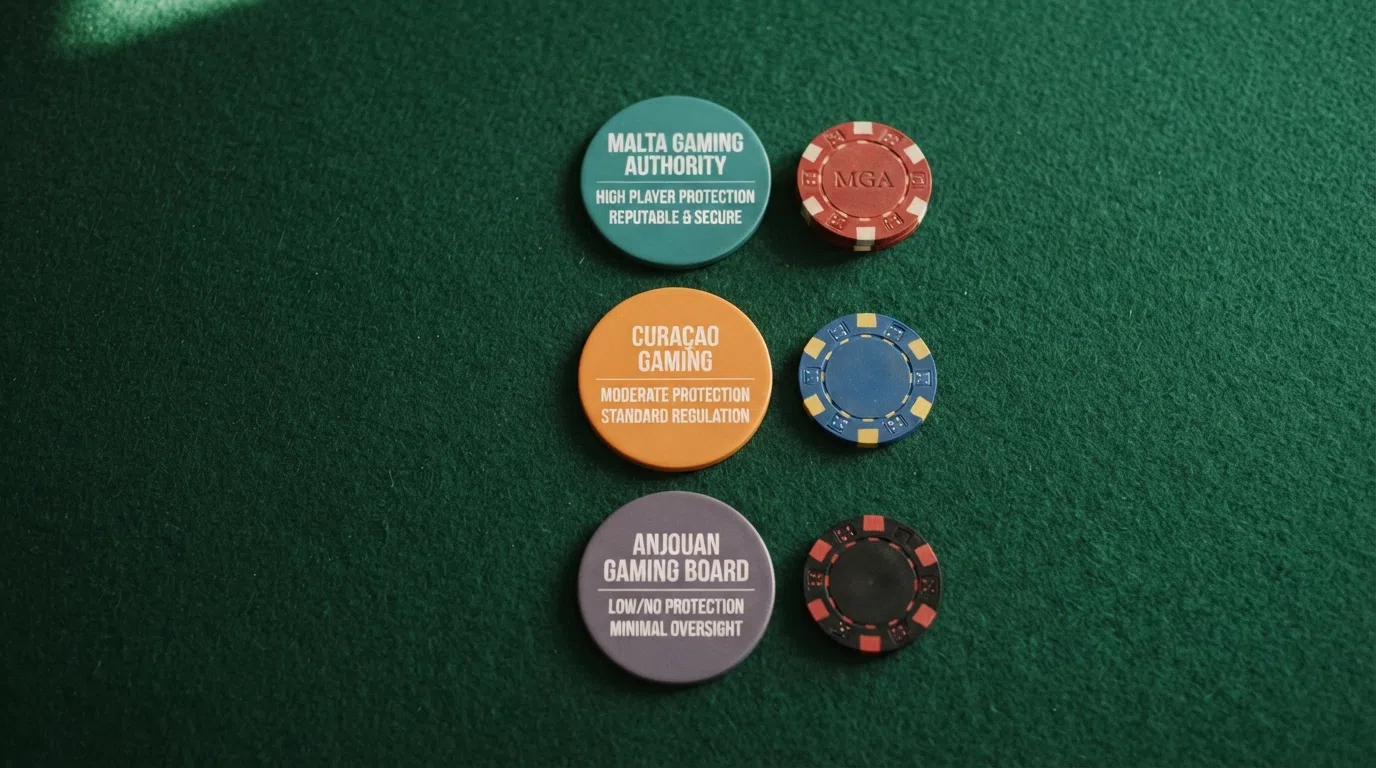
| Licence tier | Player fund segregation | Dispute resolution | Responsible-gambling requirements |
|---|---|---|---|
| MGA (Malta) | Required | Formal player-protection dispute channel | Markers of harm enforced |
| Curaçao GCA | Not mandated for operators in the way the MGA requires | Mandatory ADR, but the regulator does not handle individual player complaints or order compensation | Improving under LOK reform 2024 |
| Anjouan | Not required | No mature complaint handling | Minimal published supervision |
Kahnawake is named in some licence-tier searches the reader may run. The research available for this page does not carry published specifics on its supervision, fund handling or dispute routes, and the absence is itself the practical answer: a regulator whose requirements cannot be checked is a regulator the reader cannot rely on.
MGA: the strongest non-UK licence
The Malta Gaming Authority is the most demanding of the non-UK regulators a UK player will meet. Player fund segregation is mandatory, a formal dispute-resolution channel exists for players, and responsible-gambling markers of harm are enforced — none of which Curaçao or Anjouan mandate. Annual licence fees run from €10,000 to over €25,000, which both funds the regulator and filters out operators who cannot meet the entry cost. For a UK player choosing on protection grounds rather than bonus size, an MGA-licensed brand is the highest non-UK floor available.
Curaçao GCA: reforming, but no player complaints desk
The Curaçao Gaming Authority has reformed under the 2024 LOK framework — direct regulator oversight, a public register, and mandatory ADR. The reform is real, but the regulator has stated explicitly that it does not handle individual player complaints and cannot order operators to compensate players. Crypto payments are fully supported. The practical shape of the regime is: better than its pre-2024 reputation, still not a regulator that picks up the phone when a player has been mistreated.
Anjouan: the newest and least proven
Anjouan is the newest of the three tiers and the least proven. Published supervision is minimal, complaint handling is not mature, and there is no fund-segregation requirement. The licences themselves are cheap, the operators on them are many, and the regulator’s track record is short. For a small bankroll on a wager-free offer, the calculus is one thing; for a balance that would hurt to lose, it is another.
Crypto Payments and No-KYC Play: Privacy at a Price
Crypto is a payment method, not a licence. It is available at every brand on the table, and at a UK-licensed site the same coins are out of bounds. No-KYC is a separate axis — a brand can be MGA-licensed and still run KYC, or Curaçao-licensed and run none of it. The two should not be confused.
Bitcoin, Litecoin and the crypto payment rails
The featured set runs the major coins and a long tail. Stake takes BTC, ETH, LTC, USDT, DOGE, SOL, XRP and TRX. Jackbit adds Monero (XMR) — the privacy coin — alongside the standard list. BC.Game accepts over 150 cryptocurrencies, which is a long way past “we take the ones you have heard of.” Rainbet runs 24 coins plus wrapped versions, with minimum deposits from $5 on the cheaper chains to $15 on BTC, ETH and USDT. Withdrawal speeds across the set run instant to minutes for crypto; fiat rails at BC.Game run one to five days.
No-KYC casinos: anonymity without identity checks
The no-KYC spectrum runs from “never” to “only above a threshold.” Crypto-Games takes no identity documents at all. Jackbit asks for no ID at signup and none at withdrawal, and the policy has held since 2022. Cloudbet’s KYC is minimal for crypto play and the brand accepts VPN. FortuneJack’s check kicks in at $10,000 in cumulative deposits and withdrawals, which puts it well past where most players will ever sit. The price of that privacy is the protection a licensed jurisdiction would otherwise have paired with it: no identity-verification check means there is no regulator holding a verified record of who you are to that operator.
How to Verify a Casino’s Licence Before You Deposit
The licence check is the only step on this page that costs nothing and rules out the worst outcomes. It takes a few minutes and runs the same way for every brand.
How to verify a licence in the official register
- Find the licence number and the issuing authority in the operator’s footer or terms page. A brand that hides this is not worth the time to look up.
- Open the regulator’s public register — the UKGC’s is at gamblingcommission.gov.uk/public-register/businesses, the Curaçao GCA runs a public register under the LOK reform, the MGA’s register is on its site.
- Match the registered business name and status to the site you are on. A match on name and a status of “active” is the minimum; a mismatch on either is a stop signal.
- Treat a missing or unverified licence as a stop signal, not a negotiation. If the register cannot confirm what the site claims, the site is not the place to deposit.
Picking a safe casino for how you actually play
There is no single “best” on this list, and the page is not offering one. The decision runs through three honest steps: pick the feature that actually matters to you — crypto, bonus shape, stake size, anonymity — weigh the licence tier against that feature, then cross-reference the comparison table to see which brand sits where on the trade-off. A player who needs anonymity first will land on a different brand from one who needs MGA segregation first, and both decisions are defensible. The page that promises a single winner has stopped reading the table.
What It Takes to Win and Keep a Casino Licence
The operator’s side of the trade is the cost that pushes some of them offshore in the first place. A UKGC licence is not cheap to obtain, supervise, or hold.
What a licence application requires
A regulator vets what it would be reckless to ignore: the operator’s background, its finances, the systems it will run, and the people who run them. GB licensing is compulsory at the point of consumption, so any operator serving a GB customer without a UKGC licence is in breach of the 2014 Act. The detailed application checklist is not published in the sources available for this page, and the public register is the visible outcome of the vetting — names on it have passed; names absent from it have not, or have had their status changed.
Operating-licence types, costs and timelines
The UKGC’s remote operating licence and its small-scale categories are the two shapes a remote operator is most likely to meet. The cost shape is what drives the structural move offshore. Remote Gaming Duty rose from 21% to 40% on 1 April 2026. A statutory levy of 1.1% of gross gambling yield applied from 6 April 2025, under the Gambling Levy Regulations 2025. An MGA licence runs €10,000 to over €25,000 a year, with no equivalent GB-style duty attached. The arithmetic is what it is: the GB market is the most expensive regulated online gambling market to operate in, and operators who cannot carry the load find a different regulator.
The UK’s Safety Net Doesn’t Follow You Offshore
The UK has a real help infrastructure, and it does not require the reader to be on a UK-licensed site to use it. Almost 1.6 million adults in England may benefit from treatment or support for harmful gambling, by the GOV.UK prevalence estimate. The National Gambling Helpline runs around 55,000 calls and online chats a year through GamCare, with treatment available through the National Gambling Support Network in under two weeks from referral. None of that is conditional on which site the caller plays on.
GAMSTOP and self-exclusion
GAMSTOP has been mandatory for UK-licensed remote operators since 31 March 2020. The scheme reported over 562,000 active self-exclusions at the end of 2025, with a 16% year-on-year rise in registrations and a 40% rise in 16–24-year-old sign-ups. The exclusion periods run six months, one year and five years, with auto-renewal available and no early cancellation. None of this covers a Curaçao- or Anjouan-licensed site. A player on GAMSTOP who opens an offshore account is not stopped by the scheme at the door.
Deposit limits and reality checks
UK-licensed sites must offer a gross deposit limit based solely on money paid into the account, with the rule in force from 30 June 2026 (extended to 30 September 2026). A £150 net-deposit financial vulnerability check has applied since 28 February 2025. Reality checks and product limits are baseline UKGC obligations. None of the equivalents is required at a non-UK casino, and a brand that offers them does so on its own terms, not because its regulator obliged it.
Responsible gambling at offshore casinos
Offshore sites are not bound by UKGC responsible-gambling rules. Some volunteer their own limits, deposit caps, and reality checks, but the practical route for a UK player who is concerned about their play stays the UK infrastructure: the National Gambling Helpline on 0808 8020 133 (free, confidential, 24/7), the NGSN’s treatment pathway, NHS gambling harm clinics, and the GAMSTOP scheme for any UK-licensed site they also use.
How We Checked Every Casino on This List
The sources behind this page are the Gambling Commission’s public register and guidance, the operator’s own terms and licence pages, the WagerPals and industry-side comparison guides, and the GOV.UK / GambleAware data on prevalence and treatment. Every operator above was checked for its licence jurisdiction, its register status where one exists, and the absence of a GB operating licence. The ranking criteria were licence tier, bonus shape, crypto support and KYC posture, applied qualitatively rather than as a scored rubric — the research does not carry a numeric score per operator, and the page does not invent one. Where a fact is missing from the research, the cell shows it as missing, not as a guess.
Read the Licence, Then Decide
The gains offshore are real, and so is the protection gap. Bigger bonuses, crypto rails, no stake caps and bonus-buy slots are exactly the features the UK rulebook was rewritten to remove. The Curaçao Gaming Authority does not handle individual player complaints and cannot order operators to compensate players. The Anjouan regime is the least proven of the three tiers. The MGA-licensed brand is the strongest floor available outside the UK, and even that is not the UKGC’s floor.
For most readers the licence tier, not the headline bonus, is the deciding factor. A 360% match with a 40× wagering multiple is a different number from a 100% match with 0×; the comparison table carries the figure, and the licence column carries the rest of the story. Before any deposit, run the verification check on the register, and weigh the licence tier against the feature that actually matters to you. The reader decides their own trade-off, and no operator on this page is recommended over another.
Frequently Asked Questions About Non-UK Licence Casinos
Is it legal for UK players to gamble at casinos without a UKGC licence?
There is no established UK penalty on the player. Section 33 of the Gambling Act 2005 targets the operator — up to 51 weeks’ imprisonment and/or an unlimited fine for providing gambling facilities to GB customers without a UKGC licence. The player loses UKGC protections, but does not commit an offence by playing.
What licence does a non-UK casino need to be safe for British players?
There is no single “safe” offshore licence. The MGA is the strongest of the three tiers a UK player will meet, with mandatory player fund segregation, a formal dispute channel, and responsible-gambling markers of harm. Curaçao and Anjouan do not match that floor. Verify the licence on the regulator’s public register before depositing.
Can non-UK casinos accept cryptocurrency deposits from UK players?
Yes. Crypto is a payment method, not a licence feature, and every brand in this comparison accepts it. The UK credit-card ban for gambling (in force since 14 April 2020) sits outside crypto rails. Crypto withdrawals at the featured brands run instant to minutes.
Do non-UK casinos have higher stake limits than UK-licensed sites?
Yes. UK-licensed online slots carry a £5 maximum stake per game cycle for players 25+ and £2 for 18–24-year-olds, under SI 2025/215. Offshore brands are not bound by the cap, and a high-stakes player is one of the clearest examples of the trade this page describes.
What happens if a non-UK casino refuses to pay my winnings?
You have no UK regulator to escalate to. The Curaçao Gaming Authority has stated it does not handle individual player complaints or order compensation; Anjouan has no mature complaint handling; the MGA offers a formal dispute channel, but only at MGA-licensed brands. The operator’s own complaints team is the route, with no external escalation behind it.
Why do some British players prefer casinos without a UKGC licence?
The four reasons the research names, in order: bigger bonuses and wager-free offers, crypto deposits and withdrawals, the absence of the £5/£2 stake cap on online slots, and access for self-excluded players (GAMSTOP does not cover offshore sites). Each of those is a feature the UK rulebook was written to remove, and each is exactly what a non-UK brand is set up to provide.
Licence – fastestpayout-casinos-uk
Content created by the «fastestpayout-casinos-uk» team