
The UK slot sites worth your money in 2026 — and the rules that cap them
 Available in GB
UK online slot machines took £773 million in gross gambling yield in the first quarter of 2026, up 12% on the same three months a year earlier. Twenty-five billion spins ran through licensed sites, and 4.8 million accounts were active on average each month. The wider online market — slots, table games, peer-to-peer, the whole stack — produced £1.55 billion over the same period, 7% higher year-on-year. The market is not slowing, and the regulator is not standing back from it.

Thirty-seven per cent of British adults reported some form of gambling in the past four weeks during the most recent Gambling Commission participation survey. Strip out the people whose only bet is a lottery draw, and the share drops to 15%. That gap is the real-money playing field the rest of this page addresses: the readers who will deposit, stake, and decide whether a welcome offer is actually worth their time.
Real-money play in Great Britain is not the frictionless sign-up it was a decade ago. Every UK-licensed remote operator has to verify a customer’s name, address and date of birth before any deposit is accepted and before any stake is placed — there is no grace period. Once verified, every spin on a slot is capped at £5 per game cycle for players aged 25 and over, and at £2 for players aged 18 to 24. Two adults at the same casino on the same slot can legally face different maximum bets. That single mechanism — the age-banded stake cap — is the sharpest line the regulator has drawn into the market in the last two years.
*Current as of September 8, 2026 · Checked against the UK Gambling Commission public register and licensed-operator terms.*
This guide is built around the trust layer that surrounds all of it. The ranking in the next section sits on licence status, the wording of the welcome offer in the operator’s own terms, the wagering and stake caps, and the slot library behind the offer. A UK Gambling Commission licence is the floor, not the ceiling: it is what makes the dispute route, the GAMSTOP opt-out, the vulnerability check, and the safer-gambling tools work at all. Sections further down cover the slot titles that actually pay, the bonus mechanics behind the marketing, mobile play, the legal framework, and the help services every licensed operator must signpost.
The size of the UK online slot market in 2026
The £773 million figure for Q1 2026 is the headline number, and it carries three quieter ones behind it. Twenty-five billion spins over a quarter works out at roughly 280 billion spins a year, an industry running at a pace that would have looked fanciful in 2014 when the point-of-consumption licence was first introduced. The 4.8 million monthly active accounts means the market is not just deep, it is broad: somewhere in the region of one in twelve UK adults spins a real-money slot in an average month. The +12% year-on-year growth is roughly double the +7% growth of the wider £1.55 billion online market, which suggests slots are taking share from table games and peer-to-peer products, not just riding a tide.
That £1.55 billion total still leaves online gambling as a small share of the wider UK gambling market — the bulk sits with the National Lottery, retail betting shops, and the High Street casino estate. What online has, that those formats do not, is the regulator’s permanent attention: every spin on a UK-licensed site is logged, audited, and bounded by a stake cap that did not exist two years ago.
What changes once you play for real money
Before a real-money stake is placed, the operator has to confirm who is on the other side of the screen. That is not a marketing tick-box: it is a hard requirement, in force since 7 May 2019, that name, address and date of birth be verified before any deposit or any gambling. There is no play-now-and-verify-later window. A reader who has not completed this step will be stopped at the cashier.
The first stake a player places is also the first stake the £5/£2 cap bites into. Two players at the same licensed casino on the same slot can have a four-figure difference between the most they can lose in a single game cycle, depending only on their age. The cap, the rules around it, and how it lands on a real-money session are explored in the section on the caps and bans every licensed casino follows.
Safety and trust: what a UK licence changes
A UK Gambling Commission licence is the marker that the rest of this page leans on. The three licensing objectives written into section 1 of the Gambling Act 2005 are short and worth reading in full: preventing gambling from being a source of crime or disorder, ensuring gambling is conducted in a fair and open way, and protecting children and other vulnerable persons from harm or exploitation. Every other rule in this guide — the stake cap, the credit card ban, GAMSTOP, the safer-gambling tools, the dispute route — sits on top of those three objectives.
The public register is where the licence is proven, not asserted. It carried 2,663 licensed gambling business records at the time of writing, each one searchable by business name, trading name, domain or account number. If a casino’s name does not come back from the register, the rest of the page does not apply. How to run that check is set out in its own section further down.
How this guide is organised
The comparison table in the next section ranks ten UKGC-licensed operators on five columns: licence, welcome offer, wagering, and the size of the slot library. Each row in the table has its own section underneath, ordered by what each operator is best known for rather than by table position. Two sections cover the slot titles themselves — RTP, volatility, the highest-paying games, and what those numbers mean at the cashier. Bonuses get their own treatment, including the calculation that turns a 100% match offer into a number that actually means something. Mobile, new casinos, the legal framework, and the safer-gambling tools each get a dedicated section. The methodology, and the final verdict on how to pick, sit at the end before the frequently asked questions.
The 10 UK slot sites, compared
The table below carries the headline columns for every operator reviewed in this guide. It is the first pass; each row has its own write-up in the sections that follow. Wagering is shown as the multiplier on the bonus or on free-spin winnings where the two differ, and the slot count is the figure research confirms for that brand.
| Operator | UKGC licence | Welcome offer | Wagering | Slots |
|---|---|---|---|---|
| Sky Vegas | Yes (Flutter Entertainment) | 50 no-deposit spins + 200 spins after £10 deposit and stake | 0× | 640+ (oddschecker) / 900+ (The Standard) |
| Paddy Power | Yes (Flutter Entertainment) | 50 no-deposit spins + 100 spins after £10 via debit card or Apple Pay | 0× | 1,000+ |
| Bet365 | Yes | Up to 500 spins via daily prize reveals (5/10/20/50 over 10 days at £0.10) | 0× | 1,000+ |
| Ladbrokes | Yes (Entain plc) | 100 spins at £0.10 after £10 staked on slots | 0× | 1,800+ |
| Betfred | Yes | 200 wager-free spins after £10+ staked on slots within 14 days | 0× | 2,000+ |
| Virgin Games | Yes (Gamesys / Bally’s) | 100 spins on Game of Thrones after £10 deposit + £10 staked on slots | 0× | — |
| Coral | Yes (Entain plc) | 100 spins at £0.10 after £10 deposit and bet on slots | 0× (40× on £30 bonus variant) | 5,000+ |
| William Hill | Yes (evoke plc) | 200 spins on Big Bass Splash at £0.10 after £10 deposit and stake | 10× on winnings, £30 max cashout | — |
| 888casino | Yes (evoke plc) | 100% deposit match up to £100 | 10× on selected slots | — |
| Betfair | Yes (Flutter Entertainment) | No welcome offer confirmed this run | — | 1,000+ |
The wagering column shows how heavily the offer is loaded against the player before any spin is run. Five of the ten are flat zero — winnings land as cash, not as bonus funds that have to be cleared a second time. The other three carry a multiplier or a cap that materially changes the offer’s value, and those are the rows that need a second look. The H3s below walk each one in turn.
Sky Vegas: the no-deposit spins that need no card first
Sky Vegas is the only operator in this ranking that opens with 50 free spins before a card is asked for. The 50 land on registration, with no deposit, no debit-card prompt, and no wagering on anything they return. A second batch of 200 spins follows once £10 has been deposited and the same £10 has been staked on slots, and those 200 also carry no wagering. The deposit leg has to happen within 30 days; the spins themselves expire seven days after they land. The library sits between 640 and 900 slots depending on the source — the lower figure is what oddschecker carries, the higher is what The Standard reports. Both refer to the same licence and the same operator, and the gap is one of methodology rather than a contradiction.
The 50 no-deposit spins make Sky Vegas a real choice for a reader who wants to test a UK-licensed site before committing any money at all. Beyond that opening, the operator sits inside Flutter Entertainment, the same parent as Paddy Power and Betfair, which is why the offer mechanics are recognisable. The verdict for a reader choosing between Sky Vegas and Paddy Power comes down to which second-leg structure fits — Sky Vegas gives 200 spins for a £10 stake, Paddy Power gives 100 and demands a debit card or Apple Pay deposit.
Paddy Power: 50 free spins before a single deposit
Paddy Power’s 50 no-deposit spins open the door in the same way Sky Vegas does, with no card required and no wagering on what they pay out. The 100-spin follow-up requires a £10 deposit made through a debit card or Apple Pay, and those 100 also carry no wagering on the winnings. The library is reported by oddschecker at 1,000+ slots, and the same Flutter Entertainment licence covers the operation.
The Apple Pay route is the practical edge over Sky Vegas. A reader with an iPhone and a registered card can fund the £10 without entering a card number, and that is one fewer piece of friction between registration and the 100 bonus spins. The 7-day expiry on the free spins is the part that tends to catch readers out — a week sounds long, but a working week is not the same as seven calendar days when the spins arrive midweek.
Bet365: up to 500 free spins with no wagering
The bet365 headline is the largest in the table — up to 500 free spins, paid out as 5, 10, 20 or 50 per day across ten days of daily prize reveals, each spin valued at £0.10, with no wagering on winnings. The reveal mechanic is the catch: the player does not know in advance how many spins each day will land. The first reveal could be 5; the tenth could be 50. The total ceiling is 500, but the realistic average is well below that.
The spins are valid on selected titles, with Book of Horus named in the operator’s own terms, and the library is qualitatively large. The wagering position is the same flat-zero as most of the table: what the spins pay out is cash, not bonus funds. The 30-day claim window and the 20-day reveal window together mean the offer needs a calendar, not just a deposit. The reader who treats the daily reveal as a habit rather than a one-off deposit gets the most out of it; the reader who forgets a day leaves spins on the table.
Ladbrokes: a deep slot library and wager-free spins
Ladbrokes is the Entain-owned entry that runs the deepest library in the table outside Coral. One thousand eight hundred slots is the headline figure, with 85 Megaways titles and 30 jackpot slots sitting on top, and a 96.2% average library RTP that is the most useful single number on the row. The welcome offer is 100 free spins at £0.10 each, with 0× wagering, after £10 has been staked on slots. NetEnt, Pragmatic Play, Big Time Gaming and Play’n GO are the named providers.
The 96.2% library RTP is the figure that does the quiet work. A reader who plays the whole library rather than chasing a single title will, over a long enough run, sit closer to that 96.2% than to any individual game’s return. The Megaways count and the jackpot count are the two catalogue flags the marketing tends to play up, and both are genuinely large for a UK-licensed operator. The 100 wager-free spins are the cleanest part of the offer: no wagering means what the spins pay out is cash.
Betfred: 200 wager-free spins and 2,000+ titles
Betfred’s 200 wager-free spins are the largest zero-wagering spin count in the table, and they trigger after £10 has been staked on slots within 14 days of registration. The 7-day expiry on the spins is the standard window. The 2,000+ slot count and 30+ supplier list put Betfred second only to Coral for library depth in this ranking, and the claim that Betfred runs the highest-RTP variants of popular titles is one the operator makes in its own marketing.
The 14-day qualifying window is the unusual thing about this offer. Most featured operators trigger the welcome on a single £10 stake; Betfred gives two weeks. That is a real benefit for a reader who plans to play across several sessions rather than in one, and a real cost for a reader who deposits, sees the 7-day expiry, and then forgets. The wager-free position matches Ladbrokes, Sky Vegas, Paddy Power, Bet365 and Coral, which makes the qualifying mechanic rather than the wagering the differentiator.
Virgin Games: 100 spins on Game of Thrones, no wagering
Virgin Games runs a title-specific welcome: 100 free spins on Game of Thrones, triggered by a £10 deposit and a further £10 staked on slots, with no wagering on the winnings. The 30-day windows for qualifying and for playing the spins are the longest in the table. Virgin Games sits inside Gamesys, which became part of Bally’s, and the licence is the same UKGC entry that covers the wider Bally’s group.
A reader who has a specific interest in the Game of Thrones slot — a NetEnt game that has been in market for years — gets the cleanest version of that game-specific offer. A reader who wants to choose their own slot gets a 100-spin offer locked to one title, and that is a meaningful constraint. The “no wagering” wording is the part to read carefully in the operator’s terms, because some Bally’s offers in other markets carry a multiplier that the UK terms do not.
Coral: a 5,000-strong library on a 48-hour clock
Coral’s 5,000+ slot count is the deepest in the table, well clear of Betfred’s 2,000+ and Ladbrokes’ 1,800+. The 100 free spins at £0.10 trigger after a £10 deposit and a £10 bet on slots, with 0× wagering on the standard offer. The 48-hour acceptance window is the unusual thing — the reader has two days to opt into the spins, and then seven days to use them once they land.
There is a second offer variant in Coral’s terms that does not appear in the comparison table: a £30 bonus alternative that runs 40× wagering. The standard 100-spin route is the no-wagering option, and the £30 bonus is a separate choice for a reader who would rather have a small cash match than a fixed number of spins. The 40× on that variant blows past the 10× statutory cap on bonuses, which is why the standard offer is the one Coral leads with and the one this ranking reports. The 48-hour window is the practical cost of the 5,000-slot library — a reader who leaves the opt-in until day three gets nothing.
William Hill: 200 spins, but the £30 cap bites
William Hill’s 200 spins on Big Bass Splash, valued at £0.10 each, land after a £10 deposit and stake. They carry 10× wagering on the winnings, and a £30 maximum cashout cap. The 72-hour spin expiry and the 7-day qualifying window sit underneath. The row reads like the rest of the table’s no-wagering offers until the 10× and the £30 cap are read together: any return from the spins has to be wagered ten times, and the most that can ever be withdrawn from those winnings is £30.
This is the cautionary row of the table. 200 spins at £0.10 is £20 of spin value; the £30 cashout cap is one and a half times the spin value, which means a clean £30 win clears the cap immediately. Anything beyond that is wagered ten times and then capped. A reader who understands both numbers treats the offer as a chance to win up to £30, not as a route to anything larger. A reader who reads only the 200-spins headline will be surprised twice. The evoke plc licence is the same one that covers 888casino.
888casino: the only deposit match on this list
888casino is the lone deposit match in the ranking. The headline is 100% up to £100 — deposit £100, get £100 in bonus funds, total playable balance £200. The wagering is 10× on the bonus amount, and only on selected slots. The validity window is 90 days, and the winnings from the bonus are capped at £100. There are no free spins in the main welcome offer, which is why the row reads differently from every other entry in the table.
The 10× wagering on a £100 bonus is £1,000 of qualifying turnover, and the calculation that turns that figure into an expected loss sits in the section on why a UK casino bonus is smaller than it looks. The 90-day validity is the longest in the table, and the £100 winnings cap is a separate ceiling from the bonus amount itself — a reader who clears the wagering and wins £150 from the bonus can withdraw £100 and nothing more. The evoke plc licence that covers 888casino also covers William Hill.
Betfair: a licensed mainstay with no confirmed offer this run
Betfair sits in the table as a UKGC-licensed Flutter Entertainment brand, but the welcome offer that the operator publishes for new customers in 2026 could not be confirmed to a level the rest of the table is held to. The 1,000+ slot count, the NetEnt / Playtech / Blueprint / Red Tiger provider set, and the licence are all confirmed; the headline welcome offer, the free spins count, and the wagering terms are not. Rather than report numbers that could not be sourced, the row carries an em dash in the offer column and a note in this paragraph.
A reader comparing Betfair to the other Flutter brands — Sky Vegas, Paddy Power — already has two points of reference inside the same parent. The honest position for this run is that the Betfair welcome package is not what this guide can vouch for, and the reader who is comparing offers should treat the empty cells as a reason to check the operator’s own promotions page before depositing.
The slots that actually pay: RTP, volatility and where the value sits
The theme of a slot is decoration. The two numbers that decide what it costs the player over a long session are the return to player (RTP) and the volatility. RTP is the share of every pound staked that the game returns to players across millions of spins — a 96% slot gives back 96p of every £1 in the long run, and keeps 4p as the house edge. Volatility is how the game gets there: a low-volatility slot pays out small amounts often, a high-volatility slot pays out rarely and large. The two are independent. A 99% slot can be high volatility, which means most sessions will lose but the rare ones will pay out at five thousand times the stake. A 96% low-volatility slot will pay out a little, often, and grind down a bankroll at close to its stated edge.

The UK market has thousands of slot titles. Research confirms per-title RTP for seven of them, and the table below is the seven — every other title a reader sees on a UK-licensed site falls outside the figures this guide can publish with confidence.
The highest-RTP slots, title by title
| Slot | RTP | Provider | Volatility | Max win |
|---|---|---|---|---|
| Book of 99 | 99% | Relax Gaming | High | 5,000× |
| 1429 Uncharted Seas | 98.6% | Thunderkick | Low | 670× |
| Blood Suckers | 97.99% | NetEnt | Low | 1,014× |
| Dead or Alive II | 96.8% | NetEnt | High | 100,000× |
| Big Bass Bonanza | 96.71% | Pragmatic Play | Medium-high | 2,100× |
| Gates of Olympus | 96.50% | Pragmatic Play | High | 5,000× |
| Starburst | 96.09% | NetEnt | Low | 500× |
The 99%–96.09% spread is the only honest range this guide can publish. Book of 99 sits almost three percentage points above Starburst, and on a £100 stake the gap between 99% RTP and 96.09% RTP is £2.91 of expected return per £100 staked. Multiplied across thousands of spins, the difference is what separates one library from another. The volatility column is where the marketing copy often goes quiet. Book of 99 and Dead or Alive II are both high-volatility games, and both carry a 5,000× to 100,000× max win that the lower-RTP, lower-volatility games in the table do not approach. A reader who wants steady play and a low grind rate sits with Blood Suckers or Starburst. A reader who wants the rare five-figure return sits with Dead or Alive II and accepts that the long run will hurt.
Slot variety: Megaways, jackpots and library depth
Megaways is a mechanic rather than a studio, and the easiest way to think of it is as a slot engine that randomises the number of symbols on each reel on every spin, generating hundreds of thousands of possible ways to win on a single game cycle. Ladbrokes carries 85 Megaways titles; the same library reports 30 jackpot slots and a 96.2% average RTP across everything it offers. Betfred’s 2,000+ slot count from 30+ suppliers is the second-deepest catalogue in this guide, and the supplier count is the practical proxy for variety — more suppliers, more themes, more volatility profiles on the same cashier.
The provider mix that recurs across the featured operators is NetEnt (Starburst, Blood Suckers, Dead or Alive II), Pragmatic Play (Big Bass Bonanza, Gates of Olympus), Big Time Gaming (the studio that licensed the Megaways engine to most of the industry), and Play’n GO. A reader who recognises those four names is reading the same catalogue wherever they go; the difference is what sits underneath the headline games.
Real-money slots: stake caps and what RTP means for you
The £5/£2 stake cap is the most direct shape the regulator has put on a real-money session. It is the maximum any single game cycle can cost, regardless of which slot a player chooses. The cap does not change the RTP — the game still returns its long-run percentage — but it caps the most a single cycle can take from a bankroll. A £5 maximum on a 96% slot is 20p of expected house edge per spin; a £2 maximum is 8p. Over 25 billion spins a quarter, that is the cumulative size of the stake cap as a market mechanism.
RTP, in plain terms, is what a slot is designed to keep. A 99% slot is designed to keep 1p of every £1. A 96% slot is designed to keep 4p. The expected loss in a session is the stake multiplied by the house edge: £100 staked at 96% RTP is a £4 expected loss, on average, across millions of spins. No individual session follows that average. A reader who plays 200 spins at £1 on a 96% slot will most often lose the full £200, sometimes win back £150, occasionally walk away with £400. The £4 figure is the long-run anchor, not the session promise.
Live casino: the tables that are not slots
Live dealer casino is a different product from slots. A real dealer is filmed in a studio, the player bets on a live stream, and the outcome is a physical card or wheel rather than a random number generator. The featured operators run live casino through providers like Evolution, which supplies the live blackjack, live roulette, and live game show products that sit alongside the slot library at 888casino, Virgin Games, and most of the rest of the table.
Live casino is regulated by the same UKGC licence, the same stake caps, and the same safer-gambling tools that govern slots. RTP is set per game rather than per slot, and the live-dealer figures are not covered by the per-title research this guide could verify. A reader who wants the live tables will find them at every brand in the comparison table; the question of which provider’s studio they prefer is a catalogue decision rather than a regulatory one.
Try before you bet: free slots and demo play in the UK
Two routes exist for a UK reader who wants to play a slot without staking real money. The first is a no-deposit free spins offer, where the operator credits spins to a new account and pays out anything they return as cash or as bonus funds. The second is demo mode, where the game loads in play-money credits and a reader can run the slot indefinitely without ever depositing. They are not the same thing, and the difference matters for what each one is worth.
No-deposit offers are real-money promotions. The spins are played at the same stakes, on the same game, against the same RNG as a paid spin. The winnings are usually capped, and almost always carry a wagering multiplier or a short expiry. Demo mode is the opposite: no real money, no real winnings, no sign-up required, and no path from the credits on the screen to a cash balance. The two routes answer different questions.
No-deposit free spins: the few offers that really are free
Two operators in the featured set carry a no-deposit offer: Sky Vegas and Paddy Power. Both give 50 free spins on registration, before a card is asked for and before a deposit is made. Sky Vegas attaches a further 200 spins to a £10 deposit and stake, both batches with no wagering on the winnings. Paddy Power attaches a further 100 spins to a £10 deposit via debit card or Apple Pay, also with no wagering. The other eight operators in the comparison table do not publish a no-deposit open this run, and the 50-free-spin pair is the entire UKGC-licensed no-deposit set the research confirms.
A no-deposit spin is the cleanest test a reader can run on a UK-licensed site. There is no money at risk, no debit card to enter, and the only cost is the time it takes to register. The catch is in the second leg: the deposit-triggered follow-up carries the same wagering terms as a standard welcome offer, and a reader who only values the no-deposit batch needs to opt out before the deposit leg is taken.
Virtual credits: how demo mode actually works
Demo mode is the play-money version of a slot, loaded with virtual credits that have no cash value and no path to a withdrawal. The game runs as it would in real-money mode — same RTP, same volatility, same features — but every win lands in the demo balance, and a refresh of the page resets that balance to its starting figure. Most UK-licensed operators expose demo mode from the game lobby, and a reader can run a slot for as long as they like before any sign-up or deposit.
The practical reason to use demo mode is to test a slot’s volatility and feature frequency before committing real money. A high-volatility title like Dead or Alive II plays very differently in the first 50 spins from a low-volatility title like Blood Suckers, and the difference is much easier to feel with virtual credits than with a £5 stake. The absence of a per-operator demo table in this guide is a research gap, not a sign that demo mode is missing — every featured operator exposes demo play on the bulk of its catalogue, and the question is which individual titles are gated.
Why your 2026 UK casino bonus is smaller than it looks
The headline on a UK casino welcome offer in 2026 is almost always one of three things: a number of free spins, a percentage match on a first deposit, or a combination of the two. The number that matters is the wagering multiplier and the time the offer gives the player to clear it. Wagering is the volume of play the operator requires before a bonus or its winnings can be withdrawn; the higher the multiplier, the more of the player’s money has to flow through the games before any of it can leave.
From 19 January 2026, the UK Gambling Commission capped wagering requirements on all casino bonuses at 10× the bonus amount, and banned mixed-product promotional offers — no cross-selling between bingo, casino, lottery, and sportsbook in the same welcome. The 10× cap is the single biggest change to UK bonus terms in a decade. A reader who compared offers in 2022 would have seen 35×, 40×, even 65× as standard. A reader comparing offers in 2026 sees 0× on most welcome spins, 10× on the deposit matches, and nothing higher.
How a UK welcome bonus actually works
The mechanics of a UK welcome bonus run in four steps. First, a qualifying action — usually a £10 deposit, sometimes a £10 stake on slots, occasionally a debit card or Apple Pay deposit. Second, the bonus is credited: free spins, a matched balance, or both. Third, the wagering requirement, which is either zero on the free spins or a multiplier on the matched balance, has to be cleared. Fourth, the validity window — anything from 48 hours to 90 days — closes, and anything unclaimed or uncleared is removed.
The 10× statutory cap is the ceiling. The 888casino deposit match runs at exactly 10×, the William Hill free-spins offer runs at 10× on the spin winnings, and Coral’s £30 bonus variant runs at 40× on a product the regulator would no longer approve at the standard 10× ceiling. The 90-day window on 888casino is the longest in the table; the 48-hour acceptance window on Coral is the shortest. The £30 max cashout cap on William Hill is the most aggressive single constraint, and it is the part of the offer that turns “200 free spins” into “200 chances to win up to £30.”
The expected cost of a deposit match offer
The clearest way to read a deposit match offer is to ask what it actually costs the player. The 888casino welcome is 100% up to £100, with 10× wagering on the bonus amount. Required turnover is the bonus multiplied by the wagering factor: £100 × 10 = £1,000. The average slot RTP across a deep UK-licensed library sits around 96.2%, which means the house edge on a slot spin is roughly 3.8% of stake. Expected loss is the turnover multiplied by the house edge: £1,000 × 3.8% = £38, assuming only the bonus amount is wagered. The cost of a £100 deposit match offer, in long-run expected terms, is £38 of the £100 bonus — the rest of the bonus is expected to be returned.
The £38 is an average, not a session. A player who clears the £1,000 turnover in a single sitting will most likely lose a different figure, sometimes more, sometimes less. A player who spreads the play over the 90-day window will tend to settle closer to the long-run figure, but no individual outcome is guaranteed. The 10× cap is the reason this number is £38 and not, as it would have been under the 35× wagering common in 2023, £133. The cap is not a courtesy to the player; it is a difference of nearly a hundred pounds of expected cost on the same headline offer.
No-deposit bonuses: small, capped and rare
No-deposit bonuses in the UK market are rare, and the reason is the same 10× cap and the same ban on mixed-product promotions that reshaped the rest of the welcome landscape. A no-deposit bonus pays out real money without a deposit, and a UKGC-licensed operator can offer one only if the wagering requirement fits within 10× and the winnings are real money, not bonus funds. The maths is unforgiving: a 50-spin no-deposit offer at £0.10 is £5 of nominal spin value, and any 10× wagering on the winnings turns a small return into a much smaller one.
The Sky Vegas and Paddy Power no-deposit offers both attach a 0× wagering term to the no-deposit batch, which is what makes them work. A reader who took 50 spins at £0.10 on a 96% slot would expect to win back around £4.80 in long-run terms; under 0× wagering that £4.80 is cash, and a £30 cashout cap on the no-deposit batch is more than enough to cover the realistic ceiling. A no-deposit bonus with 10× wagering would be a much smaller net offer, and that is the structural reason why no-deposit routes are thin in 2026.
No-wagering offers: the spins that cost nothing to clear
A no-wagering free spins offer pays out cash, not bonus funds, and the cash can be withdrawn as soon as the spins have been played. Six of the ten operators in the comparison table run 0× wagering on their welcome spins: Sky Vegas, Paddy Power, Bet365, Ladbrokes, Betfred, Virgin Games, and Coral’s standard route. The 10× on William Hill’s spin winnings and the 10× on 888casino’s matched balance are the two rows that do not. Coral’s £30 bonus variant is the third, and the most heavily loaded.
The maths of 0× wagering is what makes these offers the cleanest in the UK market. A 100-spin welcome at £0.10 is £10 of spin value; on a 96% slot, the expected return is £9.60; under 0× wagering, that £9.60 is in the player’s cash balance and withdrawable. Under 10× wagering, the £9.60 is treated as a bonus that has to be played through 10 times, costing the player an expected £3.65 of the £9.60 in additional house edge. The difference between 0× and 10× on the same headline offer is, on a 100-spin welcome, roughly 38% of the expected return.
Mobile is now the default way to play in the UK
UK online casino play has shifted to mobile. The bulk of the 4.8 million monthly active accounts that the Gambling Commission reported in Q1 2026 are not sitting at desktop browsers; they are loading casino apps and mobile sites on phones and tablets. The operators in the featured set all run mobile play in some form, and the practical question for a reader is whether to download an app or use the mobile browser, and which payment method works on the device.
Casino apps vs the mobile browser: what UK operators offer
A UK casino app is a native download — from the App Store on iOS, from the operator’s own APK or Google Play on Android — that loads the lobby and games directly on the device. A mobile browser casino is the operator’s website, optimised for a phone screen, run through Safari or Chrome. Apps are slightly faster and tend to surface biometric login (Face ID, fingerprint) and push notifications for new offers. The mobile browser route needs no download, no storage, and no permission to run on the device.
The featured set does not publish a uniform app-versus-browser table, and this guide does not invent one. What the operators do is offer both routes: a downloadable app for the iOS and Android user who wants push and biometric login, and a mobile browser fallback for the reader who would rather not install casino software on a personal device. The choice is about personal preference rather than which route has more games — both expose the same slot library, the same cashier, and the same safer-gambling tools.
Playing slots on mobile: what changes and what does not
The stake cap and the 2.5-second spin floor apply on a phone exactly as they do on a laptop. Auto-play is banned, reverse withdrawals are banned, and the design rules that govern UK slot play — losses disguised as wins banned, features that speed up play banned, total losses and time played displayed during a session — are the same on every device. A player on mobile is not getting a faster, looser, or differently regulated experience; they are getting the same regulated product, on a smaller screen, with the same set of mandatory tools.
The practical difference is session shape. A mobile session tends to be shorter and more frequent — five spins on the bus, ten at the kitchen table, twenty before sleep — and the £5 cap is read against the cycle rather than the hour. The safer-gambling tools on a UK-licensed app are tuned to that pattern: deposit limits are set once and respected, reality checks pop up at the interval the player chooses, and the time-out and self-exclusion controls are one tap away from the lobby.
Mobile deposits: Apple Pay and the payment rules
Apple Pay is the deposit method the Paddy Power welcome offer names explicitly, and the only one in the featured set that is tied to a specific mobile wallet. A reader depositing £10 via Apple Pay to qualify for the 100 free spins will be charged through their default card on file, with the casino seeing a debit card-funded transaction rather than a wallet-funded one. Most of the rest of the table accepts debit cards in the cashier, and a few accept PayPal and other e-wallets.
Credit cards have been banned for all remote gambling in Great Britain since 14 April 2020, and the ban covers credit-card-funded e-wallet payments. A reader who tries to fund a casino deposit with a credit card, or by topping up an e-wallet with a credit card and then paying the casino from the e-wallet, will be declined at the cashier. The rule is enforced at the payment-processor level rather than by the casino, and it has been in force long enough that no UK-licensed operator offers a credit card route in 2026.
New UK casinos in 2026: one notable launch
The new-UK-casino field in 2026 is thin. The market has not produced a flood of new UKGC-licensed brands, and the launch pipeline has been shaped by the same regulatory tightening that has capped the rest of the market. One operator has launched in the UK this year with a confirmed UKGC licence, and the rest of the new-entrant space is either rebrands of existing operators or operators whose licence status could not be confirmed in this research.
Betty: the Canadian operator that went live in June 2026
Betty is a Canadian operator that went live in the UK on 1 June 2026 under a UKGC casino remote licence confirmed active from 1 April 2026 on the public register. The operator is positioned at casual female slot players, which is a marketing direction rather than a regulatory carve-out, and the offer, library, and safer-gambling tools sit on the same licence and the same rules as every other brand on the register. The entry is notable for what it is: a single cross-border launch into a market that is no longer easy to enter.
What a new licence changes — and what it cannot
A new licence changes what the operator can do — take deposits from GB customers, advertise in GB media, signpost to GAMSTOP and the safer-gambling tools — and it does not change the rules the operator has to operate under. The same £5/£2 stake cap applies. The same 10× wagering cap applies. The same 40% Remote Gaming Duty, the same 1.1% statutory levy, the same credit card ban, the same GAMSTOP requirement, the same vulnerability check thresholds all apply. A new operator cannot offer a more generous stake ceiling, a longer wagering window, or a looser safer-gambling framework than the operator that has been on the register for a decade. The licence is the floor, and the floor is the same for everyone.
A reader who spots a new name in the market and wants to check it should search the UKGC public register, which carries 2,663 licensed gambling business records searchable by business name, trading name, domain, or account number. A name that does not come back from that search is operating outside the GB regulatory perimeter, and the rest of this guide does not apply to it.
Legal, licensed and capped: the UK rules every player must know
UK online casino gambling is regulated by a single body, under a single statute, on a single licence. The statute is the Gambling Act 2005, extended to remote operators serving GB customers by the Gambling (Licensing and Advertising) Act 2014. The regulator is the Gambling Commission. The licence is the GB remote operating licence, and it has been compulsory at the point of consumption since 2014 — an operator based in Malta, Curaçao, or Gibraltar cannot lawfully take GB customers without one.
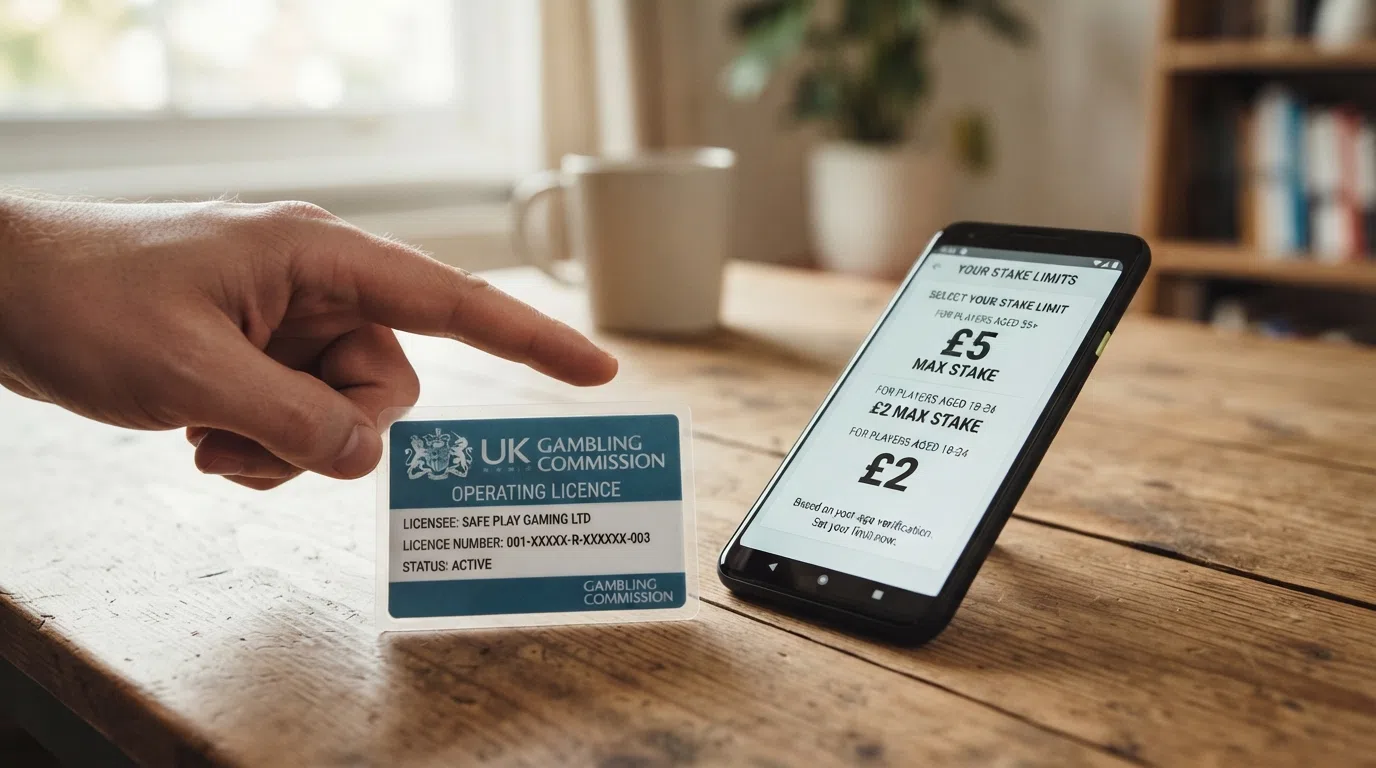
The three licensing objectives written into section 1 of the Gambling Act 2005 are short, and they are the foundation of every other rule in this guide. The first is preventing gambling from being a source of crime or disorder. The second is ensuring gambling is conducted in a fair and open way. The third is protecting children and other vulnerable persons from harm or exploitation. Every other code, condition, and technical standard derives from those three lines.
Legal and regulated: the Gambling Act and the GB licence
A “UK-licensed” casino is a market phrase, not a strictly accurate one. The Gambling Commission regulates Great Britain — England, Scotland, and Wales. Northern Ireland is outside the Commission’s remit and is governed by separate, older legislation. A reader in Northern Ireland looking for the same protections covered in this guide will not find them in the same form.
The GB licence is the licence every operator in the featured set holds. It is not a kitemark: it is a conditional permission to take GB customers, granted by the regulator, and revocable on breach. Operating without a GB licence is a criminal offence under section 33 of the Gambling Act 2005, punishable by up to 51 weeks’ imprisonment (6 months in Scotland), an unlimited fine, or both. The penalty is not theoretical — the Commission’s enforcement model is disruption-led, with cease-and-desist notices, search-engine delisting referrals (447,778 URLs were referred between April 2024 and June 2025), and pressure on domain registrars, hosts, and payment providers. The Commission does not hold statutory ISP-blocking powers, and the no-blocking legislation is proposed but not enacted. The enforcement gap matters for a reader evaluating an offshore brand that claims to take UK customers: the brand is committing a UK criminal offence, and the reader has no GAMSTOP, no ADR, and no Commission complaints route if the operator disappears with the balance.
The caps and bans every licensed casino follows
The table below is the full set of statutory limits and bans that apply to every UKGC-licensed remote casino. The numbers are the regulator’s, the dates are the in-force dates from the underlying instrument, and every operator in the featured set operates inside each one of them.
| Rule | What it caps or bans | Value (in force) |
|---|---|---|
| Online slot stake (25+) | Maximum stake per game cycle | £5 (from 9 April 2025) |
| Online slot stake (18–24) | Maximum stake per game cycle | £2 (from 21 May 2025) |
| Wagering requirement | Maximum multiplier on bonus amount | 10× (from 19 January 2026) |
| Mixed-product promotions | Cross-sell between casino, bingo, lottery, betting | Banned (from 19 January 2026) |
| Credit cards | All remote gambling funding | Banned (from 14 April 2020) |
| GAMSTOP self-exclusion | Minimum mandatory period; cancellation | 6 months / 1 year / 5 years / 5 years auto-renew; no early cancellation (mandatory since 31 March 2020) |
| Financial vulnerability check | Net deposit trigger | £150 over rolling 30 days (from 28 February 2025) |
| Spin speed | Minimum interval per game cycle | 2.5 seconds |
| Auto-play | Use on online slots | Banned (since 31 October 2021) |
| Remote Gaming Duty | Operator tax on GGY | 40% (from 1 April 2026) |
| Statutory levy | Operator contribution on GGY | 1.1% for remote casino (from 6 April 2025) |
The two age-banded stake caps are the sharpest line. A 24-year-old and a 25-year-old at the same casino on the same slot can have a £3 per-cycle difference in maximum stake, and the cap is enforced by the game rather than by the cashier. The 10× wagering cap is the line that has reshaped welcome offers in 2026. The 40% Remote Gaming Duty is the line that has reshaped operator economics; the statutory levy is the line that funds treatment, prevention, and research.
Verify any casino on the UKGC register
The public register is the single best check a reader can run. It is searchable by business name, trading name, domain name, or account number, and it carries 2,663 licensed gambling business records at the time of writing. The licence number, the licence type, the trading names under which the licence operates, and the status (active, suspended, revoked) are all on the public record. A reader who is comparing operators against a ranking like this one can confirm each row’s licence claim in under a minute.
A GB licence is not replaceable by a Curaçao, Malta, or Gibraltar licence. The 2014 point-of-consumption reform made the GB licence compulsory for any operator taking GB customers, regardless of where the operator is based, and the regulator’s enforcement record is the practical evidence that the rule is enforced. A reader who is tempted by an offshore brand’s offer should know what they are giving up: the dispute route, the ADR, the GAMSTOP opt-out, the vulnerability check, the safer-gambling prompt, and the Commission’s complaints process all live on the GB licence. An offshore brand runs on its own house rules.
Every UK casino carries a safety net — and the numbers show why
Every UKGC-licensed remote casino is required to offer the same set of safer-gambling tools, and the tools are not optional features that an operator can choose to bury. A deposit limit must be offered before the first deposit. Reality checks must pop up at the interval the player chooses. Time-outs — short self-exclusions of 24 hours to six weeks — must be available from the safer-gambling menu. GAMSTOP must be linked from every page that takes a deposit. The architecture is built in, not bolted on.
The prevalence numbers behind the architecture are not abstract. Five per cent of adults in England had a PGSI score of 1+ (at-risk or problem gambling) in the NHS Health Survey for England 2024, with men (7%) more than twice as likely as women (3%) to score in that range. The narrower problem-gambling figure (PGSI 8+) is estimated at 0.4% of adults in the Adult Psychiatric Morbidity Survey 2023–24, and at 2.5% of the GB adult population in the Gambling Survey for Great Britain 2023. The two surveys use different methodologies and report different rates, and the gap is one of measurement rather than a contradiction. The online-specific beat is GamCare’s: 82% of contacts to the National Gambling Helpline in 2026 cited online gambling specifically, the highest rate since 2021.
Deposit limits, reality checks and self-exclusion
A UK-licensed remote casino must prompt a player to set a financial limit before their first deposit. The prompt is mandatory, and the limit the player sets is binding — decrease requests have to be actioned immediately, and an increase request can only be applied after a cooling-off period. A standardised “gross deposit limit” must be offered with at least equal prominence to any other deposit-limit option. The architecture is designed to make the safer choice the easier choice.
Reality checks are session-level tools that pop up at an interval the player chooses — typically 30 minutes or an hour — to show total time played, total net losses or wins, and a prompt to continue or take a break. Time-outs are self-imposed short self-exclusions, ranging from 24 hours to six weeks, and the casino will not let the player back in until the period expires. GAMSTOP is the national self-exclusion register, with periods of six months, one year, five years, or five years with auto-renewal, and exclusion cannot be cancelled early. Once a player is on GAMSTOP, every UK-licensed operator is required to refuse their deposits for the chosen period, which is why the register is the strongest single tool in the safer-gambling stack.
What the prevalence numbers show in 2026
The 5% PGSI 1+ figure from the NHS Health Survey for England 2024 — men 7%, women 3% — is the most current at-risk prevalence number for England. The 0.4% PGSI 8+ figure from the Adult Psychiatric Morbidity Survey 2023–24 is the most current problem-gambling figure using a clinical instrument. The 2.5% PGSI 8+ figure from the Gambling Survey for Great Britain 2023 is the most current problem-gambling figure from a population-level gambling survey. The two problem-gambling numbers diverge because the surveys ask different questions, sample different populations, and weight differently. What they share is the order of magnitude: somewhere between half a per cent and three per cent of GB adults meet the threshold for problem gambling, and the figure that surfaces in clinical settings sits at the lower end of that band.
The online-specific beat is sharper. GamCare reported that 82% of contacts to the National Gambling Helpline in 2026 cited struggles with online gambling specifically, the highest rate since 2021. Treatment referrals hit 996 in January 2026, up 48% year-on-year. The number is not a population prevalence figure — it is the share of people who have already decided to call a helpline — but it is the clearest signal this guide can point to that the online-specific safety net is the right one to surface.
Where to get help, right now
GamCare runs the National Gambling Helpline on 0808 80 20 133, twenty-four hours a day, free from any UK phone. The line is the front door of the safer-gambling network, and a reader who is reading this section because the rest of the page has raised a question is the right reader to pick it up.
GambleAware funds the National Gambling Support Network, which provides treatment across Great Britain; in 2024–25, 46% of online clients presenting for help were casino slots players, up from 38% in 2022–23. NHS gambling-harm clinics operate in England, Scotland, and Wales. Gamblers Anonymous runs peer-led support groups in most major UK cities. GAMSTOP is the self-exclusion register, and registering is the right move for a reader who has decided that the next spin is not a decision they want to leave open to themselves.
How we chose and ranked the operators
The ten operators in the comparison table are the ten that satisfied four conditions in this research pass. The first is licence status: every operator in the ranking is on the UK Gambling Commission public register with an active remote casino operating licence. The second is offer visibility: every operator publishes a welcome offer for new customers in 2026 that research could verify against the operator’s own terms, with the exception of Betfair, which is included as a licensed mainstay but without a confirmed offer this run. The third is slot-library presence: every operator runs a slot catalogue that includes the main UK-licensed studios (NetEnt, Pragmatic Play, Big Time Gaming, Play’n GO and others) and reports a slot count. The fourth is editorial relevance: the operator is regularly surfaced in UK-facing comparison content and is a plausible choice for a reader comparing UK slot sites.
The ordering of the rows in the table is by relevance to the comparison rather than by an editorial score, and the H3s under the table follow the same logic. The expected-loss calculation in the bonus section uses the 888casino deposit match because it is the only percentage-match offer in the set, and the calculation requires a clear bonus amount, a clear wagering multiple, and a clear RTP assumption. Other offers in the table are simpler — a 0× wagering on a free-spins welcome requires no arithmetic to interpret.
The sources for the ranking are the UK Gambling Commission’s public register, the operators’ own published terms, and the specialist and media reviews named in the research for the table cells and the per-operator paragraphs. Where two sources disagreed (the Sky Vegas slot count, for example), both figures are noted and the disagreement is left to the reader to resolve.
How to pick a UK casino and play within the rules
A UK reader comparing slot sites in 2026 has one decision that comes before any other: whether the operator holds a UK Gambling Commission licence, and whether the licence is active on the public register. Everything else in this guide — the welcome offer, the wagering terms, the slot library, the mobile app — is conditional on that licence being in place. A reader who is comparing offers across the table and treating the licence as a given is making a reasonable assumption; a reader who is considering an operator outside the table should make the same check first.
The second decision is the offer’s net value, not its headline. A 200-spin welcome with 10× wagering and a £30 cashout cap is, in long-run terms, less generous than a 100-spin welcome with 0× wagering. A 100% deposit match at 10× is, on a £100 bonus and a 96.2% library RTP, an expected £38 of cost against the bonus — a real figure, not a marketing one. The 10× wagering cap is the reason the calculation lands where it does. A reader who treats the headline as the offer and ignores the wagering is paying for the gap.
The third decision is the session rules. The £5/£2 stake cap is the most direct shape the regulator has put on a session, and the 2.5-second spin floor is the second. The RTP spread on the seven slots this guide can publish with confidence runs from 96.09% to 99%, and a 3-percentage-point gap on the house edge is the difference between £3 and £0 of expected return on every £100 staked over a long run. No individual session follows that average, and a reader who treats any slot session as a single bet against the long-run figure is the reader most likely to be surprised.
The final decision is the safer-gambling framework, and this is the one the architecture makes automatic. A UK-licensed operator is required to offer deposit limits before the first deposit, reality checks during play, time-outs on request, and a GAMSTOP link on every deposit page. A reader who has decided to play has also, by the same licence, decided to use a casino that is built around the safer choice being the easier choice. The tools sit in the safer-gambling menu, and the menu sits one tap from the lobby. A reader who has set a deposit limit they cannot exceed, chosen a reality-check interval they cannot ignore, and registered with GAMSTOP if self-exclusion is the right call is the reader who is using the licence the way the licence was written to be used.
The next step is the reader’s. This guide does not pick a winner from the comparison table, because the right operator depends on which trade-off matters most to a particular reader — the deepest library, the cleanest welcome, the largest no-deposit open, the most generous free-spins ceiling, or the absence of a wagering multiple altogether. The right next step is to take the column that matters, look at the rows that win on it, and run the licence check before depositing.
Frequently asked questions about UK slot sites
What is the maximum I can bet per spin on UK online slots?
The maximum stake on a UK online slot is £5 per game cycle for players aged 25 and over, and £2 for players aged 18 to 24. The caps were imposed under SI 2025/215 and came into force on 9 April 2025 and 21 May 2025 respectively. A game cycle runs from initiation to either the loss of all staked money or the delivery of all winnings, and the cap covers the total staked within that cycle rather than a per-spin amount. The age band is the sharp edge: two adults at the same casino on the same slot can face different maximum bets.
What are wagering requirements, and what does the 10× cap change?
Wagering requirements are the volume of play an operator requires before bonus funds or bonus-derived winnings can be withdrawn. From 19 January 2026, the UK Gambling Commission capped wagering on all casino bonuses at 10× the bonus amount, and banned mixed-product promotional offers. A 100% deposit match at 10× on a £100 bonus requires £1,000 of qualifying turnover before the bonus and its winnings can be withdrawn. The 10× cap is the lowest in the modern UK market and the structural reason most welcome spins in 2026 carry 0× wagering on the spin winnings themselves.
Do I need to register or deposit before trying a UK slot in demo mode?
No. Demo mode on a UK-licensed casino runs in virtual credits with no cash value and no path to a withdrawal, and most operators expose it from the game lobby without requiring registration. A reader can run a slot for as long as they like in demo mode before signing up, and the only thing demo play does not give is the real-money session itself. No-deposit free spins are the closest real-money equivalent, and two operators in the featured set — Sky Vegas and Paddy Power — offer 50 no-deposit spins on registration with no card required.
How fast does GAMSTOP work, and can I cancel a self-exclusion early?
GAMSTOP registration takes effect immediately for every UK-licensed online operator, and the exclusion periods are six months, one year, five years, or five years with auto-renewal. Once the period is chosen it cannot be cancelled early; the minimum exclusion is six months, and the player will be refused deposits at every UK-licensed online operator for the duration. GAMSTOP has been a mandatory condition of every UKGC online operating licence since 31 March 2020, and a player who is on the register cannot deposit at any of the operators in the comparison table above.
Are my gambling winnings taxable in the UK?
No. Gambling winnings in the UK are not taxable on the player side, and have not been since the player-side betting duty was abolished in 2001. The tax burden sits entirely on operators, who pay Remote Gaming Duty (40% of gross gambling yield from 1 April 2026) and the statutory levy (1.1% of GGY for remote casino from 6 April 2025). A UK player who withdraws a casino balance pays no UK tax on the withdrawal, and the operator deducts nothing at source.
Does the credit card ban also cover e-wallet deposits?
Yes. The credit card ban that has been in force for all remote gambling in Great Britain since 14 April 2020 extends to credit-card-funded e-wallet payments, under LCCP licence condition 6.1.2. A player who tops up a PayPal or other e-wallet account with a credit card and then pays a casino from the e-wallet will be declined at the casino cashier. The rule is enforced at the payment-processor level, and no UK-licensed operator offers a credit card funding route in 2026.
Do more free spins always mean a better bonus?
No. A 200-spin welcome with 10× wagering on the winnings and a £30 max cashout cap is, in net terms, less generous than a 100-spin welcome with 0× wagering. The expected return on 200 spins at £0.10 on a 96% slot is £19.20; the 10× wagering requirement on the winnings imposes an additional expected cost of around £7.30 on those winnings, and the £30 cashout cap turns a clean £30 win into the maximum the offer can ever pay. The number of spins, the per-spin value, the wagering multiplier, the cashout cap, and the validity window all matter, and the headline figure is the least informative of the five.
Slots – fastestpayout-casinos-uk
Content created by the «fastestpayout-casinos-uk» team