
USDC Casinos for UK Players: The Offshore Landscape, Compared
 Available in GB
A British player who wants to deposit USD Coin at a casino in 2026 will not find a single UK Gambling Commission-licensed brand that will take it. Every site on this page runs on a Curaçao or equivalent offshore licence; every deposit sits outside the British regulatory perimeter; and every protection British players take for granted at home — GamStop self-exclusion, the Commission complaints route, the £5/£2 slot stake cap, the 10× wagering ceiling on bonuses, the mandatory deposit-limit prompt — falls away the moment a player crosses that perimeter. The bonus is faster payouts, wallet-level privacy and stablecoin denomination that does not swing with bitcoin. The cost is total: no domestic redress, no mandatory responsible-gambling tools, and an operator whose licence is enforced by a regulator that has no jurisdiction over a UK player’s bank account.
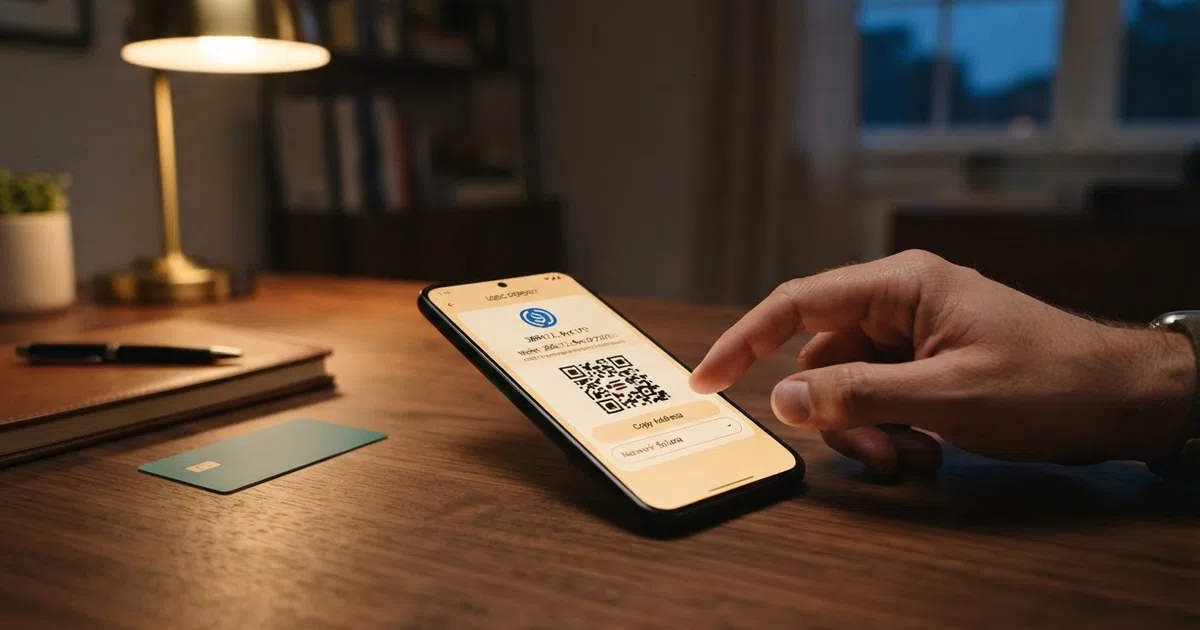
What follows is a working comparison of the ten USDC-accepting brands UK players encounter, the payment workflow that makes or breaks the experience, what the bonus terms really cost in required play, and the regulatory picture that explains why the licensed and offshore markets sit on opposite sides of a wall the UKGC is only now starting to look at.
*Current as of September 8, 2026 · licence claims verified against the UK Gambling Commission public register and the operators’ own terms.*
What USDC Casinos Are — and Why You Will Not Find a UKGC-Licensed One in 2026
USDC Explained: The Stablecoin That Keeps Your Deposit Value Steady
USDC — USD Coin — is a US dollar-pegged stablecoin issued by Circle, backed one-for-one by cash and short-dated US Treasuries. Every unit in circulation has a corresponding dollar sitting in reserve, audited monthly. That structure removes the first problem crypto gambling has carried since bitcoin: a deposit worth £1,000 at 10 a.m. can be worth £920 at noon if the player stops to check a price. With USDC, the deposit value does not move. It also removes the second problem: the player is not exposed to overnight market gaps between the moment they deposit and the moment they cash out.
USDC is not a single coin on a single chain. Circle issues native USDC on more than thirty networks — Ethereum (the original ERC-20 token), Solana, Base, Polygon, Arbitrum, BNB Chain and others. Each network settles in different times and at different costs. On Solana, a transfer confirms in under a second for a fraction of a US cent; on Ethereum the same transfer costs several dollars in gas, sometimes well over ten, depending on network congestion. The trade-off is that Solana is a younger chain with different wallet tooling, and Ethereum remains the deepest pool of liquidity. The mechanics of the deposit and the cost of moving money both depend on which of these networks a player picks.
The peg has held through one serious stress test. During the March 2023 Silicon Valley Bank crisis, USDC briefly traded down to roughly $0.87 as Circle confirmed that $3.3 billion of its reserves sat at SVB. The peg recovered within days, and Circle’s subsequent reserve restructuring has reduced the bank’s exposure. The episode was a reminder that a stablecoin is only as stable as the assets and banking partners behind it — not an abstraction a player is asked to absorb, but a real tail risk worth holding in mind.
How USDC Casinos Work: Deposits, Gameplay and Cashouts in Five Minutes
The end-to-end flow is short, and the only genuinely hazardous step is the first one. A player creates an account — the operator will either ask for identity verification up front, ask for it at withdrawal, or in some cases not ask at all. The player then opens the cashier, selects USDC and chooses a network. The casino generates a deposit address on that specific network. The player opens their own wallet, picks the matching network, and sends.
That matching step is where money disappears. Sending USDC on Ethereum to a casino address that only accepts Solana does not bounce back or trigger a warning. The funds arrive on a chain the casino does not monitor and are not credited. Recovery, if it happens at all, runs through the casino’s support team and may depend on whether their treasury holds the receiving address on that other chain. Players who skim the network field and send anyway have lost four-figure sums that no one will reimburse.
Once the deposit confirms, gameplay is identical to a fiat casino. Slots spin, blackjack hands deal, live-dealer tables stream. The cashier balance shows in USDC; the games price in USDC. At the end, a withdrawal reverses the process: the player requests a payout, receives a wallet address prompt, and USDC arrives — typically in minutes, as the operator’s payout sections below show — to whichever compatible wallet the player specifies. The win or the loss is settled in stablecoin. The player can then convert to pounds through any FCA-registered exchange, or hold the USDC and convert later.
USDC vs Bank Cards vs E-Wallets: Why Players Switch to Stablecoins
Three things drive the switch. The first is payout speed. A bank transfer from a UKGC-licensed casino typically clears in one to three working days; a USDC withdrawal on Solana can settle in under a minute. E-wallets are faster than bank transfers but rarely match that. The second is payment privacy. Funding a casino from a debit card writes the gambling merchant on the player’s bank statement. Funding from a USDC wallet writes a blockchain transaction to a casino-controlled address, and the player’s bank sees only a transfer to a crypto exchange. The third is the credit-card ban, which since 14 April 2020 (LCCP condition 6.1.2) has stopped every UK-licensed operator from accepting credit cards for gambling — and which, by design, applies only to operators within the UKGC’s reach. At an offshore site, the same UK credit card would not be accepted by the issuer’s processor, but the player can fund with USDC and bypass the question entirely.
The cost is the regulatory gap. A UKGC-licensed casino owes the player a deposit-limit prompt before the first deposit, a real-time financial vulnerability check at modest spend, and a Commission complaints route if the operator withholds funds. The offshore USDC casino owes the player nothing the UKGC enforces. Speed and privacy are real, but they sit on the same side of the balance sheet as the protections the player gives up.
The Ten Crypto Casino Brands Taking Stablecoin Deposits from Britain in 2026 — Tested Side by Side
The table below covers every brand in the comparison. None holds a GB operating licence — the UKGC public register, last updated 29 July 2026, was checked against each name. The wagering column lists the multiple applied to deposit plus bonus unless noted otherwise; the validity column lists the window in which the wagering must be cleared. The game-provider column lists the studios named in each operator’s lobby at the time of research. Empty cells reflect fields the available sources did not confirm.
| Operator | Licence | USDC Networks | Welcome Bonus | Wagering | Bonus Validity | Game Providers |
|---|---|---|---|---|---|---|
| BC.Game | Curaçao | ETH, BSC, SOL | Up to $20,000 across 4 deposits (180%-360% scaling) + 400 FS | 45× (deposit + bonus) | 30 days | Pragmatic Play, Evolution, Hacksaw, Nolimit City, BGaming |
| Stake.com | Curaçao | ETH, BSC, SOL | 200% up to $1,000 OR lifetime 3.5% rakeback (0×) | 40× (match) / 0× (rakeback) | Match: standard / rakeback: lifetime | Pragmatic Play, Evolution, Hacksaw, Nolimit City, Push Gaming |
| Cloudbet | Curaçao | ETH + other chains | Up to $2,500: 10% rakeback + daily cash drops for 30 days | 0× (all rewards paid as cash) | 30 days | Evolution, Microgaming, NetEnt, Play’n GO, Pragmatic Play |
| Jackbit | Curaçao | USDC (13 cryptos total) | 100 wager-free FS on Hot Chilli Bells ($50 min deposit) | 0× on FS / 1× on deposit | 24h to activate | Pragmatic Play, Evolution, Hacksaw, Nolimit City, Push Gaming |
| Roobet | Curaçao | ETH, SOL, TRX | 20% cashback on first 7 days | 0× (paid as cash) | 7 days | Pragmatic Play, Evolution, Hacksaw, Nolimit City, Push Gaming |
| Shuffle | Curaçao | ERC-20, BEP20, SOL, POL, Base, ARB (6 networks) | 100% up to $1,000 | 35× (deposit + bonus) | 30 days | Pragmatic Play, Evolution, Hacksaw, Nolimit City |
| FortuneJack | Curaçao | USDC + 10 other coins | 200% up to $2,000 (USDC) OR 110% up to 400 mBTC + 250 FS (crypto) | 30-40× (deposit + bonus) | 7-14 days | Evolution, Pragmatic Play, Betsoft, Yggdrasil |
| 1xBit | Curaçao | USDC + 20+ cryptos | 100% up to 1 BTC equivalent | 35× | — | Pragmatic Play, Evolution, Betsoft, Endorphina |
| mBit Casino | Curaçao | USDC not confirmed (listed: BTC, ETH, LTC, DOGE, USDT, BCH) | 110% up to 1 BTC + 300 FS | 35× | — | Pragmatic Play, Evolution, Betsoft, BGaming |
| Rainbet | Not confirmed | ETH, BSC, SOL | — | — | — | — |
The structure of the offers tells a story. Three of the ten — Cloudbet, Jackbit (on its free spins) and Roobet — run zero-wagering mechanics, paying rewards in real cash. Stake.com’s rakeback is the same. The rest layer a 35× or 45× turnover requirement on top of a deposit-and-bonus base, which is exactly the kind of structure the UKGC’s 10× wagering cap, in force from 19 January 2026, was designed to prevent at licensed sites. A 45× multiple multiplies the required play by 4.5× compared to a British standard; that gap is the trade a player is making when they leave the regulated market.
BC.Game
BC.Game is the most generous welcome package in the set, scaled across four deposits and topping out at $20,000 in matched funds plus 400 free spins. The scaling is what separates it from a flat 100% match: the first deposit earns 180%, the second 240%, the third 300%, and the fourth 360% — each subject to a $5,000 cap on the matched amount. The wagering requirement of 45× applied to deposit plus bonus is among the steepest on the page. A player who takes the full first-deposit match at 180% up to $500 and deposits $278 in real money is looking at $778 of bonus-eligible balance, against which the 45× multiplier demands $35,010 in qualifying turnover before withdrawal.
Payouts on Solana clear in 5–15 minutes per the operator; on Ethereum the same withdrawal takes 10–30 minutes. Minimum deposit is a low $10 equivalent, which makes the casino accessible to small-stake players. The provider list — Pragmatic Play, Evolution, Hacksaw, Nolimit City and BGaming — covers the bulk of the British player’s likely wish list. For a player focused on high-volume wagering, BC.Game rewards the grind; however, for those staking smaller amounts, the 45× playthrough requirement on a modest deposit can be difficult to clear, potentially making the bonus less attractive.
Stake.com
Stake.com is the brand recognition in the set: a Curaçao-licensed operator that has run a high-profile sponsorship programme for years, accepting USDC on Ethereum, BSC and Solana. The headline offer is a 200% first-deposit match up to $1,000 at 40× wagering on deposit plus bonus — a generous headline, a hard playthrough. The alternative is a lifetime 3.5% rakeback paid in cash with zero wagering: a smaller dollar value in the short term, but no playthrough and no expiry, and it is paid on every bet the player places regardless of outcome.
TGP Europe Limited, which operated the white-label Stake.uk.com site under a UKGC licence, surrendered that licence on 15 May 2025 after a £3.3 million penalty for anti-money-laundering failures and insufficient business-partner checks. Stake.com itself — the Curaçao entity — has never held a UKGC licence. The UKGC enforcement action targeted the white-label partner, not Stake.com’s main operation, but it is the closest the British regulator has come to a Stake brand, and the case is worth knowing if a player is evaluating the operator’s compliance posture. For a player who wants the rakeback over the match and is comfortable with Curaçao-only oversight, Stake.com offers one of the cleaner long-term reward structures available.
Cloudbet
Cloudbet runs a 30-day programme rather than a single deposit match. The headline is up to $2,500 in value, split between a 10% rakeback on losses and daily cash drops, with zero wagering on every reward paid out. A player does not need to clear any playthrough to withdraw what they earn — the rewards arrive as real cash, not as bonus funds with strings attached. Auto-approval on verified accounts produces a 10–20 minute payout window.
The provider list leans on Evolution, Microgaming, NetEnt, Play’n GO and Pragmatic Play, which makes Cloudbet one of the better-stocked live-dealer rooms in the comparison. The trade-off is the absence of a large upfront match: a player who values a fat welcome balance over sustained cashback will not find it here. For the player who would rather keep every pound of winnings withdrawal-ready, the zero-wagering structure is hard to beat.
Jackbit
Jackbit’s offer is a single product — 100 free spins on Hot Chilli Bells — and it is the cleanest in the set. Wagering on the free-spin winnings is zero; the player gets to keep what they win up to a $100 cap. A 1× wagering requirement applies to the deposit itself, and the spins must be activated within 24 hours. The $50 minimum deposit is the entry fee; the standard minimum for non-bonus play is $20.
Thirteen cryptocurrencies are supported, with USDC among them. Withdrawals take 15–30 minutes on crypto and the operator publishes a ceiling of €7,500 per week and €15,000 per month — a real limit that high-stakes players will hit, and a structural difference from operators that publish no fixed cap. For a player who wants the simplicity of a single, finite bonus with no hidden rollover, Jackbit delivers. The $100 cap on free-spin winnings is the part of the offer that caps the upside.
Roobet
Roobet is the other zero-wagering brand in the set, paying a 20% cashback on the first seven days of play. The cashback is calculated on net losses and paid in real cash — no playthrough, no cap, no expiry beyond the seven-day window. There is no deposit-match bonus and no free spins attached to the current offer, which is a structural contrast to BC.Game or FortuneJack.
USDC is accepted on Ethereum, Solana and Tron, and altcoin withdrawals clear in 5–20 minutes. The provider list — Pragmatic Play, Evolution, Hacksaw, Nolimit City and Push Gaming — covers the standard high-quality stable. The 20% cashback offer is transparent: it functions as direct cash insurance for the first week of play, avoiding the typical bonus-fund restrictions that often make conversion difficult for players.
Shuffle
Shuffle accepts USDC on six networks — ERC-20, BEP20, Solana, Polygon, Base and Arbitrum — the widest chain coverage of any operator in the comparison. That breadth matters for a player who holds USDC on a less common network and does not want to bridge to a casino’s preferred chain. The welcome is a clean 100% match up to $1,000 at 35× wagering on deposit plus bonus, with a $1,000 maximum cashout from the offer and 30 days to clear.
Payouts on Solana clear in roughly 30 seconds per testing, and on Ethereum in 3–5 minutes — among the fastest confirmed in the set. Minimum deposit is $20. The provider list covers Pragmatic Play, Evolution, Hacksaw and Nolimit City. The $1,000 cap on winnings is the part of the offer a player needs to read closely: even if a spin pays £5,000, the bonus structure limits withdrawal from the bonus to £1,000, and any winnings beyond that are typically forfeit on bonus-funded play.
FortuneJack
FortuneJack is a long-running crypto casino that runs two welcome tracks in parallel. The USDC-specific track is a 200% match up to $2,000 at 30–40× wagering on deposit plus bonus, with 7–14 days to clear. The alternative crypto track is 110% up to 400 mBTC plus 250 free spins, for a player who would rather collect a larger spin bundle than a USDC-denominated match. Both are valid; neither is free.
The supported-coin list runs deep: USDC alongside BTC, ETH, USDT, LTC, TRX, SOL, DOGE, DASH, BNB and Polygon. Payouts on LTC clear in under an hour; USDC withdrawals are similar. The provider list — Evolution, Pragmatic Play, Betsoft, Yggdrasil — is a touch narrower on slots than BC.Game or Stake, but Evolution’s live-dealer presence covers the table-game side. The 7–14 day validity is tight compared to the 30 days most competitors offer; a player who cannot clear the playthrough in that window forfeits the bonus.
1xBit
1xBit is the broadest coin roaster in the comparison — twenty-plus cryptocurrencies including USDC, BTC, ETH, LTC, DOGE, XRP, USDT, SOL and others. The welcome is a 100% match up to 1 BTC equivalent at 35× wagering. The wagering multiple is the part of the offer a player needs to read; 35× on a Bitcoin-denominated bonus, when bitcoin’s price is volatile, can produce a target turnover that moves against the player between deposit and clearance.
Bonus validity, free-spin inclusion and maximum cashout were not confirmed in the available research. The operator’s Payouts on XRP are under two hours; USDC is comparable. The provider list covers Pragmatic Play, Evolution, Betsoft and Endorphina. 1xBit is the breadth play — a player who holds multiple coins and wants one wallet to hold them gets that here, at the cost of an offer whose terms are not fully documented in the public sources reviewed for this page.
mBit Casino
mBit’s listed cryptocurrencies are BTC, ETH, LTC, DOGE, USDT and BCH. USDC support is not confirmed in the available research snippets, and a player who needs USDC specifically should verify acceptance in the cashier before depositing anything else. The welcome offer is a 110% match up to 1 BTC plus 300 free spins at 35× wagering, which is competitive on the spin count but carries the usual playthrough burden on the matched amount.
Payouts on LTC clear in under two hours. The provider list covers Pragmatic Play, Evolution, Betsoft and BGaming. Bonus validity and maximum cashout were not confirmed in the available research. mBit is the cautious option: a long-running BTC-native casino where USDC support is plausible but unverified, and where the bonus terms need a direct check at the cashier before commitment.
Rainbet
Rainbet is the newest tracked entrant and the most under-documented in the comparison. DappRadar’s on-chain tracking records $3.66 million in USDC deposit volume, which confirms that real players are using the platform with stablecoin funds, but the operator’s licence, welcome bonus, wagering terms, payout speed, minimum deposit, withdrawal limits and game-provider list were not confirmed in the available research. A player who encounters Rainbet should treat it as an unvetted option: presence is real, detail is thin, and the gap between $3.66M in tracked volume and a fully documented operator profile is the gap the player is being asked to bridge on their own.
The three networks confirmed by on-chain activity are Ethereum, BSC and Solana. Nothing else can be said with confidence from the sources reviewed for this page. Rainbet is the newer entrant in the market; for a player prioritizing brand history and well-established public records, the other featured operators currently offer more extensive documentation.
Getting Money In and Out: Why USDC Payouts Leave Bank Transfers in the Dust
How to Deposit USDC at a Crypto Casino — Wallet, Network, Confirm
The deposit flow is short but unforgiving. Step one: fund a wallet with USDC, typically through a UK-registered crypto exchange. The FCA’s regulatory regime for cryptoassets is expected to come into effect from 25 October 2027 under the the Financial Services and Markets Act 2000 (Cryptoassets) Regulations 2025, so for now the UK cryptoasset market runs on the anti-money-laundering registration regime the FCA inherited in 2020 — a registration is not the same as a full authorisation, and the registered firm is not the same as one carrying the full permissions a bank would carry. A player should check the exchange’s FCA register entry before sending money. Step two: open the casino cashier, select USDC, and pick a network. Step three: open the wallet, paste the casino’s deposit address, and pick the same network. Step four: send. Step five: wait for confirmations — under a second on Solana, a few seconds to a few minutes on Ethereum depending on congestion.
The fee profile varies by network. Solana settles in under a second for a fraction of a US cent per transaction. Ethereum ERC-20 gas commonly runs $2–15+ depending on congestion; a $20 deposit on Ethereum pays 10–75% of its value in gas before a spin is even placed. Base and Arbitrum are lower-cost Ethereum-compatible alternatives; BNB Chain and Polygon are mid-cost with decent operator support. Minimum deposits across the comparison run from $10 at BC.Game to $50 at Jackbit (for the bonus); the standard minimum for non-bonus play is typically $20.
USDC Withdrawals: How Fast Your Money Really Arrives
The advertised speeds and the tested speeds are close enough to be useful. Shuffle’s withdrawal on Solana is around 30 seconds; on Ethereum, 3–5 minutes. BC.Game runs 5–15 minutes on Solana and 10–30 minutes on Ethereum. Cloudbet’s auto-approval on verified accounts produces a 10–20 minute window. Jackbit is 15–30 minutes on crypto. Roobet sits at 5–20 minutes for altcoin withdrawals. FortuneJack’s LTC payouts clear in under an hour; USDC is comparable. 1xBit’s XRP withdrawals run under two hours; USDC is similar. mBit’s LTC payouts are also under two hours.
What slows a withdrawal is the operator side, not the chain. Manual approval queues are the usual culprit: a payout that should clear in five minutes can sit for twelve hours if the operator’s risk team is short-staffed or if a player triggers a manual review. Network congestion is the other variable — Ethereum at peak demand can take longer than its off-peak baseline, and a player who needs the money in twenty minutes rather than two hours will pick a non-Ethereum chain for that day.
The structural difference from a UKGC-licensed casino is the absence of a bank leg. USDC settles to a wallet, not to a UK bank account, and the player can convert to pounds at their own pace rather than waiting for the operator’s payment processor to push funds through Faster Payments.
Network Selection: Solana vs Ethereum vs Base — What Each Costs You
| Network | Confirmation Time | Typical Fee per Transaction | Featured Casinos Supporting This Network |
|---|---|---|---|
| Solana | Sub-second | Under $0.01 | BC.Game, Stake.com, Roobet, Shuffle, FortuneJack, Rainbet |
| Ethereum (ERC-20) | 1–5 min | $2–15+ | BC.Game, Stake.com, Cloudbet, Roobet, Shuffle, FortuneJack, 1xBit, mBit, Rainbet |
| Base | Seconds | Sub-$1 typically | Shuffle |
| Arbitrum | Seconds | Sub-$1 typically | Shuffle |
| BNB Chain (BEP-20) | Seconds | Sub-$1 typically | BC.Game, Shuffle, 1xBit, Rainbet |
| Polygon | Seconds | Sub-$0.10 | Shuffle, FortuneJack, 1xBit |
| Tron (TRX) | Seconds | Near-zero | Roobet (note: Circle discontinued native USDC on Tron in 2024 — bridged USDC may still be supported by individual operators) |
The table is the clearest single summary of where the comparison splits on cost. Solana is the everyday answer for casino play — the fees are a rounding error, the confirmations are immediate, and every major operator in the set supports it. Ethereum is the deep-liquidity answer — the network the player already holds USDC on, at the cost of a fee that makes small deposits uneconomic. Base and Arbitrum are the Ethereum-compatible alternatives when a player wants the tooling of Ethereum without its gas. Polygon sits in the middle. Tron remains in the comparison because Roobet accepts USDC on it, but the player should note that Circle discontinued native USDC on Tron in 2024; what an operator lists as “USDC on Tron” is typically a bridged variant, and the player should treat the difference between native and bridged as a real distinction before sending.
Deposit Minimums, Maximums and the Limits That Actually Matter
Minimum deposits are the easy part. BC.Game’s $10 equivalent is the lowest in the set, $20 is the standard for most operators, and Jackbit’s $50 is the high mark — and that $50 is specifically for the free-spin bonus, not the standard cashier. A player who skips the bonus pays the $20 standard at Jackbit too. The cost of low minimums is that they make the network-fee problem worse on Ethereum: a $10 deposit with a $5 gas fee is paying 50% in transaction cost before a bet is placed.
Withdrawal limits are the part operators quote and players misread. Jackbit publishes €7,500 per week and €15,000 per month — a real ceiling, published, enforced. Stake.com publishes no fixed limit per withdrawal, but large withdrawals still attract manual approval. Cloudbet, Shuffle and FortuneJack publish per-coin limits that vary by token and tier; the high-roller should ask the operator’s VIP team before assuming an absence of limits is the absence of a process. The hidden ceiling at any offshore operator is the manual-approval threshold: above a certain size, even a casino with no published cap will pause a withdrawal for review, and the player waits on the operator’s pace.
Fees You Pay and Fees You Avoid: Gas, Exchange and Casino Spreads
The cost stack runs in three layers. The first is network gas: sub-penny on Solana, dollars on Ethereum, sub-dollar on Base, Arbitrum, BNB Chain and Polygon. The second is the exchange spread — the gap between the mid-market USDC/GBP rate and the rate the exchange offers the player, which is typically 0.1–0.5% on a registered venue and higher on a smaller one. The third is the operator’s own fees. Most operators in the comparison do not charge a deposit or withdrawal fee beyond the network gas; the player who sees a fee line on a withdrawal confirmation is paying for the operator’s custodian conversion, and that is worth asking about before committing volume.
The proportional damage of network fees is what makes network selection a money decision rather than a technical one. A $20 deposit on Solana pays fractions of a cent in gas. A $20 deposit on Ethereum pays $2–15+. The same dollar fee on a $2,000 deposit is rounding error. A player with a small bankroll should default to Solana or a non-Ethereum chain for the same reason a player with a large bankroll can afford not to think about it.
Why Your USDC Casino Bonus Is Smaller Than the Headline Number
The headline bonus is a marketing number. The real cost is the turnover a player must generate before any of it converts to withdrawable cash. Take BC.Game’s first-deposit match: 180% up to $500 means a deposit of $278 in real money produces a bonus-eligible balance of $778. The 45× wagering on deposit plus bonus is $35,010 in required play before withdrawal. On a representative slot stake of $0.50 per spin with a 5-second interval, that is 70,020 spins, or roughly 10 minutes of continuous play. On a $5 stake, the same playthrough takes 7,002 spins and 9.7 hours. The bonus is “free money” only if the player values the time at zero.
A representative worked example: take Shuffle’s 100% match up to $1,000 at 35× wagering on deposit plus bonus. A $1,000 deposit produces a $2,000 bonus-eligible balance. The 35× multiplier demands $70,000 in qualifying turnover. On a $1 stake per spin and a 5-second interval, that is 70,000 spins — roughly 10 minutes of play. The expected loss over that turnover, assuming a representative slot RTP of 96%, is 4% of $70,000, or $2,800. A player who clears a $1,000 bonus has, on average, paid $2,800 for the privilege, and the bonus arrives as $1,000 of withdrawable cash. The arithmetic is the cost, and the bonus is the marketing word on top of it.
Welcome and Deposit-Match Bonuses — the Numbers Behind the Percentage
- BC.Game — 180-360% scaling across four deposits, up to $20,000 total, 45× wagering, 30-day validity.
- Shuffle — 100% up to $1,000, 35× wagering, 30-day validity, $1,000 cap on bonus-derived winnings.
- FortuneJack (USDC track) — 200% up to $2,000, 30-40× wagering, 7-14 day validity.
- Stake.com — 200% up to $1,000 at 40× wagering, or lifetime 3.5% rakeback at 0× wagering as the alternative.
- Cloudbet — 10% rakeback plus daily cash drops for 30 days, 0× wagering, paid in cash.
- Roobet — 20% cashback on first 7 days, 0× wagering, paid in cash.
- Jackbit — 100 wager-free free spins, 0× on winnings, 1× on deposit, $100 cap.
- 1xBit — 100% up to 1 BTC equivalent, 35× wagering, validity not confirmed.
- mBit — 110% up to 1 BTC plus 300 free spins, 35× wagering, validity not confirmed.
- Rainbet — terms not confirmed in available research.
The UKGC’s 10× wagering cap on bonuses, in force from 19 January 2026 under LCCP SR Code 5.1.1, is the comparison point that makes the offshore numbers legible. A 10× bonus is a one-week project; a 45× bonus is a full-time job. The 35–45× multiples on the matches above are 3.5–4.5× what a UKGC-licensed operator can offer. The player is paying that multiplier in time, in expected loss, or in both.
Wagering Requirements: How 35× Turns a $1,000 Bonus into a Second Job
A 35× wagering requirement on a $1,000 bonus plus a $1,000 deposit means the player must generate $70,000 in qualifying turnover before any of the bonus converts to cash. On a representative slot at 96% RTP, the expected loss on $70,000 in turnover is $2,800 — more than the bonus itself. The 45× equivalent is $90,000 in turnover and $3,600 in expected loss. The 0× exceptions — Cloudbet’s rakeback, Roobet’s cashback, Jackbit’s free-spin winnings, Stake’s rakeback — do not impose a playthrough because they are paid in cash, not as bonus funds.
The UKGC’s 10× cap is what the British market considers the boundary of fair. Offshore multiples of 35–45× are not illegal; they are simply the terms a player accepts when they leave the licensed perimeter. The math, not the regulator, is what makes a high-wagering bonus expensive; the regulator is what makes a 10× bonus a 10× bonus and not a 35× one.
Slots, Blackjack and Live Dealer: The USDC Games Worth Your Time
The provider overlap across the ten operators is striking. Pragmatic Play, Evolution, Hacksaw and Nolimit City appear across the bulk of the set. Evolution’s live-dealer studios cover the table-game side for eight of the ten; the other two either do not list their live providers in the public source or run a narrower live offering. Push Gaming and BGaming appear at the larger brands. The set is, in practice, the same catalogue of studios dressed in different lobby skins.
The total online Gross Gambling Yield in Great Britain reached £1.55 billion in Q4 FY2025-26 (January to March 2026), with online slots growing 12% year-on-year. That is the licensed market. The offshore USDC casino market sits outside that figure, but the game catalogue feeding both is largely the same — the same Pragmatic Play and Evolution titles ship to the same studios under the same commercial terms.
USDC Slots: The Studios, the Titles and What Returns You Can Expect
Pragmatic Play, Hacksaw, Nolimit City, Push Gaming and BGaming are the recurring studios across the comparison. Evolution’s slot division and NetEnt titles appear at Cloudbet. The depth of slot selection at any one of the larger operators runs into the low thousands; the depth at the smaller ones is in the high hundreds. Per-title RTP data was not carried in the research, so the comparison here is qualitative — every operator has the same major studios, and the player is choosing on theme, mechanic and stake size rather than on return percentage.
The UKGC’s statutory stake cap of £5 for players aged 25 and over and £2 for players aged 18–24, in force from 9 April 2025 and 21 May 2025 respectively, applies only to UKGC-licensed sites. None of the operators in the comparison is bound by that cap. A player at an offshore USDC casino can stake more per spin than a UKGC-licensed player can at a domestic site. The structural consequence is that the same bankroll lasts a different number of spins depending on which side of the perimeter the player is on.
Table Games and Live Dealer: Blackjack, Roulette and Baccarat with USDC
Evolution is the dominant live-dealer provider in the comparison, appearing at BC.Game, Stake.com, Cloudbet, Jackbit, Roobet, Shuffle, FortuneJack, 1xBit and mBit. The standard live table spread is blackjack, roulette, baccarat and game-show titles. USDC stakes convert at the table seamlessly because of the dollar peg — a $10 bet on a blackjack hand is a $10 bet, with no conversion layer between the cashier and the felt.
The UK slot stake cap does not apply to table games or live casino at either UKGC or offshore sites. The 2.5-second minimum spin interval and the ban on features that speed up play apply at UKGC sites only; offshore live-dealer tables run on the provider’s standard cadence, which is the same as at UKGC sites for the major studios.
Crypto Anonymity Meets Casino KYC: The Privacy USDC Actually Delivers
USDC gives a player two distinct kinds of privacy, and they should not be confused. The first is payment privacy: a blockchain transfer to a casino address does not write a gambling merchant on a bank statement. The second is identity privacy: the casino does not know the player’s name, address or date of birth. The first is real at every USDC casino. The second varies.
Operators split into three groups. The first group, the no-KYC or light-KYC operators, asks for an email address and processes withdrawals to a wallet without further verification up to a limit. The second group verifies identity at withdrawal but not at deposit — a player can play, and only proves who they are when they try to cash out. The third group, which includes the more compliance-conservative brands, verifies before first deposit. None of the featured operators are confirmed to be in the first group without a withdrawal limit; the player should expect to verify at some point in the journey, and the higher the withdrawal, the more likely verification is to be triggered.
The practical limit of no-verification play is the withdrawal ceiling. An operator that does not verify at deposit will still verify before releasing funds above a certain size, and the verification is the operator’s KYC obligation, not a courtesy. The player who wants privacy is buying time and obscurity, not anonymity in the strong sense.
USDC Casinos on Your Phone: Mobile Play Without the App-Store Runaround
The featured operators are browser-based. None appears in the Apple App Store or Google Play as a downloadable gambling app, partly because Apple’s App Store policy and Google’s Play Store policy restrict real-money gambling apps to operators licensed in the relevant jurisdiction, and a Curaçao licence does not clear that bar for a UK-distributed app. The standard access route is a mobile browser — Chrome on Android, Safari on iPhone — opening the casino’s responsive site.
Mobile play is functionally identical to desktop. The lobbies are responsive; the live-dealer streams scale to portrait or landscape; the cashier works the same way and the wallet-to-casino flow is identical. The difference is that the player is reading a casino address off a smaller screen and pasting it into a wallet, which is the part of the flow where a network mismatch is most likely to slip through.
New USDC Casino Launches in 2026 — What Is Fresh This Year
Rainbet is the newest tracked entrant in the comparison. DappRadar’s on-chain monitoring records $3.66 million in USDC deposit volume flowing through the platform, which is enough to confirm that the brand is live, that it is processing USDC, and that real players are using it. The research did not confirm a licence, welcome bonus, wagering terms, payout speed, minimum deposit, withdrawal limits or game-provider list. Rainbet is, in this comparison, the operator whose presence is real and whose detail is thin.
A player who wants to evaluate a new USDC casino before depositing should look for three things: a published licence and licence number that resolves on the regulator’s public register; bonus terms that include the wagering multiple, validity window, game weighting and maximum cashout in plain language; and a withdrawal process that does not impose manual approval on amounts below the player’s intended stake. Rainbet is not the only new brand the player will encounter; it is the only one the research tracked with a confirmed USDC volume. The established names — BC.Game, Stake, Cloudbet — continue to dominate the comparison on documentation depth.
The Legal Reality: Why Every USDC Casino Available to UK Players Operates Offshore
The UK Gambling Commission is the single statutory regulator for gambling in Great Britain. Its powers sit on a foundation of the Gambling Act 2005, extended to remote operators by the Gambling (Licensing and Advertising) Act 2014, which brought every casino serving British customers into the point-of-consumption licensing regime. The Commission’s source-of-funds, anti-money-laundering and LCCP requirements make direct crypto deposits effectively impossible at any operator legally serving Great Britain. The Commission classifies crypto-assets as a “high risk” payment method, and operators must treat customer funds originating from crypto as a high-risk indicator requiring enhanced due diligence. A brand that wants to accept USDC and serve the UK legally would have to satisfy a regulatory standard that, in practice, no current licence holder has been able to meet.

In February 2026, UKGC executive director Tim Miller announced at the Betting and Gaming Council AGM that the Commission had asked its Industry Forum to explore a “sensible” pathway for crypto as a consumer payment option, subject to existing licensing objectives. The review is exploratory, not a rule change. The the Financial Services and Markets Act 2000 (Cryptoassets) Regulations 2025 were laid before Parliament in December 2025; if approved, the FCA regulatory regime for cryptoassets is expected to take effect from 25 October 2027, and gambling firms may apply for FCA crypto authorisation under that regime. That is the date the landscape might shift; today, it has not.
The enforcement reality is disruption rather than blocking. The Commission has no statutory ISP or DNS blocking power; what it has is the ability to issue cease-and-desist notices (48-hour deadline), refer URLs to search engines for delisting, pressure domain registrars and refer payment providers. Between April 2024 and June 2025, the Commission issued 3,140 disruption notices and referred 447,778 URLs to search engines, of which 287,961 were removed — an average 32% fall in engagement across 160 disrupted sites. It is a working model, not a complete one. The UK online gambling black market is estimated at £2.7 billion staked annually, with cryptocurrency and Telegram casinos identified as a growing channel.
The RGD rise from 21% to 40%, effective 1 April 2026, is the structural pressure on the licensed side. The statutory levy at 1.1% of GGY for remote casino operators, in force from 6 April 2025, is the second. Together they raise the cost of holding a UKGC licence and widen the price gap that the offshore market exploits. The licensed operator is paying 40% of its Gross Gambling Yield to HMRC and 1.1% to the Commission before it makes a margin; the offshore operator pays its own jurisdiction’s rate, which is a fraction of that. The bonus offers, the rakeback, the wager-free spins — they exist partly because the licensed market cannot match them on cost.
| Protection Area | What a UKGC-Licensed Casino Provides | What an Offshore USDC Casino Provides |
|---|---|---|
| Identity verification | Required before first deposit (since 7 May 2019) | Varies: required at deposit, at withdrawal, or above a threshold |
| Self-exclusion | GAMSTOP mandatory (since 31 March 2020); six months, one year, five years | No participation in GAMSTOP; no equivalent scheme in most cases |
| Wagering cap on bonuses | 10× maximum (from 19 January 2026) | 35–45× common; 0× on rakeback and cashback at some operators |
| Slot stake cap | £5 (age 25+) / £2 (age 18–24) | No statutory cap; operator-set limits vary |
| Financial vulnerability check | At £150 net deposit in a rolling 30-day period (from 28 February 2025) | Not provided |
| Deposit-limit prompt | Mandatory before first deposit (from 31 October 2025) | Not provided |
| Credit-card deposits | Banned (since 14 April 2020) | Not applicable; funding is crypto |
| Complaint route | UKGC complaints process; approved ADR | No British ADR; dispute handled by operator’s jurisdiction |
| Consumer redress if operator withholds funds | Available via ADR and Commission | Not available; player is bound by Curaçao or equivalent law |
| Game-speed restrictions | No auto-play, no spin faster than 2.5 seconds, no losses-disguised-as-wins | Provider-standard; not subject to UKGC rules |
GamStop and USDC Casinos — the Self-Exclusion Gap
GamStop is the national multi-operator self-exclusion scheme, mandatory for every UKGC online operating licence since 31 March 2020. A player who self-excludes is barred from every GB-licensed casino, bookmaker and bingo site for the chosen period — six months, one year, five years, or five years with auto-renewal. The exclusion cannot be lifted early. It is a serious commitment, and it works for every operator on the Commission’s register.
It does not work for any operator on this page. The offshore USDC casino is not part of the GamStop scheme; the exclusion list that protects a British player at a UKGC site stops at the border. A player who has self-excluded from GB-licensed sites can open an offshore USDC casino account the same day. Crypto transactions circumvent the banking controls that would block a self-excluded player at a licensed site — the payment rail does not carry a flag the bank can read, and the operator is not bound to check. Forbes reported in September 2025 that crypto casinos exploit this gap, and the practical consequence is exactly what it looks like: a self-exclusion that protects a player from a regulated market does not protect a player from the unregulated one.
The UKGC, Crypto and the Law: What the Regulator Says in 2026
The Commission’s position is twofold. The first half is the practical one: crypto is a high-risk payment method, and operators licensed under the LCCP must treat customer funds from crypto as a high-risk indicator, applying enhanced due diligence before accepting them. The second half is the exploratory one: in February 2026, Tim Miller asked the Industry Forum to look at how a crypto pathway could work, subject to the three licensing objectives in section 1 of the Gambling Act 2005 — preventing crime, ensuring fair and open gambling, and protecting children and vulnerable persons. The review is not a consultation, and no formal rule change has been announced.
The FCA’s cryptoasset regime, expected from 25 October 2027 under the the Financial Services and Markets Act 2000 (Cryptoassets) Regulations 2025, is the longer-term signal. A gambling firm that wants to handle crypto at scale will, from that date, be applying for FCA crypto authorisation in addition to its UKGC licence. The shape of that dual-authorisation model is not yet defined. Today’s player is operating in the gap between the current prohibition and the future framework.
The cost side of the licensed market matters for context. Remote Gaming Duty rose from 21% to 40% on 1 April 2026. The statutory levy at 1.1% of GGY for remote casino licences, in force from 6 April 2025, is a separate layer on top. The licensed operator is paying roughly 41% of its yield to the state before it makes a margin. That cost is one of the reasons the offshore market can offer 200% deposit matches and zero-wagering rakeback — it is not paying the same tax.
Unlicensed Play and Your Money: What You Risk When You Go Offshore
- No prosecution risk for the player, but total loss of British protection. Section 33 of the Gambling Act 2005 makes providing gambling facilities without a licence a criminal offence for the operator, with penalties of up to 51 weeks’ imprisonment, an unlimited fine, or both. No UK player has been prosecuted for gambling on an unlicensed site, but the loss of protection is complete: no GamStop coverage, no Commission complaints route, no approved ADR, no British consumer redress.
- Operator choice sits in a foreign jurisdiction. A dispute with a Curaçao-licensed casino is resolved under Curaçao law, in a Curaçao court, at Curaçao cost. A player who feels their winnings have been wrongly withheld is paying their own legal bill to chase funds through a system they do not live in.
- Enforcement is disruption, not blocking. The Commission can issue cease-and-desist notices, refer URLs to search engines, and pressure payment providers. It cannot order an ISP to block a domain. The February 2025 ByBit exchange theft was flagged as a suspected laundering vector through online gambling, and the Commission’s emerging-risks guidance repeatedly names crypto as a channel of concern. The 32% engagement fall across 160 disrupted sites is real, but the rest of the market continues to operate.
- The TGP Europe case is a template, not a wall. TGP Europe surrendered its UKGC licence on 15 May 2025 after a £3.3 million penalty for failing to carry out sufficient checks on business partners and breaching AML rules. The action targeted the white-label partner of a major crypto brand. The lesson is that the Commission can and does act — but it acts within its jurisdiction, against operators that hold a GB licence, not against operators that do not.
Staying in Control: Responsible-Gambling Tools and Where UK Players Can Get Help
The responsible-gambling infrastructure that exists in the UK does not require the player to be gambling at a UKGC-licensed site. GamCare’s National Gambling Helpline is free, confidential, 24/7, and available to anyone in Great Britain. In January 2026, GamCare made 996 referrals to treatment, up 48% year-on-year from 674 in January 2025; 81.5% of contacts cited online gambling as their primary form. The helpline took 130,000+ calls and online messages in 2025/26, made 7,100 referrals into treatment services, and delivered 8,100 treatment sessions with an average 1.3-day wait. The number is 0808 8020 133.
A structural gap runs through the offshore USDC casino experience. UKGC sites must, from 31 October 2025, prompt customers to set a financial limit before first deposit; offshore sites do not. UKGC sites must enforce GamStop; offshore sites do not. UKGC sites must offer reality checks and time-out features; offshore sites are not bound to. A player at an offshore USDC casino carries the entire responsibility for setting and keeping their own limits, because no one in the regulatory chain is required to prompt them.
What Help Is Available: GamCare, the Helpline and NHS Clinics
The National Gambling Helpline — 0808 8020 133 — is the single point of contact. GamCare’s website offers an online self-assessment, live chat counselling and a moderated forum. NHS gambling harm clinics operate in England, Scotland and Wales, providing specialist treatment on referral. Gamblers Anonymous runs peer-support meetings across the country. The National Gambling Support Network, commissioned by GambleAware, is transitioning to statutory levy commissioners by March 2026, and the network’s annual statistics provide the prevalence figures that guide treatment planning.
The Annual GB Treatment and Support Survey 2024, run by YouGov and GambleAware across approximately 18,000 adults, found that 30% of adults who gamble and experience problems want treatment, support or advice — nearly double the 17% figure from 2020. The rise is not just an absolute number; the share of problem-gambling adults who want help has almost doubled in four years. The support infrastructure has grown to meet part of that demand, and the rest is the gap the country is still closing.
How We Chose and Ranked These USDC Casinos
Operators were identified from search results, DappRadar on-chain tracking and public casino databases. Each brand was checked against the UKGC public register, last updated 29 July 2026, and none holds a GB operating licence. Each operator was evaluated on USDC network support breadth, licence transparency, bonus fairness (wagering multiple, validity window, cashout caps) and game-provider quality. Where research did not confirm a field — Rainbet’s licence, 1xBit’s bonus validity, mBit’s USDC acceptance — the cell is empty, and the reader is asked to verify before depositing.
All facts on this page come from the named sources in the research file: the UK Gambling Commission, GamCare, the Betting and Gaming Council, the FCA, the operators’ own websites, and the public blockchain where DappRadar data is verifiable on-chain. No claim originates from the page itself.
The USDC Casino Trade-Off: Faster Payouts, Fewer Protections — Our Verdict
The trade is clean. A USDC casino offers faster payouts, wallet-level privacy, and bonus structures that range from generous to zero-wagering. Every single one of them operates outside the UK regulatory perimeter. The player who picks one is trading GamStop coverage, the £5/£2 slot stake cap, the 10× wagering ceiling, the mandatory deposit-limit prompt, the Commission complaints route and the British ADR for sub-minute withdrawals, no banking-flag trail and a 200% deposit match. Both sides of the trade are real.
The decision framework is simple. If speed and crypto convenience matter more than UKGC protections, pick a well-established operator from the comparison above with a published licence, transparent terms and a documented payout process. The four zero-wagering or low-wagering brands — Cloudbet, Roobet, Jackbit (on free spins), Stake (on rakeback) — are the cleanest offers. The high-match brands — BC.Game, FortuneJack — are the ones whose terms need the most reading. Rainbet, mBit on USDC and any operator with “not confirmed” beside a field are the ones that need a direct conversation with support before any money moves.
The absolute rules do not bend. Never deposit more than a player can afford to lose, because there is no British ADR or Commission complaints route if the operator withholds funds. Never send USDC on a network that does not match the casino’s deposit address, because the loss is permanent and unrecoverable. Never assume a bonus converts to cash without checking the wagering, the validity window and the maximum cashout. The UKGC’s February 2026 crypto review and the FCA’s 2027 regulatory regime mean the landscape may shift; today’s player operates in the gap, and the gap is the price of the speed.
Frequently Asked Questions
Could a UK player face prosecution for using an unlicensed crypto casino?
No UK player has been prosecuted for gambling on an unlicensed site. Section 33 of the Gambling Act 2005 makes providing gambling facilities without a licence a criminal offence for the operator, with penalties of up to 51 weeks’ imprisonment or an unlimited fine, but the offence sits with the operator, not the customer. The cost to the player is the loss of British protection: no GamStop coverage, no Commission complaints route, no approved alternative dispute resolution and no UK consumer redress if funds are withheld. A dispute with a Curaçao-licensed operator is resolved under Curaçao law, at the player’s expense.
Does the UK Gambling Commission plan to allow crypto payments at licensed casinos?
The Commission is exploring the question, not changing the rule. In February 2026, UKGC executive director Tim Miller announced at the Betting and Gaming Council AGM that the Commission had asked its Industry Forum to look at a “sensible” pathway for crypto as a consumer payment option, subject to the three licensing objectives in the Gambling Act 2005. The review is exploratory, not a formal consultation. The FCA’s cryptoasset regulatory regime, expected from 25 October 2027 under the 2025 Cryptoassets Regulations, will shape what a dual-licensed crypto-accepting casino could look like. Today, no UKGC-licensed casino accepts crypto deposits.
What is the difference between USDC and USDT at online casinos?
USDC is issued by Circle, US-registered, with monthly third-party audits of its reserves held in cash and short-dated US Treasuries. USDT is issued by Tether, with less frequent and less granular reserve disclosure. Both are dollar-pegged stablecoins, and both are accepted at most of the operators in this comparison. The practical difference for a player is transparency: USDC’s reserves have been more openly audited, and its regulatory engagement with US and European authorities is more active. The gaming experience at the casino cashier is functionally identical. The March 2023 SVB-driven USDC depeg to roughly $0.87 is a reminder that any stablecoin carries banking-system and counterparty risk, regardless of issuer.
What happens if I send USDC on the wrong blockchain network to a casino?
The funds are not credited and are typically not recoverable. A transfer of USDC on Ethereum to a casino address that only credits Solana does not bounce or trigger a warning; the transaction confirms on the wrong chain, the casino’s monitoring system does not see it, and the funds sit in an address the casino may not control. Recovery, where it happens, requires the casino’s support team to confirm that their treasury holds the receiving address on the other chain, and that the player can prove ownership of the sending wallet. The cost in time and the chance of full recovery are both low. The fix is the network-matching step at deposit: copy the network the casino specifies, set the same network in the wallet, send.
Where does a British player turn when a crypto casino refuses to pay out?
The honest answer is: a Curaçao-licensed operator is governed by Curaçao law, and the player is bound by the terms they accepted at signup. The UK Gambling Commission’s complaints process is for operators it licences; an offshore operator is not on its register. The player can raise the issue with the casino’s support team, then with the Curaçao Gaming Control Board if the operator is licensed there, then with a legal representative in the operator’s jurisdiction. None of these routes is fast, free or guaranteed. The structural difference from a UKGC-licensed casino — where the player has the Commission complaints process and an approved ADR — is the gap the player accepted when they chose an offshore site. The only protection is to choose an operator with a documented history of paying out and a published complaint process before depositing.
Can I self-exclude from USDC crypto casinos if I am in the UK?
Not through GamStop, which covers UKGC-licensed sites only. None of the operators in this comparison participates in GamStop. Some offshore operators run their own self-exclusion tools — typically a request to support, processed manually — but coverage is inconsistent and enforcement across the operator’s own product set is the operator’s choice. A player who has self-excluded from GB-licensed sites and is concerned about offshore access should treat the exclusion as a personal commitment rather than a system-enforced one, and should use the responsible-gambling tools the operator offers, where they exist, alongside external blocking software. GamCare’s National Gambling Helpline on 0808 8020 133 is available 24/7 to discuss self-exclusion strategies and support options regardless of where a player gambles.
No-Deposit Bonuses and Free Spins: Do Any USDC Casinos Offer Them?
No featured operator currently offers a pure no-deposit bonus — the headline exists, the market does not deliver it. The closest equivalent is Jackbit’s 100 wager-free spins, which require a $50 deposit and cap the free-spin winnings at $100. BC.Game’s 400 free spins are bundled inside a four-deposit welcome package rather than a standalone offer. Cloudbet’s free spins are embedded in a daily cash-drop programme rather than a separate sign-up gift. Stake, Roobet, Shuffle, 1xBit and Rainbet do not include free spins in their current offers at all.
A player who sees a “no-deposit USDC bonus” advertised in search results is looking at a promotion that either no longer exists, applies to a different brand, or is gated behind a deposit the advertising page does not show. The honest answer for the featured set is that the offers above are what is actually available.
Real-Money Play vs Demo Mode: Can You Practise Before You Deposit?
Demo-mode availability is mixed across the set and is not systematically documented in the available research. UKGC-licensed sites offer demo play as standard; offshore practice varies. Operators that run no-KYC or light-KYC policies are more likely to allow demo play without registration, but this is a general pattern, not a per-operator confirmation from the research. A player who wants to test a casino’s catalogue before depositing should open the game lobby as a logged-out user and see whether the slots launch in demo mode — that is the cheapest available test, and the answer varies by operator and by game provider.
Payments – fastestpayout-casinos-uk
Content created by the «fastestpayout-casinos-uk» team