
The UPayCard Casino Question, Answered Honestly for UK Players
 Available in GB
Every “best UPayCard casino” page that turns up in a search is wrong. UPayCard is deadpooled. The UK entity that once marketed it to British players has been dissolved for years, the Cyprus parent behind it went the same way in June 2021, and the brand’s name has surfaced in fraud litigation tied to illegal gambling. There is no UK-licensed casino accepting UPayCard deposits in 2026 — and there has not been one for some time.

That sounds like bad news. It is not. What replaces UPayCard at the cashier of any reputable UK casino is faster, native to GBP, and protected by the Gambling Commission’s full machinery of player safeguards. Debit cards clear instantly. PayPal withdraws within hours. Apple Pay collapses the mobile deposit to a single biometric tap. Trustly moves money straight from a bank account without a card. And behind every one of them sits a UKGC licence, GAMSTOP self-exclusion, mandatory deposit-limit prompts, and a real complaints process — none of which existed on the offshore sites that UPayCard was most often used to fund.
This page is written for the player who searched for “casinos that accept UPayCard” and arrived at the truth instead. It covers what UPayCard was and why it vanished, the alternatives that genuinely work at UK-licensed casinos, how deposits and withdrawals behave at each, and which operators in the featured set handle the modern cashier best. The arithmetic that matters — what a bonus actually costs to clear, how long it takes, what an offer is worth once the wagering is taken off the table — is worked through in the bonus section below.
Currency and licence verification: Data current as of September 8, 2026 against the UK Gambling Commission public register.
UPayCard Is Dead — What UK Casino Players Need to Know in 2026
What UPayCard Was — and Why It Vanished
UPayCard pitched itself, briefly and loudly, as a prepaid e-wallet with the sort of frictionless deposit experience that online casino players liked — buy a card, load it, deposit, play, withdraw. The company behind it was founded in London in 2013 by Alain Bazille. Tracxn’s company profile now lists UPayCard as “deadpooled,” which is analyst-speak for: the legal entity has stopped operating and there is no successor. The Cyprus-registered parent, UPC UPAYCARD LIMITED (registration HE 342274), was formally dissolved on 30 June 2021. A third arm of the business — Moorwand Ltd — surfaced in legal proceedings concerning Authorised Push Payment fraud, with UPayCard named as a Moorwand brand used in schemes tied to illegal gambling. None of that is the kind of corporate biography a regulated payment method accumulates by accident.
The version of UPayCard that still exists today operates only as an Israeli prepaid card in shekels, US dollars and euros. There has never been a GBP rail for UK casino deposits, so even at the height of its UK marketing the product could not have served the British market in pounds — only via conversion, with the fees and friction that implies. The most honest reading of the search results pages still listing “UPayCard casinos” is that they were never checked. They repeat a claim that the corporate filings, the regulator, and the fraud litigation have all undermined.
How UPayCard Casinos Used to Work
The deposit-play-withdraw loop that UPayCard marketed to UK players ran through an offshore account structure. A player bought or loaded the prepaid card, deposited at a casino that listed UPayCard in its cashier, played, and withdrew — in principle — back to the same card. In practice the UK side of the rail never quite landed. The credit card ban that took effect on 14 April 2020 closed off the main workaround that e-wallets offered to UK players — funding a wallet from a credit card and then depositing at the casino — by extending the prohibition to credit-card-funded e-wallet deposits. UPayCard’s lack of a GBP rail meant any UK player using it sat on top of a currency-conversion margin on every transaction. And once the corporate entities started to dissolve, any balance left on a card sat behind a closed corporate door.
That sequence is why no UKGC-licensed casino ever listed UPayCard as a primary deposit method in any serious way. The licensed brands took debit cards, PayPal, Trustly, and the other rails the regulator recognised. UPayCard’s volume lived at offshore sites that did not run UKGC compliance — the same sites where player balances, self-exclusion, and dispute resolution existed as marketing copy rather than as enforceable obligations.
The Real Alternatives — What Replaces UPayCard Now
The payment methods that actually work at a UKGC-licensed casino in 2026 are not mysterious. They are the same rails British consumers use everywhere else, with one important addition: a debit card is the only card payment the regulator accepts, and credit cards — direct or via e-wallet — are out.
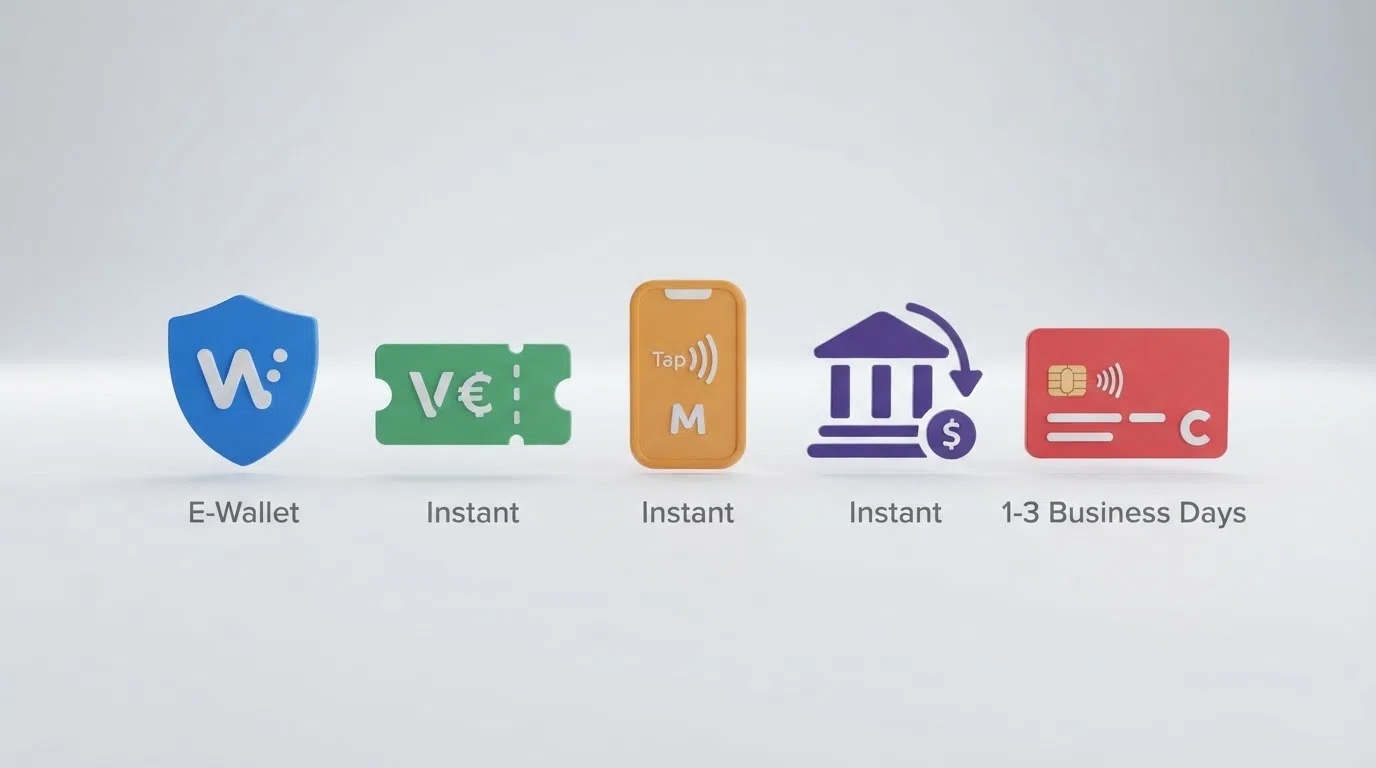
The debit card is the universal fallback. Every UK-licensed casino accepts Visa Debit and Mastercard Debit. Deposits clear instantly, withdrawals take one to three business days, and no operator in the featured set charges a fee for using one. Apple Pay and Google Pay layer on top of those cards on mobile, and that is the one-tap deposit experience the UPayCard pitch was reaching for, only delivered by the card networks and the phone rather than by a separate wallet. PayPal is the strongest e-wallet in this market: instant deposits, withdrawals often within six hours at the operators that support it, and no fee on the casino side. Skrill and Neteller remain accepted at several brands but with a sharp catch — most welcome bonuses exclude them. Trustly and the wider open-banking rail move money directly from a bank account without a card and offer the fastest deposits to a casino without entering card details. Paysafecard holds the prepaid slot UPayCard once aimed at, with a fixed-value voucher and no bank link required.
Each of these is faster than UPayCard was, GBP-native, and backed by the UK Gambling Commission’s full licence machinery. None of them involves a defunct corporate entity.
The Search Results Are Wrong — What Most UPayCard Pages Get Wrong
A search for “casinos that accept UPayCard” returns a thicket of affiliate pages that list UPayCard as a live deposit option and recommend specific casinos on the strength of it. The pattern is consistent enough to be worth naming. Affiliate pages earn on player sign-ups, so the incentive is to keep the page live and converting rather than to keep it accurate. The pages never state that UPayCard is defunct — most never mention it. They never verify a licence number against the Gambling Commission’s public register. They rarely note the credit card ban that closes off e-wallet-funded credit play. And they never link the UPayCard story to the Moorwand fraud litigation that has been public for years.
The honest thing to do — and the thing this page does — is to state the defunct status up front, verify every operator in the featured set against the UKGC public register, and offer the alternatives as the actual answer. A page that recommends a casino on a payment method no UK-licensed operator supports is not a recommendation. It is a relic, and the player who follows it pays the cost.
How Casino Deposits and Withdrawals Work Without UPayCard
Depositing at a UK Casino — Your Options in 2026
The deposit screen at a UK-licensed casino is shorter and more honest than it was in UPayCard’s day. The universal rail is the debit card. Visa Debit and Mastercard Debit clear instantly, do not exclude the welcome bonus at any of the featured operators, and carry no operator fee. Apple Pay sits behind those cards on iOS and macOS, and Google Pay sits behind them on Android — the same funds, the same banking relationship, but the deposit is a Face ID tap or a fingerprint rather than a card number.
PayPal works at Sky Vegas, William Hill, Betfair and most of the larger brands. Deposits are instant, and at Sky Vegas withdrawals land within six hours of approval. The catch — and it matters — is that several welcome offers in the featured set exclude PayPal, Skrill and Neteller deposits from the bonus. The exclusion sits in the small print, not on the deposit screen, and it is the single most common reason a UK player takes a “free” offer and finds no bonus credited. 888casino excludes Skrill and Neteller deposits from its welcome bonus; Betfair excludes PayPal, Neteller and Skrill. Debit card and Apple Pay deposits stay eligible everywhere.
Trustly and the broader open-banking rail move money directly from a bank account to the casino without a card in the loop. Deposits clear in seconds and are bonus-eligible at the brands that support them. For players who prefer not to share card details, Trustly is the cleanest substitute for what UPayCard claimed to offer.
Paysafecard covers the prepaid slot — a fixed-value voucher bought in a shop or online, redeemed at the cashier by entering the PIN. No bank account is linked, no card is entered, and the deposit is capped at whatever the voucher value is. It suits the player who wants to keep a hard ceiling on what can be spent in a session.
Withdrawal Speed — Which Methods Actually Pay Out Fastest
Withdrawal speed at a UK-licensed casino is governed by two clocks. The first is the operator’s pending window — the period during which a withdrawal request can be reviewed, reversed in the old regime (now permanently banned), or rejected. The second is the payment rail’s own processing time once the operator approves the request. Both matter, and confusing them is where most “fast withdrawal” pages go wrong.
PayPal leads on real-world speed at the operators that support it. Sky Vegas’s published time is within six hours, and that figure includes the pending window — the PayPal leg itself is typically minutes. Betfair and William Hill also publish PayPal withdrawals on the same day for verified accounts. Debit card withdrawals take one to three business days once approved, with Visa Fast Funds shortening the first half of that for some banks. Trustly withdrawals settle within hours at the brands that support the return leg.
A structural change worth noting: the reverse-withdrawal ban, in force permanently since 31 October 2021, means operators can no longer let a player cancel a withdrawal during the pending window and route the funds back to the casino balance. The pending window still exists for compliance checks, but the player’s money stays earmarked for withdrawal. That cuts one of the friction points that slowed payouts under the old rules.
Deposit Limits, Minimums, and What UK Regulation Actually Sets
Two limit systems run in parallel at a UK-licensed casino. The operator sets its own minimums and ceilings. The regulator sets the safeguards that sit around what the player chooses.
The operator side is straightforward. The standard minimum deposit across the featured set is £10 — Sky Vegas’s published floor is £10, and the other major brands sit at the same level or close to it. Per-transaction ceilings vary by payment method: Virgin Games allows up to £10,000 on debit cards and £5,000 on Apple Pay or Google Pay, which gives a sense of the operator-side range. These are limits the player sets against themselves, not against the regulator’s floor.
The regulator side is newer and heavier. From 31 October 2025 every UK-licensed operator must prompt a customer to set a financial deposit limit before their first deposit — not bury the option in the account settings, but prompt. A gross deposit limit (a hard ceiling across all products, not per product) must be offered with at least equal prominence by 30 September 2026. These are the deposit limits that matter, because they are the ones the regulator enforces.
Fees — What You Pay and What You Should Never Pay
UK-licensed casinos do not charge deposit or withdrawal fees on the operator side. That is the expectation, and a fee showing up on a UKGC brand’s cashier is a flag worth investigating before completing a transaction. The fees that do exist live on the payment provider side — PayPal does not charge for casino transactions in GBP, Skrill and Neteller have moved away from per-transaction fees for the same activity, and Trustly and open-banking rails are zero-fee at the user end for casino deposits.
The fee trap that does exist is currency conversion. Any method that does not transact in GBP will apply a margin, typically 1.5% to 3%, on top of the interbank rate. That is what made UPayCard academic for UK players in the first place: there was no GBP rail, so every transaction sat on a conversion margin. The licensed alternatives transact in pounds, and the conversion problem disappears with them.
Payment Method Overview
| Payment Method | Deposit Speed | Withdrawal Speed | Best For |
|---|---|---|---|
| Debit Cards | Instant | 1-3 Business Days | Reliability |
| PayPal | Instant | Within 6 Hours | Speed & E-wallet Users |
| Trustly | Instant | Within Hours | Open Banking Users |
| Apple/Google Pay | Instant | N/A (Linked to Card) | Mobile Users |
The Best UK-Licensed Casinos for Every Alternative Payment Method
The ten operators below are the UKGC-licensed brands where the modern cashier works in practice — where deposits clear, where the welcome bonus is reachable, and where the alternatives to UPayCard are actually built into the product. Each was verified against the Gambling Commission’s public register before inclusion.
| Operator | UKGC Licence | Welcome Offer | Free Spins | Wagering | E-wallets Accepted |
|---|---|---|---|---|---|
| Sky Vegas | 065519-R-339675-002 | 250 free spins (50 no-deposit + 200 on £10) | 250 | 0× | PayPal, Trustly |
| William Hill | UKGC public register confirmed | 200 free spins on Big Bass Splash | 200 | 10× on spin winnings | PayPal (verify bonus eligibility) |
| Betfair Casino | UKGC public register confirmed | 50 no-deposit spins + 100 on £10 | 150 | — | PayPal, Skrill, Neteller (excluded from bonus) |
| bet365 | UKGC account 38721 | Up to 500 free spins, 10 daily reveals | Up to 500 | 0× | — |
| Paddy Power | UKGC public register confirmed | 260 free spins (50 reg + 10 SMS + 200 on £10) | 260 | 0× | — |
| 888casino | UKGC public register confirmed | 100% match up to £100 | — | 10× on bonus funds, 90 days | PayPal, Neteller (Skrill/Neteller excluded from bonus) |
| Ladbrokes | UKGC public register confirmed | — | — | — | PayPal |
| Gala Bingo | UKGC public register confirmed | 100 free spins on £10 deposit and spend | 100 | 0× on spin winnings | — |
| Betfred | UKGC public register confirmed | — | — | — | PayPal |
| Virgin Games | UKGC public register confirmed | ~30 free spins (Mega Reel) | ~30 | — | None — debit cards and Apple/Google Pay only |
Sky Vegas — The Broadest Payment-Method Roster
Of the featured set, Sky Vegas accepts the widest range of deposit methods without an e-wallet bonus exclusion hanging over the welcome offer. Debit cards (Visa and Mastercard), Apple Pay, PayPal, Trustly and Bank Transfer all sit on the cashier; PayPal withdrawals land within six hours; the minimum deposit is £10. The welcome offer is 250 free spins — 50 credited on registration with no deposit required, and a further 200 on depositing and staking £10. Every spin’s winnings carry zero wagering, and the validity is seven days from credit. The UKGC licence is 065519-R-339675-002 under Flutter Entertainment, and the brand sits on the public register as an active operator. For a player whose priority is a broad, GBP-native cashier and a wager-free welcome, Sky Vegas is the cleanest single answer in the featured set.
888casino — Strong Methods but Mind the Bonus Exclusions
888casino runs the only deposit-match bonus in the featured set: 100% up to £100 on a minimum £10 deposit and stake. The wagering requirement is 10× on bonus funds, applied to selected slots within a 90-day validity window — which is, after the 10× cap, the upper end of how long a UK bonus can run. PayPal and Apple Pay are both accepted and both bonus-eligible. The catch is in the e-wallet exclusion: Skrill and Neteller deposits do not qualify for the welcome bonus. The licence sits with evoke and is verified on the UKGC public register. 888casino suits the player who wants a cash match rather than free spins and who plans to deposit with a debit card, PayPal or Apple Pay.
William Hill — Big Bass Splash Free Spins with a PayPal Question Mark
William Hill Vegas’s welcome is 200 free spins on Big Bass Splash at 10p per spin, triggered by depositing and wagering £10. The wagering requirement is 10× on spin winnings, and the expiry is 72 hours from issue — tight by UK standards, where seven-day windows are more common. The winnings are capped at £30, which is the ceiling the operator sets on top of the wagering. PayPal is on the cashier, but the brand’s bonus terms have historically excluded some e-wallet deposits from welcome offers, so the practical instruction is to verify bonus eligibility on the live William Hill site before funding with anything other than a debit card or Apple Pay. The licence is verified on the UKGC public register. The offer suits players who prefer a named slot and standard debit-card funding, but PayPal users should verify eligibility directly on the site before depositing.
Betfair — Generous No-Deposit Spins, but E-Wallets Forfeit the Bonus
Betfair’s welcome is the strongest no-deposit offer in the featured set: 50 free spins credited on registration, before any deposit is made. A further 100 spins credit on a £10 deposit, taking the total to 150. The no-deposit portion is wager-free in practice, though the wagering multiplier on the deposit portion was not specified in the terms available this cycle. The brand is operated by Flutter Entertainment and verified active on the UKGC register. The catch is the same one that runs through the Flutter group: PayPal, Neteller and Skrill are all on the cashier, but none of them is bonus-eligible. A Betfair welcome is reachable only via debit card or Apple Pay. Registration spins offer a low-stakes way to explore the interface, provided players note that the deposit-match bonus requires a card or Apple Pay instead of an e-wallet.
bet365 — Up to 500 Free Spins, Zero Wagering, but a Slow Reveal
bet365’s welcome is the largest free-spin pool in the featured set — up to 500 spins, delivered across 10 daily reveals of between 5 and 50 spins each. Every spin’s winnings carry zero wagering. The cost is patience: a minimum £10 lifetime deposit is required, the first reveal happens on day one, and a 24-hour gap sits between each subsequent reveal. The whole window is 20 days. The bonus slot is selected by bet365 and is not named in the standard terms. The licence sits with Hillside (UK Gaming) ENC under UKGC account 38721, and the bet365 domain has been active on the public register since 17 October 2019. For a player who wants the biggest possible spin count and is happy to let the offer drip out, bet365 is unmatched; for a player who wants 500 spins on day one, the structure will frustrate.
Paddy Power — 260 Free Spins, Three Ways to Trigger, All Wager-Free
Paddy Power’s welcome splits 260 free spins across three distinct triggers. Fifty spins credit on registration, with no deposit required. Ten more credit on SMS verification, on Paddy’s Mansion Heist. Two hundred more credit on depositing and wagering £10. Every spin’s winnings across all three tranches is wager-free, and the validity is seven days from credit. The licence sits with Flutter Entertainment and is verified active. Paddy Power’s offer structure rewards a player who is willing to spend five minutes on the registration and verification steps before deciding whether to deposit — the SMS tranche is, in effect, a small loyalty bonus for completing the sign-up.
Ladbrokes — PayPal Accepted, Bonus Terms to Verify
Ladbrokes is a long-standing UK high-street name with a UKGC licence under Entain, verified active on the public register. Debit cards, Apple Pay and PayPal are confirmed on the cashier. The welcome-offer details — bonus amount, free spins, wagering multiplier, validity — were not surfaced in the research for this cycle, and the live terms on the Ladbrokes site are the source that matters. A player considering Ladbrokes should verify the current welcome terms before depositing, and the same applies to the e-wallet bonus-eligibility question that hangs over most Flutter and Entain brands.
Gala Bingo — 100 Free Spins, Wager-Free Winnings, Slots-Only Focus
Gala Bingo’s welcome is 100 free spins at £0.10 each, credited on depositing and spending £10 on slots. The free-spin winnings credit as cash with no additional wagering — the cleanest bonus mechanic in the featured set. The validity is seven days, and the games are selected by the operator. The licence sits with Entain and is verified active on the UKGC register. Gala Bingo remains the standout choice for players seeking a straightforward slots welcome without wagering complications, though users looking for a multi-product library may prefer a wider-scope brand.
Betfred — PayPal on the Cashier, Bonus Terms Unconfirmed
Betfred is a long-standing UK bookmaker under Done Brothers (Cash Betting) Ltd, verified active on the UKGC public register. Debit cards and PayPal are confirmed on the cashier. The welcome-offer specifics — bonus amount, free spins, wagering, validity — were not surfaced this cycle, and the live Betfred site is the source. A player considering Betfred should verify the current welcome terms before funding.
Virgin Games — No E-Wallets, a Curated Cashier, and a Mega Reel
Virgin Games is the only operator in the featured set with zero e-wallet support. The cashier is debit cards (Visa Debit and Mastercard Debit) and Apple Pay on iOS and macOS or Google Pay on Android — no PayPal for new accounts since November 2020. The deposit ceiling is £10,000 on debit cards and £5,000 on Apple Pay or Google Pay. The welcome offer is delivered through a Mega Reel mechanic, with around 30 free spins referenced for new registrations; the exact terms — wagering, validity, slot selection — were not confirmed this cycle and the live Virgin Games page is the source. The licence sits with Nozee Limited / Gamesys and is verified active on the UKGC register. For a player who prefers card-and-mobile pay over e-wallets, Virgin Games is the cleanest curated cashier in the set; for a PayPal-first depositor, the brand is a non-starter by design.
Why Your 2026 Casino Welcome Bonus Looks Smaller Than the Ads Promise
UK welcome bonuses in 2026 look smaller than the offshore bonus pages still circulate. That is the regulator’s doing. From 19 December 2025 the Gambling Commission’s Social Responsibility Code capped wagering requirements at 10× on bonus funds, and the same rule banned mixed-product promotional offers — the bundles that let a player spend a bonus across slots, sports and casino at once. The headline number on a UK bonus shrunk. The cost of clearing it shrunk faster.
The 10× cap is the largest single change to UK bonus economics in years. A £100 deposit-match bonus at the cap requires £1,000 of qualifying turnover — a fraction of the £3,500 the same bonus would have demanded under the old 35× baseline that offshore operators still advertise. The free-spins pivot is the visible consequence: most UK welcome offers in the featured set are spins, not cash matches, because a free spin with no wagering is a cleaner product under the new rules than a cash match at any multiplier. Four operators in the featured set — Sky Vegas, bet365, Paddy Power and Gala Bingo — deliver wager-free free-spin winnings, which is the closest the UK market now comes to the “free” offer the older affiliate pages promised.
Welcome and Deposit-Match Bonuses Under the New Rules
888casino’s 100% match up to £100 is the only deposit-match bonus in the featured set, and it sits exactly at the 10× cap. The arithmetic of clearing it is the arithmetic the new rules force on every cash match that survives the post-19 December 2025 regime. The inputs: a £100 bonus at 10× wagering means £1,000 of qualifying turnover before the bonus and any winnings become withdrawable. At a typical slot stake of £1 per spin and an RTP in the mid-90s, that turnover is roughly 1,000 spins — about 83 minutes of play at a 5-second interval per spin, or just over an hour and a half. The 90-day validity window means a casual player can clear it across several sessions rather than a single sitting, which the older 7-day windows never allowed.
The cost of clearing is the expected-loss arithmetic the new rules do not make easier or harder — only the wagering path changes. Assuming a 96% RTP on selected slots (a typical industry baseline for the eligible games), the expected loss over £1,000 of turnover is roughly £40 — the house edge working as it always does. The player ends the wagering requirement with the £100 bonus converted to withdrawable cash and around £40 less in their pocket than if they had simply not played. That is the price of the bonus. It is roughly a third of what the same offer would have cost under the pre-cap 35× regime, where the same £100 bonus would have demanded £3,500 of turnover and an expected loss closer to £140. The cap made bonuses cheaper to clear and, by extension, cheaper to take.
What the cap also did was shrink the supply. Several UK operators that built their welcome around deposit matches have pivoted to free-spin offers, where the wagering mechanic is simpler and the regulator’s product rules are easier to satisfy. The player looking for a cash match at a UK-licensed casino in 2026 has fewer choices than they did two years ago. The choices that remain are cheaper to take.
No-Deposit Free Spins — Who Gives Them and What They Are Worth
Three operators in the featured set give free spins for registering, before any deposit is made: Sky Vegas (50 spins), Betfair (50 spins) and Paddy Power (50 spins on registration plus 10 more on SMS verification). The total no-deposit spin pool in the set is therefore 110 spins, plus the 10 SMS spins at Paddy Power, plus any unconfirmed no-deposit portions elsewhere.
What these spins are worth depends on two numbers the operator sets and one the slot sets. The operator sets the per-spin stake (typically 10p) and the winnings cap (William Hill’s £30 cap on the Big Bass Splash spins is the cleanest benchmark in the set). The slot sets the RTP, which determines what the expected value of the spin actually is. At 10p per spin and a 96% RTP, a 50-spin no-deposit tranche has an expected value of around 48p — small, but free of any deposit commitment and free of any wagering multiplier in the brands that offer them wager-free.
The £30 winnings cap at William Hill is the constraint that matters. A 200-spin no-deposit offer would, in theory, be worth more than the 50-spin offers in the featured set; in practice the operator’s cap compresses the upside. The cap is the same mechanism that keeps a 500-spin wager-free offer at bet365 affordable to the operator — the casino’s exposure per player is bounded, and the player’s upside is bounded with it. The honest framing of no-deposit spins is that they are a try-before-you-buy mechanic for the casino and a small, capped gift for the player. The “free” descriptor is true on the deposit requirement and false on the upside.
No-Wagering Offers and Bonus Codes — What Still Matters
Four operators in the featured set deliver wager-free free-spin winnings: Sky Vegas, bet365, Paddy Power and Gala Bingo. The same four sit on or below the 10× cap on the cash-match side (888casino’s £100 match is exactly at 10×). Across the whole set, no operator exceeds the 10× cap — because none of them can. The cap is a ceiling.
Bonus codes are largely irrelevant to the welcome offers in this set. Sky Vegas, bet365, Paddy Power, Gala Bingo and 888casino credit the welcome on the qualifying deposit and stake, with no code required. Where a code does still appear — typically on reload or seasonal offers — the terms override the code, not the other way around. A code unlocks an offer; it does not rewrite the wagering or the validity. The 10× cap applies regardless. The rule is structural and sits above every individual promotional mechanic.
What matters more than the code is the bonus-eligibility question on the payment method. Skrill, Neteller and — at several brands — PayPal deposits are excluded from welcome bonuses in the featured set. The exclusion is the most common reason a UK player takes an “offer” and finds no bonus credited. The single most useful thing a player can do before depositing is to read the payment-method exclusion list on the specific offer’s terms page. The exclusion is consistent across operators, and it is rarely on the deposit screen itself.
The UK Gambling Licence — What It Protects and What It Will Not
The UK Gambling Commission licence is the single most valuable player protection in British gambling. It is also narrower than the marketing suggests. The protection it provides is real and the limits of that protection are real, and a player who understands both is in a stronger position than one who has been told the licence “covers everything.”
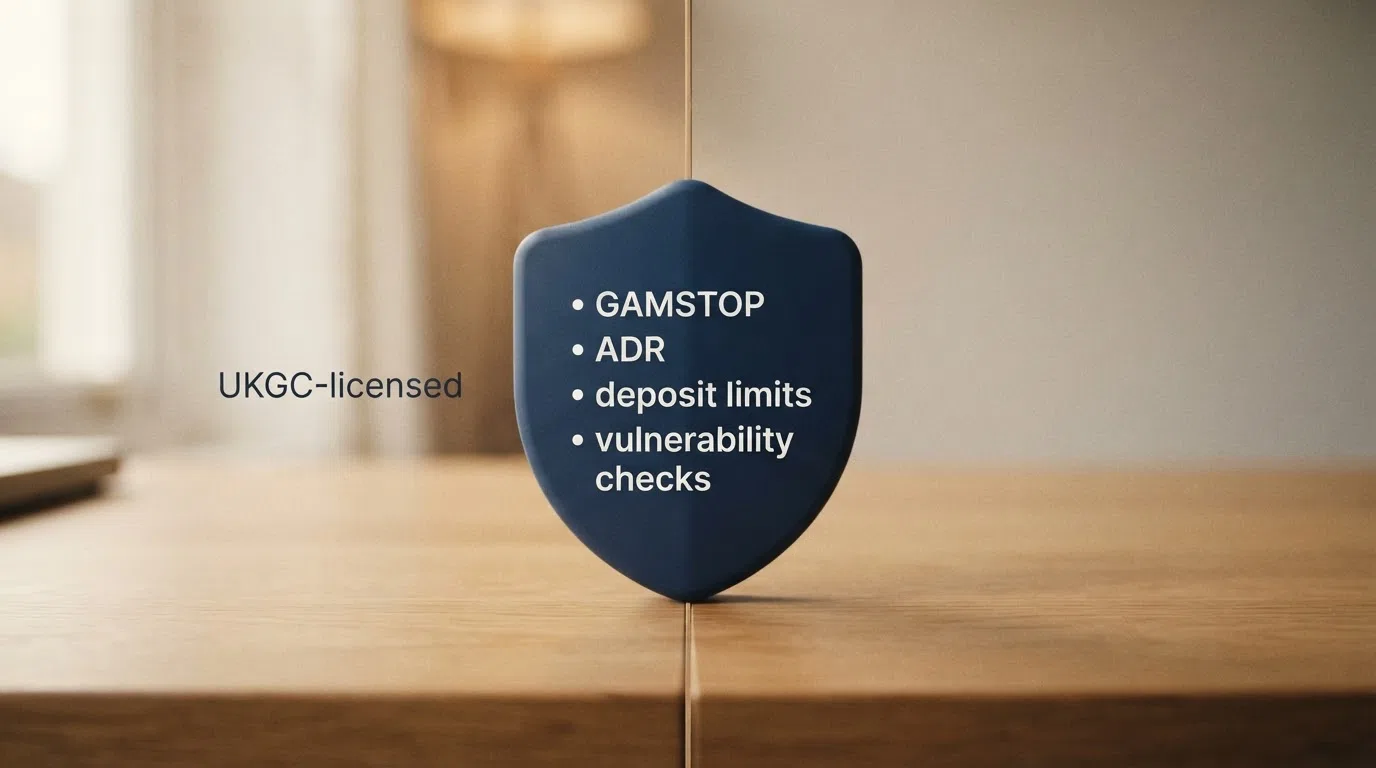
The three licensing objectives sit at the top of the framework, set by section 1 of the Gambling Act 2005: preventing gambling from being a source of crime, ensuring gambling is fair and open, and protecting children and other vulnerable persons. The day-to-day obligations live in the Licence Conditions and Codes of Practice (LCCP) and the Remote Technical Standards (RTS). What that produces in practice is a stack of automatic protections the player does not opt into and cannot opt out of: GAMSTOP integration, the £150 net-deposit vulnerability check, the mandatory deposit-limit prompt, the slot stake caps, the 2.5-second spin minimum, the auto-play ban, the reverse-withdrawal ban, the credit card prohibition, the 10× wagering cap. The list is long because the framework is the product.
What the licence does not cover is the offshore market. A Curaçao-licensed or Malta-licensed casino that accepts UK players is not bound by the LCCP, does not integrate with GAMSTOP, does not run vulnerability checks, does not offer the ADR process the UKGC mandates, and does not apply the slot stake caps or the wagering cap. The protections are real, the limits are real, and the boundary between them is the licence record on the public register.
How to Verify a UKGC Licence in Sixty Seconds
The Gambling Commission maintains a free, searchable public register of every operator it licenses. The search process takes less than a minute. Go to the register, enter the operator’s name, and read the licence record that returns. The licence number sits in a three-part format — for Sky Vegas, the record is 065519-R-339675-002 — and the licence record shows the operating company, the trading names, the licence status and the date the licence was issued. The domain name on the licence record should match the domain the player is on. If it does not, the casino is not the licensed entity.
Three red flags to look for: a casino with no licence number on its site, a licence number that returns a different operator on the register, and a badge styled to look like a UKGC mark that does not link to a record on the register. All three are common at offshore sites marketing to UK players; all three are absent at every operator in the featured set.
UK-Licensed vs Offshore — What You Lose When You Leave
An offshore casino is not a UK-licensed casino with a different address. It is a different regulatory product, with a different set of obligations and none of the UK framework’s automatic protections.
The first thing to go is GAMSTOP. A player who has self-excluded through GAMSTOP cannot reach a UK-licensed casino for the duration of their exclusion, and the operator cannot let them. An offshore casino has no GAMSTOP integration, and the exclusion does not reach it. The same is true of the deposit-limit prompt, the £150 vulnerability check, and the operator’s duty to monitor harm markers — none of these obligations travel outside the UKGC licence. The ADR process for disputes does not travel either: an unresolved complaint at a UK-licensed casino can be escalated to an ADR provider; at an offshore casino the regulator is the licensing authority in the offshore jurisdiction, and the player has no UK-based route to escalate.
The statutory stake caps — £5 for adults 25 and over, £2 for adults 18 to 24 — apply only to UKGC-licensed online slots. The credit card prohibition, the auto-play ban, the 2.5-second spin minimum, and the losses-disguised-as-wins ban all sit in the same category: UKGC rules, applied only inside the UKGC framework. Operating without a GB licence is a criminal offence under section 33 of the Gambling Act 2005, carrying up to 51 weeks’ imprisonment, an unlimited fine, or both. The penalty sits with the operator, not the player — the player who gambles at an unlicensed site commits no offence, but loses every protection the UK system has built over twenty years.
The Protections You Cannot Opt Out Of
- GAMSTOP integration, with exclusion periods from six months to five years and a five-year auto-renewal option.
- Mandatory deposit-limit prompt before the first deposit, in force from 31 October 2025.
- Financial vulnerability check at the £150 net-deposit threshold over a rolling 30-day period, using publicly available data on County Court Judgments, Individual Voluntary Arrangements and bankruptcy orders.
- £5 maximum stake per game cycle on online slots for adults 25 and over; £2 for adults 18 to 24.
- 2.5-second minimum spin interval, auto-play ban, turbo-mode ban, slam-stop ban.
- Losses disguised as wins banned from the visual presentation of any slot.
- Reverse withdrawals permanently banned since 31 October 2021.
- Credit card deposits prohibited, including credit-card-funded payments through any e-wallet.
- Wagering requirements on bonuses capped at 10× on bonus funds, with mixed-product promotional offers banned.
Every one of these is automatic. The player does not request them, cannot switch them off, and meets them at every UKGC-licensed casino without exception. The list is what “UK-licensed” means in practice.
UPayCard, Moorwand, and the Fraud Allegations — What the Collapse Exposed
The UPayCard story is not just a defunct product. It is a case study in why the UKGC’s payment-method scrutiny matters at the player level. UPayCard’s UK arm was linked to Moorwand Ltd, which faced Authorised Push Payment fraud litigation, with UPayCard named as a Moorwand brand used to facilitate fraud schemes and illegal gambling. The Cyprus entity that operated the card was dissolved in June 2021. The UK entity behind it never opened a GBP rail for casino deposits. The product that reached British players sat, at every layer of the stack, outside the UK regulatory framework that the Gambling Commission’s payment-method rules are designed to enforce.
A payment method with no UK-regulated entity backing, no GBP rail, and a documented trail of fraud allegations is exactly what the UKGC licence system is built to keep out. The fact that UPayCard was so often used at offshore sites that also sat outside the framework is the lesson, not a coincidence. The lesson for the player is that the payment method on the cashier is a regulatory signal as much as a transactional one. A rail the regulator recognises is a rail the regulator has vetted. A rail the regulator does not recognise is one the player vets themselves, and the UPayCard record is the reason to take that task seriously.
GAMSTOP, Self-Exclusion, and the Safety Net You Walk Away From Offshore
What Happens When You Play Outside GAMSTOP’s Reach
GAMSTOP is the UK’s national multi-operator online self-exclusion scheme. Every GB-licensed online operator has been required to integrate with it since 31 March 2020. When a player registers with GAMSTOP — for six months, one year, five years, or five years with auto-renewal — the exclusion applies to every UK-licensed casino and cannot be cancelled early. The system is the strongest single protective wall in the British online gambling framework, and it is built into the licence rather than into the player’s willpower.
The wall has a boundary, and the boundary is the licence. An offshore casino is not integrated with GAMSTOP. A player who has self-excluded and then deposits at an offshore site has not breached the exclusion — the offshore site is outside the system that enforces it — but the protective intent of the registration has been bypassed. The same applies to every other automatic UK protection: the deposit-limit prompt, the £150 vulnerability check, the operator’s harm-marker monitoring, the ADR process for unresolved complaints. None of them reach an offshore site.
The defunct UPayCard closes one route by which UK players were historically routed to offshore sites. The lesson the UPayCard collapse leaves is that the offshore pipeline and the unregulated payment rail often arrived together — and that the UKGC’s payment-method scrutiny is part of the same protective machinery as GAMSTOP itself.
Real Help, Right Now — UK Resources, Numbers, and What to Say
The help infrastructure that exists for UK players is independent of where the gambling happened. GamCare runs the National Gambling Helpline on 0808 8020 133 — free, 24 hours, every day. The line made 996 referrals to treatment and peer-based support in January 2026, up 48% year on year from 674 in January 2025. GamCare also runs an online self-assessment tool and a live-chat service that players can use without making a phone call.
NHS gambling treatment clinics operate in England, Scotland and Wales. NHS referrals to those clinics reached 4,355 in 2024/25 — up from 2,284 in 2023/24, an increase of more than 90% year on year. Referral into the NHS system is usually through a GP, but GamCare can route directly. The National Gambling Support Network, funded by GambleAware, treated 11,960 clients across Great Britain in the same period. Gamblers Anonymous runs peer support groups in person and online.
Funding for this infrastructure is structural. From 6 April 2025 the statutory levy on UKGC-licensed operators sits at 1.1% of gross gambling yield for remote casino, bingo and betting licences, collected by the Gambling Commission and split 50% to treatment, 30% to prevention, and 20% to research. The levy sits separately from the Remote Gaming Duty, which rose to 40% from 1 April 2026. The two together fund the operator-side cost of the regulatory framework and the help infrastructure the player reaches when the framework’s protections are not enough.
Playing on Mobile — What Changes and What Does Not
Casino Apps, Apple Pay, and the One-Tap Deposit
The mobile deposit at a UK-licensed casino is built around two payment methods that did not exist in UPayCard’s day: Apple Pay and Google Pay. Both layer on top of the debit cards the operator already accepts, with the card details stored in the phone’s wallet rather than re-entered at the cashier.
Sky Vegas, William Hill, 888casino, Ladbrokes and Virgin Games all accept Apple Pay. Virgin Games adds Google Pay as the Android counterpart. The deposit flow at the cashier collapses to a single biometric prompt — Face ID on an iPhone, a fingerprint on an Android device — and the funds clear instantly. The deposit is bonus-eligible at every brand in the featured set where Apple Pay is on the cashier, with no e-wallet exclusion applying. The mobile-browser experience works similarly, though the app experience is where the biometric flow is cleanest.
What does not change between desktop and mobile is the protection stack. GAMSTOP integration, the deposit-limit prompt, the £150 vulnerability check and the slot stake caps all run identically. The mobile deposit is faster; the regulatory framework it sits inside is the same.
Slots, Live Dealer, and Table Games — Where the Real Value Sits
UK Slots in 2026 — Stake Caps, Spin Speed, and What the Rules Changed
Online slots at a UK-licensed casino in 2026 are slower, lower-stake and more transparent than they were two years ago. The changes are statutory, not optional, and they apply to every UKGC-licensed slot regardless of provider.
The stake cap is the most visible change. The maximum stake per game cycle is £5 for players aged 25 and over (in force from 9 April 2025) and £2 for players aged 18 to 24 (in force from 21 May 2025). The age band means two adults at the same casino can face different maximum bets on the same slot — the casino verifies age at registration and again at deposit, and the cap follows the verified age. No stake cap applies outside slots: table games, live dealer and sports betting are not subject to the £5 / £2 limit.
The spin-speed rules run alongside the stake cap. The minimum interval between spins is 2.5 seconds, which is roughly twice the pace of an unregulated slot. Auto-play is banned. Features that speed up play — turbo mode, quick spin, slam stop — are banned. Losses disguised as wins are banned from the visual presentation of any slot. The reverse-withdrawal ban, in force since 31 October 2021, means a withdrawal request stays a withdrawal request: the player cannot cancel it during the pending window and route the funds back to the casino balance.
What the rules produce is a slower, smaller-stake slot session with no visual trick to disguise a loss as a win. The cost per spin is bounded by the stake cap. The cost per session is bounded by the spin-speed minimum and the deposit-limit the player set at registration. The experience is less intense by design.
Live Dealer and Table Games — Outside the Slot Cap
The £5 / £2 slot cap does not extend to live dealer or table games. A player who wants to extend a single deposit across a longer session — or to play a single hand or spin at a stake that exceeds the slot ceiling — finds that space at the blackjack, roulette or live casino tables.
A £1 blackjack hand, played at a reasonable pace, lasts longer per deposit than a £5 slot spin. The session cost is lower and the time-on-device is longer. Live dealer providers at UK-licensed casinos include Evolution, Pragmatic Play Live and Playtech, and the product mix varies by operator. The stake ranges typically start below the slot floor and extend above it, so the table-game section of a UK casino is where a player whose session is bankroll-driven, rather than stake-driven, spends the budget.
Bingo and Variety Play — The Lighter Side of UK-Licensed Gaming
Bingo is a separate product at UK-licensed casinos, with its own duty treatment, its own stake profile and — at the brands that specialise in it — its own promotional structure. Gala Bingo is the dedicated bingo brand in the featured set; Sky Vegas and Paddy Power carry Slingo and hybrid games alongside the main casino product.
From 1 April 2026 the bingo duty that previously applied to UK bingo operators is abolished. The change removes the operator-side tax differential that shaped bingo’s pricing, and the visible consequence is more aggressive bingo promotions as the duty saving is recycled into customer offers. For the player, bingo offers a lower typical stake per game than slots, longer session times, and a product that sits outside the slot stake cap. For a player who wants to extend a single deposit across a longer evening without touching the slot ceiling, bingo and its hybrid variants are the lightest-stake option at the licensed casino.
Crypto, No-Verification Play, and the UPayCard Privacy Angle
The privacy pitch that UPayCard carried — minimal identification, prepaid funding, a layer between the player and the casino — has migrated, in the years since UPayCard dissolved, into the cryptocurrency casino market. Bitcoin, Ethereum and USDT deposits at offshore-licensed casinos offer a similar anonymising layer to what UPayCard claimed to provide. The trade-off is identical to the trade-off UPayCard asked for: every UK protection sits on the other side of the boundary.
No-verification and no-registration casinos market themselves on the same premise. The reality is that UKGC-licensed casinos are required to identify and verify every customer before the first deposit, and the verification is not a marketing checkbox — it is a licence condition. A casino that promises no verification is, by definition, not UKGC-licensed, and a player who values the UK protections the rest of this page describes cannot have both.
The licensed path is the opposite of the anonymous path. The player registers with a name, an address, a date of birth and a payment method; the operator verifies the identity; the player sets a deposit limit at the prompt; the player’s GAMSTOP status is checked at registration and on every return visit. The framework is heavy by design. It is also the framework that produced the £150 vulnerability check, the slot stake caps, the auto-play ban, the credit card prohibition and the rest of the protection stack. A player who wants the protections does not want the anonymity. A player who wants the anonymity does not get the protections. The trade is structural and cannot be negotiated.
New UK Casinos — Who Took the Alternatives Seriously
A new UK-licensed casino launching in 2026 faces a steeper cost stack than at any point in the previous decade. The Remote Gaming Duty rose to 40% from 1 April 2026. The statutory levy adds 1.1% of gross gambling yield on top. Compliance staffing, RTS testing, LCCP adherence and Safer Gambling obligations add fixed cost before a single deposit is taken. The result is fewer new licensees per year than the search results imply, and a higher proportion of new brands that launch with a slim product focus rather than the full multi-product stack of the established names.
The new entrants that have launched under this cost stack have, in practice, built their cashier around the modern rails — Apple Pay and open banking — rather than the legacy e-wallet roster. The established brands in the featured set, by contrast, carry the wider roster because they had it before the cost stack tightened: PayPal, Trustly, debit cards and Apple Pay at Sky Vegas; PayPal, Neteller and Apple Pay at 888casino. The new-brand advantage is on the rail mix the player is most likely to use; the established-brand advantage is on breadth and on payment-method stability over time.
A player evaluating a new UK-licensed casino should read the payment-method page before depositing. The licence number should match the UKGC register. The payment-method list should include the rail the player intends to use. The bonus terms should be checked for e-wallet exclusion at the offer’s terms page, not on the deposit screen.
How We Selected and Ranked the Casinos on This Page
The ten operators in the featured set were drawn from the UKGC public register. Each licence record was verified as active at the research cut-off date. The selection criteria, in order of weight: payment-method breadth (debit cards and at least one of PayPal, Apple Pay or Trustly), bonus accessibility with e-wallets (the absence of an e-wallet exclusion at the welcome offer, where disclosed), wagering fairness (at or below the 10× cap on bonus funds or zero wagering on free spins), and confirmed withdrawal speed where the operator publishes a figure.
The ranking is not exhaustive. It does not measure game library size, customer support responsiveness, live-chat availability, mobile-app quality or the depth of the live casino product — none of which were tested in this cycle. The ranking is built to answer the specific question of which UK-licensed casinos handle the post-UPayCard cashier best, and it is honest about that scope.
The research cut-off applies to the figures and terms quoted. Operators change welcome offers, free-spin counts, wagering multipliers and payment-method lists without notice. The live terms on the operator’s site — and the live record on the UKGC public register — are the source a player should check before depositing. The figures on this page are correct as of the verification date and may not be the figures in force when the player reads the page.
What You Should Actually Do with This Information
UPayCard is closed. The door that opened when it closed is wider than the door it replaced. Every alternative on this page — debit card, PayPal, Apple Pay, Google Pay, Trustly, Paysafecard — is faster, GBP-native, and backed by the full UKGC protection stack. The “best UPayCard casino” pages still circulating in search results are selling a product that has not existed for years, and the player who follows them pays the cost of a defunct payment method, an absent regulator, and a casino that does not integrate with the British safer-gambling infrastructure.
Three steps. Pick a payment method that suits how you actually fund gambling — debit card or Apple Pay if you want every welcome offer to be reachable, PayPal if you want same-day withdrawals, Trustly if you want bank-to-casino without a card. Pick a UKGC-licensed operator whose welcome offer matches the way you play — wager-free free spins if you want the bonus cleared on receipt, a deposit match at the 10× cap if you want cash rather than spins. Set your deposit limit at the prompt before your first deposit, and do not raise it without deciding you mean it.
The rest is verification. The licence number is on the UKGC public register. The bonus terms are on the operator’s site, not on the deposit screen. The deposit limit is the number you set, not the number the operator offers. The help line — 0808 8020 133 — is free and 24 hours, and the question of whether to use it is one a player answers for themselves.
UPayCard is gone. What replaced it is better. Use it on those terms.
Frequently Asked Questions
Can I still use UPayCard at UK online casinos in 2026?
No. UPayCard is classified as deadpooled: the UK entity behind it has stopped operating, and the Cyprus parent (UPC UPAYCARD LIMITED, registration HE 342274) was dissolved on 30 June 2021. No UKGC-licensed casino accepts UPayCard deposits, and any affiliate page claiming otherwise is repeating outdated information. The licensed alternatives are debit cards, PayPal, Apple Pay, Google Pay, Trustly, and Paysafecard — all GBP-native and faster than the rail that vanished.
What happened to UPayCard and why did it stop working?
The UK entity that founded UPayCard in 2013 (London, Alain Bazille) is no longer operating, and the Cyprus parent was formally dissolved in June 2021. The card was available in ILS, USD and EUR only — there was never a GBP rail for UK casino deposits. Moorwand Ltd, linked to UPayCard, faced Authorised Push Payment fraud litigation, and UPayCard was named in that litigation. The combination of no UK regulatory backing, no GBP support, and the fraud trail is why no UKGC-licensed casino carries it on its cashier.
Are e-wallet deposits eligible for welcome bonuses at UK casinos?
Often not. Several UK welcome offers exclude Skrill, Neteller and sometimes PayPal deposits from the bonus — the exclusion sits in the offer’s small print rather than on the deposit screen. 888casino excludes Skrill and Neteller deposits; Betfair excludes PayPal, Neteller and Skrill. Debit card and Apple Pay deposits are bonus-eligible at every operator in the featured set. Check the specific offer’s terms page before funding with anything other than a debit card or Apple Pay.
Do I pay tax on casino winnings in the UK?
No. UK players pay no tax on gambling winnings — the betting duty was abolished in 2001, and the burden sits entirely on operators. Operators pay Remote Gaming Duty at 40% from 1 April 2026 (up from 21%) and the statutory levy at 1.1% of gross gambling yield. The player keeps the full amount of any withdrawal, with no declaration required and no HMRC involvement.
How do I set deposit limits at a UK-licensed online casino?
Every UKGC-licensed operator prompts the player to set a financial deposit limit before the first deposit, in force from 31 October 2025. The limit can be a daily, weekly or monthly figure, and a gross deposit limit across all products must be offered with at least equal prominence by 30 September 2026. Limits can be tightened immediately and can only be loosened after a cooling-off period. The prompt is the moment to set the limit; the player does not need to find the option in account settings.
What is the maximum stake on online slots in the UK?
£5 per game cycle for players aged 25 and over (in force 9 April 2025) and £2 for players aged 18 to 24 (in force 21 May 2025). The age band means two adults at the same casino can face different maximum bets on the same slot. The cap applies only to online slots — table games, live dealer, bingo and sports betting are not subject to it. The cap is statutory, imposed by SI 2025/215, and every UKGC-licensed casino enforces it at the game level.
Payments – fastestpayout-casinos-uk
Content created by the «fastestpayout-casinos-uk» team