
Casinos That Accept Ukash: What Replaced the Voucher in the UK
 Available in GB
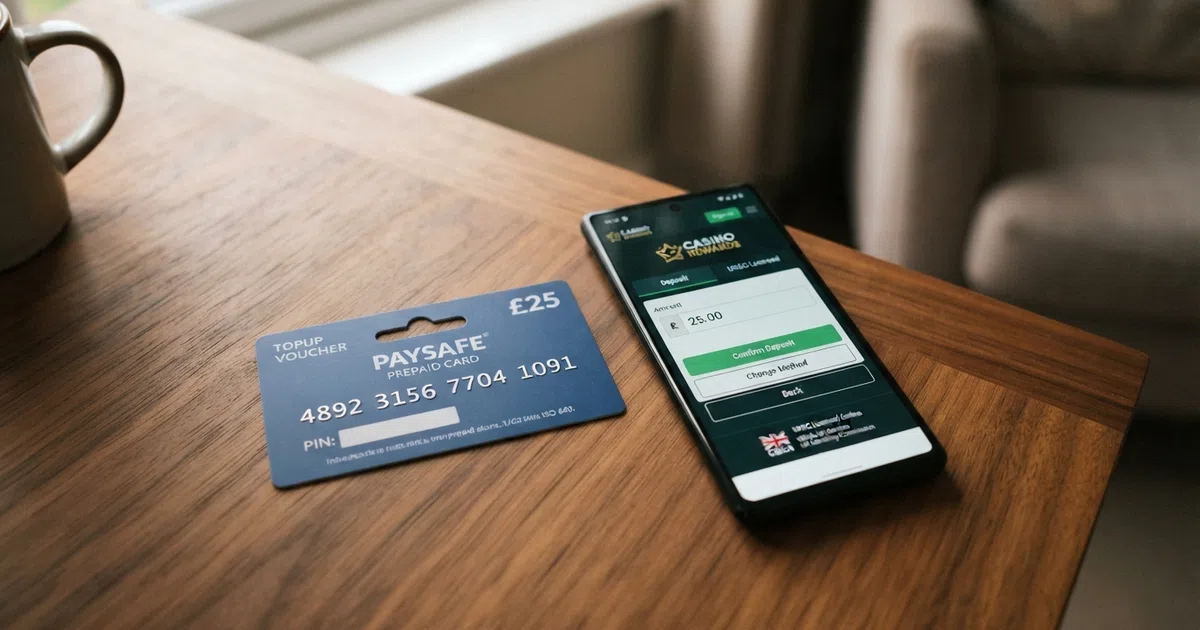
Ukash branded vouchers stopped working at UK casinos on 31 October 2015. The product itself is gone, the brand has been folded into paysafecard, and no UKGC-licensed casino accepts a Ukash-branded payment today. Players who remember buying a 16-digit code with cash at the corner shop and depositing it straight into a casino account are not imagining a better system. That system existed, it worked, and the company that built it now sells a product called paysafecard. The question this page answers is not where to find a Ukash casino in 2026 – there is no such thing – but where the Ukash experience went and which UK-licensed casinos now accept the voucher that replaced it.
Data is current as of September 8, 2026 and was verified against the UK Gambling Commission’s public register of licence holders.
What Ukash Was – and Why It Disappeared from UK Casinos
Ukash was a UK-based electronic money system that turned physical cash into a 16-digit code you could spend online. You walked into a shop, handed over a tenner, got a voucher with a PIN printed on the receipt, typed that PIN into a casino cashier, and the money appeared in your account. No bank account. No card. No name attached to the transaction, at least at the point of purchase. The model was simple enough that it spread through the UK retail network quickly, and through the early 2010s it was a mainstream deposit method at UK-facing online casinos.
The product’s commercial logic collapsed inside eighteen months. Skrill Group acquired Ukash in April 2014, and the new parent company already owned paysafecard – a competing voucher brand with a similar retail footprint. Running two prepaid voucher products side by side doubled the marketing cost, fragmented the retail network, and confused customers who could not tell why two near-identical PINs existed. The decision to merge was commercial, not regulatory. Voucher distribution stopped on 31 August 2015, existing Ukash vouchers could be redeemed until 31 October 2015, and from 1 November 2015 the Ukash brand ceased to exist as a payment method. Paysafecard inherited the retail network, the customer base, and the casino integrations that Ukash had spent a decade building.
The acquisition matters to a 2026 reader because Ukash’s success is what proved the demand for cash-funded, no-bank-link casino deposits. That demand has not gone away. The credit card ban, in force since 14 April 2020, has only sharpened it: every deposit at a GB-licensed casino now has to come from a debit card, a bank account, or cash – and a prepaid voucher is one of the cleanest ways to put cash into a casino cashier without touching either of the first two.
How Ukash Worked for Casino Deposits
The flow was deliberately frictionless. A player bought a Ukash voucher at a participating retailer – newsagents, convenience stores, petrol stations – for a fixed denomination, usually £10, £25, £50 or £100. The till printed a receipt with a 16-digit code. At the casino, the player opened the cashier, selected Ukash as the deposit method, entered the PIN, and the funds credited instantly. The transaction was anonymous in the sense that no bank account or card number was attached to the deposit; the casino saw the PIN, validated it with the Ukash system, and credited the corresponding amount.
Two features made Ukash attractive to a specific kind of player. First, the cash purchase created a hard spending cap: you could not deposit what you had not physically bought, and you could not run up a balance by accident. Second, the absence of a bank or card link meant players who did not have a bank account, or who did not want gambling transactions appearing on a bank statement, could still play. That second group is smaller in 2026 than it was in 2014 – almost every adult in the UK now has a debit card – but the first group, players who want a physical ceiling on what they spend, has not gone anywhere.
The modern equivalent of that flow is paysafecard. The shop display is the same, the PIN is still 16 digits, and the cashier experience is functionally identical. The difference is what sits behind the PIN: paysafecard operates under a UK e-money licence, paysafecard deposits are processed by a company that is regulated at both UK and EU level, and the UK Gambling Commission now classifies all prepaid payment methods as high-risk because a voucher can be bought with credit or cryptocurrency through third-party websites. That classification does not stop players using paysafecard. It changes what the casino does behind the scenes.
Why Ukash Was Discontinued – the Acquisition Timeline
The end of Ukash was the predictable consequence of a market consolidating onto one voucher standard. Skrill Group’s April 2014 acquisition brought Ukash and paysafecard under the same parent, and Paysafe Group – the rebranded Skrill parent – decided to run one voucher brand rather than two. From the operator’s perspective, two PIN brands meant two integrations, two marketing budgets, two relationships with every retailer, and no benefit from the duplication. From the player’s perspective, the brands were indistinguishable: both were 16-digit prepaid codes sold at the same kind of shops. The transition window was six months – distribution stopped on 31 August 2015, existing vouchers were honoured until 31 October 2015 – and paysafecard absorbed both the retail network and the casino integrations.
The lesson for a 2026 reader is that the demand Ukash met is durable, even if the brand is not. Every regulatory change since 2015 – the credit card ban, the stake caps, the wagering cap, the new deposit-limit rules – has been written on the assumption that some players want a clean break between their bank account and their gambling account. The prepaid voucher is how that break is delivered. Ukash was the first product to do it well at scale; paysafecard is the one that survived.
What Replaced Ukash: Your Deposit Options at UK Casinos in 2026
The prepaid voucher market Ukash created did not shrink after 2015. It consolidated, and the product that consolidated it is paysafecard. Paysafecard operates through the same kind of retail network Ukash used – WHSmith, ASDA, petrol stations, corner shops – and the deposit experience is functionally identical: buy a 16-digit PIN, enter it at the cashier, funds arrive instantly. The difference is regulatory: paysafecard is a licensed e-money product, every casino that accepts it is paying for a payment integration that the UK Gambling Commission has formally classified as high-risk, and the casino’s anti-money-laundering controls are tuned to flag anything unusual about a voucher purchase.
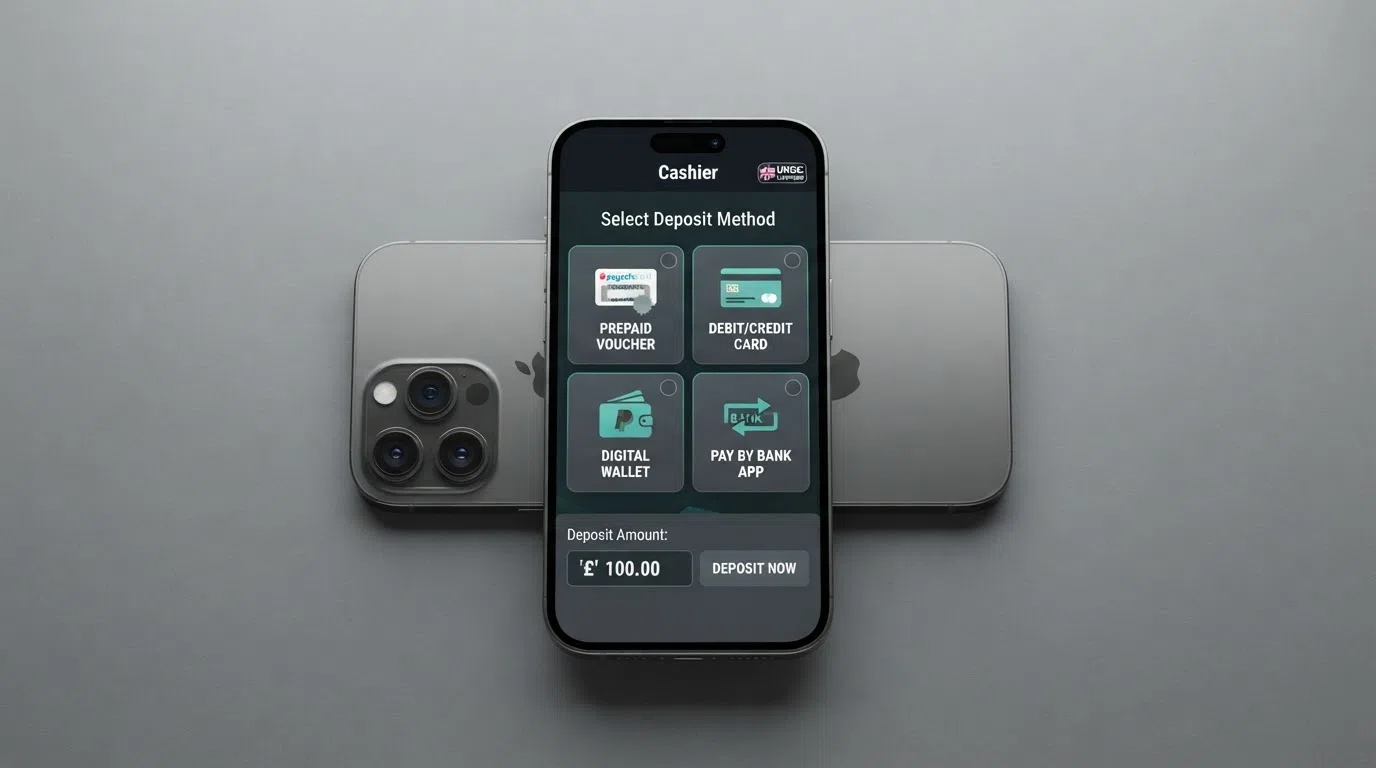
Three other categories of deposit method now sit alongside paysafecard at UK casinos, and each one addresses a different part of what Ukash used to deliver. The pay-by-mobile options – Siru Mobile, Boku – charge the deposit to a phone bill, which keeps the bank account out of the loop but adds a carrier bill to manage. Pay-by-bank options – Trustly, the generic Open Banking rails – pull money directly from a bank account through a screened interface, which is faster than a card and does not expose the card number to the casino. E-wallets – Skrill, Neteller, PayPal – act as a buffer between the bank and the casino, and they are the only withdrawal route that works for a player who deposited with a prepaid voucher and does not want to hand a debit card to the casino.
The reason this matters under UK regulation is the credit card ban. Since 14 April 2020, GB-licensed casinos cannot accept credit card payments, including credit-card-funded e-wallet deposits. Every deposit at a UKGC-licensed casino is now funded by debit, bank transfer, or cash-equivalent – and a prepaid voucher is the cleanest cash-equivalent deposit available.
Paysafecard – the Direct Ukash Successor
Paysafecard is the product Ukash became. The retail footprint covers WHSmith, ASDA, petrol stations and a long tail of independent convenience stores, and the PIN is the same 16-digit code Ukash used – different system behind it, same mechanic at the till. Deposits are instant: the casino validates the PIN with the paysafecard system, credits the account, and the player is playing within seconds. No bank account is linked, no card number is stored, and there is no transaction to find on a bank statement.
The single limitation a reader needs to know is deposit-only. Paysafecard is a one-way product at almost every UK casino: the voucher buys credit in the account, but the casino cannot send winnings back to a paysafecard PIN. To withdraw, the player needs a second method – usually a debit card, Trustly Pay-by-Bank, or an e-wallet like PayPal. The reason is structural: a paysafecard PIN is a fixed-value token, and paying out to a token that has already been spent would require a refund onto the original purchase, which the paysafecard system does not support. The practical answer is to set up a withdrawal method before depositing, so the winnings have somewhere to go when they arrive.
Paysafecard does not charge the player a fee for the deposit itself. The retailer takes a margin on the voucher sale, and paysafecard may charge an inactivity fee on unused balances after a long period, but those are paysafecard-side costs, not casino cashier charges. The casino receives the gross deposit and credits it to the account.
| Method | Coverage | Minimum PIN | Withdrawal Support |
|---|---|---|---|
| Paysafecard | High | £10 | No |
| Neosurf | Low | £10 | No |
| Flexepin | Low | £10 | No |
| Siru Mobile | Moderate | £5 | No |
The UK prepaid-voucher market is thinner than players expect. Paysafecard accounts for the overwhelming majority of prepaid voucher deposits at UKGC-licensed casinos, and the other voucher brands – Neosurf, Flexepin – have a smaller retail footprint and weaker casino integration. Neosurf and Flexepin are real products, and they work the same way paysafecard does: a 16-digit or 20-digit PIN bought at a retailer, entered at the cashier, credited to the account. The difference is availability. A player in central London can find a paysafecard PIN at a WHSmith within walking distance; a Neosurf PIN requires either an online purchase or a trip to a different set of retailers, and the casino’s cashier has to be configured to accept it.
For a player whose primary goal is “cash to casino without a bank account,” paysafecard is the answer. Neosurf and Flexepin are backup options – useful if the player’s preferred casino accepts them and paysafecard is not on the cashier list, or if the player already has a PIN from a previous purchase. The underlying lesson is that the prepaid voucher market consolidated along with Ukash, and paysafecard is the survivor.
Deposit Methods That Work Like Ukash Without Being a Voucher
Three non-voucher methods serve the same purpose Ukash used to serve, and each one addresses a different version of the “I don’t want my bank account involved” request.
Pay-by-mobile options like Siru Mobile and Boku charge the deposit to the player’s phone bill. The casino sees a payment confirmation, the player sees a charge on their next mobile statement, and no bank or card details pass through the casino’s system. The trade-off is that the deposit is capped at the mobile carrier’s per-transaction limit – usually £10 or £30 per day – and the withdrawal cannot go back to the phone bill, so a second method is still needed for cashing out.
Pay-by-bank options like Trustly sit between the player’s bank and the casino, using Open Banking rails to authenticate the transfer without exposing card numbers or account details. The deposit is a bank transfer from the player’s account to the casino, but the player does not enter the sort code or account number at the casino: the Trustly interface authenticates the bank, the player approves the transfer, and the money arrives. Trustly also supports withdrawals, which solves the voucher-withdrawal problem in a single integration.
E-wallets – Skrill, Neteller, PayPal – sit on top of a bank account or card, but the casino only sees the e-wallet account. The player loads the e-wallet from a debit card or bank transfer, then deposits from the e-wallet to the casino. The withdrawal goes back to the e-wallet, and the player moves the money out to a bank account afterwards. This is the closest equivalent to old Ukash behaviour for a player who wants the casino to see as little as possible.
The default at every UK casino is a debit card. The credit card ban means that debit is the only card-based option, and the player who has nothing else will end up using one. Debit is not Ukash-like – the bank sees the transaction, the casino stores the card number, and the chargeback rights that apply to a card purchase do not apply to a voucher. But it is the simplest method, and it is the only one that does not require setting up a second service before the first deposit.
Mobile Prepaid Deposits at UK Casinos
A paysafecard deposit works the same way on a phone as it does on a laptop. The cashier sits inside the mobile casino app or the mobile browser, the player selects paysafecard, enters the 16-digit PIN, and the deposit credits instantly. The PIN entry works on a small screen without friction – the input is the same field as a card number, and the auto-form on most phones splits the digits into the familiar 4-4-4-4 blocks.
There is no mobile-only prepaid product in the UK market. The mobile path is simply the same paysafecard PIN entered at a smaller cashier. Pay-by-mobile options like Siru Mobile and Boku are the mobile-native alternative, and they work without a PIN at all – the deposit is charged to a phone bill, and the player confirms by SMS. The trade-off is the deposit cap, which the mobile carrier sets at a low level.
Top Prepaid-Voucher-Friendly Casino Sites for UK Players in 2026
The ten operators below all hold active GB operating licences on the UK Gambling Commission public register, last updated 29 July 2026. Five of them – PlayOJO, LeoVegas, Casumo, MrQ and Grosvenor – have confirmed paysafecard acceptance in published reviews. For the other five – bet365, Sky Vegas, Paddy Power, Betfair and Betfred – payment methods should be verified directly on the operator’s cashier page before committing to a deposit. The table compares the licensed UKGC status, confirmed paysafecard acceptance, the welcome offer as published, the wagering multiplier, and whether a no-deposit leg is available.
| Feature | Prepaid Voucher Support | Wagering Requirements |
|---|---|---|
| PlayOJO | Confirmed | 0× |
| LeoVegas | Confirmed | 1× |
| Casumo | Confirmed | 10× |
| MrQ | Confirmed | 0× |
| Grosvenor | Confirmed | 10× |
| bet365 | Not Confirmed | 0× |
| Sky Vegas | Not Confirmed | 0× |
| Paddy Power | Not Confirmed | 0× |
| Betfair | Not Confirmed | Not stated |
| Betfred | Not Confirmed | Not stated |
The two columns that do the most work in this comparison are Paysafecard Accepted and Wagering. A casino that accepts paysafecard but excludes it from the welcome bonus delivers a thinner deal to a voucher depositor than a casino that accepts it and credits the bonus. A casino that takes paysafecard and offers a 0× wagering welcome offer delivers a deal that is structurally better than a 10× cash-match, because the free-spin winnings land in cash and bypass the playthrough question entirely. The No-Deposit column is the second filter: the four Flutter properties (Sky Vegas, Paddy Power, Betfair) plus MrQ’s confirmation that voucher deposits are included make those the strongest prepaid-friendly choices, on the published evidence, for a player who wants to test the casino before funding the account.
A word on what the table does not say: it does not rank the casinos. The ranking would require weighting the columns, and the right weighting depends on what the reader is optimising for. A player who wants the closest direct Ukash equivalent – paysafecard accepted, bonus credited, no wagering on winnings – is reading this table differently from a player who wants the largest free-spins pool or who is willing to deposit with a debit card to get a wider choice of offers.
What Ukash Acceptance Meant Before 2015
In the years before the Skrill acquisition, Ukash was a mainstream deposit method at most UK-facing casino brands. It was integrated into the cashier at every major UKGC-licensed operator and at a long tail of offshore sites that accepted UK players under older Malta or Curaçao licences. The retail network was built up over a decade, and by 2014 a Ukash voucher was as easy to buy as a top-up card for a mobile phone.
No per-operator records of which casinos accepted Ukash in 2015 survive in the research for this run. The Skrill acquisition transferred the retail network and the payment engine to paysafecard, but the casino-side integrations had to be rebuilt under the new brand, and the old merchant list was not preserved as a public document. A reader reconstructing “which casinos accepted Ukash” from current sources will find affiliate pages that rank Ukash casinos in 2015, but those pages are recycled content from before the shutdown and offer no warranty that the same brands now accept paysafecard. The honest answer is that Ukash was widely accepted, and the question of which specific operators took it is not recoverable from the research available for this article.
What Makes a Casino Prepaid-Voucher-Friendly Today
Four attributes separate a casino that genuinely supports prepaid-voucher depositors from one that merely tolerates them. The first is paysafecard acceptance itself: the cashier has to list paysafecard as a deposit method, and the integration has to work for small denominations. The second is bonus eligibility: the welcome offer has to credit on a paysafecard deposit, not exclude it from the terms. The third is withdrawal pairing: because paysafecard is deposit-only, the casino needs to support a withdrawal method that a voucher depositor can use – Trustly, debit card, PayPal – and the withdrawal has to be fast enough to be usable. The fourth is the UKGC licence: a GB operating licence is the non-negotiable baseline, and the licence status has to be checked on the public register, not inferred from a footer logo.
The UKGC’s classification of prepaid vouchers as high-risk under LCCP 12.1.1(1) is the reason the third attribute matters. Operators are required to apply enhanced due diligence to high-risk payment methods, which in practice means larger voucher deposits may trigger source-of-funds questions or ID verification prompts beyond the standard onboarding. A casino that is prepared for that – that has built its KYC flow around the reality that voucher users need to withdraw somewhere – handles a prepaid depositor more smoothly than one that has not.
PlayOJO
PlayOJO runs on the Skill on Net platform and is GB-licensed. The welcome offer is 50 free spins on Big Bass Bonanza on first deposit, and the spins pay in cash with no wagering. The phrase the casino uses is “anything you win from your free spins is paid in cash,” and the term is literal: there is no playthrough, no conversion, no max-win cap. The minimum deposit is £10, and paysafecard is confirmed as an accepted deposit method by independent review sites, included in welcome-offer qualification.
For a prepaid-voucher depositor, PlayOJO is the cleanest deal in the set. The offer is small – 50 spins rather than Grosvenor’s 100 or bet365’s up to 500 – but the absence of wagering means the winnings are withdrawable immediately, and the voucher is not sidelined from the bonus. A player who deposits £10 via paysafecard, plays the 50 spins, and wins £12 can withdraw the £12 without further play. The trade-off is that the headline number – 50 spins – is lower than competitors that layer larger spin counts on top of a wagering requirement.
LeoVegas
LeoVegas Gaming plc is GB-licensed. and the welcome offer is 50 free spins on Big Bass Splash with a £10 deposit. The mechanics are similar to PlayOJO, with one twist: the deposit itself must be wagered 1× on eligible games to unlock the spins. The spins themselves are wager-free; the 1× playthrough sits on the deposit, not on the spin winnings. The free spins expire 3 days after crediting, and the deposit wagering window is 7 days. Paysafecard is confirmed as an accepted deposit method.
The 1× deposit wagering is a small friction. A player depositing £10 has to wager £10 on eligible slots to unlock the spins, which is simple but requires a moment of play. If you plan to wager at least £10 anyway, this requirement effectively vanishes, making it a non-issue for most active players.
Casumo
Casumo Services Limited is GB-licensed. and the welcome offer is the only cash-match in the featured set: 50% match up to £100 on first deposit. The wagering requirement is 10×, sitting at the UK regulatory cap that took effect on 19 December 2025. The casino runs 3,500+ games from multiple providers, and paysafecard is confirmed as an accepted deposit method.
This comparison highlights licensed casinos, though licensing serves as regulatory oversight rather than deposit insurance. Licensing by the Gambling Commission ensures operators meet strict standards for fair play and financial transparency, but it does not act as a deposit insurance scheme. There is no deposit guarantee and no payout guarantee; players are advised to manage their own funds, use reliable withdrawal methods, and verify all terms before committing.
MrQ
Lindar Media Ltd operates under a GB licence for MrQ. and the casino’s reputation is built on its zero-wagering model. Welcome-offer specifics are not detailed in the research snippets for this run, but the platform’s broader offer structure is known: no wagering on winnings, no max-win caps, and a commitment to paying bonus winnings as cash. Paysafecard is confirmed as an accepted deposit method.
The verification gap is the reason MrQ sits in the middle of the table rather than at the top. The platform’s broader offer structure is known: no wagering on winnings, no max-win caps, and a commitment to paying bonus winnings as cash. A player who wants to use MrQ as a paysafecard destination should check the operator’s current welcome page in 2026 before depositing, because the bonus structure is updated regularly. What does not change is the platform position: a voucher depositor who plays the welcome offer keeps what they win.
Grosvenor Casinos
Grosvenor, part of the Rank Group, is GB-licensed. and is the most explicit example in the featured set of the bonus-exclusion trap that prepaid users need to watch for. The welcome offer is deposit £20, play with £40 plus 100 free spins on Big Bass Splash, with 10× wagering on deposit plus bonus and a £2,000 maximum cashout. Paysafecard deposits are accepted – but they are excluded from qualifying for the welcome offer. The casino’s terms list PayPal and Paysafe as excluded from the bonus, while debit card and other methods qualify.
The offer is generous on its face – £40 to play with, 100 free spins, £2,000 ceiling – and the 10× wagering is at the regulatory cap. The trap is that a paysafecard depositor does not get the offer. The £20 deposit credits the account, but the £40 bonus and 100 spins do not trigger. For a player who has chosen Grosvenor specifically because the operator runs a high-street casino floor and an online site under the same brand, the voucher exclusion is a real cost. The practical answer is to deposit with a debit card if the welcome offer is the reason for choosing Grosvenor, and to use paysafecard only on subsequent deposits where the exclusion does not apply.
bet365
Hillside UK Gaming ENC is GB-licensed. and bet365’s casino welcome offer is the largest free-spins pool in the featured set: up to 500 free spins, awarded as select prizes of 5, 10, 20 or 50 spins across 10 selections within 20 days. The free-spin winnings are cash, with 0× wagering. The minimum to qualify is a £10 lifetime deposit, and the eligible games include Book of Horus, Curse of the Bayou, Magic Forge and Wrath of the Deep. Paysafecard acceptance is not confirmed in the research for this run; debit card and Apple Pay are confirmed.
For a player who deposits with a debit card, bet365 is the strongest free-spins offer on the page. The 500-spin maximum is well above what the rest of the featured set offers, and the cash-payment structure means the winnings withdraw immediately. The uncertainty is the paysafecard question. If bet365 accepts paysafecard for the deposit, the offer is the best in the set for a voucher user. If it does not, a voucher depositor is looking at the other nine operators. The verification check is a few minutes on the bet365 cashier page before the first deposit.
Sky Vegas
Sky Vegas, part of Flutter Entertainment, is GB-licensed. The welcome offer is 50 free spins with no deposit, plus 200 free spins after a £10 deposit and spend – 250 in total. The free-spin winnings are cash, with 0× wagering. The 50 no-deposit spins expire 7 days after registration, and the 200 deposit-triggered spins require the deposit and spend within 30 days. Paysafecard acceptance is not confirmed in the research for this run; debit card is confirmed.
The no-deposit leg is the distinguishing feature. A player who registers and verifies the account can play 50 spins without funding it, and the cash winnings are withdrawable. For a player who wants to test the casino before committing a deposit method, the 50 no-deposit spins are the largest such offer in the set apart from Paddy Power’s 60. The deposit-triggered 200 spins are competitive with bet365’s smaller selections, and the 0× wagering is the now-standard payout structure. The voucher question is the same as bet365: confirm the cashier before committing.
Paddy Power Games
Paddy Power Games, part of Flutter Entertainment, is GB-licensed. The welcome offer is 60 free spins with no deposit – SMS verification required – plus 200 free spins after a £10 deposit and wager, 260 in total. The free-spin winnings are cash, with 0× wagering. The validity is 7 days. Paysafecard acceptance is not confirmed; debit card, Apple Pay and Pay by Bank are confirmed.
The 60 no-deposit spins are the largest in the featured set, one more than Sky Vegas’s 50. The SMS verification step is a small friction – the casino needs a phone number to send the verification code – and the 7-day expiry is tight. For a player who already has a Paddy Power sports account, the casino is a single login away, and the bonus triggers automatically. The Paysafecard verification is the same as the other Flutter properties: check the cashier before committing.
Betfair Casino
Betfair Casino, part of Flutter Entertainment, is GB-licensed. The welcome offer is 50 free spins with no deposit, per current oddschecker listings. The wagering multiplier is not stated in the research snippets for this run, which is a real gap for a player choosing between offers. Paysafecard acceptance is not confirmed; debit card, Apple Pay and PayPal are confirmed.
Betfair provides a solid Flutter-based experience, though the lack of explicit wagering terms in some summaries requires checking the current offer page. Its reliability is backed by PayPal availability, which is a significant advantage for those needing a reliable withdrawal route. It is a viable alternative if you are already comfortable with existing Flutter platforms.
Betfred
Done Brothers Cash Betting Ltd is GB-licensed for Betfred. and the brand is best known as a high-street bookmaker with an online casino attached. The welcome-offer specifics are subject to change, and payment methods should be verified on the operator’s cashier page before committing. The casino also notes that security and validation checks can take up to 48 hours.
The 48-hour validation window is the unusual feature. Other UK casinos verify identity in minutes or hours; Betfred’s checks can take up to two days. For a player who wants to deposit and play immediately, the delay is a real cost. For a player who is happy to wait, Betfred is a high-street-brand casino with a confirmed UKGC licence and a PayPal withdrawal route. The welcomes offer is the gap, and the verification gap is the same as the rest of the unconfirmed-paysafecard group: check the cashier before committing.
Why the UKGC Calls Prepaid Vouchers High-Risk – and What That Means for UK Players
The UK Gambling Commission classifies all prepaid payment methods as high-risk under Licence Condition 12.1.1(1), and the language the Commission uses is specific: prepaid methods are considered high-risk due to the ability to purchase them using credit or cryptocurrency, potentially bypassing controls. The classification is not a judgement on the player who walks into a WHSmith and buys a £20 paysafecard PIN with cash. It is a judgement on the third-party websites that sell digital vouchers for credit or crypto, and on the regulatory gap those websites create between the source of funds and the casino account.

The implication for a player depositing with a voucher at a GB-licensed casino is that the operator is required to apply enhanced due diligence. In practice, this means a few things the player may notice. A paysafecard deposit above a certain threshold may trigger a source-of-funds question. A pattern of voucher purchases from third-party resellers may flag the account for review. The first deposit, regardless of method, already requires identity verification under the 7 May 2019 rule – the casino has to confirm name, address and date of birth before any gambling – and the high-risk classification layers additional checks on top of that baseline.
The credit card ban, in force since 14 April 2020, is the regulatory backdrop. Every deposit at a GB-licensed casino has to come from a debit card, a bank account, or cash. A prepaid voucher is a cash equivalent, and the Commission’s concern is that the path from credit card to voucher to casino deposit would bypass the ban if it were not policed. The high-risk classification is what closes that gap: the operator has to know where the voucher came from, not just that the PIN is valid.
UKGC Licensing and Payment-Method Requirements
The UK Gambling Commission is the statutory regulator for Great Britain, sponsored by the Department for Culture, Media and Sport. The governing statute is the Gambling Act 2005, extended to remote operators by the Gambling (Licensing and Advertising) Act 2014, which made a GB licence compulsory for any operator taking GB customers – wherever the operator is based. The licence is point-of-consumption: the regulatory trigger is the player, not the operator’s headquarters.
The three licensing objectives, set out in Section 1 of the Gambling Act 2005, are preventing gambling from being a source of crime or disorder, ensuring gambling is conducted in a fair and open way, and protecting children and other vulnerable persons from being harmed or exploited. Every UKGC licence decision is made against those three objectives, and the payment-method requirements sit inside the third: the payment infrastructure has to be configured to prevent underage gambling, money laundering, and harm to vulnerable players.
The UKGC publishes a public register of licence holders, and the register is the definitive source for verifying whether an operator is licensed. A footer logo on a casino website is not enough. The register is searchable, free, and updated regularly – the last update for this article was 29 July 2026. Northern Ireland is a separate jurisdiction under older law, and the Commission’s remit does not extend there. The accurate phrase for a GB-licensed casino is “GB-licensed,” not “UK-licensed,” and the distinction matters because a UK-facing casino without a GB licence is operating illegally under section 33 of the Gambling Act 2005.
The minimum age for commercial gambling in Great Britain is 18. Since 7 May 2019, identity verification – name, address, date of birth – must be completed before the first deposit or any gambling. The 72-hour grace period that used to exist has been removed. A player who cannot verify their identity cannot deposit, and a casino that accepts a deposit without verified identity is in breach of its licence.
How Voucher-Based Payments Fit Within UK Regulation
Paysafecard is a lawful deposit method at every GB-licensed casino. The UKGC’s high-risk classification does not ban vouchers – it requires operators to apply enhanced due diligence to high-risk payment methods, which is a procedural obligation rather than a prohibition. The player who buys a £10 paysafecard PIN at a WHSmith with cash is depositing lawfully. The player who buys a £500 digital paysafecard PIN from a third-party website using a credit card is potentially creating a regulatory problem, and the casino’s high-risk classification is what catches that case.
The practical experience for a voucher depositor is that the casino’s KYC processes may be more visible than they are for a debit card depositor. The first deposit always triggers identity verification, regardless of method. A paysafecard deposit above a threshold set by the operator may trigger an additional source-of-funds question – where the voucher came from, how it was purchased, whether the player has a record of the purchase. The casino is not asking these questions because the player is suspected of wrongdoing; it is asking because the operator’s licence requires it.
The tension between the voucher’s anonymity appeal and the regulator’s KYC requirements is real, and it is the single most common surprise for a new prepaid-voucher user. The voucher is anonymous at the point of purchase; the casino account is not anonymous at the point of deposit. The two are reconciled by the casino’s enhanced due diligence, which is the cost of operating a UKGC licence.
Player Protection and Deposit Safeguards
The UKGC’s player-protection framework covers every GB-licensed casino, and the protections apply regardless of how the player funded the account. The player-funds protection regime requires operators to hold customer balances in segregated accounts, rated on a scale from basic to high depending on the operator’s financial controls. A player who keeps a balance at a GB-licensed casino is protected to the level of the operator’s rating, and the rating is published on the UKGC register.
Disputes that cannot be resolved with the casino’s customer service go to an approved Alternative Dispute Resolution (ADR) provider. The ADR is free for the player, and the operator is bound by the ADR’s decision. This is the route a player takes when a withdrawal is delayed, a bonus is incorrectly denied, or a self-exclusion is not honoured. The ADR process is unavailable for unlicensed operators, which is one of the costs of playing off-licence.
The financial vulnerability check, in force since 28 February 2025, is a light-touch process triggered when a player’s net deposits reach £150 in a rolling 30-day period. The check uses publicly available data only – County Court Judgments, bankruptcy orders, Individual Voluntary Arrangements, Debt Relief Orders – and does not require documents from the player. It is not a credit check and does not affect the player’s credit score. The purpose is to flag players whose financial circumstances suggest they may be at risk, and the trigger is the deposit total, not the payment method.
A prepaid voucher does not offer chargeback protection. A debit card purchase can be disputed through the card issuer’s chargeback process, and certain credit purchases are protected under Section 75 of the Consumer Credit Act. A voucher purchase is a cash transaction at a retailer, and the cash-for-PIN exchange is not reversible through the card network. The financial protections on a voucher deposit are the casino’s own: the player-funds regime, the ADR, and the UKGC’s complaints process. The payment method does not add a layer of protection on top of that, and a player who wants chargeback rights should fund the account with a debit card.
There is no tax on gambling winnings in the UK. Player-side betting duty was abolished in 2001, and the tax burden sits on the operator – Remote Gaming Duty rose from 21% to 40% on 1 April 2026. A player who wins £500 at a UK casino keeps the £500, and the casino pays the duty to HMRC. The tax position is the same regardless of payment method.
Responsible Gambling When You Deposit with Prepaid Vouchers
Prepaid vouchers cut both ways on responsible gambling. From the player’s perspective, a £20 paysafecard PIN is a hard spending cap: the balance cannot go below zero, and the only way to deposit more is to buy another PIN. From the UKGC’s perspective, the same voucher is a high-risk payment method because it can be purchased with credit or cryptocurrency through third-party websites, bypassing the controls that the credit card ban was designed to enforce. The same product that protects a player’s budget is the product the regulator worries about most.
The tension is not a reason to avoid prepaid vouchers. It is a reason to use them deliberately. The UKGC’s mandatory responsible-gambling infrastructure applies to every player at every GB-licensed casino, regardless of payment method: GAMSTOP self-exclusion, deposit limits, the financial vulnerability check, the affordances for time-out and reality checks. A voucher user gets the same tools as a debit card user, and the voucher’s hard cap is a complement to the casino’s tools rather than a substitute.
The prevalence data gives the context. The Gambling Survey for Great Britain (Year 3, 2025) found 47% of adults in Great Britain had gambled in the past four weeks, with 38% gambling online. Around 0.5% of the adult English population experience problem gambling, with another 3.8% at elevated risk. An estimated 7% of the British population are negatively affected by someone else’s gambling. The absolute numbers are large, and the trajectory is rising: NHS England gambling harm clinic referrals rose 91% from 2023/24 to 2024/25, from 2,284 to 4,355. The help services exist because the demand is real.
Deposit Limits and Prepaid-Method Controls
The UKGC’s deposit-limit rules apply to every player regardless of payment method. From 31 October 2025, operators must prompt the customer to set a financial limit before their first deposit. From 30 September 2026, only a gross deposit limit – a cap on total deposits within a set period – may be called a “deposit limit,” per the Remote Gambling and Software Technical Standards (RTS 12). The terminology standardisation does not cap the amount; it clarifies what the term means. The level remains the customer’s choice.
A prepaid voucher adds a second layer of control on top of the casino’s deposit limit. A player who has set a £100 weekly deposit limit at the casino and buys a £25 paysafecard PIN each week has a physical spending cap that matches the casino’s digital one. If the player wants to spend more, the casino has to be persuaded to raise the limit, and the raise does not happen automatically. The combination of a casino-set limit and a voucher-set limit is the tightest spending control available at a UK casino, and it is the reason the UKGC’s high-risk classification sits oddly alongside the product’s budgeting appeal.
The slot stake caps, in force since 2025, are the additional brake. Online slots carry a maximum stake of £5 per game cycle for players aged 25 and over (in force 9 April 2025) and £2 for players aged 18 to 24 (in force 21 May 2025), imposed by SI 2025/215. The caps apply to the slot, not to the wallet. A voucher deposit does not raise the cap, and a debit card deposit does not lower it. Two adults at the same casino can face different maximum bets on the same slot, and the casino’s software enforces the cap based on the verified age of the account.
Self-Exclusion Tools at UK-Licensed Casinos
GAMSTOP is the national multi-operator online self-exclusion scheme for Great Britain, mandatory for every GB-licensed online operator since 31 March 2020. At the end of 2025, over 562,000 people were actively excluded through GAMSTOP, with 117,756 new registrations during the year. The exclusion periods are six months, one year, five years, or five years with auto-renewal. Once activated, a GAMSTOP exclusion cannot be cancelled early – the minimum six-month period runs regardless of the player’s subsequent request.
GAMSTOP is online-only and licence-bound. It covers every GB-licensed casino and every other GB-licensed gambling product – sports betting, bingo, poker. It does not cover land-based venues, and it does not cover unlicensed offshore sites. A player who self-excludes through GAMSTOP can still walk into a high-street betting shop, and they can still deposit at a Curaçao-licensed casino. The exclusion is a powerful tool within its scope, and it is silent outside it.
The prepaid-voucher user who is considering self-exclusion should know that GAMSTOP is the single block that affects every casino on this page. A paysafecard deposit does not allow a player to bypass GAMSTOP, because the casino checks the GAMSTOP database at the registration stage and refuses to open the account. The exclusion is enforced at the door, not at the cashier.
UK Responsible-Gambling Resources and Helplines
Help is free, confidential, and available 24 hours a day. The National Gambling Helpline, run by GamCare, is 0808 80 20 133. Between April 2024 and March 2025, the helpline received over 130,000 calls and online messages, with 7,100 referrals into treatment services and 8,100 treatment sessions delivered, with an average wait time of 1.3 days. The helpline is the single front door for UK gambling treatment.
The National Gambling Support Network (NGSN) treated 11,960 clients in 2024/25, an 11% increase on the previous year. 93% of clients who completed treatment saw improvement, and 50% had their first appointment within six days. The NGSN is the treatment infrastructure that sits behind the helpline, and the improvement rate is the evidence that the treatment works.
NHS England gambling harm clinics saw referrals rise 91% from 2023/24 to 2024/25, from 2,284 to 4,355. The NHS expansion is the public-health response to rising demand, and the clinics offer specialist treatment for moderate to severe gambling harm. Referrals come through the helpline or through a GP.
Gamblers Anonymous runs peer support groups nationwide, and the model is the same as other 12-step programmes: regular meetings, shared experience, and mutual support. For a player who is not ready to call a helpline, a local meeting is a lower-friction entry point. GambleAware funds prevention, research, and treatment, and is the umbrella under which much of the UK’s gambling-harm infrastructure sits.
How We Assessed and Ranked These Casinos
Every operator on this page was checked against the UK Gambling Commission’s public register of licence holders, last updated 29 July 2026. The register is the definitive source for GB licensing status, and a casino that does not appear on the register is not licensed for GB customers. The register check is the non-negotiable first filter, and a casino that fails it does not appear on the list.
Paysafecard acceptance was cross-referenced against multiple industry sources, including major casino review portals. Where two or more sources confirm acceptance, it is marked as confirmed; otherwise, it is listed as “not confirmed” to ensure transparency. Verifying the cashier before funding remains the most reliable step for prepaid users.
Welcome-offer terms were taken from the operator’s published bonus page and cross-referenced against the same review sources. The wagering multipliers, minimum deposits, free-spin counts, and validity windows are as published; any change after the research date is not reflected. The comparison table does not weight the columns or assign a score, because the right weighting depends on what the reader is optimising for. A player who wants the closest direct Ukash equivalent is reading the Paysafecard Accepted and Wagering columns; a player who wants the largest free-spins pool is reading the Welcome Offer column; a player who wants to test before funding is reading the No-Deposit column.
What the End of Ukash Means for Your Casino Deposits in 2026
Ukash is gone. The brand has not existed for a decade, the PINs stopped working in 2015, and no UKGC-licensed casino accepts a Ukash-branded payment today. The page that a reader came looking for does not exist, and pretending it does would be a disservice to the reader who is trying to make a real deposit decision.
What does exist is the product Ukash became. Paysafecard does everything Ukash did: a 16-digit PIN bought at a UK retailer, an instant deposit at the casino cashier, no bank account or card linked to the transaction. The difference is the regulatory framework around it. Paysafecard operates under a UK e-money licence. The UKGC classifies all prepaid vouchers as high-risk, which means the casino’s KYC processes are tuned to flag anything unusual. The credit card ban, in force since 2020, means every deposit at a GB-licensed casino is funded by debit, bank, or cash – and a voucher is the cleanest cash equivalent available. The wagering cap, in force since December 2025, means no bonus carries a playthrough higher than 10×. The stake caps, in force since 2025, mean online slots are limited to £5 or £2 per spin depending on age. GAMSTOP, mandatory since 2020, blocks every GB-licensed casino for any player who has self-excluded. The deposit-limit rules, in force since October 2025 and standardised from September 2026, require the casino to prompt a financial limit before the first deposit. Each of these rules came after Ukash disappeared, and each one tightens the framework around the payment method Ukash used to be.
The practical steps for a reader who arrived here looking for a Ukash casino are short. First, accept that the product is paysafecard and the cashier is the same. Second, decide which of the ten operators on this page to use, and check the two columns that matter most: Paysafecard Accepted and Welcome Offer. Third, verify the licence on the UKGC public register before depositing. Fourth, set up a withdrawal method – Trustly, debit card, or PayPal – before the first deposit, because paysafecard is one-way and the winnings need somewhere to go. Fifth, deposit with a voucher the way Ukash would have: a £10 or £20 PIN, spent deliberately, with a budget in mind.
The real answer to a payment-method search is not the payment method. It is the regulatory framework that protects the player who uses it, and the framework is now stronger than it was when Ukash was live. The UKGC’s public register is free, the GAMSTOP exclusion is mandatory, the deposit-limit prompt is in force, the wagering cap is at 10×, the credit card ban has been in place for six years, and the stakes on online slots are capped by age. A player who deposits with a paysafecard PIN at a GB-licensed casino in 2026 sits inside all of those protections. Ukash could not offer that. Paysafecard can.
Frequently Asked Questions
Can you withdraw casino winnings to a prepaid voucher like Paysafecard?
No. Paysafecard is a deposit-only method at almost every UKGC-licensed casino. The voucher is a fixed-value token that credits the account on the way in, but the casino cannot reverse a withdrawal back to a PIN that has already been redeemed. To withdraw, the player needs a second method – a debit card, Trustly Pay-by-Bank, or an e-wallet like PayPal. The withdrawal method should be set up before the first deposit.
What is the minimum deposit amount with Paysafecard at UK casinos?
Most UKGC-licensed casinos set the minimum deposit at £10 across all payment methods, including paysafecard. Grosvenor is a £20 minimum for the welcome offer. The paysafecard PIN itself is sold in fixed denominations at UK retailers – usually £10, £25, £50 and £100 – and the deposit has to match a whole PIN. A £10 deposit needs a £10 PIN.
Do UK casinos charge fees for Paysafecard deposits?
No. Deposits are free of charge. The casino receives the full deposit amount, and the retailer’s margin is deducted at the point of sale. While paysafecard may charge an inactivity fee on dormant PINs, these are administrative costs between you and the payment provider, not casino-imposed processing fees.
How do prepaid voucher deposits compare to debit card or e-wallet deposits?
A prepaid voucher keeps the bank account out of the loop, which a debit card does not. A debit card deposit is faster to arrange and supports both deposit and withdrawal, which a voucher does not. An e-wallet like PayPal or Skrill sits between the bank and the casino, offering some privacy on the casino side and supporting both deposit and withdrawal. The 10× wagering cap since December 2025 applies to all welcome bonuses regardless of payment method, and the UKGC’s high-risk classification applies to vouchers specifically.
Is there a maximum deposit limit when using Paysafecard at UK casinos?
The paysafecard system caps individual PIN values at £100 at UK retailers, and higher-value purchases require multiple PINs. The casino’s own deposit limit, set by the customer under the UKGC’s financial-limit rules, sits on top of that. The two limits are independent: a player can set a £200 weekly deposit limit at the casino and fund it with one £100 PIN and one £50 PIN, or two £100 PINs across the week. The casino will not accept a deposit that exceeds the customer-set limit, regardless of the PIN value.
Can You Still Use Ukash at UK Casinos Today?
No. Ukash vouchers ceased working on 31 October 2015. No UKGC-licensed casino accepts a Ukash-branded payment, and no legitimate offshore casino accepts one either, because the brand has not existed for a decade. Any affiliate page ranking “Ukash casinos” in 2026 is recycling content from before the shutdown and should be treated as stale. The Ukash PIN you might find in a drawer, on eBay, or through a “voucher exchange” website has no value: the redemption system was decommissioned, and the funds attached to a Ukash PIN after 31 October 2015 are not recoverable.
Players who search for “Ukash casino” today generally want one of three things: the cash-funded anonymity Ukash offered, the budget-control feature Ukash imposed, or a casino that accepts a 16-digit PIN voucher. All three are still available. The product that delivers them is paysafecard, and the rest of this page is about where to use it.
Did Ukash Work Across Casino Products – Slots, Live Tables, Mobile?
Ukash was a cashier-level deposit method, not a game-specific one. A voucher credited the casino account, and the player could spend that balance on anything the casino offered – slots, live dealer tables, sports betting, bingo, scratch cards. The same was true on mobile: the cashier sat inside the mobile casino app or the mobile browser, the PIN entry worked on a phone screen, and the deposit credited instantly. The voucher did not care which product the player chose afterwards, because the deposit sat in the account, not attached to a game.
Paysafecard works the same way today. The deposit lands in the casino account, and the player spends it as they would any other balance. The limitations are not product-specific. They are regulation-specific: online slots carry a £5 maximum stake per game cycle for players aged 25 and over, and £2 for players aged 18 to 24, both imposed in 2025. Those caps apply regardless of how the account was funded. A paysafecard deposit does not exempt a slot from the stake cap, and a debit card deposit does not lower it. The stake cap is on the game, not on the wallet.
Can You Still Claim a Bonus When Depositing with a Prepaid Voucher?
Yes, but not at every casino, and the variation is wide enough that checking before depositing saves a wasted first deposit. The relevant question is not whether the casino accepts paysafecard – most of the licensed market does – but whether the welcome offer credits when the deposit is a voucher. The casino’s bonus terms list the eligible deposit methods, and the eligible-method list is not always the same as the accepted-method list.
At the casinos reviewed on this page, the split is explicit. PlayOJO, LeoVegas, Casumo and MrQ accept paysafecard and include it in welcome-offer qualification. Grosvenor accepts paysafecard but excludes it from the welcome bonus – a player depositing £20 via paysafecard gets the account credited but does not trigger the £40 + 100 free spins offer. That exclusion is stated in the bonus terms, and it is the trap a prepaid user most needs to watch for. For bet365, Sky Vegas, Paddy Power, Betfair and Betfred, paysafecard acceptance is not confirmed in the research for this run, and bonus eligibility for a prepaid depositor should be checked against the operator’s current terms before committing a deposit.
The 10× wagering cap, in force since 19 December 2025, applies to every casino on this page. No bonus can carry a wagering multiple higher than 10×, and the operators that offer cash-match bonuses (Casumo, Grosvenor) sit at the cap. The zero-wagering operators (PlayOJO, Sky Vegas, Paddy Power, bet365) pay free-spin winnings as cash, which removes the wagering question entirely.
Payments – fastestpayout-casinos-uk
Content created by the «fastestpayout-casinos-uk» team