
E-Wallet Casinos UK: Where PayPal, Skrill and Neteller Actually Work
 Available in GB
Most lists of “e-wallet casinos” are a PayPal logo on every row, a vague promise about fast withdrawals, and a bonus that quietly excludes the wallet the reader actually holds. The list below is different. Ten UK-licensed casinos, ranked by what their cashiers actually accept and what that acceptance costs the player. PayPal clears at eight of the ten; Skrill and Neteller at half. The bonus word “instant” appears nowhere until the page earns it.
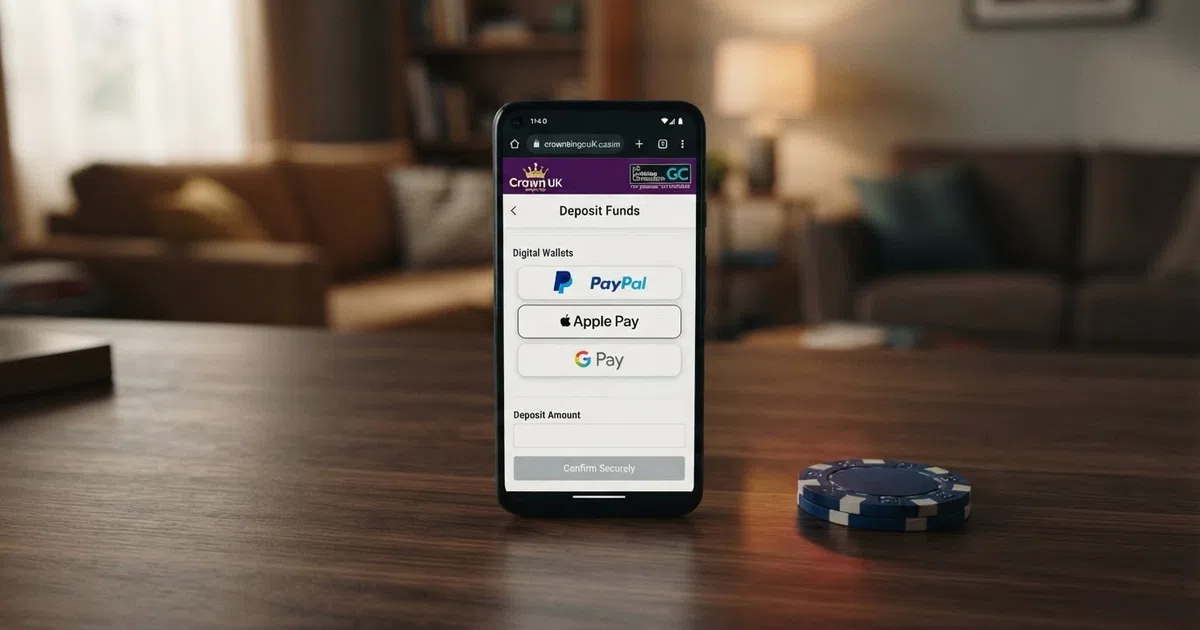
Every operator below holds a Gambling Commission operating licence, and the public register was checked on 29 July 2026. E-wallet deposits are instant at all ten; e-wallet withdrawals range from sixty minutes to four hours, and the reverse-withdrawal button that used to stall them has been banned since October 2021.
Current as of September 8, 2026 · Licence claims verified against the UK Gambling Commission public register.
What E-Wallet Casinos Actually Offer UK Players in 2026
An e-wallet casino is a UK-licensed gambling site that lets the player fund a balance and withdraw winnings through a third-party digital wallet such as PayPal, Skrill, Neteller or MuchBetter, rather than directly from a bank account. The wallet sits between the player’s bank and the casino cashier. That single layer does three things: it speeds up withdrawals, it keeps the casino’s name off the bank statement, and it makes one specific promise that the casino never has to keep — the wallet’s. It also adds a constraint: many UK casinos exclude the major e-wallets from welcome bonuses.
The headline numbers for 2026 are stark. PayPal is accepted at eight of the ten featured operators. Skrill at five. Neteller at five. A player who holds a Skrill balance walks into half the doors a PayPal user can. The reason is bonus economics: Skrill and Neteller are commonly excluded from welcome offers because both wallets have historically been used to layer bonuses across multiple accounts, and operators have responded by quarantining the deposit method. PayPal, by contrast, usually qualifies, though eligibility is always operator-specific.
The credit-card gambling ban that took effect on 14 April 2020 reaches into e-wallets as well. A UK-licensed operator cannot accept a deposit funded by a credit card, including a deposit made through PayPal or Skrill that was itself topped up with a credit card. The ban is enforced under LCCP condition 6.1.2, and the rule is the same whether the wallet hides the funding source or not.
And there is one rule the marketing never mentions: UK operators must verify the player’s identity — name, address, date of birth — before the first deposit is accepted, under LCCP condition 17.1.1. There is no grace period, no warm-up spins, no exception for e-wallet users who have already passed the wallet’s own checks. The e-wallet provides convenience. It does not provide anonymity.
What Counts as an E-Wallet Casino — and What Doesn’t
A casino that lists a wallet logo on its payments page is not automatically an e-wallet casino in the sense the phrase is used in the comparison below. The featured set is built on the narrower definition: a UK-licensed site that accepts at least one of PayPal, Skrill, Neteller or MuchBetter for both deposits and withdrawals, with terms the operator publishes.
Prepaid vouchers and mobile-payment layers fall outside that definition. Paysafecard is a voucher, not a wallet: it is a 16-digit code purchased with cash or debit, redeemed at the cashier, and rarely usable for withdrawals. Apple Pay and Google Pay are mobile-payment front-ends that resolve to a card; they are convenient at the cashier, but they are not e-wallets in the regulated sense. Trustly sits closer to a bank transfer than a wallet: it is an open-banking rail that pulls funds directly from the player’s bank account, and it is generally treated as a banking method rather than an e-wallet for bonus eligibility.
The KYC rule changes the meaning of “e-wallet anonymity” altogether. A player can hold a verified PayPal account, fund it from a debit card, and still expect to be asked for a passport and a utility bill before the casino’s first deposit is accepted. The wallet verifies the wallet. The casino verifies the player. Those are separate obligations, and the casino’s cannot be delegated.
Which E-Wallets UK Casinos Actually Accept — and the Surprising Gaps
PayPal is the default. It appears at eight of the ten featured operators and almost always qualifies for welcome bonuses where one is offered. The reason is straightforward: PayPal’s own KYC is rigorous, chargebacks through PayPal are rare, and operators have less reason to quarantine the deposit method.
Skrill and Neteller are the second tier. Both are widely recognised, both work at the cashier, and both are frequently barred from welcome-offer eligibility. The exclusion is not universal, and a player who holds a Skrill balance should still check the specific terms, but the working assumption is correct: at most UK casinos, the welcome offer will not count a Skrill or Neteller deposit. The gap shows up clearly in the operator set. Mr Vegas, PartyCasino and Queenplay all accept Skrill and Neteller; Bet365 accepts Skrill but not Neteller; Unibet accepts Neteller but not Skrill as a primary option; four of the ten accept neither.
MuchBetter is the smaller name. It appears at Betfair, alongside Skrill and Neteller, and gives that operator the widest alternative-wallet set in the featured ten. It is not a PayPal replacement, and few readers will arrive with a MuchBetter balance already loaded, but the option exists.
The honest shape of the market, then, is PayPal dominant, Skrill and Neteller present in roughly half the featured set and frequently excluded from bonuses, and everything else a footnote. A player whose wallet is Skrill or Neteller has fewer doors and may have to choose between using the wallet or using the welcome offer.
How an E-Wallet Casino Payment Actually Works
The deposit side is short. The player opens the casino cashier, selects the e-wallet, enters an amount, and is redirected to the wallet’s own login. The wallet confirms the transfer. The casino credits the balance instantly — every featured operator in this guide does so for e-wallet deposits.
The pre-deposit step is what changes the flow. Under LCCP condition 17.1.1, the operator must verify name, address and date of birth before the first deposit is accepted, not after. In practice the player is asked to upload a passport or driving licence, a recent utility bill or bank statement, and sometimes a payment-method proof, all before the cashier unlocks. The e-wallet’s own verification does not satisfy this requirement; the casino must run its own.
The withdrawal side reverses the path. The player requests a withdrawal from the casino cashier, the operator runs an internal review (the “pending period”), and once approved the funds are pushed to the e-wallet, where they typically credit in minutes. The pending period is the bottleneck, not the wallet. William Hill’s tested PayPal withdrawal cleared in 60 minutes; Bet365 PayPal takes one to four hours; Betfair e-wallet withdrawals clear within approximately four hours once approved.
E-Wallets vs Debit Cards vs Bank Transfer: What the Player Actually Gains
On deposit speed, the three methods are roughly equal. E-wallets are instant. UK-licensed casinos credit debit-card deposits instantly as well, because the card networks authorise in real time. Bank transfers are slower; same-day is the floor, next-day is the norm.
The real difference is on the withdrawal side. An e-wallet withdrawal that has been approved by the operator credits in minutes; a debit-card withdrawal goes through the card network and arrives in one to three business days, sometimes longer. A bank transfer is the slowest of the three, often two to five business days. For a player who wants the winnings in the bank tonight, the e-wallet is the only realistic option.
The bonus trade-off cuts the other way. Skrill and Neteller are commonly excluded from welcome offers, and a player who values the bonus over the speed will often deposit with a debit card for the welcome and switch to the e-wallet afterwards. PartyCasino makes this explicit: e-wallet deposits are excluded from the welcome offer, and the player must use a debit card to claim it.
There is a budgeting argument for e-wallets that has nothing to do with speed. Funding the wallet from a bank account creates a buffer between the casino cashier and the player’s main current account. A player who keeps £200 in their PayPal balance and uses only that balance at the casino cannot accidentally tap into rent money with one misplaced click. The convenience is real, and so is the constraint.
Which UK Casinos Actually Deliver on E-Wallet Support in 2026
The ten operators below were ranked by the breadth and honesty of their e-wallet support. Three accept all three major wallets (PayPal, Skrill, Neteller). One covers PayPal and Skrill. One covers Skrill, Neteller and MuchBetter but not PayPal. One accepts Neteller as its primary e-wallet. Four accept PayPal only, with NetBet adding Payz and Paysafecard as digital-wallet supplements.
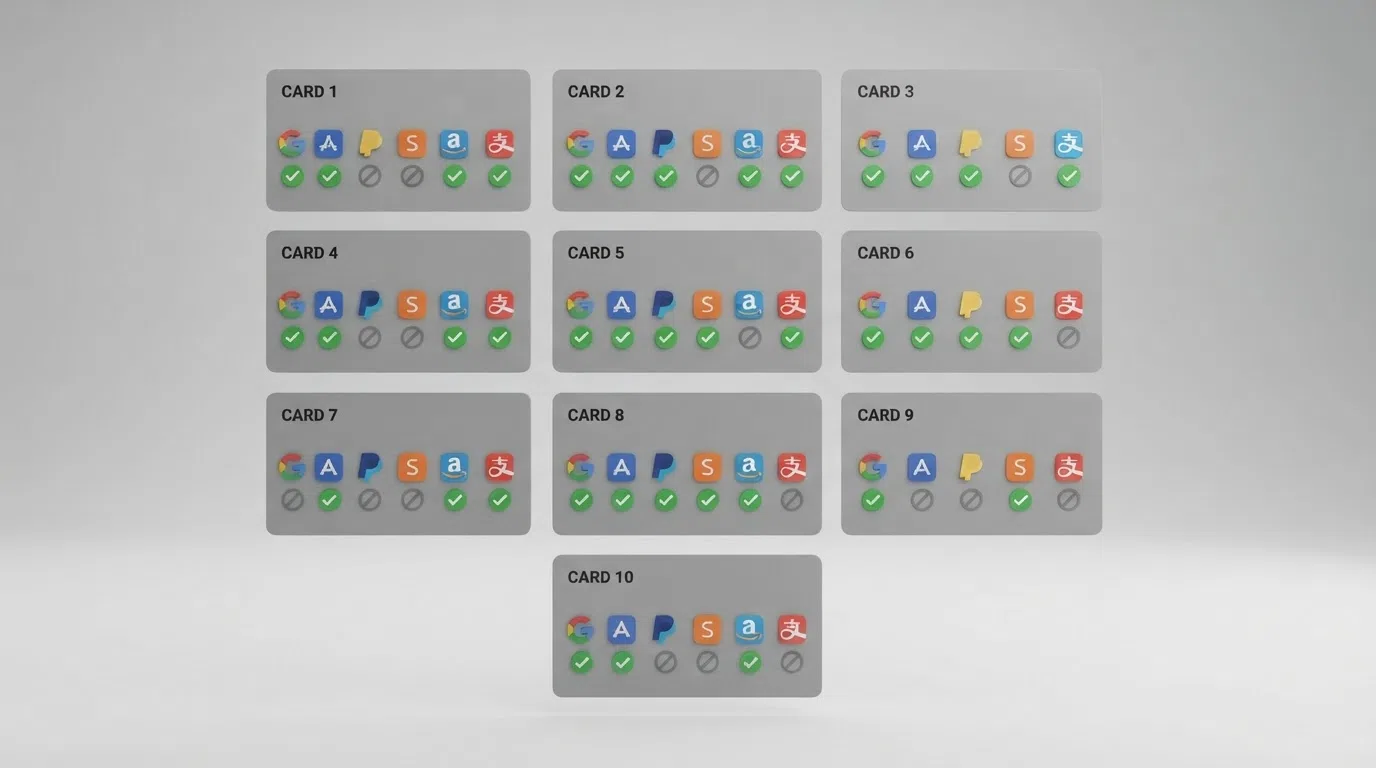
The split matters because it determines which wallet a player can actually use. PayPal holders have eight doors open. Skrill holders have five. Neteller holders have five. A player who holds all three has full access. A player who holds only Skrill has chosen a narrower path.
| Operator | E-Wallets Accepted | Key E-Wallet Term | UKGC Licence Confirmed |
|---|---|---|---|
| Mr Vegas | PayPal, Skrill, Neteller | £10 min / £1,000 max deposit (all three wallets) | Yes (UKGC #39380) |
| PartyCasino | PayPal, Skrill, Neteller | E-wallet deposits excluded from welcome offer | Yes (Entain Operations Limited) |
| Queenplay | PayPal, Skrill, Neteller | £5,000 per-method cap (payment table) | Yes (UKGC #39483) |
| Bet365 | PayPal, Skrill | PayPal: £25 min deposit, £10 min withdrawal, £5,500 cap, 1–4 hour processing | Yes (Hillside (UK Sports) LP) |
| Betfair | Skrill, Neteller, MuchBetter | E-wallet withdrawals clear within ~4 hours once approved | Yes (PPB Counterparty Services Limited) |
| Unibet | Neteller (primary); Skrill at higher minimum | Skrill min deposit £10 vs £5 for other methods | Yes (Platinum Gaming Limited) |
| William Hill | PayPal | £10 min withdrawal, £5,500 max, no fee, 60-minute tested time | Yes (WHG (International) Limited) |
| Ladbrokes | PayPal | None surfaced | Yes (LC International Limited) |
| BetMGM UK | PayPal | £4,000 maximum withdrawal cap on PayPal | Yes (UKGC #39198) |
| NetBet | PayPal (primary); Payz and Paysafecard also noted | None surfaced | Yes (NetBet Enterprises Limited) |
The cells marked with a “none surfaced” note simply mean the research did not surface a specific cap or restriction for that operator’s e-wallet terms; the absence is information in itself, and the operator write-ups below explain where it leaves the player.
Casinos With the Broadest E-Wallet Coverage: Three-Wallet Operators
Three operators in the featured set accept PayPal, Skrill and Neteller, and that breadth is the headline. The differences between them are in the restrictions.
Mr Vegas caps each wallet at £1,000 per deposit with a £10 minimum across all three, which is the tightest ceiling in the three-wallet group but also the most transparent — the cap is the same regardless of which wallet the player uses. PartyCasino accepts all three wallets but excludes e-wallet deposits from the welcome offer, which is the most significant restriction in the entire featured set: a player who wants the welcome must fund it with a debit card, and the e-wallet becomes a post-sign-up tool. Queenplay sits between the two, with a £5,000 per-method cap that is higher than Mr Vegas and lower than the £5,500 ceilings at Bet365 and William Hill.
For a player who holds multiple e-wallets and wants the most flexible cashier, Mr Vegas is the strongest fit. For a player who wants flexibility and is willing to forfeit the welcome bonus, PartyCasino works. For a player whose transaction sizes are large, Queenplay’s £5,000 per-method cap is the relevant number.
Mr Vegas
Mr Vegas is the broadest e-wallet cashier in the featured set. PayPal, Skrill and Neteller are all supported for both deposits and withdrawals, and the terms are uniform across the three: £10 minimum deposit, £1,000 maximum per transaction, instant crediting, no fee. The cap is the tightest of any three-wallet operator here, but it is also the most clearly stated, and a player who knows their typical deposit size can plan around it without ambiguity.
No e-wallet bonus restriction was surfaced in the research for Mr Vegas, which is worth noting because the same cannot be said for PartyCasino. The combination of three wallets, transparent caps and no surfaced bonus exclusion makes Mr Vegas the most usable three-wallet operator in the set for a player who values flexibility over per-transaction ceiling.
Operated by Videoslots Limited under UKGC operating licence #39380.
PartyCasino
PartyCasino’s e-wallet acceptance looks the same as Mr Vegas on paper: PayPal, Skrill and Neteller, all three. The single line of small print that undoes it is the welcome-offer exclusion. E-wallet deposits are explicitly excluded from the welcome offer, which means a player who funds the first deposit with PayPal or Skrill is playing without the bonus, and the e-wallet is useful only after the welcome has been claimed with a debit card.
This is the most significant restriction in the featured set, and the reason PartyCasino ranks below Mr Vegas despite identical wallet coverage. For a player who is indifferent to welcome bonuses, PartyCasino offers the same three-wallet cashier. For a player who treats the welcome offer as part of the value, the e-wallet is a second-act tool rather than a first-deposit option.
Operated by Entain Operations Limited under a valid UKGC operating licence.
Queenplay
Queenplay is the third three-wallet operator in the set, and the one that matters most to high-volume players. PayPal, Skrill and Neteller are all accepted, and the payment table notes a £5,000 per-method cap — higher than Mr Vegas’s £1,000 and closer to the £5,500 ceilings at Bet365 and William Hill. For a player whose typical deposit is in the low thousands rather than the low hundreds, that difference is the relevant number.
No e-wallet bonus restriction was surfaced in the research. The combination of full three-wallet coverage, a high per-method cap and no surfaced exclusion places Queenplay alongside Mr Vegas as a strong fit for a player who holds more than one e-wallet. Operated by Aspire Global International LTD under UKGC licence #39483.
Casinos With Solid Two-Wallet or Specialist E-Wallet Support
The second tier of e-wallet operators covers those that take two of the three major wallets, or lean on a less common one.
Bet365 accepts PayPal and Skrill but not Neteller, and PayPal carries the highest minimum deposit in the featured set at £25. Betfair skips PayPal entirely and offers Skrill, Neteller and MuchBetter — the widest alternative-wallet set in the ten, and the only MuchBetter acceptance in the group. Unibet treats Neteller as its primary e-wallet, with Skrill available but at a £10 minimum deposit against a £5 floor on other methods.
Bet365
Bet365 is the UK’s largest online operator and accepts two e-wallets: PayPal and Skrill. The headline term is the PayPal deposit floor of £25, which is double the £10 minimum that runs across most of the featured set and the highest e-wallet entry point in the group. A player making a £10 deposit cannot use PayPal at Bet365; they can use Skrill, or a debit card, or another method.
The PayPal withdrawal is the more interesting number. Minimum withdrawal is £10, maximum is £5,500, typical processing is one to four hours, and there is no fee. That combination — a high minimum deposit paired with a standard minimum withdrawal and a fast processing window — is the Bet365 PayPal profile, and a player who can meet the £25 floor gets a wallet experience that competes with William Hill’s on speed.
Operated by Hillside (UK Sports) LP, licensed by the UKGC (verified 29 July 2026).
Betfair
Betfair is the only operator in the featured set that does not accept PayPal, and the only one that accepts MuchBetter. The e-wallet set is Skrill, Neteller and MuchBetter, which is the widest alternative-wallet combination in the ten. A player who holds a MuchBetter balance — a smaller group than the Skrill or Neteller audience — has exactly one door in this ranking, and it is Betfair.
The withdrawal speed is the strongest published figure. E-wallet withdrawals typically clear within approximately four hours once approved, which is slower than William Hill’s 60-minute tested time and roughly in line with the upper end of Bet365 PayPal. For a player who values the alternative-wallet set over PayPal’s reach, Betfair is the fit.
Operated by PPB Counterparty Services Limited, licensed by the UKGC (verified 29 July 2026).
Unibet
Unibet is the narrowest e-wallet door in the featured set. Neteller is the primary e-wallet; Skrill is also available, but it carries a £10 minimum deposit against a £5 floor on other methods. A player depositing £10 via Skrill can do so; a player depositing £5 cannot. The point is small, but it is a real friction that the other PayPal-accepting operators do not impose.
For a player who already holds a Neteller balance and is happy with the operator’s other terms, Unibet works. For a player whose wallet is PayPal or Skrill alone, Unibet is a worse fit than the eight PayPal-accepting operators in the group. Operated by Platinum Gaming Limited, licensed by the UKGC (verified 29 July 2026).
PayPal-Only Operators: The Largest Acceptance Group
Four of the ten featured operators accept PayPal and no other major e-wallet. This is the most common e-wallet profile among UK-licensed casinos, and the one a Skrill or Neteller holder will hit most often when looking beyond the three-wallet operators.
William Hill offers PayPal with a tested 60-minute withdrawal and the same £10–£5,500 range as Bet365. Ladbrokes offers PayPal with no surfaced restrictions. BetMGM UK offers PayPal with a £4,000 maximum withdrawal cap, which is lower than the £5,500 ceiling at William Hill and Bet365. NetBet offers PayPal as the primary e-wallet and adds Payz and Paysafecard as digital-wallet supplements.
William Hill
William Hill’s e-wallet offering is the simplest in the set: PayPal, and PayPal only. The terms are competitive. Minimum withdrawal is £10, maximum is £5,500, and a tested withdrawal cleared in 60 minutes. There is no fee. The 60-minute figure is the fastest tested withdrawal in the featured set, and it sits well below the four-hour figures published for Betfair and the upper end of the Bet365 range.
For a player who holds a PayPal balance and values speed, William Hill is the strongest fit in the PayPal-only group. The absence of Skrill and Neteller is the cost, and a Skrill or Neteller holder has no option here. Operated by WHG (International) Limited under a UKGC operating licence confirmed on the public register on 29 July 2026.
Ladbrokes
Ladbrokes is the most familiar high-street name in the PayPal-only group, and the operator whose e-wallet terms the research surfaced least. PayPal is accepted; no specific bonus exclusion, deposit floor or withdrawal cap was surfaced. That absence is information in itself, but it is not the same as a clean bill of health, and a player who wants a specific term should check the operator’s payments page directly.
For a player who is happy with PayPal, who values the brand’s familiarity, and who is willing to accept a thinner published-terms profile in exchange for it, Ladbrokes is a reasonable fit. Operated by LC International Limited under a UKGC operating licence confirmed on the public register on 29 July 2026.
BetMGM UK
BetMGM UK is the PayPal-only operator with the lowest published withdrawal cap in the group: £4,000 maximum on PayPal, against £5,500 at William Hill and Bet365. For a player whose withdrawals are typically under £4,000, the cap does not bite. For a player who occasionally pulls a larger balance, the cap forces a split into two withdrawals, which is a small friction but a real one.
The brand is the LeoVegas group’s UK operation, and the licence account is LeoVegas Gaming PLC under UKGC licence #39198. For a player who is comfortable with the £4,000 ceiling and wants a PayPal-only cashier from a more recent UKGC-licensed operator, BetMGM UK is the fit. For a player who wants the higher ceiling, William Hill or Bet365 is the answer.
NetBet
NetBet rounds out the PayPal-only group, with a twist: the operator’s payment suite also includes Payz and Paysafecard as digital-wallet options. PayPal is the primary e-wallet; Payz is a digital wallet in the e-money sense; Paysafecard is a prepaid voucher rather than a wallet. Together they give NetBet a wider digital-wallet cashier than the “PayPal only” label suggests, though Paysafecard’s restriction to deposits-only limits its usefulness for withdrawals.
No e-wallet bonus restriction was surfaced for NetBet. For a player who uses PayPal and wants the option of Payz alongside it, NetBet is the relevant operator in this group. Operated by NetBet Enterprises Limited under a UKGC operating licence confirmed on the public register on 29 July 2026.
Why Your E-Wallet Withdrawal Lands Faster at Some UK Casinos Than Others
The two-stage withdrawal pipeline is the first thing to understand. The casino has a pending period during which it reviews the request, runs any required checks, and approves the release. Once approved, the funds leave the casino and arrive at the e-wallet, which credits the balance in minutes. The bottleneck is the operator, not the wallet. A player who chooses a fast operator is choosing a short pending period, and a player who has already passed KYC will not be slowed by it again.

The featured set spans a useful range. William Hill’s tested PayPal withdrawal cleared in 60 minutes. Bet365 PayPal takes one to four hours. Betfair e-wallet withdrawals clear within approximately four hours once approved. Other operators in the set do not have published tested times in the research, and a player who needs a guaranteed same-day withdrawal should expect to verify the specific terms directly.
UK regulation tightened the picture in October 2021. Reverse withdrawals — the function that used to let a player cancel a pending withdrawal and return the money to the playing balance — were banned permanently. The point of the rule is to prevent operators from holding withdrawn funds hostage while encouraging the player to keep playing. The effect for the player is that a withdrawal, once requested, moves forward. That change is the structural reason the worst-case pending periods have come down across the market.
How an E-Wallet Deposit Lands in Your Casino Account
Every operator in the featured set credits e-wallet deposits instantly. This is the industry norm for UK-licensed casinos and is one of the genuine improvements the e-wallet layer provides over bank transfer. The variable is the floor and the ceiling.
The research carries a small set of specific deposit terms. Mr Vegas sets a £10 minimum and a £1,000 maximum per transaction across PayPal, Skrill and Neteller. Bet365’s PayPal minimum is £25 — the highest in the set — with a £5,500 maximum. Unibet charges £10 minimum on Skrill, against £5 on other methods. Other operators in the set did not surface specific e-wallet deposit caps in the research, and the absence should be read as “the operator did not publish a term that the available sources captured” rather than as “no cap exists”.
For a player with a £100 PayPal balance and a £50 deposit plan, every operator in the set works. For a player with a £1,500 PayPal balance who wants to deposit it in a single transaction, the Mr Vegas £1,000 cap forces a split. That is the kind of detail the headline number hides, and the reason the table above carries the cap rather than just the method.
What Determines How Fast Your E-Wallet Withdrawal Arrives
The two legs of the journey behave differently. The operator’s internal review — the pending period — varies from operator to operator, and is the part the player can influence by choosing the right casino. The e-wallet’s own crediting time, once the funds leave the casino, is fast across the board: minutes, not hours. The two figures together give the total withdrawal time.
The published figures for the featured set are William Hill at 60 minutes tested, Bet365 PayPal at one to four hours, and Betfair e-wallet at approximately four hours once approved. These are tested or reported times, not contractual guarantees, and the actual time for any given withdrawal will depend on the time of day, the player’s verification status, and the operator’s workload.
UK regulation also limits how long the operator can hold the request. The UKGC’s LCCP requires operators to process withdrawals promptly, and the 2021 ban on reverse withdrawals removed the mechanism that used to let the pending period stretch indefinitely. The result is a market in which the worst-case pending period has come down and the typical e-wallet withdrawal lands within a day, often within hours.
The reverse-withdrawal ban deserves a second mention because it changes the player’s psychology. There is no longer a “let me cancel that and keep playing” option. The moment a withdrawal is requested, it moves toward the player’s wallet, and the only way to get the money back is to deposit again, which is a deliberate act rather than a checkbox.
PayPal vs Skrill vs Neteller: Which E-Wallet Wins for Casino Play
The three major e-wallets serve different player profiles, and the table below puts the comparison on one page.
| E-Wallet | Featured Casinos Accepting (of 10) | Bonus Eligibility | Typical Fees at UK Casinos |
|---|---|---|---|
| PayPal | 8 | Usually qualifies for welcome offers (operator-specific) | Fee-free at featured operators |
| Skrill | 5 | Commonly excluded from welcome offers | Fee-free at featured operators |
| Neteller | 5 | Commonly excluded from welcome offers | Fee-free at featured operators |
PayPal wins on acceptance. It is the only wallet that appears at eight of the ten featured operators, and it is the wallet most likely to qualify for a welcome offer where one is offered. The marketing language around PayPal is not puff: it is the most widely accepted e-wallet at UK-licensed casinos, and the reason is partly that PayPal’s own KYC is rigorous and chargebacks are rare.
Skrill and Neteller are roughly tied on the negative side. Both appear at five of the ten, and both are commonly excluded from welcome bonuses. The exclusion is not universal — a player who holds a Skrill balance should always check the specific terms — but the working assumption holds. A Skrill or Neteller player who values the welcome bonus will often deposit with a debit card for the welcome and switch to the e-wallet afterwards.
On fees, the picture is uniform: all three are fee-free for casino transactions at the featured operators. The operator does not surcharge the deposit or the withdrawal, and the wallet’s own fees (for currency conversion, for topping up by certain methods) are a separate question that sits outside the casino’s terms.
The right wallet depends on the player’s priority. PayPal is the broadest, most bonus-friendly, and most familiar. Skrill and Neteller are narrower and often excluded from bonuses, but they work at the cashier, and a player who already holds a balance is not obliged to abandon it. The trade-off is real, and it is the trade-off the welcome-offer language on most casino sites is designed to hide.
E-Wallet Transaction Limits: What the Featured Casinos Actually Cap
The ceilings in the featured set span a fivefold range where they are published. Bet365 caps PayPal withdrawals at £5,500. William Hill caps PayPal withdrawals at £5,500. BetMGM UK caps PayPal withdrawals at £4,000. Queenplay notes a £5,000 per-method cap. Mr Vegas caps each of its three wallets at £1,000 per transaction. Other operators in the set did not have a publicly surfaced e-wallet withdrawal cap in the research.
For most UK players, the ceiling is the more important figure. A withdrawal cap of £5,500 will not bite a player who is cashing out a session’s winnings. It will bite a player who is cashing out a large balance accumulated over weeks. Mr Vegas’s £1,000 cap is the tightest in the set, and a player who plays high-volume sessions at Mr Vegas will feel it; the same player at Bet365 or William Hill will not.
The deposit minimums are simpler to compare. Bet365 PayPal’s £25 floor is the outlier. Mr Vegas and Unibet’s £10 floors on Skrill are typical. The £5 floor on other methods at Unibet is the lowest in the set, and is the figure a player with a small bankroll will see at the cashier.
A player who wants the highest published ceiling should pick from Bet365 or William Hill. A player who wants the most transparent per-wallet cap should pick Mr Vegas. A player who does not see a cap on the operator’s published terms should expect to ask, because the absence of a surfaced cap is not the same as the absence of a cap.
The UK Rules That Protect Every E-Wallet Deposit
Every casino in the featured set holds a UKGC operating licence, and that is the non-negotiable baseline. The Gambling Commission, sponsored by the Department for Culture, Media and Sport, regulates commercial gambling in Great Britain under the Gambling Act 2005 and the Gambling (Licensing and Advertising) Act 2014, the latter introducing the point-of-consumption regime that brought remote operators serving GB customers into the UKGC’s licensing perimeter. An offshore casino serving a GB customer without a UKGC licence is operating illegally; the UKGC’s enforcement arm uses disruption powers rather than ISP blocking, but the legal position is unchanged.
A UKGC operating licence is not a one-time badge. The operator must hold a valid licence, follow the Licence Conditions and Codes of Practice (LCCP), and comply with the Remote Technical Standards (RTS) that govern the technical and procedural conduct of remote gambling. The combination is what separates a UK-licensed casino from an offshore one, and the difference shows up in three places the player can feel: identity verification, fund protection, and bonus rules.
The bonus rules are worth noting here because they are recent. From 19 December 2025, wagering requirements on bonuses are capped at 10x, and mixed-product bonuses are banned. The “100% match plus free spins” packages that used to carry separate wagering conditions on the bonus and the spin winnings are no longer legal at GB-licensed operators. A player who is comparing offers should expect the wagering multiple on the welcome to be no higher than 10x, and the bonus to be a single-product offer rather than a stack.
Your UKGC Licence Check: How to Confirm Any Casino Is Legitimate
The single source of truth is the UKGC public register, which lists every operating licence holder in Great Britain. A player who wants to confirm any operator’s status can search the register by licence account name, and the result will show the licence status, the trading names associated with it, and any conditions attached.
All ten featured operators in this article were confirmed against the public register on 29 July 2026. A “confirmed” entry means the operator’s licence account name appeared on the register as active, and the trading name used by the casino was associated with that account. The verification is a point-in-time check, and a player who revisits the page in six months should re-check, because licence status can change.
A GB operating licence is more than a permit. It binds the operator to the LCCP and the RTS, and a player who has a dispute with a UK-licensed casino has a route to the UKGC and ultimately to an independent adjudicator (typically IBAS). A player who has a dispute with an offshore casino has no equivalent route, and the protection of the LCCP does not apply.
Why You Must Verify Your Identity Before Your First E-Wallet Deposit
LCCP condition 17.1.1 requires operators to verify name, address and date of birth before the first deposit is accepted or any gambling takes place. There is no grace period. There is no warm-up spin. There is no exception for a player who has already passed the e-wallet’s own KYC.
The rule eliminates the possibility of anonymous play at any GB-licensed casino, regardless of payment method. A player who funds a deposit with PayPal, Skrill, Neteller or a debit card will be asked for a passport or driving licence, a recent utility bill or bank statement, and sometimes a payment-method proof. The casino’s KYC is its own obligation, and the e-wallet’s verification does not satisfy it.
The practical consequence is that an e-wallet is a convenience layer, not an anonymity layer. It hides the casino’s name from the bank statement; it speeds up withdrawals; it gives a player a buffer between the cashier and the current account. It does not let the player skip the casino’s identity checks. A reader who is looking for anonymous gambling has come to the wrong market.
How UK Regulation Protects the Money in Your Casino Account
Three structural protections apply to every GB-licensed operator, and they sit around the e-wallet balance rather than inside it.
The first is fund segregation. UKGC licence conditions require operators to hold player funds in separate accounts, protected from the operator’s own creditors. The level of protection varies — operators can elect to hold funds in a segregated account, in a trust, or in a ring-fenced account with a custodian bank — and a player who wants to know the level should check the operator’s published fund-protection notice. The default position is “segregated”, which means the funds are separate from the operator’s own money but not fully insulated from an insolvency; the higher tiers offer stronger protection.
The second is the credit-card ban. Since 14 April 2020, no GB-licensed operator may accept a credit-card payment, and the ban extends to e-wallet transactions funded by a credit card. A deposit at a UK casino, whether through a debit card or an e-wallet, must be funded from a non-credit source. The rule is enforced at the operator level, and the wallet’s own screening is a backstop rather than the primary check.
The third is the incoming deposit-limit regime. From 31 October 2025, operators must prompt customers to set a financial limit before the first deposit. From 30 June 2026, only a “gross deposit limit” — based solely on the money a customer pays in over a set duration — may be called a “deposit limit”. The second phase of the RTS 12B deposit-limit requirements has been extended to 30 September 2026. The combined effect is that a player setting a deposit limit is setting a number that tracks real money paid in, not net-of-withdrawals, and the rule applies regardless of which payment method funds the deposit.
Staying in Control: The Safer-Gambling Tools Tied to Your E-Wallet
The safer-gambling tools in the UK are mandatory at every GB-licensed operator, and the e-wallet is just the funding pipe. The limit sits on the casino account, not on the wallet, and the wallet does not see it. A player who sets a £200 weekly deposit limit will hit that ceiling on the casino side regardless of whether the deposits come from PayPal, Skrill, a debit card or a bank transfer.
The support infrastructure extends beyond the casino. GAMSTOP is the national online self-exclusion register, mandatory for all GB online licensees since 31 March 2020. The National Gambling Helpline, run by GamCare, is free and available 24/7. GambleAware provides an anonymous self-assessment tool. NHS England took commissioning responsibility for gambling-harms treatment from 1 April 2026, completing the three-tier support system that sits around every GB-licensed casino.
The prevalence data is the reason the infrastructure exists. Around 0.5% of adults in England experience problem gambling, 3.8% are at elevated risk, and an estimated 7% of the British population are negatively affected by someone else’s gambling. The numbers are not large in percentage terms, but they are large in absolute terms, and they are the reason the deposit-limit regime, the financial-vulnerability checks, and the self-exclusion register are mandatory rather than optional.
Setting Deposit Limits When You Pay With an E-Wallet
The limit sits on the casino account and applies regardless of the funding method. A player who sets a £100 weekly deposit limit at Bet365 and funds it with PayPal will hit the ceiling on the casino side, not on PayPal’s. The e-wallet is the pipe, not the valve.
From 30 June 2026, only a “gross deposit limit” may be called a “deposit limit” by the operator. The figure tracks the actual cash a customer pays into the account over a set duration, and a player setting the limit should expect to see it expressed in those terms. The change matters because older “deposit limit” terminology in marketing materials may have conflated deposits with net-of-withdrawals figures, and the rule closes that gap.
A separate rule kicks in at the £150 mark. From 28 February 2025, a financial-vulnerability check is triggered when net deposits minus withdrawals exceed £150 in a rolling 30-day period. The check uses public-record data only, and the trigger is automatic; the operator does not need the player to opt in. The point of the rule is to flag players whose deposit behaviour has changed in a way that warrants a closer look, and a player who sees the trigger should expect a check rather than a penalty.
GAMSTOP: What Self-Exclusion Means for E-Wallet Players
GAMSTOP blocks the player, not the payment method. Once a player registers with GAMSTOP, no GB-licensed operator may accept a deposit from that identity, regardless of whether the player tries to fund it with PayPal, Skrill, a debit card or anything else. The exclusion is at the identity layer, and the wallet is irrelevant to the rule.
The exclusion periods are 6 months, 1 year, 5 years, or 5 years with auto-renewal. None of the periods can be cancelled early; a player who registers for 5 years stays excluded for 5 years. The point of the rule is to give the player a hard boundary that survives a change of mind, and the early-cancellation ban is the structural reason GAMSTOP works.
GAMSTOP has been mandatory for GB online licensees since 31 March 2020. A player who tries to deposit at a UK-licensed casino while registered will be refused, and the operator is required to enforce the refusal. The mechanism is not the e-wallet; the mechanism is the operator’s onboarding check against the GAMSTOP register, which happens before the first deposit is accepted.
Where UK Players Get Help: The Support Infrastructure Beyond the Casino
The support infrastructure is a three-tier system, and the tiers sit outside the casino entirely.
The first tier is the National Gambling Helpline, run by GamCare on 0808 8020 133. It is free, confidential, and available 24/7. A player who wants to talk to someone about their own gambling, or about someone else’s, can call at any time. The helpline is the entry point for most of the rest of the system, and the call is the most common route into structured support.
The second tier is the GambleAware self-assessment tool. It is anonymous, takes 2 to 4 minutes, and produces a personalised risk profile. A player who is unsure whether their gambling is becoming a problem can take the assessment without registering, and the result is a private reflection rather than a record.
The third tier is the NHS England gambling-harms treatment programme. From 1 April 2026, NHS England took commissioning responsibility for gambling-harms treatment in England, completing a transition that brings gambling disorder into the same clinical framework as other behavioural health conditions. NHS gambling service use increased by 130% over the preceding year, which is the demand signal that drove the commissioning change.
The prevalence data behind the system is from GOV.UK. In England, around 0.5% of adults experience problem gambling and 3.8% are at elevated risk; an estimated 7% of the British population are negatively affected by someone else’s gambling. The 0.5% figure is small in percentage terms, but it is large in absolute terms, and it is the figure that explains why the deposit-limit regime, the self-exclusion register and the NHS treatment pathway are mandatory rather than optional.
How We Evaluated and Ranked the E-Wallet Casinos on This Page
The ranking above is built on a defined set of checks, and the criteria are qualitative rather than scored. Every operator was confirmed against the UKGC public register on 29 July 2026, and the verification is a point-in-time check that a reader should re-run if revisiting the article later.
The first criterion is the breadth of e-wallet acceptance: how many of PayPal, Skrill and Neteller are supported, and at what deposit and withdrawal terms. Three-wallet operators outrank two-wallet operators; two-wallet operators outrank PayPal-only operators. MuchBetter acceptance is noted but does not change the rank, because it serves a smaller player base.
The second criterion is the severity of e-wallet restrictions. An exclusion from the welcome offer is the most significant restriction in the set, and a player who values the welcome will weight it accordingly. A higher-than-typical deposit floor (Bet365’s £25 PayPal minimum) is a smaller restriction. A lower-than-typical withdrawal cap (BetMGM UK’s £4,000) is a smaller restriction again, and only matters to a player whose withdrawals are large.
The third criterion is the availability of per-operator withdrawal speed data. William Hill’s 60-minute tested time, Bet365 PayPal’s 1–4 hour window and Betfair’s approximately-four-hour figure are the three published data points in the set. Where a speed is published, it is used; where it is not, the absence is noted rather than filled in with a guess.
The research sources for the article are the UKGC’s official publications and public register, the operator payment-method pages, independent casino-review outlets that publish tested withdrawal times, and the Gambling Commission’s regulatory announcements on deposit-limit and bonus-wagering rules. Where a figure is unattributed in the article, it is qualitative; where a figure carries a number, the source is research, the inputs, or the published calculation.
What UK Players Should Check Before Funding an E-Wallet Casino Account
The honest answer to “which e-wallet casino should I use” depends on three checks, and the order of the checks is the order of the decision.
The first check is wallet acceptance. PayPal is the safest bet, with 8 of 10 featured operators supporting it. A Skrill or Neteller holder has 5 of 10. A MuchBetter holder has 1. If the player’s wallet is not in the acceptance set of the casino they want, the rest of the analysis is irrelevant, and the answer is a different casino. This is the gate, and most readers clear it without thinking because PayPal is so widely accepted. The Skrill and Neteller reader is the one who has to think.
The second check is bonus eligibility. Skrill and Neteller deposits are commonly excluded from welcome offers at UK casinos, and a player who values the welcome over the e-wallet convenience should deposit with a debit card to claim it, then switch to the e-wallet afterwards. PartyCasino is the clearest example: e-wallet deposits are explicitly excluded, and the welcome must be claimed with a debit card. The trade-off is real, and the right answer depends on the size of the welcome relative to the convenience of the wallet.
The third check is the operator’s e-wallet withdrawal cap and how it compares to the player’s typical play level. The featured set spans £1,000 (Mr Vegas) to £5,500 (Bet365, William Hill) where a figure is published, and many operators do not publicly surface a cap at all. A player who routinely withdraws more than £1,000 will feel Mr Vegas’s cap; a player who withdraws £200 at a time will not feel it. A player who has not seen a cap on the operator’s published terms should ask, because the absence of a surfaced cap is not the same as the absence of a cap.
The verdict is that the casino the player picks is less important than the wallet the player holds. PayPal players have eight doors and the broadest bonus eligibility; Skrill and Neteller players have five doors and a bonus trade-off; MuchBetter players have one door. The brand is secondary. The wallet is primary.
Frequently Asked Questions
Can I claim a UK casino welcome bonus if I deposit with Skrill or Neteller?
At most UK casinos, no. Skrill and Neteller deposits are commonly excluded from welcome offers because both wallets have historically been used to layer bonuses across multiple accounts, and operators have responded by quarantining the deposit method. PayPal usually qualifies, as do debit cards, though eligibility is always operator-specific. The right move is to check the bonus terms before depositing; the wrong move is to assume the welcome will count the e-wallet.
What is the fastest e-wallet to withdraw casino winnings from a UK site?
The fastest tested withdrawal in the featured set is William Hill’s PayPal at 60 minutes. Bet365 PayPal typically clears in 1–4 hours, and Betfair e-wallet withdrawals clear within approximately 4 hours once approved. The bottleneck is the operator’s internal review, not the wallet; once the funds leave the casino, the wallet credits them in minutes. UK regulation has banned reverse withdrawals since October 2021, so a withdrawal, once requested, moves forward.
Which UK casinos accept PayPal for both deposits and withdrawals?
Eight of the ten featured operators accept PayPal for both deposits and withdrawals: Mr Vegas, PartyCasino, Queenplay, Bet365, William Hill, Ladbrokes, BetMGM UK and NetBet. The two that do not are Betfair (which accepts Skrill, Neteller and MuchBetter but not PayPal) and Unibet (which accepts Neteller as its primary e-wallet). Of the eight PayPal-accepting operators, the strongest tested withdrawal speed is William Hill at 60 minutes.
Are there extra fees for using e-wallets at UK online casinos?
No, at the featured operators. UKGC-licensed casinos in the set do not surcharge e-wallet deposits or withdrawals; Bet365 PayPal and William Hill PayPal are both fee-free. The wallet’s own fees, for currency conversion or for topping up by certain methods, are a separate question that sits outside the casino’s terms. A player who funds a PayPal balance from a credit card will hit the credit-card gambling ban at the deposit step, not a fee at the cashier.
Which e-wallet is safest for UK online gambling deposits?
All three major e-wallets (PayPal, Skrill, Neteller) are authorised e-money institutions with their own KYC and consumer protections, and the casino’s own KYC obligation applies regardless of the wallet. The e-wallet does not change the casino’s verification requirement, and a player who has passed the wallet’s KYC still has to pass the casino’s. The choice between wallets is therefore a choice about acceptance and bonus eligibility rather than about safety: PayPal is the broadest, Skrill and Neteller narrower, and MuchBetter the most specialised. Safety from the casino’s side comes from the UKGC licence, not from the wallet.
Payments – fastestpayout-casinos-uk
Content created by the «fastestpayout-casinos-uk» team