
Where you can still use an eCheque at a UK casino in 2026 — and what it costs you
 Available in GB
An eCheque is a bank-to-bank payment that has been around in one form or another for more than twenty years, and the security layer that comes with routing through the Automated Clearing House is the main reason it has not disappeared. The problem is that almost nobody lists it any more. Out of ten major UK brands checked for this guide, only one — Betway — explicitly names e-Check in its UK cashier. The rest either route you to “bank transfer” and call it done, or quietly omit cheque deposits altogether. That is the honest starting point for any page on this subject, and it shapes everything that follows: the method works, it is regulated, and the casino that takes it from you is harder to find than the marketing suggests.
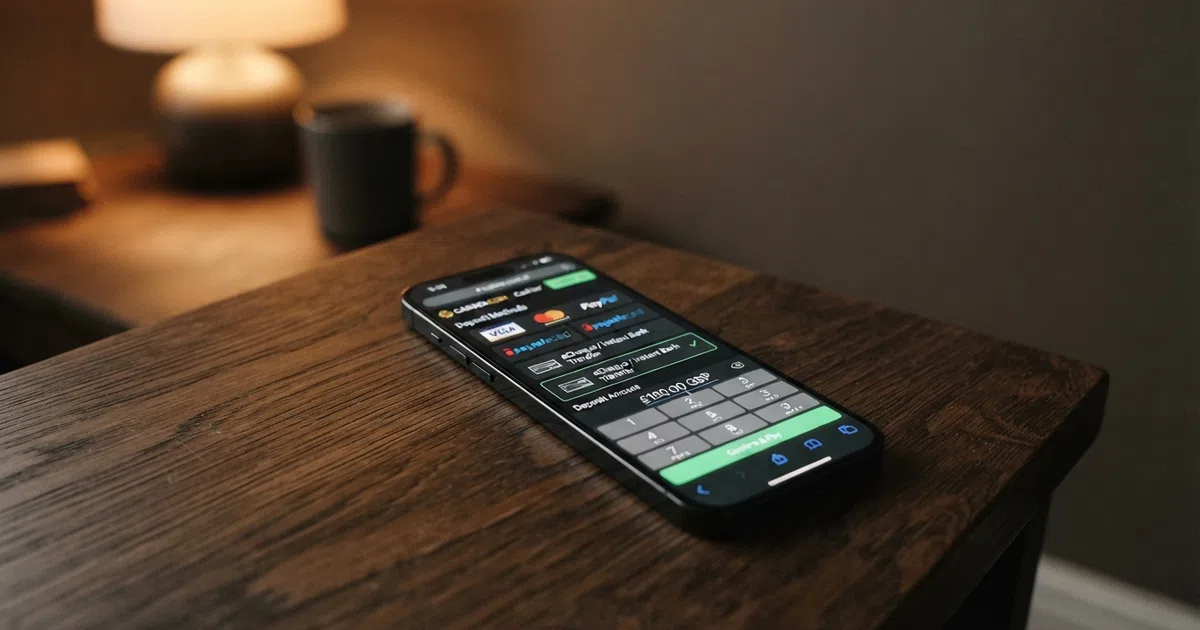
Last verified on September 8, 2026 against the UK Gambling Commission’s public licence register and each operator’s own UK payment page.
What an eCheque actually is — and why UK casino players still use it
An eCheque, sometimes written eCheck, is the digital cousin of a paper cheque. Instead of you mailing a slip of paper to a casino, the transaction is created electronically and routed through the ACH network, where it is cleared in batches and settled into the recipient’s account. In the UK, the underlying cheque infrastructure was rebuilt by Pay.UK’s Image Clearing System in 2019, and the practical effect of that change was simple: a cheque deposited before a bank’s cut-off time on a working day typically has funds available by 11:59 PM the next working day, down from up to six working days under the old paper model.
The eCheque sits in an odd corner of the UK payments world. Faster Payments moves money in seconds, debit cards are instant at the cashier, and open banking now lets you authorise a bank transfer from your phone in a couple of taps. eCheque still works the way it always did: you authorise, the casino or its payment processor queues the instruction, the ACH batch picks it up, and the funds arrive 24 to 48 hours later — sometimes sooner, never on a weekend. The “heavier security” reputation is real, in the sense that ACH leaves a paper-trail and the cheque itself is a credit-push instrument the payer can revoke, but that same friction is also why speed-focused players have moved on.
Why bother, then? Three reasons, all of them real for at least some players. First, the credit card ban of 14 April 2020, applied across all remote gambling under LCCP condition 6.1.2, cut off the dominant funding route for a large slice of UK players and pushed them toward bank-based methods. Cards remain the most popular deposit method, but paying via bank account has become the second most popular option overall for UK players — for many, it is now the first choice. eCheque is one of the bank-based options, and it lives inside that post-2020 shift even if it is not the option most of those migrating players ended up using. Second, eCheque is the method of last resort for anyone whose bank does not yet support open banking or whose card issuer declines gambling transactions. Third, the regulated status of the method is non-negotiable: under LCCP 5.1.2, in force since 31 January 2024, every deposit a UKGC-licensed operator accepts has to go through a payment service provider regulated under the Payment Services Regulations 2017, and that is the route an eCheque at a compliant operator takes.
What does a player actually need to deposit by eCheque? A current account at a UK bank, the routing and account details the cashier asks for, and the willingness to wait 24 to 48 hours for the first transaction to clear. Verification is not optional: every GB-licensed casino has to confirm your name, address and date of birth before your first deposit, a rule in force since 7 May 2019. Once that is done, the eCheque flows through the PSP layer the licence demands, and the cashier shows the balance when ACH settles. The eCheque itself is over twenty years old as a mechanism, and its heavier security measures have helped it remain a payment option in niches where the alternatives do not quite reach.
How an eCheque casino deposit actually works
The flow has four steps and they do not change much from one operator to the next. You select eCheque from the cashier’s deposit options, enter the amount, hand over the bank details the form asks for (usually sort code, account number and the name on the account), and authorise the transaction. Behind the scenes, the casino’s payment service provider wraps the instruction, the ACH network picks it up in one of its four daily batches, and the funds settle into the casino’s account one to two business days later. Weekends and bank holidays do not count, and the system is offline for both. If you deposit on a Friday evening, the realistic landing time is Tuesday.
The PSP layer is the part a player does not see but the UKGC requires. Under LCCP 5.1.2, the operator cannot accept a raw bank-to-bank instruction — the money has to move through a PSD 2017-regulated intermediary. That is why a cashier that says it accepts eCheque at a UK-licensed casino is, in practice, accepting it through a processor that handles the cheque logic on the operator’s behalf. The player’s experience is unchanged: enter details, click, wait. The compliance difference is what makes the transaction licensable in the first place.
Echeque vs the modern UK banking landscape: why it is a niche choice
The honest comparison is brutal. Debit card deposits are instant. Open banking and Trustly are instant, with withdrawals in one to two days. PayPal and most e-wallets process withdrawals in two to twenty-four hours. Bank transfers take one to three days in, three to seven days out. An eCheque deposit lands in 24 to 48 hours, and an eCheque withdrawal — where the operator supports it at all — takes two to five business days on top of any internal processing. eCheque is the slowest of the bank-based options a UK player can pick, and that is before any queue at the operator’s payments team.
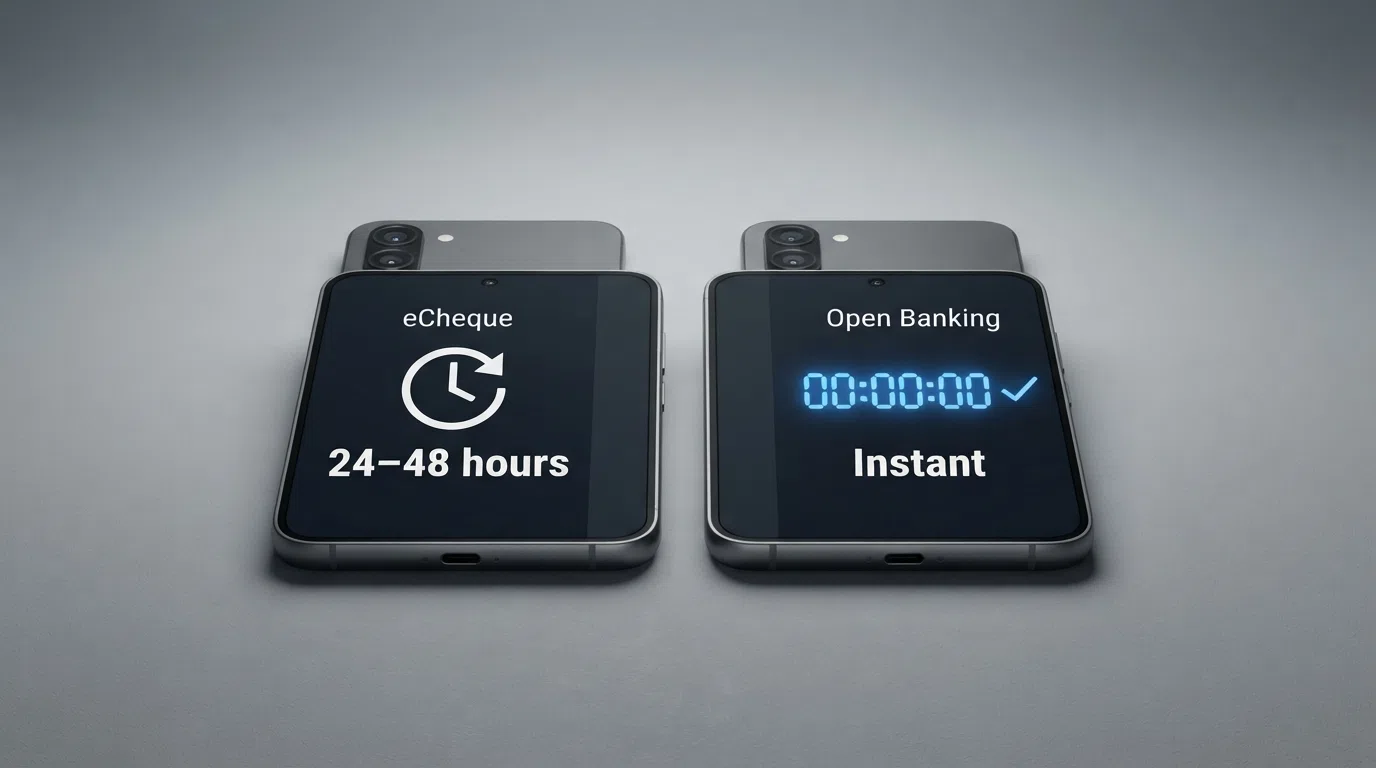
So why does it survive? The persistence is partly structural: the Image Clearing System, ICS, has been running since 2019, and the rails are there, so a payment processor can offer eCheque as a product at low marginal cost. It is partly demographic: a long tail of UK bank accounts still do not play nicely with open banking, and eCheque is the only cheque-style method the cashier still surfaces. And it is partly the inertia of a niche that the marketing pages of US-facing sites keep alive. The US-focused guides that dominate the search results frame eCheque as a generic, fast, secure option. In the UK, the speed claim is the part that does not hold up.
The single most important thing to take from this comparison: a UK player who values speed and universal availability is better served by debit card or open banking. A UK player whose bank or card blocks the alternatives is the audience eCheque is still built for. The next section is about how to confirm which of those two groups you fall into.
Finding a GB-licensed casino that actually takes eCheque
Start with the cashier, not the homepage. The first step is the public register at the UK Gambling Commission: every operator that legally serves GB customers appears there, with a current licence status, an account number, and the legal entity name. If a casino is not on the register, the rest of the comparison is academic, because a deposit to an unlicensed site forfeits every protection discussed further down this page.
Once a brand is on the register, the next step is its own payments page, not a review site’s summary. The verification done for this guide found that only Betway explicitly lists e-Check as a named payment method in the UK. William Hill lists “bank cheque” as a withdrawal method, not a deposit method, and the rest of the major brands reviewed — Bet365, Sky Vegas, Paddy Power Games, Ladbrokes, Grosvenor, LeoVegas, 32Red, Betfred — do not name eCheque in their surfaced cashier or in the cross-referenced review sources. That is the honest state. It is not proof that these operators reject eCheque at the back end; an operator can process a cheque-style payment without ever surfacing the word. But it does mean a player cannot rely on the cashier to confirm it for them, and the right move is to ask the operator’s support team before depositing.
The wider context for this scarcity is the UKGC’s enforcement posture. The Commission does not currently hold statutory ISP or DNS blocking powers, and its toolkit against unlicensed operators is disruption rather than blanket blocking — 3,140 disruption notices issued, 447,778 URLs referred to search engines, and 287,961 URLs removed between April 2024 and June 2025. That is real activity, but it is the background to the licensed market, not a substitute for checking the register yourself.
Mobile eCheque casinos: depositing by cheque on your phone
The clearing time is identical regardless of device. Whether you authorise the eCheque in a browser tab on a laptop or tap through the cashier in a casino’s iOS or Android app, the ACH batch picks the instruction up on the same schedule, and the funds settle on the same next-business-day window. There is no mobile-specific speed premium to chase.
What does vary by device is how the cashier is laid out. Most of the major UK brands in this guide maintain apps alongside their mobile sites, and the deposit flow in an app is usually a stripped-down version of the desktop cashier — fewer payment methods shown on the first screen, with the full list behind a “more options” or “bank” tab. The eCheque entry, where it exists, tends to be under that tab rather than on the front page, which is another reason checking the full cashier matters. The verification is no different: the same identity check applies on mobile as on desktop, and the same PSP routes the payment.
The GB-licensed casinos we checked for eCheque support in 2026
Ten brands were reviewed for this guide, drawn from the UK licensed market and cross-referenced against multiple sources for payment-method availability. Only Betway explicitly confirms e-Check in its UK cashier. William Hill lists bank cheque for withdrawals. The remaining eight do not name eCheque in the sources reviewed, and that gap is the most important fact on the table below. Every operator on this list holds a current UKGC licence; the wagering and bonus terms shown are the terms the operator publishes; the 10× statutory wagering cap that took effect on 19 December 2025 under LCCP SR Code 5.1.1 applies to every GB-licensed brand in this table, even where the welcome offer is structured as free spins with no wagering on the spin winnings themselves.
| Casino | UKGC Licence | Welcome Offer | Free Spins | Wagering | Bonus Validity |
|---|---|---|---|---|---|
| Betway | 39700 | 100% match up to £50 (debit card only, £10+ first deposit) | 125 on Big Bass Bonanza (25/day for 5 days) | 50× on bonus funds; 0× on free spins | 7 days |
| William Hill | 2752 (since 1 Jan 2009) | Casino promo V26: £20 bonus; sports: £30 in free bets | — | 10× on casino promo (V26) | 72h casino; 7 days sports |
| Bet365 | 39563 | Bet £10 Get £30 (sports, debit card only) | — | Free bet stake not returned | — |
| Sky Vegas | 39439 | 50 no-deposit FS + 200 FS on £10 deposit and spend | 250 total | 0× on free spins | 7-day FS expiry |
| Paddy Power Games | Flutter group | 60 no-deposit FS + 200 FS on £10 deposit-and-wager | 260 total | — | — |
| Ladbrokes | 39438 (LC International) | Play £10 Get 100 No-Wagering FS (£0.10 each) | 100 | 0× on free spins | 48h to accept; 7 days validity |
| Grosvenor Casinos | Rank Group | Deposit £20, get £40 casino bonus + 100 FS on Big Bass Splash | 100 | 10× on FS winnings | — |
| LeoVegas | 45829 | 50 wager-free FS on Big Bass Splash with £10 deposit | 50 | 0× on free spins | 3-day FS expiry; 7 days to wager deposit 1× |
| 32Red | 39028 (Kindred) | 320 × £0.10 FS on Big Bass Splash (play £30 on slots) | 320 | 10× on FS winnings | Claim within 7 days; FS expire 48h after crediting |
| Betfred | Active (4.85% market share) | 200 FS on selected slots with £10 deposit and stake | 200 | 0× on free spins | 7-day FS validity |
The table is honest about its own gaps. Where a value is not surfaced in the review or the operator’s terms snippet, the cell stays empty rather than invent a number. The blank cells in the wagering column, where they appear, are not the same as zero — they mean the data was not located in the cross-referenced sources, and the right move is to read the operator’s own terms page before signing up.
The wider story this table tells is the spread of welcome-offer design across the GB market. Wager-free free-spin offers now dominate — five of the ten brands reviewed price the welcome in spins with no wagering on the spin winnings. Betway is the outlier, and the one place on the table that pairs a deposit-match bonus with a 50× wagering multiple, which is the term that gets the focus later in the page.
Betway: the only featured brand that explicitly lists e-Check
Betway is the one brand in this guide where the eCheque question has a clean answer. The UK review published by Next.io confirms that e-Check is listed among Betway’s UK payment methods, and the licence sits on the UKGC register under account 39700 with an active status. The welcome offer is a casino match: a 100% bonus up to £50 on a first deposit of £10 or more, debit card only. The wagering on the bonus funds is 50×, which sits at the top end of any term on this page and is the main reason the worked example further down uses Betway. A separate free-spin offer, “Stake £20 Get 150 Free Spins”, is available as a separate casino promotion. Additionally, there is a 125 FS offer on Big Bass Bonanza (25/day for 5 days, 0× wagering on the spin winnings). Bonus validity runs seven days from credit, and the minimum deposit is £10. For a player whose priority is to use eCheque specifically, Betway is the only name on this list that confirms the method in writing.
William Hill: bank cheque for withdrawals, not eCheque for deposits
William Hill holds UKGC account 2752 and has done since 1 January 2009, which makes it the longest-running licence on this page. The eCheque question lands in an adjacent category: William Hill lists “bank cheque” as a withdrawal method, with a minimum of £25 and a maximum of £100,000, and the clearance time is around ten working days. There is no confirmation of an eCheque deposit route in the cross-referenced sources. The casino welcome is a small promo-game offer: £20 in bonus funds, 10× wagering on the promo game, a 72-hour validity window, and £25 as the maximum redeemable winnings. The sports welcome is a separate product: £30 in free bets (three bets of £10) when you stake £10 at odds of 1/2 or greater, with a seven-day validity. The minimum debit card deposit is £5. A player who wants a UKGC-licensed operator with a long track record and the option of a bank cheque withdrawal is in the right place; a player who needs eCheque as a deposit method is not.
Bet365: the UK’s biggest sportsbook — but no echeque confirmed
Bet365 is the dominant name in UK online betting and holds UKGC account 39563 under Hillside (UK Sports) ENC. The payment methods confirmed in the cross-referenced sources are debit card, bank transfer, PayPal, Apple Pay, Google Pay and Paysafecard, and eCheque is not named among them. The welcome is a sports offer: Bet £10 Get £30 in free bets, debit card only, with PayPal, Apple Pay, Google Pay and Paysafecard explicitly excluded, and the free bet stake is not returned with any winnings. Casino product terms and free-spin packages were not surfaced in the sources reviewed. The fact that Bet365 does not list eCheque is the single most informative data point on this page about how niche the method is: if the largest UK operator does not surface it, the audience for it is small. Players who find Bet365 by reputation and want to use eCheque will need to confirm with support before depositing.
Sky Vegas: 250 wager-free spins but echeque status unknown
Sky Vegas holds UKGC account 39439 and the welcome is one of the strongest no-wagering packages in the featured set: 50 free spins credited with no deposit, plus 200 more when you deposit and spend £10 on selected slots, for a total of 250 spins, all at 0× wagering on the winnings. The 7-day free-spin expiry is the only clock on the offer. The minimum deposit is £10, and the payment methods surfaced in the cross-referenced sources are debit card, PayPal, Trustly and Apple Pay. eCheque is not listed. A player choosing Sky Vegas for the spin package will need to fund the £10 trigger by one of those four methods, and that is the same constraint that applies to most of the brands on this page.
Paddy Power Games: 260 free spins across two triggers
Paddy Power Games is part of the Flutter Entertainment group and the welcome is split across two triggers: 60 no-deposit free spins credited on sign-up, then 200 more when you deposit £10 and wager £10 on the eligible games. The total is 260 spins. Payment methods listed in the cross-referenced sources are debit card, Apple Pay, PayPal, Skrill, Neteller, Rapid Transfer, Paysafecard and Pay by Bank. eCheque is not named. The minimum deposit is £5 on debit card and £10 on PayPal, Skrill or Neteller. The wagering terms on the free-spin winnings were not surfaced in the sources reviewed, and the right move is to check the operator’s own terms before claiming. The Pay by Bank entry is the open-banking option that has eaten most of the eCheque audience at Paddy Power.
Ladbrokes: 100 no-wagering spins with a £5 entry point
Ladbrokes holds UKGC account 39438 under LC International Limited. The welcome is “Play £10 Get 100 No-Wagering Free Spins” on selected slots, with each spin valued at £0.10, and the wagering on the spin winnings is 0×. The window is tight: 48 hours to accept the offer and 7 days of validity once the spins are live. The minimum deposit is £5 across most methods, which is the lowest entry point on this page. Payment methods confirmed in the cross-referenced sources are Visa and Mastercard debit, Apple Pay, Google Pay, PayPal and Instant Bank Transfer. eCheque is not listed. For a player who wants a low entry, a clean spin-only offer and a UKGC licence with a long history, Ladbrokes fits; the eCheque route does not.
Grosvenor Casinos: the land-based giant’s online echeque gap
Grosvenor’s high-street presence is the most distinctive thing about the brand, and the online offer is built around that heritage. The welcome is a deposit £20, receive £40 casino bonus, plus 100 free spins on Big Bass Splash — an offer refreshed in early July. The wagering on the free-spin winnings is 10×, and the £40 bonus is wagered alongside the qualifying deposit. The minimum deposit is £20, which is the highest entry point on this page outside 32Red’s £30 trigger. Payment methods in the cross-referenced sources are debit card, PayPal, Paysafecard and bank transfer. eCheque is not named. A player who wants the land-based operator’s online product will be paying for it through one of those four methods, not by eCheque.
LeoVegas: 50 wager-free spins and open banking, but no echeque signal
LeoVegas holds UKGC account 45829 and the welcome is 50 wager-free free spins on Big Bass Splash with a £10 deposit, debit card or Open Banking only, and PayPal explicitly excluded. The 0× wagering on the spin winnings is paired with a short clock: a 3-day free-spin expiry and 7 days to wager the deposit 1× to qualify. Each spin is valued at £0.10, and the casino’s library is described in the cross-referenced sources as carrying more than 3,000 games. The payment methods are debit card, PayPal, Apple Pay and Open Banking. The Open Banking entry is the one that matters for this page: it is the modern bank-to-bank method that has effectively replaced eCheque for most UK players, and LeoVegas is one of the brands that built its cashier around it. eCheque is not listed. For a player who wants the deliberate pace of a bank-based payment but cannot find eCheque at the cashier, Open Banking is the route the operator is steering you toward.
32Red: 320 free spins, the largest spin count in our set
32Red holds UKGC account 39028 under the Kindred Group, and the welcome is the largest free-spin package in the featured set: 320 spins at £0.10 each on Big Bass Splash when you play £30 on slots. The wagering on the free-spin winnings is 10×, the claim window is 7 days, and the spins expire 48 hours after crediting. The minimum spend to trigger the offer is £30, which is the highest entry on this page. Payment methods are debit card and instant bank transfer. eCheque is not listed. A player who wants the biggest spin count on the page and can fund a £30 trigger by debit card or instant bank transfer has the right brand; the eCheque question goes to support, not the cashier.
Betfred: 200 free spins with zero wagering
Betfred is a long-established GB operator with 4.85% market share, and the welcome is 200 free spins on selected slots with a £10 deposit and stake. The wagering on the spin winnings is 0×, the validity window is 7 days, and the deposit has to be on debit card. eCheque is not listed in the cross-referenced sources. For a player who values a 0× wagering headline and a high-street name, Betfred fits; the eCheque question has the same answer it has for most of the brands on this page, which is to ask support directly.
What your eCheque casino bonus actually costs in time
The only confirmed eCheque brand on this list is Betway, so this is the welcome offer the worked example has to use. The terms are: 100% match up to £50 on a first deposit of £10 or more, with 50× wagering on the bonus funds. The spin value on Betway’s separate free-spin offer is £0.10 per spin on Big Bass Bonanza. Plugging those numbers into the standard bonus-cost arithmetic, the required turnover on the bonus is the £50 maximum bonus multiplied by the 50× wagering factor, which is £2,500 of qualifying wagering. At a £0.10 stake per spin that comes to 25,000 spins. At a 5-second interval between spins, that is 125,000 seconds of play, or roughly 34.7 hours at the slot without a break. The figure is a statistical estimate under the stated assumptions — it is what the bonus costs in time at the wagering requirement, not a guaranteed outcome, and it depends on the player spending only the bonus amount and not adding deposits on top.
The thing to notice about that number is the gap it opens with the new 10× statutory wagering cap. The cap took effect on 19 December 2025 under LCCP SR Code 5.1.1, and it applies to every GB-licensed operator. Betway’s published 50× on the bonus funds sits five times above the cap, and the cross-referenced sources do not explain the discrepancy. The honest reading is that the welcome offer as published is a snapshot, and any player who wants to compare Betway’s bonus against a competitor’s terms under the new rules should look at the live terms page at the moment of sign-up rather than the archived version. The worked example is left on the page because the arithmetic is real and the assumptions are stated; the comparison is the part the reader has to re-check at the cashier.
Echeque deposits and withdrawals: how fast your money actually moves
The deposit timeline runs from the moment you authorise the eCheque at the cashier to the moment the funds clear into your casino balance, and the length of that window depends on which UK clearing system does the work. Under the Image Clearing System, a cheque deposited before the bank’s cut-off on a working day typically has funds available by 11:59 PM the next working day. Under the older ACH batch logic, settlement runs in 1 to 2 business days with four daily batches, and the system is offline on weekends and bank holidays. A player who deposits late on a Friday is looking at Tuesday before the balance shows. A player who deposits on a Wednesday morning will often see the funds on Thursday.
The cross-referenced sources are not consistent on whether eCheque deposits can be instant. Casino.org and sportingpedia.com describe the typical window as 24 to 48 hours, with some transactions instant; the UK-specific clearing logic from ICS and ACH is more conservative, and the honest reading is that the underlying rails do not support instant settlement. The headline “instant eCheque” claim is the kind of marketing line the page treats with caution. Where it is true, it is because the operator is fronting the funds against the cheque — the casino takes the risk of a chargeback in exchange for a faster player experience — and that is the operator’s policy, not the ACH network’s speed.
| Payment Method | Deposit Speed | Withdrawal Speed | Typical UK Availability |
|---|---|---|---|
| Debit card | Instant | 2–24 hours (some instant) | Universal at UK-licensed casinos |
| PayPal / e-wallet | Instant | 2–24 hours | Widely available |
| Open banking / Trustly | Instant | 1–2 days | Growing; second most popular deposit method |
| Bank transfer | 1–3 days | 3–7 days | Widely available |
| eCheque (eCheck) | 24–48 hours (rarely instant) | 2–5 business days | Niche; explicitly listed by a small number of UK brands |
Withdrawal is where the gap widens. A UK-licensed casino adds its own processing time on top of the clearing time, and the standard pattern is a manual review layer for first withdrawals. The fastest realistic eCheque withdrawal window is 2 business days from authorisation, with 5 being more typical. The reverse-withdrawal ban, in force since 31 October 2021, means a player cannot cancel a withdrawal to keep the funds in play, and that is a player protection rather than a speed issue. William Hill’s bank-cheque withdrawal is a separate product: minimum £25, maximum £100,000, around ten working days. The slow rate is the trade-off the operator prices in, and it is the kind of figure a player who wants the bank-cheque option should be ready for.
How to deposit with eCheque at a UK online casino: step by step
The walkthrough assumes the operator lists eCheque at the cashier. Step one is signing in, opening the cashier, and selecting eCheque from the deposit menu. Where the operator offers eCheque through a PSP, the cashier may show the PSP’s name rather than “eCheque”, and that is the compliance-driven version of the same option. Step two is the amount — confirm the figure is above the operator’s minimum and below any ceiling the cashier shows. Step three is the bank details: sort code, account number, name on the account. Step four is authorisation: confirm the instruction at the bank’s end, which on open banking rails is a redirect to the bank’s app, and on legacy ACH rails is a click-to-confirm at the cashier. The funds do not appear instantly. The cashier will show a “pending” state until the ACH batch settles, which on a working day with a same-day cut-off is the next morning, and on a Thursday evening is the following Tuesday.
The PSP layer is the part a player does not see and the UKGC requires. Under LCCP 5.1.2, in force since 31 January 2024, an eCheque at a licensed operator has to be routed through a Payment Services Regulations 2017-regulated intermediary. If a cashier offers eCheque without a PSP step, it is not compliant, and the licence is the place that flags it.
Deposit limits, minimums and what UK casinos typically allow
The minimum deposit across the featured set runs from £5 (William Hill, Paddy Power, Ladbrokes) to £30 (32Red’s welcome trigger), with most brands clustered around £10. None of the sources reviewed publish eCheque-specific minimums; the cashier figure is the operator’s general minimum and applies to whatever method you pick. There is no statutory eCheque-specific ceiling, and there is no nationwide gross deposit cap — the state mandates the offer of a deposit limit and the player’s choice on the amount. Since 31 October 2025, every operator has to prompt the customer to set a financial limit before the first deposit, and a standardised gross deposit limit under RTS 12 has to be available, with a compliance deadline that has been moved to 30 September 2026.
The financial vulnerability check sits on top of the deposit-limit prompt. Under LCCP SR Code 3.4.4, in force since 28 February 2025, the check triggers at £150 of net deposit in a rolling 30-day period and uses publicly available data only — bankruptcy orders, county court judgments, individual voluntary arrangements, debt relief orders. It is not a credit check, and it does not pull a credit file. The check is a soft interruption, not a hard block, and a player who triggers it goes through a brief affordability conversation with the operator. The threshold is per operator, not across the market, which means a player moving funds between two licensed casinos does not aggregate the totals. That is a deliberate feature of the rule and it is the one the page is not going to speculate past.
Can you withdraw by eCheque? And why it takes longer
Yes, where the operator supports it, and only William Hill’s bank-cheque withdrawal is explicitly confirmed in the cross-referenced sources. The 2-to-5-business-day window is the realistic range for any eCheque payout at a UK-licensed casino, and that is on top of the operator’s own processing time, which is typically 24 to 48 hours for the first withdrawal. Bank-cheque withdrawal at William Hill runs around ten working days and that is the slowest realistic figure on the page. A player who wants a fast payout is better served by PayPal, e-wallet or open banking, all of which sit inside a 24-hour to 2-day window from authorisation.
The reverse-withdrawal ban is the player protection that sits across every payout method. Since 31 October 2021, a UK-licensed operator cannot offer the player a “cancel withdrawal” button, which closes the loophole that used to let a player route winnings back into a session on a tilt. The rule applies to every method, and a player who wants the funds back in play has to make a fresh deposit. The ban is not a speed feature; it is a harm-reduction feature, and it is the kind of detail that matters to a player comparing methods for the wrong reasons.
Your money is protected: how UK gambling law shields eCheque players
The single most important fact about depositing at a UK online casino is the licence. The Gambling Commission licenses every operator that legally serves GB customers, and a current licence is the gateway to every protection discussed in this page. The statute is the Gambling Act 2005, extended to remote operators by the Gambling (Licensing and Advertising) Act 2014 — the point-of-consumption reform that makes a GB licence compulsory for any operator serving GB customers, wherever the operator is based. The three licensing objectives, set out in section 1 of the 2005 Act, are preventing gambling from being a source of crime or disorder, ensuring gambling is conducted in a fair and open way, and protecting children and other vulnerable persons from being harmed or exploited by gambling. Every rule that follows in this section is the Commission’s reading of those three objectives, applied to payment handling, bonus design, age verification and player protection.
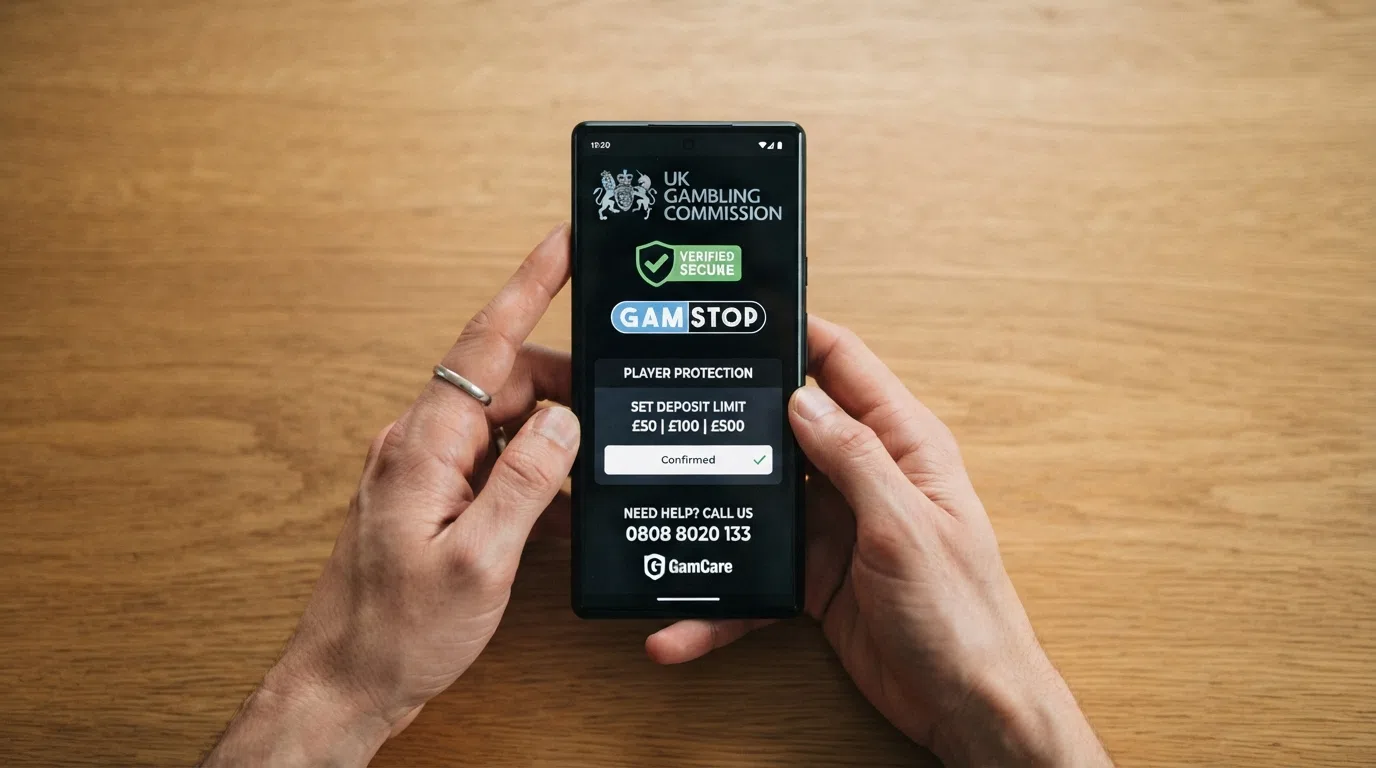
The GB licence is a jurisdictional shield, not a marketing badge. A player on an unlicensed site loses GAMSTOP coverage, the Commission complaints route, Alternative Dispute Resolution access and any British consumer redress if funds are withheld. Operating without a GB licence is a criminal offence under section 33 of the Gambling Act 2005 — up to 51 weeks’ imprisonment and/or an unlimited fine for the operator. The player is not prosecuted for gambling on an unlicensed site, but the player has no practical recourse when things go wrong. The UKGC’s enforcement toolkit is disruption, not blocking: 3,140 disruption notices, 447,778 URLs referred to search engines, and 287,961 URLs removed between April 2024 and June 2025. There is no statutory ISP or DNS blocking power, and proposed legislation has not been enacted. The Commission works the levers it has, and the licensed market is what those levers protect.
What a UKGC licence actually requires of an eCheque casino
Four conditions govern every pound a player deposits, and each one is enforced through the licence rather than through a separate contract. Identity is the first: a remote licensee has to verify name, address and date of birth before any deposit or gambling, a rule in force since 7 May 2019. Anonymous play at a UK-licensed casino is not an option. The minimum age is 18, and the verification happens before the cashier opens. The second condition is the payment-provider requirement. Under LCCP 5.1.2, in force since 31 January 2024, a licensee can only accept payment through a Payment Services Regulations 2017-regulated payment service provider. An eCheque at a compliant operator goes through a PSP, and a cashier that does not run a PSP step is not compliant. The third condition is the credit card ban. Since 14 April 2020, under LCCP condition 6.1.2, credit cards have been banned for all remote gambling, and the ban extends to credit-card-funded e-wallet deposits. The fourth condition is the bonus design: wagering requirements are capped at 10× under LCCP SR Code 5.1.1, in force since 19 December 2025, and mixed-product promotional offers are banned. The cap applies to every GB-licensed operator, and a bonus that demands more than 10× wagering is, in principle, a breach of the licence condition.
Two further rules sit alongside these four. The stake limit on online slots is £5 per game cycle for players aged 25 and over, and £2 for players aged 18 to 24, in force under SI 2025/215. No statutory stake cap is in place for sports betting, live casino or bingo. The game-design rules, in force since 31 October 2021, ban auto-play, set a 2.5-second minimum spin speed, ban features that speed up play, ban losses disguised as wins, ban reverse withdrawals and require a session display of loss, win and time played. Every one of these rules applies regardless of the deposit method. The eCheque choice is a payment-method question, and the player protection is the same either way.
The credit card ban and why bank-based payments surged at UK casinos
The credit card ban took effect on 14 April 2020 under LCCP condition 6.1.2, and it was the single most disruptive change to UK casino payments in the past decade. The scope is broad: credit cards cannot fund a remote gambling deposit directly, and credit-card-funded e-wallet deposits are equally out. The result was a rapid migration of UK players toward debit cards and bank-based methods. Cards remain the most popular deposit method, but paying via bank account has become the second most popular option overall for UK players after card payments, and for many, it is now the first choice. Open banking, Pay by Bank, and Trustly are the methods that captured most of that migration, and the eCheque lives inside the same bank-based shift without leading it. The post-2020 UK cashier is built around debit cards and instant bank-to-bank payments, and the eCheque is the slower cousin in the same family.
The other side of the ban is the e-wallet rule. Where a player funds a PayPal, Skrill or Neteller wallet with a credit card and then deposits from the wallet to a casino, the credit card ban applies. A player who wants to use an e-wallet at a UK casino has to fund the wallet from a debit card or bank account, and the cashier’s “PayPal accepted” line does not change that. The rule has been in force for nearly six years, and the cross-referenced sources do not flag any widespread non-compliance, but the rule is the kind of detail a player should be aware of rather than assume.
GAMSTOP, ADR and the safety net every UK-licensed casino must provide
GAMSTOP is the national multi-operator self-exclusion register, and it is mandatory for every GB-licensed online gambling operator since 31 March 2020. The exclusion periods are six months, one year, five years, or five years with auto-renewal, and none of them can be cancelled early — once the clock starts, it runs to the end. The register is online-only and licence-bound, which means a player who has self-excluded at a UK-licensed operator cannot open an account at any other UK-licensed operator for the duration of the exclusion, and an unlicensed site is not bound by it. The Commission’s disruption activity is what makes the GAMSTOP coverage meaningful in practice: a player who wants to bypass the exclusion cannot do so at a licensed site, and the offshore route is the only option, with the loss of every other protection that comes with it.
The financial vulnerability check sits next to GAMSTOP in the safety net. Since 28 February 2025, the check has triggered at £150 of net deposit in a rolling 30-day period, using publicly available data only — no credit check, no credit file. The check is a soft interruption, not a hard block, and the operator walks the player through a brief affordability conversation. The mandatory deposit-limit prompt sits on top of that: since 31 October 2025, every operator has to prompt a customer to set a financial limit before the first deposit, and a standardised gross deposit limit under RTS 12 has to be available, with compliance moved to 30 September 2026. ADR access and the Commission complaints route are the final pieces: a player who cannot resolve a dispute with the operator directly can take the matter to an ADR provider approved by the Commission, and a player who believes the operator has breached a licence condition can complain to the Commission. None of that exists at an unlicensed site, and the contrast is the reason the GB licence is the non-negotiable filter.
Staying in control: the safety net every UK eCheque player has
Responsible gambling is not an optional extra in the GB market. The pre-deposit financial-limit prompt, the session display, the GAMSTOP register and the helpline infrastructure are written into the licence conditions, and a player who funds an account by eCheque sees exactly the same safety net as a player who funds by debit card. The point of the section is to spell out what the safety net actually does, because a player who understands the tools is a player who can use them.
The prevalence numbers behind the safety net are stable rather than rising. The Gambling Survey for Great Britain, in its Year 3 report covering 2025, found the PGSI 8+ problem-gambling rate at 2.4%, compared with 2.5% in 2023 and 2.7% in 2024. The NHS Adult Psychiatric Morbidity Survey 2023–24, which uses a different methodology, found 0.4% PGSI 8+ and 1.6% PGSI 3+. The two surveys are not directly comparable — the GSGB uses a push-to-web methodology and the NHS uses face-to-face interviewing — and the difference is a known feature of the GB evidence base rather than a contradiction. The headline is that problem-gambling prevalence in GB has been stable across the three years of the GSGB, and the safety net is built around the population that prevalence describes.
The help infrastructure is the part the safety net connects to when a player decides the tools are not enough. GamCare’s National Gambling Helpline — 0808 8020 133, free, confidential, 24/7 — made 996 referrals to treatment and peer-based support services in January 2026, up 48% year-on-year from 674 in January 2025. The National Gambling Support Network, funded by GambleAware, provides treatment within less than two weeks of referral, and nine in ten of those who complete treatment see improvement. Over 52,000 calls a year go to the helpline. The NHS runs gambling harm clinics in England, Scotland and Wales, and the NHS Primary Care Gambling Service offers free, confidential therapeutic intervention. Gamblers Anonymous runs peer support groups. GAMSTOP is the self-exclusion tool a player activates themselves. The route from a casino cashier to professional help is short, free, and confidential, and a player who needs it is not the player the rest of this page is for.
Deposit limits, session tracking and the tools you set before you play
The pre-deposit financial-limit prompt is the first practical control. Since 31 October 2025, every GB-licensed operator has to ask a customer to set a financial limit before the first deposit, and a standardised gross deposit limit under RTS 12 has to be offered, with a compliance deadline extended to 30 September 2026. The limit is the player’s choice, and the operator’s job is to make the choice visible. The financial vulnerability check at £150 of net deposit in a rolling 30-day period, in force since 28 February 2025, is the second layer — a soft affordability conversation triggered by publicly available data, not a credit check.
The session-level tools are the third layer. Since 31 October 2021, every GB-licensed casino has to display session loss, win and time-played, has to ban auto-play, has to enforce a 2.5-second minimum spin speed, has to ban features that speed up play and has to ban losses disguised as wins. Reverse withdrawals are banned permanently. The session display is the single most useful tool a player has during play: the figures update in real time, and a player who watches them is a player who knows when to stop. The eCheque deposit that took 24 to 48 hours to clear is unrelated to any of these controls — the safety net runs the same way regardless of the payment method — but the player’s experience of the safety net is the same, and that is the design.
Where to get help: GamCare, the NHS and the National Gambling Helpline
The single number to keep is 0808 8020 133. GamCare’s National Gambling Helpline is free, confidential, 24/7, and routes callers to treatment and peer-based support. The line took 996 referrals to treatment in January 2026, up 48% year-on-year, and the National Gambling Support Network that receives those referrals delivers treatment within less than two weeks. Nine in ten of those who complete treatment see improvement, and the helpline takes over 52,000 calls a year. The NHS runs gambling harm clinics in England, Scotland and Wales, and the NHS Primary Care Gambling Service provides free, confidential therapeutic intervention. Gamblers Anonymous runs peer support groups. GAMSTOP is the self-exclusion tool a player activates themselves, with periods of six months, one year, five years, or five years with auto-renewal, and no early cancellation. The infrastructure is built, the routes are short, and a player who needs any of it does not need to clear it with the operator first.
How we chose and ranked these eCheque casinos
The featured set is drawn from the UK licensed market and cross-referenced against multiple sources for eCheque availability. The first filter is the UKGC public register, which is the only place a current GB licence can be verified — every brand on this page appears on the register with an active status and an account number. The second filter is eCheque availability, and the verification is honest about its limits: only Betway is confirmed as listing e-Check in its UK cashier (Next.io, Betway UK review). William Hill lists bank cheque for withdrawals. The remaining eight brands do not name eCheque in the cross-referenced sources, and that is recorded as “unconfirmed” rather than “rejected”, because absence of mention in a single review does not prove the method is unsupported.
The ranking criteria, in the order they were applied, are eCheque availability (which collapses to a near-tie across the set, since only one brand confirms it), UKGC licence status and longevity (every brand passes the status check; William Hill has the longest track record at 1 January 2009), welcome-offer value and wagering terms, and the published payment-method list. The set is not weighted with invented scores, and no operator is placed ahead of another on a metric that was not surfaced in the research. The evaluation is qualitative, and the cross-referenced sources are listed at the foot of this section so a reader who wants to redo the check has the inputs to do it.
Cross-referenced sources: Next.io, Bettingexpert.com, Thatsagoal.com, Spinverdict.com, Gambleguru.org, Bookies.com, Bestslotsappuk.com, britishgambler.co.uk, newcasinoway.co.uk, leovegas.co.uk, Betway.com, 32red, Fplbet.com, Racingpost.com, Legalbet.uk, wageringtimes.co.uk, bettinglounge.co.uk, Skyvegas.com, support.skyvegas.com, and the UK Gambling Commission’s public register for licence verification.
Echeque at UK online casinos: is it worth the wait in 2026?
The honest verdict is that eCheque is a niche method in the GB market, and the casino that takes it is harder to find than the marketing for the method suggests. Out of ten major UK brands reviewed, only Betway explicitly names e-Check in its UK cashier. William Hill lists bank cheque for withdrawals only. The rest route you to debit card, open banking, PayPal or instant bank transfer, and the eCheque is the option the cashier does not surface. For a player whose bank or card blocks the alternatives, the niche is the point — eCheque works where the faster methods do not, and the regulated PSP layer under LCCP 5.1.2 means the transaction is processed through the same compliance machinery as any other method. The 20-plus-year track record and the heavier security are real, and they are the reason the method has not disappeared, but they are not a speed argument.
The speed argument is the one that loses. eCheque deposits clear in 24 to 48 hours, against instant for debit card and open banking. eCheque withdrawals take 2 to 5 business days, against 1 to 2 days for open banking and under 24 hours for many e-wallets. A UK player who values speed and universal availability is better served by debit card or open banking; a UK player whose bank or card blocks the alternatives is the audience eCheque is still built for, and the worked example further up the page gives the cost of clearing Betway’s £50-match bonus in time rather than money. The non-negotiable filter is the GB licence, and it does not change with the payment method. Every brand on this page holds a current licence; the eCheque question is the secondary one, and the right place to answer it is the cashier or the operator’s support team, not the marketing.
Frequently asked questions about eCheque at UK online casinos
Are eCheque deposits safe at UKGC-licensed casinos?
Yes, where the operator lists eCheque as a payment method, the transaction is processed through a Payment Services Regulations 2017-regulated payment service provider under LCCP 5.1.2, and the UK Gambling Commission’s licensing objectives apply to the deposit in the same way they apply to any other. The safer test is the licence status on the UKGC public register, not the payment method on its own. An unlicensed site is not safe by definition, regardless of which method it accepts.
Is eCheque better than bank transfer or open banking for casino deposits in the UK?
No, not on speed. Debit card and open banking deposits are instant; eCheque deposits clear in 24 to 48 hours, and the ACH system is offline on weekends and bank holidays. Bank transfer is the slowest of the modern alternatives at 1 to 3 days in, but it is still faster than eCheque on the deposit side. eCheque’s case is the niche one: a player whose bank or card blocks the faster methods.
How long does an eCheque deposit take to process at a UK casino?
Typically 24 to 48 hours, with the UK Image Clearing System aiming for next-working-day availability by 11:59 PM where the deposit hits a working-day cut-off. The ACH network runs four daily settlement batches but is offline on weekends and bank holidays. A player who deposits late on a Friday is looking at Tuesday before the balance lands. Some operators front funds for faster credit at their own risk; the underlying rails do not support instant settlement.
Do UK casino welcome bonuses apply when depositing by eCheque?
Where the operator lists eCheque as a qualifying method, yes. The Betway welcome on this page is a £50 match with 50× wagering on the bonus funds, and the bonus terms apply to deposits regardless of method, subject to the cashier’s eligibility list. Most GB-licensed brands exclude certain e-wallets from bonus qualification; eCheque is rarely on the exclusion list because it is rarely on the cashier list. Always read the live terms before depositing.
What fees are charged for eCheque deposits at UK online casinos?
None from the operator side, in the cross-referenced sources. The player may incur a standard bank transaction fee from their own bank in some cases, and the operator’s PSP may pass through processing costs, but neither is typically surfaced as a player-facing fee. The hidden cost is the time: 24 to 48 hours to clear, and the same window on the withdrawal side. Fees are a reason to read the cashier’s small print; the time cost is the reason to read this page.
Why do so few UK casinos accept eCheque as a payment method?
Because the modern bank-based alternatives — open banking, Trustly, Pay by Bank, instant bank transfer — are faster, more visible, and built around the same KYC and PSP machinery eCheque uses. Open banking is now the second most popular deposit method at UK casinos after cards, and the eCheque’s audience has migrated to it. The method is not banned and the rails are still live, but the demand has thinned, and a cashier that does not list eCheque is making a product call rather than a regulatory one.
Payments – fastestpayout-casinos-uk
Content created by the «fastestpayout-casinos-uk» team