
Why Diners Club Doesn't Work at UK Online Casinos — and What You Can Use Instead
 Available in GB
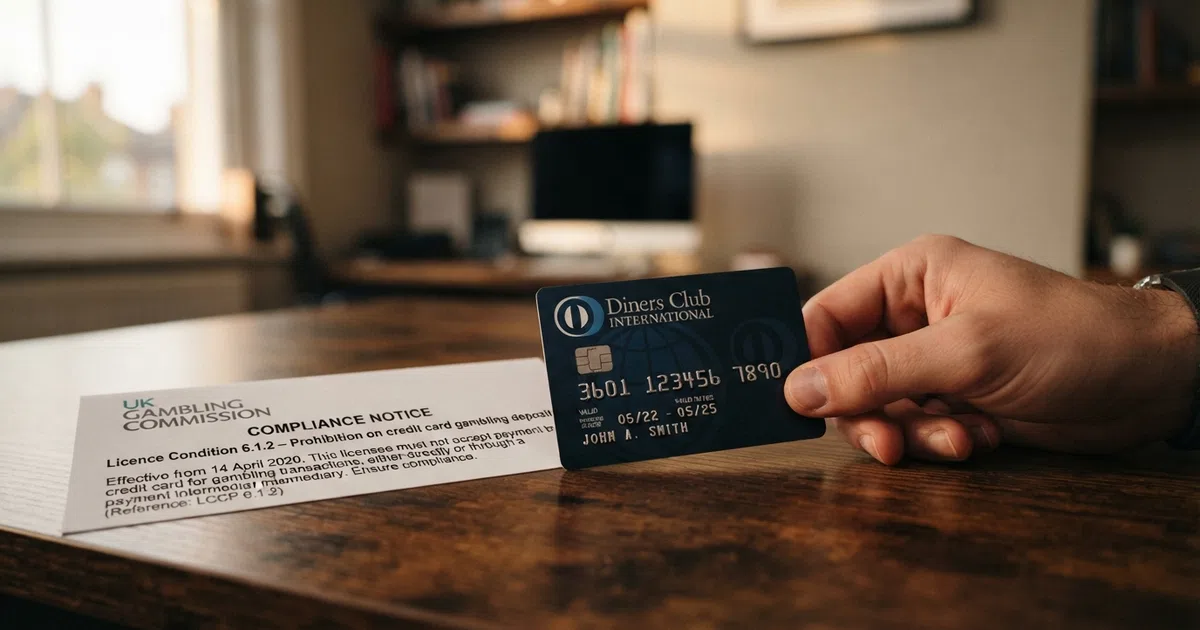
There is no shortage of websites promising a list of UK casinos that accept Diners Club. They tend to look convincing — logo grids, deposit-step screenshots, a withdrawal note. They are also wrong, and not by accident. Diners Club International is a credit card network, and since 14 April 2020 every gambling operator licensed in Great Britain has been prohibited from taking credit card deposits. That prohibition sits in Licence Condition 6.1.2 of the LCCP, the Gambling Commission’s operating rulebook, and it applies uniformly — to Bet365, to William Hill, to a casino launched last week. The card a reader holds, whatever the marketing around it, is a credit card. The cashier at any UKGC-licensed site will reject it. The rest of this page works out what that means: where DC does work, why it doesn’t matter for a UK player, what the ten biggest UK brands actually accept, and what the regulatory machinery built around the gap looks like.
*Data current as of September 8, 2026, licence claims verified against the Gambling Commission public register.*
Diners Club Casinos Do Not Exist in the UK — and the Regulation That Removed Them
What Diners Club International Actually Is
Diners Club International is a credit card network. That classification — credit, not debit — is the entire reason this page exists. The network runs on Discover Global Network, the same infrastructure that processes Discover cards and the PULSE debit network, and it handles millions of transactions every day worldwide. Within the UK, the brand has been quietly expanding its merchant footprint: Moorwand, a UK acquirer, signed a deal enabling British merchants to take Discover, Diners Club, and thirty partner-network cards; DNA Payments followed in May 2024, adding online acceptance of Discover Global Network cards through its UK gateway. None of that infrastructure extends to gambling. The merchants it serves are retail and hospitality businesses, not GB-licensed casino operators bound by a credit card prohibition.
The “Diners Club” name is sometimes used loosely to describe both Diners Club International (the network) and the individual Diners Club credit card (the product a consumer holds). For UK gambling law, the distinction does not matter — the card issued to a UK consumer under either name remains a credit card. The defining question is whether the underlying instrument extends credit to the holder, and a Diners Club card does. That single fact places it inside the scope of LCCP 6.1.2.
The Credit Card Ban That Changed UK Gambling
The Gambling Commission did not single out Diners Club. It banned every credit card from being used for gambling at every GB-licensed operator, and Diners Club was caught in the same net as Visa, Mastercard and American Express. The rule took effect on 14 April 2020, in the early weeks of the first pandemic lockdown, and the timing was no coincidence: the Commission had been building the case for years, and the consultation that preceded the ban found that 22% of online gamblers who used credit cards were classed as problem gamblers. That figure — roughly one in five — became the central justification. A product whose users were disproportionately harming themselves was no longer acceptable as a deposit rail.
The ban’s scope is total. It covers remote gambling (online casino, sports betting, bingo), non-remote betting (betting shops), and online and telephone lotteries. The only exception is non-remote lottery — paper tickets sold in a shop. E-wallets and money service businesses do not provide a workaround. The Commission’s own guidance makes this explicit: the ban extends to credit card payments through any money service business, including e-wallets and electronic money institutions, where the underlying funding source is a credit card. An operator may only accept an e-wallet deposit if the wallet provider can demonstrably prevent credit-funded gambling. In practice, PayPal, Skrill and Neteller all run on the same model — debit card or bank balance only, no credit line.
Any directory claiming to list UK casinos accepting Diners Club is therefore either predating April 2020, listing offshore sites not licensed for the GB market, or factually wrong. There is no fourth category. The Gambling Commission’s public register is the definitive check, and it shows no GB-licensed operator permitted to take DC credit card deposits.
The Diners Club Debit Card Question
A Diners Club debit card would be legal. LCCP 6.1.2 prohibits credit, not debit, and a debit product funding a casino account from the cardholder’s own balance would fall outside the rule. The problem is availability: no confirmed Diners Club debit card for UK consumers surfaced in this research run. The Moorwand acquiring deal and the DNA Payments integration are about merchant acceptance — they let UK shops take DC cards — not about issuing a UK-branded DC debit product to consumers.
Even if a DC debit card existed and was issued to a UK holder, the gambling-acceptance infrastructure would need to be built. UKGC-licensed operators do not list DC as a payment method, full stop. The acquirer relationships, the cashier integrations, the fraud-screening rules — none of them have been set up for Diners Club on the GB gambling side. A reader holding a hypothetical DC debit card would face the same blank space at the cashier that DC credit card holders face today. The legal door is open. The practical door is not.
The Pros and Cons of Diners Club for Online Gambling
Diners Club has genuine advantages in markets where credit cards are not banned for gambling.
- Wide international acceptance, particularly in the United States, parts of Asia and Latin America.
- Access to the Discover Global Network, which extends reach through partner networks.
- A rewards ecosystem historically tied to travel and dining, with cardholder perks in those categories.
- A premium positioning that appeals to a specific cardholder demographic.
The cons, captured in the brand’s own customer feedback, are sharp. Diners Club International’s Trustpilot rating sits at 1.4 out of 5, from 38 reviews, with recurring complaints about customer service responsiveness, unexpected fees, verification friction and dispute handling. For a UK player, the bigger drawback dwarfs all of these: the UK market’s regulatory structure renders every DC pro irrelevant. A rewards programme only matters if the card is accepted. Wide international acceptance only matters if the player is gambling internationally. Inside the GB regulated market, the credit card ban makes the comparison pointless — the card is refused before any of its features come into play.
Key Responsible Gambling Tools
| Tool | Purpose | Status |
|---|---|---|
| GAMSTOP | Multi-operator self-exclusion | Mandatory |
| Deposit Limits | Financial control prompt | Mandatory |
| Reality Checks | Time-played alerts | Mandatory |
| Financial Vulnerability | CCJ/Bankruptcy flagging | Mandatory |
| Self-Exclusion | Individual operator blocking | Mandatory |

| Casino | UKGC Licence | Min Deposit | Payment Methods Available | Game Providers |
|---|---|---|---|---|
| Bet365 | GB-licensed (UKGC) | £5 | Visa Debit, Mastercard Debit, PayPal, Apple Pay, bank transfer, Paysafecard | Microgaming, Playtech, NetEnt |
| William Hill | GB-licensed (UKGC, under evoke plc) | £10 | Visa Debit, Mastercard Debit, PayPal, Skrill, Neteller, bank transfer, Paysafecard | Playtech, Evolution, IGT |
| Ladbrokes | GB-licensed (UKGC, under Entain) | £5 | Visa Debit, Mastercard Debit, PayPal, Skrill, Paysafecard, bank transfer, Apple Pay | Playtech, NetEnt, Evolution, IGT |
| Paddy Power | GB-licensed (UKGC, under Flutter) | £5 | Visa Debit, Mastercard Debit, PayPal, Skrill, Neteller, bank transfer, Apple Pay | Playtech, Evolution, NetEnt |
| Betfair | GB-licensed (UKGC, under Flutter) | £5 | Visa Debit, Mastercard Debit, PayPal, Skrill, Neteller, bank transfer | Playtech, Evolution, Blueprint |
| Coral | GB-licensed (UKGC, under Entain) | £5 | Visa Debit, Mastercard Debit, PayPal, Skrill, Paysafecard, Apple Pay, bank transfer | Playtech, Evolution, NetEnt |
| Betfred | GB-licensed (UKGC) | £5 | Visa Debit, Mastercard Debit, PayPal, Skrill, Paysafecard, bank transfer | Playtech, IGT, Microgaming |
| Sky Vegas | GB-licensed (UKGC, under Flutter) | £5 | Visa Debit, Mastercard Debit, PayPal, bank transfer, Apple Pay | NetEnt, Evolution, Blueprint, IGT |
| 888 Casino | GB-licensed (UKGC, under evoke plc) | £10 | Visa Debit, Mastercard Debit, PayPal, Skrill, Neteller, bank transfer, Apple Pay, Paysafecard | NetEnt, Evolution, Playtech, IGT, Red Tiger |
| BetVictor | GB-licensed (UKGC) | £10 | Visa Debit, Mastercard Debit, PayPal, Skrill, Neteller, bank transfer, Paysafecard | NetEnt, Evolution, Microgaming, Pragmatic Play |
The table shows what every one of these operators does accept, and the column structure tells the story: ten rows, ten minimum deposits, ten payment-method lists, ten provider lineups. The table below omits a Diners Club column, as the entry for every operator would be identical: not accepted. Where the table is genuinely useful is in the spread of alternatives — every brand takes Visa Debit and Mastercard Debit, most take PayPal, and the cluster of e-wallets (Skrill, Neteller) and voucher methods (Paysafecard) varies by operator. A reader choosing between these ten is choosing on minimum deposit, on which e-wallet they prefer, and on game-provider breadth, not on DC acceptance.
Bet365
Bet365 holds a GB licence and sits at the top of the UK online gambling market for both sports and casino. Its payment suite includes major cards and e-wallets like PayPal and Apple Pay, with a £5 minimum on debit card deposits — the lowest tier on this page. Game providers span Microgaming, Playtech and NetEnt, giving the casino library enough breadth to cover slots, table games and live dealer without leaning on a single studio. Diners Club is not accepted, for the same reason it is not accepted anywhere else on this list. A reader choosing Bet365 is choosing depth of product and a low entry threshold, not a payment method that does not work.
William Hill
William Hill operates under evoke plc and carries GB licensing. Its payment alternatives run to the standard industry mix of debit cards and major e-wallets, with a typical £10 minimum deposit. Providers include Playtech, Evolution and IGT — a trio that covers slots, live dealer and a substantial table-game catalogue. For a UK player who values brand familiarity and a high-street heritage, William Hill offers what the licence requires, and the same DC refusal applies. The page’s verdict: a dependable mainstream choice, paying the £10 minimum without complaint.
Ladbrokes
Ladbrokes sits under Entain, alongside Coral, and carries GB licensing. Payment methods cover the standard industry options of debit cards and major e-wallets, with a £5 debit card minimum confirmed on the Ladbrokes help page. Providers — Playtech, NetEnt, Evolution and IGT — give the casino floor a familiar spine. For a UK player who likes the Entain cluster’s product feel and wants the lower entry threshold, Ladbrokes is the more accessible of the two sister brands. Diners Club is, again, not in the cashier.
Paddy Power
Paddy Power operates under Flutter and holds a GB licence. Its payment alternatives cover standard industry methods, including debit cards and major e-wallets, at a £5 minimum. The brand carries a more irreverent tone than most UK operators, but the underlying catalogue — Playtech, Evolution and NetEnt — is serious. A reader who prefers Flutter’s product environment over Entain’s will find Paddy Power’s casino library comparable in breadth. The DC position is identical to every other GB-licensed brand: refused at the cashier.
Betfair
Betfair, the exchange pioneer, runs under Flutter with GB licensing. Payment methods include the typical industry suite of debit cards, e-wallets, and bank transfer at a £5 minimum. Game providers — Playtech, Evolution and Blueprint — cover the standard casino library. For a reader who came to Betfair for the exchange and wants the casino as a sideline, the payment alternatives are the same Flutter set, with no DC and no surprises. The verdict: a familiar Flutter experience for a player already comfortable with the brand.
Coral
Coral sits under Entain, with GB licensing. Payment alternatives include Visa Debit, Mastercard Debit, PayPal, Skrill, Paysafecard, Apple Pay and bank transfer at a £5 minimum. Providers are Playtech, Evolution and NetEnt, matching Ladbrokes’ studio spine. For a UK player who likes the Entain product feel and prefers Coral’s brand presentation, the DC question is irrelevant — the answer is the same as for every other GB-licensed operator. The minimum deposit is competitive with the lower end of the table.
Betfred
Betfred holds a GB licence as an independent bookmaker, not part of a larger group. Payment methods include Visa Debit, Mastercard Debit, PayPal, Skrill, Paysafecard and bank transfer at a £5 minimum. Providers — Playtech, IGT and Microgaming — lean toward slots and traditional table content. A reader who prefers an independent brand over a group subsidiary will find Betfred a fair fit. Diners Club does not work, but the rest of the payment suite is standard and accessible.
Sky Vegas
Sky Vegas operates under Flutter with GB licensing. Payment alternatives include Visa Debit, Mastercard Debit, PayPal, bank transfer and Apple Pay at a £5 minimum. Providers — NetEnt, Evolution, Blueprint and IGT — give the slots and live dealer catalogue a familiar structure. For a reader who came in through Sky’s TV branding, the casino environment is mainstream Flutter with no DC. A flat verdict: the same product any Flutter customer would expect, at the lowest minimum deposit on the page.
888 Casino
888 Casino runs under evoke plc alongside William Hill, with GB licensing. Its payment suite is the widest on the page: a full range of debit cards, e-wallets, and bank transfer options, at a £10 minimum. Providers — NetEnt, Evolution, Playtech, IGT and Red Tiger — give 888 the broadest game-provider lineup on this list, including a Red Tiger integration that several competitors lack. A reader who wants the widest e-wallet coverage and the deepest provider mix will find 888 the most accommodating brand on the list. The trade-off is the £10 minimum, and DC is, of course, absent.
BetVictor
BetVictor holds a GB licence as an independent operator. Payment methods include Visa Debit, Mastercard Debit, PayPal, Skrill, Neteller, bank transfer and Paysafecard at a £10 minimum. Providers — NetEnt, Evolution, Microgaming and Pragmatic Play — cover the standard library and add Pragmatic Play, which several competitors do not feature. For a UK player who values an independent brand with Pragmatic Play’s slot catalogue, BetVictor is a strong fit. The DC situation is unchanged.
How UK Casino Payments Actually Work in 2026
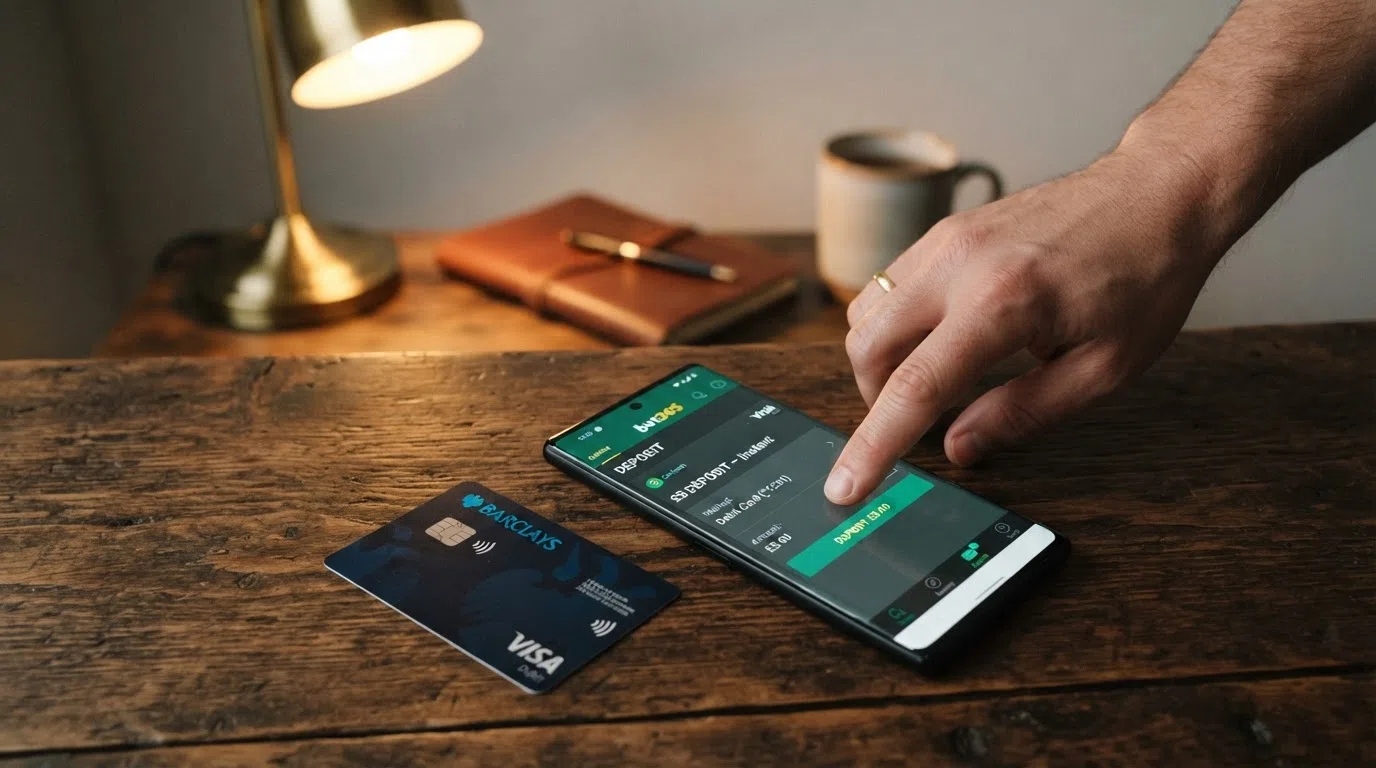
Five years after the credit card ban took effect, the UK online gambling deposit landscape has settled into a clear hierarchy. Debit cards — Visa Debit and Mastercard Debit — sit at the top, taking the vast majority of GB-licensed deposits. E-wallets follow: PayPal leads, with Skrill and Neteller covering the rest of the wallet-funded share. Open Banking and Pay by Bank are the fastest-growing alternative, routing deposits directly from the customer’s bank account without a card at all. Apple Pay and Google Pay sit alongside the debit card rails — they are mobile-fronted debit transactions, not separate networks.
The Diners Club position within this landscape is unusual. Internationally, DC deposits at online casinos typically carry minimums of €10 to €20 and maximum payouts around €5,000 per transaction or €10,000 per month, set by the casino rather than by Diners Club itself. Even at international casinos where DC is accepted for deposits, withdrawals back to the card are not supported at the majority of operators — a player who deposits with DC abroad still needs a separate cashout route, typically a bank transfer or e-wallet.
Debit Cards, E-Wallets, and Open Banking — Your Real Deposit Options
Visa Debit and Mastercard Debit are the most widely accepted deposit methods at GB-licensed casinos, with processing times that are effectively instant. The card networks do not extend credit to the customer — they pull funds from the customer’s current account — and that is why LCCP 6.1.2 does not touch them. E-wallets come next. PayPal, Skrill and Neteller all support gambling deposits under GB rules, but only because their wallet providers demonstrably prevent credit-funded gambling. The Commission requires this; the e-wallet operators implement it at the wallet level.
Open Banking, branded at some operators as Pay by Bank, is the rail that bypasses card networks entirely. The deposit is initiated from the customer’s bank app, authenticated there, and settled directly between the bank and the casino. No card brand sits in the middle. Apple Pay and Google Pay are mobile wallets that fund the deposit from the underlying debit card — they are not separate payment methods for regulatory purposes. A deposit through Apple Pay is a debit card deposit, and the same LCCP rules apply.
Deposit Minimums, Maximums, and the New UK Rules
The £5 to £10 minimum deposit range across the ten featured operators is the standard for the GB market. Eight of the ten sit at £5; William Hill, 888 Casino and BetVictor — three out of ten — sit at £10. None of these minimums are statutory. They are commercial decisions by each operator, set against the cost of processing a small deposit and the regulatory burden of verifying the customer.
The regulatory change that matters for a first-time player is the mandatory deposit-limit prompt. Since 31 October 2025, every GB-licensed operator must prompt a customer to set a financial limit before their first deposit. The prompt must offer a gross deposit limit — the total amount paid in over a set period — with at least equal prominence, and only that form may carry the label “deposit limit.” Decreases to the limit take effect immediately; increases may be delayed, in line with RTS 12. A player who wants to set their own ceiling now has the operator’s full machinery behind the request.
Withdrawal Speed — and Why DC Cashouts Rarely Work Anywhere
The withdrawal side of the DC story is where the card’s limitations show most clearly. At most online casinos globally, Diners Club is deposit-only — withdrawals back to the card are not supported at the majority of operators. A player who deposited with DC at an offshore casino still needs a separate cashout method: a bank transfer or an e-wallet. The Diners Club deposit was, in practice, a one-way street.
Within the GB market, withdrawal methods at UKGC-licensed casinos are debit card refunds, bank transfer, and e-wallets. The UKGC requires operators not to delay withdrawals, and reverse withdrawals — the practice of letting a customer pull money back into their gambling balance after requesting a cashout — have been permanently banned since 31 October 2021. A withdrawal request is final. The processing window varies by method, but the direction of the rule is clear: the operator cannot sit on the money, and the player cannot second-guess the cashout.
Fees, Hidden Costs, and What to Watch For
GB-licensed casinos do not charge depositors a fee for card or e-wallet payments. That is the norm for the UK market, and it holds across every brand on this page. The hidden costs a UK player actually faces are elsewhere: currency conversion on multi-currency sites (less of an issue at GB-licensed brands, which price in GBP), and any fees the payment provider itself charges. A Visa Debit deposit at a UK casino costs the player nothing at the casino end.
The Diners Club fee profile is a different matter. The Trustpilot complaints about unexpected fees, verification friction and dispute handling point to a card network whose customer experience has been poor enough to drive a 1.4-out-of-5 rating from its own reviewers. For an international player using DC at an offshore casino, the fees are layered: currency conversion mark-ups, cashout fees for the alternative withdrawal method, and the absence of the fee-transparency rules that GB-licensed operators are bound by. The practical comparison is simple — a UK debit card deposit costs the player nothing at the casino end, and that is the standard a DC deposit cannot match in this market.
What UK Casino Bonuses Look Like Under the New Rules
The bonus landscape at GB-licensed casinos changed fundamentally on 19 December 2025. LCCP Social Responsibility Code 5.1.1 imposed two binding limits: wagering requirements capped at 10 times, and a ban on mixed-product promotional offers. A welcome bonus that required 30 times or 50 times turnover — the norm in many international markets and still common at some offshore casinos — is no longer legal in GB. A promotional offer that bundled a sports bet with free spins, a casino deposit with bingo bonus, or any other combination across product verticals, is also no longer legal. The old playbook is dead.
The shift in operator behaviour has been visible since the rules took effect. Smaller headline bonus amounts with cleaner terms have replaced the old large-print-small-terms model. The marketing claim that used to read “£500 bonus with 50x wagering” now reads closer to “£100 bonus with 10x wagering.” Both numbers are smaller, but the second offer is more honest about what the player needs to do to clear the bonus. The 10x cap means a £100 bonus requires £1,000 of qualifying turnover — still real money spent at the tables, but a transparent figure rather than the £25,000 the old 50x model demanded on a similar bonus.
The welcome-bonus specifics for the ten featured operators were not confirmed from primary operator pages in this research run. The LCCP 5.1.1 rules apply uniformly, and the structure of any welcome offer at any GB-licensed casino now sits within the 10x cap and the mixed-product ban. The exact amounts and qualifying games vary by operator; the regulatory ceiling does not.
Free Spins, No-Deposit Offers, and No-Wagering Deals
Free-spin offers survive under the UK framework, but they sit inside the same rules. Where free spins are tied to a qualifying deposit, the 10x wagering cap applies to any winnings converted from the spin value. A free-spin welcome that paid out in bonus funds requiring 35 times turnover would no longer be legal; the same offer at 10 times turnover is. No-deposit bonuses are rare in the post-2025 UK market — the regulatory environment has pushed operators toward deposit-triggered offers, and the bonus structures that survive are the ones tied to a real-money deposit. No-wagering bonuses, where the player keeps what they win without any turnover requirement, exist as a format and sit cleanly within the 10x cap (zero is less than ten).
The key point for a DC holder is unchanged. A bonus is claimed with the deposit method the casino actually accepts. A Diners Club card is refused at the cashier; a Visa Debit, Mastercard Debit or e-wallet deposit succeeds; the same bonus everyone else can claim is then available. The DC brand on the card does not unlock any exclusive offer, because the card never reaches the cashier.
Mobile Casinos — Does Diners Club Change Anything?
The payment rails at a mobile casino are the same rails at a desktop casino. The cashier does not change between a browser and an app, and the rules around LCCP 6.1.2 do not change either. A Diners Club credit card deposit attempted through a mobile-optimised browser is rejected for the same reason it is rejected on desktop — the operator is GB-licensed, and GB-licensed operators cannot accept credit. The device is irrelevant.
Android casino apps in the UK face the additional layer of Google Play’s real-money gambling policy, which restricts how gambling apps are distributed through the store. The deposit method rules inside the app are the same LCCP rules; the distribution channel is a separate consideration. Apple Pay and Google Pay on mobile fund the deposit from the underlying debit card — they are not separate payment methods for regulatory purposes, and they do not extend credit.
The age-banded online slots stake caps apply regardless of device. A player aged 25 or over faces a £5 maximum stake per game cycle on online slots; a player aged 18 to 24 faces a £2 maximum. Those caps follow the player, not the device, and they apply in the same browser tab or app session.
Slots, Table Games, and Live Dealer at UK Casinos
The full spectrum of casino games at GB-licensed operators — slots, table games, live dealer and bingo — is payable with the deposit methods these operators accept. The Diners Club question is settled at the cashier, not at the game floor. Every slot, every blackjack variant, every live dealer table funded by a debit card or e-wallet deposit is available to the player, and the games themselves do not discriminate by card brand.
The UK-specific game-design rules shape what the experience looks like once a player is in. Auto-play is banned; the spin speed on slots is at least 2.5 seconds per game cycle; features that speed up play are banned; losses disguised as wins — slot animations that celebrate a spin that returned less than the bet — are banned. All of these rules took effect on 31 October 2021. Operators must also display total losses, total wins and time played during a slots session, giving the player a real-time view of where they stand. The UK slot experience is designed to slow the player down and keep them informed — the opposite of what a DC-friendly international slot might look like.
Online Slots Under the UK’s Age-Banded Stake Caps
Two adults at the same UK casino, on the same slot, at the same moment, can face different maximum bets. The age-banded stake cap, introduced under SI 2025/215, set a £5 maximum stake per game cycle for players aged 25 and over (in force from 9 April 2025) and a £2 maximum stake for players aged 18 to 24 (in force from 21 May 2025). The age band works in practice because age verification has been mandatory before first deposit or any gambling since 7 May 2019 — the operator knows the player’s age band before the first spin.
The cap applies to online slots only. There is no statutory stake cap for live casino, table games, sports betting or bingo. Slots are the only product with a per-spin ceiling, and the ceiling is age-dependent. A 19-year-old and a 40-year-old at the same slot, on the same evening, are playing under different maximums.
Blackjack, Roulette, and Live Dealer Tables
Blackjack, roulette, baccarat and the poker variants are available across the featured operators, with Evolution and Playtech as the dominant live dealer providers. The ten brands on this page collectively run the major live dealer studios, and the table-game libraries — RNG-based blackjack and roulette, plus the live versions — are standard fare for the GB market.
The deposit-method restriction is the same. A player funding live dealer play with a debit card or e-wallet is operating within the rules; a DC credit card deposit is refused at the cashier before reaching the table. The lack of a statutory stake cap for live casino or table games means the only ceiling on a hand of blackjack or a spin of live roulette is the operator’s own table limit — and those limits can run into the thousands for VIP tables.
Free-Play and Demo Mode — No Deposit Needed
Most GB-licensed operators offer slots in demo mode without requiring a deposit. Demo play is the one way to explore the casino’s game library with zero payment friction — no card needed, no e-wallet needed, and no DC question to answer. The games run on the same RNG as the real-money versions, and a player can test the mechanics, the volatility and the feel of a slot before committing funds. Live dealer games are generally not available in demo mode; the studio cost of running a live table means operators reserve that product for real-money play.
For a reader whose card does not work at the cashier — and Diners Club is exactly that situation — demo play is a legitimate route into the casino’s game library. The age-verification requirement that applies to real-money gambling does not necessarily extend to demo play that does not constitute gambling, and a player can browse the catalogue before deciding which deposit method to fund an account with.
Cryptocurrency and Diners Club — Why the Overlap Is Tiny
Two payment methods searching for a UK audience, and neither works at a GB-licensed casino. Cryptocurrency deposits are not accepted at UKGC-licensed operators — the regulatory framework does not accommodate them, and the operators that take Bitcoin and other cryptoassets are offshore. The handful of international casino sites that accept both Bitcoin and Diners Club exist outside GB licensing. For a UK-based player who wants consumer protection, both payment methods point to the same unregulated destination.
The broader context is straightforward. Crypto casinos operate outside the UK licensing framework, and they carry the same risks as any other offshore operator. The Diners Club angle is irrelevant to the licensing question — what matters is whether the operator holds a GB licence, and crypto-friendly sites do not. A reader tempted by the “DC and Bitcoin accepted” combination should read that as a signal of where the casino sits in the regulatory landscape, not as a feature.
New UK Casino Sites — What Matters More Than Your Card Brand
A brand-new UK casino launching in 2026 faces the same LCCP 6.1.2 restriction as every established brand on this page. There is no novelty exemption. Every new entrant must hold a UKGC operating licence, comply with the LCCP from day one, and refuse credit card deposits at the cashier. The card a new site accepts is settled by regulation, not by how recently the operator opened.
What matters when a new UK casino site launches is the same checklist that applies to every operator. Licence status on the Gambling Commission public register — the definitive check. Payment methods offered and whether they sit inside the LCCP framework. Bonus terms, which must comply with the 10x wagering cap and the mixed-product ban that took effect on 19 December 2025. Game provider lineup, which signals the depth of the casino’s content partnerships. The new-casino bonus pattern under the December 2025 rules is the same as the established-operator pattern: smaller headline amounts, cleaner terms, and no cross-product bundling. The marketing language may be louder, but the regulatory ceiling is the same.
The Legal Landscape — UK Licensing, GAMSTOP, and Offshore DC Casinos
Two parallel worlds exist in UK online gambling. The GB-licensed market, where Diners Club cannot work and every consumer protection the LCCP builds is in force. The offshore market, where DC deposits can be accepted by operators not bound by LCCP 6.1.2, but where the player loses every UK protection. Understanding the boundary between these two worlds is the single most important thing a reader searching for DC acceptance can do.
The Gambling Commission’s role is central. It licenses operators, personnel and software, and the public register of licence holders is the definitive check for any casino claiming to serve UK players. The Gambling Act 2005 established the regulatory framework; the Gambling (Licensing and Advertising) Act 2014 extended it to remote operators, making a GB licence compulsory for any operator serving GB customers, wherever the operator is based. A Curaçao, Maltese or Gibraltar licence is not a substitute for a GB licence when the customer is in Great Britain.
The enforcement picture is disruption-based rather than ISP-blocking. Between April 2024 and June 2025, the Commission issued 3,140 disruption notices, referred 447,778 URLs to search engines, and saw 287,961 URLs removed. The UKGC does not currently hold statutory ISP or DNS blocking powers — legislation has been proposed but not enacted. The tools are cease-and-desist notices, search-engine delisting referrals, domain suspension and payment-provider referrals. These work against the visible surface area of the offshore market, but they do not reach every site.
Section 33 of the Gambling Act 2005 makes providing gambling without a licence a criminal offence, punishable by up to 51 weeks’ imprisonment, an unlimited fine, or both. That sanction falls on the operator, not the player. No sanction has been traced against individual players for gambling on unlicensed sites. What the player loses is protection: no GAMSTOP coverage, no Commission complaints route, no approved ADR provider, no British consumer legal redress if funds are withheld.
Offshore Casinos That Take Diners Club — and What You Give Up
Diners Club credit card deposits work at offshore casinos. Operators licensed in Curaçao, Malta or Gibraltar are not bound by LCCP 6.1.2, and many of them list Diners Club as a deposit method. For a UK player, that is the entire appeal and the entire problem.
What the player gives up is every layer of UK consumer protection. No GAMSTOP coverage means no multi-operator self-exclusion; a player who has registered with GAMSTOP is not blocked at an offshore site. No UKGC complaints route means no escalation to the regulator if the operator withholds funds. No approved ADR means no alternative dispute resolution service with UK standing. No British consumer legal redress means no recourse under UK consumer law if the casino refuses a withdrawal or changes its terms retroactively.
The framing matters. This page does not recommend offshore DC casinos. Offshore DC acceptance exists — the keyword the reader searched is built on that fact — but the trade-off is clear. The card works, and the protections do not. No bonus is worth that exchange.
Staying Safe — Responsible Gambling Tools Every UK Player Has
UK regulation builds the safety net, and the safety net is not optional. The prevalence context is worth keeping in mind: 47% of adults in Great Britain had gambled in the past four weeks between September 2025 and January 2026, 27% excluding lottery-only players, and 38% had gambled online. In 2026, 81.5% of people contacting the National Gambling Helpline cited online forms of gambling — the highest proportion in five years. These are not abstract statistics. They describe the population a UKGC-licensed casino serves.
The mandatory tools are real. From 31 October 2025, every GB-licensed operator must prompt a customer to set a financial limit before first deposit. Reality checks and time-outs are standard features at every LCCP-compliant site. The financial vulnerability check at £150 in net deposits over a rolling 30-day period — in force from 28 February 2025 — uses publicly available data (county court judgments, bankruptcy orders, IVAs, DROs) to flag players who may be in financial difficulty. Age verification has been mandatory before first deposit or any gambling, including free bets, since 7 May 2019. None of these tools are add-ons. They are infrastructure.
GAMSTOP, GamCare, and Where to Find Help
GAMSTOP is the national multi-operator self-exclusion scheme, mandatory for all GB-licensed online operators since 31 March 2020. A player registers once and is blocked at every participating site. Exclusion periods run to 6 months, 1 year, 5 years, or 5 years with auto-renewal. The exclusion cannot be cancelled early — a player who signs up for five years is excluded for five years. GAMSTOP does not cover unlicensed offshore sites.
The National Gambling Helpline, run by GamCare, is free and confidential: 0808 8020 133. Over 52,000 calls are made annually. In January 2026, the Helpline made 996 referrals to treatment and peer-based support services — up 48% from 674 in January 2025. The National Gambling Support Network, commissioned by GambleAware, treated 11,960 clients between April 2024 and March 2025; the rate of problem gambling among those clients fell from 87% at initial assessment to 27% at final assessment. NHS gambling harm clinics operate in England, Scotland and Wales. Gamblers Anonymous runs peer-support meetings. None of these services charge the player. All of them exist because the system decided they should.
How We Evaluated the Casinos on This Page
The ten operators reviewed on this page are major GB-licensed casino brands evaluated against the Diners Club acceptance question. The primary sources were the Gambling Commission public register for licence verification, LCCP 6.1.2 for the credit card ban status, each operator’s payment pages for accepted methods and minimum deposits, and Discover Global Network resources for DC’s UK merchant-acceptance position.
The evaluation criteria, applied qualitatively rather than as a scored ranking, were licence status (GB-licensed versus offshore), payment method range available to UK players, minimum deposit accessibility, game provider breadth, and compliance with UK safer-gambling infrastructure. The scope of this review is the ten operators listed. It does not claim to cover every UK casino brand, and it does not extrapolate to operators not featured.
The welcome-bonus specifics for the ten operators were not confirmed from primary operator pages in this research run, and the table and write-ups reflect that. The LCCP 5.1.1 bonus rules — wagering requirements capped at 10x, mixed-product promotional offers banned — apply uniformly from 19 December 2025, and the structure of any welcome offer at any GB-licensed casino sits within those rules regardless of which brand issues it.
Your Diners Club Card and UK Casino Play — What to Do Next
The unambiguous answer to the core question: no GB-licensed casino accepts Diners Club credit card deposits, and none can under LCCP 6.1.2. The legal door is closed, and it has been closed since 14 April 2020. A directory claiming to list UK casinos accepting DC is either outdated, listing offshore sites, or wrong.
The practical path forward is straightforward. Pick any GB-licensed operator from the ten reviewed. Deposit with a Visa Debit or Mastercard Debit card, an e-wallet such as PayPal, or Open Banking where available. You are then playing with full UKGC consumer protections — GAMSTOP coverage, ADR access, segregated player funds, the mandatory safer-gambling infrastructure that every LCCP-compliant operator runs. The £5 minimum at eight of the ten brands and the £10 minimum at the remaining two keeps the entry threshold low.
The offshore route exists, and Diners Club deposits work at unlicensed casinos. The trade-off is that the player loses GAMSTOP coverage, ADR access and legal recourse under UK consumer law. The page cannot recommend that exchange. No bonus is worth it.
Before the first deposit, set a financial limit. The operator’s cashier will prompt you — that prompt has been mandatory since 31 October 2025 — and the deposit limit you set is a ceiling you control. Know the National Gambling Helpline number: 0808 8020 133, free, confidential, run by GamCare. Register with GAMSTOP if self-exclusion is the right step; the exclusion periods run to six months, one year, or five years. The UK system built these tools, and they exist for the reader who reaches for them.
Frequently Asked Questions
Can I use a Diners Club credit card to deposit at a UK online casino?
No. Since 14 April 2020, LCCP Licence Condition 6.1.2 has prohibited every GB-licensed gambling operator from accepting credit card deposits, and Diners Club International is a credit card network. Every UKGC-licensed casino will reject a DC deposit at the cashier. The rule applies uniformly across the market — there is no exception for any individual brand.
Is Diners Club a credit card or a debit card, and does that matter for UK gambling?
Diners Club International is a credit card network. The credit classification is what matters under UK gambling law, because LCCP 6.1.2 prohibits credit, not debit. A hypothetical Diners Club debit card would fall outside the ban, but no confirmed DC debit product is available to UK consumers in this research run, and the gambling-acceptance infrastructure for any DC product has not been built at UKGC-licensed operators.
Why were credit cards banned for gambling in the UK?
The Gambling Commission found that 22% of online gamblers who used credit cards were classed as problem gamblers, and the credit facility was enabling harm that the regulator felt obliged to address. The ban took effect on 14 April 2020 and covers all remote gambling, non-remote betting, and online and telephone lotteries — the only exception is non-remote lottery. E-wallets cannot be used as a workaround where the underlying funding is a credit card.
What payment methods can I use instead of Diners Club at UK casinos?
GB-licensed casinos accept Visa Debit, Mastercard Debit, PayPal, Skrill, Neteller, bank transfer, Paysafecard, Apple Pay and Google Pay (the last two as debit-card proxies), plus Open Banking and Pay by Bank at an increasing number of operators. Eight of the ten brands reviewed set a £5 minimum debit card deposit; the remaining two set £10. The deposit is instant and carries no fee from the casino.
Can I withdraw casino winnings back to my Diners Club card?
At most online casinos globally — including offshore sites that accept DC for deposits — withdrawals back to Diners Club are not supported. A player who deposited with DC still needs a separate cashout method, typically bank transfer or e-wallet. At GB-licensed casinos, the standard withdrawal methods are debit card refund, bank transfer and e-wallet, and reverse withdrawals have been permanently banned since 31 October 2021.
Does the Discover Global Network work at UK online casinos?
No. The Discover Global Network processes Discover cards, Diners Club International cards, and PULSE debit network transactions, and it has expanded UK merchant acceptance through deals with Moorwand (UK acquirer) and DNA Payments (online gateway, May 2024). These expansions cover general retail and hospitality. They do not extend to GB-licensed gambling operators, which are bound by LCCP 6.1.2 to refuse credit card deposits.
Are there any fees for using Diners Club at online casinos?
Diners Club International’s Trustpilot rating sits at 1.4 out of 5, with recurring complaints about unexpected fees, verification friction and dispute handling. Internationally, DC deposits at online casinos can carry currency conversion mark-ups and cashout fees on the alternative withdrawal method. GB-licensed casinos do not charge depositors a fee for debit card or e-wallet payments, so a UK debit card deposit costs the player nothing at the casino end — a standard a DC deposit cannot match in this market.
Payments – fastestpayout-casinos-uk
Content created by the «fastestpayout-casinos-uk» team