
Bitcoin casinos accepting UK players in 2026 — the offshore-only reality
 Available in GB
Every Bitcoin casino a UK resident can deposit at in 2026 is licensed somewhere other than Great Britain. That single fact is the spine of this page, and it shapes every choice that follows — which offers are worth examining, which licences carry weight, and which safeguards the player is trading away. The ten operators ranked below are all functional, active and accessible from a UK IP. None of them is licensed by the Gambling Commission. A UK player who opens an account at any of them steps outside the British regulatory perimeter, and the consequences of that step are what this article is built around.
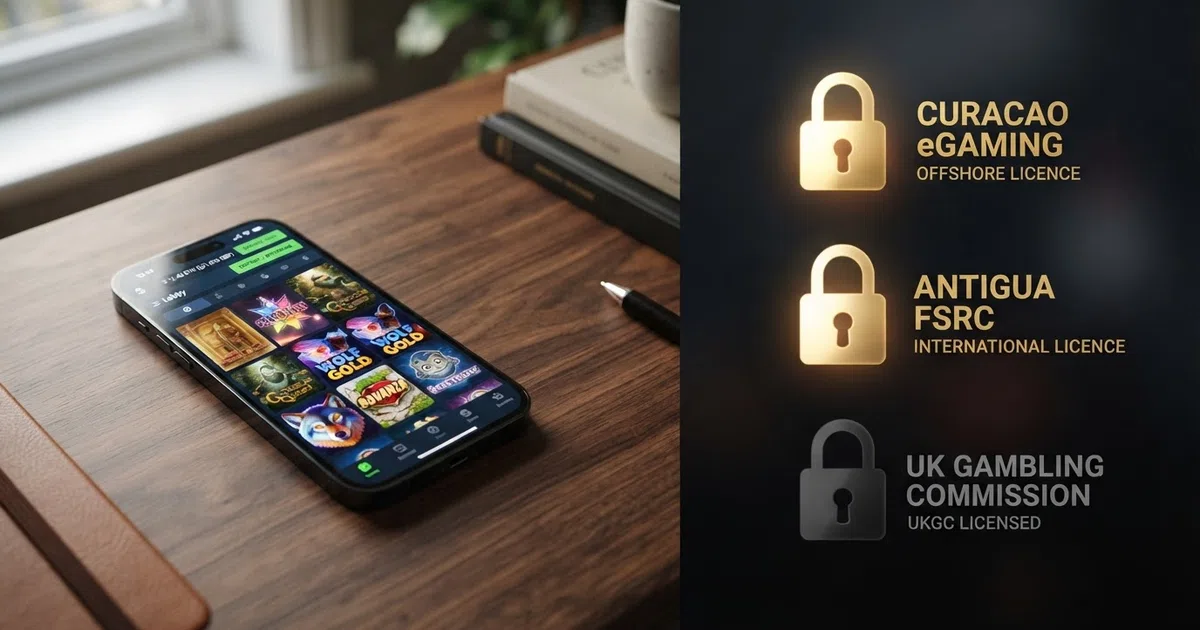
Data current as of September 8, 2026. Licence claims cross-checked against the UK Gambling Commission’s public register, Curaçao Gaming Authority public register, and operator-published terms.
What a Bitcoin Casino Is (and Why No UK-Licensed One Exists in 2026)
A Bitcoin casino is an online gambling site that accepts cryptocurrency — most commonly BTC, often alongside ETH, USDT and a long tail of altcoins — and pays winnings back in the same currency. The mechanic underneath the marketing is straightforward: a player sends Bitcoin from a personal wallet or exchange account to a deposit address the casino publishes, the casino credits the play balance in a fiat equivalent (USD or EUR at the prevailing rate), and any withdrawal reverses the process. From the player’s chair, the experience looks like a normal online casino — slots, live dealer, table games — funded and settled through a different rail.
What makes the format distinctive is not the game catalogue but the payment architecture. On-chain Bitcoin deposits confirm in minutes once the network has accepted the transaction; withdrawals from a willing operator settle in the same window. Where Lightning Network is supported, the deposit is effectively instant and the fee is a fraction of a cent. The friction that fiat players take for granted — bank delays, card-issuer holds, source-of-funds paperwork for a £200 deposit — drops away. At least, it does in the marketing.
In 2026, no operator licensed by the UK Gambling Commission accepts Bitcoin or any other cryptocurrency. The reason is not a written ban. The Gambling Commission has never expressed an express statutory prohibition on digital currency in UK-licensed gambling. The barrier is operational. To accept crypto under a GB licence, an operator must satisfy the Commission’s anti-money-laundering obligations and, in particular, its source-of-funds requirements — the same checks that gate any large withdrawal at a properly regulated casino, but applied at the deposit and at a depth most operators find unworkable for a pseudonymous payment rail. The Commission’s own published guidance is blunt: applications with a crypto funding element will not be considered unless the operator can hand over a complete history of source-of-funds evidence. No GB-licensed operator has met that bar.
The result is a structural gap. UK players who want to gamble with Bitcoin have a working market — offshore. UK players who want to gamble inside the British regulatory perimeter have no crypto option. The two do not overlap. The ten operators reviewed below all sit in the first camp, and the entire page is built around making that distinction legible.
What a Bitcoin Casino Actually Is
A Bitcoin casino accepts cryptocurrency deposits, converts them to an internal play balance denominated in fiat, and reverses the conversion on withdrawal. The player never holds Bitcoin inside the game itself — every spin, hand and bet is denominated in USD or EUR. Crypto is the deposit and withdrawal medium; it is not a separate betting unit.
This matters because it sets the boundary on what crypto changes. The house edge on a slot is the same whether the deposit is Bitcoin or a debit card. The return-to-player percentage is the same. The game is the same. What changes is the speed and the regulatory framework around the money. On-chain BTC withdrawals typically settle in 10 to 60 minutes after casino approval — substantially faster than the bank-transfer standard of one to three working days at a fiat UK casino, and well clear of the card-issuer delays that can stall a payout by a week. The blockchain does not pause for office hours. The casino still does, which is the more important limit.
How UK Players Use Bitcoin at an Online Casino
The practical sequence runs through three steps. First, the player buys Bitcoin — typically on a regulated exchange, sometimes peer-to-peer, occasionally from a Bitcoin ATM where one is available. Second, the player sends the Bitcoin to the deposit address the casino provides. The casino’s software watches the blockchain, waits for the required number of confirmations (commonly two to six), and credits the account. Third, when the player wants out, they request a withdrawal and the casino sends Bitcoin from its hot wallet back to the address the player supplies.
The friction points are not where the marketing suggests. Buying Bitcoin on a regulated UK exchange takes minutes; the harder part is the verification the exchange itself demands before a first withdrawal is permitted, which can take a day or more. Sending Bitcoin to a casino is cheap when the mempool is quiet and expensive when it is congested — a $50 deposit during a peak-fee window can cost $5 to $20 in network fees, which is the reason several operators now support Lightning Network deposits where the fee is fractions of a cent. The exchange that the player uses to convert winnings back into pounds may also impose its own minimums and withdrawal queues. The casino is the fastest part of the chain; the exchange is often the slowest.
Bitcoin Casinos vs Traditional Online Casinos: What UK Players Lose and Gain
The trade is real on both sides. A UK player moving from a GB-licensed casino to an offshore Bitcoin casino gains faster withdrawals, lower payment fees, and welcome bonuses that licensed operators cannot legally match — Vave’s 150% to 1.5 BTC and Stake’s 200% to $2,000 are both multiples of what a UK-licensed operator is permitted to offer under the GB wagering cap. The player loses every consumer protection British law attaches to a regulated casino: GAMSTOP self-exclusion, the statutory £5 (or £2 for under-25s) online slots stake cap, the 10× wagering cap on bonuses that took effect in December 2025, mandatory financial-vulnerability checks from £150 in rolling deposits, and the right to refer a dispute to an alternative dispute resolution service backed by the Gambling Commission.
The GB online slots stake cap, imposed by SI 2025/215, is the clearest illustration of what disappears. A GB-licensed operator cannot legally accept a £20 spin on a slot from a 30-year-old player. An offshore Bitcoin casino accepts whatever stake the slot allows, which on Megaways titles can run into hundreds of pounds. The gambling experience is the same slot; the regulatory frame around it is not. A player who chooses the offshore path is choosing the larger bonus, the faster payout and the higher ceiling — and accepting that nobody is checking the ceiling on their behalf.
The Legal Reality: Offshore Only, With All the Protections That Removes
The legal architecture that governs this gap is short and settled. The Gambling Act 2005 created the UK Gambling Commission and set the three licensing objectives that animate every British gambling rule: preventing crime, ensuring fairness, and protecting children and vulnerable people. The Gambling (Licensing and Advertising) Act 2014 extended the regime to remote gambling — the point-of-consumption rule — making it a requirement that any operator offering gambling to customers in Great Britain holds a GB operating licence, regardless of where the operator is based. Section 33 of the 2005 Act makes providing facilities for gambling without the required licence a criminal offence, punishable on summary conviction by up to 51 weeks’ imprisonment, an unlimited fine, or both.
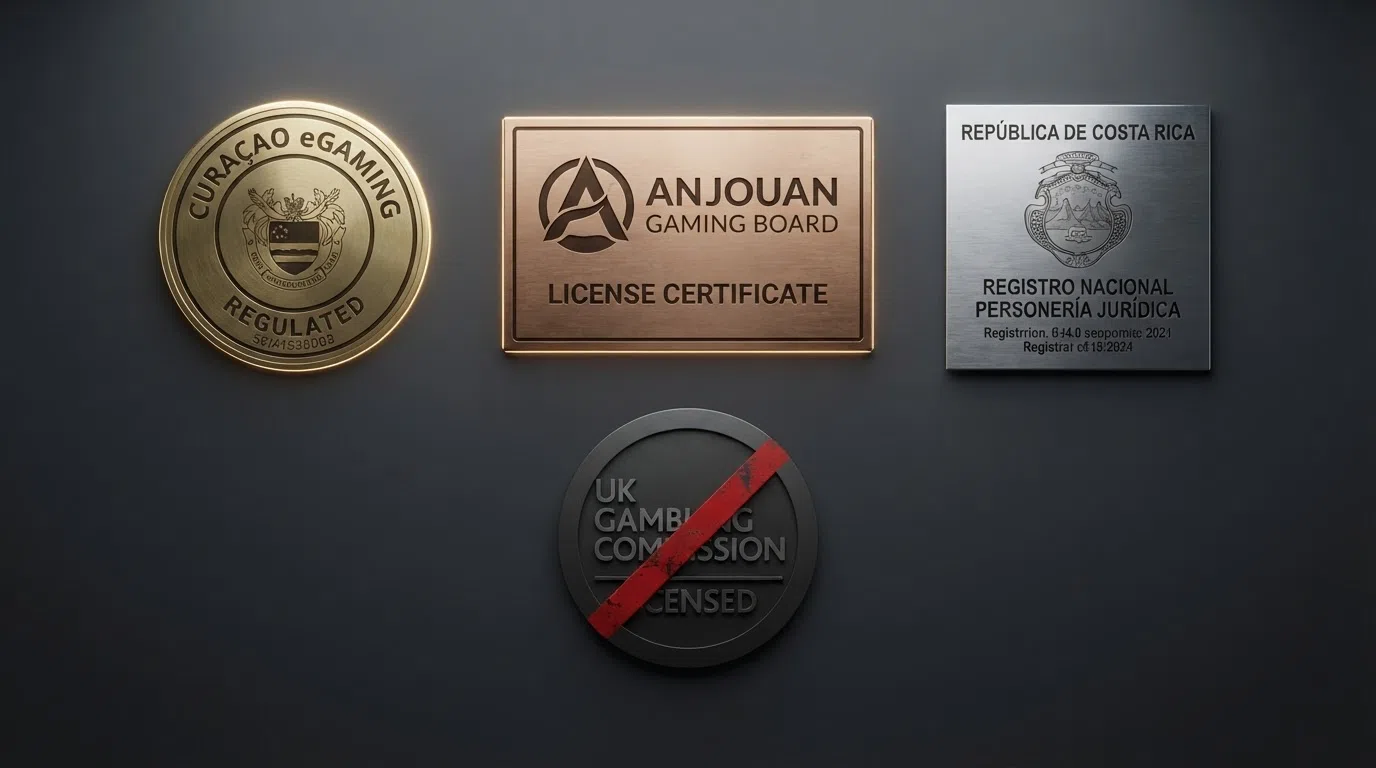
The practical position on cryptocurrency is the one most often misstated. The Commission has not banned Bitcoin. It has not added cryptocurrency to a list of prohibited payment methods. It has, through its published guidance on digital currencies, made the conditions for accepting crypto under a GB licence unworkably heavy. A GB-licensed operator that wanted to add Bitcoin would have to demonstrate full source-of-funds compliance at the deposit, maintain ongoing AML monitoring of the blockchain, and satisfy the Commission’s socially responsible gambling requirements on a payment rail that does not lend itself to identity verification. No operator has cleared that bar.
The Commission’s February 2026 announcement that it had asked its Industry Forum to explore a “sensible” pathway for cryptoassets as a licensed payment option was widely reported as the first step toward legalising Bitcoin at British casinos. It is more honestly read as a tentative first step, in the Commission’s own words, with no timetable. The accompanying move — the FCA’s Cryptoassets Regulations 2026, passed by Parliament on 4 February 2026 and expected to come into force on 25 October 2027 — brings cryptoassets within the Financial Conduct Authority’s perimeter, but it does not touch gambling payments. The two regulators operate different rulebooks.
The Gambling Commission and Cryptocurrency: No Ban, No Licence, No Middle Ground
The Commission’s published position is plain. “If you want to accept digital currency as a means of payment you must satisfy yourself and us that you can meet your obligations in relation to anti-money laundering and that you are acting in a socially responsible way.” That sentence, from the Commission’s own guidance, is the rule. The follow-up is sharper: “If you are considering using crypto-assets to fund a gambling business, we recommend that unless you are able to provide a full and complete history of SoF with your application, do not submit as we will not consider Operating Licence applications with a crypto funding element without this evidence provided in full.” An application that cannot meet that standard will not be considered. The rule is not a written prohibition. The rule is a wall built out of procedural requirements.
The legal commentary that follows the rule is consistent. As one London law firm put it this year: “There has never been an express statutory prohibition on the use of cryptocurrency in UK-licensed gambling. However, the practical position has long been clear.” The practical position is that no GB-licensed casino accepts Bitcoin, and none will until either the Commission’s source-of-funds expectations change materially or a licence applicant succeeds in proving the impossible.
GamStop and Self-Exclusion: Why Offshore Bitcoin Casinos Sit Outside the Net
GAMSTOP has been mandatory for every GB-licensed online operator since 31 March 2020. A player who self-excludes through GAMSTOP cannot open an account with any British online casino, and the exclusion cannot be reversed early — the minimum period is six months, with one-year, five-year, and five-year auto-renewal options on top. It is the single most effective self-exclusion tool available to a British gambler, and it works only against GB-licensed operators.
Every Bitcoin casino on the page below is offshore. None of them is required to integrate with GAMSTOP, and none of them does. A UK player who has self-excluded through GAMSTOP and then attempts to register and deposit at any of the operators ranked here will, in almost every case, succeed. The exclusion scheme does not extend. This is the most significant consumer-protection gap in the entire crypto-for-UK-players arrangement, and it sits on top of every other concern: a player who has decided to stop gambling and chosen the most robust British mechanism to enforce that decision can step straight around it by opening a Bitcoin casino account. The tools the offshore casinos offer in place of GAMSTOP — voluntary deposit limits, account-level self-exclusion — are operator policies, not regulator-enforced obligations.
When KYC Is Required (and When It Isn’t) at Offshore Bitcoin Casinos
The no-KYC marketing at several operators in this set is honest about what it offers and silent about what it does not. Jackbit and Jack.com state plainly that they do not require routine identity verification at registration. Betpanda and Cryptorino, registered in Costa Rica rather than licensed in a recognised gambling jurisdiction, market minimal verification as a feature. What that means in practice is that a player can register an account, deposit Bitcoin and start playing without uploading a passport or a proof of address.
What it does not mean is that the casino never asks. Anti-money-laundering triggers operate across the no-KYC operators the same way they operate everywhere else — a large withdrawal, an irregular deposit pattern, or a flag from blockchain analytics will pull the account into the verification queue. The difference is that the player has no certainty about when the queue activates, what evidence will be demanded, or how long the review will take. A GB-licensed casino verifies at registration and so the player knows exactly where they stand. A no-KYC casino verifies on demand, and the player learns the rules by hitting them.
The protection a UK player gives up is concrete. A no-KYC casino has no obligation to run the Gambling Commission’s mandatory financial-vulnerability checks — the light-touch check at £150 in net rolling deposits that screens for county court judgments, individual voluntary arrangements and similar markers of financial distress. The casino has no obligation to interact with a UK self-exclusion register, because no UK self-exclusion register extends to offshore operators. If a dispute arises — a bonus the player believes was wrongfully withheld, a withdrawal the casino delays, a game the player suspects was not fair — the player’s only remedy is the operator’s own complaints process and, in some cases, the alternative dispute resolution service the operator has signed up to. The UK Gambling Commission will not take the complaint. There is no British ombudsman for an unlicensed casino.
The Top 10 Bitcoin Casinos Accepting UK Players in 2026
The table below ranks the ten featured operators. Every one of them is offshore-licensed. None is licensed by the UK Gambling Commission. The columns below describe what each operator does on its own terms, and the gap between them and any GB-licensed equivalent.
| Operator | Licence & jurisdiction | Welcome bonus | Crypto withdrawal speed | Standout feature |
|---|---|---|---|---|
| Vave | Curaçao CGA 8048/JAZ (Latcas B.V.) | 150% to 1.5 BTC + 100 free spins | BTC 10–60 min; ETH 5–30 min | Dual casino and sportsbook welcome; 100+ providers |
| Jackbit (Jack.com) | Curaçao OGL/2024/1562/1139 (Ryker B.V.) | 100 free spins on $50+ deposit | Near-instant for most crypto | Wager-free free spins with $100 cap; native Monero |
| BC.Game | Anjouan (BlockDance B.V.); UKGC revoked Dec 2024 | Token-based $BC rewards | Minutes per blockchain | 8,000+ games, 155+ cryptocurrencies, 75+ provably fair Originals |
| Stake | Curaçao OGL/2024/1451/0918; UKGC surrendered Mar 2025 | 200% to $2,000 | Typically minutes | Premier League sponsorship; 4,200+ games |
| Betpanda | Costa Rica corporate registration (Star Bright Media S.R.L.) | 100% to 1 BTC | 20 min tested | No KYC; fee-free crypto payments |
| Thunderpick | Curaçao-licensed | — | — | Esports-focused; 250+ live dealer games |
| Cryptorino | Costa Rica data-processing (Star Bright Media S.R.L.) | 100% to 1 BTC | 20 min tested | Lightning Network deposits; 66× wagering |
| Bets.io | Curaçao-licensed | — | — | Consistent presence in UK crypto casino rankings |
| TrustDice | Curaçao-licensed | — | — | Provably fair games across the catalogue |
| Winz.io | Curaçao (Dama N.V.) | 20% cashback + 800 free spins, 0× wagering | — | Only fully wager-free welcome offer in the set |
Vave — 150% Match to 1.5 BTC + 100 Free Spins, Curaçao-Licensed
Vave runs on a Curaçao CGA licence under the operator Latcas B.V., and it markets the strongest first-deposit bonus in the featured set: a 150% match up to 1.5 BTC plus 100 free spins. The headline figure is the largest single deposit-match available here; the conditions that come with it are also among the heaviest. Wagering sits at 40× the bonus amount, and the bonus has to clear inside 14 days. Slots count 100% toward wagering; table games and live dealer games are excluded entirely, which narrows the set of games a player can use to clear the requirement.
The catalogue is broad — 100+ providers including Pragmatic Play, Evolution, Hacksaw Gaming and BGaming, with both a casino and a sportsbook under the same account. The dual product is unusual among Curaçao-licensed operators and lets a player who likes a sportsbook welcome not have to choose. Minimum deposit for the bonus is 20 USDT or crypto equivalent. Withdrawals run in the standard crypto window — BTC ten to sixty minutes, ETH five to thirty.
The verdict is one of scale. Vave is the largest headline bonus here, and it costs the player the heaviest playthrough in the set alongside Cryptorino’s. A player with a bankroll large enough to clear 40× wagering inside 14 days on slot play alone will find a substantial offer; a player who wants to mix in live dealer or table games will find the bonus effectively unbettable. The 14-day validity is the real pressure point — the wagering requirement is not just large, it is large and short.
Jackbit (Now Jack.com) — 100 Wager-Free Free Spins With a $100 Cap
Jackbit rebranded to Jack.com in spring 2026 and continues to operate under a Curaçao licence (OGL/2024/1562/1139) granted in July 2025, through Ryker B.V. The welcome offer is the simplest in the set: 100 free spins on a first deposit of $50 or more. The spins are wager-free — any winnings land directly in the balance — but a 1× deposit-plus-winnings playthrough applies before a withdrawal can be requested, and free-spin winnings are capped at $100. The 24-hour activation window and the 24-hour use window are tight: a player who deposits on a Tuesday and comes back on Thursday has lost the spins.
The catalogue runs to 6,000+ games across multiple providers, and Jackbit is one of the few operators in the set with native Monero support — a meaningful detail for players who prioritise transactional privacy. Routine KYC is not required; verification is reserved for fraud and AML flags.
The verdict lands as a taster, not a bankroll. The wager-free framing reads well, but the $100 cap on free-spin winnings and the 24-hour use window set a ceiling low enough that the offer functions as a small first-deposit trial rather than a meaningful bankroll boost. A player who wants to play through a bonus over weeks, not hours, will not find it here.
BC.Game — 8,000+ Games, 155+ Cryptocurrencies, and a UKGC Revocation in Its Past
BC.Game is the largest operator in the set by both game count and cryptocurrency coverage. It lists 8,000+ games from 38+ providers and accepts 155+ cryptocurrencies — a number that no other operator in the ranking comes close to. The in-house BC Originals library adds another 75+ provably fair titles, including Crash, Mines and Plinko, each verifiable through the cryptographic seed-pair system.
The bonus structure is not the kind a player can read off a poster. BC.Game phased out a conventional deposit match in early 2026 and replaced it with a token-based reward: players earn $BC through wagering, and the tokens are auto-staked into an hourly share of platform profit. There is no wagering multiplier, no fixed cashout cap and no expiry in the conventional sense, because there is no conventional bonus. Players who value a clear, scannable welcome offer will find the model opaque.
The regulatory history is the heaviest in the set. BC.Game’s UKGC licence was revoked in December 2024; it now operates under an Anjouan (Comoros) licence through BlockDance B.V. Roughly $2.5M in disputed unpaid player claims is reported under appeal.
The verdict is uncomfortable. BC.Game is the most capable platform in the set on raw product — breadth of games, breadth of cryptocurrencies, depth of provably fair Originals — and it is also the most legally encumbered. A player who arrives at BC.Game for the catalogue and the crypto range is accepting a regulatory history and an unresolved claims picture that no Curaçao-licensed competitor carries. The token-based reward removes the wagering-multiplier problem that dogs the rest of the set, but it replaces it with a model that requires more trust in the operator, not less.
Stake — 200% to $2,000, Surrendered Its UKGC Licence in 2025
Stake.com is the most recognisable brand in crypto gambling, partly because of the sponsorship footprint — Everton FC in the Premier League, Drake across the broader cultural surface — and partly because of the size of the welcome offer: 200% up to $2,000. The headline is the largest fixed-dollar match in the set.
The licence stack is broader than most competitors’ — Curaçao OGL/2024/1451/0918 as the primary, plus Estonia EMTA, Mexico, Colombia and Peru. The UKGC licence was surrendered in March 2025, framed by the operator as a strategic exit rather than a regulatory penalty. 4,200+ games from major studios; 20+ cryptocurrencies accepted; withdrawals typically settle in minutes.
The wagering terms on the welcome bonus are not specified in the sources cross-checked for this page — a gap that matters more for Stake than for smaller operators, because the size of the headline bonus sets an expectation the small print should match. The bonus value is real, but the cost of clearing it is not on the page that markets it.
The verdict reads as scale with a footnote. Stake is the largest fixed-dollar offer, on the most licensed platform, with the most recognised brand — and it left the British regulated market voluntarily in 2025. A player who weighs brand recognition heavily will find Stake easier to evaluate than the rest of the set; a player who weighs regulatory standing will find the surrender a meaningful signal. Both readings are defensible. The licence footprint across four non-GB jurisdictions is a genuine plural-licence advantage that no other operator in the ranking matches.
Betpanda — 100% to 1 BTC, No KYC, Costa Rica-Registered
Betpanda runs on a Costa Rica corporate registration through Star Bright Media S.R.L., which is not the same thing as a Costa Rican gaming licence. Costa Rica does not issue gambling-specific licences; it registers companies that may lawfully offer gambling products. The distinction matters because it means there is no Costa Rican gaming regulator to complain to if a dispute arises — the operator is accountable to its own ADR only.
The welcome offer is straightforward: 100% up to 1 BTC, with a €10 minimum deposit and a 7-day expiry. The 7-day window is the shortest in the set. No KYC is required at registration, and the operator publishes no responsible gambling information — no deposit-limit tool, no self-exclusion mechanism, no reality check. The catalogue runs to 6,000+ games from 70+ providers; withdrawals have been independently tested at around 20 minutes.
The verdict is convenience against the weakest oversight in the set. Betpanda is fast to sign up to and quick to pay out, and it sits in the lowest tier of regulatory protection among the ten operators. A player who wants the no-friction experience and accepts the regulatory gap will find Betpanda delivers; a player who expects any third-party accountability will look elsewhere.
Thunderpick — Esports-First Casino With 250+ Live Games
Thunderpick is the only operator in the ranking built around esports as the primary product, and the secondary casino offering is sized to match a sportsbook audience. The live-dealer lobby runs to 250+ games — the deepest of any operator in the set — drawing on multiple live studios including Evolution and Pragmatic Play Live.
The licence is Curaçao. BTC, ETH and major altcoins are accepted. Bonus terms and withdrawal speeds for Thunderpick are not detailed in our research data.
The verdict is qualitative. Thunderpick is the only operator in the set to put esports ahead of slots, and the live-dealer depth is the genuine standout. A player whose primary interest is esports betting and who wants a credible casino alongside will find the strongest fit here; a player looking for the largest welcome bonus or the lowest wagering multiplier will not.
Cryptorino — 100% to 1 BTC With Lightning Network, but 66× Wagering
Cryptorino shares its corporate registration with Betpanda — both sit under Star Bright Media S.R.L. in Costa Rica, which means neither holds a gaming licence issued by a recognised gambling regulator. The welcome bonus is a 100% match up to 1 BTC; the wagering requirement is 66×, the highest in the featured set.
The standout feature is Lightning Network support. Deposits settle in seconds rather than the ten-to-sixty-minute on-chain window, and the network fee is a fraction of a cent. For a player depositing $50, the difference between paying $5 in on-chain fees and paying a negligible Lightning fee is material. The catalogue runs to 6,000+ games from 70+ providers; withdrawals have been tested at around 20 minutes; no KYC is required and no responsible gambling information is published.
The verdict is the steepest wagering in the set against the fastest deposits. A player depositing small amounts frequently will find the Lightning integration genuinely useful; a player who wants to claim the welcome bonus and clear it will find 66× wagering on a 7-day-equivalent timeline harder than any other offer here. The bonus is one to think carefully about before claiming.
Bets.io — Curaçao-Licensed, Regular in UK Crypto Casino Rankings
Bets.io appears in multiple top-5 rankings for UK-facing crypto casinos — a pattern of consistent presence across competing affiliate listicles that is itself a kind of signal. The licence is Curaçao. BTC and major cryptocurrencies are accepted.
The bonus structure, wagering terms, provider list and withdrawal speeds were not captured in this article’s research. The operator is described in available rankings as a mid-tier Curaçao-licensed casino with broad crypto coverage.
The verdict is incomplete by necessity. Bets.io’s presence across rankings is the strongest verifiable signal; the absence of detail on bonus terms or withdrawal speed in this article’s sources means a player considering Bets.io needs to check the operator’s own published terms before depositing. The Curaçao licence places it in the middle of the jurisdictional spectrum — above Costa Rica corporate registration, below a GB licence, broadly equivalent to most of the set.
TrustDice — Curaçao-Licensed With Provably Fair Games
TrustDice sits on a Curaçao licence and markets its provably fair system as the differentiator. The catalogue covers BTC and major cryptocurrencies, and the operator appears in multiple top rankings for crypto casinos — the same pattern of consistent presence that describes Bets.io.
The bonus structure, wagering terms, provider detail and withdrawal speeds were not documented in the sources cross-checked for this article. The provably fair system is the standout feature, in the same way BC.Game’s Originals are the standout feature there — a verifiable cryptographic chain between server seed, client seed and outcome hash.
The verdict is similar to Bets.io’s: a Curaçao-licensed operator with provably fair games and a pattern of consistent ranking presence, but with detail gaps in the sources available for this article. A player prioritising provably fair verification over bonus size will find TrustDice’s positioning credible; a player prioritising the largest welcome offer will not.
Winz.io — 20% Cashback + 800 Wager-Free Free Spins, No Wagering
Winz.io operates under a Curaçao licence through Dama N.V. and launched in 2020. The welcome offer is the only one in the featured set that carries zero wagering: 20% cashback on net losses for up to 7 days, plus 800 free spins with 0× playthrough. There is no multiplier to clear, no cap on cashback winnings (the cashback is calculated on net loss and credited as real money), and no expiry pressure on the free spins beyond the standard bonus window.
The hybrid product — casino and sportsbook under the same account — is less developed than Vave’s, and the bonus structure is the standout rather than the game catalogue. BTC and major cryptocurrencies are accepted; withdrawal speeds and minimum deposits were not documented in the sources cross-checked for this article.
The verdict is the only genuinely wager-free welcome in the ranking, and that is a meaningful differentiator. Every other offer here carries a multiplier — 40× at Vave, 66× at Cryptorino, 1× at Jackbit on top of the deposit — and a player who has been frustrated by hidden wagering requirements elsewhere will find Winz.io’s 0× framing honest. The absence of a conventional deposit match means the headline is smaller, but the value retained by the player is higher.
How to Spot a Bitcoin Casino You Can Actually Trust
The absence of UKGC protection changes what due diligence means. A player at a GB-licensed casino can rely on the regulator to do the licensing work — the operator’s licence status, the fairness of the games, the segregation of player funds. A player at an offshore Bitcoin casino has to do that work themselves, and the available signals are thinner. Three are worth weighting.
The first is licence jurisdiction. A Curaçao CGA licence is a real gambling licence, issued by a regulator with a public register and a complaint route — even if the complaint route is thinner than the UKGC’s. An Anjouan licence is a real gambling licence, issued by the Comoros regulator, with a comparable but less-tested record. A Costa Rica corporate registration is not a gambling licence at all. The ordering matters: Costa Rica at the bottom of the trust stack, Curaçao and Anjouan in the middle, no operator in this set at the top.
The second is provably fair verification. A genuinely provably fair game lets the player confirm after each round that the outcome was determined by the combination of a hashed server seed and a player-supplied client seed, with no operator-side manipulation. BC.Game’s 75+ Originals are the largest such library; TrustDice’s catalogue is positioned around the same mechanism. A casino that publishes its provably fair algorithm and lets a player re-compute outcomes is offering something no GB-licensed casino can, because the GB regime relies on regulator-side testing rather than player-side verification. The signal cuts both ways: a player who does not verify the provably fair claim is not getting the protection it appears to offer.
The third is independent community track record. Player forums, long-form review sites, and the complaints history of a casino across multiple affiliate sites are the closest thing to a market test an offshore operator receives. A casino with two years of clean payout history across multiple sources is meaningfully less risky than one that appeared six months ago with no track record. The signal is not perfect — affiliate reviews earn commission on sign-ups and the incentives are not always aligned with the reader — but it is the only signal the market offers.
The Three Signals That Matter: Licence, Provably Fair, and Community Track Record
A practical checklist for a UK player evaluating any Bitcoin casino runs through these three signals in this order. Confirm the licence jurisdiction and check the regulator’s public register for the licence number the operator publishes. If the licence does not appear on the regulator’s register, walk away. If the operator claims a Curaçao licence but the licence number cannot be verified on the Curaçao Gaming Authority’s public register, the licence is unverified.
Confirm the provably fair implementation. A provably fair casino should publish the algorithm it uses (commonly a hashed server seed plus client seed plus nonce), let the player supply the client seed, and provide a verification tool that re-computes the outcome hash. If any of these elements is missing, the claim is marketing rather than mechanism.
Check the community track record across at least two independent sources. A casino that pays out consistently will have that pattern visible in long-form reviews and player discussions; a casino that delays or withholds will also have that pattern visible. The market signal is the only one that survives across multiple regulatory frameworks.
Reading Between the Lines of a Bitcoin Casino Review
Most Bitcoin casino reviews published online earn commission on the sign-ups they generate. That is the business model, and it is not unique to crypto — the same incentive exists at every affiliate publisher in every vertical. What is unusual about the crypto casino affiliate market is the depth of the review gaps. Reviews that headline a 200% bonus without specifying the wagering multiplier; reviews that name a withdrawal speed without naming the cryptocurrency tested; reviews that call an operator “trusted” without naming the licence jurisdiction.
A review that does not specify the wagering multiplier on the welcome bonus is not telling the reader what the bonus costs. A review that names a “fast payout” without saying whether the test used BTC, ETH or USDT is not telling the reader what to expect. A review that describes a casino as “licensed” without naming the jurisdiction is not telling the reader whether the licence carries any weight. The signals to look for are the small-print numbers — the wagering multiplier, the max cashout, the validity window — and the licence number, verifiable on the regulator’s public register.
House Edge, RTP and Why the Maths Matters More When Nobody Caps the Wagering
Return-to-player (RTP) is the share of wagered money a slot returns to players over millions of spins. A 96% RTP slot returns, on average, 96p for every £1 wagered across the long run — the remaining 4p is the house edge. The numbers are statistical averages over a large sample, not a guarantee for any individual session, and the volatility rating (low, medium, high, very high) describes how bumpy the ride is around that average.
At a GB-licensed casino, the wagering requirement that sits on top of a bonus is capped at 10×. A £100 bonus with 10× wagering means £1,000 of total bets before the bonus becomes withdrawable. The expected loss on those £1,000 in bets, at 96% RTP, is £40 — meaning the player expects to lose £40 of the £1,000 in turnover on the way to clearing the bonus. The bonus itself is worth more than £40, so the offer is positive expected value.
At an offshore Bitcoin casino, the same £100 bonus might carry 40× wagering (Vave) or 66× wagering (Cryptorino). The required turnover is £4,000 or £6,600. At 96% RTP, the expected loss on £4,000 is £160; on £6,600 it is £264. Whether the bonus is still positive expected value depends on the bonus size and the cashout cap, but the expected-loss calculation is what makes the difference legible. The GB cap is a real consumer protection. The offshore absence of the cap is what makes the offshore bonus look large.
A worked example using Vave’s 150% bonus up to 1.5 BTC, at 40× wagering, on a 96% RTP slot: a player claiming the maximum 1.5 BTC bonus at a BTC price of, say, $60,000 has a bonus value of roughly $90,000 at claim time, with required turnover of $3.6M and an expected loss of $144,000 on that turnover. The headline figure is large; the cost of clearing it is larger.
Why Your Bitcoin Casino Bonus Is Smaller Than It Looks
Every bonus carries a gap between the headline and what the player actually keeps. The gap has three components: the wagering multiplier, the validity window, and the game contribution rules. A player who evaluates only the headline will be surprised by all three.
Wagering multipliers in this set range from 0× (Winz.io on the wager-free offer) to 66× (Cryptorino). A 40× multiplier is the median. The GB-licensed ceiling is 10×. The spread matters: a 40× bonus takes four times the turnover of a 10× bonus to clear, and the expected loss on that turnover is four times larger for any given RTP.
Validity windows range from 24 hours (Jackbit’s free spins) to 14 days (Vave’s deposit match). A short window forces a higher daily wagering volume. Betpanda’s 7-day window on a 100% bonus means a player depositing 1 BTC at the maximum has to clear roughly 40× in 7 days, which is impossible at sane session lengths without the player increasing their average stake well beyond the deposit minimum. The pressure is real.
Game contribution rules are the third mechanism. Vave’s bonus counts slots at 100% but excludes table and live dealer games entirely. A player who enjoys live dealer blackjack cannot use the bonus on it. The bonus is large and the games that count toward clearing it are a subset of the catalogue. Jackbit’s wager-free free spins carry a 1× deposit-plus-winnings playthrough on the way out — a small but real multiplier applied at the point of withdrawal rather than at the point of play.
The contrast across the set is sharpest between Winz.io’s 0× offer and Cryptorino’s 66× offer. Winz.io is the only operator in the ranking offering a wager-free welcome; Cryptorino carries the highest multiplier. The two bonuses are at opposite ends of the same spectrum, and the spread between them is what the headline figure conceals.
No-Deposit Bonuses and Sign-Up Offers: Free Bitcoin, but Read the Small Print
A no-deposit bonus is credit or free spins the casino issues without requiring the player to deposit first. In the Bitcoin casino market, no-deposit offers are uncommon — the deposit-gated welcome bonus is the standard, and it is the form every operator in the featured set uses. None of the ten operators reviewed here currently advertises a pure no-deposit Bitcoin bonus; the closest equivalent is Jackbit’s 100 free spins, which require a $50 deposit to activate.
The distinction matters because the marketing on no-deposit offers tends to overstate the value. A 1 mBTC no-deposit credit sounds like free money until the small print attaches a 50× wagering multiplier and a $20 max cashout. The structure is consistent: small bonus, heavy multiplier, low ceiling. A player who claims such an offer expecting to withdraw a meaningful amount will likely be disappointed.
Welcome and First-Deposit Bonuses: The Headline Numbers vs the Real Cost
The deposit-match bonuses across the featured set scale from 100% (Betpanda, Cryptorino) to 150% (Vave) to 200% (Stake). The wagering multipliers scale in the opposite direction at the heaviest end — Cryptorino at 66× is the steepest in the set. The combination is what determines what the player actually keeps.
Vave’s 150% to 1.5 BTC plus 100 free spins, with 40× wagering and a 14-day window, is the largest match in the set. The expected-loss calculation on the maximum bonus, assuming 96% RTP slot play across the clearing period: a 1.5 BTC bonus at $60,000/BTC is worth $90,000 at claim, with required turnover of $3.6M and an expected loss of approximately $144,000 on the way to clearing. The bonus exceeds the loss in headline value but the wagering window is tight.
Betpanda’s 100% to 1 BTC, with 7-day expiry, has no documented wagering multiplier in the sources cross-checked for this article but the 7-day window is the constraint. Cryptorino’s 100% to 1 BTC, with 66× wagering, is the heaviest playthrough in the set against a modest match. Stake’s 200% to $2,000 has no documented wagering terms in the sources cross-checked here — a gap that affects the comparison.
Free Spins on Bitcoin Slots: Wager-Free, Capped, and Everything In Between
Free spins are the most common promotion at Bitcoin casinos, and they range from genuinely free to capped and conditional. Winz.io’s 800 free spins with 0× wagering is the only fully wager-free free-spin offer in the set. Jackbit’s 100 free spins are wager-free on the spin itself but carry 1× deposit-plus-winnings playthrough on the way out and a $100 cap on free-spin winnings. Vave’s 100 free spins are tied to the deposit-match bonus and carry 40× wagering on spin winnings.
The mechanisms are different. The Jackbit structure is a near-wager-free offer with a tight ceiling — a player who wins $80 from the spins can withdraw it after a small playthrough. The Vave structure is a deposit-match with a spin add-on, and the spin winnings enter the bonus balance under the same 40× multiplier. The Winz.io structure is genuinely free — the spin winnings are real money from the moment they land.
VIP and High-Roller Programmes: What the Featured Operators Offer Their Biggest Players
The loyalty programmes across the featured set differ in structure. BC.Game’s $BC token system — earn through wagering, auto-stake for hourly platform profit share — is the most novel; the value depends on platform trading volume and the token’s market price, both of which fluctuate. Stake, Vave and the Curaçao-licensed operators more broadly run conventional tiered VIP programmes with higher deposit limits, personal account managers, and bonus terms that are negotiated privately rather than published.
A high-volume UK player faces a specific risk. A six-figure balance held at an offshore Bitcoin casino, denominated in BTC, sits outside the GB regulatory framework entirely — no GAMSTOP coverage, no UKGC complaints route, no British consumer redress. The protection that the player forgoes scales with the balance. A player keeping $200 of BTC at an offshore casino is accepting a small protection gap. A player keeping $200,000 is accepting a large one.
Getting Money In and Out: Bitcoin Casino Payments, Speed and Limits
The payment mechanics are the most distinctive part of the Bitcoin casino offer, and the marketing tends to oversimplify what is actually happening. On-chain BTC deposits confirm in minutes; on-chain BTC withdrawals settle in 10 to 60 minutes after casino approval. Lightning Network deposits (where supported) settle in seconds and cost fractions of a cent. Altcoin withdrawals vary — ETH typically five to thirty minutes, Solana two to three minutes, USDT depending on the host chain.
The friction points are not the blockchain. The friction is the casino’s internal approval process, the exchange the player uses to convert BTC back into pounds, and the limits the operator sets on deposits and withdrawals. A casino that requests KYC at the withdrawal stage can delay a payout for days regardless of how fast the blockchain settles. A casino with a $10,000 daily withdrawal cap creates a different kind of delay. The marketing claim of “instant withdrawal” almost always refers to the blockchain leg only — not the casino’s internal processing time.
How to Deposit Bitcoin at an Online Casino
The three-step process is consistent across operators. Step one is buying BTC — typically on a regulated exchange, with the exchange performing its own identity verification before allowing a withdrawal. Step two is sending BTC from the exchange (or a private wallet) to the deposit address the casino publishes in its cashier. Step three is waiting for confirmations — typically two to six, depending on the operator’s stated policy. The casino credits the play balance in fiat at the prevailing rate.
Network fees are the most variable cost. During quiet mempool periods, a Bitcoin transaction costs under $1 in fees. During congested periods — typically during major BTC price moves — fees can spike to $5 to $20 on a single transaction. A $50 deposit carrying a $15 fee is a real cost the player pays before any gambling begins. The Lightning Network, where supported, reduces the fee to fractions of a cent.
Withdrawal Speeds: From Instant to 60 Minutes — and Why the Casino, Not the Blockchain, Is the Bottleneck
On-chain BTC withdrawals settle in 10 to 60 minutes after the casino approves the transaction. The casino’s approval is the bottleneck. A casino that processes withdrawals automatically settles in minutes; a casino that queues withdrawals for manual review adds hours or days. Lightning Network withdrawals, where supported, settle in seconds. Altcoin speeds vary by design: ETH five to thirty minutes, Solana two to three, USDT depending on the host chain.
The marketing claim of “instant withdrawal” almost always refers to the blockchain leg. The casino’s internal processing time is what determines whether the withdrawal is genuinely fast. A no-KYC casino that delays KYC verification until the withdrawal stage can hold a payout for days while the player supplies identity documents — a friction the player did not face at the deposit stage. Betpanda and Cryptorino have been independently tested at around 20 minutes for crypto withdrawals; Jackbit markets near-instant processing. The variance across operators is real.
Minimum Deposits, Maximum Cashouts and the Limits That Shape Your Session
Minimum deposits at the featured operators run from €10 (Betpanda) to $50 (Jackbit, to trigger the welcome offer). Minimum withdrawals are typically $10 to $20 equivalent. Maximum cashout caps apply to bonus winnings specifically: Jackbit’s $100 cap on free-spin winnings is the clearest example.
The comparison to GB-licensed casinos is sharp. A UK-licensed operator must, since 31 October 2025, prompt the player to set a financial limit before the first deposit, and must offer a “gross deposit limit” with at least equal prominence (RTS 12). An offshore Bitcoin casino has no such obligation. A player at Betpanda or Cryptorino can deposit the maximum allowed by the payment system without any in-platform prompt to set a limit. The protection that British law requires is the protection the offshore casino does not offer.
Anonymity Is a Myth: What Crypto Casinos Actually Know About You
The anonymity promise at crypto casinos is a marketing line, not a property of the technology. Bitcoin is pseudonymous: every transaction is recorded on a public ledger tied to a wallet address, and the address is tied, through the exchange the player used to buy the Bitcoin, to the player’s identity in most regulatory regimes. A player who bought their BTC on a regulated UK exchange has linked their identity to the wallet they withdrew to. A no-KYC casino that receives BTC from that wallet is receiving funds from an identity the exchange knows, even if the casino does not ask.
What no-KYC casinos actually skip is the identity verification step at registration. They still log IP addresses, device fingerprints, wallet addresses and deposit patterns. They reserve verification for AML triggers — large withdrawals, irregular deposits, blockchain analytics flags. A player who plans to withdraw a meaningful amount should expect to be asked for ID at the point of withdrawal, not the point of deposit. The “no KYC” claim describes the entry point, not the exit.
The practical consequence is that anonymity is partial, not total. A player who wants maximum privacy would use Monero (Jackbit supports it natively), route through a non-custodial wallet with no exchange history, and withdraw in a coin that breaks the on-chain trail. A player who buys BTC on a UK exchange and deposits at any of the operators in this set has already given up most of the privacy the marketing promises, as exchanges link their identity to the wallet they use. There is simply no substitute for caution.
Multi-Crypto Casinos: Beyond Bitcoin
The cryptocurrency range across the featured set varies from the focused (Vave’s BTC, ETH, USDT, DOGE, LTC, XRP and others) to the comprehensive (BC.Game’s 155+ cryptocurrencies). The breadth matters because low-fee altcoins offer a way around Bitcoin’s network-fee problem: depositing in Litecoin, XRP or Solana instead of BTC, with the casino crediting the same fiat play balance, lets a player avoid the $5-to-$20 fee spikes during congested BTC mempool periods.
Jackbit’s native Monero support is the standout privacy play. Monero transactions obscure the sender, receiver and amount by default, and a player who values that property above casino breadth will find Jackbit the closest fit. For most players, the altcoin route is more about fee management than privacy — depositing in SOL or XRP, gambling in USD-equivalent play balance, withdrawing in the same low-fee coin.
Provably Fair Gaming: How Blockchain Verification Actually Works
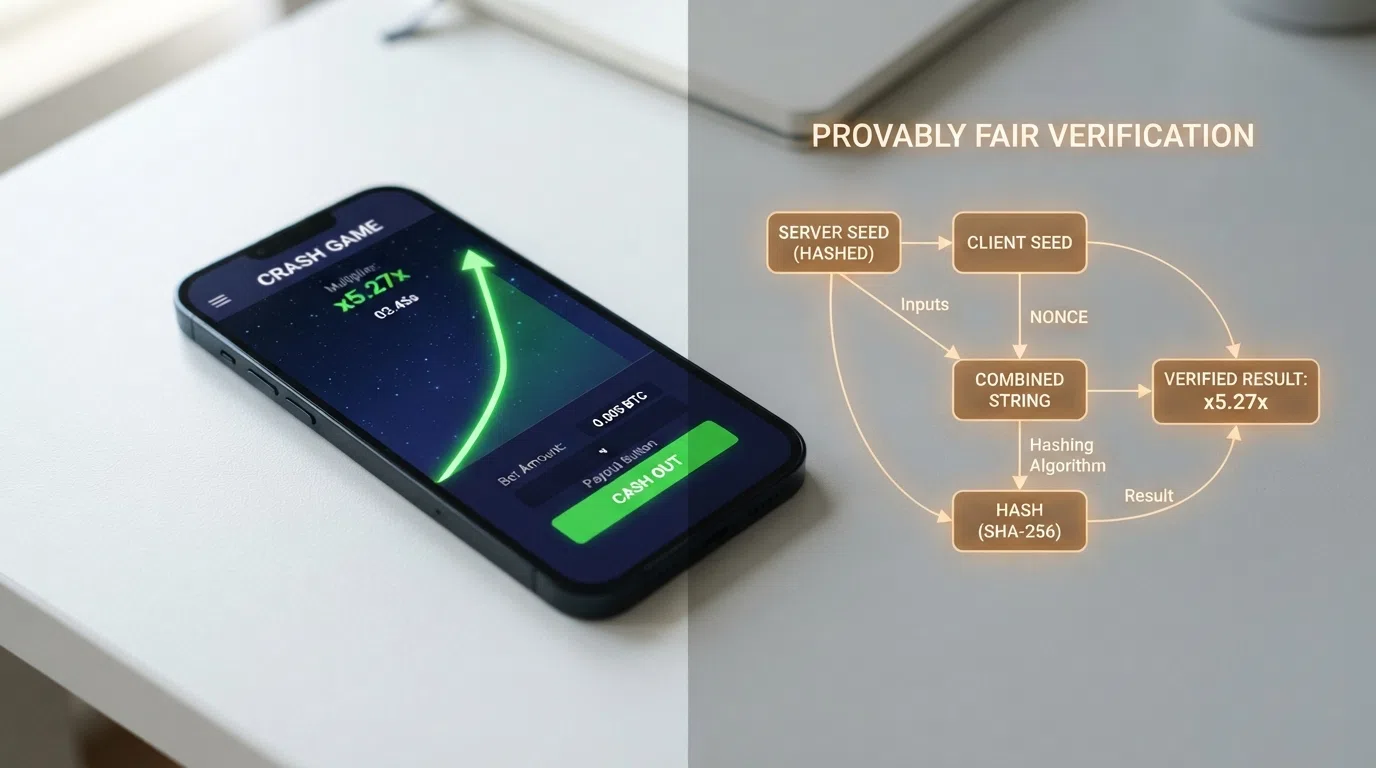
Provably fair is the cryptographic mechanism that lets a player verify each game outcome was not manipulated. The mechanism runs through three components: a server seed generated by the casino (hashed so the casino cannot change it after the bet), a client seed supplied by the player, and a nonce that increments with each bet. After the round, the player can re-combine the unhashed server seed, the client seed and the nonce to verify the outcome matches the hash the casino committed to before play began.
The system works because the hash commits the casino to the server seed before the player bets, and the player supplies the client seed independently. Neither party can manipulate the outcome after the fact. The player can verify by running the algorithm themselves.
The relevance to a UK player at an offshore casino is that provably fair is the only independent verification available. A GB-licensed casino’s games are tested by the regulator and by independent testing houses (eCOGRA, ITech Labs); the player trusts the testing rather than re-running it. At an offshore casino, no regulator is testing; provably fair is the only mechanism the player can use to confirm fairness without trusting the operator. BC.Game’s 75+ Originals are the largest provably fair library; TrustDice positions its catalogue around the same mechanism.
The Games You Can Play With Bitcoin (and Which Ones Give You the Best Shot)
The game catalogue at the featured operators is dominated by slots — Megaways titles, progressive jackpots, classic three-reelers, branded content from Pragmatic Play, Hacksaw Gaming, BGaming, Nolimit City and Big Time Gaming. Live dealer is the second pillar, with Evolution and Pragmatic Play Live as the dominant studios. RNG table games and crypto-native specialty titles (Crash, Mines, Plinko, Dice) round out the offering.
The slot RTPs that are published for specific titles give a snapshot of the range. Bonanza Megaways (Big Time Gaming) sits at 96.00% RTP with high volatility and a 26,000× max win. Speed Crash (Hacksaw Gaming) sits at 97.00% RTP with high volatility and a 10,000× max multiplier. The Dog House Megaways (Pragmatic Play) features the Megaways mechanic with up to 117,649 ways to win and sticky wild multipliers during the free spins round.
| Slot title | Provider | RTP | Volatility |
|---|---|---|---|
| Bonanza Megaways | Big Time Gaming | 96.00% | High |
| Speed Crash | Hacksaw Gaming | 97.00% | High |
The wider RTP picture is less clear. Most Bitcoin casino slots do not publish per-title RTP in the operator’s lobby, and the player has to consult an external database to confirm the figure. The transparency gap is real: a GB-licensed casino is required to display total losses and time played during a session, and the game-design rules (auto-play banned, spin speed capped at 2.5 seconds, losses disguised as wins banned) impose a specific UX that offshore casinos ignore.
Bitcoin Slots: Megaways, Progressive Jackpots and the Titles With Published RTP
Megaways slots — games that randomise the number of ways to win on every spin, with up to 117,649 possible combinations — are a fixture at the featured operators. Bonanza Megaways and The Dog House Megaways are the most consistently available titles, with sticky wild multipliers and free-spin mechanics that drive the variance. Progressive jackpot slots pool a fraction of each bet into a growing top prize; the payouts can reach seven figures, though the RTPs on progressive titles are typically lower than on fixed-jackpot games to fund the pool.
The published-RTP gap is the main difference a player will notice. A GB-licensed slot lobby typically shows the RTP prominently in the game info panel. An offshore Bitcoin casino slot lobby often does not — the player has to check an external database or the provider’s own published spec. BC.Game’s 75+ Originals and TrustDice’s provably fair catalogue are partial exceptions: the provably fair mechanism is published, and the per-game RTP is generally documented.
Live Dealer Games: Blackjack, Roulette and Baccarat With Real Dealers
Live dealer games are the second-largest category at the featured operators, drawing on Evolution, Pragmatic Play Live and other studios. Thunderpick’s 250+ live games is the deepest lobby in the set. The standard formats — live blackjack, roulette, baccarat, poker, and game-show titles like Crazy Time and Monopoly Live — are all available.
The wagering contribution is the friction. Vave’s bonus terms exclude table and live dealer games entirely from wagering — a player who prefers live dealer cannot use the deposit match on it. Several other operators apply reduced contribution rates (10–20% rather than 100%) for live dealer play, which extends the time required to clear a bonus.
Crash, Mines, Plinko and Dice: The Crypto-Native Games You Won’t Find at a Fiat Casino
Crash, Mines, Plinko and Dice are the games that distinguish a crypto casino from a fiat casino. The mechanics are simple, the odds are transparent, and the provably fair verification applies cleanly because the outcomes are algorithmically generated.
Crash is the most popular. The multiplier rises from 1.00×; the player bets and decides when to cash out; if the multiplier crashes before the cash-out, the bet is lost. Speed Crash (Hacksaw Gaming) runs at 97.00% RTP with a 10,000× max multiplier and a 0.10 to 5.00 bet range. Mines is a grid-based reveal game where the player uncovers tiles and tries to avoid bombs. Plinko drops a ball through a pegged board and pays according to the slot it lands in. Dice lets the player set a target number and bet on whether the roll will be over or under. All four are staples of BC.Game’s Originals library and are available across most of the featured operators.
Table Games and RNG Classics
RNG table games — digital blackjack, roulette, baccarat, poker, craps and keno — are available at every featured operator. The pace is faster than live dealer, the minimums are lower, and the RTP is broadly comparable to the live versions (blackjack around 99.5% with optimal play, roulette around 97.3% on European single-zero wheels).
The wagering exclusion is the recurring constraint. Table games are often excluded from bonus play, or count at a reduced contribution rate, at the same operators that list them prominently in the lobby. A player who wants to clear a bonus should check the contribution rules before assuming table play counts.
Free Play and Demo Mode: Trying Bitcoin Slots Without Risk
Demo mode is standard at the major crypto casinos: a player can launch most slot games without registering an account, on a simulated play balance that behaves identically to real money. The game mechanics are the same; the RTP is the same; the bonus features trigger on the same conditions. What changes is the stakes — the player is not risking anything.
The value is in learning the game’s mechanics before committing BTC. Volatility patterns are visible in demo play over hundreds of spins: a high-volatility slot will produce long dry stretches punctuated by large wins; a low-volatility slot will produce a steadier return. A player who demos first and chooses games that match their bankroll and session-length tolerance will play better-informed real-money sessions.
The limitation is what demo cannot replicate. Progressive jackpots do not trigger in demo mode; the pool only builds on real-money play. Some bonus features behave differently in demo. And the behavioural difference between playing with a simulated balance and playing with real BTC is the difference the player cannot simulate away — the loss aversion that real money introduces is the variable that changes the decisions.
Free-Play vs Real-Money: What Changes When You Switch
Demo play runs on the same RNG and the same RTP as real-money play. The mechanics do not change. The player’s decisions do. A £0.10 spin in demo mode feels nothing like a £0.10 spin funded by Bitcoin that took minutes to acquire and cost network fees to deposit. The behavioural economics of gambling are built on the wager’s perceived value, and the perceived value is zero in demo mode.
The transition is the moment of truth. A player who has tested a slot for 200 demo spins and feels comfortable with the volatility pattern still has to make the first real-money decision with real BTC at stake. Starting with the minimum deposit and treating the first session as an extension of the test is the most defensible approach. The alternative — moving straight from demo to a maximum-deposit bonus claim — is the path most likely to end in a session the player did not want.
Staying Safe: Responsible Gambling When the UK Safety Net Isn’t There
The UK’s responsible-gambling infrastructure is available regardless of where a player chooses to gamble. The National Gambling Helpline (0808 8020 133) is free, confidential and operates 24 hours a day, every day. GamCare runs the helpline and provides counselling, live chat, peer-support forums and treatment referrals. GambleAware funds the National Gambling Support Network, which treated 11,960 clients between April 2024 and March 2025 — an 11% year-on-year increase. NHS gambling-harm clinics operate in England, Scotland and Wales, with waiting times from referral typically under two weeks. Gamblers Anonymous runs peer-support meetings across the country.
The prevalence data makes the urgency plain. In 2024, 13.1% of adults in Great Britain — approximately 6.8 million people — were classified as experiencing some level of gambling problems under the PGSI screen. The problem gambling rate sits at 0.5%; the elevated-risk rate at 3.8%; and an estimated 7% of the British population are negatively affected by someone else’s gambling. In January 2026, GamCare’s helpline made 996 referrals to treatment, up 48% year-on-year. 82% of the people who disclosed their form of gambling to the helpline that year cited online gambling specifically — the highest rate since 2021.
The point of these numbers is that the gap between the licensed market and the offshore Bitcoin casino market is wider than the difference in consumer protection suggests. A UK player who is struggling with their gambling and has self-excluded through GAMSTOP can still deposit at any of the operators on this page. The British safety net extends to the player; the British safety net does not extend to the casino.
The Tools You Still Have: Deposit Limits, Self-Exclusion and Reality Checks at Offshore Casinos
The responsible-gambling tools at offshore Bitcoin casinos are voluntary and unevenly implemented. Some Curaçao-licensed operators offer deposit limits, session timers and self-exclusion mechanisms inside the player account; Betpanda and Cryptorino publish no responsible-gambling information at all. The GB-licensed benchmark is materially stronger: operators must prompt the player to set a financial limit before the first deposit (in force from 31 October 2025), must offer a gross deposit limit with at least equal prominence, and must run financial-vulnerability checks at £150 in net rolling deposits.
A UK player at an offshore casino has to replicate these protections manually. Practical steps: set a wallet-level budget in a separate crypto wallet dedicated to gambling; never deposit more than the budget allows; use the operator’s session-timer tool if it exists; write the National Gambling Helpline number into the casino account notes; consider blocking the casino’s domain at the router level if the player decides to stop. None of these are as effective as GAMSTOP, but they are what the offshore arrangement offers.
Where to Get Help: UK Support Services That Cover All Gambling, Regardless of Where You Play
The services below are free, confidential and available to any UK resident regardless of where they gamble.
- National Gambling Helpline (GamCare): 0808 8020 133 — free, confidential, 24/7.
- GamCare: counselling, live chat, peer-support forums, online self-assessment tool.
- National Gambling Support Network (NGSN): treatment waiting times under two weeks from referral; 11,960 clients treated April 2024 to March 2025.
- NHS gambling-harm clinics: England, Scotland and Wales.
- Gamblers Anonymous: peer-support groups.
- GambleAware: information, resources and the funding body behind the NGSN.
A self-excluded UK player who has registered at an offshore Bitcoin casino can still contact GamCare, still enter treatment, and still block further deposits at the exchange level. The protection that has been lost is the regulator’s enforcement of the exclusion; the protection that remains is the player’s own follow-through on the decision to stop.
How We Chose and Ranked These Bitcoin Casinos
The operator list was drawn from industry comparisons, consumer reviews and crypto-gambling publications. The ten operators that appear most consistently across those sources, and that remain active in 2026, form the ranking. The evaluation criteria: licence jurisdiction and quality (Curaçao and Anjouan weighted above Costa Rica corporate registration); welcome bonus value after wagering is applied (0× wagering weighted above 40× above 66×); withdrawal speed tested or reported (Lightning and on-chain BTC speeds considered); game catalogue breadth and provider quality (100+ providers above 50+ above unspecified); and the presence or absence of responsible-gambling tools (any RG information above none).
The comparison table carries the headline numbers: licence and jurisdiction, welcome bonus, withdrawal speed and standout feature. Every cell with a specific figure is sourced from the research data bank; every cell without a specific figure is shown as an em dash, not a placeholder.
What this ranking does not measure is regulatory standing. The ranking compares offshore operators on their own terms — bonus size, game breadth, payment speed — and does not endorse any of them as safe or UK-compliant. None of them are UK-compliant, because no GB-licensed casino accepts Bitcoin. The ranking is honest about that fact from the first paragraph and does not soften it anywhere downstream.
What a UK Player Should Actually Do About Bitcoin Casinos Right Now
The inescapable fact at the centre of this page: every Bitcoin casino a UK player can use in 2026 operates outside the GB licensing framework and offers no UKGC protection. The trade is real on both sides. Faster withdrawals, larger bonuses and crypto convenience against no GAMSTOP, no ADR, no British consumer redress and no statutory stake or wagering caps. The GB 10× wagering cap, in force since 19 December 2025, is the sharpest illustration: a GB-licensed casino cannot legally offer a 40× bonus; an offshore Bitcoin casino can, and several in this set do.
The practical decision framework, for a UK player who has decided the trade is worth making:
- Choose a Curaçao-licensed operator over a Costa Rica-registered one. Curaçao CGA and Anjouan licences are real gambling licences with real (if thin) complaint routes; Costa Rica corporate registration is not.
- Verify the licence number on the regulator’s public register. If the licence number does not appear, walk away.
- Verify the provably fair implementation independently. A genuinely provably fair casino publishes the algorithm and lets the player re-compute the outcome.
- Check the community track record across at least two independent sources before depositing a meaningful amount.
- Never deposit more than the player can afford to lose entirely. The protection that British law requires is the protection the offshore casino does not offer.
- Keep the National Gambling Helpline number (0808 8020 133) to hand.
The longer view is the UKGC’s February 2026 announcement that it has asked its Industry Forum to explore a “sensible” pathway for cryptoassets as a licensed payment option — described by the Commission’s own Executive Director as a “tentative first step” with no timetable. The FCA’s Cryptoassets Regulations 2026, passed on 4 February 2026 and coming into force on 25 October 2027, bring cryptoassets within the FCA’s regulatory perimeter but do not touch gambling payments. The gap between what UK law requires and what Bitcoin casinos offer is, for now, the whole story.
Frequently Asked Questions
Can I deposit Bitcoin at a UK Gambling Commission-licensed casino?
No. No UKGC-licensed casino accepts cryptocurrency deposits in 2026. The Gambling Commission has not issued a written ban, but its anti-money-laundering, source-of-funds and consumer-protection requirements make accepting crypto operationally and regulatorily impossible at any operator legally serving Great Britain. Every Bitcoin casino accessible to UK players is offshore-licensed.
What happens if I gamble at an offshore Bitcoin casino from the UK?
The operator is operating unlawfully under the Gambling (Licensing and Advertising) Act 2014, which requires a GB licence for any operator serving GB customers regardless of where it is based. The player is not prosecuted, but loses every British consumer protection: no GAMSTOP coverage, no UKGC complaints route, no alternative dispute resolution backed by the Commission, no statutory stake or wagering caps, and no British consumer redress. Section 33 of the Gambling Act 2005 targets the operator, not the player.
Do Bitcoin casinos require ID verification for UK players?
It depends on the operator. GB-licensed casinos verify at registration by default. Several offshore casinos (Jackbit, Betpanda, Cryptorino) skip routine verification at sign-up and reserve it for anti-money-laundering triggers, typically large or irregular withdrawals. A player who plans to withdraw a meaningful amount should expect to be asked for identity documents at that point regardless of the no-KYC marketing at registration.
Are Bitcoin casino games provably fair and how does that work?
Provably fair is a cryptographic system that lets the player verify each round was not manipulated. The casino commits to a hashed server seed before the bet; the player supplies a client seed; after the round, the player can re-combine the unhashed server seed, client seed and nonce to confirm the outcome matches the committed hash. BC.Game’s 75+ Originals and TrustDice’s catalogue are the largest provably fair libraries in the featured set. Provably fair is the only independent verification available at an offshore casino.
Can I bypass GamStop by using a Bitcoin casino?
Yes. GAMSTOP is mandatory for GB-licensed online operators only. Every offshore Bitcoin casino on this page sits outside GAMSTOP, and a UK player who has self-excluded through the scheme can register and deposit at any of them. This is the most significant consumer-protection gap in the offshore crypto arrangement and the one most worth weighing before signing up.
Do I pay tax on Bitcoin casino winnings in the UK?
No. Gambling winnings are tax-free for UK residents regardless of whether the casino is GB-licensed or offshore, regardless of whether the bet was placed in pounds or Bitcoin. The tax falls on the operator (Remote Gaming Duty), not the player. Disposing of the Bitcoin itself may be a capital-gains event when the player converts back to fiat, but the gambling win is not taxable.
Payments – fastestpayout-casinos-uk
Content created by the «fastestpayout-casinos-uk» team