
UK Casino VIP Programmes Ranked for 2026
 Available in GB
“VIP” in a British online casino no longer means what it meant five years ago. The visible tier ladder — Bronze to Diamond, points ticking over on screen, a relationship manager appearing by email once a player crosses a threshold — has retreated behind an invitation wall. The reasons sit in a regulatory timeline that runs from 2020 to 2026, and they sit in front of every programme still operating today.
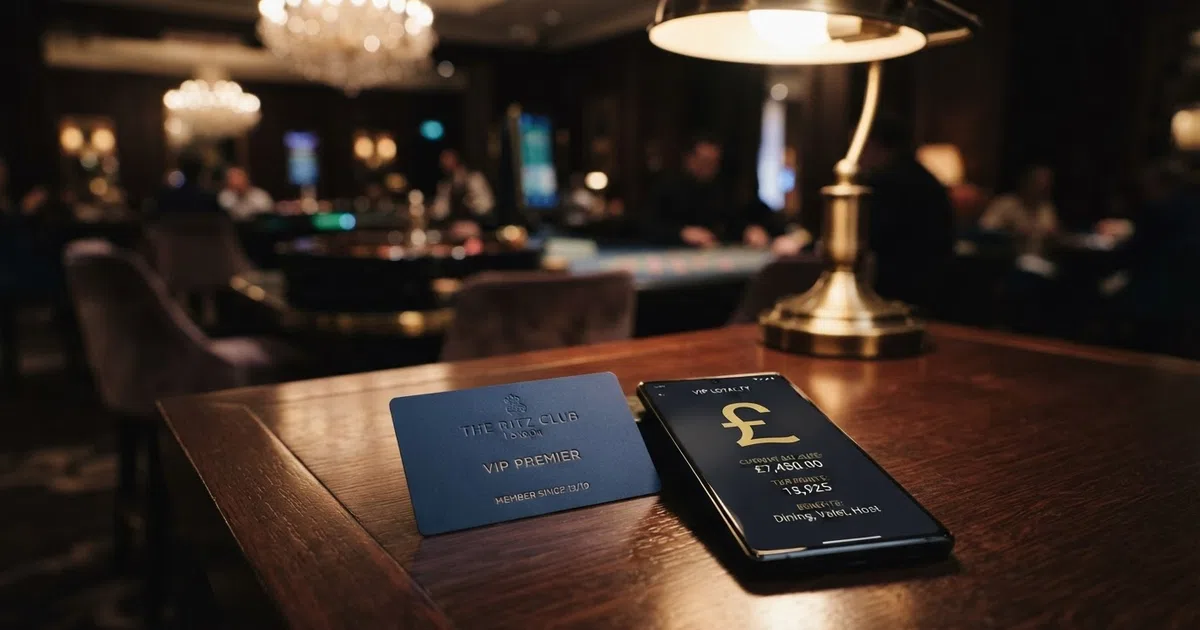
Current as of September 8, 2026; licence claims verified against the UK Gambling Commission’s public register.
Fewer than two in three UK-licensed operators still run any kind of high-value customer or VIP scheme at all, according to the Commission’s own monitoring data from 2024. That share has barely moved since the rules tightened in 2021. The market has settled, in other words, into a smaller and quieter shape, and the operators competing for this page have each made a different bet on what a British VIP programme is worth offering.
The UK VIP Casino Landscape
Before 2020, a UK VIP programme was a recruitment tool. Operators ran public tier ladders, advertised the top rung in banner ads, and used the promise of a “personal account manager” to pull high-spending customers across from rivals. The Betting and Gaming Council — the industry body — published a voluntary code of conduct for VIP reward programmes that year, the first formal acknowledgement that high-value play carried heightened risk of harm. It was a warning shot. It did not change the shape of the market on its own.
What changed the market was the 2021 update to the Licence Conditions and Codes of Practice. The LCCP’s social responsibility code now requires that any HVC or VIP incentive scheme is consistent with the licensing objectives, and that a Personal Management Licence holder — a named senior executive — is appointed to oversee the scheme and be held accountable for how it operates. That executive is personally on the hook. No operator team offering HVC rewards may be paid on the basis of an individual customer’s losses or spend. Commission-based VIP host pay, the engine of aggressive recruitment, was effectively killed.
The Commission published a monitoring report in 2024 covering 2024 data, and the picture it draws is one of stability rather than retreat. Sixty per cent of sampled operators reported having an HVC or VIP scheme, compared with 55 per cent in 2021 and 67 per cent in 2020 before the regulatory changes. The pre-crackdown peak has not returned. Every scheme in the sample had a senior executive appointed, and the loss-based remuneration rule was universally observed. The rules are not just on the books; they are being followed.
What a reader takes from that is straightforward: a British VIP programme in 2026 is run by a named executive who can lose their personal licence if the scheme oversteps. The programme exists because the operator decided it could be run inside those rails, not because the marketing department wanted another acquisition channel.
High-Roller vs VIP: What Is the Difference?
The two terms are used interchangeably in the marketing, but the UK Gambling Commission treats them as the same thing. Both high-roller and VIP fall under the HVC designation, and both are subject to the same customer assessment, the same senior executive oversight, and the same ban on loss-based staff pay. A player who is invited to either is an HVC in the Commission’s eyes, regardless of what the operator’s branding calls them.
The distinction that does exist in practice is between a high-roller as a spend threshold and a VIP as a relationship. A high-roller is a customer whose deposit and wagering volume puts them in a top percentile. A VIP, on the British model now, is someone the operator has actively chosen to manage, with named contact, personalised terms, and ongoing welfare oversight. The first is a category; the second is a status granted after assessment.
Where the two converge in the high-stakes play itself is at the table. The statutory online slot stake cap — £5 per game cycle for players aged 25 and over, £2 for players aged 18 to 24, both in force from 2025 — is the sharpest regulatory line in the British model, and it shapes what high-roller slot play looks like today. A player at Grosvenor can sit at a Salon Privé live dealer table and put £10,000 on a single hand. The same player on the same account, opening a slot, faces a £5 ceiling. Live casino, table games, and sports betting are not subject to the stake cap, and that is where the high-roller volume lives now.
How Casino VIP Programmes Actually Work Under UKGC Rules
The mechanics of a British VIP programme in 2026 are defined less by what an operator would like to offer and more by what the Commission requires them to do before offering anything at all. The pre-HVC checklist is not optional, and it is the reason so many programmes have moved off public marketing.
Before any incentive, reward, or special treatment is offered, operators must undertake a full customer assessment covering four areas. The first is a check on the sustainability of the customer’s spend — can this person afford to play at this level as leisure spending, with no impact on living costs, debts, or dependents. The second is a safer gambling assessment — is there evidence of gambling-related harm, escalating spend, chasing losses, or any of the markers the Commission’s HVC guidance lists. The third is a negative information review — court judgments, insolvency, anything in the public record that suggests financial stress. The fourth is Know Your Customer verification, which under the point-of-consumption regime happens before the first deposit and is not a VIP-specific step but a baseline. The Commission’s own wording in the HVC guidance is plain: “commercial pressures will never override welfare considerations.”
What this means in practice is that the moment an account starts to look like a high-value customer, an assessment process begins. The financial vulnerability check that activates at £150 net deposits in a rolling 30-day period — a light-touch automated check against publicly available data on bankruptcy orders, county court judgments, IVAs and debt relief orders — is the first automated gate. It runs whether the customer is interested in VIP status or not. Most active players who would qualify for any VIP scheme will trip it within a month. Beyond that, the HVC assessment is a human process, repeated regularly, and it is the reason a tier promotion no longer happens the moment a points threshold is crossed. The system checks first; the perk follows.
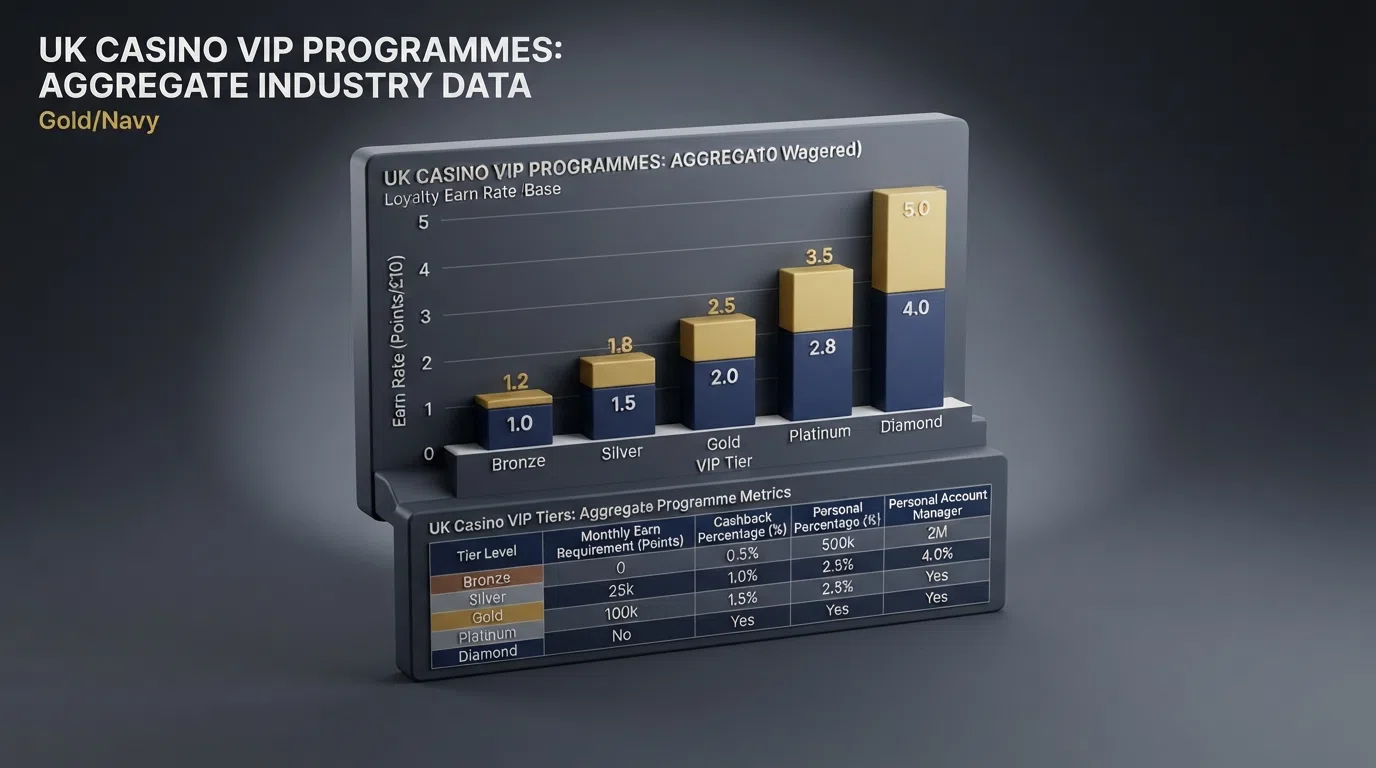
The tier-progression model itself has not been banned. Points still earn at broadly the rates they always did — one point per ten pounds wagered on slots is a common baseline, with table games typically earning at one point per twenty-five to one hundred pounds depending on the house edge. What has changed is visibility. The public-facing tier ladder with a live point counter, the kind of thing that used to live at the top of a casino’s promotions page, has largely been replaced by an opaque relationship. The player who would have watched a counter tick toward Gold is now told, by their account manager or not at all, that they have been moved up.
Programme Tiers, Levels and Status
Most UK programmes that still use tier names follow a Bronze-to-Diamond convention, or a precious-metal variant of it. BetMGM runs a five-rung public ladder — Sapphire, Pearl, Gold, Platinum, and the invite-only NOIR at the top — built on tier credits earned through play. Betway Plus uses a tiered structure with a clear conversion mechanic at every level: 150 points converts to £1 in cash, and at the Silver tier a player receives a 25 per cent weekly reload bonus, with up to 10 per cent weekly cashback available at higher tiers. The Bronze-through-Diamond pattern is a holdover from the pre-regulation era; what has changed is what sits at the top of it.
The visible tiers are now typically the lower and middle bands. Entry-level status — Bronze, or whatever the operator’s equivalent is — requires little or no assessment beyond the standard KYC. Mid-tier progression happens through points earned and is broadly automatic. The upper tiers, the ones that used to carry the most aspirational marketing, are now invitation-only in practice if not always in name. The “invitation” is the assessment process in disguise: an operator does not invite a player to Platinum until the assessment has cleared, and a player cannot force the assessment by spending more, because the spend itself triggers the welfare checks.
What changes at each tier breakpoint in practice is also less dramatic than the marketing suggests. Cashback percentages tick up, reload offers become available, withdrawal ceilings rise. The defining perk of the upper tiers — a dedicated VIP host, member-only events, personalised bonus terms — was always the real prize, and it remains so, but it now sits behind a regulatory gate that spend alone cannot open.
Public Loyalty vs Private VIP: Two Different Worlds
The distinction between a loyalty programme and a VIP programme matters under UKGC rules in a way it did not before 2021. A loyalty programme is the visible, earn-as-you-play layer: points, tier credits, a public ladder, cashback credited to the account. A VIP programme is the invitation-only relationship above it, with named contact, personalised terms, and the HVC assessment baked in. The Commission’s HVC guidance applies to the second, not the first, which is why so many operators have kept their loyalty programmes broadly intact while quietly moving their VIP schemes behind closed doors.
32Red is the clearest example of a programme that unifies both layers under one currency. Red Rubies are earned across the casino, sportsbook, and bingo verticals, and convert to bonus credits on a published rate. Progression runs from entry-level status through to a top tier where a dedicated VIP host takes over account management. The player can see their Ruby balance; the upper tiers are still tiers, but the host relationship is a separate, regulated layer above them.
BetMGM runs the same two-tier model with the layers explicitly named. BetMGM Rewards is the public loyalty programme with the Sapphire-to-NOIR ladder visible to every account. The Club is the invite-only VIP layer above it, with a dedicated Key Account Manager, member-only events, exclusive live casino games, and physical gifts. Both are GB-licensed. Both run on the same regulatory perimeter; the difference is the assessment threshold that gates the second.
Sky Vegas is the case study in running neither. Multiple 2026 reviews confirm it offers no VIP programme and no loyalty programme. It is one of the UK’s largest casino brands by market share, and it competes on brand familiarity, fast payments, and a 250-free-spin welcome package (50 no-deposit, 200 on deposit, all wager-free) rather than on loyalty mechanics. It is the baseline against which every programme on this page should be measured: a major British casino brand has decided that a loyalty programme is not worth the regulatory cost, and the market has not punished it for that decision.
Earning VIP Status: Invitation vs Progression
A player who wants to become a VIP at a UK casino in 2026 cannot earn it the way they would have in 2019. Spend volume is no longer the sole qualifier, and in some cases it is not a qualifier at all. The HVC assessment sits in the way, and the assessment is not a formality.
The process, in broad terms, runs like this. The player’s account flags through the operator’s internal monitoring as a candidate for HVC status. That flag can be triggered by deposit volume, wagering volume, frequency of play, or a combination. The operator then runs the full assessment: affordability, enhanced due diligence, safer gambling review, negative information check. A threshold of £150 in net deposits over 30 days serves as an initial automated filter, and most active VIP candidates trip it early. Where the assessment comes back clean, the player is invited into the HVC programme. Where it does not — where the data shows insolvency history, escalating spend, or markers of harm — the invitation does not come, and the operator’s safer gambling team takes over the account instead.
What a player can expect during the process, if it goes well, is that someone from the operator’s VIP team will make contact. The first conversation is often the assessment itself: verification of employment, source of funds, gaming preferences, and an explicit safer gambling conversation. Only after that conversation is the player given access to the programme’s benefits. There is no points threshold a player can watch tick over; the progression is invisible until it has happened.
This is the part of the British VIP model that frustrates players accustomed to the old ladder. A player who would have expected to grind their way to Platinum by sheer volume cannot, because the operator’s duty under the HVC guidance is to make sure the player can afford to be there before the perks arrive. The ladder has not been abolished; the steps on it have been moved behind a curtain.
VIP Rewards, Points and Redemption
Not all loyalty points are worth the same amount of cash, and the conversion rate is where a loyalty programme either earns its keep or quietly fails to. The British market has converged on a small range of models, and the differences between them are more meaningful than the marketing suggests.
The clearest earn-rate benchmark in the UK is Betway’s: 150 points converts to £1 in cash, and points are earned at a published rate per spin and per wager. That ratio is simple to evaluate because the conversion is to real withdrawable cash, not bonus funds. A player who knows their point balance knows, to the penny, how much cash they can convert. The reload and cashback percentages layered on top — 25 per cent weekly reload at Silver, up to 10 per cent weekly cashback at higher tiers — are published in the same terms.
The virtual-currency model works differently. Ladbrokes’ Ladbucks and Coral’s Coral Coins are both Entain products, built on shared infrastructure, and both work as an internal currency earned through play and redeemed in a store. Ladbucks convert to free spins, bonus funds, or cash, with the conversion rate set by the redemption choice. Coral Coins are earned through daily activities, tournaments, and a Rewards Grabber mini-game rather than through wagering volume alone, and they are spent in the Coral Coins Store, which refreshes monthly on the 2nd of each month, with unused coins expiring on the 7th. The store model gives operators a flexible lever — they can adjust the catalogue, the prices, and the earn rates without changing a published loyalty rate — but it also means the real value of a Coin depends entirely on what is in the store that month.
Virgin Games runs a unique cross-brand loyalty play through Red Hot Rewards. Points earned in the casino convert to Virgin Atlantic Flying Club miles, which is a real-world airline loyalty currency with a published valuation. The conversion rate sits somewhere in the middle of the market’s cash-convertible programmes, and the trade-off is that the value depends on how the player uses the miles. For a regular flyer, the miles are worth more than cash; for a player who would never book a Virgin Atlantic flight, they are worth less.
VIP Perks and Exclusive Benefits
The defining perk of a genuine UK VIP programme is no longer the bonus; it is the named human contact. A dedicated account manager or VIP host — the person a player can call, message, or email and get a substantive response from — is the single most consistent feature across every programme that runs a relationship layer above the loyalty ladder. BetMGM calls this the Key Account Manager. 32Red runs dedicated VIP host management at the top tier. Betway offers a VIP host at higher tiers. The terminology varies; the role is the same.
The other recurring perks are member-only events, priority customer support, and the smaller, more personal touches — birthday bonuses, anniversary rewards, physical gifts sent to the player’s address. BetMGM’s The Club is the most fully developed example: events, exclusive live casino games, dedicated management, and gifts. None of this is unique to BetMGM, but few operators describe it as openly.
Faster customer support response times and higher deposit and withdrawal ceilings are the practical operational perks, and they are the ones a player feels most directly. These are covered in their own section below. The headline perks — events, gifts, the host — matter because they are the things a loyalty programme cannot replicate, and they are the things that have survived the regulatory tightening largely intact. A UKGC rule does not ban an operator from sending a player a birthday present; it bans the operator from giving that player a bonus without the assessment first.
Why Your VIP Casino Bonus Is Smaller Than It Looks
The 10× wagering cap that came into force on 19 December 2025 changed the arithmetic of every UK casino bonus, and it changed the arithmetic of VIP bonuses more visibly than any other offer type. Before the cap, a welcome bonus could carry wagering requirements as high as 50× or even 60× the bonus amount. Betway’s historical 100 per cent deposit match up to £50 carried 50× wagering on the bonus, which meant a player taking the full offer had to turn over £2,500 in bonus funds before withdrawing anything. That is the offer a generation of British casino players grew up clearing. It is no longer legal.
The cap at 10× does two things at once. It makes any given bonus dramatically easier to clear, which is a genuine improvement for the player. It also makes the headline bonus smaller, because an operator offering a bonus that clears too easily gives away real money. The market has responded by tightening the amounts offered: smaller matches, tighter caps, more free-spin-heavy structures. The free spin is the easiest unit to manage under the cap, because its wagering requirement is applied to the winnings, not the stake, and the stake itself is no longer a credit-card-sized sum.
The mixed-product promotional ban that came in on the same date — 19 December 2025 — killed a different kind of VIP offer. The “bet £10 on football, get 50 free spins” structure, the cross-vertical hook that Entain, bet365, and the larger groups used to pull sportsbook players into casino, is no longer permitted. A casino bonus is now a casino bonus, and the cross-sell lever has been removed. For VIP players, this means a sportsbook-heavy player who would have received casino offers through a personalised Entain or bet365 promotion is now in a separate product silo for bonus purposes.
Cashback and Reload Bonuses
Cashback has survived the regulatory tightening better than almost any other VIP benefit, because it pays out on losses rather than rewarding deposits, and the Commission’s framework treats it more leniently. A weekly cashback percentage credited as bonus funds or, at the top tier, as real cash, is the benefit most consistently present across British VIP programmes.
Betway’s up to 10 per cent weekly cashback for higher tiers is the published benchmark. BetMGM’s personalised cashback for The Club members is not published at a specific rate because it is set individually. Ladbrokes’ and Coral’s cashback flows through the Ladbucks and Coral Coins systems rather than appearing as a line item, which is the operator’s choice but also a way of keeping the rate flexible. Virgin Games’ cashback is tier-dependent through Red Hot Rewards.
Reload bonuses — recurring deposit matches for active VIP players — sit in a similar regulatory space. The 25 per cent weekly reload at Betway Silver is the cleanest example; it is published, it is recurring, and it is subject to the 10× wagering cap on any bonus funds it produces. The trend in the post-cap market is toward reloads as the primary recurring benefit and away from one-off match offers, because reloads cost the operator less per pound of player value and they keep the player active inside the programme.
Exclusive and Personalised Promotions
The most valuable VIP offers are the ones that never appear on a public promotions page. bet365 is the clearest example: it runs no points programme, no public tier ladder, and no visible point total. Its loyalty model is offer-based, with personalised promotions landing in the account based on play history, and rewards appearing without the player having to opt in to anything visible. For a player who values transparency, this is the worst model on the market. For a player who values the upside of personalisation, it is among the best.
Ladbrokes’ Ladbucks system sits in a similar space. The Entain infrastructure powering both Ladbrokes and Coral allows personalised virtual-currency rewards that an account manager can adjust to a specific player’s play pattern. The player does not see a list of available offers; the offer appears in the store when the system decides the player is due it. Coral Coins work the same way, with a gamified layer on top — the daily activities, the tournaments, the Rewards Grabber — that makes the earn mechanic feel like play rather than loyalty.
Virgin Games’ mass-market offer of 70 free spins on a £10 deposit is a useful counterpoint: it is a published promotion aimed at acquisition, not at VIP retention, and it is the kind of offer that exists because the operator needs to compete for new customers at the entry point. Sky Vegas’ 250 free spins, 50 no-deposit and 200 on deposit, all wager-free, is the non-VIP alternative. A free-spin package that is genuinely wager-free — meaning winnings are paid as cash, not as bonus funds — is now the most generous acquisition offer a UK casino can make, because the 10× cap applies to bonus funds, and free of those a free spin is the cleanest possible value transfer.
The direct-marketing rules that came in from 1 May 2025 affect how personalised VIP offers reach the player. Opt-in is now required per product and per channel: a player must have actively consented to receive casino offers by email, separately from any consent to receive sportsbook offers. For a player who has opted in fully, the personalisation works as designed. For one who has not, the offers do not arrive at all, and that is a deliberate feature of the framework, not a bug.
VIP Casino Games: Where the Real Value Lives
The stake cap reshaped what high-stakes play looks like at a British online casino, and the consequence is that live dealer and table games are now where the volume is. The £5 ceiling per game cycle on online slots for players 25 and over, £2 for 18-to-24-year-olds, is the single most important number on this page for a VIP player who plays slots, because it caps the per-spin risk in a way the old VIP welcome bonus never did.
The cap does not apply to live casino, table games, or sports betting. A player at Grosvenor’s Salon Privé live dealer tables can bet up to £10,000 on a single hand. The same player on the same account, opening an online slot, faces the £5 ceiling. This is not a glitch or a transition period; it is the deliberate design of the British model. The Commission has capped the per-spin stake, not the deposit ceiling, because the harm model it is acting on is the harm of a single large loss on a fast-cycling game, not the harm of a large deposit made responsibly over time.
The auto-play ban, in force on all remote slots, and the 2.5-second minimum spin speed add friction for any player who would have set a slot running and let it cycle. The “losses disguised as wins” prohibition — sound and imagery celebrating returns that are smaller than the stake — removes a category of subliminal encouragement the slots industry had relied on. The reverse-withdrawal ban, permanent since 2020, removes the friction between a withdrawal request and a reversal back into play. None of these are VIP-specific rules; they are baseline rules that apply to every spin at every GB-licensed casino, and they are the reason slot grinders have moved toward live dealer play in the post-2025 market.
VIP Live Dealer Tables
Live dealer is where VIP programmes deliver their most tangible exclusive access, because the stake cap does not reach it. Every operator in the featured set runs Evolution-powered live casino, and Evolution’s VIP and Salon Privé table environments are the industry standard for high-stakes live play. Grosvenor’s branded Salon Privé tables, with the £10,000 maximum bet, are the most public example; the rest of the field relies on Evolution’s generic VIP tables, which carry similar limits but less brand differentiation.
The practical question for a VIP player is not whether the table exists — it does, at every major operator — but whether access to it is gated by the VIP programme. At most operators, the higher-stakes live tables are open to any funded account, and the table limits are visible in the lobby. What the VIP programme adds is the dedicated management and the personalised terms around losses and recovery, not a different table. Grosvenor is the partial exception: its Salon Privé is positioned as an exclusive environment, and the £10,000 limit is high enough that few non-VIP accounts ever reach it.
Live-dealer return-to-player is broadly comparable with slots at the high end — the house edge on a standard blackjack table is lower than on most slots, and the variance is lower too — which means the per-hour cost of play is often more predictable at a live table than at a slot. For a VIP player whose time is the variable being managed, that predictability has its own value.
VIP Slots and Table Games
The £5-per-spin cap limits VIP slot volume in a way the pre-2025 market did not. A player who would once have run a slot at £20 or £50 per spin is now at £5, and the wagering volume required to clear any bonus has fallen by the same multiple. The 10× wagering cap reinforces this: a £50 bonus on a 10× turnover is £500 in wagering, which at £5 a spin is 100 spins, which at 2.5 seconds a spin is roughly four minutes. The bonus clears in a coffee.
The trade-off is that the upside of a single spin is also capped. A player who would have hit a £50 spin and lost £50 in a single cycle can now lose at most £5 in the same window. The game has become more about volume and less about individual risk, which suits a player with a session budget and a time limit and unsettles a player who plays for the occasional large outcome.
RNG table games — virtual blackjack, virtual roulette, the Gamesys-exclusive titles at Virgin Games — sit in a different regulatory bucket. They are not subject to the slot stake cap and the auto-play ban, because the Commission classifies them as table products, not slot products. A player who wants high-volume table play on a strict budget can find it in the RNG tables; a player who wants the live experience moves to the live dealer lobby. The operators’ game mixes — Microgaming, NetEnt, Playtech, IGT, Pragmatic Play, Gamesys across the featured set — reflect this split, with Evolution holding the live dealer layer across the board.
VIP Payment Advantages: Faster Cashouts, Higher Ceilings
The most measurable operational perk of VIP status is payment speed, and the benchmark data from 2026 makes the spread visible. Betway VIP withdrawals clear in approximately one hour via PayPal. Grosvenor Casinos clears in approximately two hours via PayPal. LeoVegas clears in approximately one hour via PayPal. 888 Casino clears in approximately three hours. bet365’s VIP-level withdrawals run one to four hours via PayPal and debit cards. Ladbrokes’ VIP withdrawals run one to two hours via Visa Fast Funds and PayPal.
The spread is real, and the underlying reason is that PayPal and Visa Fast Funds are the fastest rails available to a UK-licensed operator, and an operator that has invested in automated PayPal payouts is paying out faster than one that has not. VIP status usually means the player’s account has been flagged for prioritised processing, which on a fast rail means a one-hour payout instead of a same-day one. The difference is operational, not regulatory; the speed is a function of the operator’s payment infrastructure, not the player’s tier.
The credit-card ban, in force since 14 April 2020 across all remote gambling including credit-card-funded e-wallet deposits, is the constraint that shapes the high-stakes depositing picture. A VIP player who would once have used a credit card to fund a large deposit session cannot do so. The standard alternatives are debit cards, bank transfers via Faster Payments or CHAPS, PayPal, Skrill, Neteller, and Apple Pay. Each of these has a different ceiling and a different processing window. CHAPS clears same-day with no upper limit and a fee, which is the rail a high-deposit VIP player is most likely to use. Faster Payments is free and instant up to the per-transaction ceiling set by the sending bank. PayPal is instant at the deposit and fast at the withdrawal, which is why it sits at the top of the speed table.
Higher Deposit and Withdrawal Limits
The British model sets no statutory deposit or loss ceiling, which is a deliberate choice. The Commission’s harm model acts on the per-spin stake and the per-deposit flag, not on a maximum the player can spend over a month. A player who can afford to deposit £50,000 a month and play it responsibly at a £5-a-spin ceiling is not constrained by the model; a player who cannot afford to deposit £500 a month but tries to is caught by the financial vulnerability check at £150 net deposits in a rolling 30-day period.
That £150 threshold is the real ceiling that matters for most active VIP candidates. It is a light-touch automated check against publicly available insolvency data — bankruptcy orders, county court judgments, individual voluntary arrangements, debt relief orders — and it activates well before any VIP programme would. A player who has tripped it and is flagged by the operator’s monitoring enters a closer-oversight regime, and the HVC assessment that would have led to a VIP invitation may instead lead to account restrictions. This is the path the Commission’s HVC guidance anticipates, and it is one of the reasons the financial vulnerability check matters more to a VIP player than to a casual one.
The financial risk assessment regime, which the press has been calling “affordability checks,” is the next layer. The UKGC Board confirmed on 7 July 2026 that it will proceed with a staged rollout. Stage 1 thresholds are £5,000 net deposits in 24 hours for players 25 and over, and £2,500 for under-25s. Final thresholds are £1,000 or £3,000 (25 and over, depending on stage) and £750 or £2,000 (under 25). The start date has not been confirmed. For a player chasing VIP status through sheer deposit volume, these thresholds are the ones that will eventually catch them. For a player with a normal bankroll, the £150 vulnerability check is the one that does the catching first.
Mobile VIP Play: What Changes on a Smaller Screen
No operator in the featured set offers a mobile-exclusive VIP feature, which is the single most useful thing to know about British mobile VIP play. The programmes run on the same account, the same tier structure, the same points ledger regardless of the device. What changes between desktop and mobile is the experience of using them, and the friction is in the same places it has always been: live dealer streams on a smaller screen, loyalty point redemption flows that were designed for a desktop form factor, and the absence of any touch-optimised account manager chat at any of the featured operators.
The reality check and time-out tools that are mandatory across all UKGC-licensed platforms work identically on mobile and desktop, which is the one piece of the safer-gambling infrastructure that translates without friction. Deposit limits, self-exclusion via GAMSTOP, and the broader safer-gambling controls are also device-agnostic. A VIP player who sets a deposit limit on desktop will see the same limit on the mobile app. The regulatory baseline is uniform; the operator-level polish is not.
For a player who values live dealer play, the mobile live experience is now genuinely competitive with desktop at most major operators, and the Evolution-powered lobbies are responsive on modern devices. The old “use desktop for live casino” advice is a year or two out of date. For a player who values the loyalty redemption flow, desktop remains easier. The gap is in the operator’s design choices, not in the underlying technology.
Crypto VIP Programmes at UK Casinos: A Different Kind of Loyalty
A crypto VIP programme and a UKGC VIP programme are not in the same market, and the reasons are foundational. The Commission’s licensing regime is built on verified identity. A player at a UK-licensed casino has had their identity, age, and source of funds confirmed before the first deposit, and the HVC assessment that gates VIP status runs on top of that verified identity. Anonymous play is impossible at a UKGC casino. Crypto casinos, by design, allow exactly that.
The structural consequence is that the protections a UK player takes for granted — GAMSTOP self-exclusion, the Commission’s complaints route, alternative dispute resolution through an approved ADR provider, the £150 financial vulnerability check, the HVC assessment, the stake cap, the 10× wagering cap, the credit-card ban — do not exist at an offshore crypto casino. A Curaçao or Curaçao-Antillean licence is not a substitute for a GB licence; the point-of-consumption regime makes a GB licence compulsory for any operator serving GB customers, and an operator without one is illegal for GB players regardless of where it is based.
What a crypto VIP programme offers instead is higher limits, fewer checks, and a different kind of perk. Enhanced rakeback, faster crypto withdrawals, bonuses denominated in bitcoin or ether, and tier structures that reward volume without the welfare assessment sitting on top. The trade-off is the loss of every British consumer protection. If a crypto casino refuses a withdrawal, the player has no UK regulator to complain to. If a player self-excludes via GAMSTOP and then opens an offshore crypto account, the exclusion does not reach it. The Commission’s enforcement against offshore brands is disruption-based — cease-and-desist notices, search-engine delisting, payment referrals, domain suspension — not ISP blocking, and the Commission has issued 3,140 disruption notices and referred 447,778 URLs to search engines between April 2024 and June 2025. The illegal offshore market is not untouched; it is also not closed.
For a player who would not otherwise consider an offshore brand, the decision is straightforward: the British model exists, it is the only one that offers the protections British players are entitled to, and the crypto alternative trades those protections for higher limits and fewer checks. For a player who is already playing offshore and weighing the VIP programme there, the relevant question is not whether the rakeback is generous; it is what happens when a problem develops and there is no UK regulator to escalate to.
UK Casino VIP Programmes Compared: 2026 Ranking
| Operator | VIP / Loyalty Programme | GB Licence | Welcome Offer | Cashback | VIP Host |
|---|---|---|---|---|---|
| Betway | Betway Plus (tiered, points-based) | Yes | 100% deposit match up to £50 | Up to 10% weekly (higher tiers) | Yes (higher tiers) |
| 32Red | Red Rubies (unified casino/sportsbook/bingo) | Yes | Matched bonus (current terms not published) | Tier-dependent | Yes (highest tiers) |
| BetMGM | The Club (invite-only VIP) + BetMGM Rewards (public) | Yes | Matched bonus (varies) | Personalised (Club members) | Yes — Key Account Manager |
| bet365 | Offer-based loyalty (no formal tiers) | Yes | New customer offer (varies) | Personalised (not published) | Yes (invite-only) |
| Ladbrokes | Ladbucks (Entain infrastructure) | Yes | Bet £5 get £20 free bets (sports) | Via Ladbucks system | Entain VIP management (invite-only) |
| Coral | Coral Coins (gamified virtual currency) | Yes | Bet £5 get £20 free bets (sports) | Via Coral Coins system | Entain VIP management (invite-only) |
| Virgin Games | Red Hot Rewards (Flying Club miles) | Yes | Play £10 get 70 free spins | Tier-dependent | Upper tiers invite-led |
| Betfair | Tiered Rewards + Prize Pinball | Yes | Free spins welcome offer | Tier-dependent | Not disclosed |
| Grosvenor | Grosvenor One (online + land-based) | Yes | Deposit £20 play with £50 | Via Grosvenor One rewards | Yes |
| Sky Vegas | No VIP or loyalty programme | Yes | 50 no-deposit + 200 deposit free spins, wager-free | — | — |
What the table makes visible is the gap between programmes that publish a structure and programmes that do not. Betway’s 150-points-to-£1 conversion, BetMGM’s five-tier ladder, 32Red’s unified Rubies currency — these are the programmes a player can evaluate before signing up. bet365’s offer-based loyalty, Entain’s invitation-only VIP management, Betfair’s unconfirmed VIP host status — these are the programmes a player has to be inside to assess, which is the defining feature of the post-regulation British model and the one the table cannot fully capture.
Betway — The Points-to-Cash Benchmark
Betway Plus sets the standard for transparent points-based value in the UK, and it does so by publishing the conversion rate. 150 points to £1 in cash, with points earned at a published rate per spin and per wager, means a player can sit down and work out, from a points balance, exactly how much real money they can convert. The Silver tier adds a 25 per cent weekly reload bonus; higher tiers add up to 10 per cent weekly cashback and a VIP host. The cash withdrawal speed of approximately one hour via PayPal is the operational benchmark for the rest of the field.
The Betway welcome offer — historically a 100 per cent deposit match up to £50, with 50× wagering on the bonus — is now subject to the 10× cap on any new offer, which means the headline structure is smaller than it was but the wagering requirement is a fifth of the historical level. The welcome is no longer the value centre of the Betway proposition; the loyalty programme is, and on the published conversion it is the easiest programme in the UK to evaluate.
For a player who values transparency and a clear points-to-cash ratio, Betway is the operator. For a player who would rather have a personalised relationship with no published ladder, bet365 is the alternative. The two approaches sit at opposite ends of the British VIP spectrum, and a player choosing between them is choosing a philosophy as much as a programme.
32Red — The Unified Red Rubies Ecosystem
32Red’s Red Rubies programme is the UK’s clearest example of a single loyalty currency spanning multiple product verticals. Rubies are earned across casino, sportsbook, and bingo play, and convert to bonus credits on a published basis. Progression runs from entry-level status up to a top tier where dedicated VIP host management takes over the account, which is the same relationship layer other operators offer but with the advantage that the player’s Ruby balance carries across every product they play.
The current welcome-offer terms for 32Red are not publicly published. What is confirmed is the programme structure, the cross-vertical earn mechanic, the tier progression, and the GB-licensed status of 32Red Limited on the Commission’s public register. Game providers are Microgaming and Evolution, which is a narrower mix than the larger operators but covers the slots and live dealer bases a UK player expects. For a multi-product player who would value one loyalty ledger rather than three, 32Red is the cleanest implementation in the market.
BetMGM — The Club and the Tier-Credits Ladder
BetMGM runs the UK’s clearest two-tier model. BetMGM Rewards is the public loyalty programme, with a five-rung tier-credits ladder from Sapphire through Pearl, Gold, and Platinum to NOIR at the top. The Club is the invite-only VIP layer above the ladder, with a dedicated Key Account Manager, member-only events, exclusive live casino games, birthday and anniversary bonuses, and physical gifts. The two are explicitly named and explicitly distinct, which is useful for a player who wants to know whether the perks they are reading about are the public programme or the gated one.
The game provider mix is broader than 32Red’s: Evolution, IGT, Pragmatic Play, and Playtech cover the live dealer, the slots base, and the branded content. Personalised cashback for The Club members sits alongside the tier-based progression, and the welcome offer structure varies by promotion period. For a player who wants the most fully developed invitation-only VIP experience in the British market, BetMGM is the clearest answer. The trade-off is that the public ladder is the visible face, and the real value sits behind it.
bet365 — The Offer-Based Loyalty Model
bet365 does not run a points programme, a tier system, or a visible point total. Its loyalty model is entirely offer-based: personalised promotions land in the account based on play history, and the rewards — early payouts, enhanced odds, meeting bonuses, free spins on selected games — appear without the player having opted in to anything visible. The VIP host is there, at the invitation-only level, but the host is the only fixed point in a model that otherwise treats each account as its own segment.
The withdrawal speed of one to four hours via PayPal and debit cards is competitive with the rest of the field, and the game provider mix — Playtech, NetEnt, Evolution, Microgaming — is one of the broadest in the UK. The player who values transparency will not find it here; the player who values personalisation and is comfortable with an opaque relationship will find it working for them in a way a published ladder cannot replicate. Bet365 effectively puts its focus on the individual player experience rather than a universal point structure.
Ladbrokes — Ladbucks and the Entain Infrastructure
Ladbrokes shares Entain’s virtual-currency engine with Coral, but Ladbucks targets a different player. The virtual currency converts to free spins, bonus funds, or cash, with the conversion rate set by the redemption choice. The Entain VIP management layer sits above the Ladbucks programme, invitation-only, and the game provider mix — Playtech, NetEnt, Evolution, IGT — is the same as Coral’s, which is unsurprising given the shared infrastructure.
The withdrawal speed of one to two hours via Visa Fast Funds and PayPal is at the fast end of the market, and the welcome bonus structure (Bet £5 get £20 in free bets on the sportsbook, with the casino bonus varying by promotion period) reflects the cross-product nature of an Entain-brand offer. Ladbrokes caters to the existing Entain user who appreciates having rewards tied to the wider group’s currency.
Coral — Coral Coins and the Gamified Alternative
Coral’s Coral Coins programme is the gamified alternative to a traditional tiered loyalty model, and it works differently from anything else in the UK. Coins are earned through daily activities, tournament participation, and a Rewards Grabber mini-game rather than through wagering volume alone, which is the deliberate design choice that sets it apart from Betway’s pure-points model. The Coral Coins Store refreshes monthly on the 2nd of each month, and unused coins expire on the 7th, which is a hard window that rewards engagement and punishes accumulation.
The Entain VIP management layer sits above the Coins programme for the invitation-only upper tier, and the game provider mix — Playtech, NetEnt, Evolution, IGT — is the shared Entain base. The trade-off Coral is offering is between gamified engagement and traditional VIP value. A player who enjoys the daily activity loop and the tournament calendar will find the Coins programme more engaging than a points ledger; a player who values predictable cash conversion will find it harder to evaluate. Coral is the operator for the former, not the latter.
Virgin Games — The Cross-Brand Loyalty Play
Virgin Games’ Red Hot Rewards programme offers the UK’s only casino-to-airline-miles conversion. Points earned in the casino convert to Virgin Atlantic Flying Club miles, and the value of those miles depends on how the player uses them. For a regular Virgin Atlantic flyer, the miles are worth more than the cash equivalent would be; for a player who would never book a flight, the miles are worth less.
The welcome offer of 70 free spins on a £10 deposit is a mass-market acquisition offer, not a VIP offer, and it sits in the published promotions rather than the invitation-only layer. The upper tiers of Red Hot Rewards are invite-led, the game provider mix is Gamesys-exclusive titles alongside NetEnt and Evolution, and the cashback is tier-dependent. For a Virgin Atlantic customer who would value cross-brand loyalty, Virgin Games is the only option in the UK. For everyone else, the Flying Club conversion is a feature that does not apply.
Betfair — Prize Pinball and Tiered Rewards
Betfair’s tiered Rewards programme runs alongside a daily free game — Prize Pinball — with a jackpot of up to £1,000. The daily game adds a layer of gamification on top of the tier structure, and the free-spins welcome offer is the entry-point acquisition. The game provider mix is Playtech, NetEnt, and Evolution, which is a narrower Evolution base than some of the larger operators but covers the essentials.
Betfair’s current VIP host status is not publicly disclosed. What is confirmed is the tiered Rewards programme, the Prize Pinball game, the welcome offer, the GB-licensed status under Flutter Entertainment, and the game providers. For a player who would value the daily Prize Pinball layer on top of a tier structure, Betfair is a competitive option; for a player whose decision turns on the VIP host, the assessment is incomplete and worth confirming directly with the operator.
Grosvenor — Salon Privé and the Land-Based Bridge
Grosvenor One is the UK’s only VIP programme that bridges online play with a physical casino estate. The unified loyalty programme tracks play across Grosvenor’s online casino and its land-based floors, which is a unique structural advantage for a player who plays in both. The Salon Privé live dealer tables, with a £10,000 maximum bet, are the most public expression of Grosvenor’s high-stakes positioning and the highest public VIP table limit in the UK market.
The withdrawal speed of approximately two hours via PayPal is competitive but not the fastest in the field; the welcome offer of Deposit £20 Play with £50 is straightforward; the game provider mix of IGT, NetEnt, Evolution, and Playtech is broad. For a player who values the land-based bridge and the £10,000 Salon Privé limit, Grosvenor is the clearest answer. For a player whose play is entirely online, the bridge is a feature they will not use.
Sky Vegas — The No-Loyalty Benchmark
Sky Vegas does not run a VIP programme and does not run a loyalty programme, which is confirmed across multiple 2026 reviews. The brand is one of the UK’s largest by market share, and it competes on brand familiarity, fast payments, and a 250-free-spin welcome package — 50 no-deposit, 200 on deposit, all wager-free — rather than on loyalty mechanics. The game provider mix is Playtech, NetEnt, and Evolution.
The relevance of Sky Vegas to a page about VIP programmes is as the baseline. A major British casino brand has decided that a loyalty programme is not worth the regulatory and operational cost, and the market has not punished it for that decision. The 250 wager-free free spins are the most generous acquisition offer on this page, and they are the offer Sky Vegas would rather be measured on than on a tier structure it has chosen not to operate. For a player who values a clean, no-loyalty-mechanics experience with a strong welcome, Sky Vegas is the answer; for a player who wants a relationship that develops over time, it is not.
The UKGC VIP Crackdown: What Changed and What It Means Now
The 2020–2025 regulatory timeline is the story no competitor tells in full, and it is the story that defines every UK VIP programme in 2026. It begins with the Betting and Gaming Council’s 2020 voluntary code of conduct for HVC VIP reward programmes, the industry’s first formal acknowledgement that high-value play carried heightened harm risk. It continues through the 2021 update to the LCCP’s social responsibility code, which made senior executive oversight mandatory and banned loss-based staff remuneration. It runs through the 2024 monitoring report, which confirmed the regulatory changes were holding and that 60 per cent of operators still ran schemes with no increase since 2021. It lands on the 19 December 2025 wagering cap and mixed-product ban, which changed the shape of every bonus in the market, and on the 2025 stake limits and financial vulnerability checks, which changed the shape of every spin and every deposit.
The three licensing objectives in section 1 of the Gambling Act 2005 are the legal framework driving every restriction: preventing gambling from being a source of crime or disorder, ensuring it is conducted in a fair and open way, and protecting children and other vulnerable persons from being harmed or exploited. Every LCCP condition, every HVC guidance paragraph, every stake cap and every wagering cap traces back to one of those three objectives, and that is the lens the Commission applies when assessing a programme.
UK enforcement works through disruption rather than blocking. The Commission issued 3,140 disruption notices and referred 447,778 URLs to search engines between April 2024 and June 2025; 287,961 of those URLs were removed, and the average engagement fall across 160 disrupted sites was 32 per cent. There is no statutory ISP or DNS blocking power; the legislation has been proposed but not enacted. The Commission’s tools are cease-and-desist, search-engine delisting, payment referrals, and domain suspension — all aimed at the operators, advertisers, and intermediaries, not at the player. The penalty for playing at an unlicensed offshore casino is not established; the sanctions target the operator.
The UKGC VIP Crackdown Timeline (2020–2026)
| Date | Regulatory Event | Impact on UK VIP Programmes |
|---|---|---|
| 2020 | BGC voluntary code of conduct for HVC VIP reward programmes | Industry’s first formal HVC welfare requirements; voluntary, not yet binding |
| 14 April 2020 | Credit cards banned for all remote gambling, including via e-wallets | High-stakes depositing shifted to debit cards, bank transfers, e-wallets |
| 31 March 2021 | GAMSTOP participation mandatory for all online operating licences | Self-exclusion now covers every GB-licensed site, including VIP programmes |
| 2021 | LCCP SR Code 5.1.1 updated; PML-holding senior executive oversight mandatory; loss-based staff pay banned | HVC schemes now run under named executive accountability; recruitment-driven model ends |
| 2024 | UKGC HVC monitoring report (2024 data): 60% of operators still run schemes, stable since 2021 | Confirms regulatory changes are holding; no rebound in scheme prevalence |
| 1 October 2022 | CAP/BCAP “strong appeal” test in force; no under-25s in gambling ads | Marketing of VIP programmes to broad audiences restricted |
| 1 May 2025 | Direct marketing opt-in required per product and per channel | Personalised VIP offers now require explicit, granular consent |
| 6 April 2025 | Statutory levy commences at 1.1% of GGY for remote casino (50% treatment, 30% prevention, 20% research) | Operators fund treatment, prevention and research from gross yield |
| 9 April 2025 | Online slot stake cap £5 per game cycle for players 25+ | High-roller slot volume capped; live dealer and table games become the high-stakes home |
| 21 May 2025 | Online slot stake cap £2 per game cycle for players 18–24 | Age-banded cap creates two different maximum bets on the same slot for two adults |
| 28 February 2025 | Financial vulnerability check at £150 net deposits in a rolling 30-day period | First automated gate; most active VIP candidates trip it within a month |
| 19 December 2025 | Wagering requirements capped at 10×; mixed-product promotional offers banned | VIP bonus structures compressed; cross-vertical offers removed |
| 1 April 2026 | Remote Gaming Duty rises from 21% to 40% | Operator cost base up; further pressure on bonus generosity |
| 2026/27 season | Premier League voluntary shirt-sponsorship ban takes effect | Gambling marketing’s public profile falls further |
GAMSTOP Self-Exclusion and VIP Status
A player who self-excludes via GAMSTOP loses access to every GB-licensed online gambling site, including the VIP programme they are on. The exclusion periods are six months, one year, five years, or five years with auto-renewal, and none of them can be cancelled early. A player who has accumulated points, reached a tier, or been assigned a VIP host loses all of that the moment the exclusion takes effect, and the account remains closed for the full period.
What GAMSTOP does not cover is the offshore market. An excluded player who opens an account at an unlicensed offshore casino is not in breach of their exclusion, because GAMSTOP has no jurisdiction there, but the excluded player has also lost the UK regulator’s complaints route, the ADR access, and the safer-gambling infrastructure that the British model provides. The exclusion is a personal commitment enforced at the GB-licensed end; the offshore end is unenforceable.
Advertising Rules for VIP Programmes
The CAP and BCAP codes restrict what a UK VIP programme can say and to whom. The “strong appeal” test, in force from 1 October 2022, requires that gambling advertising does not have strong appeal to under-18s. No one under 25 may appear in a gambling advertisement, which means a VIP programme cannot use imagery of young-looking models, lifestyle cues that read as youth-oriented, or anything that crosses the line the codes draw. The direct marketing opt-in rules from 1 May 2025 — per product, per channel — mean a casino VIP offer cannot be emailed to a player who has not actively opted in to casino marketing specifically, and the consent must be granular rather than bundled.
The Premier League voluntary shirt-sponsorship ban, taking effect from the 2026/27 season, is the public-marketing context rather than a VIP-specific rule, but it matters for the broader visibility of gambling brands. A player who has historically seen a casino brand on a Saturday afternoon shirt will see it less, and that affects the recruitment top of the funnel rather than the VIP programme itself. For a VIP programme, the advertising rules tighten what can be promised to a broad audience and what can be sent to an opted-in player; the programme itself, once inside, runs on the HVC framework rather than the marketing framework.
Responsible Gambling Inside VIP Programmes: Guardrails, Not Just Limits
The safer-gambling infrastructure in the UK applies to VIP players at every level, and the guardrails are tighter than most players realise. This automated check against insolvency data kicks in once net deposits hit £150 over 30 days, regardless of VIP status. The HVC assessment that gates VIP status itself is a welfare check dressed up as a qualification process. The reality check and time-out functions that are mandatory across every UKGC-licensed platform apply to VIP accounts in the same way they apply to any other. The deposit-limit offer that every operator must present is presented to a VIP candidate in the same way it is presented to anyone else.
The broader picture of gambling harm in the UK is what gives the regulatory framework its weight. GamCare’s National Gambling Helpline received 55,228 calls and online chats in 2023/24, a 25 per cent increase on the previous year, with 74 per cent of those classed as supportive interventions. The National Gambling Support Network treated 11,960 clients between April 2024 and March 2025, an 11 per cent increase on the previous year, and the rate of problem gambling among those clients fell from 87 per cent at initial assessment to 27 per cent at final assessment, which is a striking treatment outcome. The statutory levy that commenced on 6 April 2025 at 1.1 per cent of gross gambling yield for remote casino operators — split 50 per cent to treatment, 30 per cent to prevention, 20 per cent to research — is the funding mechanism behind the network’s expansion. The Commission, the Department for Culture, Media and Sport, and the treatment providers are operating on the same data.
Affordability Checks and VIP Players
The £150 financial vulnerability check threshold catches most active VIP candidates in the first month, and the consequences of tripping it are not punitive. The check is light-touch: a query against publicly available insolvency data on bankruptcy orders, county court judgments, individual voluntary arrangements, and debt relief orders. A clean result means the account continues without intervention. A flag means the operator’s safer gambling team takes a closer look, which may mean an affordability conversation, a deposit limit, or a restriction.
The financial risk assessment regime — the “affordability checks” of the press — sits one layer above. The Commission’s Board confirmed on 7 July 2026 that the regime will proceed with a staged rollout. Stage 1 thresholds are £5,000 net deposits in 24 hours for players 25 and over, and £2,500 for under-25s. Final thresholds are £1,000 or £3,000 (25 and over, depending on stage) and £750 or £2,000 (under 25). The start date has not been confirmed. A player chasing VIP status through deposit volume is the player these thresholds are designed to catch, and the staged rollout is the reason a high-volume VIP player should expect closer scrutiny over the next year.
What the British model does not do is set a deposit ceiling. There is no statutory maximum the player can deposit in a month; the amount is the customer’s choice within the operator’s risk assessment. The model acts on the per-spin stake, on the per-deposit vulnerability flag, and on the HVC assessment, not on a hard monthly cap. This is a deliberate design choice: the Commission has judged that a player who can afford to play at high volume should be allowed to, and a player who cannot should be caught by the automated checks, not blocked at a pre-set ceiling.
Responsible-Gambling Tools Inside Loyalty Programmes
The Gambling Survey for Great Britain 2024 found 2.7 per cent of adults aged 18 and over scored 8 or higher on the Problem Gambling Severity Index, statistically stable compared to 2023. Forty-eight per cent of adults had gambled in the past four weeks, falling to 28 per cent excluding lottery-only players. The OHID figures for England put problem gambling at 0.5 per cent of the adult population, with a further 3.8 per cent at elevated risk, and an estimated 7 per cent of the British population — roughly 3.8 million adults — negatively affected by someone else’s gambling. The treatment-seeking rate has nearly doubled: 30 per cent of adults experiencing problems want treatment, support, or advice, up from 17 per cent in 2020. The infrastructure exists because the demand for it has grown.
The tools a player can use are the National Gambling Helpline (operated by GamCare, freephone 0808 8020 133, available 24/7 and free), GAMSTOP for self-exclusion across every GB-licensed site, NHS gambling harm clinics in England, Scotland and Wales, Gamblers Anonymous peer support, and the PGSI self-assessment tools that GamCare publishes online. Reality checks and time-out functions are mandatory inside every UKGC-licensed platform and work the same way on desktop and mobile. Deposit limits are an offer every operator must present; a player can set a limit at any time, and the limit applies across the account.
The reality check is the most underrated tool in the suite. A pop-up that appears at a set interval during play, showing the player how long they have been playing and what they have won or lost, is not a dramatic intervention. It is the one that most reliably catches a player whose session has drifted past the point they intended, and it is the one that runs on every UKGC platform without the player having to opt in.
How We Assessed Every VIP Programme
Every operator on this page was verified against the UK Gambling Commission’s public register of licence holders before it was included. The featured set covers ten GB-licensed brands with distinct approaches to the VIP and loyalty question: Betway, 32Red, BetMGM, bet365, Ladbrokes, Coral, Virgin Games, Betfair, Grosvenor, and Sky Vegas. The latter is included despite running no loyalty programme, because it is one of the UK’s largest casino brands and a useful benchmark for what a major British casino offers without a formal programme.
The evaluation criteria were four. The first is programme structure and transparency: whether the programme is published, whether the earn rates and conversion rates are clear, whether the tier system is visible. The second is cashback and rewards value: the real cash-equivalent return on a player’s volume, evaluated at the tiers the operator publishes. The third is VIP host and account management access: whether a dedicated contact is available, at what tier, and on what terms. The fourth is regulatory compliance and safer-gambling integration: whether the programme operates inside the HVC framework, whether the assessment is visible, and whether the safer-gambling tools are present.
The methodology draws on the hands-on assessment approach used by Bojoko and MayfairCasino — reachability at regular stakes, tier-progression clarity, bonus terms, and overall value — and on the UKGC’s own monitoring data from 2024, which provides the prevalence benchmark (60 per cent of operators running schemes) and the compliance confirmation (every scheme with a senior executive, no loss-based remuneration). Operator pages, LCCP conditions, and independent affiliate reviews current to 2026 supplied the programme-specific details.
Where a programme-specific figure was not confirmed in available sources — a welcome offer’s current terms, a VIP host’s tier, a withdrawal speed — that gap is named in the operator section rather than filled in from inference. A page that invents the missing figure to make a comparison table look complete has failed the reader the table was built for.
What the UK VIP Casino Market Means for Your Play in 2026
The shift from public tier ladders to invitation-only relationship management is regulation working as designed, and the operators competing on this page are the ones who decided the design was workable. The 10× wagering cap, the slot stake limits, the financial vulnerability checks, the HVC assessment, the senior executive accountability, the loss-based remuneration ban — none of these are operator choices. They are the framework. The operator choices are the ones that sit inside it: whether to run a points-to-cash programme with a published conversion, whether to unify a loyalty currency across verticals, whether to run an offer-based loyalty model with no visible tier, whether to run a programme at all.
The operators that offer the most transparent value are the ones that publish their mechanics. Betway’s 150-points-to-£1 conversion is the clearest benchmark in the market. BetMGM’s two-tier model, with the public ladder and the invitation-only Club above it, is the most fully developed VIP structure. 32Red’s unified Red Rubies currency is the cleanest multi-product implementation. The operators that offer the least visible value are the ones that have decided the relationship matters more than the published ladder: bet365, Entain’s Ladbrokes and Coral at the upper tiers, and Betfair where the host status is unconfirmed. And the operator that offers no programme at all — Sky Vegas — is the proof that market share in the UK does not require a loyalty scheme.
The practical decision framework for a player is not complicated. Look past the marketing of any VIP programme and ask three questions. What is the real cash-equivalent return on the points or coins the programme issues, and is the conversion rate published or only implied. What does the programme require of the player to reach the tier where the real perks sit, and is that requirement achievable without the assessment process blocking the way. And what does the programme cost the player in time, volume, and concentration of play, measured against the value it returns. A programme that scores well on the first two and reasonable on the third is one worth chasing; a programme that is vague on all three is one to leave on the page.
The one thing every player should check before chasing VIP status is whether the programme’s real value, measured in cash-equivalent returns at the tiers the player can actually reach, justifies the play volume required to get there. The £5 slot stake cap, the 10× wagering cap, and the financial vulnerability check at £150 are the regulatory floors. The HVC assessment is the regulatory ceiling. The space between them is the space a British VIP player operates in, and the operators on this page are the ones still choosing to operate in it.
Frequently Asked Questions
Are VIP casino bonuses subject to wagering requirements?
Yes — every UK VIP bonus carries a wagering requirement, but the cap since 19 December 2025 is 10× the bonus amount, down from historical levels as high as 50× or 60×. The cap applies to all UKGC-licensed operators and has compressed the structure of VIP welcome offers across the market, with smaller headline amounts paired with far easier clearing conditions. Free-spin winnings are subject to the same cap when paid as bonus funds, but wager-free free spins (as at Sky Vegas) pay winnings as cash with no wagering attached.
What is the difference between a loyalty programme and a VIP programme at UK casinos?
A loyalty programme is the visible, earn-as-you-play layer — points, tier credits, a public ladder, cashback credited to the account. A VIP programme is the invitation-only relationship above it, with a named contact, personalised terms, and the UKGC’s HVC assessment baked in. The Commission’s HVC guidance applies to the second, not the first, which is why most UK operators now run a public loyalty programme alongside a gated VIP layer, and why some — Sky Vegas being the clearest case — have decided not to run either.
Can VIP players get faster withdrawals at UK online casinos?
Yes. The published benchmark for 2026 is approximately one hour via PayPal at Betway and LeoVegas, approximately two hours at Grosvenor, and one to four hours at bet365. Ladbrokes clears in one to two hours via Visa Fast Funds and PayPal. The speed is a function of the operator’s payment infrastructure and the VIP account’s prioritised processing flag, not a regulatory requirement, which is why the spread between the fastest and the slowest is real and worth checking before depositing at scale.
How do casino loyalty points work and what are they worth?
Loyalty points are earned at a published rate per wager — typically one point per £10 on slots, with table games earning more slowly at one point per £25 to £100 depending on house edge. The conversion to cash or bonus varies by operator: Betway’s benchmark is 150 points to £1 in cash. Ladbrokes’ Ladbucks and Coral’s Coral Coins use a virtual-currency store model where the real value depends on the catalogue that month. Virgin Games’ Red Hot Rewards points convert to Virgin Atlantic Flying Club miles, whose value depends on how the player uses them.
Are there responsible gambling protections for VIP players?
Yes — and the protections are tighter than most players realise. Every VIP candidate undergoes an HVC assessment covering affordability, enhanced due diligence, safer gambling, and negative information review before any incentive is offered. This automated check against insolvency data at £150 in net deposits over 30 days is the first hurdle for all customers. Reality checks, time-outs, deposit limits, GAMSTOP self-exclusion, and the full safer-gambling toolset apply to VIP accounts in the same way they apply to any other. GamCare’s helpline (0808 8020 133) is free, confidential, and available 24/7.
Promotions – fastestpayout-casinos-uk
Content created by the «fastestpayout-casinos-uk» team