
The 10 best UK online casinos for cashback bonuses
 Available in GB
Data current as of September 8, 2026, verified against the UK Gambling Commission’s public register of gambling businesses.

A cashback bonus is the closest thing the regulated UK market offers to a safety net. It returns a slice of what you lost, usually as withdrawable cash, on a fixed schedule, and the slice is the part the marketing likes to shout about. The terms behind it are the part that decides what you actually keep, and the gap between the two has widened sharply since the Gambling Commission put a 10× ceiling on bonus wagering in January. This page ranks the ten GB-licensed casinos whose cashback terms hold up to that scrutiny, then walks through the rules that changed what a rebate is worth, the games they cover, and the safer-play tools that sit alongside any offer.
What a cashback bonus is — and how it really works
A cashback bonus is a rebate on net losses, not a multiplier on a deposit. The distinction is the whole game, and confusing the two is the mistake most casual readers make when they first see a 10% headline. A deposit match takes £100 of your money and hands you another £100 in bonus credit, which then has to be wagered before any of it is yours. A cashback takes your net losses over a window — usually a week — and gives a percentage of them back, typically as real cash with nothing further to clear. One of the two pays out because the other one finishes paying out; only one of them does so without a wagering multiple attached.
Since 19 January 2026, no GB-licensed operator can attach a wagering requirement higher than 10× to bonus funds, and mixed-product offers are banned outright. That is the new ceiling in a market where 60× was once routine, and it is the reason the gap between the two has narrowed. Wager-free cashback still exists, but it is rare — the regulator’s own commentary describes wager-free as the exception rather than the rule, and most competitors still attach 1×–5× playthroughs or credit the rebate as bonus funds that need to be cleared. The detail to watch on every term sheet is which of those two structures the operator has chosen.
A rebate on losses, not a deposit match
A cashback rebate returns a slice of your losses. A deposit match multiplies your deposit. The two are paid out of the same marketing budget but they behave very differently. A match is a loan: you put down £50, the operator adds £50 in bonus credit, and that £50 is yours only after you have wagered it the required number of times. A rebate is a discount: you lose £200 over a week, the operator returns £20 as real cash, and that £20 is yours to withdraw the moment it lands.
The reason the distinction matters is that the headline rate is not where the value sits. A 100% match at 35× wagering keeps a tight grip on its bonus funds; a 10% cashback at 0× lets you keep the rebate the day it arrives. The match can return a larger number in absolute terms; the cashback returns a smaller number with nothing further to clear, and which one is worth more depends on the player. The Duelz 10% weekly rebate at 0× and the All British 10% weekly rebate at 0× both illustrate the wager-free structure; the rest of the field generally moves through 1×–5× or through bonus funds rather than cash. The honest version of the question “is this a good offer?” starts with which of those two it actually is.
How a rebate is calculated from your losses
The maths behind a weekly cashback is straightforward once the qualifier is named. The operator takes your net losses across a calendar window — usually Monday through Sunday, occasionally Thursday through Wednesday — and applies the rebate percentage to the result. Net losses are losses minus wins, not losses on their own, so a week where you lost £300 and won £120 leaves £180 of net losses. Ten per cent of that is £18 of cashback, credited the day the window closes.
The shape of the deal comes from the floor and the ceiling. Duelz’s 10% weekly pays a minimum of £0.10 and a maximum of £100 per week, which means anything you lose beyond £1,000 in a week no longer adds to the rebate. Karamba’s 10% weekly on net slot losses caps the rebate at £200. All British pays the 10% only when the account balance is below £10 at the end of the window, which is a different kind of cap: a balance rule that gates whether the rebate lands at all. Read both ends before you treat the headline percentage as your expected return.
Weekly is the UK default — daily and instant are the exceptions
The crediting day tells you when the rebate becomes yours, and the UK market has settled into a rhythm. Friday is the day the highest number of operators pay — Duelz credits its 10% every Friday, Mr Vegas’s Rainbow Fridays pays on the same day, and a reader who is comparing on that schedule will see Friday recur often enough to treat it as the market’s default. Monday is WinOMania’s day, Tuesday is Karamba’s, Thursday is Grosvenor Casinos’ for Blackcard members. The week closes, the window is tallied, the cashback arrives.
There is one exception worth naming, and that is PlayOJO. Its OJOplus mechanism credits cashback in real time after every real-money bet, win or lose, with no waiting for a window to close. The credit lands as real money rather than bonus funds, and there is no cap on the accumulation. It is a different model from a net-loss rebate — closer to a per-bet rebate at a low percentage — and the only operator in the set that runs it. Apart from OJOplus, the rest of the set pays on a weekly cadence, and no operator in the featured ten runs a monthly cycle. If a brand is advertising a monthly rebate, it is not in this ranking.
Cashback applies to real-money stakes
A rebate is calculated on real-money play, not on bonus-credit stakes. That is the rule across the featured set, and it is the reason the headline rate is normally the rate on your own money rather than on a balance that is partly the operator’s. Duelz’s 10% is paid as real cash with no wagering, All British’s 10% is paid as real money with no wagering, and the cash is yours to withdraw as soon as the credit lands. A 0× rebate paid as real cash is the cleanest version of the offer the market runs.
The one wagered exception in the set is WinOMania, whose 5–20% tiered weekly rebate comes with 1× wagering — a single playthrough of the rebate before it becomes withdrawable. The figure is well below the 10× statutory ceiling, and it does not undo the rebate, but it does trim the headline by requiring one round of play before the cash is yours. If you would rather the rebate arrive already cleared, the wager-free set is the shortlist; if the tiered percentage matters more, WinOMania is the one to read the small print on.
The promotions behind the headline rate
The percentage is the visible part of the offer. The terms are the part that decides whether you actually receive it. A few of the more common gates appear in the featured set, and they cluster around three patterns. The first is an opt-in plus a minimum deposit, the structure Karamba runs for its 10% on net slot losses — opt in on Monday, deposit at least £50, and the rebate is paid in cash on Tuesday. The second is a membership tier, which is how Grosvenor’s 10% works: only Blackcard members qualify, and the £50 minimum has to be staked between Thursday 01:00 and Wednesday 00:59 to count. The third is a minimum wagered amount, which Bally Casino sets at £30 before its 10% Game of the Week rebate unlocks.
Each comparison table in this ranking carries the headline number; the operator write-ups below carry the gate. Read the gate before you stake, because an unclaimed opt-in is the commonest reason a reader who expected a rebate finds the window closed without a credit.
What makes a cashback site trustworthy
Three signals matter, and the first is the licence. A GB licence from the Gambling Commission is the only licence that puts the operator inside the regulatory system that has just rewritten the bonus rules; a Curaçao, Maltese or Gibraltar licence puts the operator outside it. The Commission’s public register lists 2,663 licensed businesses as of 29 July 2026, and a name check is the first job before any deposit. The second signal is the terms themselves: clear wagering (or none), an explicit cap on the rebate, a crediting day named in the small print. Vague terms on any of these are a tell. The third signal is the payout: the crediting day arrives, the cashback lands as real cash, and the withdrawal works without friction. The first two can be checked before sign-up; the third only shows up after, which is why the licence and the terms have to carry the weight up front.
The 10 UK operators we compared (2026)
The ten operators below are all GB-licensed, all verified against the UK Gambling Commission’s public register, and all compared on the same four points: the cashback rate, the wagering requirement attached to the rebate, the games the rebate covers, and the day the cash lands. The headline rate is the visible number; the column beside it is the number that decides what you keep. Max-cashback figures and qualifying stakes are not in the table because they vary enough per operator to read better in each write-up.
| Casino | UKGC licence | Cashback rate | Wagering on cashback | Game eligibility | Crediting time |
|---|---|---|---|---|---|
| Duelz Casino | GB-licensed (SuprPlay Limited) | 10% weekly on net losses | 0× (real cash) | All casino games | Every Friday |
| PlayOJO | GB-licensed (SkillOnNet Limited) | Continuous per-bet | 0× (real money) | All games | Real-time (OJOplus) |
| All British Casino | GB-licensed (L&L Europe Ltd) | 10% weekly on net losses | 0× (real money) | Slots and live (excludes table games) | Weekly |
| Mr Vegas | GB-licensed (Videoslots Limited) | Rainbow Fridays (rate n/a) | 0× (real cash) | All games (8,000+) | Every Friday |
| 32Red | GB-licensed (32Red Ltd) | VIP tier-dependent | Varies by tier | Varies by tier | Weekly |
| Grosvenor Casinos | GB-licensed (Rank Digital Gaming) | 10% on net losses | Not specified | Not specified | Every Thursday |
| Sky Vegas | GB-licensed (Bonne Terre Limited) | No dedicated programme | n/a | n/a | n/a |
| WinOMania | GB-licensed (Anakatech Interactive) | 5–20% tiered weekly | 1× | All games (selected by tier) | Every Monday |
| Karamba Casino | GB-licensed (Aspire Global International) | 10% on net slot losses | 0× (cash) | Slots only | Every Tuesday |
| Bally Casino | GB-licensed (Gamesys Operations) | 10% on Game of the Week | 0× (cash) | Game of the Week only | Weekly |
Duelz — 10% weekly with no wagering, paid every Friday
Duelz sets the benchmark for the wager-free weekly rebate. The 10% on net losses is paid as real cash with no wagering, credited every Friday, and covers all casino games. The minimum rebate is £0.10, the maximum is £100 per week, and the headline rate is matched by the only part of the deal that matters at the table: nothing further needs to be cleared. The structure is the rare one the regulator’s own commentary describes as “genuine value” — a wager-free cashback in a market where 1×–5× playthroughs or bonus-funds credit are the norm. The welcome offer is a 100% match up to £100 plus 100 free spins, with the free spins expiring within three days. Duelz stands out as the primary choice for any player prioritising wager-free rebates.
PlayOJO — money back on every bet, win or lose
PlayOJO runs the only mechanism in the featured set that does not wait for a window to close. OJOplus credits a percentage of every real-money bet as real money, win or lose, with 0× wagering and no cap on accumulation. The rate is the trade-off for the cadence: slots run at roughly 0.1%, instant wins at roughly 0.25%, and blackjack at roughly 0.025%. A reader who plays primarily slots will see a steady drip rather than a Friday lump; a reader who plays blackjack will see a much smaller one. The structure is the inverse of a net-loss rebate — it rewards every wager rather than netting wins against losses — and for a high-volume slots player it adds up. The welcome is 50 free spins at 0× on Book of Dead, with winnings paid as cash.
All British Casino — 10% weekly, but table games excluded
All British’s 10% weekly on net losses from real cash play is paid as real money with no wagering, but the eligibility list is narrower than Duelz’s. Slots and live games are covered, table games are excluded, and the rebate pays out only when the account balance is below £10 at the end of the window. The balance rule is unusual — it is not a cap on the rebate itself, it is a gate on whether the credit lands at all — and a reader who leaves winnings in the account will not see the cashback. The welcome offer is a 100% match up to £100 plus free spins, with the spins expiring after 48 hours. For a slots and live-only player the deal is clean; for anyone who sits at the blackjack or roulette table, it is not.
Mr Vegas — wager-free Rainbow Fridays on 8,000+ games
Mr Vegas’s Rainbow Fridays mechanism is a wager-free cashback on total turnover, paid as real cash every Friday across the operator’s 8,000+ game library. The rate is not specified in the sources reviewed, and the cap is not either, which leaves the headline number the one part of the term sheet that does not surface in the data. The 0× structure is the same clean payout Duelz runs, applied across a much wider catalogue. The welcome offer is a 100% match up to £50 with 10× wagering on the deposit, paid in 10% increments over 60 days. The 60-day schedule is longer than most, and the 10× sits at the statutory ceiling rather than below it. For a reader who wants a Friday cashback on a deep catalogue, the structure is solid; it remains an opaque data point for now.
32Red — VIP-tier cashback with a welcome spin offer
32Red reserves its weekly cashback for the VIP Club, where the rate and the wagering vary by tier. The membership is the gate: a reader outside the VIP structure does not see a cashback headline on the standard term sheet. The welcome offer is 100 free spins at £0.20 each on Sweet Bonanza, unlocked by depositing and staking £10 on slots, with 10× wagering on free spins winnings and a claim window of seven days. Sweet Bonanza carries an RTP of 96.48% on Pragmatic Play’s build. For a player inside the VIP tier, the cashback term is the better part of the deal; for a reader comparing welcome packages, the 100 free spins with 10× wagering is the number to read.
Grosvenor Casinos — 10% for Blackcard members
Grosvenor’s 10% on net losses is gated to Blackcard members and credited every Thursday, with a £50 qualifying stake required between Thursday 01:00 and Wednesday 00:59. The weekly window is the tightest in the set, and the membership tier is the gate. The welcome offer is a £40 bonus plus 100 free spins on Big Bass Splash for a £20 deposit, with 10× wagering and a £2,000 maximum winning cap from the bonus. Big Bass Splash runs at an RTP of 96.71% on Pragmatic Play’s build. For a Blackcard member the cashback is a clean 10% with a predictable Thursday payout; for a reader who is not on the membership tier, the welcome package is the visible deal.
Sky Vegas — no dedicated rebate, but no-wagering spins
Sky Vegas does not run a dedicated cashback programme, and the offer that takes its place is a no-wagering one. New customers who deposit and stake £10 on slots and instant wins receive up to 200 free spins at 10p per spin, with no wagering on winnings and a 7-day expiry. The cashback column is empty here, and the rationale is on the page: the operator is selling the no-wagering structure on the welcome offer rather than a rebate on losses. Players hunting a cashback headline will not find it here. However, for those prioritising no-wagering spins, the operator provides a transparent and straightforward alternative.
WinOMania — tiered cashback with 1× wagering
WinOMania is the one wagered rebate in the featured set. The 5–20% weekly cashback is tiered by VIP level, with 20% at Diamond status, and the 1× wagering means a single playthrough of the rebate before it becomes withdrawable. The minimum is £1, the maximum at Diamond is £5,000 per week, and the credit lands every Monday. The 1× is a long way short of the 10× statutory ceiling, and it does not undo the rebate, but it does mean the cash is not quite as clean as the 0× set. The welcome is 100% up to £100 plus 100 bonus spins on Big Bass Splash, with 10× wagering on bonus funds and a 2-day validity. For a player who values the tiered percentage and does not mind a single playthrough, the structure is honest; for a player who wants the rebate to land already cleared, the 0× set is the shortlist.
Karamba — 10% on slot losses only
Karamba’s 10% is paid on net slot losses only, with the cashback credited every Tuesday for Monday play, the minimum at £50 deposited and an opt-in required. The maximum rebate is £200 per week, paid as cash with 0× wagering, and the eligibility is the narrowest in the set: slots only, with table games and live dealer excluded from the calculation. Karamba’s entry package includes a 100% deposit bonus of up to £50 plus 100 free spins, keeping wagering at or below the 10× statutory cap. For a slots-only player who does not play tables, the structure is clean and the cap is generous; for anyone who splits play across products, the slots-only qualifier cuts the deal in half.
Bally Casino — 10% on one Game of the Week
Bally Casino’s 10% is paid on net losses from a single Game of the Week, with 0× wagering, paid as cash, and a £30 minimum wagered to qualify. The eligibility is the narrowest in the set — a single featured game, not the full library — and the minimum is the lowest of the deposit-or-stake gates. The welcome offer and any free spins are not specified in the cashback-specific sources reviewed. For a reader who plays the featured game and meets the £30 stake, the rebate lands clean; for a reader who plays across the catalogue, the narrow eligibility is the constraint to read first.
No-deposit cashback is barely a thing at licensed UK sites
None of the ten featured operators offers a no-deposit cashback, and that is the honest verdict rather than a gap in the research. The licensed UK market ties cashback to real-money play, and the ten brands ranked here are representative of that pattern. A no-deposit rebate would return a slice of losses without requiring a prior deposit, and no checked operator in the featured set runs one. A reader who has seen no-deposit cashback advertised on a comparison page elsewhere is looking at an offshore brand outside GB licensing — the next section walks through why that distinction matters.
What a no-deposit refund would look like
A no-deposit cashback would return a slice of net losses to a player who had not first deposited, and it is a different offer from no-deposit free spins or no-deposit bonus credit. Free spins without a deposit give a fixed number of plays on a named slot; bonus credit without a deposit gives a small balance to wager through. A no-deposit cashback would only pay out if the player lost, and the operator would be refunding money it had never received in the first place. Structurally, the offer is rare in a licensed market because it converts a marketing budget into a contingent liability without the prior deposit that normally justifies it.
Why no checked UK brand offers one right now
The honest absence is the verdict, not a hedge. No checked operator in the featured ten offers a no-deposit cashback, and the licensed market ties the rebate to real-money play. Offshore sites that advertise the structure sit outside GB licensing, and a reader who signs up to one is not on the register the regulator maintains. Duelz and All British both show what the UK version looks like: a 10% weekly rebate paid as cash on net losses from real-money play, with a deposit-and-stake history behind the window. The deposit is what makes the rebate payable; the no-deposit version is the one the licensed market does not run.
Low-wagering rebates as the realistic alternative
For a reader who wants the closest thing to a no-deposit rebate at a licensed site, the wager-free set is the realistic substitute. Duelz at 0×, All British at 0×, Karamba up to £200 at 0×, Bally Casino at 0× — four operators in the featured ten pay the rebate as cash with nothing further to clear, and a fifth, WinOMania, sits at 1× rather than 0×. The 1× means a single playthrough of the rebate before it becomes withdrawable, which is the closest the market comes to a friction point. The wager-free structure is the practical answer to the no-deposit question, and the cap on the headline rate — £100 at Duelz, £200 at Karamba, tier-dependent elsewhere — is the cost of the clean payout.
No-deposit versus deposit rebates: the honest trade-off
A deposit cashback scales with the player’s real stakes. A no-deposit cashback does not exist in the featured set. The wager-free majority pays 0× on the rebate; the one wagered rebate in the set, WinOMania, sits at 1×, which trims the headline before it reaches the player’s hand but is still well short of the 10× statutory ceiling. The honest trade-off is that a player who chases a no-deposit rebate is trading the GB-licensed protection for an offer the licensed market does not run, and the protection — GAMSTOP, the UKGC complaints route, ADR — is the part a reader does not see until they need it.
Slots, blackjack or live dealer: where a rebate actually applies
Game eligibility is the part of the term sheet that decides whether a rebate pays at all, and the split across the featured set is wide. Karamba’s 10% is slots only; All British covers slots and live games but excludes table games; PlayOJO covers all games at a per-bet rate; Duelz and Mr Vegas cover all casino games; Bally Casino’s rebate runs on a single Game of the Week. The table at the top of this page carries the column; this section walks through what each row means in practice.
Money back at sites built around slots
Slots are where UK cashback concentrates, and two of the patterns in the featured set are slot-first. Karamba’s 10% on net slot losses up to £200 is the narrowest eligibility, paid as cash with 0× wagering on Tuesday for Monday play. The £50 minimum deposit and the opt-in are the gates, and the £5 slot stake cap for players aged 25 and over (and £2 for players aged 18 to 24) bounds the play that feeds the rebate. 32Red’s welcome of 100 free spins at £0.20 on Sweet Bonanza is a slot-first entry offer with 10× wagering on the winnings, paid out as bonus credit rather than cash. For a reader whose play is primarily slots, the slot-first set is the right place to start; the £5/£2 cap is the boundary on how much a single spin feeds into the rebate calculation.
Blackjack rebate terms and what they usually say
Blackjack is the game most often excluded from a UK cashback, and the featured set makes the pattern plain. All British’s 10% explicitly excludes table games, which takes blackjack out of the eligible list. PlayOJO’s OJOplus runs across all games, but at a blackjack rate of roughly 0.025% — about a quarter of the per-bet rate on slots, and an order of magnitude lower than the rate on instant wins. No operator in the featured ten runs a blackjack-only cashback. For a blackjack player, the honest reading is that the rebate either does not apply or applies at a much lower per-bet rate than the slot headline suggests.
Refunds at live tables: where they are included
Live dealer coverage is split. All British covers slots and live games but excludes table games, and the table-games exclusion catches the RNG blackjack and roulette alongside the live versions. PlayOJO runs OJOplus across all games including live, at the same per-bet rate structure. Duelz and Mr Vegas cover all casino games, which is the widest net in the set. Live coverage is a per-brand term rather than a default, and a reader who plays live dealer should read the eligibility column before assuming the headline rate applies.
Eligibility: the fine print that decides a rebate
The eligibility term is the fine print that overrides the headline. A 10% rebate on net losses sounds universal until the operator narrows the eligible games to slots only, to a single Game of the Week, or to slots and live with table games excluded. Per-game cashback rates, like PlayOJO’s ~0.1% on slots and ~0.025% on blackjack, change the effective return for a player who splits time across products. Eligibility is the part of the term sheet to check before deposit, because the headline rate is only as wide as the eligible list behind it.
Crypto cashback is an offshore promise, not a GB-licensed offer
No GB-licensed operator in the featured set runs a crypto cashback, and the offshore sites that advertise the structure to UK players are not licensed for GB play. The Curaçao, Maltese and Gibraltar licences that some of those brands carry are not a substitute for a GB licence, and a player who signs up to one of them is gambling on a site the Gambling Commission does not regulate. The loss is not a single number — it is the absence of a protection that a licensed player takes for granted.
Bitcoin refunds: what offshore platforms advertise
Offshore sites market bitcoin cashback to UK players as a faster, anonymous alternative to a regulated rebate. The pitch is not backed by UK regulation, and the brands running it are not on the public register of 2,663 licensed businesses the Gambling Commission maintains. A reader who has seen the offer advertised is looking at a site outside GB licensing rather than at a gap in the licensed market. The description stays qualitative on this page because no checked operator carries the offer, and naming an offshore brand as a ranked offer would be exactly the misstep the comparison table above is built to avoid.
Crypto refunds versus fiat: why the licensed market stays fiat
No confirmed rule on cryptocurrency deposits at GB-licensed operators is in force at the time of writing, but the practical picture is clear: the licensed market’s cashback is paid in sterling, the GB-licensed operator runs in fiat, and anonymous play is not possible at a licensed GB site. Identity has to be verified before the first deposit, and credit cards have been banned for all gambling since 14 April 2020, with the ban extending to credit-card-funded payments routed through e-wallets. The licensed market stays fiat because the verification regime requires it, and the crypto rebate at an offshore site is the inverse of that structure.
Loyalty rewards at offshore casinos: outside UK protection
A reader who takes up an offshore loyalty or cashback scheme is gambling without the safety net the licensed market provides. GAMSTOP self-exclusion does not apply to an offshore brand, so a player who has self-excluded at a GB licensee can still play at an offshore site that does not check the register. There is no UKGC complaints route and no alternative dispute resolution (ADR) at an unlicensed brand, and the player has no statutory recourse if the operator declines to pay. State the loss plainly: the protection is the part a reader does not see until they need it, and the offshore market does not carry it.
How to judge a cashback site before you sign up
Four checks sit between an advertised rate and a real offer. The first is the licence, and a GB licence from the Gambling Commission is the only licence that puts the brand inside the regulatory system that has rewritten the bonus rules. The second is the wagering, and 0× on real cash is the cleanest version the market runs. The third is eligibility, and the headline rate is only as wide as the eligible list behind it. The fourth is the crediting day, because the cashback is yours only when it lands, and the gap between “weekly” in the marketing and “every Friday” in the terms is the gap a reader who did not read the small print falls into.
How to read a review of a rebate offer
A review’s headline rate is the easy part to write and the easy part to find. Wagering, eligibility, the crediting day and the cap are the parts the headline omits, and they are the parts that decide what a reader actually keeps. Treat unnamed benchmarks — payout-speed figures or market data — as background rather than as offers, and read the small print before treating any single number as the deal. The Duelz 10% at 0× on Friday is a different offer from the WinOMania 5–20% tiered at 1× on Monday, and the headline rate alone would not tell a reader that.
Step-by-step: claiming a rebate without surprises
Three patterns gate the claim, and the patterns recur across the featured set. The first is opt-in plus minimum deposit, the structure Karamba runs for its 10% on net slot losses. The second is a minimum wagered amount, which Bally Casino sets at £30 before its 10% Game of the Week rebate unlocks. The third is a membership tier with a qualifying stake in a defined window, the structure Grosvenor’s 10% Blackcard rebate runs between Thursday 01:00 and Wednesday 00:59. The window matters: an unclaimed opt-in is the commonest reason a reader who expected a rebate finds the window closed without a credit.
What a shortlist should actually weigh
The shortlist should weigh wagering first, payout form second, eligibility third and the cap fourth. A 0× rebate on real cash is the cleanest version of the offer; a 1× wagering rebate trims the headline before it reaches the reader’s hand; a rebate paid as bonus funds rather than cash has a longer way to travel. Wager-free cashback is rare — most competitors still attach 1×–5× playthroughs or credit the rebate as bonus funds — and the shortlist that does not weigh wagering first is the shortlist that ranks a higher headline rate above a real-cash payout.
Questions to ask before you register
Four questions sit between a reader and a deposit. Is the brand on the UK Gambling Commission’s public register, searchable by name, trading name or domain? Does the rebate carry a wagering requirement, and at what multiple? Which games qualify for the rebate, and is the eligible list narrower than the catalogue? When does the cashback land, and in what form — real cash, real money, or bonus funds? The four questions are the first check, and the comparison table above is the second.
The UK rules that changed what cashback is worth
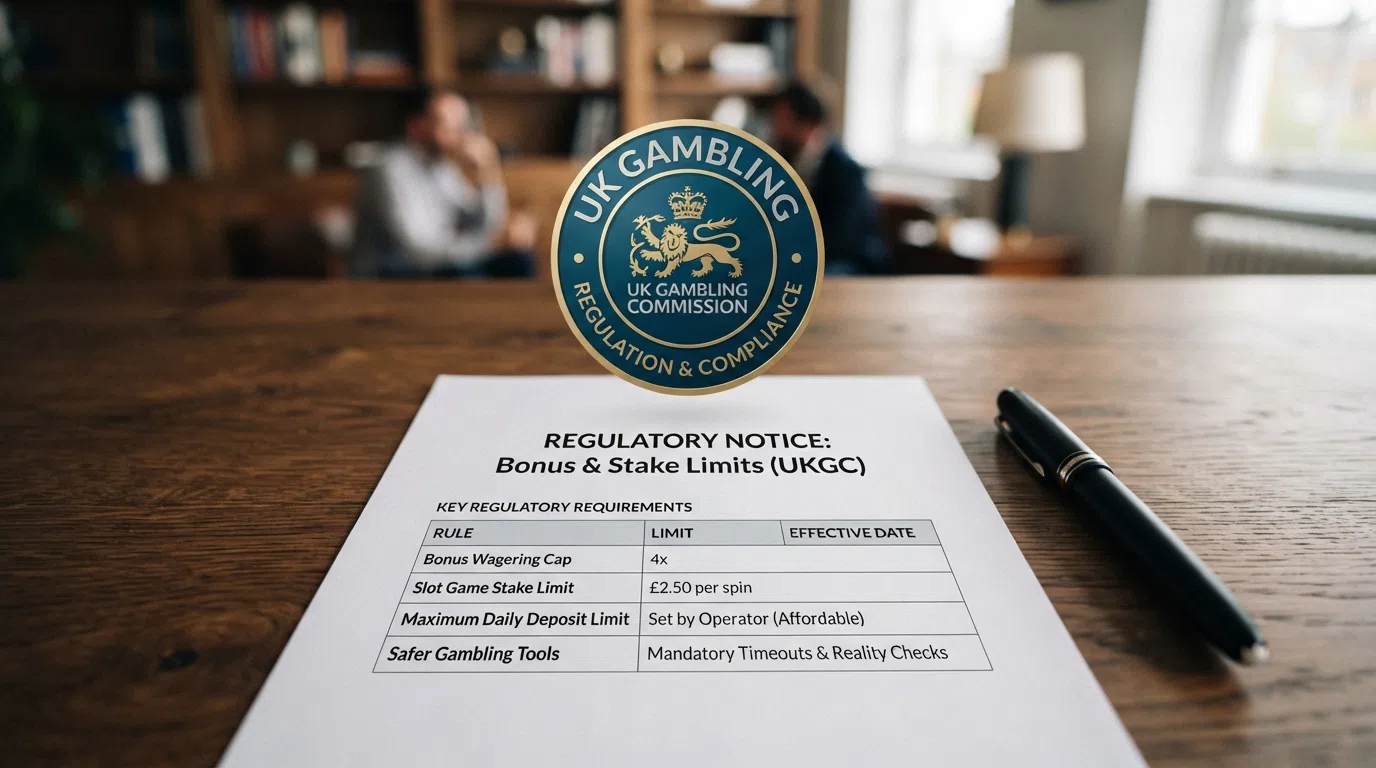
The 10× wagering cap and the mixed-product bonus ban, both in force from 19 January 2026, are the two rule changes that most directly reshape the cashback landscape. The cap replaced a market where bonus wagering requirements as high as 60× were standard; the ban removed the structure that let one product type carry a bonus contingent on play in another. A third change is the slot stake cap, age-banded at £5 for players aged 25 and over and £2 for players aged 18 to 24, which bounds the play that feeds a cashback calculation. The table below sets out the rules and the limits; the prose below the table explains how each one bites.
| Rule or limit | What it caps or sets | In force from |
|---|---|---|
| Wagering requirement cap | 10× maximum on bonus funds (LCCP SR Code 5.1.1) | 19 January 2026 |
| Mixed-product bonus ban | No offer may condition a bonus on play in a different product type | 19 January 2026 |
| Online slot stake cap (25+) | £5 per game cycle | 9 April 2025 |
| Online slot stake cap (18–24) | £2 per game cycle | 21 May 2025 |
| Credit card ban | All gambling payments, including e-wallet routing | 14 April 2020 |
| Remote Gaming Duty | 40% on operator profits (was 21%) | 1 April 2026 |
| Statutory levy | 1.1% of GGY for remote casino/bingo/betting/software licences | 6 April 2025 |
| Vulnerability check threshold | £150 net deposit in a rolling 30-day period | 28 February 2025 |
To illustrate what the cap and the bans do in practice, take a real welcome offer from the featured set: Grosvenor’s £40 bonus plus 100 free spins, carrying 10× wagering on the bonus, with a £2,000 maximum winning cap. The 10× sits exactly at the new statutory ceiling, where the same offer two years ago would have carried 35× or 60× wagering on a much larger headline. Under the cap, the £40 bonus requires £400 of qualifying turnover to clear. The 100 free spins at 10p on Big Bass Splash carry an RTP of 96.71%, so the expected loss on the spin value alone is £10 × (1 − 0.9671) ≈ £0.33, before any cap on the winnings bites. A player who hits the £2,000 maximum winning cap on the bonus walks away with the cap, not the headline; a player who clears the bonus in full and walks away without it has spent £400 of qualifying turnover to release £40. The arithmetic is the same calculation a player would have run under the old 60× regime — only the multiplier has changed, and the new multiplier is the regulator’s answer to the old one.
A GB licence is the entry ticket
A GB licence from the Gambling Commission is the only licence that puts the operator inside the regulatory system. Point-of-consumption licensing has applied to remote operators since 2014, and the Commission’s public register lists 2,663 licensed businesses as of 29 July 2026, searchable by business name, trading name, domain name or account number. Providing gambling facilities without the required licence is a criminal offence under section 33 of the Gambling Act 2005, carrying up to 51 weeks’ imprisonment, an unlimited fine, or both. A Curaçao, Maltese or Gibraltar licence is not a substitute, and a reader who signs up to an offshore brand is gambling outside the system the register maintains.
GAMSTOP and refunds: self-exclusion first
GAMSTOP exclusion periods run for six months, one year, five years, or five years with auto-renewal, and once confirmed, an exclusion cannot be cancelled early. Participation in GAMSTOP has been a mandatory condition of every UKGC online operating licence since 31 March 2020. Cashback never overrides a self-exclusion — a player who has self-excluded cannot deposit, and a rebate that pays out on net losses depends on a deposit having been made. The first tool is the one that runs before any offer matters, and the section on safer-play tools below lists the routes a reader who has self-excluded can take to get help.
How the 10× cap and bans reshape bonus value
The 10× cap on bonus funds, in force from 19 January 2026, replaced a market where requirements as high as 60× were standard. The regulator’s own rationale is that the cap “decreases the likelihood of harm, reduces complexity, and improves transparency while maintaining consumer choice” — the trade-off the rule is built around. The mixed-product bonus ban removed the structure that let one product carry a bonus contingent on play in another, and the four product types — bingo, lottery, casino and betting — are no longer cross-promotable. Remote Gaming Duty rose from 21% to 40% from 1 April 2026, and the 1.1% statutory levy on operators sits on top of duty as a separate cost. Both are operator-side numbers, and both are pressures on the generosity a cashback programme can carry. The arithmetic on the cap is the one a player can run themselves: the lower the multiplier, the lower the qualifying turnover to clear, and the closer a bonus sits to the headline.
Cashback does not remove the risk: safer-play tools that matter
A cashback rebate is harm reduction, not risk removal. It returns a slice of what the player has already lost, on a fixed schedule, and it does not change the underlying odds. The Gambling Commission’s Gambling Survey for Great Britain puts participation in any gambling activity in the past four weeks at 47% of adults, with online gambling participation at 37%. GambleAware’s Annual Treatment and Support Survey 2024 classified 13.1% of GB adults — around 6.8 million people — at PGSI 1+, meaning at least some level of gambling-related problems. The National Gambling Helpline made 996 referrals to treatment in January 2026, up 48% on the same month a year earlier, and 81.5% of contacts disclosing a form of gambling in 2026 cited online gambling — the highest proportion in five years. The numbers are the backdrop, not the argument: the tools below are the ones that operate alongside any cashback offer.
Deposit limits and self-exclusion still apply
Cashback does not bypass the guardrails. The £150 net deposit vulnerability check, in force from 28 February 2025, runs on a rolling 30-day basis and uses publicly available data — county court judgments, individual voluntary arrangements, bankruptcy orders — to flag customers in financial difficulty. The age-banded slot stake cap — £5 for players aged 25 and over, £2 for players aged 18 to 24 — bounds the play that feeds a cashback calculation, and operators must prompt customers to set a financial limit before the first deposit. A reader who plays at the cap and clears a £100 weekly rebate has spent £2,000 of slot stake in a week, and the deposit-limit prompt sits at the start of that week, not at the end.
A rebate is not risk removal
The honest framing of a cashback rebate is recovery, not removal. The 13.1% of GB adults at PGSI 1+ is the backdrop, and the 48% year-on-year rise in helpline referrals is the trend a reader should know before treating a rebate as a reason to play. The mechanism returns a slice of losses; the player’s net position after the rebate is still negative on the weeks when a rebate pays out, because the rebate is a percentage of a loss rather than a return of stake. Cashback softens losses; it does not eliminate them, and no reading of the offer that suggests otherwise misrepresents what it does.
Where to get help: helplines and tools
The National Gambling Helpline is on 0808 8020 133, run by GamCare, and made 996 referrals to treatment and peer-based support in January 2026, up 48% year-on-year. Of contacts disclosing a form of gambling in 2026, 81.5% cited online gambling — the highest proportion in five years. The National Gambling Support Network treated 11,960 clients between April 2024 and March 2025, and the rate of problem gambling among those clients fell from 87% to 27% between initial and final assessment. GAMSTOP is the national multi-operator self-exclusion scheme, with exclusion periods of six months, one year, five years, or five years with auto-renewal; once confirmed, an exclusion cannot be cancelled early. NHS gambling harm clinics operate in England, Scotland and Wales, and Gamblers Anonymous runs peer-support meetings across the country. The tools sit alongside any cashback offer, and a reader who needs any of them has not lost anything by using them.
Frequently Asked Questions
Cashback on net losses versus cashback on every bet — what’s the difference?
Net-loss cashback is a retrospective rebate on the amount you lost over a set period, like a week. Cashback on every bet, such as OJOplus, is a tiny percentage of every wager, win or lose, credited in real time. One is a safety net for bad weeks; the other is a per-bet rewards mechanism.
Does cashback arrive as withdrawable cash or as bonus funds?
It varies by operator. A wager-free cashback usually lands as real cash you can withdraw instantly. Others credit it as bonus funds that require you to meet wagering requirements before the cash becomes withdrawable. Always check the terms to see if the credit is cash or bonus-funds based.
Do cashback bonuses carry any wagering requirements in 2026?
Yes, many do, though the terms are now much fairer. Since the January 2026 rule change, the statutory limit for bonus wagering is 10×. Many cashback offers are now 0× (wager-free) or carry low 1×–5× requirements, providing a clearer path to withdrawal than the old 60× standards.
How often is cashback actually credited — daily, weekly or monthly?
It depends on the site’s cadence. The UK default is weekly, often credited on Fridays or Mondays. Some, like PlayOJO, offer real-time crediting with every bet. Monthly cycles are almost non-existent in the current featured set, so look for weekly if you want a regular, predictable rebate schedule.
Which casinos pay cashback with no wagering attached?
Several top UK casinos offer wager-free cashback. Duelz, All British, Mr Vegas, Karamba, and Bally Casino all currently run 0× (wager-free) models where the rebate is credited as real cash. These are generally the cleanest options for players who want to avoid clearing requirements or bonus-fund hurdles altogether.
The sources for the operator data are the named review and comparison sites — casinobuddies.co.uk, gg.co.uk, Gambleguru.org, britishgambler.co.uk, spinverdict.com, sportsboom.co.uk, Squawka.com, grosvenorcasinos.com, and thesun.co.uk — each cited where a specific figure is used. Every operator was verified against the UK Gambling Commission’s public register, which lists 2,663 licensed businesses as of 29 July 2026 and is searchable by name, trading name, domain or account number. The criteria that ordered the ranking are the four columns in the comparison table: the cashback rate, the wagering requirement on the rebate, the games the rebate covers, and the day the cashback lands. No weighting was applied beyond those four points, and the table at the top of this page is the ranking in full.
Pick the rebate that costs you nothing to clear
Wager-free cashback wins on value because nothing is lost clearing it. A 1× wagering rebate trims the headline before it reaches your hand, and the trim is small but real. Eligibility exclusions change the deal per game: a 10% slots-only rebate is half a 10% all-games rebate for a player who splits time across products, and the headline rate does not show that split. The decision is the reader’s, and the shortlist above is the four operators that pay the rebate as cash with nothing further to clear — Duelz, All British, Karamba and Bally Casino — alongside PlayOJO, whose per-bet OJOplus pays continuously, and WinOMania, whose 1× wagering is the closest the market comes to a friction point. The page is built to let the reader compare on the same four points; the choice between them is theirs.
Promotions – fastestpayout-casinos-uk
Content created by the «fastestpayout-casinos-uk» team